Flashlights
Nitecore P35i Review: A Dual-Beam Monster Thrower With 1,650 Meters of Reach
The Nitecore P35i pairs a 3,000-lumen LED flood beam with a Class 1 LEP spotlight that reaches 1,650 meters. Here is what to know before spending on it.
Introduction
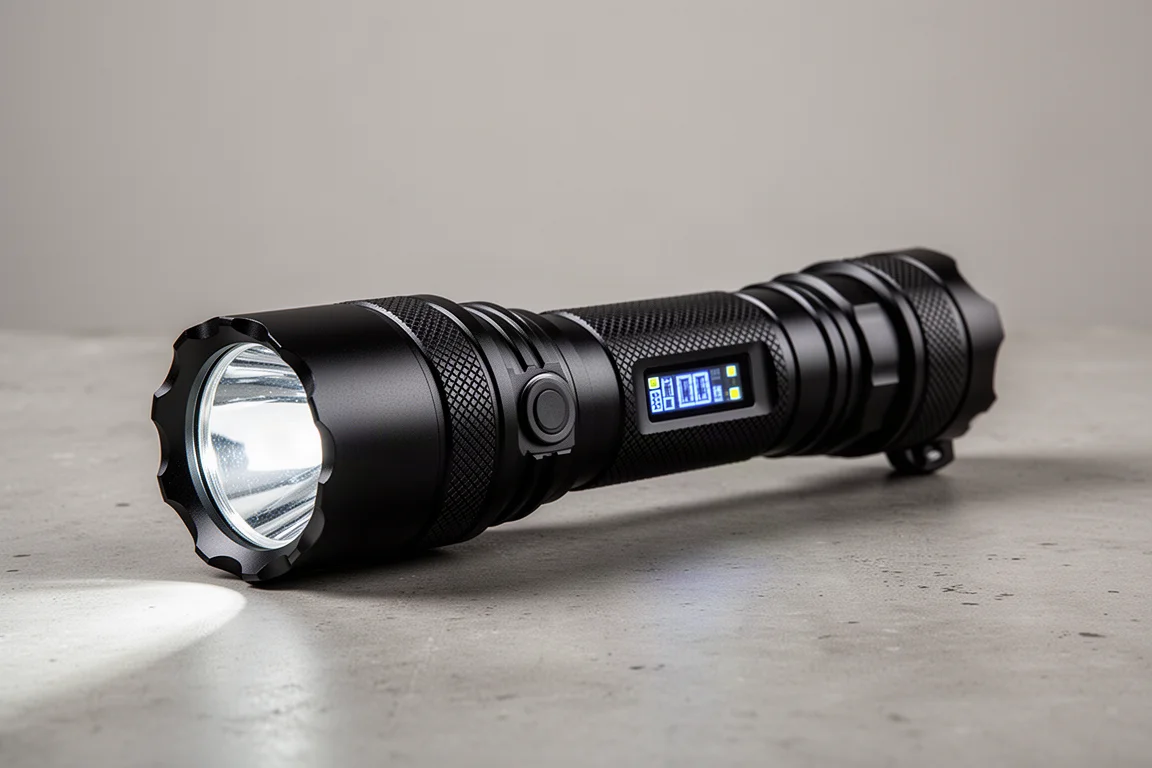
The Nitecore P35i is an ultra long-range dual-beam flashlight that combines two very different light sources in one body: a six-LED flood array producing up to 3,000 lumens, and a Class 1 LEP spotlight with a beam intensity of 678,000 candela and a claimed throwing distance of 1,650 meters. That is well over a mile of reach, which puts it firmly in monster-thrower territory.
This review covers what is in the box, how the dual-beam system works in practice, what the OLED display adds, and the trade-offs worth knowing about before buying, including the proprietary battery and the price.
What Is the Nitecore P35i?
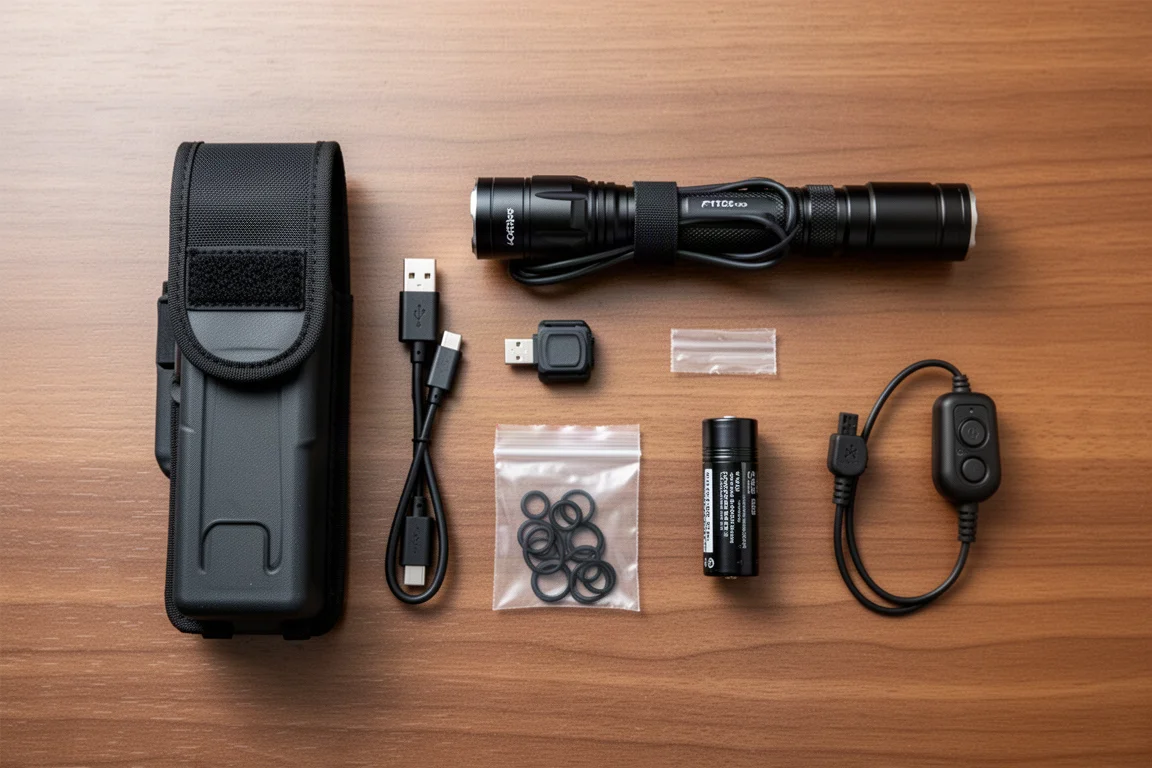
Out of the box, the P35i is well equipped. Alongside the flashlight itself, Nitecore includes a hard molded nylon holster with a velcro flap, a USB type-A to type-C charging cable, a CR123 battery adapter, a spare rubber o-ring, and a remote pressure switch that connects to the light through a USB type-C connector. The box itself has a magnetic front panel with the key specifications printed on it.
The headline numbers are significant: 3,000 lumens maximum output, 1,650 meters (5,413 feet) of maximum throw, and that 678,000-candela beam intensity. Three user modes are available: flood, spot, and mix.
Nitecore positions this light for search, patrolling, rescue, industrial maintenance, and emergency lighting. In practice, it is best understood as a tool for hunters and law enforcement first, with a secondary audience of anyone who genuinely needs a very long-range searchlight.
Design, Build, and Dimensions
The body is aluminum alloy with a type 3 hard anodized finish, rated for impact resistance up to one meter and carrying an IP68 rating. That means it is completely dust proof and submersible in up to six feet of water. The bezel has a striking, somewhat sharp edge profile; combined with the 13.2-ounce (374-gram) weight, it doubles as a plausible self-defense light.
Dimensions are a length of 7.36 inches, a head diameter of 2.56 inches, and a tube diameter of exactly one inch. More than half of the flashlight is effectively the head, because the LEP module sits deep inside a magnifying lens system. The grip is small as a result, but the knurling is well executed and the overall feel is very solid and high quality.
One small detail worth noting: the head is marked with the Class 1 laser designation, confirming the LEP source.
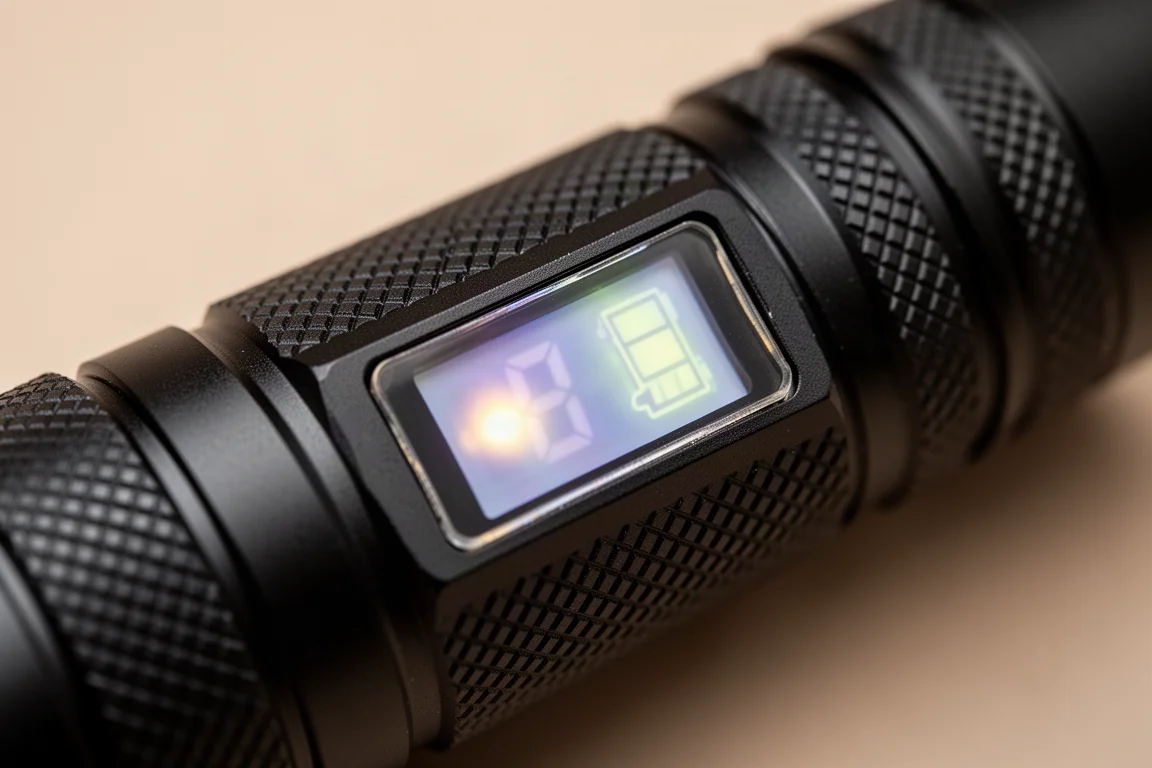
The light also has dual switches, a tail switch to activate it and a side switch to cycle modes, plus one of the most useful features here: a multifunctional OLED display.
Battery, Charging, and the CR123 Backup Option
The P35i runs on the proprietary Nitecore NL2150HPI 21700 battery, a 5,000mAh rechargeable lithium-ion cell. This is an important limitation: the light will not run on conventional 21700 batteries. You can charge it directly through the USB type-C port located on the tail cap, where an LED indicates charging status.
The included CR123 adapter offers a genuine backup option, with some restrictions. When powered by two CR123 batteries, turbo mode is locked out, so in flood or spot modes you only get four of the five brightness levels. That means no 3,000-lumen flood output and no full 1,650-meter throw. As an emergency fallback, though, it is a welcome addition.
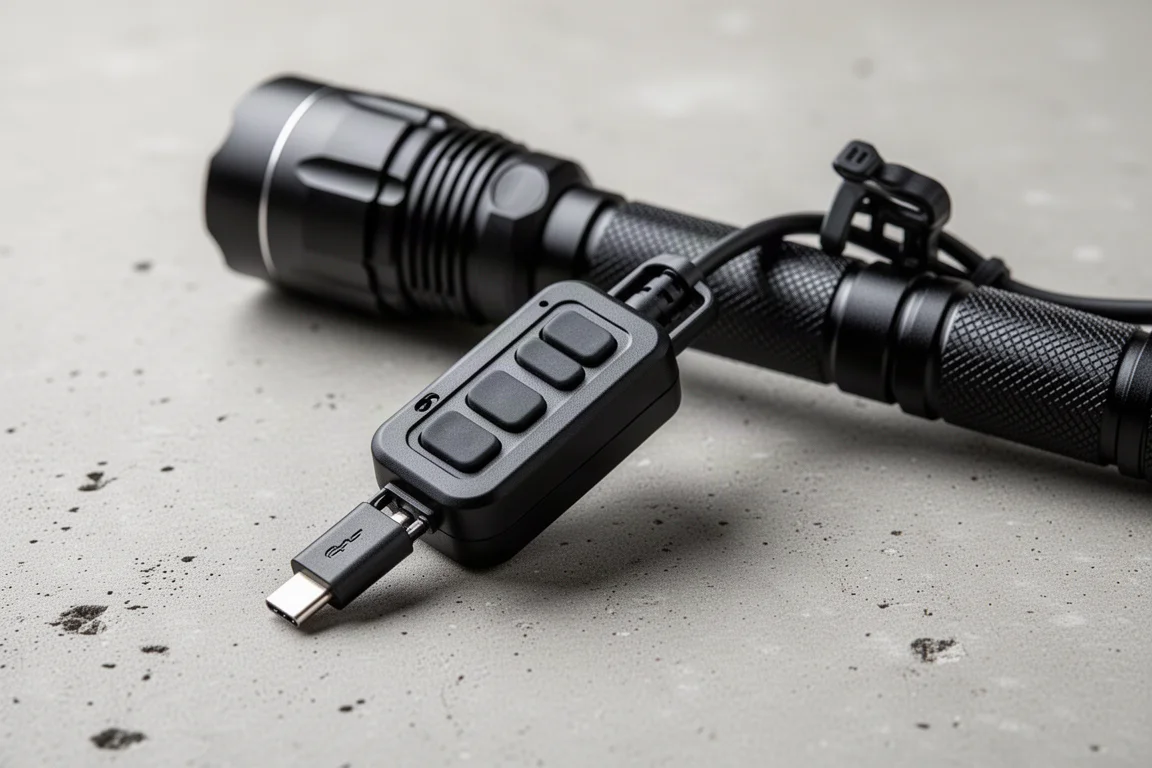
The remote pressure switch deserves a mention too. It connects via USB type-C with a locking clip and offers four buttons, including one that activates a momentary strobe. Strobe is the one mode that cannot be triggered natively through the flashlight’s own switches, so the pressure switch is effectively required for that function.
Interface and the OLED Display
Switching between the flood, spot, and mix user modes is done by pressing and holding the side switch and then pressing the tail switch. Short presses of the side switch cycle through the five brightness levels in flood and spot modes; mix mode has three levels: low, mid, and high.
The OLED display is a highlight. When the light is off, a press of the side switch shows the last brightness level, the last user mode, and remaining battery voltage. While the light is on, it reads out the current brightness level, user mode, output in lumens, beam distance, and remaining runtime. It makes the light genuinely easy to manage in the dark.
One workaround worth knowing: while in flood mode, pressing and holding the side switch activates the LEP spotlight at full 3,000 lumens with a countdown timer on the display. In testing, this repeated reliably across several activations, with later runs appearing to last longer.
There is brightness and mode memory, so the light returns to your last setting when reactivated. There is no electronic lockout; instead, a quarter turn of the tail cap physically locks the light out.
Key Output Numbers
The specifications across modes tell the story of what this light can do:
- Flood turbo: 3,000 lumens, 45 minutes of runtime, 200-meter throw, 10,000 candela
- Spot turbo: 410 lumens, 2 hours and 15 minutes of runtime, 1,650 meters of throw, 678,000 candela
- Mix high: 3,000 lumens, 1,650 meters of throw
- Mix mid: 420 lumens, 900 meters of throw
- Mix low: 130 lumens, 640 meters of throw, 6 hours of runtime
Mix mode is particularly compelling because even at low output, 130 lumens, the beam still reaches 640 meters while running for six hours. That combination of usable spill plus serious reach is what makes the dual-beam design more than a gimmick.
Heat and Handling
Running mix mode on high, the head measured 104 degrees Fahrenheit after one minute and 110.6 degrees after two minutes, with the body reaching 92.6 degrees. Those are completely manageable numbers for a light pushing 3,000 lumens, with the warmth concentrated near the lens end of the head. The weight, at 13.2 ounces with the battery installed, is noticeable but reasonable for a light of this size.
Beam Test: Flood, Spot, and Mix in the Real World
In flood mode, the six Cree XP-G3 LEDs produce a wide, very even beam that comfortably lights up an entire field. At full turbo, 3,000 lumens, everything around the light is visible and the treetops are easy to hit at distance.
Spot mode is a different animal. The Class 1 LEP produces an intensely bright, laser-like hotspot with virtually no spill at all, which is characteristic of LEP lights. At the highest level, distant nets and far trees were clearly visible, and the beam was just reaching the far treeline. It is an extremely impressive spotlight, but on its own you see little beyond that narrow hotspot.
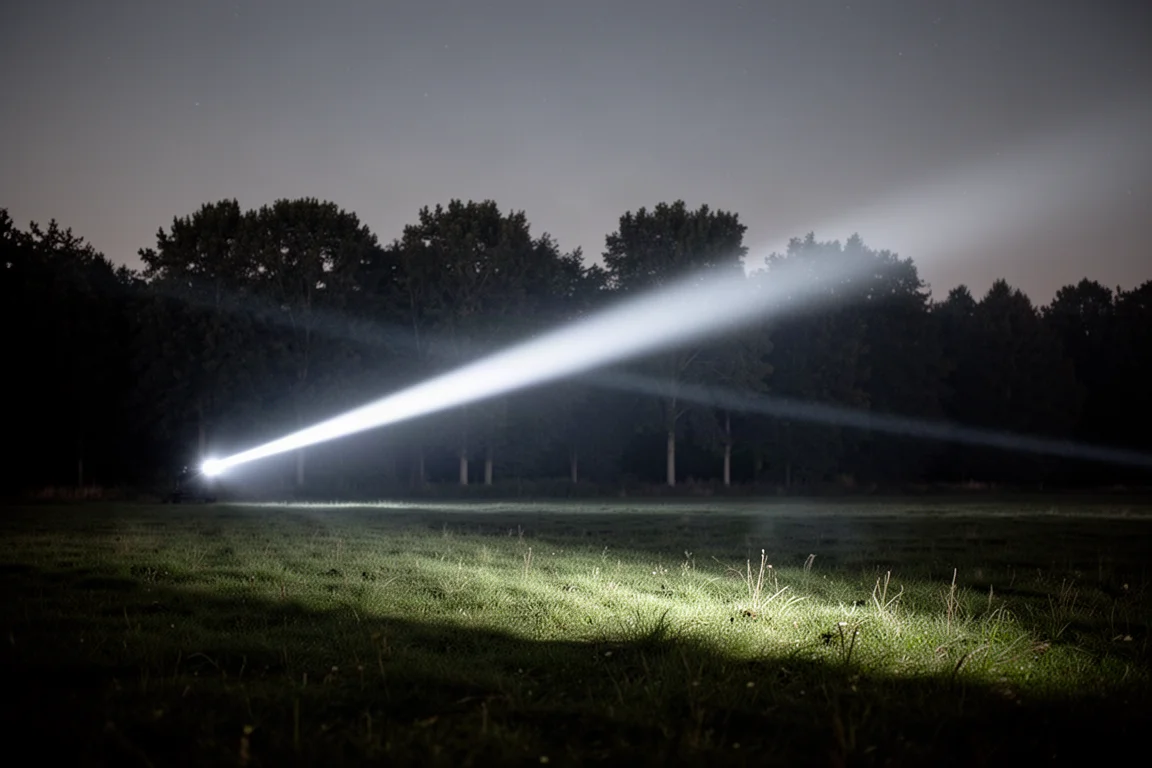
Mix mode resolves that. It runs both the LEDs and the LEP together, combining a wide, even flood with the razor-sharp long-distance beam in one profile. In the field, all four distant reference targets and the background trees were visible without any issues. This is the mode the light is arguably built around, and the flood-only turbo workaround means you can still summon the full spotlight while primarily running the LEDs.
Things to Consider Before Buying
The most obvious consideration is price. At around $300, this is a premium flashlight, though the performance and the LEP module go some way toward justifying it. The proprietary battery is the other sticking point: you cannot swap in standard 21700 cells, and CR123 operation costs you turbo. Finally, the light cannot tail-stand, since the tail cap has no flat base around the switch, which matters if you like propping your light up as a lantern.
Buying Advice
Buy the P35i if you genuinely need extreme reach and want a single light that can do flood and long-range spot at once. Hunters, security professionals, and search-and-rescue users are the natural audience. If your needs are more casual, a conventional high-lumen flashlight with standard battery support will be more practical and considerably cheaper.
Conclusion
The Nitecore P35i is one of the most versatile throwers available, pairing a 3,000-lumen flood array with a 1,650-meter LEP spotlight and a genuinely useful OLED display. The proprietary battery, lack of tail-standing, and $300 price are real trade-offs, but as a high-end dual-beam searchlight, it delivers on its promises.
Product link
View more details for Nitecore P35i
This product is mentioned in the review. Check the specifications, options, and compatibility before buying.
View more details for Nitecore P35iFurther reading
Related Reviews
Flashlights
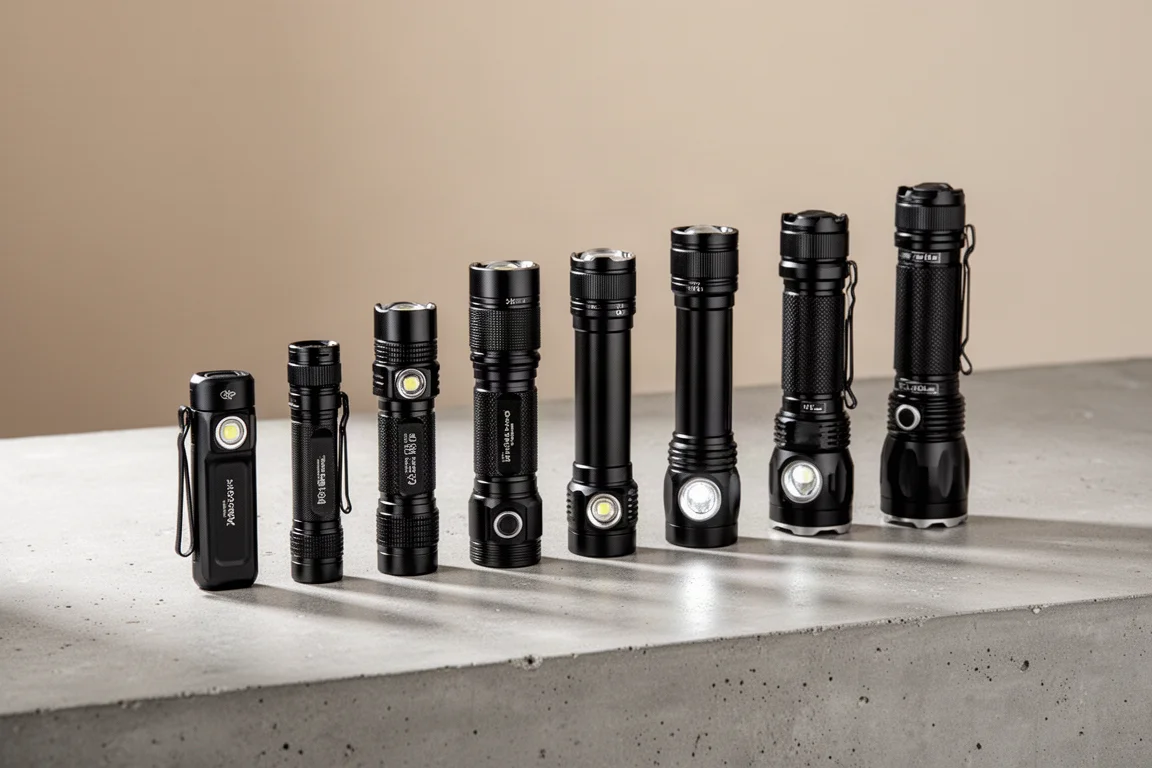
Best Flashlights 2026: Brightness, Battery, and Value Compared
We tested 18 flashlights across a wide price range to find the best performers in brightness, battery life, and durability.
Flashlights
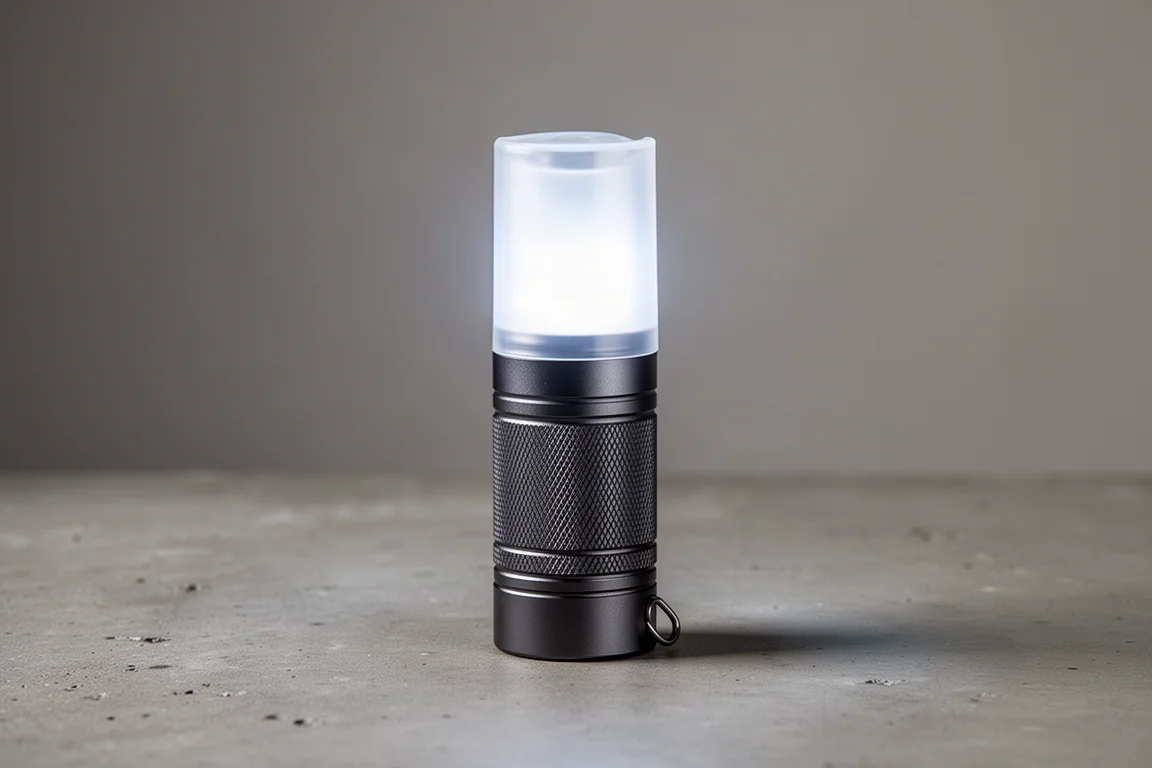
Nitecore LA10 Review: A Tiny 2-in-1 Lantern That Nails the Basics
The Nitecore LA10 pairs a pocket-sized lantern with a single AA battery, a magnetic tail cap and a five-year warranty. Here is where it shines and where it struggles.
Flashlights
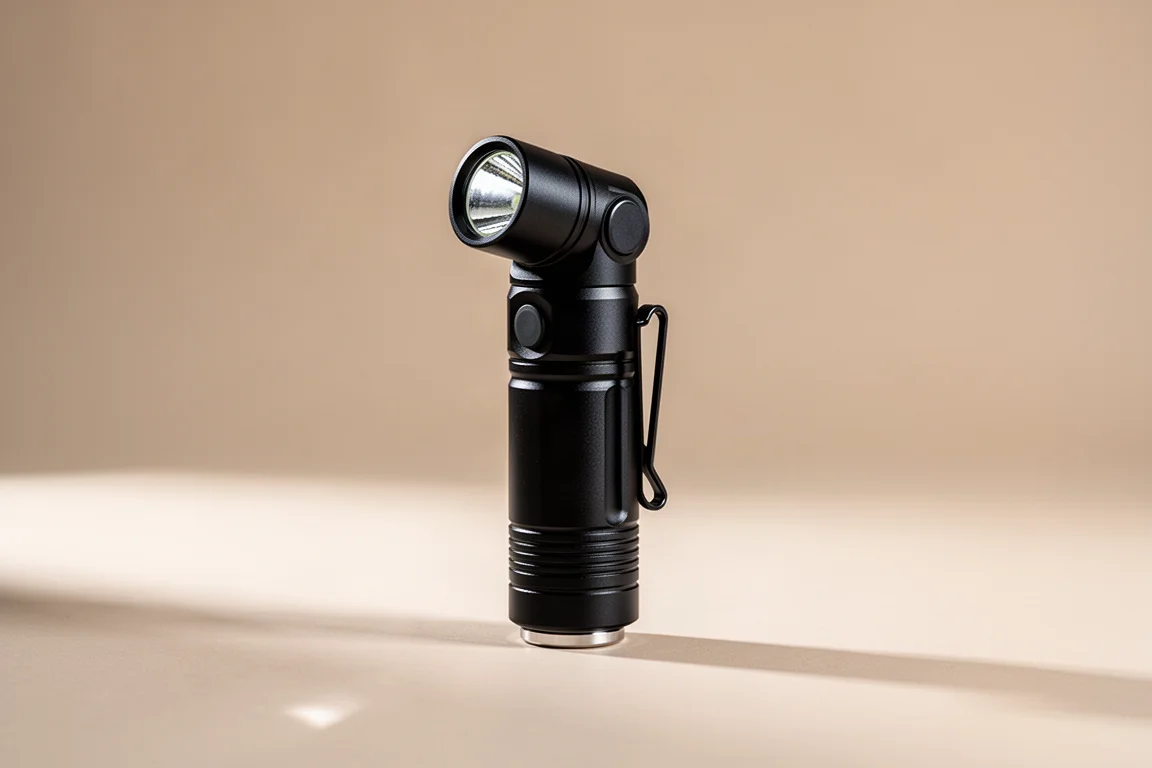
Wuben G5 Review: A Compact Everyday Carry Flashlight
The Wuben G5 is a small, rechargeable flashlight with a pivoting head, magnetic base, and color modes. Here is how it performs as an everyday carry light.