Flashlights
Nitecore P17iX Review: A Variable-Beam Tactical Flashlight with 5,000 Lumens
The Nitecore P17iX pairs 5,000-lumen burst output with switchable spot, mix, and flood beam patterns, a rugged 7075 aluminum body, and deep customization. Here is what works and what does not.
Introduction
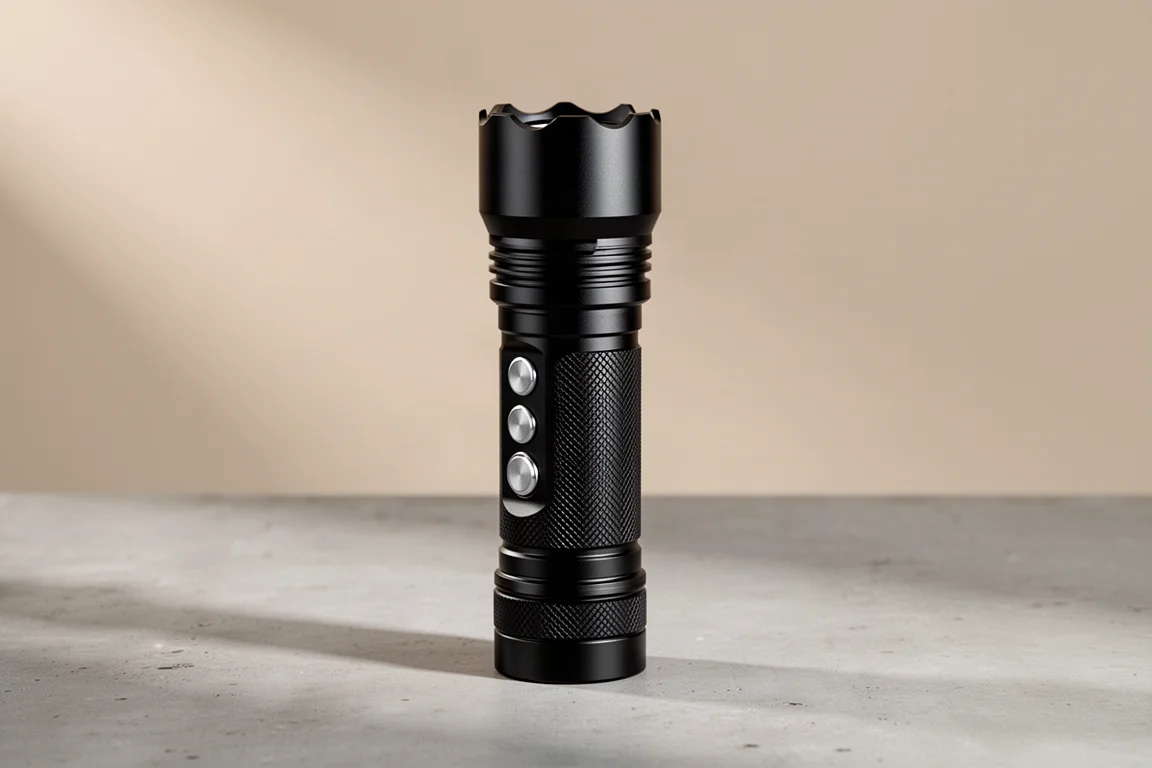
The Nitecore P17iX is a variable beam pattern tactical flashlight with a maximum output of 5,000 lumens, a maximum throwing distance of 330 meters, a max intensity of 27,225 candela, and a max runtime of 100 hours on low. It is best described as the little brother to the P27iX: nearly identical in looks, specs, and controls, with only slight differences between them. Both push 5,000 lumens and both run 100 hours on low, but the P27iX throws further, at 430 meters with 46,320 candela, and costs $160 versus the $129.95 asking price of the P17iX.
What you give up is throw. What you keep is the power, the same build quality, and a smaller, less bulky head that makes the P17iX noticeably easier to pocket carry. That trade is worth a close look.
Variable Beam Patterns and the Four-Core LED Head
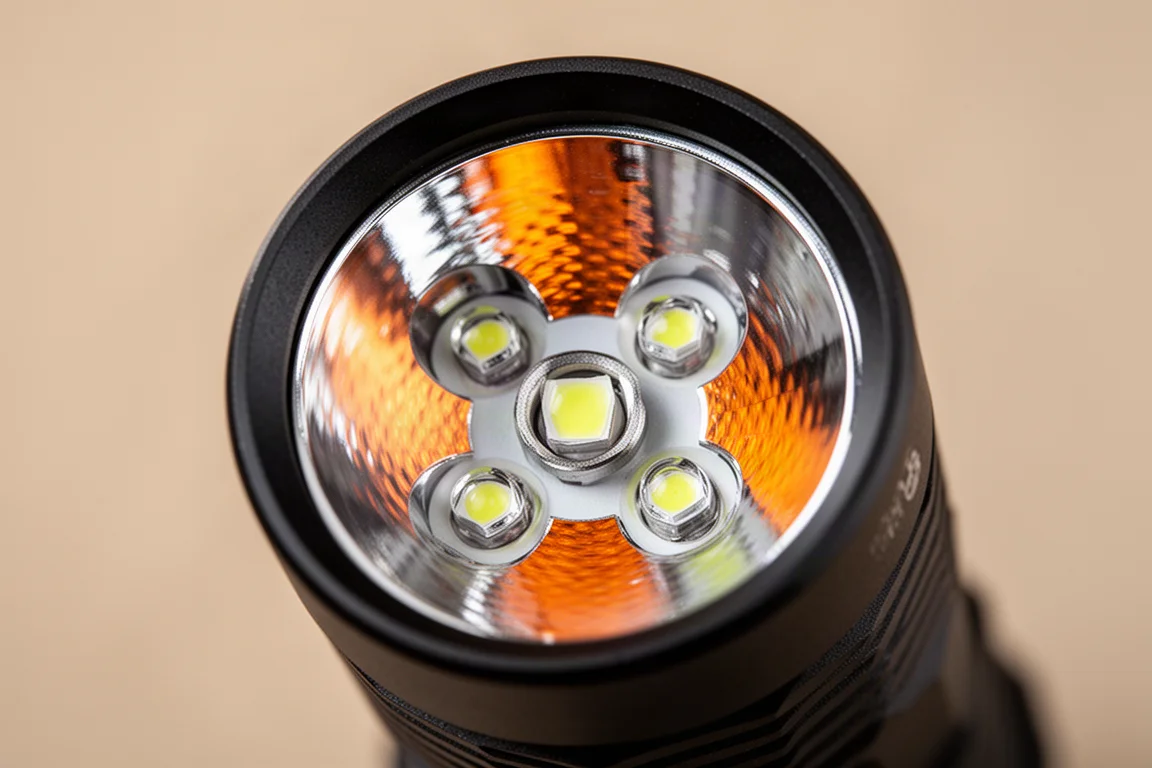
The defining feature is the beam pattern switching. Five-core M515 SL LEDs with a cool white color temperature generate the light: the center core drives the spotlight, the four surrounding cores drive the floodlight, and all five activate together in mixed mode. A long press on the set button cycles through spot, mix, and flood, and the flashlight remembers which pattern you left it on. Nitecore is also still using the same orange peel reflector seen on the P27iX.
Each beam pattern offers the same four brightness levels with identical lumen outputs: low at 15 lumens, mid at 80, high at 400, and turbo at 1,500, with runtimes of 100, 25, 6, and 3 hours respectively. Only the throwing distance and candela change with the beam pattern. On top of that, you get a 2,500-lumen search mode with the full 330-meter throw, a 5,000-lumen lumen shield mode at 295 meters and 21,895 candela, a 1,000-lumen warning flash, and a full 5,000-lumen strobe.
One honest caveat: specialty modes are short-lived. Expect roughly 16 seconds of search mode and around 12 seconds of lumen shield before the flashlight steps down due to heat. There is no beacon or SOS mode, and no firefly or moonlight level. For a tactical light, simplicity wins more often than not, but an SOS would have been a nice inclusion.
Build Quality, Battery, and Charging
The body is 7075 T6 aluminum with a type 3 hard anodized finish, rated IP68 for dust and water submersion up to 6 feet, with 2-meter impact resistance. The buttons, including the set button, the main tail button, and the secondary engage button, are all stainless steel, and the whole light has a sturdy, high-quality feel in hand. The middle of the body carries nice texturing for grip, and a somewhat striking bezel sits at the head, though it is not deep or aggressive.
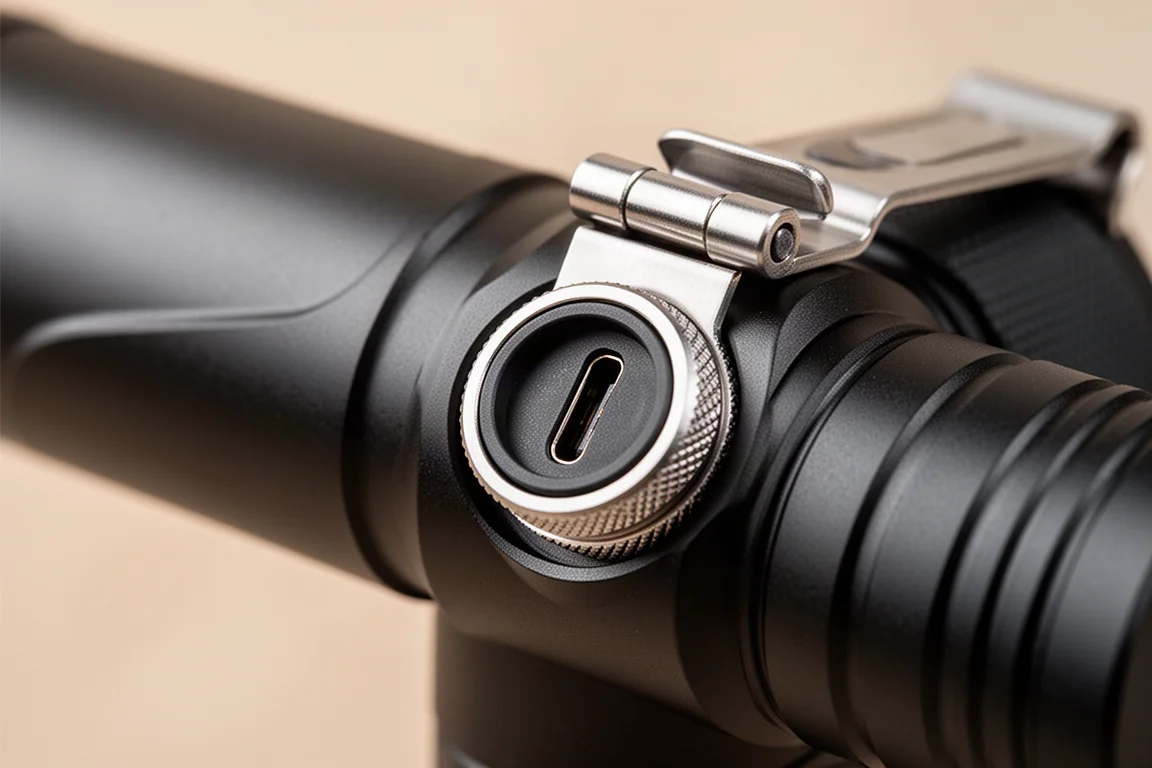
It ships with a 3.6V 5,500mAh rechargeable lithium-ion battery, charged via an 18W USB-C port behind a plastic door latch. That latch is a meaningful upgrade over a rubber flap, and it has held up well on the same design used by the P27iX. You can also slot-charge the battery, or run two CR123 or two RCR123 cells with the included adapter, though doing so greatly reduces both lumen output and runtime.
Dimensions come in at 5.51 inches long, with a 1.06-inch head diameter, 1.02-inch tube diameter, and 1.30-inch tail diameter. Weight is 6.3 oz or 178 g with the battery installed, without the pocket clip. There are no springs at the head or tail, but that has not caused issues on the closely related P27iX, which shrugged off hard knocks on wood with no light loss.
Controls and Customization
Everything runs through three buttons: the side set button, the main tail button with its half-press and full-press actions, and the secondary engage button. The flashlight ships in a basic mode, and a press-and-hold on the tail button plus three presses of the set button switches you into professional mode, which adds memory of your last brightness level and requires a long press to turn off.
The battery life indicators, shown in green, and brightness level indicators, shown in blue, are simple and effective: each brightness LED represents a level from low to turbo, and each battery LED represents 25%. They fade away after a few seconds, which keeps the interface clean.
Customization runs deep. The half press of the tail button can be set to low or mid, and the full press to high or turbo. The engage button can be assigned two of the three specialty modes: lumen shield, strobe, or search. For example, a half press can be set to search and a full press to lumen shield, or the half press can become strobe. You cannot have all three at once, but two out of three covers most needs. One favorite feature is the rapid lock mechanical lockout switch: push it up toward the tail and every button is dead, which matters on a 5,000-lumen light that gets very hot. Push it back and you are instantly ready to go.
Beam Tests: Spot, Mix, and Flood in the Field
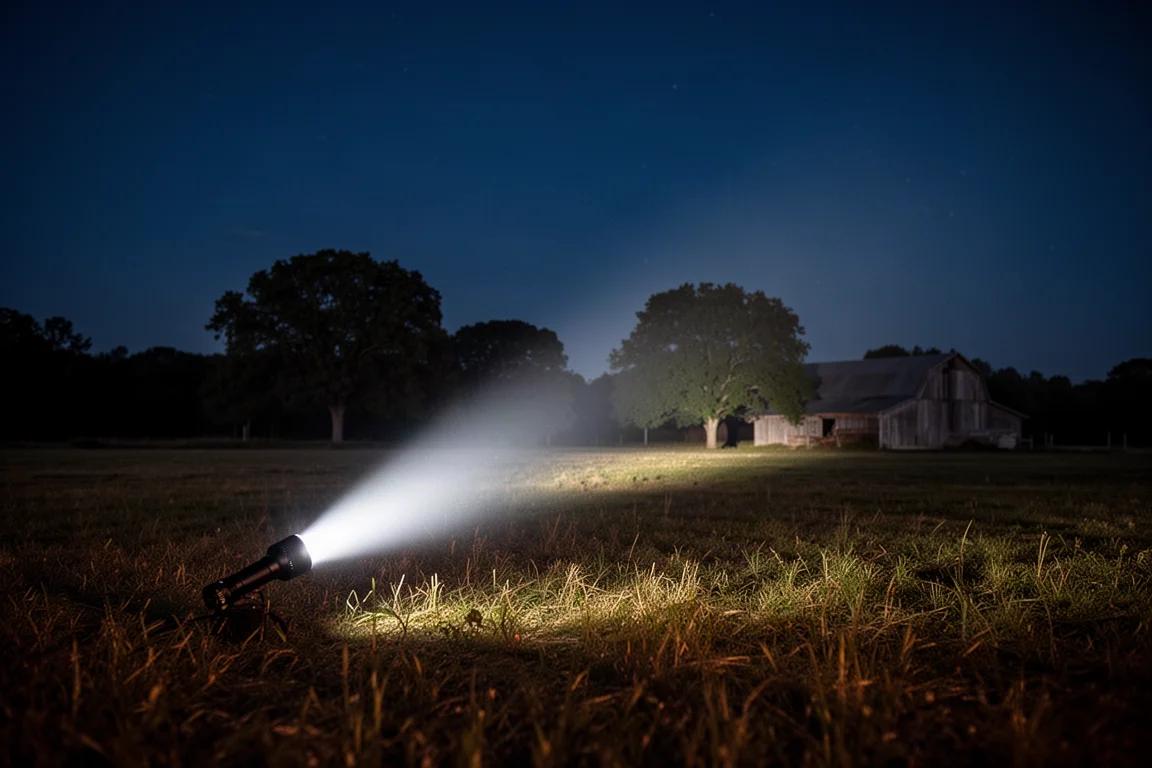
In the dark, spot mode on mid easily reaches nearby trees, and on high it hits the tree line and distant buildings with a defined hotspot. The cool white tint looks clean in the spotlight, and the mix mode pairs the center hotspot with useful peripheral light, which is the most versatile configuration for general use. Flood mode spreads light broadly but still shows a hotspot, so this is not a pure flooder.
The one visual flaw is the outer perimeter of the beam. A floral, kaleidoscope-like pattern rings the hotspot, a result of the four outer LEDs and their reflector shapes. It is not a functional problem, but the transition from hotspot to perimeter is choppy and the pattern is not pleasant to look at on a wall. If the outer reflectors were perfectly circular, it likely would not happen.
Things to Consider Before Buying
A few negatives are worth weighing. There is no moonlight or firefly mode, which is arguably subjective for a tactical light. The flashlight cannot tail stand, a consequence of the lanyard tabs at the tail, and anyone who likes standing a light on its end for ambient lighting will notice. The floral beam perimeter is the ugliest quirk of the design. And 12 to 15 seconds of lumen shield or search mode before step-down feels short, even if those are specialty modes.
None of these are dealbreakers for tactical or weapon-light use, but pocket carry users who like tail standing may be bothered more than most.
Buying Advice
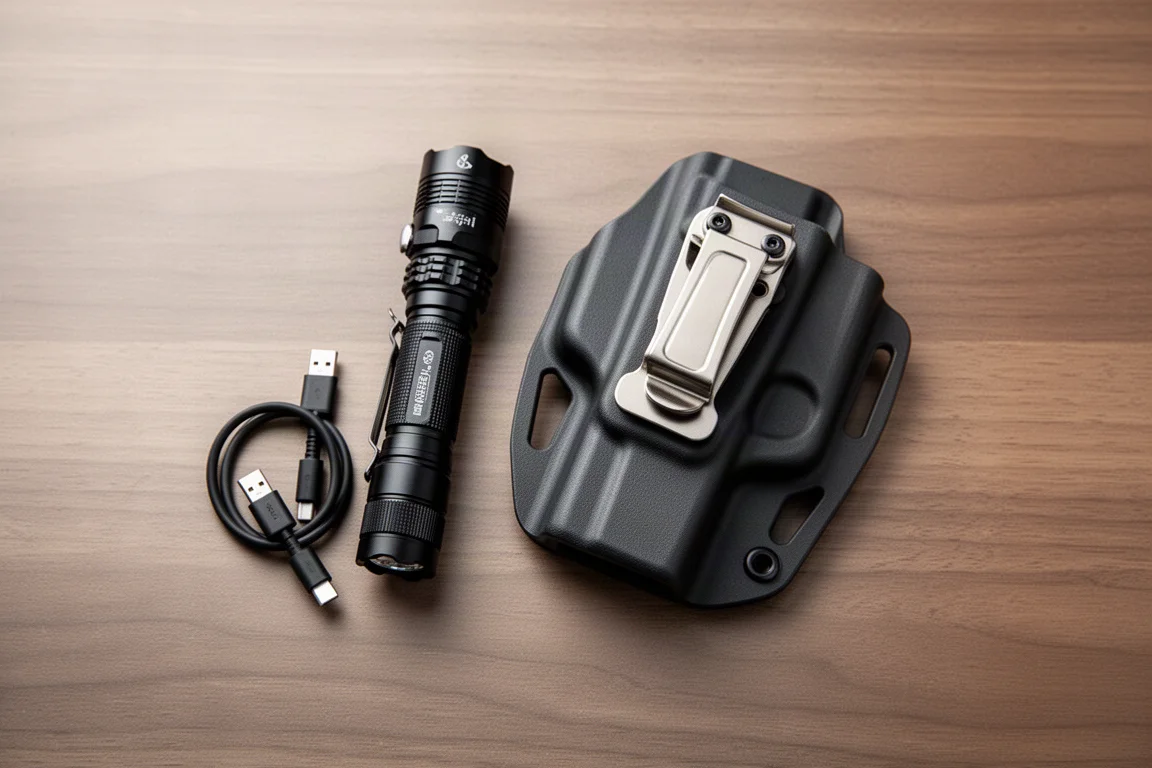
The pros add up convincingly. You get CR123 compatibility as a backup power option, excellent build quality in 7075 aluminum with stainless steel buttons, a well-designed molded plastic holster with a metal belt clip, a pocket clip, and an ingenious USB-C charging cable that doubles as a lanyard, meaning you are never without a charging cable. Most of all, the compact proportions make it far more pocketable than the P27iX while keeping the same 5,000-lumen output.
At $129.95, it is $30 cheaper than the P27iX with the only meaningful losses being some throw and candela. For anyone who values deep customization, near-instant access to maximum output and strobe, and a genuinely powerful light that still pockets well, the P17iX is a strong buy. Choose the P27iX instead only if longer throw matters more to you than the price and bulk difference.
Conclusion
The Nitecore P17iX delivers the same raw output and polished construction as its bigger sibling in a slimmer, cheaper package. The floral beam perimeter and the missing tail stand are real quirks, but the variable beam patterns, customizable controls, rapid lock, and thoughtful accessories make it easy to recommend for tactical users and everyday carriers alike.
Product link
View more details for Nitecore P17iX
This product is mentioned in the review. Check the specifications, options, and compatibility before buying.
View more details for Nitecore P17iXFurther reading
Related Reviews
Flashlights
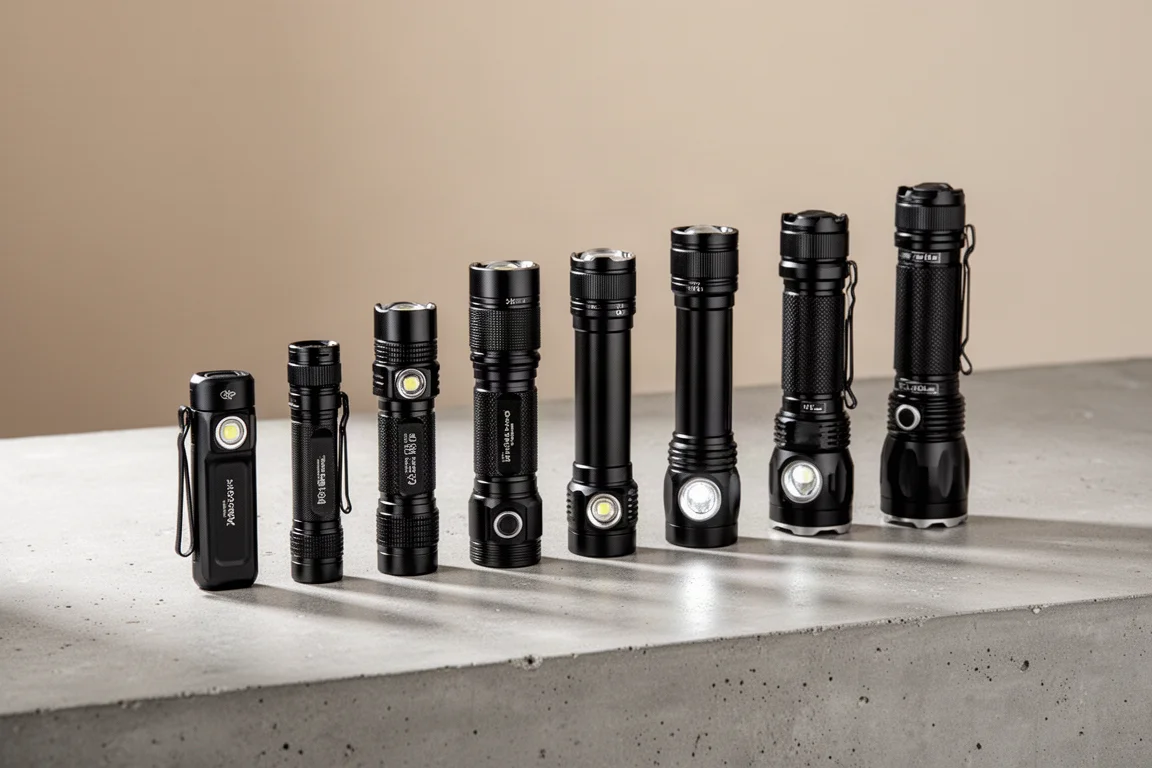
Best Flashlights 2026: Brightness, Battery, and Value Compared
We tested 18 flashlights across a wide price range to find the best performers in brightness, battery life, and durability.
Flashlights
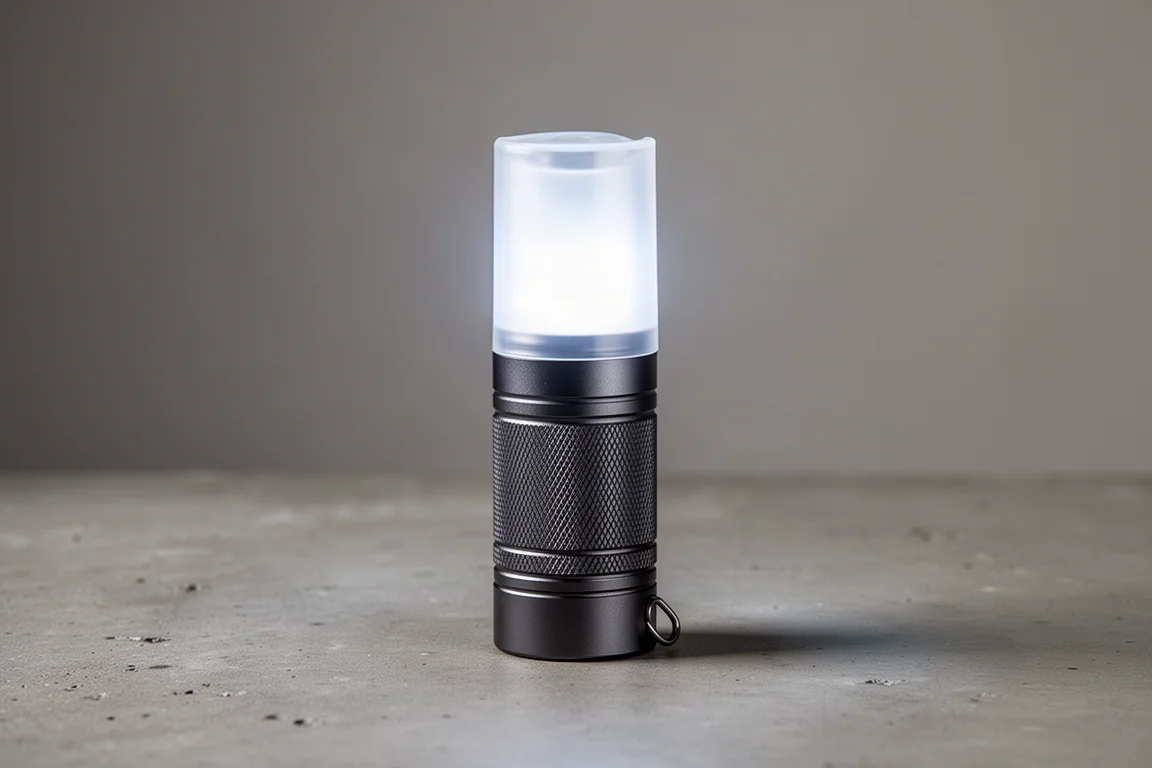
Nitecore LA10 Review: A Tiny 2-in-1 Lantern That Nails the Basics
The Nitecore LA10 pairs a pocket-sized lantern with a single AA battery, a magnetic tail cap and a five-year warranty. Here is where it shines and where it struggles.
Flashlights
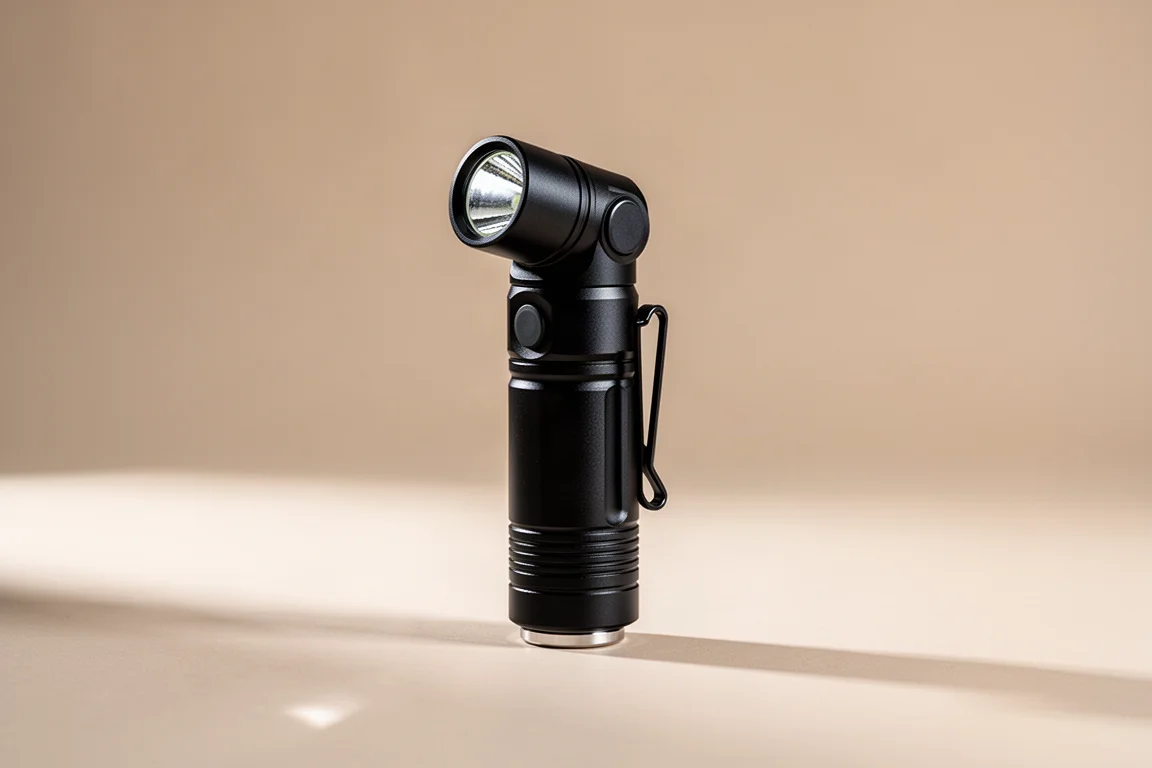
Wuben G5 Review: A Compact Everyday Carry Flashlight
The Wuben G5 is a small, rechargeable flashlight with a pivoting head, magnetic base, and color modes. Here is how it performs as an everyday carry light.