Kitchen Knives
New Japanese Knife Arrivals Worth a Look: Kuruchi, Ginsan Damascus, and More
A fresh batch of Japanese kitchen knives has landed, from affordable Aogami Kuruchi gyutos to Damascus SPG Strix work from a rising blacksmith.
Introduction
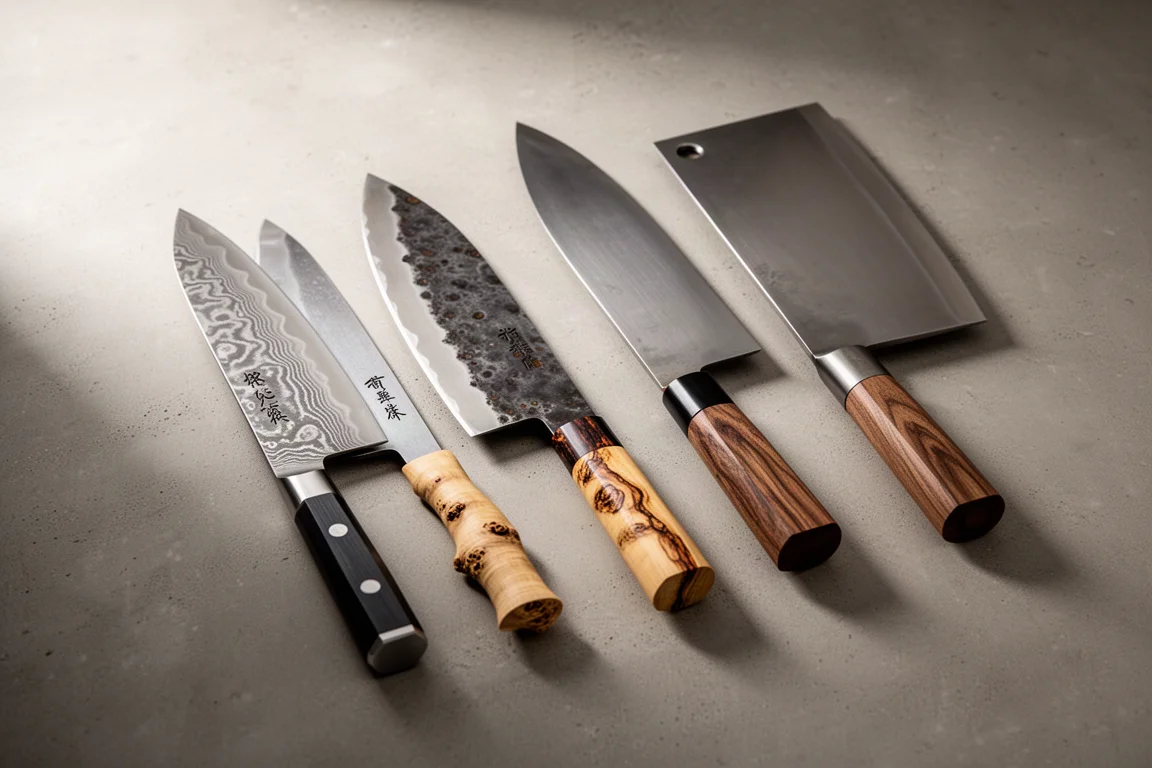
It has been a while since a genuinely exciting wave of new Japanese knives arrived all at once, and this batch is a strong one. It spans a rising blacksmith’s latest Damascus work, budget-friendly Aogami Kuruchi gyutos, a returning staff-favorite Damascus line, a legendary W2 gyuto, dependable Shirogami single-bevel knives, and a rare Aogami Number 2 cleaver. Here is how they stack up and who each one makes sense for.
Kenuro Hatonos Ginsan Damascus Series
Kenuro Hatonos is a blacksmith who trained as an apprentice at the Tefu Knife Village and opened his own business last spring. His Ginsan Damascus series covers a wide range of shapes: petty knives with rosewood and buffalo horn ferrules, a bunka with a mono ebony handle, and two gyutos with kitsuke-style tips in oak and walnut or ebony mono handles. The work is notably thin at the spine and beautifully thin behind the edge, with tall blades and cleanly sanded, rounded spines and choils.
Availability is the catch for now: these knives are not online yet. The blacksmith will be doing a forging demonstration at Two Smiths in Kitchener on September 17, followed by an engraving event at the shop in Etobicoke on Saturday, September 20, where buyers can have their knives engraved in person. Remaining stock is expected to reach the website around the end of September, with more shapes, including 240mm blades, sujihiki, and nakiri, on the way.
Kenuro Hatonos SPG Strix Series
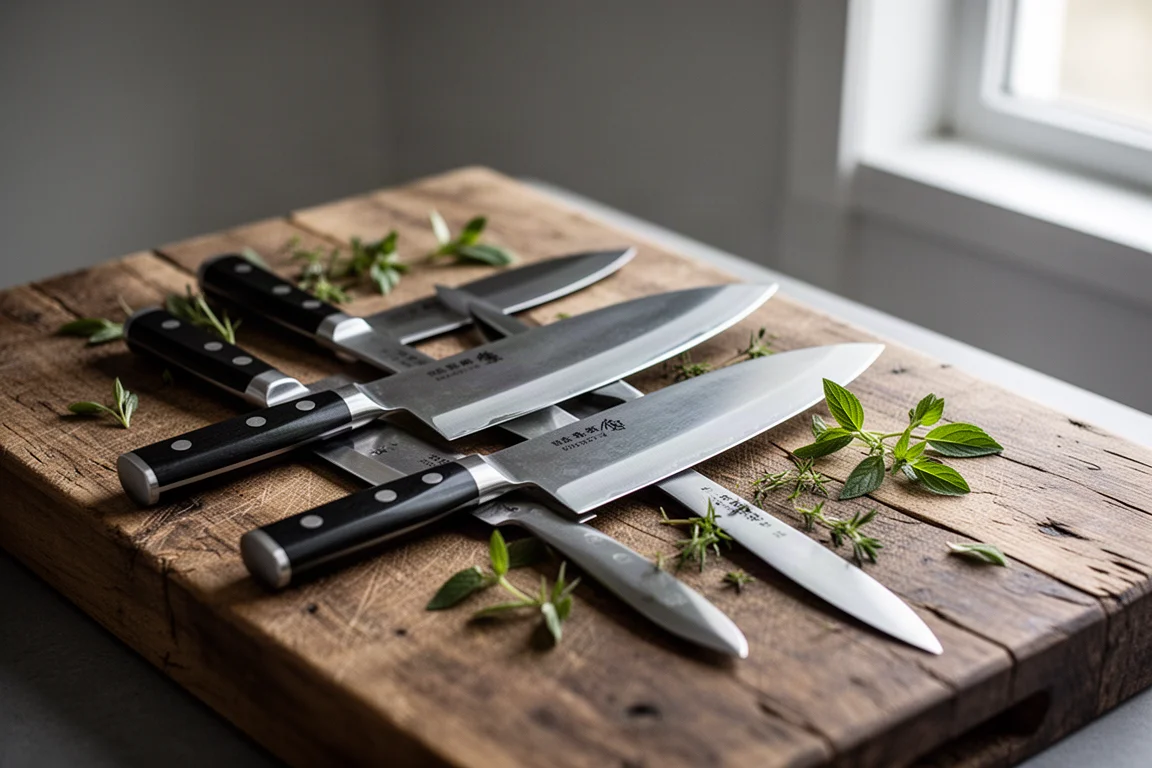
The SPG Strix series brings a strikingly shiny and beautiful Damascus pattern, available with either oak and buffalo horn or ebony and buffalo horn handles with an aluminum liner. Each delivery from this maker has been shinier, sharper, and more consistent than the last, and the fit and finish leave little to criticize. Like the Ginsan series, these are slated to appear online after the September events, so keep an eye on the shop around the end of the month.
Hatsukoro Kuruchi Series
The Hatsukoro Kuruchi series is the value pick of this batch. It uses Aogami Number 2 with iron cladding in a kuruchi finish, paired with chunky stabilized birchwood handles with G10 liners. The 210mm gyuto has a nice flat spot with a bit of sweep toward the tip and a slight distal taper. The spine and choil sanding is not the finest, but the knife still feels comfortable in a pinch grip, and the blade feels sturdy in hand. At around 200 dollars, it is a genuinely strong deal.
Hatsukoro Kumo Kag Series
The Kumo Kag series is a returning staff and customer favorite, and it is easy to see why. It pairs Aogami Number 2 with a kuruchi finish, a Damascus pattern on the bevel, and a forced patina that creates a striking black aesthetic on the exposed carbon steel. The wa handles come with buffalo horn ferrules. These knives are fairly thick at the spine but nice and thin behind the edge, and they perform well above their price range.
Yoshikin Kuruchi Nashi Bunka
Yoshikin knives have a devoted following for good reason, and the Kuruchi Nashi Bunka with white Number 2 in stainless cladding, a wa handle with buffalo horn ferrule, carries that reputation. The spine and choil are nicely rounded, the profile is flat, and the blades are tall. Anyone who has used a Yoshikin knife knows how remarkably sharp they arrive out of the box, and this bunka is no exception.
Masamoto KS Gyuto
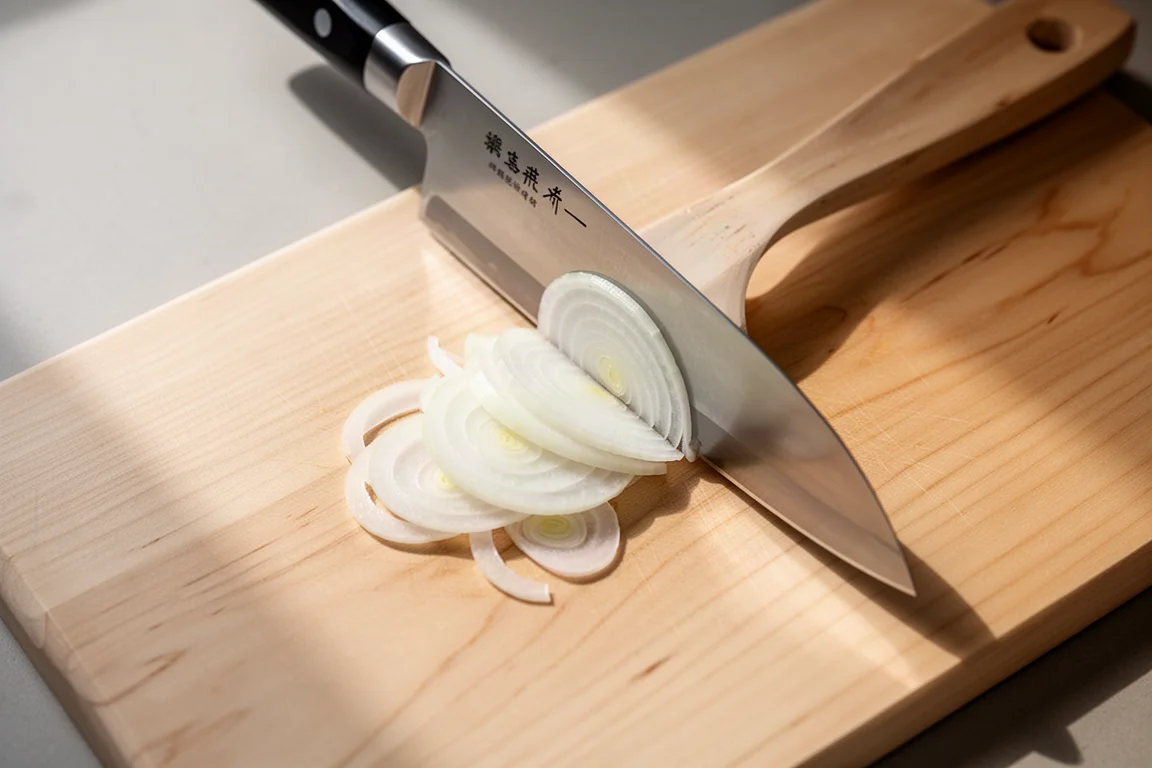
The Masamoto KS gyuto is back in stock in both regular and kitsuke-style tips, in 210mm and 240mm lengths, with D-shaped magnolia handles and buffalo horn ferrules. Construction is monosteel W2 with no cladding. These knives hold something close to legendary status in the Japanese knife world, and the reason becomes obvious the moment you cut with them: the profile is beautiful and the tip gets astonishingly thin, which makes work like onions and shallots feel effortless.
Hatsukoro Shirogami Honeski 150mm and Deba
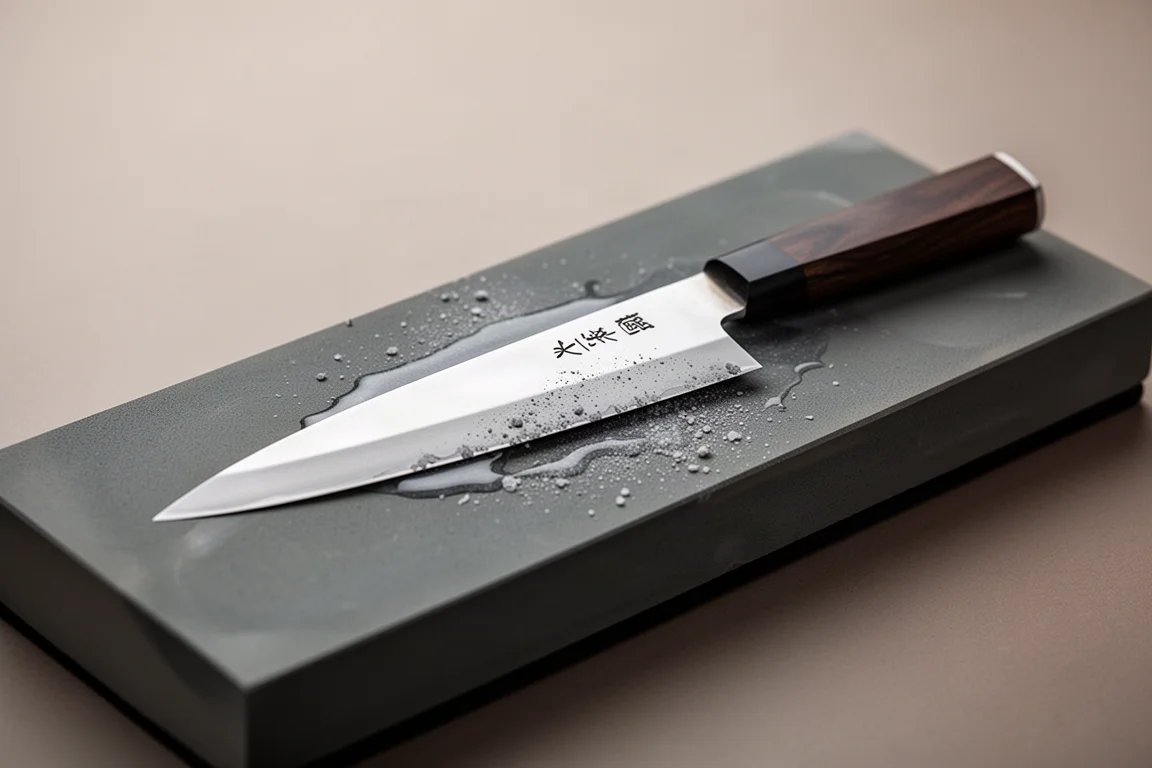
The Shirogami series returns with the 150mm honeski and deba knives in 150mm and 165mm, all with wa handles and buffalo horn ferrules. The honeski is exceptionally sturdy and feels fantastic in hand, though new ones need a little tuning: work the bevel and the micro bevel a bit and they will take a screaming edge. The debas are cleanly and beautifully made, and in the deba world they count as relatively affordable, still not cheap, but reasonable for what you get.
Hatsukoro Senten Series Cleaver
The Hatsukoro Senten series cleaver rounds out the lineup, made from Aogami Number 2 with stainless cladding in a rustic kuruchi finish, available in 170mm and 190mm. One thing to know upfront: these are made in China, though from Japanese steel, and the quality is solid. Aogami Number 2 cleavers are genuinely rare to find, which makes this an interesting pick even though it is not the cheapest cleaver on the market.
Overall Buying Advice
If budget is the priority, the Hatsukoro Kuruchi series delivers carbon steel performance and a comfortable, chunky handle for around 200 dollars. If you want standout looks and performance above the price, the Kumo Kag series and the Yoshikin bunka are the picks. Traditionalists after a tip-thin workhorse should look at the Masamoto KS gyuto, while anyone needing a sturdy single-bevel knife should consider the Shirogami honeski or deba. The Kenuro Hatonos knives are the ones to watch: they will appear online around the end of September, and given how each batch improves, they will likely move quickly.
Conclusion
This arrival wave covers nearly every kind of buyer, from a first proper carbon steel gyuto to rare Aogami Number 2 cleavers and next-generation Damascus work. Match the knife to the cutting you actually do, and there is something here that will earn its place on the magnetic strip.
Product link
View more details for Kenuro Hatonos Ginsan Damascus Series
This product is mentioned in the review. Check the specifications, options, and compatibility before buying.
View more details for Kenuro Hatonos Ginsan Damascus SeriesFurther reading
Related Reviews

Kitchen Knives
Best Chef's Knives 2026: 27 Popular Options Tested and Ranked
A comprehensive review of 27 chef's knives ranging from $18 to $380, with honest assessments of handle comfort, blade balance, and real-world performance.

Kitchen Knives
Best Chef's Knives Under $75: Two Tested Recommendations
Two practical 8-inch chef's knives that balance sharpness, comfort, and durability without premium pricing.

Kitchen Knives
Best Chef's Knives 2026: 27 Options Tested and Ranked
A comprehensive review of 27 chef's knives ranging from $18 to $380, with honest assessments of handle design, balance, blade profile, and real-world performance.