Camping Tables
Nemo Moonlander vs Top Chances Guide Series Table: Two Dual-Height Camp Tables Compared
A dual-height folding camp table comparison covering setup, storage, weight, build quality, and price, with clear guidance on which version makes sense for a given trip.
Introduction
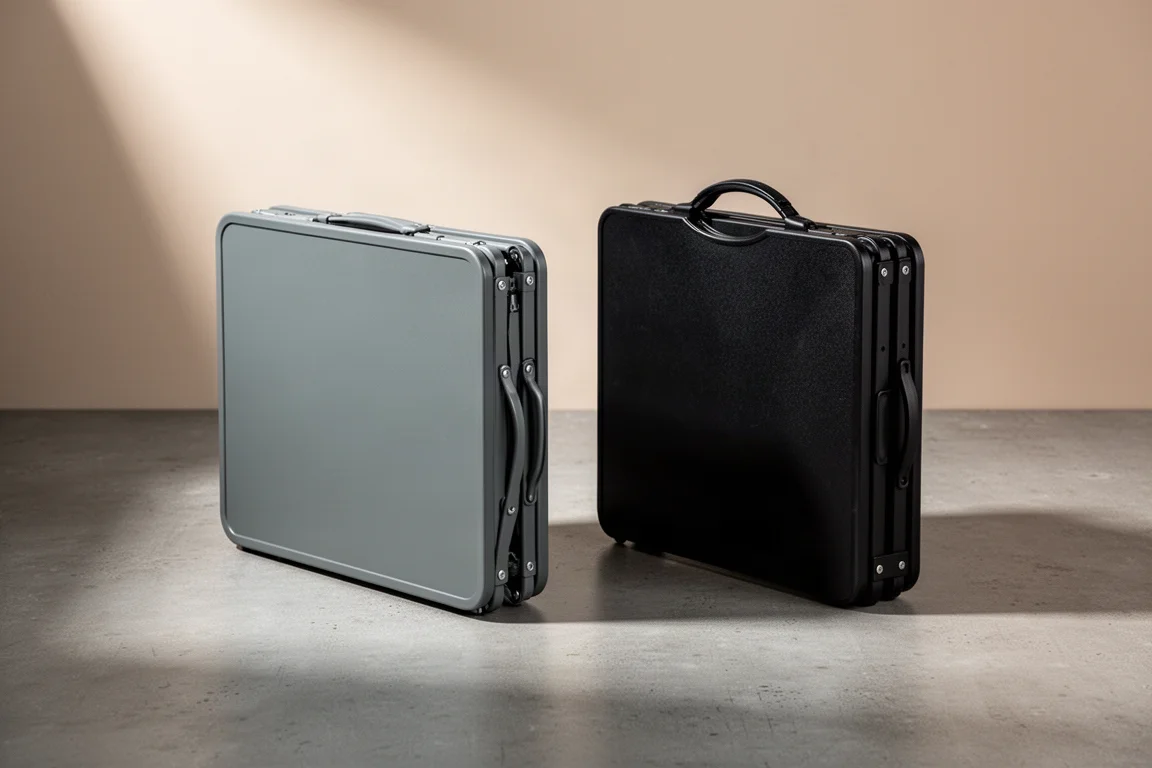
Small folding camp tables live or die on two things: how quickly they set up and how much they cost. The Nemo Moonlander has been the reference point for this category, a compact dual-height table that folds into a slim package and works either at ankle height or at a taller 16 in setting. The catch has always been the price. The Top Chances Guide Series Table arrives with the same folding mechanism and the same dual-height layout for a fraction of the money. This comparison covers what the two genuinely share, where they differ, and which one is the smarter purchase for a given trip.
How These Two Tables Compare
Set the two side by side and the similarities are immediate. Both open with the same motion, with the feet extending as the table unfolds, and both rely on four separate legs that slot into the underside to raise the tabletop. Both measure 14.5 in by 9.5 in by 1.5 in when folded, both stand 16 in at full height, and both are rated to hold 100 lb. The low setting sits at roughly 4 in, which is the height that tends to be most useful for a power bank or a small heater inside a tent.
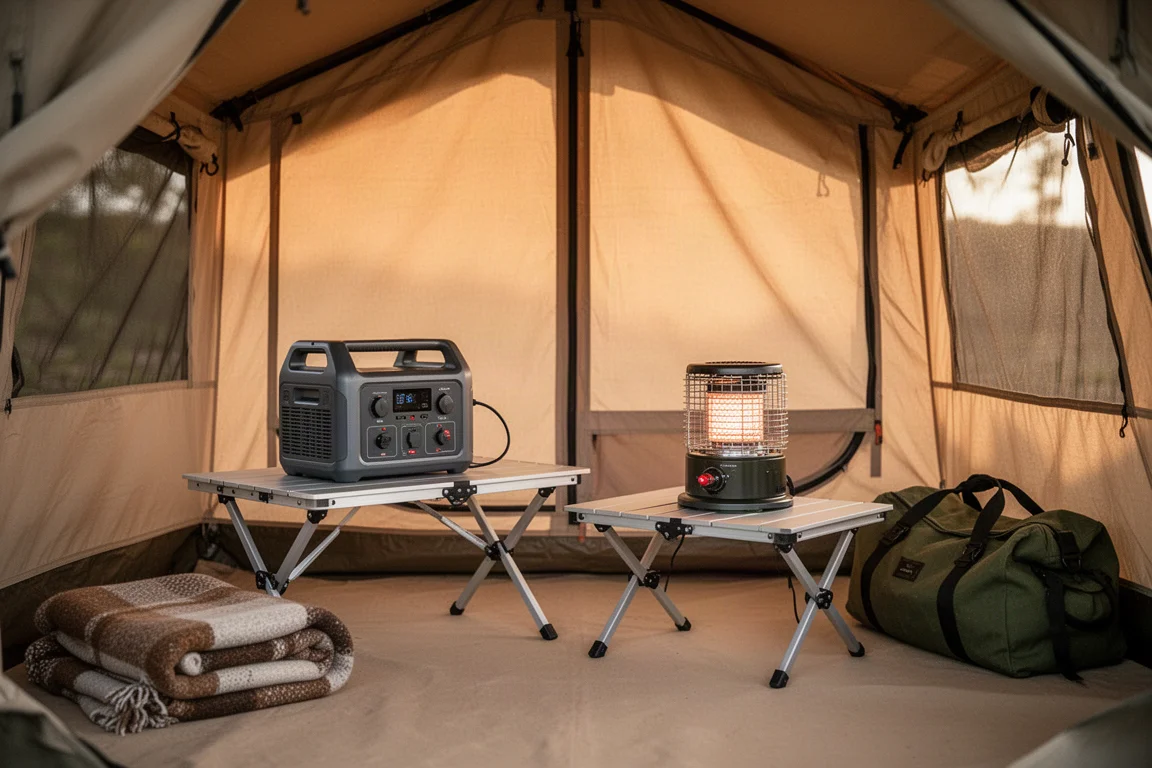
The differences come down to material and weight rather than function. The two tables use different plastics, and that shows up on the scale: the Moonlander weighs just over 5 lb, while the Guide Series comes in around 3 lb 8 oz. For an overlanding table that rarely leaves the vehicle, the extra weight is not a dealbreaker, but it is the clearest physical sign that these are not the same build.
Nemo Moonlander: The Original Dual-Height Table
The Moonlander is the table that established this format, and it has held up across roughly three years of overlanding use. It ships in a zippered carry case with grab handles, and it carries a lifetime warranty, which is unusual for a small plastic camp table and is a real part of what the price buys.
The compromises are practical rather than structural. The legs fall out of the case constantly, which means picking them up off the floor or out of the bag. The tabletop also arrived with visible mold marks and scratches and still shows them, which is hard to accept at this price point. The table is now sold mainly in a grey finish, and the green version is still available from some sellers at a premium: $188 for green against $151 for grey at the time of writing.
Top Chances Guide Series Table: Nearly Identical for Much Less
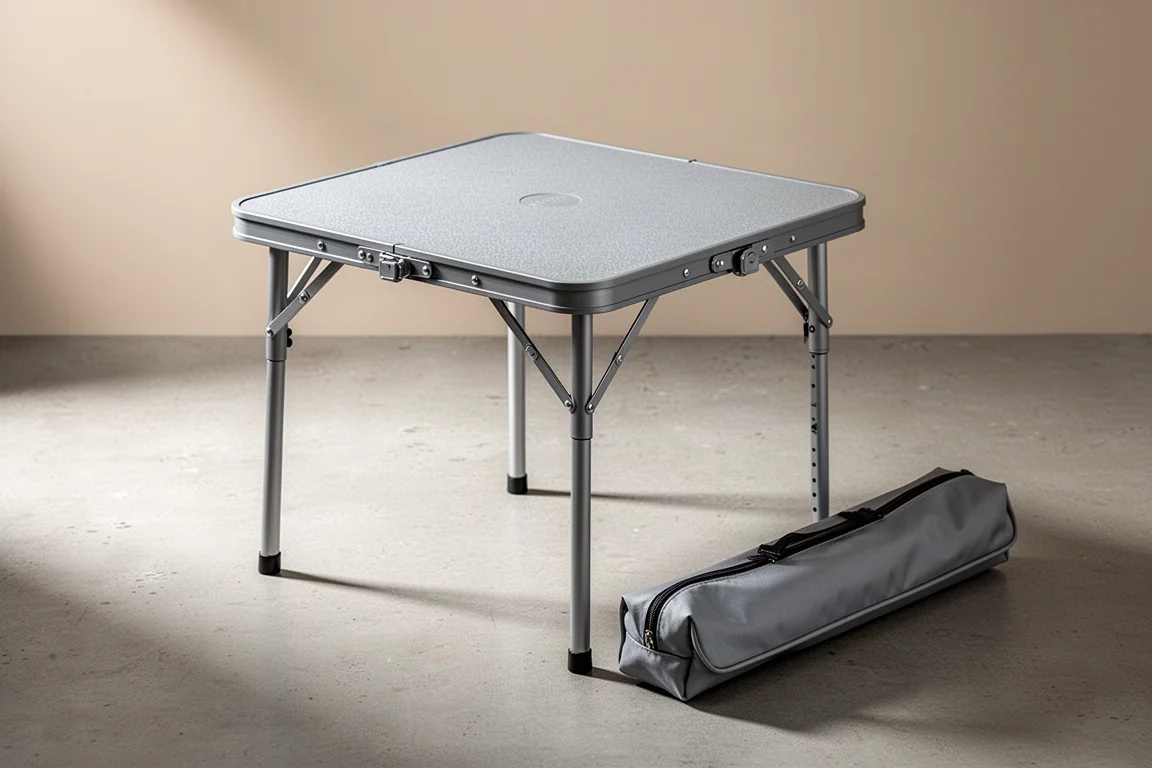
The Guide Series Table is the same design from a different company, and it costs $110 less. It sells for around $48, and a 15% coupon has appeared on the product page from time to time, though that offer may or may not be there when you look. It is available in green and black.
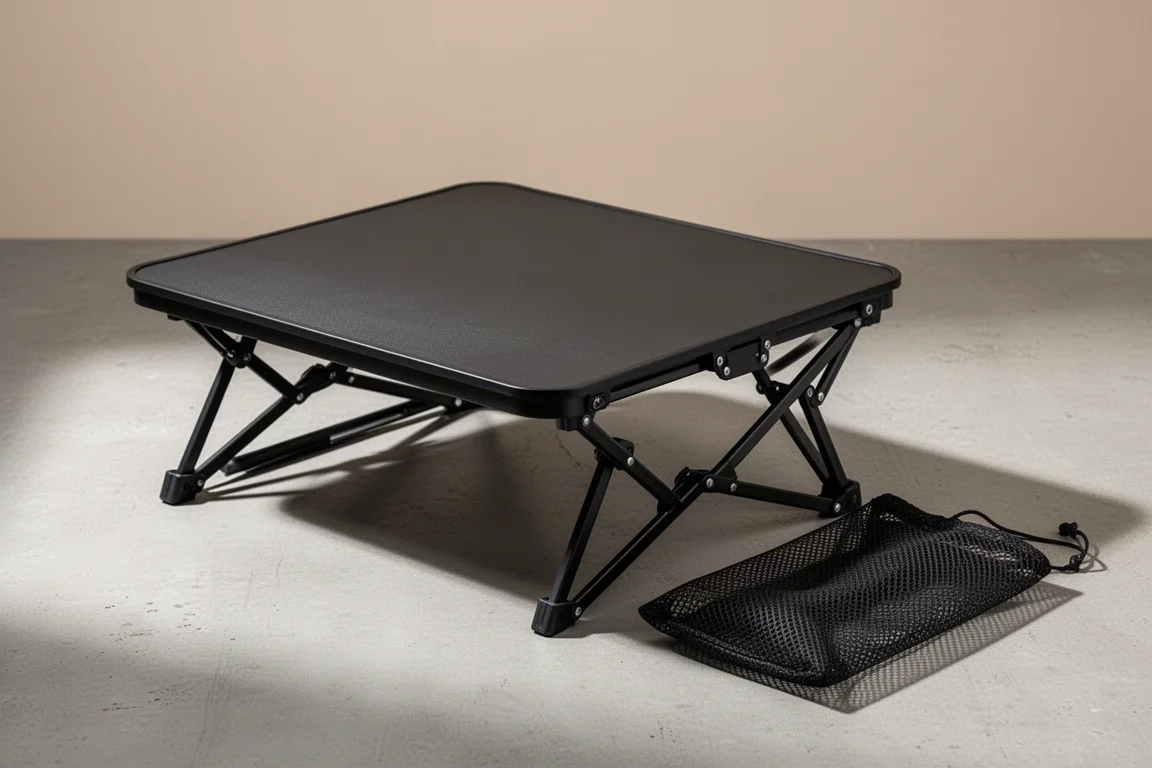
Storage is handled with a mesh bag closed by a draw pull rather than a zipper, and in daily use that turns out to be faster: the table slides out without the fiddling that a zippered case requires. The legs also stay locked in place in the bag instead of dropping out, and the tabletop arrived clean and unmarked.
Weight is the main functional difference. At roughly 3 lb 8 oz the Guide Series is noticeably lighter, and its plastic construction is different from the Moonlander’s. After about a month of testing across two trips, it has performed as well as the more expensive table in setup, stability, and everyday use.
Setup, Storage, and the Leg Details
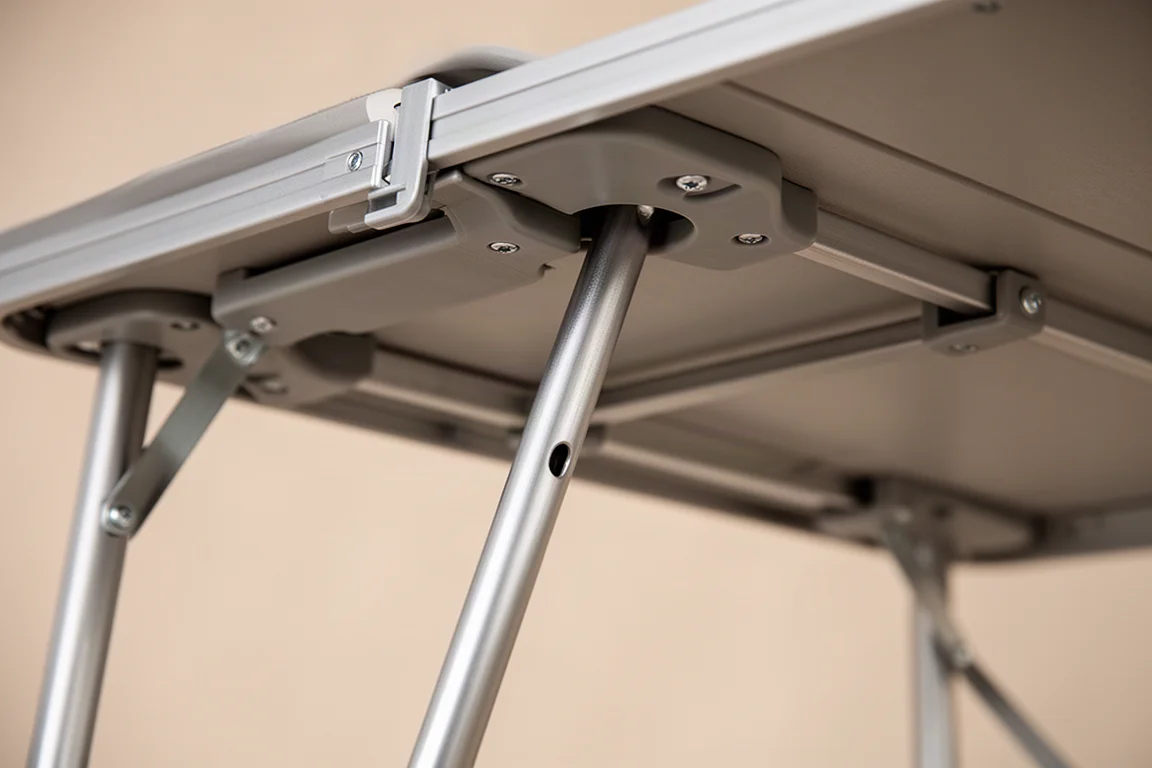
Setup is identical on both tables and takes seconds. Each leg passes through a hole in the underside and rotates until it clips onto a metal bar, and the process becomes easy after the first attempt. If a leg meets resistance, the fix is to push it forward slightly to take pressure off the mount, which lets it slide into place and lock smoothly. Forcing the rotation means something is not aligned.
Breakdown is just as quick, and both tables pack down to the same slim footprint. The case is where the two diverge. The Moonlander’s zippered case feels more substantial and protects the table well, but it slows you down when you want the table out in a hurry. The Guide Series mesh bag is simpler and noticeably quicker to use, even if it feels less premium.
Build Quality and Long-Term Durability
In the hand, the Moonlander feels like the more expensive object. Its legs are heavier and they go together a little more smoothly. The Guide Series compensates with better out-of-the-box presentation and a tabletop that looks the way a new product should.
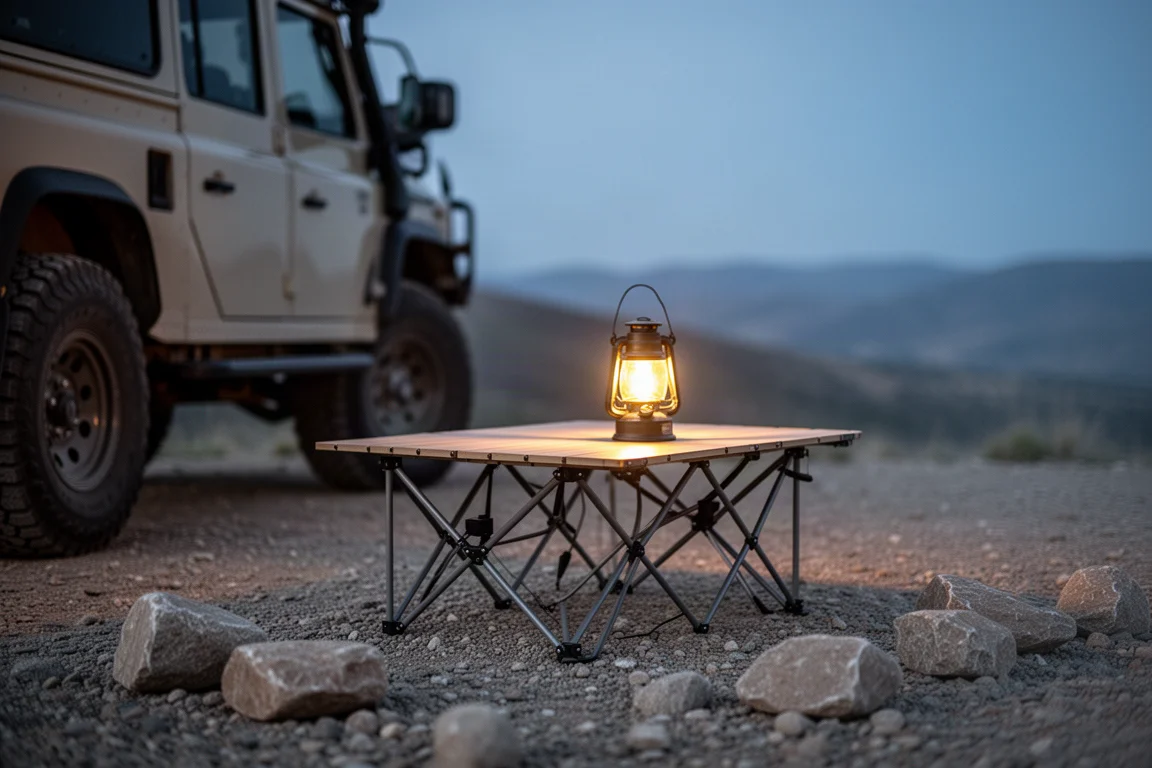
Both tables are equally sturdy in use, partly because they are small and only stand 16 in tall, and both handle the jobs they are meant for without flex or wobble. The open question is long-term durability. The Guide Series has no scratches yet, but it has only seen a month of use, so how the plastic and the leg clips hold up over years is still being watched.
Nemo Moonlander: Who Should Still Consider It
The Moonlander remains the safer long-term bet for buyers who want a documented track record and a lifetime warranty behind the purchase. Three years of overlanding use without a structural failure is meaningful evidence, and the heavier legs and smoother assembly are small quality advantages that some owners will notice every time they set the table up.
The trade-off is straightforward. You pay $151 to $188 for a small folding plastic table, and you accept loose legs in the case along with a tabletop that arrived looking worn. That is a lot to accept in exchange for peace of mind.
Buying Advice: Matching the Table to the Trip
For most buyers, the Guide Series Table is the more sensible purchase. It sets up the same way, holds the same 100 lb, sits at the same two heights, and stores more conveniently, all for around $48. The 15% coupon is a bonus when it appears, but even without it the value gap is enormous.
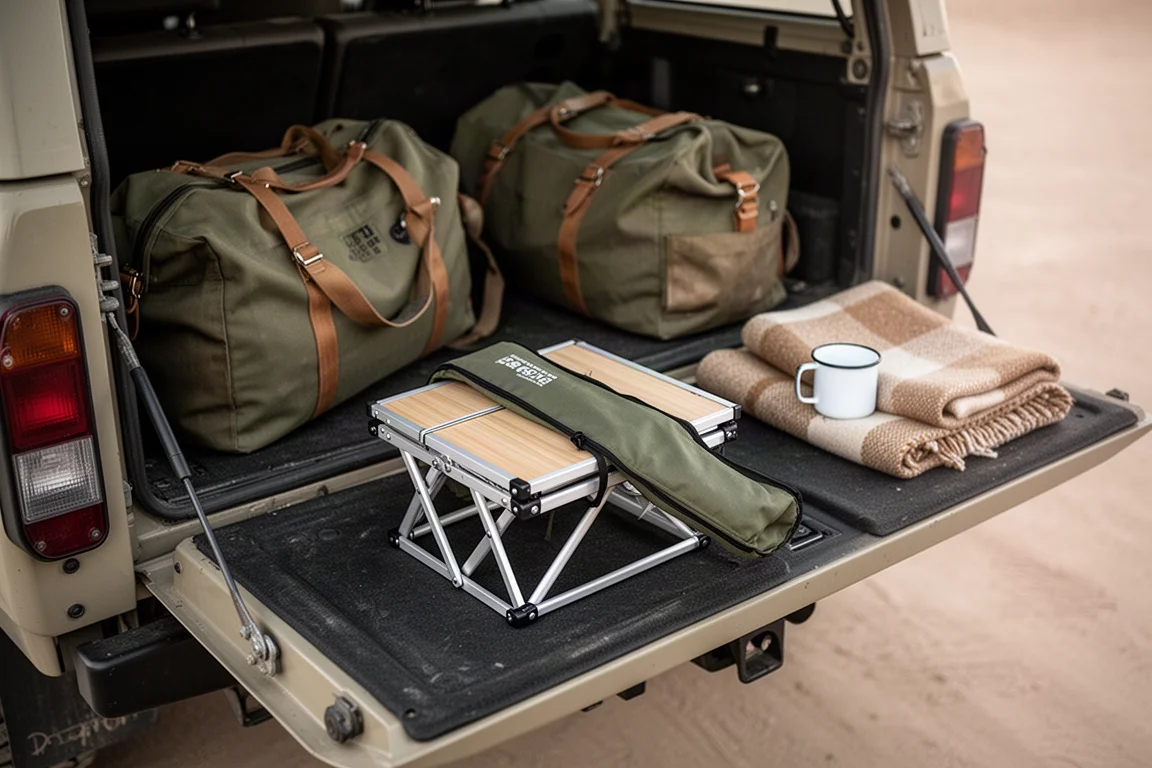
Choose the Moonlander if the lifetime warranty and the proven multi-year record matter more to you than the price difference, or if you simply prefer the feel of the heavier build. Choose the Guide Series if you want the same table for a fraction of the money and are comfortable taking a chance on an unproven warranty situation. Either way, check the current listing before buying, since pricing and coupon availability move around.
Conclusion
The Moonlander is a genuinely good design that has been priced out of reach for most people, and the Guide Series Table delivers that same design for far less money. The differences are real but small: material, weight, the carry bag, and the warranty. For a small table that lives in a vehicle or a tent, the lower-priced version makes the stronger case.
Further reading
Related Reviews
Camping Tables
Big Agnes Soul Kitchen Table Review: A Well-Made Camp Table With a Price Problem
A 24 x 24 inch folding camp table with quick setup and solid build quality, held back by a stain-prone fabric top, a low practical weight limit, and a $230 price.
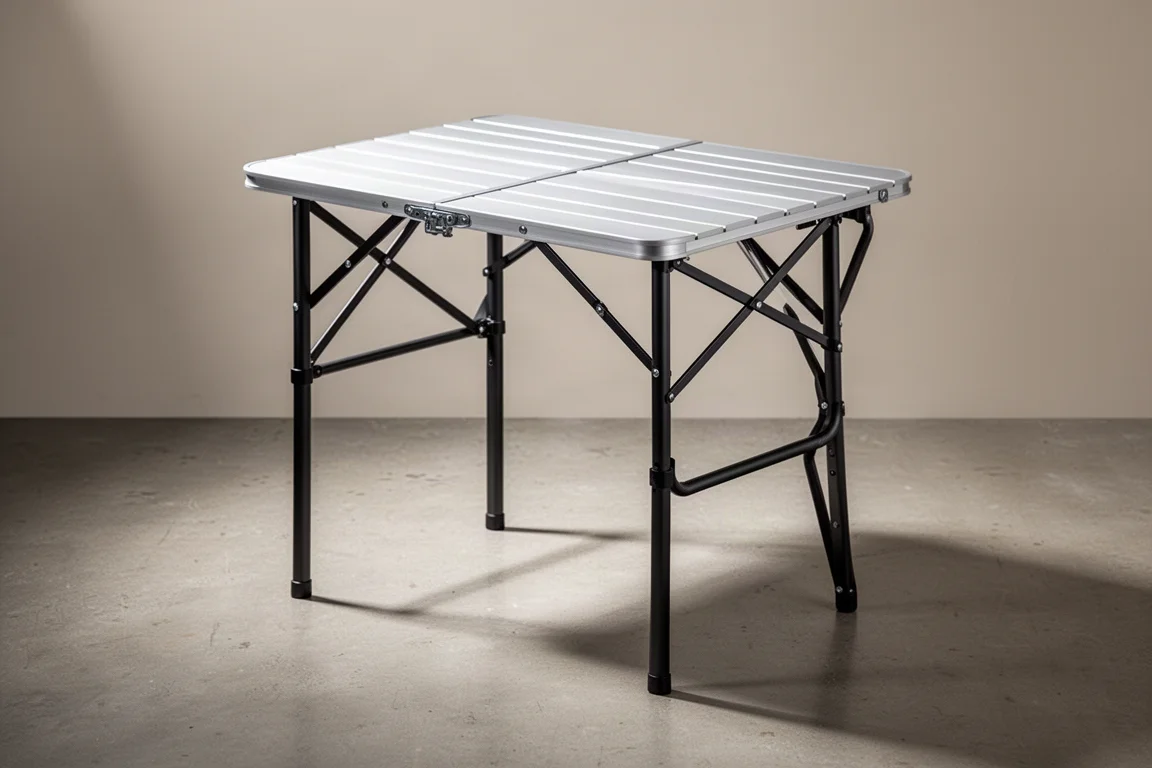
Camping Tables
Mission Mountain S4 Table Review: Sturdy, Compact, and Fairly Priced
A close look at the Mission Mountain S4 folding camp table, from packed size and two-level height to the manufacturer claims that do not quite hold up.
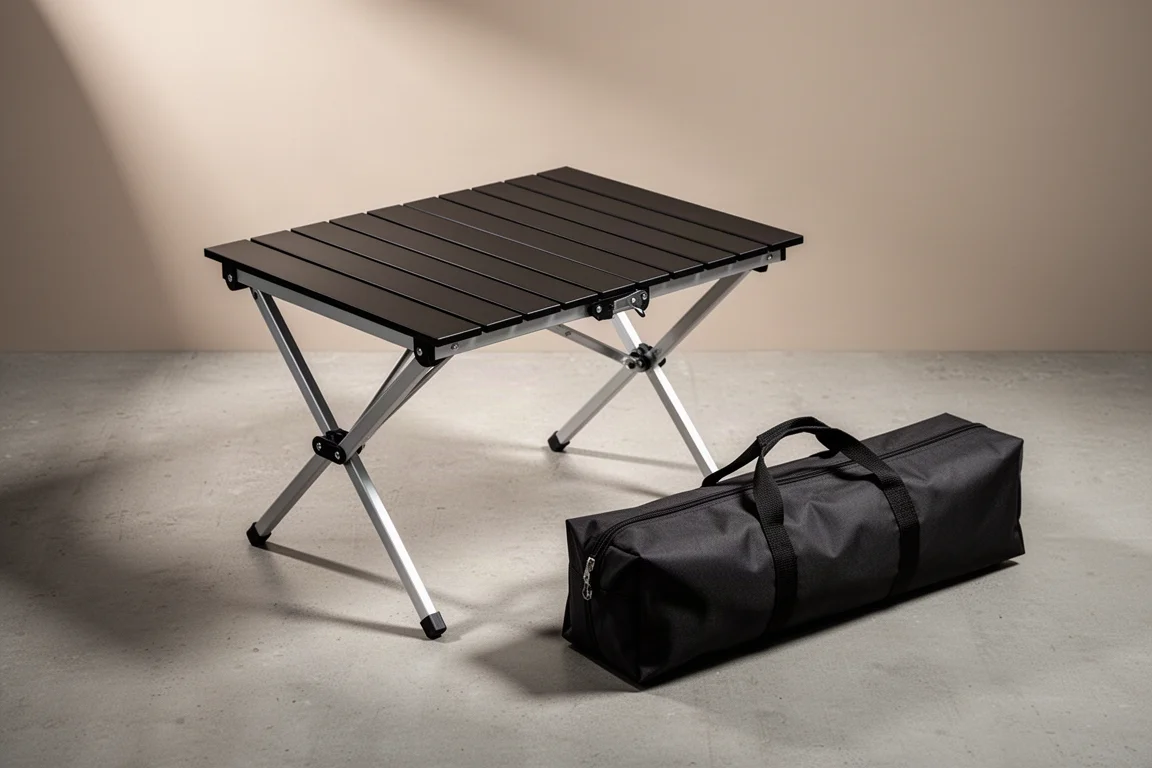
Camping Tables
Naturehike YL01 Camping Table Review: Fast Setup, Unclear Placement
A quick-setup aluminum camp table that is well made and genuinely useful in the right spot, but too heavy for backpacking and too small for most car camping setups.