Telescopes
National Geographic Sky Assist 102 Review: A Budget Refractor That Punches Above Its Price
A 102mm refractor sold at a budget price with slow-motion controls, a phone dock, and surprisingly good optics. Here is what it does well and where it falls short.
Introduction
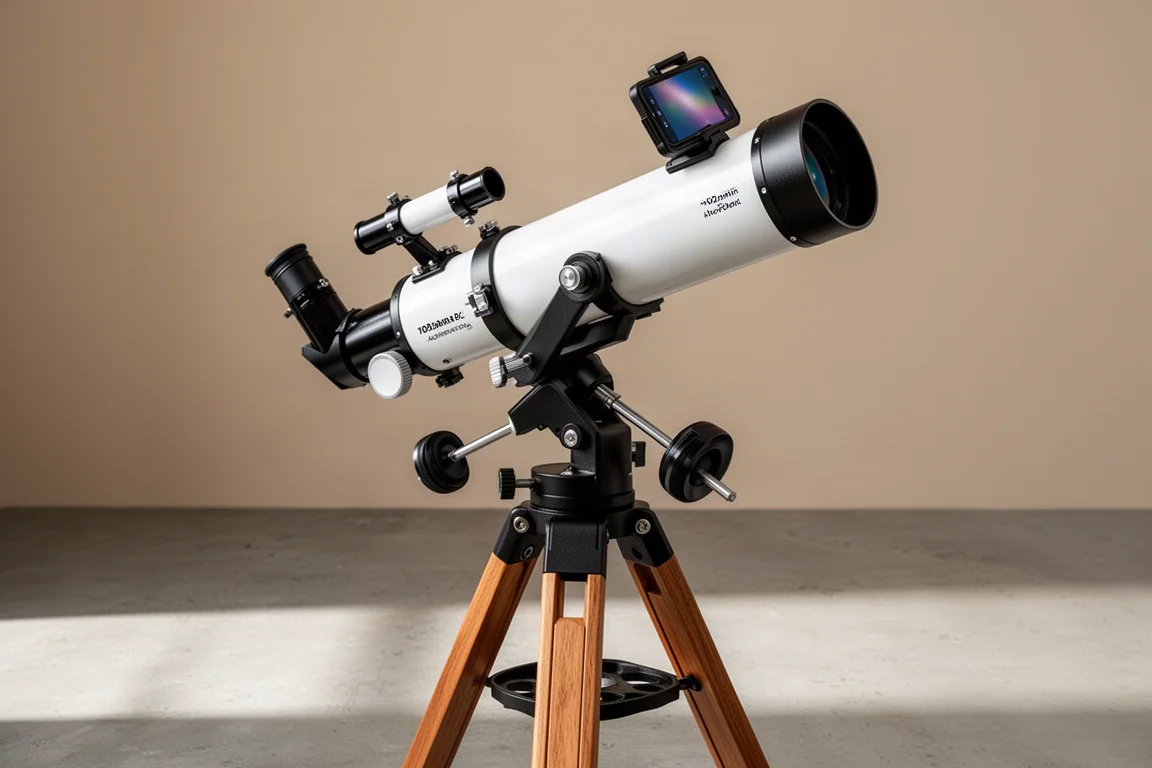
Budget telescopes usually ask you to compromise somewhere: shaky mounts, poor optics, or accessories that feel like afterthoughts. The National Geographic Sky Assist 102, sold through Costco for 199 Canadian dollars (just under 150 US dollars), manages to avoid most of those traps. It is a 102mm refractor with slow-motion controls, a red dot finder, a phone dock, and optics that are shared with telescopes costing considerably more.
This review covers what the Sky Assist 102 includes, how it performed on Jupiter and the Orion Nebula, and who should genuinely consider it.
What the Sky Assist 102 Is
The Sky Assist 102 is a 102mm refractor telescope package aimed squarely at budget-conscious beginners. On first inspection, the optical tube appears to be identical to the Explore Scientific FirstLight 102, which sells for around 400 dollars elsewhere in Canada. That makes this package roughly half the price, and it adds features the FirstLight lacks, including slow-motion controls on the mount.
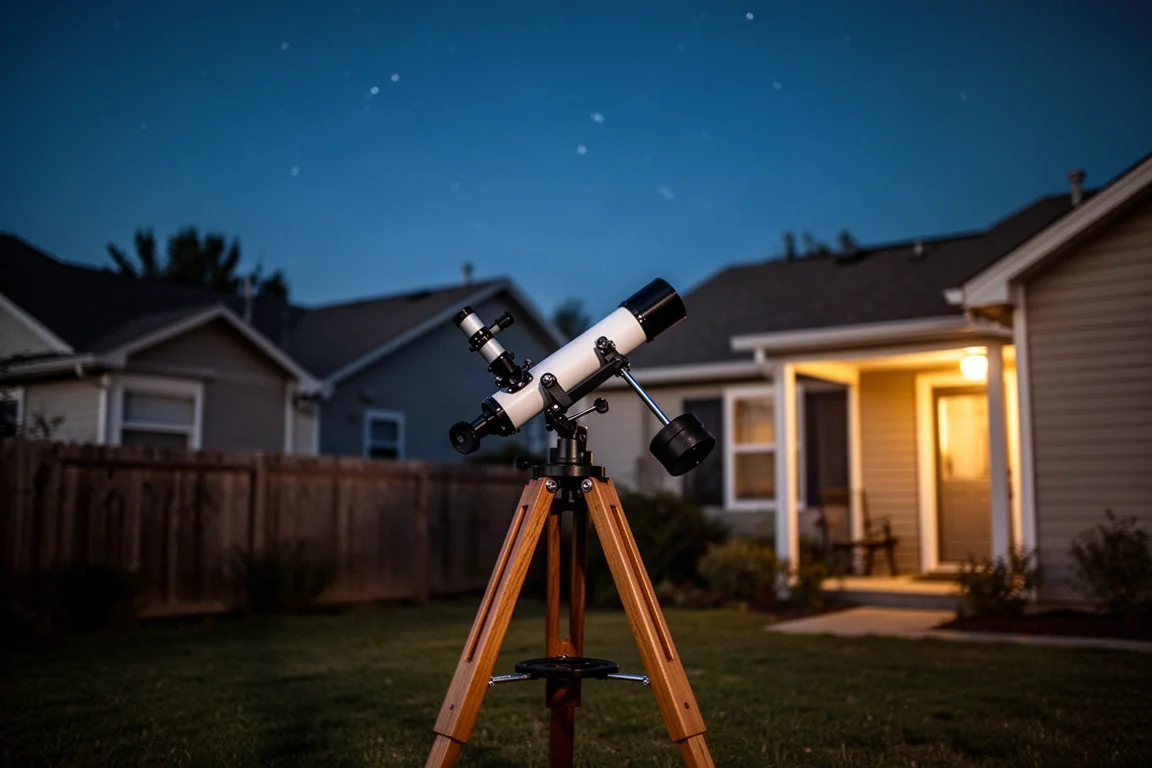
The package includes a 1.25-inch focuser, a red dot finder, a phone dock on top of the tube, and two eyepieces: a 25mm Plossl delivering 26x magnification and a 10mm delivering 66x. A 3x Barlow lens is also included, multiplying those magnifications by three. The mount is impressive for this price class, with slow-motion controls that make small adjustments easy.
Who This Product Is For
This telescope suits three groups in particular. First, budget-conscious beginners who want real aperture and a capable mount without spending more. Second, families: an eight-year-old tester had genuine fun with the included app, which narrates constellations as you point the telescope around the sky. Third, anyone who wants a low-cost alternative to pricier smart-telescope systems, with the caveat that the bundled app does not truly guide you to deep sky targets.
Main Strengths
The optics are the headline. The 102mm lens used in this telescope also appears in Celestron, Bresser, and Explore Scientific telescopes, some of which sell for upwards of a thousand dollars with the same glass. The views are consistent with what you would expect from a small refractor, and arguably better than almost anything else in this price range.
On Jupiter, the 25mm eyepiece immediately showed the planet with all four Galilean moons and two prominent cloud belts, with only a slight, easy-to-miss trace of chromatic aberration. The Orion Nebula showed visible nebulosity even from the city, and the Trapezium was clearly resolved at higher magnification.
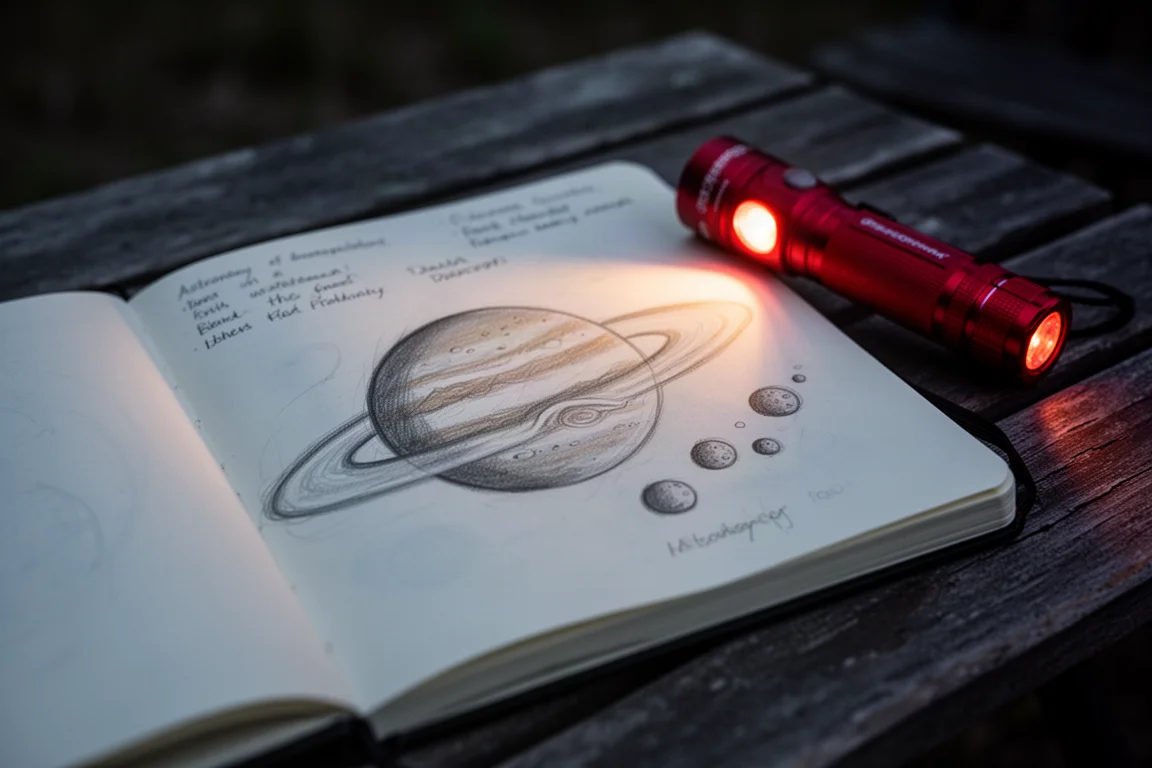
The mount deserves credit too. Slow-motion controls at this price are rare, and the tube moves smoothly enough by hand for subtle repositioning at the eyepiece. The red dot finder, once aligned during the day against a distant target, makes locating objects straightforward.
Things to Consider Before Buying
There are real limitations. The 1.25-inch focuser means you cannot upgrade to 2-inch eyepieces, unlike the Celestron Omni AZ 102 or StarSense DX 102. That said, there are excellent 1.25-inch eyepieces available, so this is less of a problem than it sounds.
The 3x Barlow with the 10mm eyepiece pushes the telescope to its approximate maximum useful magnification of around 200 power, and it is simply too much: Jupiter filled the field, drifted constantly, and the view felt like looking through a straw. The Barlow with the 25mm eyepiece also made chromatic aberration more obvious, adding a blue halo around Jupiter. A quality dedicated eyepiece is the better upgrade path; a 5mm eyepiece delivered the best planetary views in testing, with good surface detail despite some blue fringe.
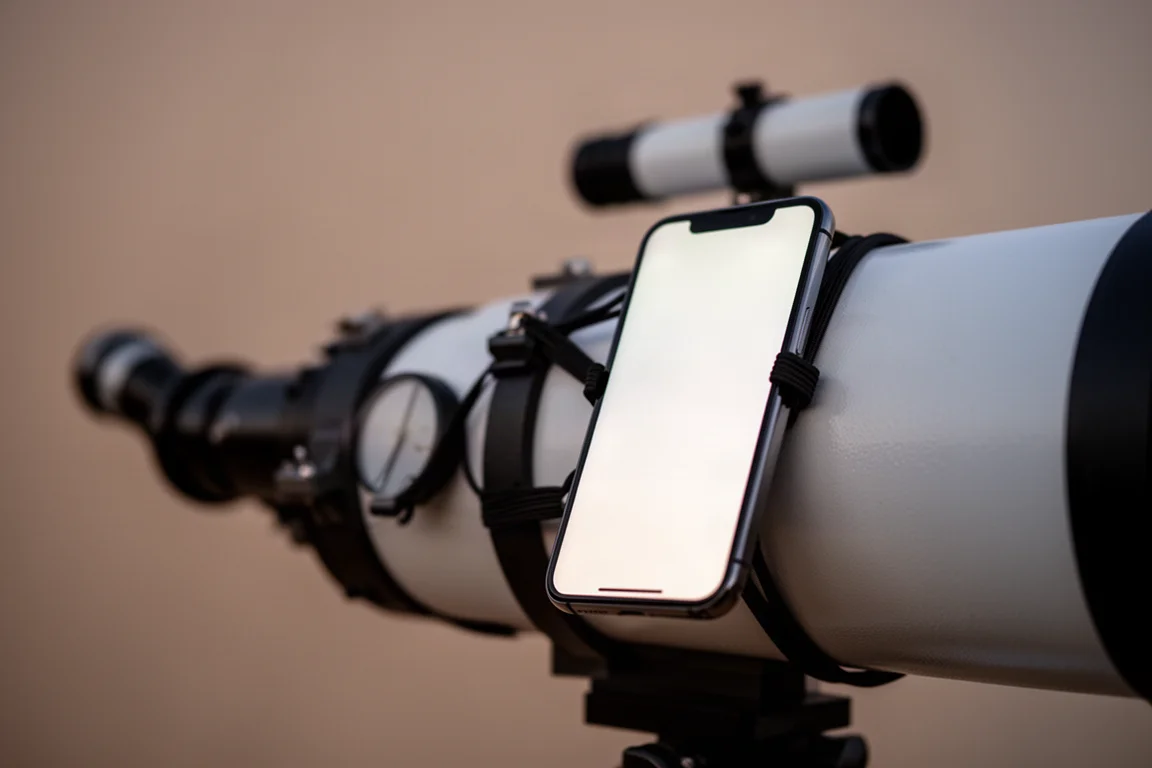
The bundled AR Telescope app is a mixed bag. It connects to a Bluetooth adapter on the mount and narrates constellations as you point at them, which kids will enjoy. But it does not reliably guide you to targets, and it does not help you find deep sky objects at all. The StarSense app almost works in the phone dock, since it can plate-solve the sky, but the mirror-reversed view moves the map the wrong way, so it cannot steer you to targets.
The image is also mirror-reversed, which takes some getting used to when navigating the sky.
The App That Actually Helps You Find Targets
There is a free solution that works far better than the bundled software: AstroHopper. It is not even an app, just a website you open on your smartphone. Secure the phone to the telescope tube with elastic bands, painter’s tape, or a 3D-printed holder, point the telescope at a star you recognize, select that star in the web app, and hit align. From then on, the app and telescope stay synced, and the search function guides you to targets across the sky. For finding galaxies and star clusters, this is the practical route.
Buying Advice
For around 200 dollars, this is a great deal. Is it the optimum beginner telescope? Not quite; an 8-inch Dobsonian still holds that title, though those now cost around 600 dollars. If you are on a budget, the Sky Assist 102 is genuinely hard to beat.
Plan your magnification sensibly. Start planets on the 25mm eyepiece, and for galaxies and nebulae, a rule of thumb is aperture divided by three, which works out to roughly 34x for this telescope. An 18mm or 19mm eyepiece reaches that range and is the most useful first upgrade. If you want a single eyepiece investment, a quality 5mm is the better planetary choice rather than the included Barlow.
Be patient with deep sky observing: after about 20 minutes of dark adaptation, faint objects come alive. A season-by-season target guide makes a real difference here, and pairing the telescope with AstroHopper turns it into a genuinely capable deep sky machine for the money.
Conclusion
The National Geographic Sky Assist 102 earns its place as one of the best budget telescopes available right now. The optics are shared with telescopes costing far more, the mount has slow-motion controls rarely seen at this price, and the included app, while not a true finding aid, is fun for kids. Skip the Barlow for planets, add an 18mm eyepiece when you are ready, and use AstroHopper to find your way around the sky. For beginners on a budget, the future is looking up.
Product link
View more details for National Geographic Sky Assist 102
This product is mentioned in the review. Check the specifications, options, and compatibility before buying.
View more details for National Geographic Sky Assist 102Further reading
Related Reviews

Telescopes
Sightron SJ75 UF and Sky-Watcher HS125: Two Telescopes Worth Watching
A look at two notable telescopes from a recent camera and optics expo: a sharp new astrograph from Sightron Japan and a compact fast reflector from Sky-Watcher.

Telescopes
SV503 102ED Review: A Budget 102mm Refractor That Surprises
The SV503 102ED is an affordable 102mm doublet refractor that delivers surprisingly decent star shapes and a smooth focuser, despite some chromatic aberration and light falloff.

Telescopes
SVBony MK127 Review: A Compact Maksutov-Cassegrain That Surprises
The SVBony MK127 is a 127mm Maksutov-Cassegrain telescope with a unique 0.65x reducer, making it a versatile option for visual astronomy and even some deep-sky imaging.