Kitchen Knives
Nakiri Showdown: Three Japanese Nakiri Knives Compared
Three nakiri knives, three cutting tests. We compare the Shiro Kamo, Yoshimi Kato, and Mazaki 165mm nakiri to see which one deserves a spot on your board.
Introduction
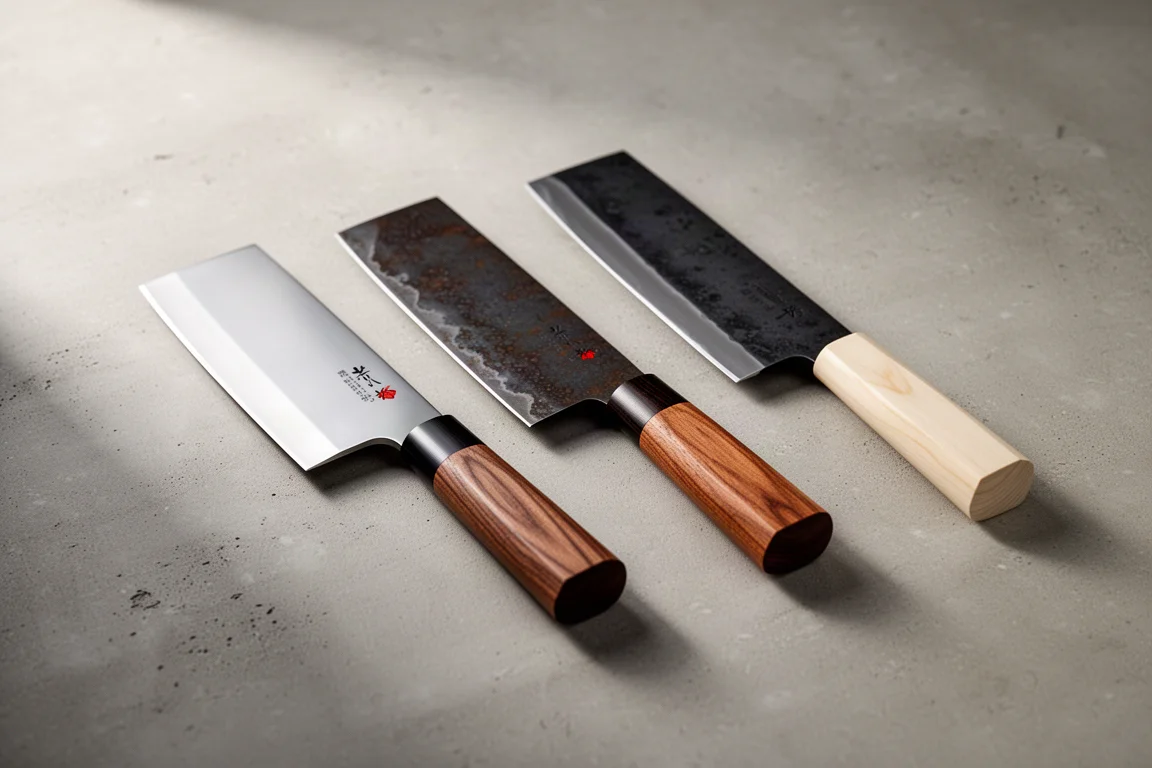
The nakiri is a purpose-built vegetable knife, and the three blades in this comparison all come from makers with strong reputations. We put the Shiro Kamo Aogami Super Nakiri 165mm, the Yoshimi Kato Aogami Super Stainless Clad Kurouchi Nakiri, and the Mazaki 165mm Kurouchi Shirogami Nakiri through three cutting tests: carrot, onion, and scallion. All three are high performers, but each takes a different approach to blade height, thickness, and edge geometry, and those differences matter depending on how you cook.
The Contenders at a Glance
The Shiro Kamo is the tall, thin blade of the group, with stainless cladding over Aogami Super steel. The Yoshimi Kato also uses Aogami Super with stainless cladding and a kurouchi finish, in a slightly shorter, more compact package with excellent fit and finish. The Mazaki is the outlier: an iron-clad Shirogami blade with thick, confident dimensions and a reputation for outstanding heat treatment.
Shiro Kamo Aogami Super Nakiri 165mm
The Shiro Kamo has a tall blade and a very thin profile at both the spine and behind the edge. That thinness is a big part of why it moves so well through dense ingredients like root vegetables, sweet potato, carrots, and squash. The stainless cladding keeps maintenance manageable: only the exposed core steel near the edge can rust, so upkeep is far easier than an iron-clad knife.
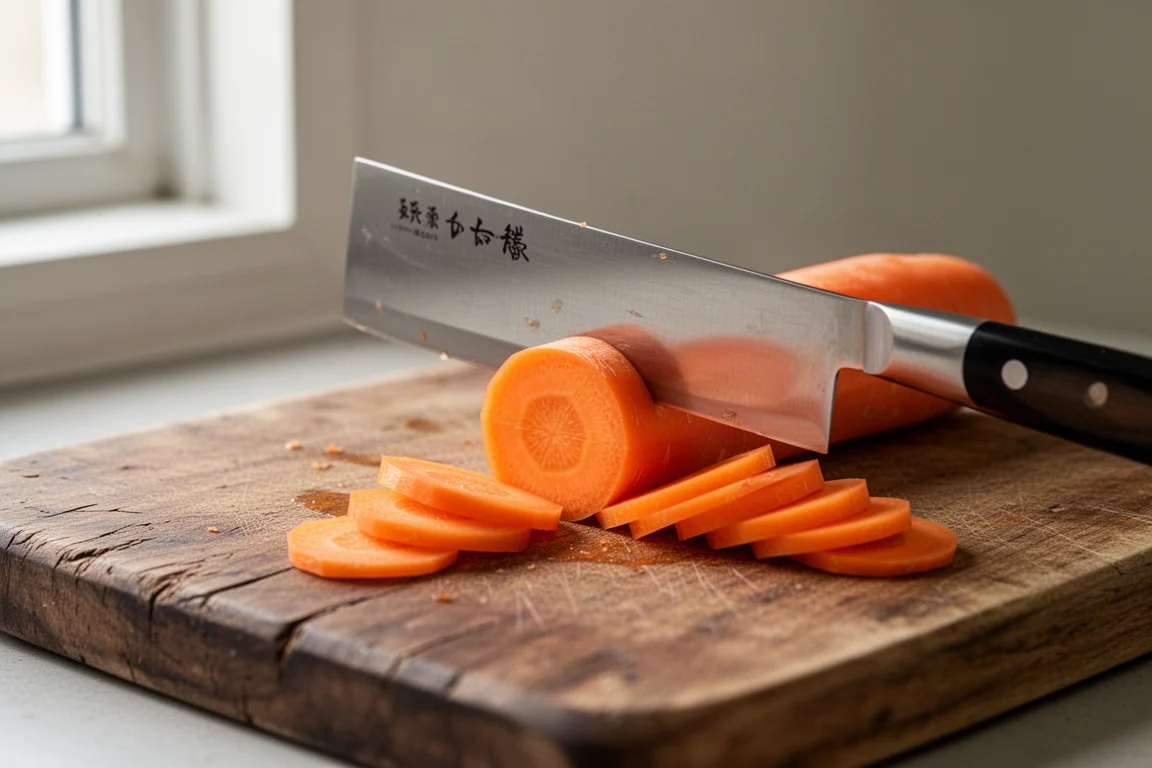
The walnut handle with a maple spacer and ebony ferrule is octagonal and ambidextrous, though a bit slender. The choil and spine meet the top and bottom of the handle with no gap, which is a nice detail. The knife is light overall with a balance point roughly an inch to an inch and a half from the handle.
Two caveats: the spine and choil sanding is not the most refined and can feel a little sharp, though if you keep the knife properly sharpened you apply so little pressure that it rarely becomes an issue. A quick sand of the choil and spine solves it if it bothers you. The very thin blade also calls for slightly more careful handling. The profile is mostly flat with a slight curve at the tip, so it still rocks a bit without turning push cuts into a struggle.
Yoshimi Kato Aogami Super Stainless Clad Kurouchi Nakiri
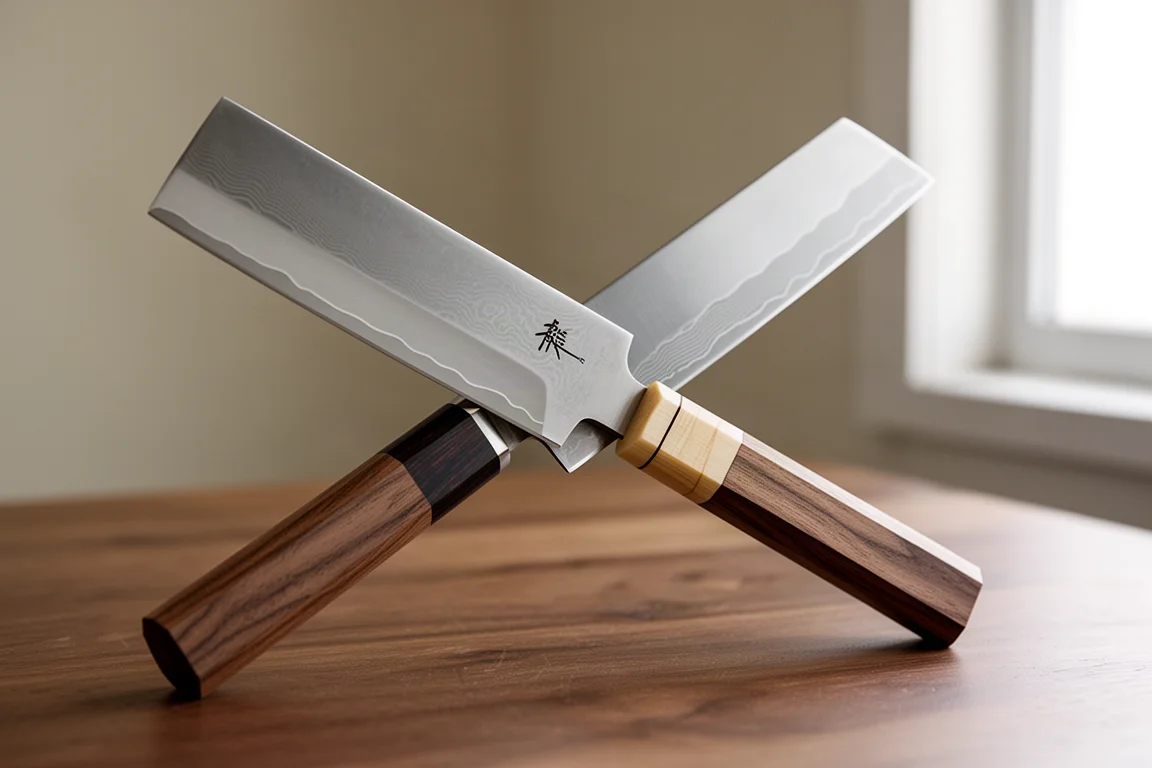
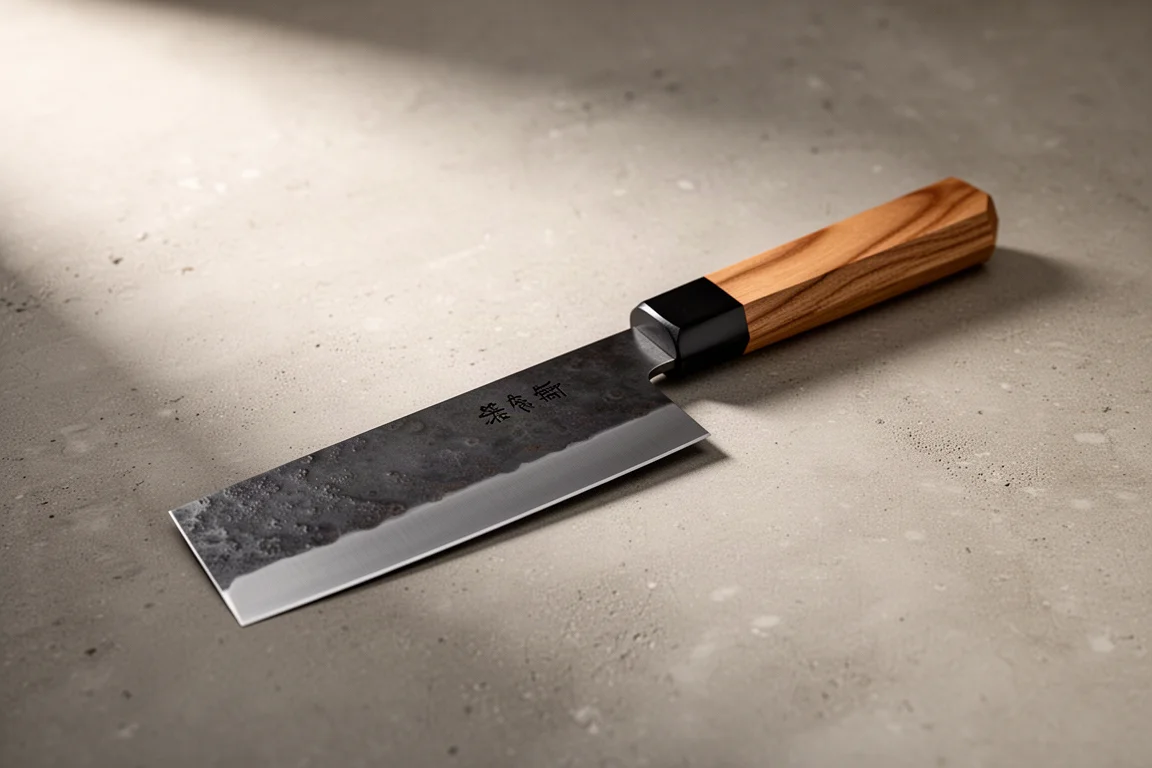
The Yoshimi Kato pairs the same Aogami Super core with stainless cladding and a kurouchi finish, topped with a cherry handle and black pakka wood ferrule. The blade is not as tall as the Shiro Kamo, and it feels a bit smaller in the hand as a result, but the fit and finish is excellent: the spine and choil are nicely sanded and it feels noticeably smoother to hold than either competitor.
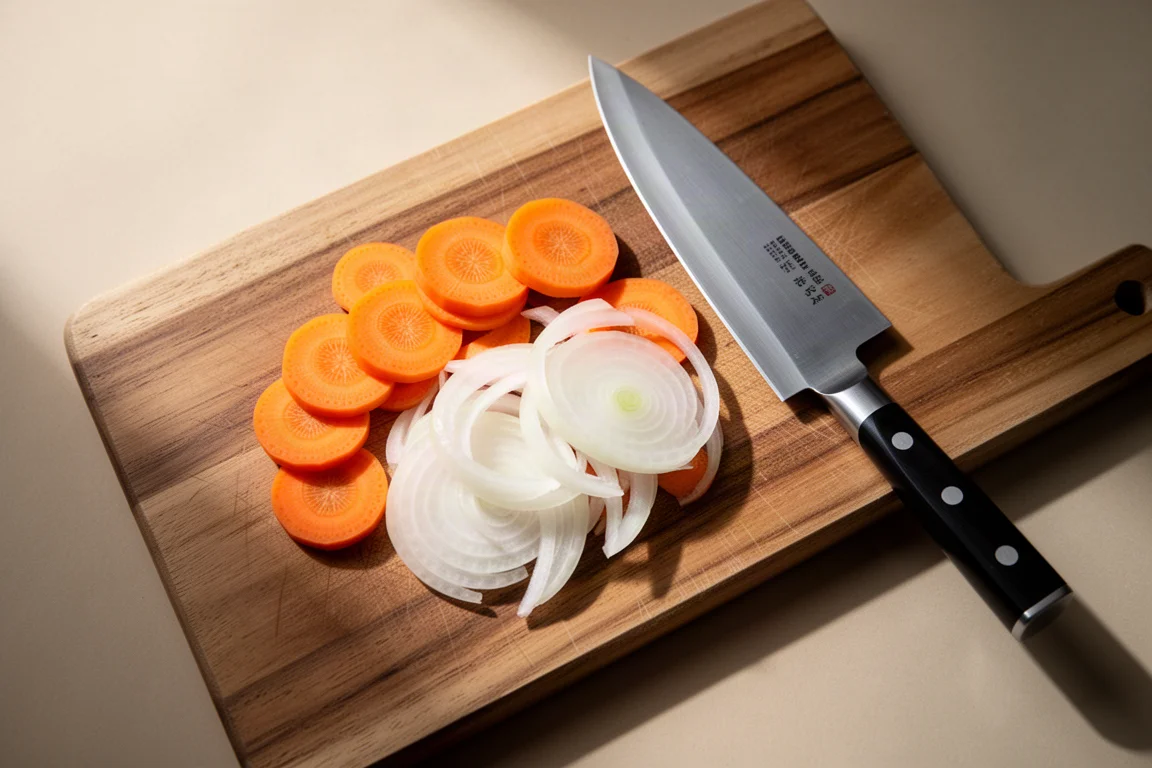
The handle is a little chunkier than the Shiro Kamo’s, and the knife carries a touch more weight, though the balance point sits in almost the same spot, close to the pinch grip. If you like a knife balanced right around the midpoint, this one will suit you.
In the tests it was consistently excellent, with food release that was arguably the best of the three, and it held its bite through an entire bunch of scallions without any noticeable edge loss. Since it shares the Aogami Super core with the Shiro Kamo, edge retention should be similar, though it may need thinning a bit sooner over its life.
Mazaki 165mm Kurouchi Shirogami Nakiri
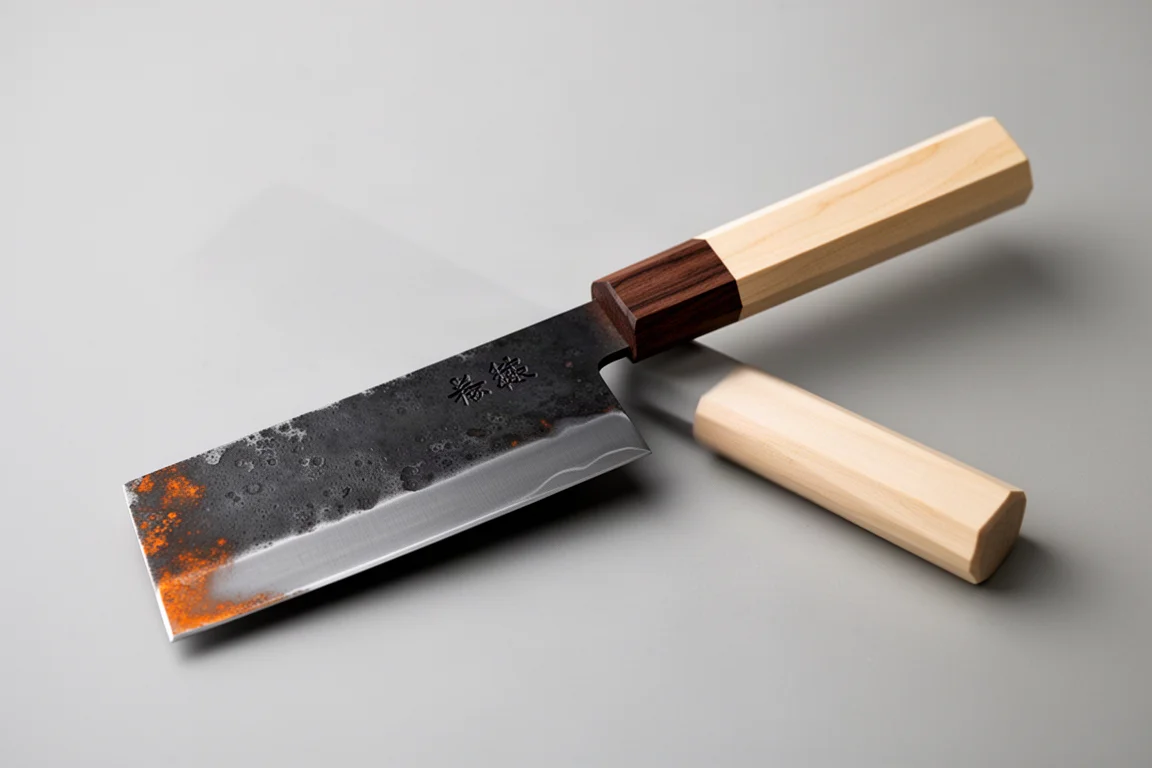
The Mazaki is the chunkiest and heaviest of the three, and the only iron-clad blade here, meaning the entire blade surface can rust if not kept dry and clean. The kurouchi finish helps a little with maintenance, but this is not the knife for a beginner to carbon steel. It has been fed some mixed feedback on its handles, though plenty of owners genuinely like them; it comes down to personal preference if you prefer something more slender.
What makes this knife special is the maker’s heat treatment, reportedly reaching around 63-64 HRC, and the fact that everything is done in-house from forge welding the iron cladding to the core steel, shaping, sharpening, and finishing on natural stones. The result is an edge that behaves more like a convex grind, and because there are no hollow-ground high and low spots to work out, thinning it over the life of the knife is easier than with many knives.
Despite the thick spine and choil, the edge geometry tapers beautifully thin behind the edge. It was a genuinely pleasant surprise in the carrot test, cutting through thick sections with no wedging, and the food release was superb. The octagonal magnolia handle with walnut ferrule is the most substantial of the three, and the balance point sits furthest forward of the group, which makes the up-and-down chopping motion that defines nakiri use feel effortless.
How They Performed in the Cutting Tests
Carrot was a close contest. The Shiro Kamo felt best going through the thick middle of a carrot thanks to its exceptionally gradual transition from the shinogi to the cutting edge, but the Yoshimi Kato had better food release. The Mazaki matched both despite its heft, earning half points alongside the Shiro Kamo.
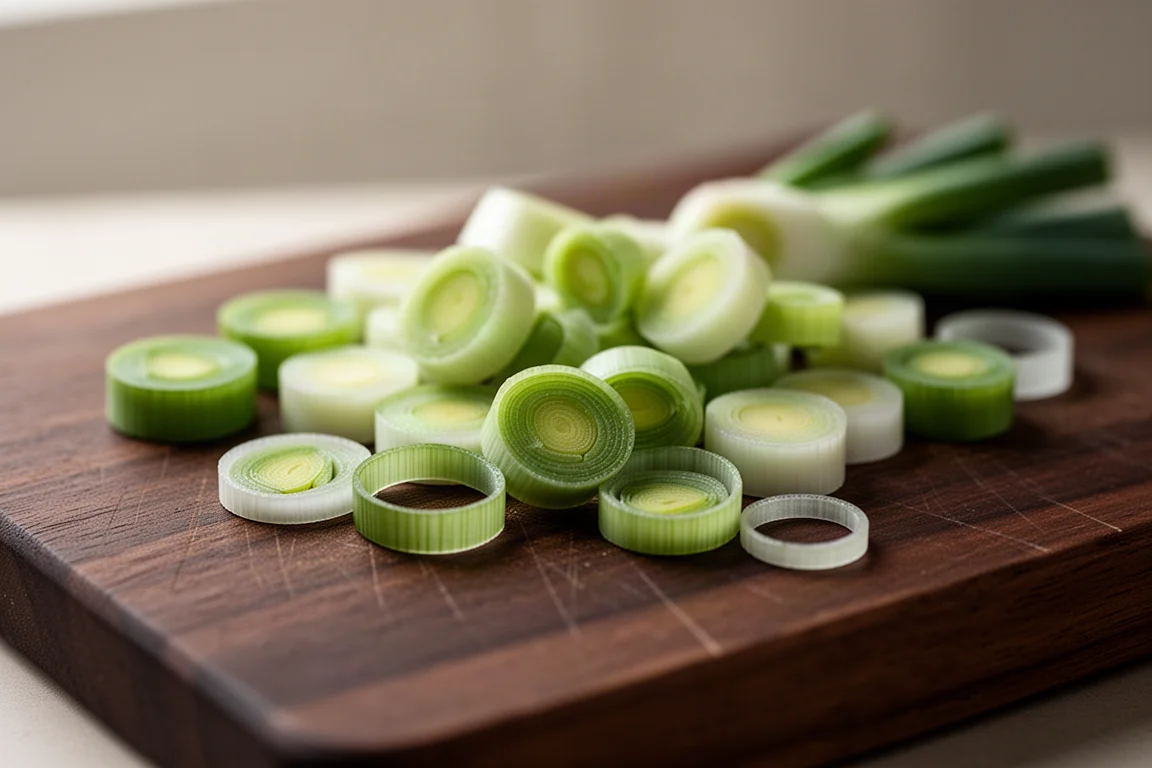
The scallion test rewarded flat profiles and clean push cuts. The Shiro Kamo and Yoshimi Kato both produced clean rounds with almost no stuck-together slices, and the Kato kept its edge bite through the whole bunch. The Mazaki, despite having the flattest profile of the three, lost a bit of its spark here and felt slightly sticky, though it still did an admirable job and its edge may have simply needed a touch-up on a stone.
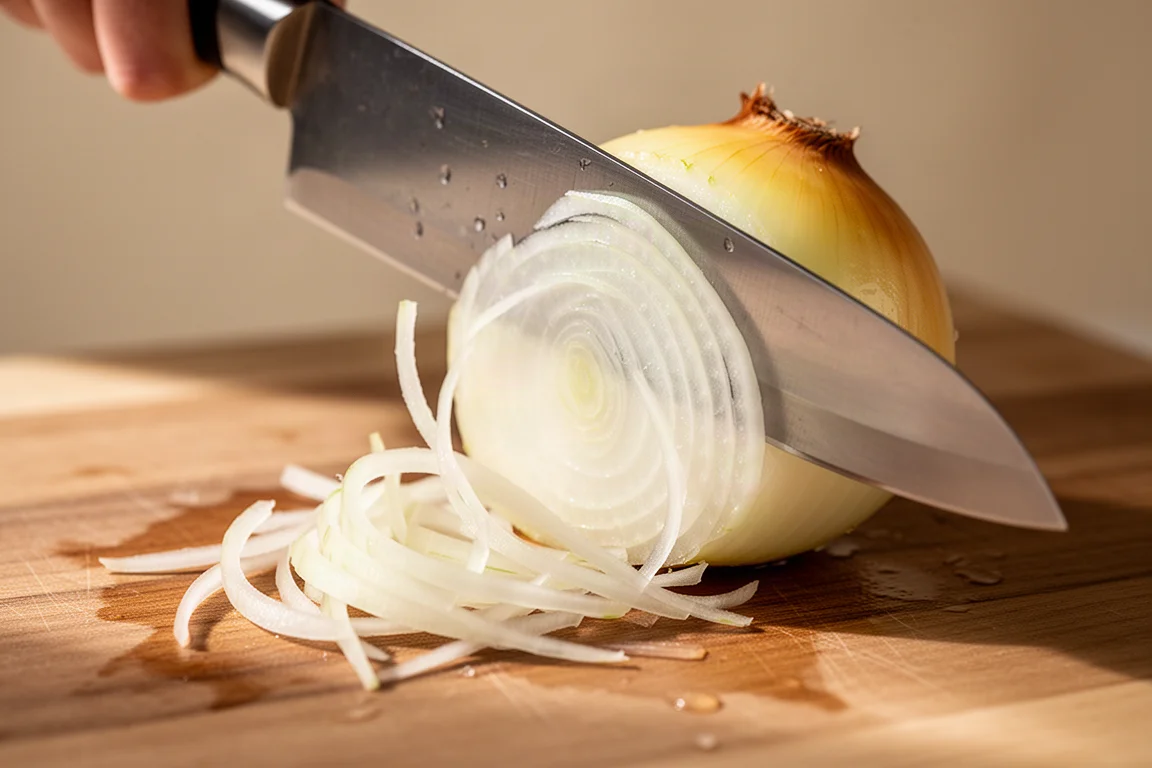
Onion brought the Mazaki back to form. Its flat profile and thin, sharp edge made julienne work genuinely enjoyable, and its tip handled radial cuts and dicing better than expected, getting impressively close to the root. The Yoshimi Kato was nearly as good, possibly slightly thinner at the tip. The Shiro Kamo was the least nimble at the dice, but its tall blade compensated with a feeling of control and comfort that is hard to overstate.
Which One Should You Buy
If you want the best overall cutting feel and appreciate a tall blade that inspires confidence, the Shiro Kamo remains hard to beat, provided you can accept slightly rougher spine and choil finishing. If fit and finish, refined handles, and top-tier food release matter most, the Yoshimi Kato is a compelling middle path: not too thin, not too chunky, with excellent sanding and ambidextrous comfort. If you love a forward-balanced, substantial knife for traditional up-and-down chopping, and you are comfortable maintaining carbon steel, the Mazaki delivers a remarkable edge and food release that holds up over the life of the knife.
All three are genuinely high performers and there is no wrong choice here. The honest tie-breaker is handling preference: slender and light, balanced and refined, or chunky and powerful.
Conclusion
This comparison came down to fine margins. The Shiro Kamo kept its crown on overall cutting feel and comfort, the Yoshimi Kato led on fit, finish, and food release, and the Mazaki surprised with its edge geometry and onion performance. Whichever direction your kitchen leans, one of these three nakiri knives will earn its place on the board.
Further reading
Related Reviews

Kitchen Knives
Best Chef's Knives 2026: 27 Popular Options Tested and Ranked
A comprehensive review of 27 chef's knives ranging from $18 to $380, with honest assessments of handle comfort, blade balance, and real-world performance.

Kitchen Knives
Best Chef's Knives Under $75: Two Tested Recommendations
Two practical 8-inch chef's knives that balance sharpness, comfort, and durability without premium pricing.

Kitchen Knives
Best Chef's Knives 2026: 27 Options Tested and Ranked
A comprehensive review of 27 chef's knives ranging from $18 to $380, with honest assessments of handle design, balance, blade profile, and real-world performance.