Recovery Equipment
MyoMaster Myo Pump Review: Three Months With an Elite Air Compression Recovery System
After three months of testing, here is how the MyoMaster Myo Pump performs as a recovery tool for runners and endurance athletes.
Introduction
Extreme leg compression has been on my radar for a long time, so getting to live with the MyoMaster Myo Pump for a full three-month test period was a genuinely useful experience. The idea behind the system is simple: take the air compression recovery tools used in professional sport for years and make them straightforward to use and more attainable for regular athletes. After months of regular sessions, the question is whether a system priced at £649 actually earns its place in a recovery routine.
The Brand Behind the Myo Pump
MyoMaster was started by Joe Gray, a former professional rugby player who struggled with achilles tendonitis and wanted to speed up his own recovery. The origin story is famously improvised: he dismantled his drill, welded it to a stool leg, and used it as a makeshift massage gun. That became the first MyoPro prototype and the brand grew from there.
The company has since expanded well beyond rugby, sponsoring the Harlequins and working with top athletes in strongman. Its product range now spans from compact, easily portable massage guns up to elite-level air compression systems like the Myo Pump tested here.
What You Get and How It Works
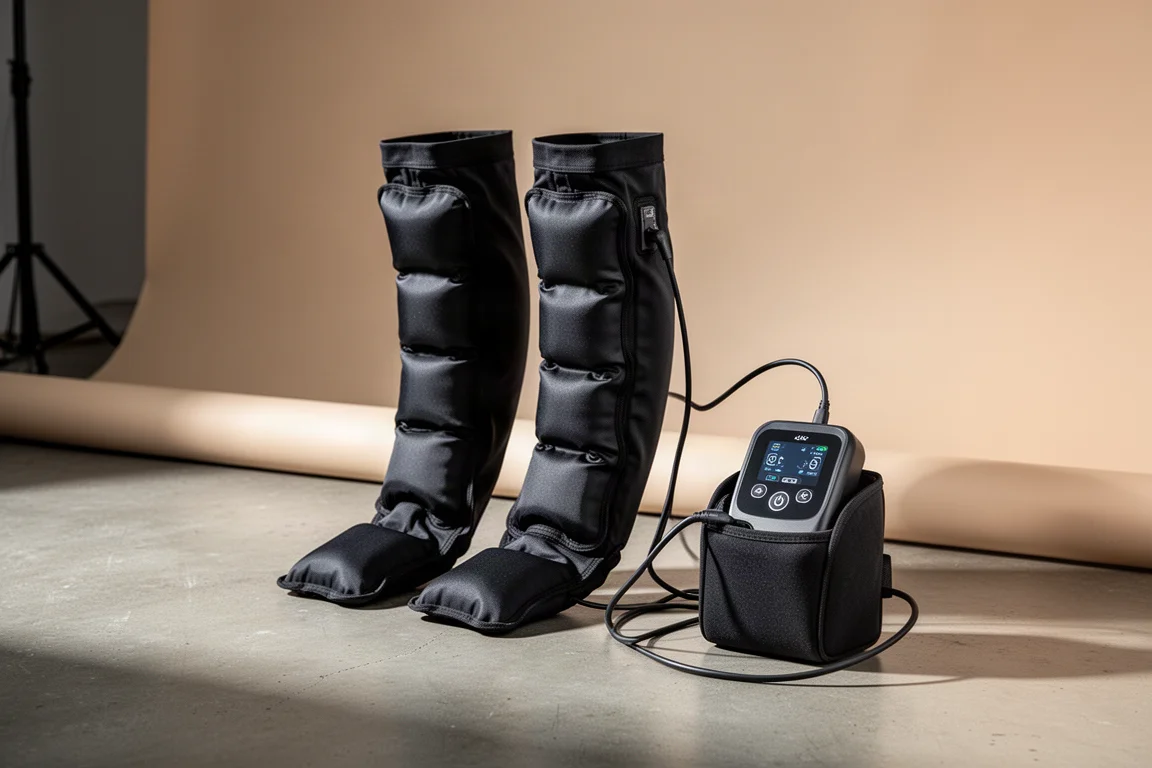
The package includes a pair of leg pumps, the Myo Pump control unit, and a handy holder that protects the unit and makes it portable for race day or travel to a training camp. Setup could hardly be simpler: unroll the leggings, plug the connecting cable into the leggings and then into the unit, choose your settings, and connect the power.
Each legging contains four precision inflation chambers that target specific areas of the legs to maximise the flushing effect. The compression squeezes blood out of the legs, helping clear the metabolic waste built up through training that can contribute to stiffness and muscle soreness, then fresh, nutrient-rich, oxygenated blood flows back into the limbs to speed up recovery.
Programs, Pressure, and Chamber Control
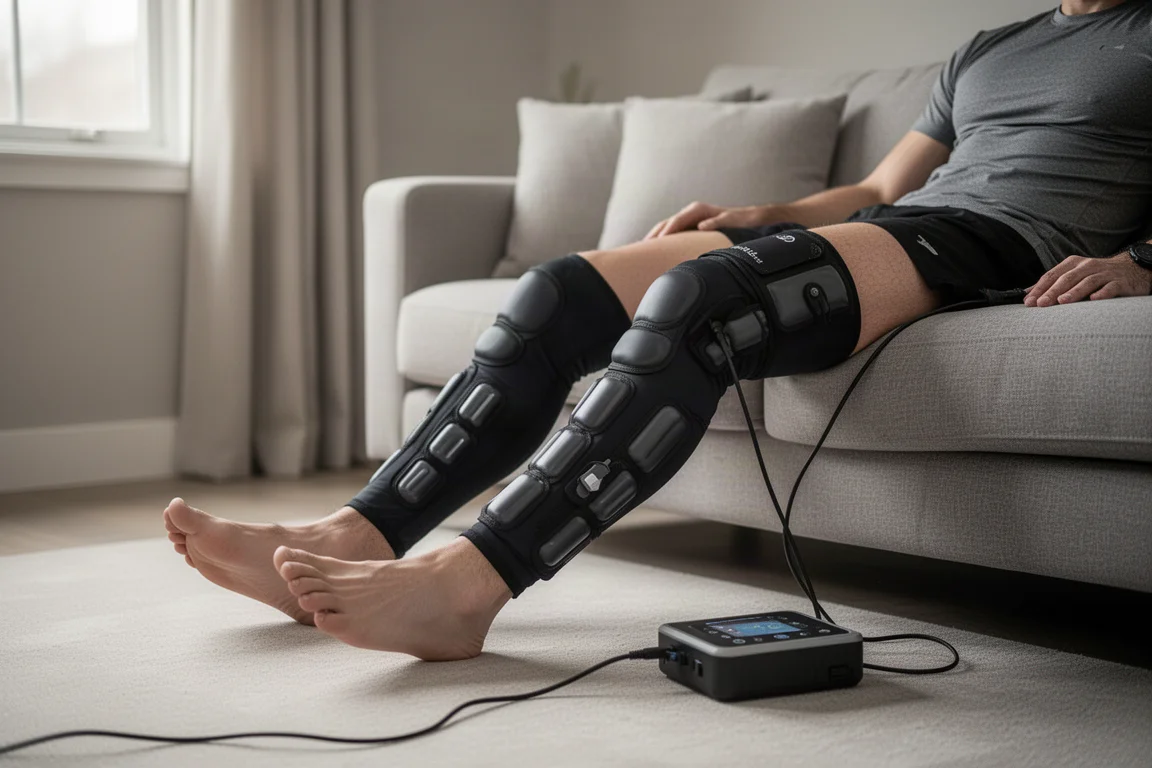
The controls are deliberately pared back. Two programs are available: setting A delivers a slightly more gradual session, while setting B runs full sequential compression. Pressure starts as low as 20 mmHg, roughly the feel of a pair of compression running socks, and can be raised considerably higher. A physio who played with the unit for ten minutes was reportedly amazed at the level of compression it delivers.
Session length offers three choices: 10, 20, or 30 minutes. A genuinely useful extra is the ability to open and close the four chambers independently. After a heavy hill session with sore calves, you can switch off chambers three and four so the session focuses on the lower limb; after a hard quad workout, you can do the reverse and concentrate on the quads and hamstrings with the two top chambers.
Setup and Daily Usability
In everyday use, the Myo Pump could not be much easier to operate. The front of the unit lays out all the information clearly, from numbers to diagrams, so it is hard to go wrong working through the settings. The one detail worth noting is connecting the cables correctly: the connectors are clearly labelled and have two small notches so they only attach in the right orientation, which removes most of the room for error.
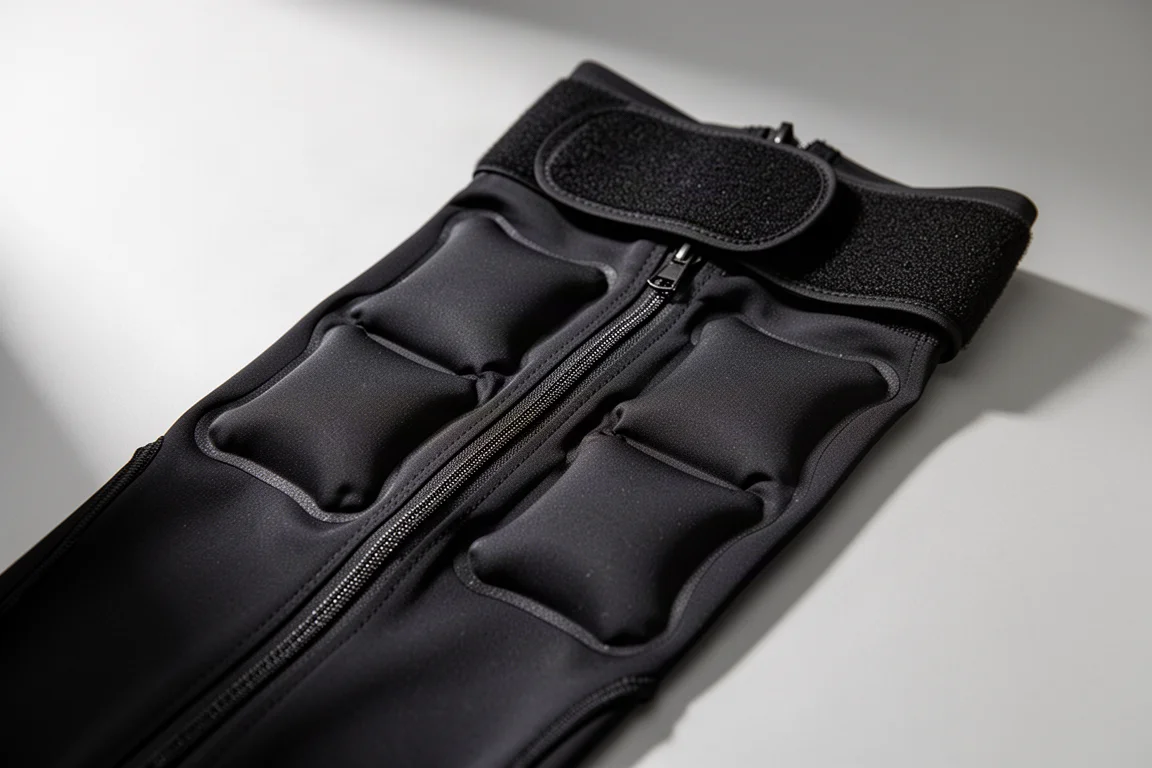
Zipping up the leggings, fastening the velcro across the top, and sitting back for a session makes this just about the easiest recovery session you can do. There is no skill involved and no active effort required, which is exactly what you want from a passive recovery tool.
Has It Worked as a Recovery Tool?
For me, the answer is clearly yes. My last two years of running have been a rollercoaster of niggles and injuries: old ankle injuries on my right side, major hip surgery back in 2009, and a badly sprained ankle last year that kept me out for over a month. Even after excellent physio treatment, lingering issues from that sprain made consistency hard to find.
My last three months of training have been the most consistent in a long time: three runs a week mixing road and trail, plus one or two mountain bike rides a week averaging 25 to 35 miles. After a challenging 14-mile coast path run, my legs felt good enough to do a 30-mile mountain bike ride the following day.

That is not down to the Myo Pump alone. It is not magic, and it sits alongside strength and conditioning work, regular sports massage, and other body maintenance. But because of my injury history and hip surgery, circulation in my right lower leg is poor and it gets bunged up and sticky with built-up toxins. Using the pumps regularly to flush that out and get oxygenated blood back into the system has, I believe, made a real difference where my circulation is the weak link.
Who Should Consider Buying It
Is the Myo Pump worth the investment? For the right person, it has to be a yes. If you take your training and recovery seriously, whether you run, cycle, or race triathlon, and you train hard to be as competitive as you can be, this is a strong recovery tool. It is equally compelling if you have played sport all your life, your body is carrying the wear and tear, and you are starting to feel it.
If you travel frequently to races or training camps, it is also worth knowing that MyoMaster makes the Myo Air, a wireless system you can use almost anywhere without access to power, with more features, functions, and a bit more pressure. A discount code, RUN50, has been offered for £50 off a purchase.

Conclusion
After three months of testing, the MyoMaster Myo Pump has earned a positive verdict. It is exceptionally easy to use, the independent chamber control adds genuine flexibility for targeted recovery, and it has coincided with the most consistent stretch of training I have had in years. At £649 it is a serious investment, but for committed endurance athletes or lifelong sportspeople battling wear and tear, it is a worthwhile addition to a recovery arsenal.
Product link
View more details for MyoMaster Myo Pump
This product is mentioned in the review. Check the specifications, options, and compatibility before buying.
View more details for MyoMaster Myo PumpFurther reading
Related Reviews
Recovery Equipment
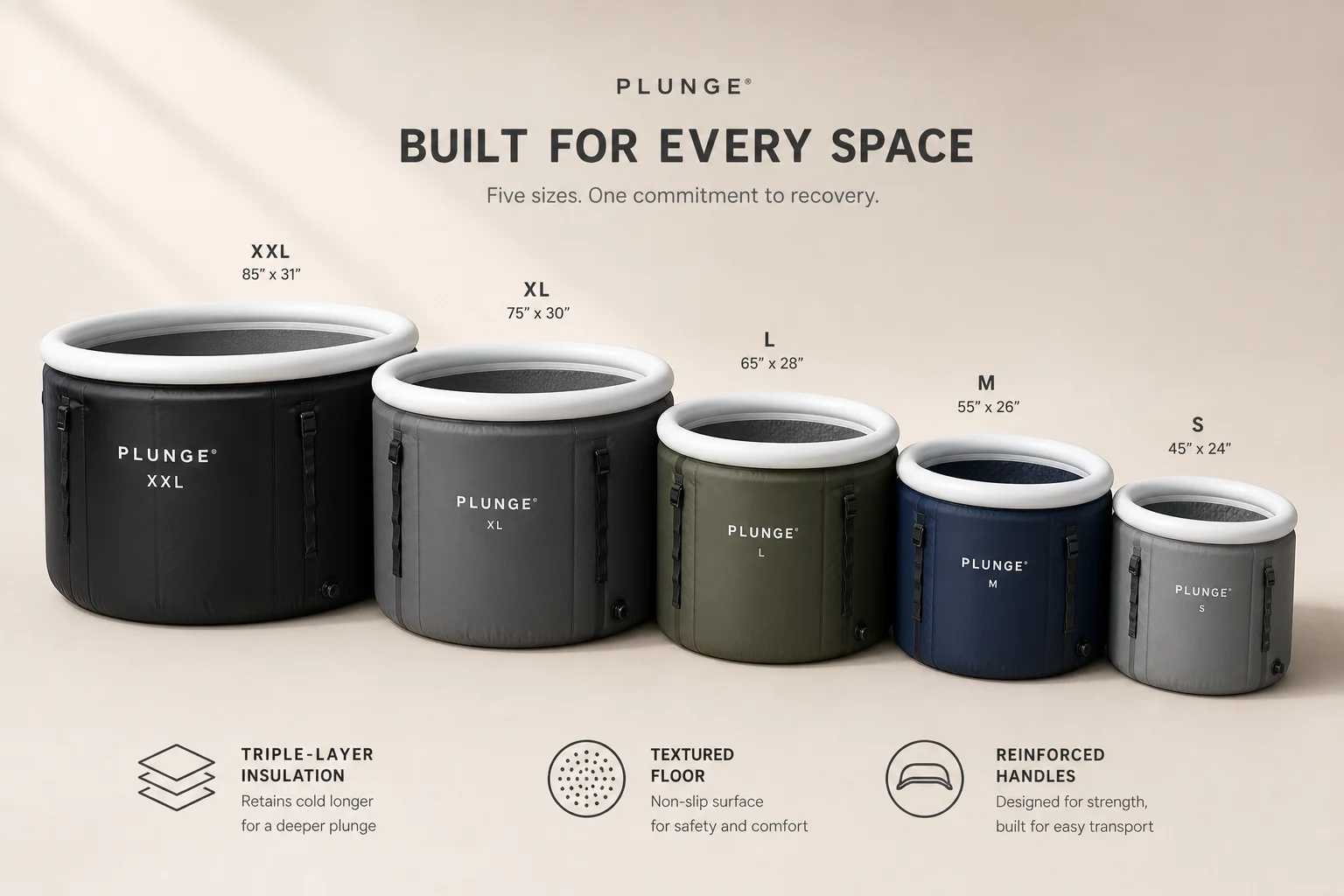
Best Cold Plunge Tubs 2026: Five Options Ranked by Performance and Value
A breakdown of five cold plunge tubs from budget-friendly to premium, with clear strengths and trade-offs to help you choose the right recovery tool.
Electric Skateboards
Acedeck Ares X1 Review: A Powerful First Board From a New Name
The Acedeck Ares X1 brings a 14s battery, CNC aluminum trucks, and strong performance to the electric skateboard market. Here is a closer look at what it offers.

Air Purifiers
AirDoctor 3000 Review: A Simple Air Purifier With Impressive Performance
The AirDoctor 3000 delivers strong purification results in a medium-sized room, with a straightforward design that prioritizes ease of use over smart features.