Garage & Workshop
Mule Garage Fan Review: An Affordable Way to Move Air in Your Garage
A ceiling-mounted garage fan that is easy to install, moves a surprising amount of air, and costs far less than a big-shop ceiling fan. Here is what to know before buying.
Introduction
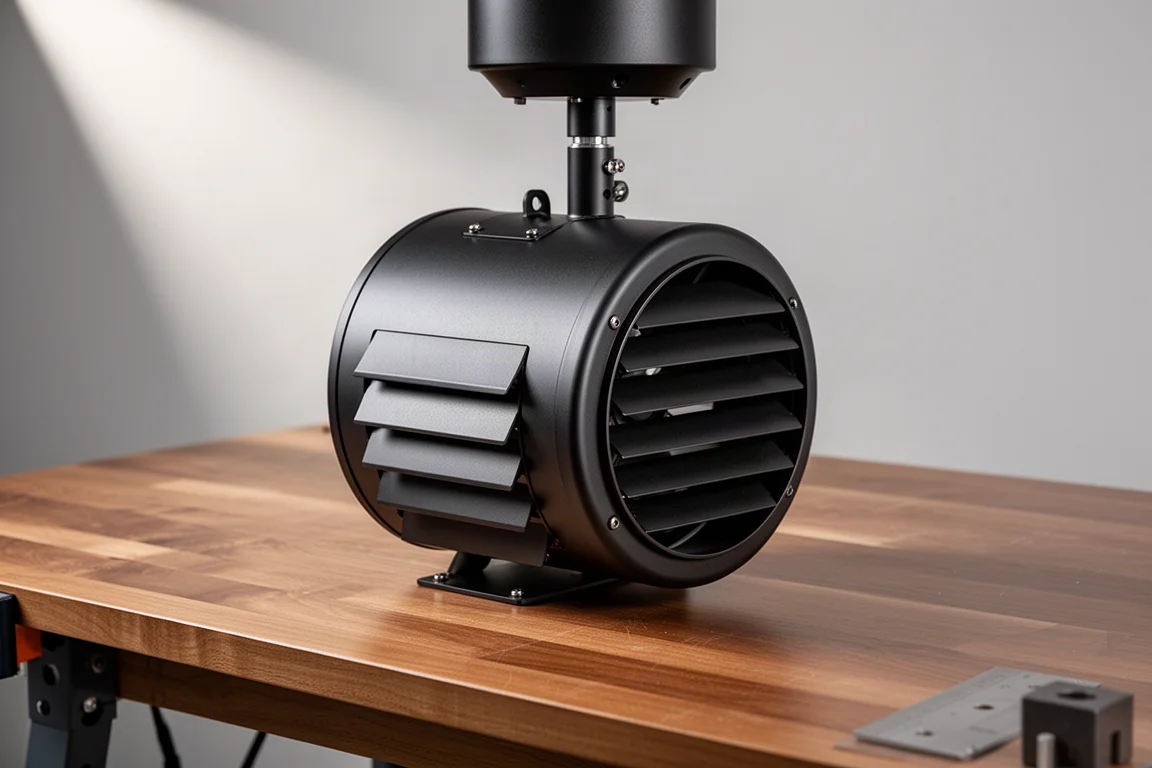
If you want an affordable way to move air around your garage, whether to keep yourself cool in the summer or to help dry things off in winter, the Mule garage fan is worth a close look. It is easy to install, can be purchased with a remote control, and moves quite a bit of air for the money. This review walks through the whole package: installation, controls, noise, airflow, and where this fan makes sense compared to the alternatives.
Installation Is Straightforward
Installation is about as simple as it gets for a ceiling-mounted fan. You find a truss in the ceiling, attach a mounting plate with two screws, and the fan slides up into the bracket and locks itself into place. The hardest part is genuinely just locating the joist. A safety cable that can loop around a joist is included, though it is not strictly needed, and the necessary screws come in the box. If you have thicker drywall, longer screws are a sensible idea so everything bites into the joist properly.
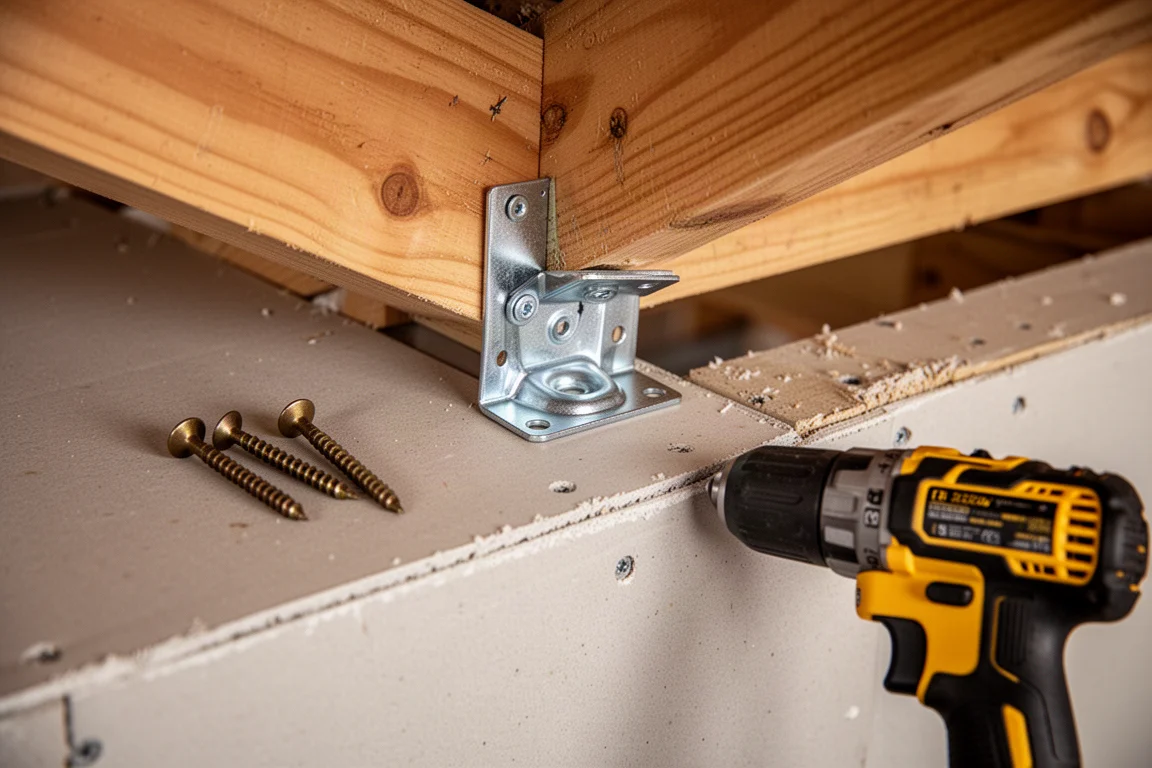
Once mounted, the fan head swivels and can be tightened or loosened and adjusted any way you like. The one limitation worth knowing: the head can be angled up and down, but it cannot be locked side to side. If something pulls on the cord, the fan will swing that direction and just sit where it wants. A side-to-side lock would have made positioning easier, especially with a cord in play.
The fan uses a standard three-prong plug, so if you have a ceiling outlet nearby, or you are willing to run a hidden extension cord along the ceiling, you are ready to go.
Remote Control and Speed Settings
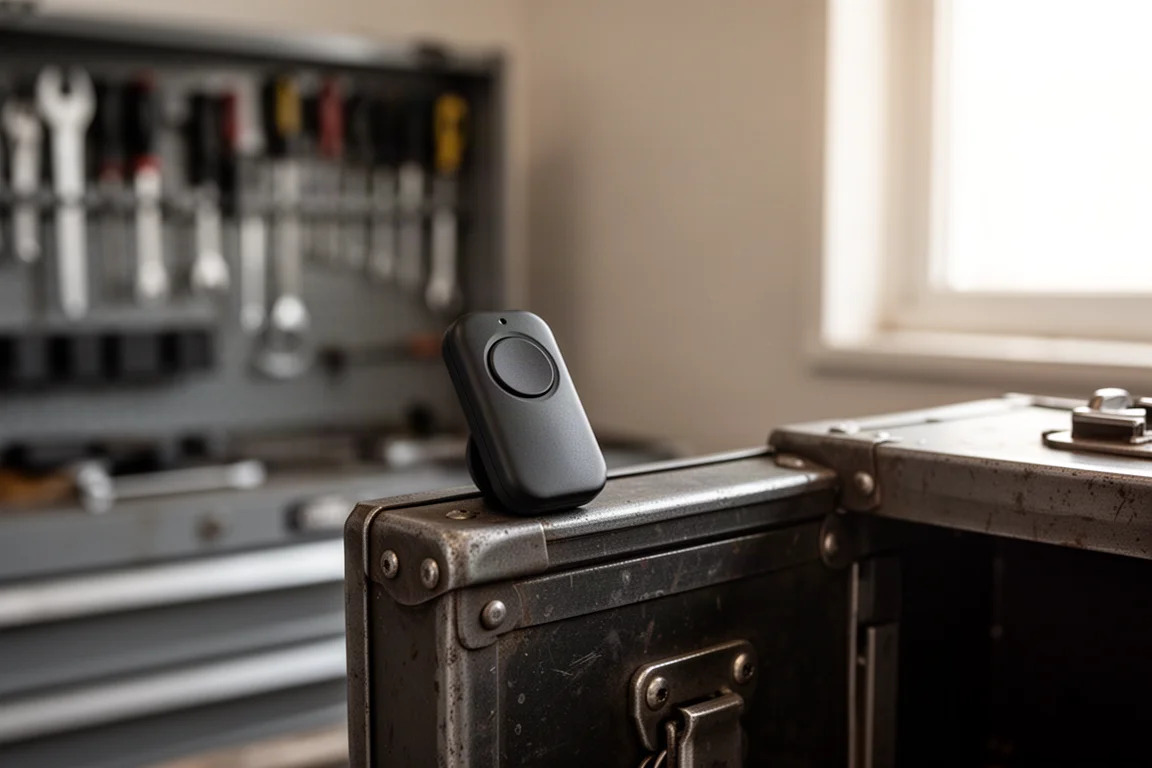
The model with the remote includes a small control box that sits on the fan. It looks like an adapter, but it is actually the receiver for the remote, which lets you turn the fan on and off from anywhere in the garage. A single button toggles between low, medium, high, and off.
The remote has a magnetic connection on the back, so you can stick it to a wall plate, a metal cabinet, or the back of a toolbox, which is a genuinely handy touch. It is small enough to disappear into a toolbox lid and always be findable.
The non-remote model has a dial on the bottom with 0, 1, 2, and 3 settings for fan speeds. If you buy the remote version, you simply leave that dial on 3 and let the remote handle everything.
Airflow Character
This is not a typical household fan that blasts a concentrated column of air directly in front of it. The Mule pushes air outward and to the sides instead. While it moves a lot of air, up to around 3,000 scfm on high, you will not feel your hair blowing back if you stand in front of it. That came as a surprise at first, but it works well in practice: you can move around the shop and feel some airflow almost everywhere, rather than getting hammered by air in one narrow spot.
That spreading pattern is useful for drying equipment or workspace. After bringing in wet or snowy equipment, the fan helps pull hot air down from the ceiling and move air around, and with the garage door open it can help balance airflow across an L-shaped shop.
Noise Levels at Different Distances
Noise is the main trade-off. Close up on low, the fan is audible but you can easily hold a conversation. Medium makes conversation slightly more difficult, and high means raising your voice to talk.
Measured with a decibel meter, the numbers tell a clear story:
- 25 feet away: low is around 51 dB, medium around 54 to 55 dB, and high around 58 to 60 dB
- 10 feet away on high: roughly 61 to 62 dB
- 10 feet away on low: bouncing between 52 and 57 dB
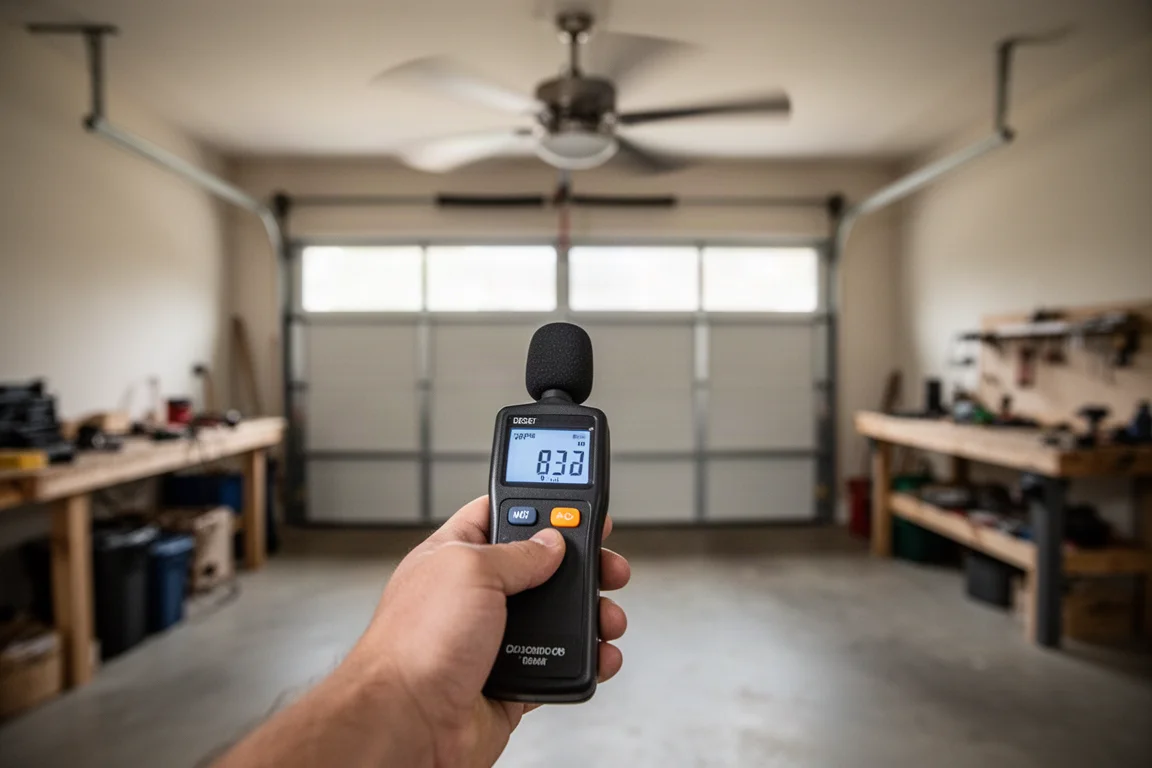
That sweet spot is on low, where you get a lot of air movement for a much lower noise level. On high, expect to be alone in the garage, or to have music going, or to raise your voice to chat.
Buying Advice
If you have a plug near where you plan to mount the fan, or you do not mind running and hiding an extension cord along the ceiling, this fan is an easy recommendation. If the noise on high would bother you, think about how you actually use the space.
Two longer-term takeaways from living with it: if you are building a new shop, put a few plugs in the ceiling, and design in a mounting point for a ceiling fan. Traditional ceiling fans are incredibly quiet and move a lot of air, but a proper large-shop ceiling fan costs far more. The Mule sits on the cost-benefit line: much less money, much less airflow, and noticeably more noise.

Pricing lands at around $250 for the model with the remote and $219 without. The remote version is easy to recommend: the magnetic back makes it simple to park on a toolbox or wall plate, so everyone knows where it is, and controlling the fan from anywhere in the garage is genuinely convenient.
Conclusion
The Mule garage fan does what it promises: it is inexpensive, quick to install, moves a meaningful amount of air outward through the space, and helps with both summer cooling and winter drying. The trade-off is noise on the higher speeds and a head that will not lock side to side. If you can plug it in near the ceiling and do not mind some noise on high, it is a solid, affordable alternative to a big-shop ceiling fan.
Product link
View more details for Mule Garage Fan
This product is mentioned in the review. Check the specifications, options, and compatibility before buying.
View more details for Mule Garage FanFurther reading
Related Reviews

Garage & Workshop
Best Oil Spill Absorbents: Granules and Pads Put to the Test
We compared oil absorbent powders, granules, and pads on absorption, tear strength, floor cleanup, and antifreeze performance to find the winners worth buying.
Garage & Workshop
Hyper Tough 2-Drawer Tool Cart Review: A $100 Cart That Makes Sense for Home Garages
A close look at the Hyper Tough 2-Drawer Tool Cart, plus how it stacks up against popular alternatives from US General, Harbor Freight, and Husky.

Garage & Workshop
Three Ryobi Garage Upgrades That Make Small Workspaces Work Harder
A modular storage organizer, a 2-in-1 creeper seat, and a folding wall-mounted workbench: three practical Ryobi pieces for cramped garages.