Camping Stoves
MSR WindBurner vs Jetboil MiniMo: Canister Stoves for Windy Conditions
A field test of the MSR WindBurner Personal Cook Set in strong wind, plus how its handle, lid and packing compare with the Jetboil MiniMo.
Introduction
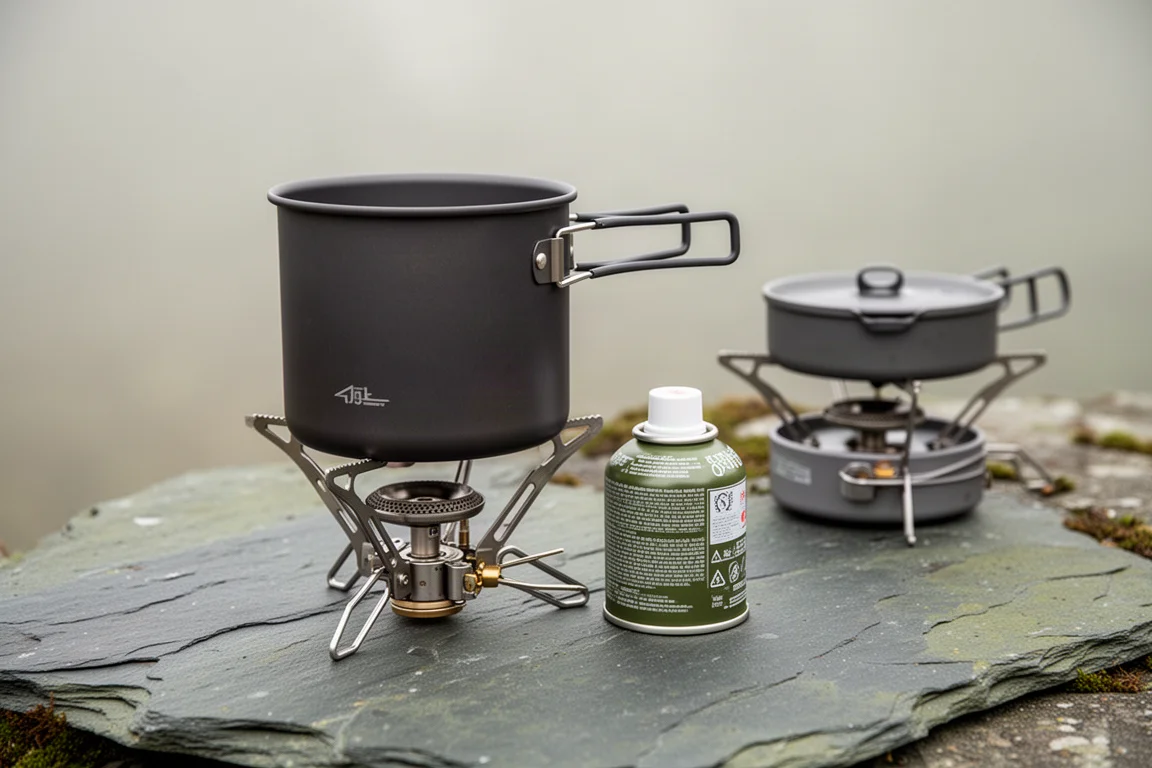
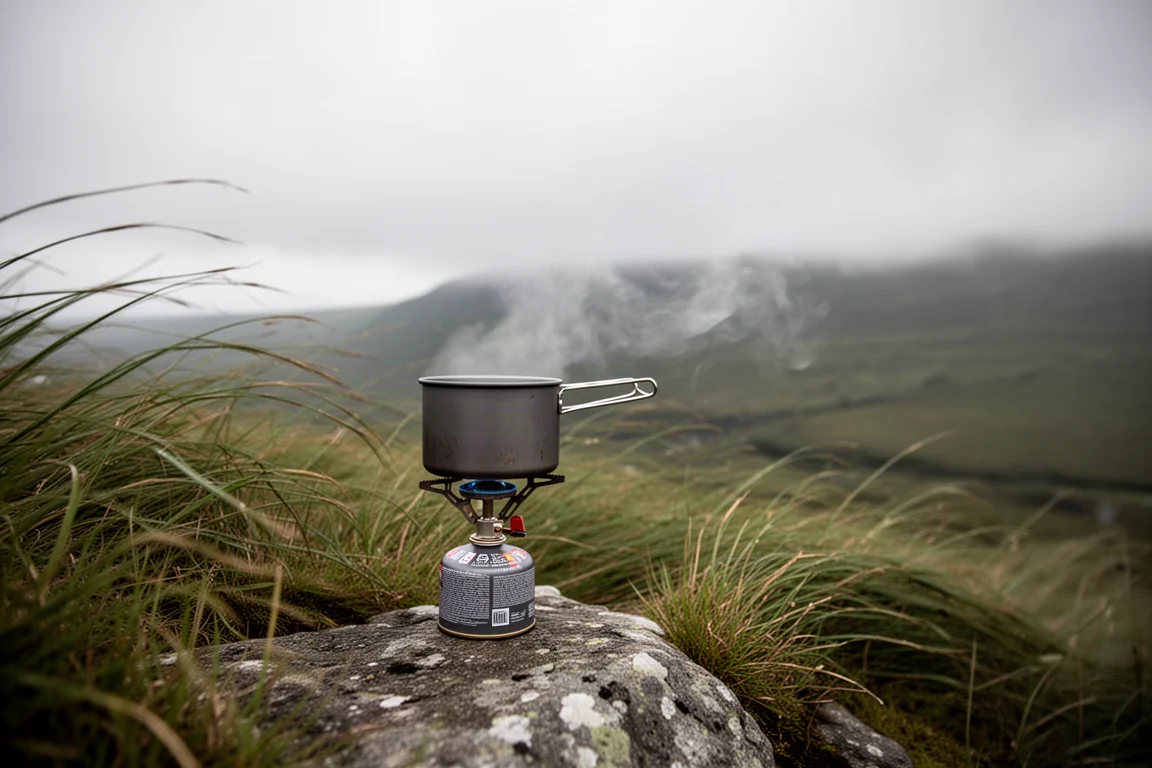
The MSR WindBurner Personal Cook Set is an integrated canister stove built around a simple promise: it keeps cooking when the weather turns ugly. It was put through a boil test in winds of up to 60 mph during a named storm, set up low behind a rock for a little shelter. The stove stayed lit and produced hot water in conditions that would likely have put out a Jetboil.
That makes a direct look at the Jetboil MiniMo worthwhile, since it is the stove many backpackers already own or have shortlisted. Both are integrated canister systems with an insulated pot and a locking burner, and both make compromises in the details: the handle, the pan support, and how much extra gear you end up buying.
What to Look For in a Windy-Weather Canister Stove
Wind is the biggest single variable in canister stove performance. An exposed burner loses heat to moving air, struggles to stay lit, and burns fuel inefficiently. The features that matter most are a pot that locks onto the burner and shields it, a burner designed for efficient heat transfer, and a canister support stable enough to hold everything upright on uneven ground.
Ignition matters just as much in practice. Some systems include a built-in igniter and some do not, which means carrying a lighter or a ferro rod and being able to use it with cold hands. Packed size, total weight and how easily the kit comes apart for storage round out the shortlist.
MSR WindBurner Personal Cook Set: Performance in Strong Wind
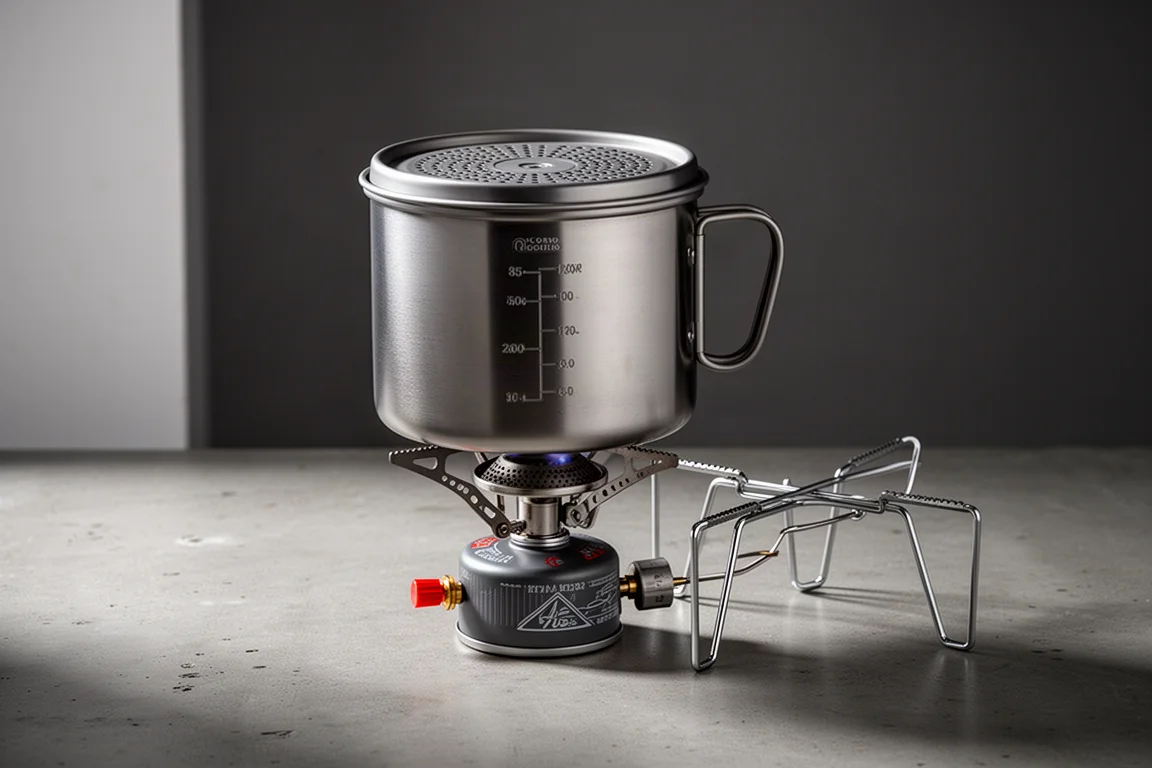
The pot holds one litre, measures 18 cm long and 10.5 cm in diameter, and the system weighs 430 g without a gas canister. The burner uses radiant burner technology, which the brand describes as highly efficient, and the pot twists onto the burner so that the burner area is completely sealed and shielded from the wind.
In the boil test, roughly 400 ml of water was visibly bubbling soon after the pot went on, and the stove kept running despite the conditions. There is no built-in igniter, so lighting it takes a lighter or ferro rod and some patience in an exposed spot. An indicator wire shows whether the stove is lit, which helps when the flame is hard to see. The canister support is more stable than the Jetboil equivalent and clips on and off easily.
The handle is the weakest detail. It is integrated into the pot but feels like an afterthought compared with the MiniMo’s handle. Cooling takes about five minutes, after which the burner twists off by hand without needing much force, even with the stove sitting on the ground.
Lid, Handle and Packing Details
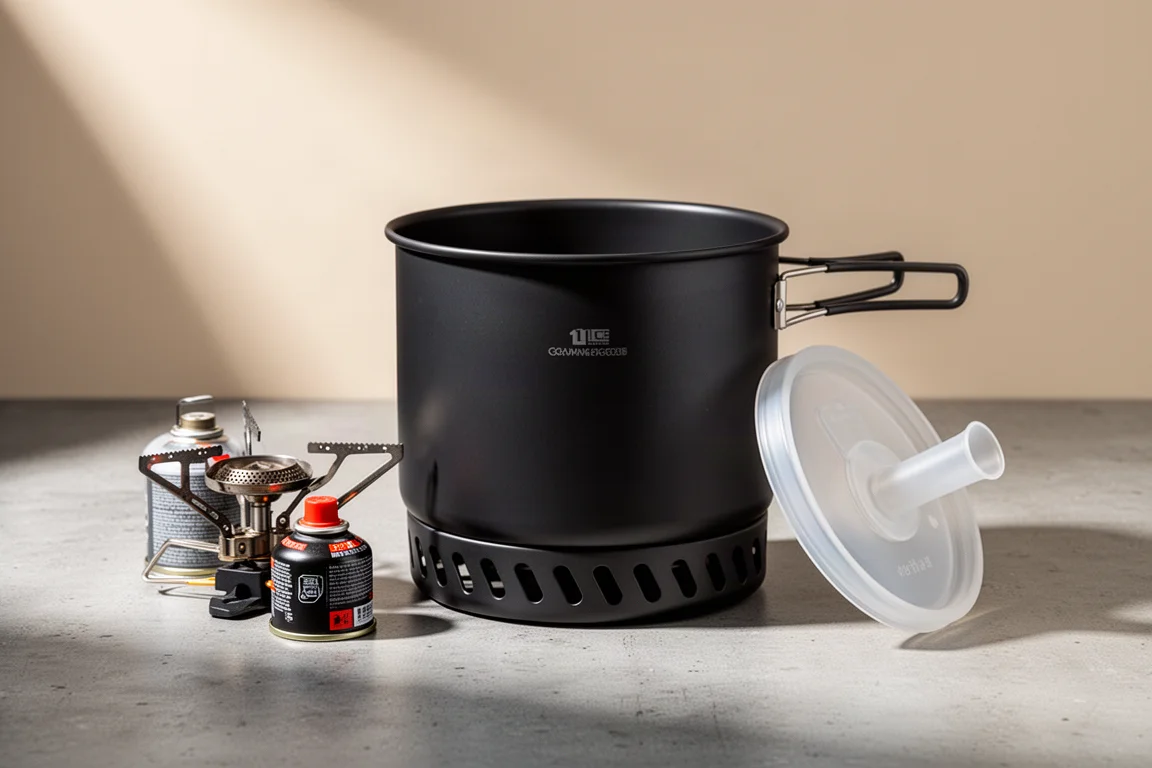
The plastic lid has a strainer and a mouthpiece, so the pot can double as a mug on a cold morning. It clips on tightly, and the practical sequence is to fill the pot and clip the lid on before mounting everything on the canister, rather than pressing down on a lid that is already sitting on a lit burner.
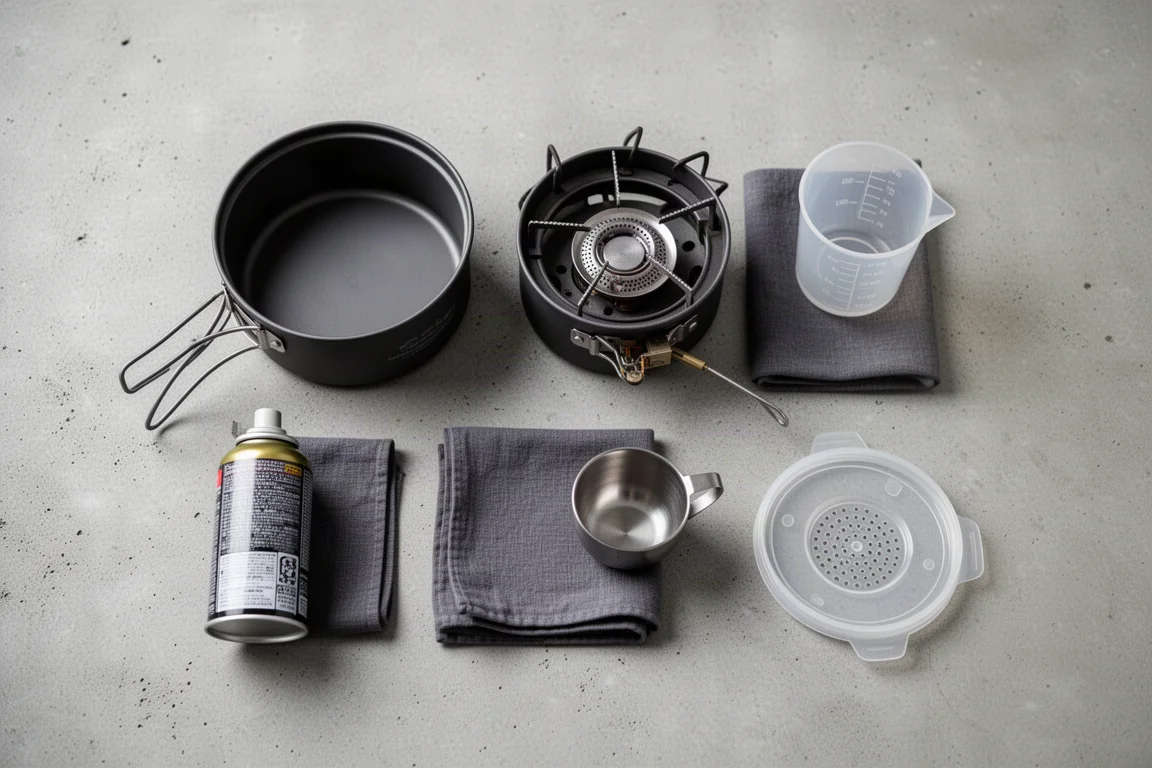
Packing away is straightforward. The burner unscrews, the small cloth that lives in the base of the pot drops over the valve to protect it, and a 100 g gas canister fits inside along with a measuring cup. A small triangle piece sits on top of the packed contents to reduce rattling, though it does not eliminate it entirely, and an extra cloth helps. The whole system packs down compactly.
The handle design is the clearest difference from the MiniMo, and the Jetboil Zip uses a handle closer to the WindBurner’s, which suggests MSR is competing in that part of the market.
Jetboil MiniMo: The Cook-Friendly Alternative
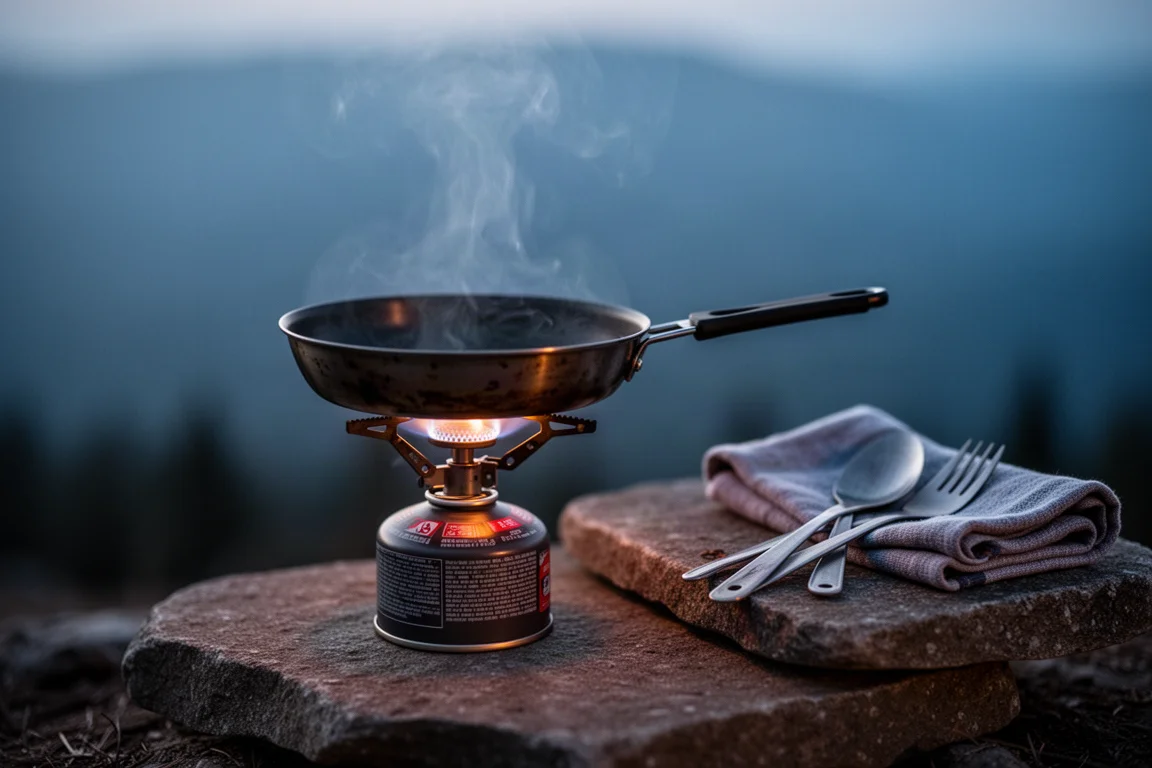
The MiniMo is the Jetboil model that comes with a pan support, so a frying pan or skillet can sit on top of the burner. That is a genuine advantage for anyone who wants to cook rather than just boil water. The opening in that support is small, however, so it covers most of the burner area and limits what will sit securely on it.
The MiniMo’s handle is noticeably better than the WindBurner’s, and it makes a hot pot easier to move around camp. On the boil test itself, the conditions were extreme enough that a Jetboil system would likely have struggled to stay lit, which is the main reason the WindBurner stands out for exposed pitching.
For trips where wind is less of a factor and cooking flexibility matters more, the MiniMo remains a sensible choice, and its included pan support means you are not shopping for accessories straight away.
Fuel, Ignition and Extra Costs to Plan For
Both systems run on standard canister gas, and both ask the user to bring their own ignition. The WindBurner stores a 100 g canister inside the pot for transport, which keeps the packed kit tidy.
Frying capability is where the two systems diverge on cost. MSR sells a WindBurner skillet that clips onto the top of the burner the same way the pot does, and it adds roughly £70 to the setup. Without it, the WindBurner is a boil-and-rehydrate system first. The MiniMo includes its pan support in the box, though the small opening limits what fits.
Buying Advice: Which Stove Suits Which Trip
Choose the MSR WindBurner Personal Cook Set if you regularly cook in exposed, windy places and want a system that stays lit and packs down compactly. The sealed burner and locking pot are the core reasons it handled 60 mph winds, and the one-litre pot is enough for a hot drink or a rehydrated meal.

Choose the Jetboil MiniMo if you want pan support out of the box, a better handle, and a stove that suits cooking as much as boiling. It is the more comfortable system to live with around camp, even if it is not the one you would reach for on a ridgeline in a storm.
Either way, budget for the extras. The WindBurner skillet is a separate purchase at around £70 if you want to fry, and the WindBurner itself has no built-in igniter, so plan to carry a lighter or ferro rod.
Conclusion
The WindBurner’s headline claim is wind resistance, and the field test backed it up: it stayed lit and boiled water in conditions that would likely have extinguished a Jetboil. Its weak points are the handle and the cost of adding a skillet. The MiniMo answers with a better handle and included pan support. Match the choice to the weather you actually cook in, and either system will serve you well.
Further reading
Related Reviews
Camping Stoves
BCB Fire Dragon Mini Cooker Review: A Tiny Folding Stove With Real Trade-Offs
A palm-sized, fuel-flexible folding stove that heats water well enough, but brings flame control, stability, and fuel cost questions worth understanding first.
Camping Stoves
Boundless Voyage Titanium Alcohol and Wood Stove Review: Ultralight Cooking, Two Ways
A titanium alcohol and wood burning stove kit that weighs 4.5 oz complete, boils two cups of water in about 10 minutes, and costs $36.
Camping Stoves
BRS 32 Dual Burner Stove Review: A Folding Two-Burner That Packs Down Flat
A detailed look at the BRS 32, a slim folding dual burner camping stove that expands into a stable cooking platform for around $60.