Power Tools
Most Powerful Cordless Routers Compared: DeWalt, Makita XGT and HiKOKI 36V
Three of the most powerful cordless routers in their classes face off with the same router bits, the same timber and identical batteries. Here is which one cuts fastest, which one survives the tough stuff, and which one drains a battery first.
Introduction
Cordless routers have quietly become some of the most capable tools in a battery-powered workshop, and the question that matters most for anyone buying one is simple: which is the most powerful? To find out, three of the strongest contenders in their respective classes were put head to head with the same router bits, the same timber, and comparable batteries. This is not a full review of any single tool. It is a raw power contest, with each router pushed until it stalls, cuts out, or simply wins.
The Contenders
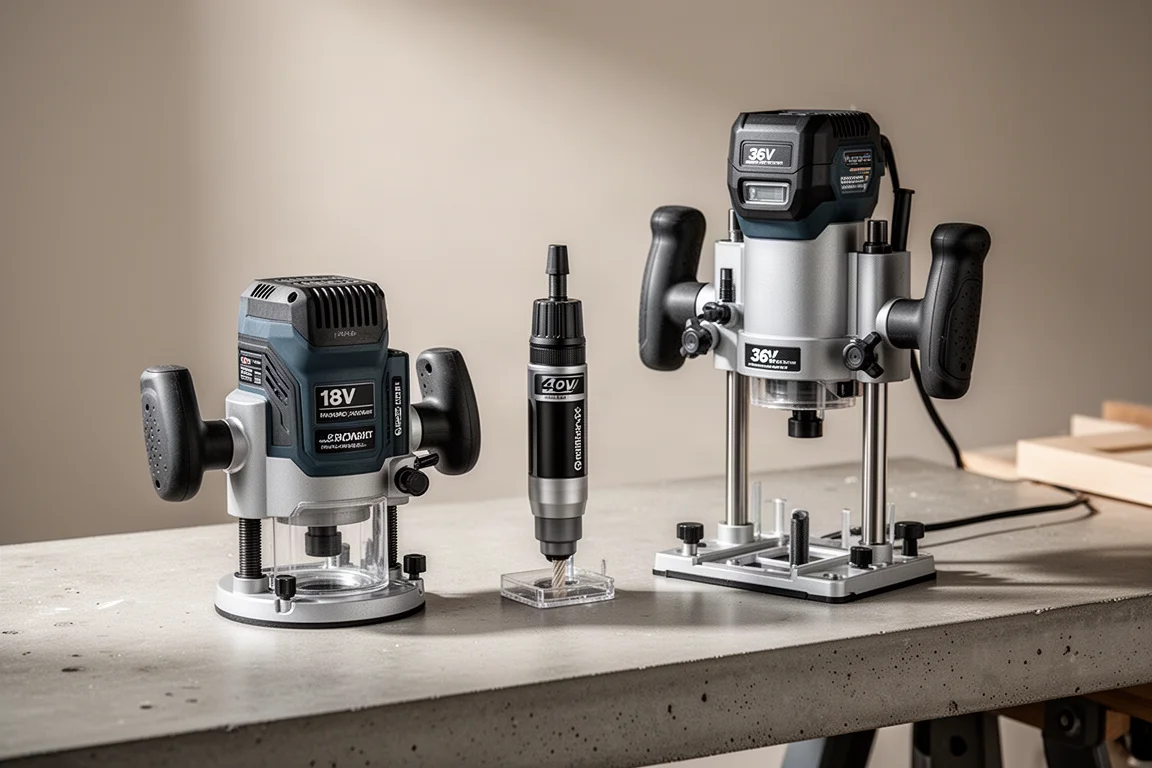
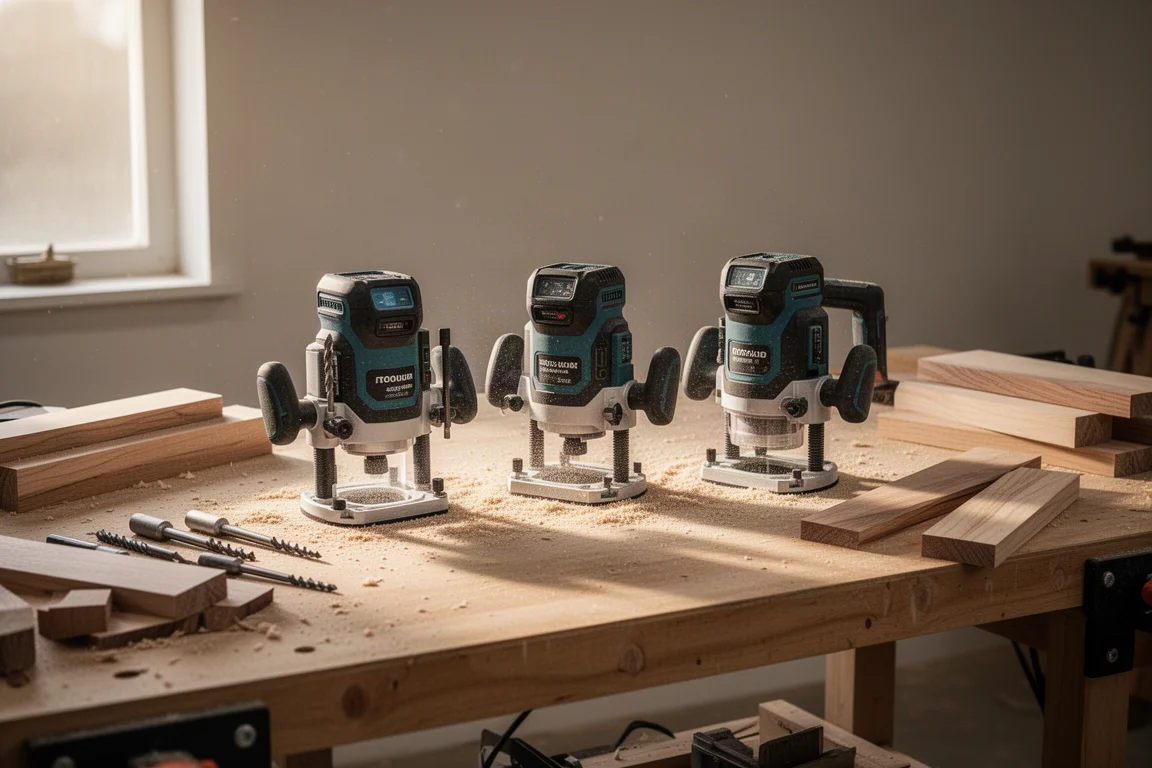
Three routers took part, each the most powerful in its own class. The DeWalt 18V sits in an interesting spot: it is bulkier than most trim routers, with a bigger motor and noticeably more torque than other 18V routers, and it can fly through material. The Makita XGT 40V trim router is described as the most powerful trim router of its type, ahead of the equivalent HiKOKI or Metabo HPT offering. And then there is the HiKOKI/Metabo HPT 36V, a big half-inch plunge router that remains the only half-inch plunge router available as a cordless tool.
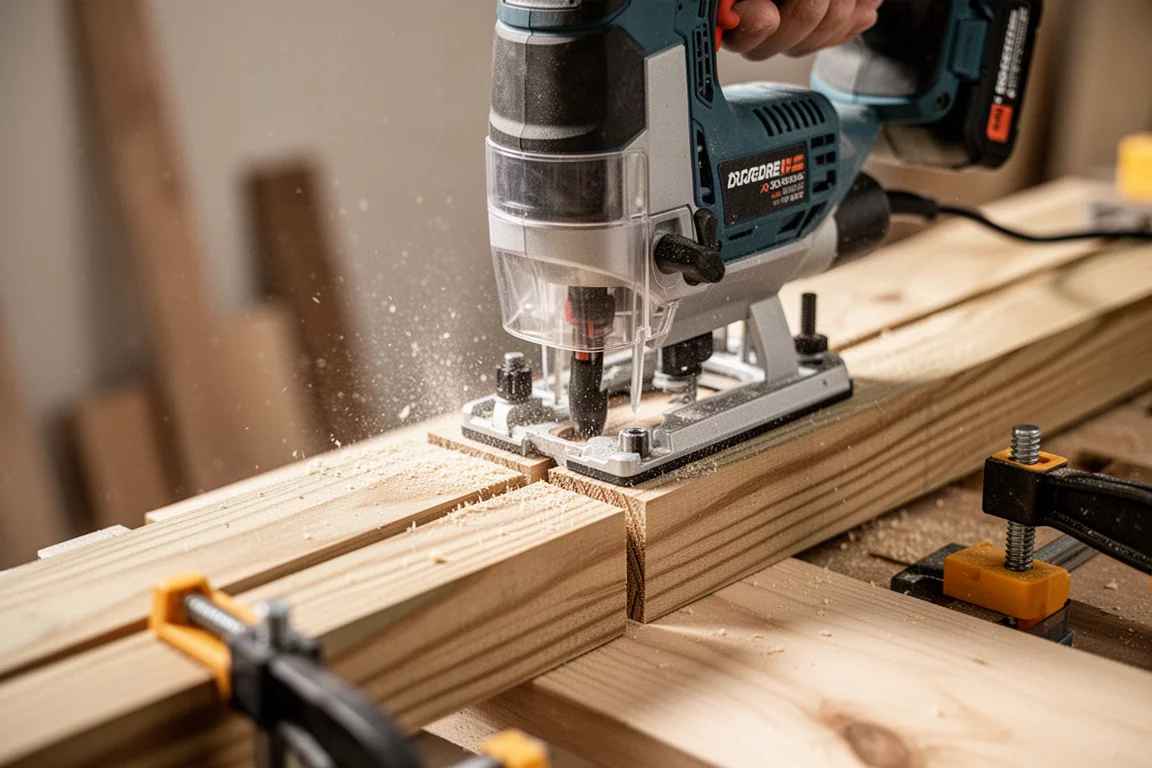
For fairness, testing was done with similarly sized batteries: a 4Ah 36V battery on the HiKOKI, the biggest the brand makes, and a 4Ah pack on the Makita, with the DeWalt running its compact high-output battery format.
Round One: Channel Cuts in Treated Pine
The first test used a half-inch channel bit, cutting roughly 12 to 13mm wide by 12 to 13mm deep into treated pine. All three tools completed the task. The DeWalt was probably the best at blowing swarf clear of the cut, though none of them were good at it, and the HiKOKI was the worst for packing dust in afterwards. Honestly, all three are a bit mediocre in that regard.
The more meaningful takeaway was control. The Makita and the HiKOKI were much smoother to run than the DeWalt, which simply wants to race ahead. It is quick but not precise, almost pulling itself along the timber. With the other two you have far more control over the cut.
The Hardwood Test
Next, the stakes doubled: a 15mm deep by 25mm wide cut in Vitex hardwood, a dense and demanding timber, with each tool running at full speed. The Makita struggled a bit and did not sound happy, though it got the job done. It is worth noting that 25mm is close to the maximum bit size a trim router of this style can realistically take, and it was removing a lot of material in one pass.
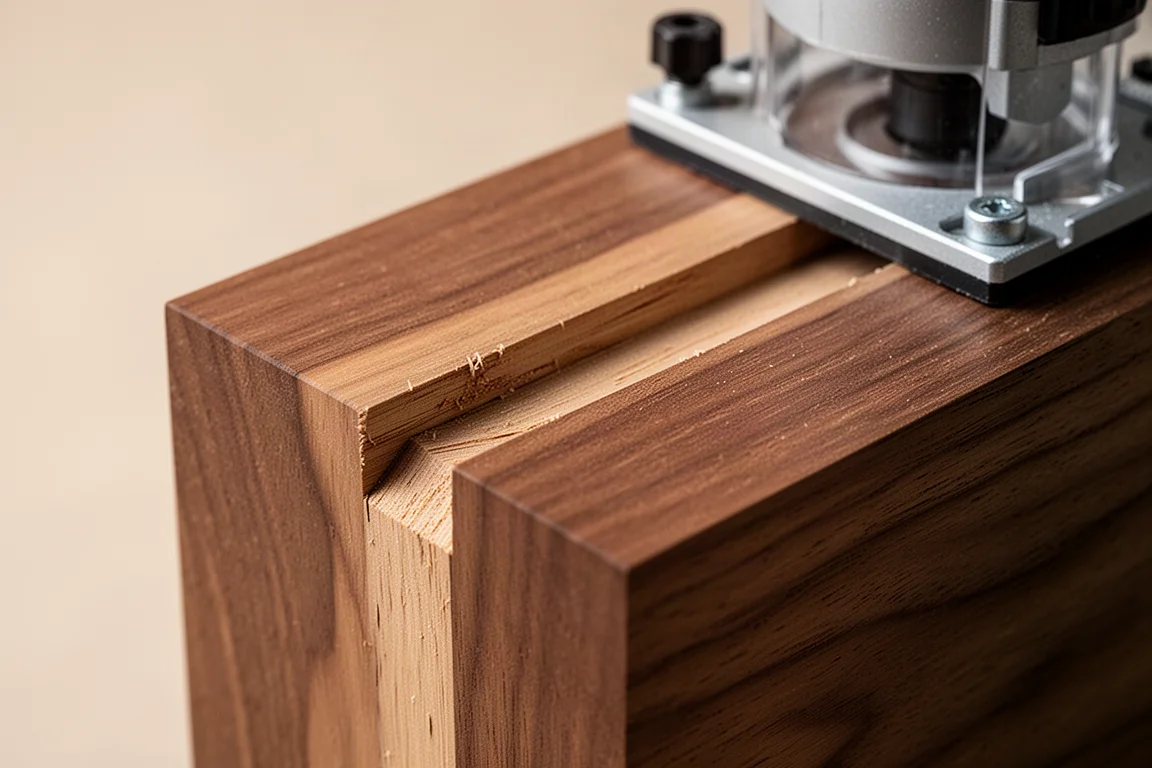
The DeWalt had real trouble with the larger bit and, more importantly, drained its compact battery hard. The pack was fully charged at the start of the first cut; after a three-foot cut and roughly half of the second, the battery was flat. These compact packs are small, light and surprisingly powerful, and they are brilliant on an impact driver or for overhead work, but they simply do not last under high-drain routing.
Stalling Behavior: A Real Safety and Workpiece Issue
One behavioral difference matters a lot in practice. Both the HiKOKI and the Makita cut out easily when overloaded, protecting the workpiece. The DeWalt does not. It keeps going until it jams up good and proper, and that damages your work. Yes, some will argue that not stalling is a good thing, but when it does finally stop, it is because something has gone badly wrong.
With the bit dialed back to 11mm depth instead of 15mm, both the DeWalt and the Makita cut noticeably smoother, but the overall ranking did not change.
The Verdict on Raw Power
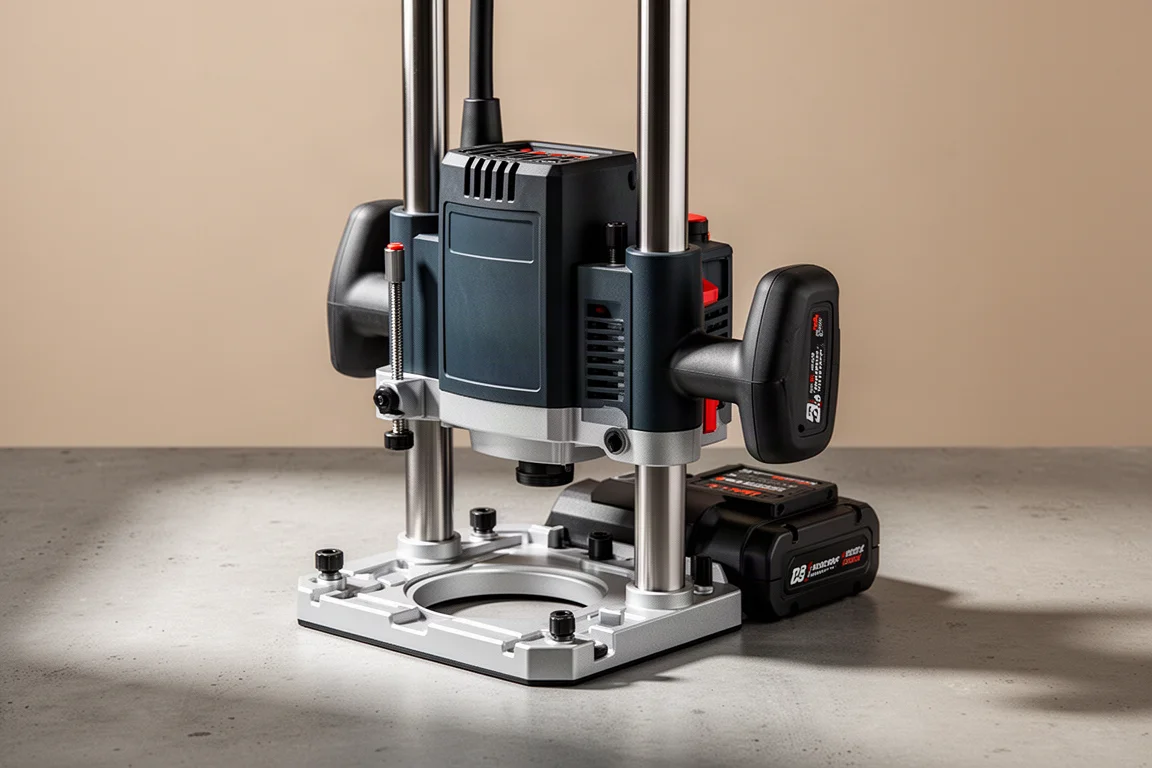
The clear winner overall is the HiKOKI/Metabo HPT 36V. It is not a fast tool in the sense that you can rush it; push too hard and it stalls. But it handles larger cuts that the other two simply cannot accept, since you cannot fit bits of that size through the trim routers, and it delivered the best overall speed on the big work.
Battery Runtime: Where the Makita Pulls Ahead
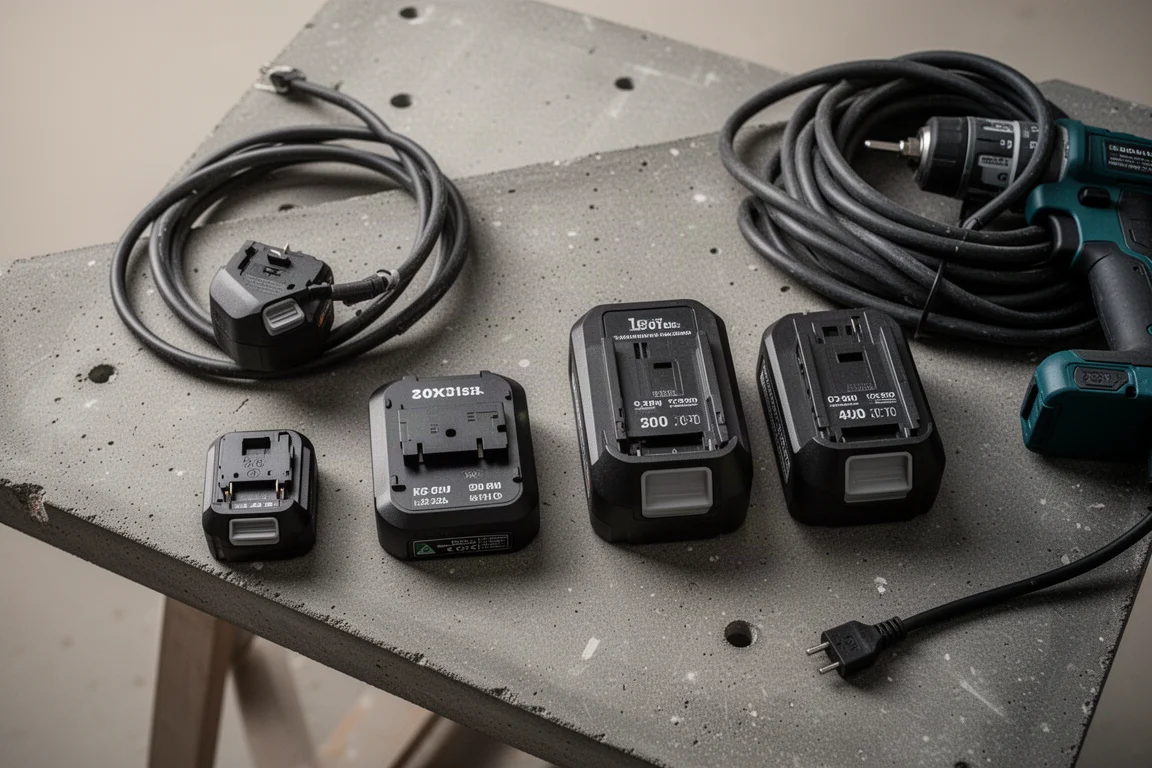
The HiKOKI and the DeWalt are both terrible on battery runtime. The Makita lasted much better: it never used a single bar on its 4Ah pack, while the DeWalt went through a full compact pack and dipped into a 6Ah battery. That pattern holds across the brand’s trim routers, which consistently offer better runtime than the DeWalt, HiKOKI, and Milwaukee equivalents.
On speed, the DeWalt is the fastest for small routing tasks, narrowly beating the other two in the first test. Once the larger bits came out, the Makita took over on speed, beating the DeWalt even though it stalled earlier. That extra voltage gave it the power needed for the tough tasks.
Buying Advice: Which One Should You Get?
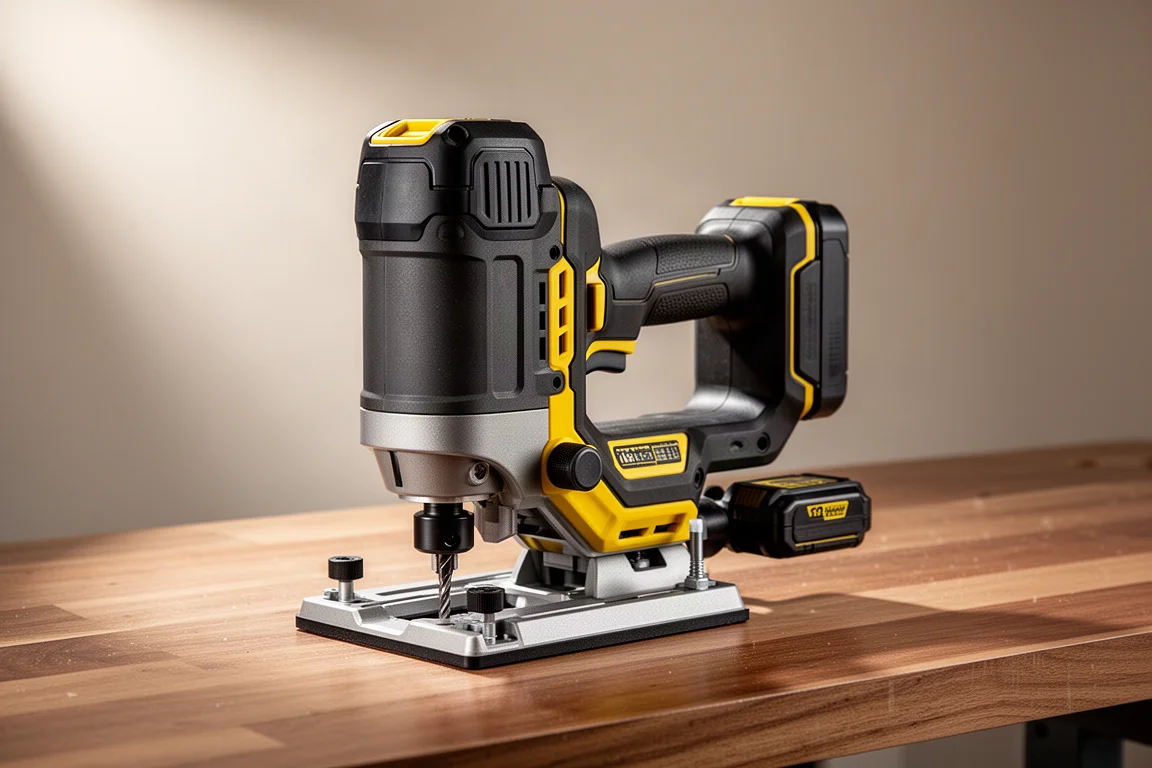
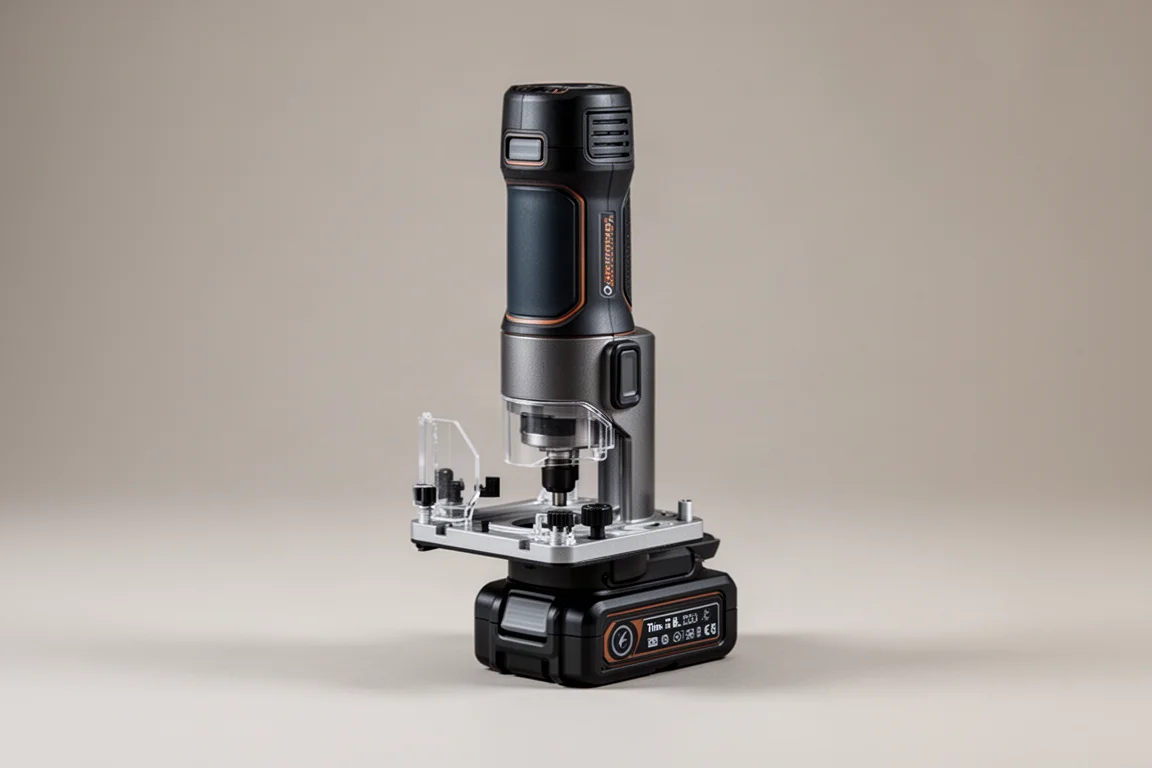
If you mainly do small routing tasks and want the fastest option, the DeWalt makes a strong case, just be aware of its appetite for battery power and its tendency to push hard rather than cut out. If you want the best balance of speed on larger cuts, cleaner overload protection, and much better runtime, the Makita XGT is the more forgiving all-rounder. And if you need a genuine half-inch plunge router with cordless freedom, capable of big cuts as long as you work slowly and deliberately, the HiKOKI/Metabo HPT 36V stands alone in the market.
Both the DeWalt and the Makita also have plunge bases available, which extends their usefulness well beyond the trim configuration.
Conclusion
The HiKOKI/Metabo HPT 36V is the most powerful cordless router of the three and the best for larger cuts, but it is a slow, battery-hungry workhorse. The Makita XGT 40V wins on runtime and remains impressively capable for a trim-format tool, taking over as the fastest once bigger bits come into play. The DeWalt 18V is the quickest for small tasks but the least precise, the worst on battery life under load, and the only one that will keep grinding until it jams and damages your work. Choose based on the size of the cuts you actually make.
Further reading
Related Reviews
Power Tools
Best 1-Inch Pistol Impact Wrenches: Three Heavy-Duty Options Compared
We compare three 1-inch pistol impact wrenches, from a budget-friendly Harbor Freight model to a premium Caterpillar unit, to help you choose the right one.
Power Tools
Best 3/4-Inch Impact Wrenches 2026: Five Contenders Compared
We compare five 3/4-inch impact wrenches across price and performance, from a budget Amazon option to Snap-on's most powerful model yet.
Power Tools
Best Budget Cordless Tools 2026: Walmart Finds That Punch Above Their Price
We tested five cordless tools from Walmart, including a high-torque impact wrench that trades blows with Milwaukee and a $35 duster that outperforms its price class.