Power Tools
The Most American Power Tool Brands, Ranked: Where Your Money Actually Goes
We look at how 19 major power tool brands sold in the US score across manufacturing, workforce, R&D, service, and community investment.
Introduction
If you care about where your money goes when you buy a cordless drill or impact driver, the answer is more complicated than a “Made in USA” sticker. Power tools sold in the US come from companies with wildly different levels of American manufacturing, domestic employment, research and development, and community investment.
To make sense of it, we evaluated the top 19 major power tool brands sold in the United States across eight weighted categories: US manufacturing and assembly, US-sourced components and materials, US workforce and payroll, domestic R&D and engineering, headquarters and profit retention, service and warranty infrastructure, domestic supply chain and spend, and community investment.
A quick caveat before the rankings: none of this reflects tool quality. Some excellent brands rank low simply because almost everything they do happens overseas. This is purely about how much buying a given brand supports American workers and the American economy.
How the Ranking Works
Each brand was scored across the eight categories, with manufacturing, workforce, R&D, and service carrying the heaviest weights. Assembly and components account for a maximum of 30 and 15 points respectively, which is why brands that only assemble tools domestically cannot reach a perfect score. Anything less than 50 percent domestic build content caps a brand’s potential significantly.
One honest note on method: the category weights were set with assistance from AI to reduce personal bias, and the full breakdown is the kind of thing you could reasonably re-sort with your own priorities. A brand like Craftsman, for example, markets “Made in USA with global components,” which we treat with some skepticism. If you weight that label differently, your ranking may shift.
Here is the full order, from most to least invested in the American economy:
| Rank | Brand | Highlights |
|---|---|---|
| 1 | Snap-on | US assembly, high US content, tool truck service network |
| 2 | Ridgid (Red) | US-made tools, motors and castings sourced domestically |
| 3 | DeWalt | US assembly and motor production, major US R&D and HQ |
| 4 | Craftsman | Some US assembly, large US workforce, shared service network |
| 5 | Hercules | Full US R&D, huge US workforce via Harbor Freight |
| 6 | Bauer | Largest US workforce footprint, US-based service and HQ |
| 7 | Porter-Cable | Shared HQ and service network with DeWalt and Craftsman |
| 8 | Black & Decker | Strong US corporate footprint, no US manufacturing |
| 9 | Milwaukee | Strong US R&D and HQ, no US assembly or components |
| 10 | Hilti | Exceptional service network, no US manufacturing |
| 11 | Ridgid (Orange) | US workforce and HQ, but made overseas by TTI |
| 12 | Makita | Small US workforce and R&D, strong service centers |
| 13 | Bosch | US sales and testing workforce, made in Malaysia, China, Germany |
| 14 | Ryobi | US HQ and workforce in the Carolinas, nothing made in the US |
| 15 | HART | Sold through Walmart, minimal US investment |
| 16 | Metabo HPT | Small US workforce, trade school donations |
| 17 | Festool | Best-in-class US service network, nothing built here |
| 18 | Skil | Minimal US presence beyond support |
| 19 | Worx | Practically no US footprint at all |
1. Snap-on
Snap-on takes the top spot, though not with a perfect score. The brand earns high marks for US assembly and build (20 of a possible 30 points), high US content in cast housings and electronics, and one of the largest and strongest US-based workforces in the industry. Its R&D center in Kenosha, Wisconsin and US headquarters earn full marks.
The famous tool truck network is what pushes service to a perfect score. Have a problem and you can often take the tool straight back to the truck for an exchange, which is a service model almost nobody else can match.
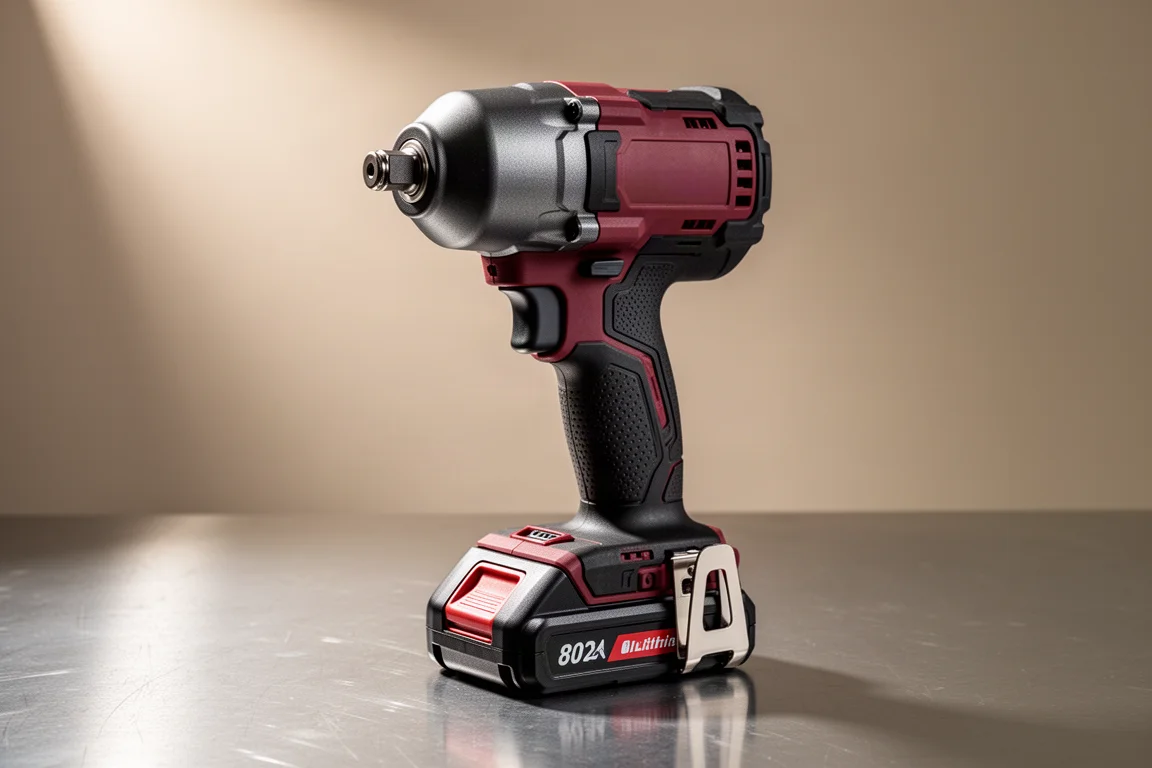
The important catch: much of the 14.4V line is made in Asia, and nearly all batteries and chargers are made in Asia. When a power tool kit says “Made in USA,” it usually means the tool itself only. The accessories that come with it typically are not.
2. Ridgid (Red)
Ridgid Red, the professional line under Emerson, is one of the highest scorers here. The tools are made in the United States, with domestic sourcing for motors and castings, though large battery components come from overseas, which keeps the components score at 5 out of 15.
Everything else is strong: a large US manufacturing workforce under Emerson, full marks for R&D and the St. Louis headquarters, an extensive US repair network, and a skilled trade training partnership supporting the community.
3. DeWalt
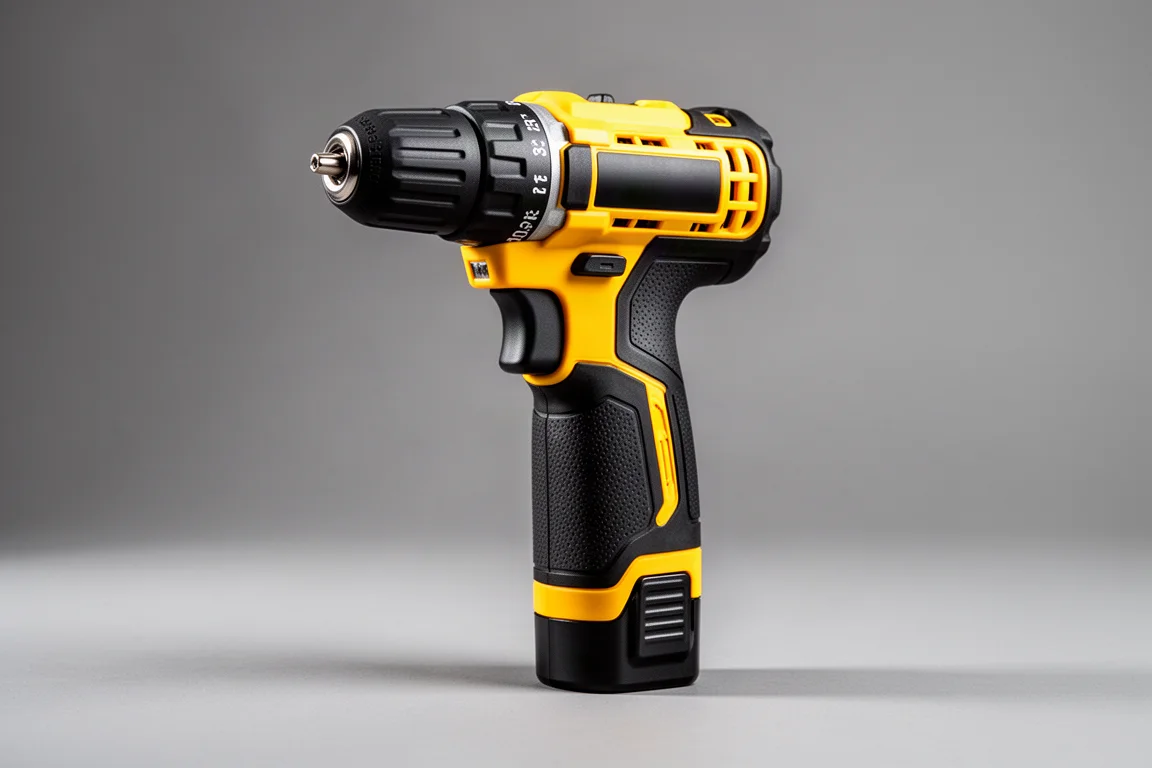
DeWalt posts some of the biggest raw scores in the evaluation. Tools are assembled in the United States, and the company is now spinning up motor production domestically as well. Components earn partial credit because global materials still pull the total down.
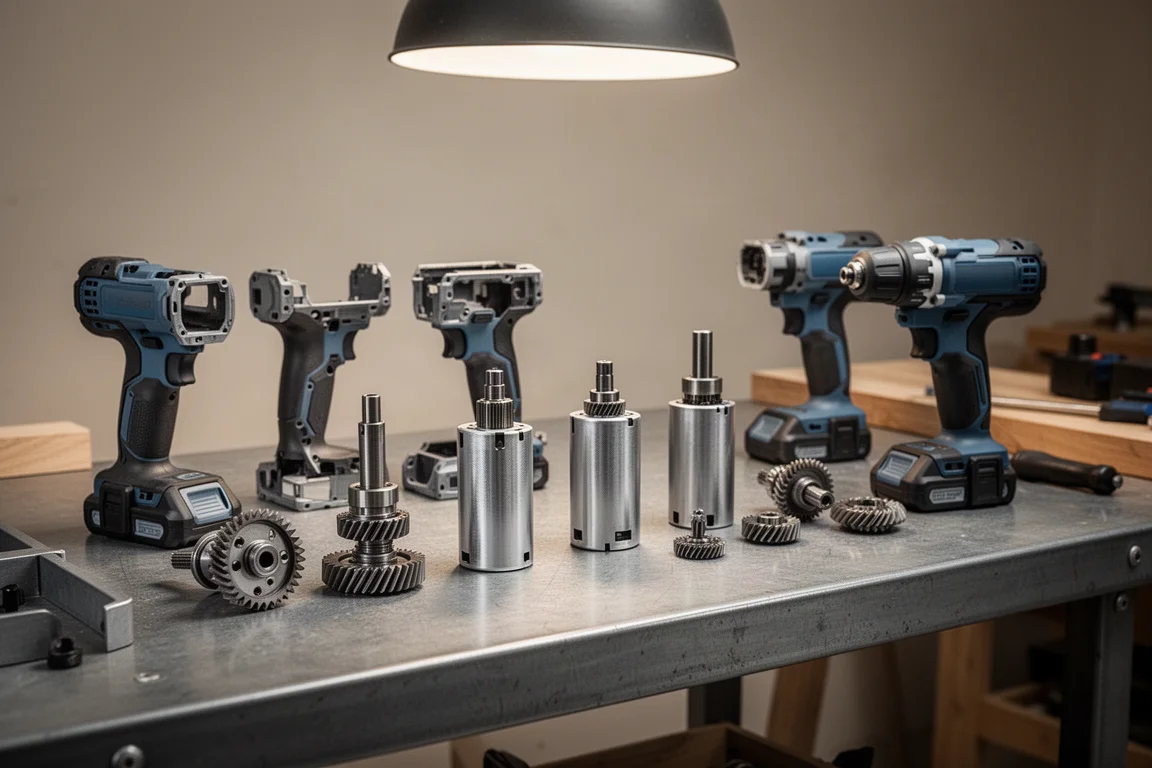
R&D and the US headquarters both earn perfect scores, service infrastructure is extensive, and community support is solid through veterans programs and Skills USA sponsorship. One honest detail: much of the domestic motor production is automated, so the jobs it creates lean toward servicing the robots rather than hands-on assembly work.
4. Craftsman
Craftsman earns partial credit for assembly and components because some power tool assembly genuinely happens in the United States, even if the “Made in USA with global components” label deserves a raised eyebrow. The US workforce is one of the largest in the industry, second only to Harbor Freight’s retail footprint.
Design work piggybacks on the DeWalt engineering team, and it shows: much of the line reads as reworked DeWalt tooling painted red. The headquarters and service network, shared with DeWalt and Craftsman siblings, earn full marks.
Community involvement includes trade school grants and NASCAR sponsorship, which nudges the community score up.
5. Hercules
Hercules, Harbor Freight’s pro-leaning house brand, lands surprisingly high. All power tools are still made overseas, so assembly and component scores are zero. What carries it is everything else: two fully US-based R&D centers, a privately held American family-owned company behind it, US-based service and support, and an unusually large domestic workforce through Harbor Freight’s enormous store network.
Community support is genuinely notable, with roughly a million dollars donated each year to school shop programs, plus donations to first responders.
9. Milwaukee
Milwaukee sits mid-pack, which surprises a lot of people. The brand was bought by Hong Kong-based TTI years ago, and manufacturing moved overseas, so assembly and components score zero. What Milwaukee does retain is a strong US presence in R&D, with heavily invested campuses in Brookfield, Wisconsin, plus a significant US headquarters.
Service is excellent with over 200 corporate-affiliated authorized service centers across the country, the supply chain is strong with US warehousing and distribution, and a skilled tradeship program based out of the Wisconsin headquarters earns community credit.
Buying Advice: Matching the Ranking to Your Needs
If maximizing American economic impact is your goal, the top of this list is clear: Snap-on, Ridgid Red, DeWalt, Craftsman, and Hercules all put real money into US factories, payrolls, R&D, or service networks.
If service matters most, Hilti and Festool rank low overall but run two of the best US service networks in the industry, with Hilti even offering on-site service for fleet customers. If you shop at Home Depot, Ridgid Orange offers US-backed support even though the tools are built overseas by TTI.
The bottom of the list is equally clear. Worx, Skil, Festool, Metabo HPT, and HART offer little beyond basic support infrastructure in the US. That does not make them bad tools, but buying them does very little for American workers.
Conclusion
“American-made” is rarely a simple yes or no in the power tool world. The brands that score highest combine real domestic assembly with US engineering, large domestic payrolls, and service networks that employ Americans. Check what a “Made in USA” kit actually covers, weigh service and workforce alongside manufacturing, and the ranking above should help you spend your money where it counts most for you.
Further reading
Related Reviews

Power Tools
Best 1-Inch Pistol Impact Wrenches: Three Heavy-Duty Options Compared
We compare three 1-inch pistol impact wrenches, from a budget-friendly Harbor Freight model to a premium Caterpillar unit, to help you choose the right one.

Power Tools
Best 3/4-Inch Impact Wrenches 2026: Five Contenders Compared
We compare five 3/4-inch impact wrenches across price and performance, from a budget Amazon option to Snap-on's most powerful model yet.

Power Tools
Best Budget Cordless Tools 2026: Walmart Finds That Punch Above Their Price
We tested five cordless tools from Walmart, including a high-torque impact wrench that trades blows with Milwaukee and a $35 duster that outperforms its price class.