Gravel Bikes
Moots Routt CRD Review: A Titanium Gravel Race Bike With Full Internal Routing
The Moots Routt CRD pairs a light titanium frameset with full internal cable routing, in-house carbon cockpit parts, and clearance for 50mm tires. Here is how it rides and who it suits.

Introduction
Moots has been building bicycle frames for around 30 years, and gravel bikes for roughly the last 10 of them. The Routt family now runs to five models, and the Routt CRD sits at the top of the range. The name stands for Complete Race Design, and it is the most race-focused gravel bike the brand has produced.
The headline change is full internal routing for cables and hoses. It is a well-established trend on road and gravel bikes, and the Routt CRD is Moots’ answer for riders who want that clean front end on a titanium frame rather than a carbon one.

To make that possible, Moots developed its own carbon fiber components, including a new fork, stem, and handlebar. The frame itself is built from the company’s lightest titanium tube set, with generous tube diameters flowing into a T47 bottom bracket and a rear triangle that uses curved stays and a wishbone design. The result is a frameset that looks purposeful from every angle and signals speed before you even ride it.
Who This Bike Is For
Anyone shopping for a gravel race bike will weigh carbon against titanium, and the answer depends on what you value. Carbon remains lighter, stiffer, and more aerodynamic, which is why riders chasing results at the front of a race usually choose it.
Titanium makes a different argument. The frame is tough and solid, and it can take a beating from rock strikes, rough terrain, and the occasional drop without cracking. It also has no paint to scratch or wear away, so mud, grit, and strap rub from long adventures leave the surface as it was. Titanium is corrosion resistant as well, so it will not rust the way a steel frame can.
That combination makes the Routt CRD appealing to riders who want a durable gravel bike that stays fast, and who are not chasing the last marginal gains in weight and aerodynamics.
Frame Design and Titanium Craftsmanship
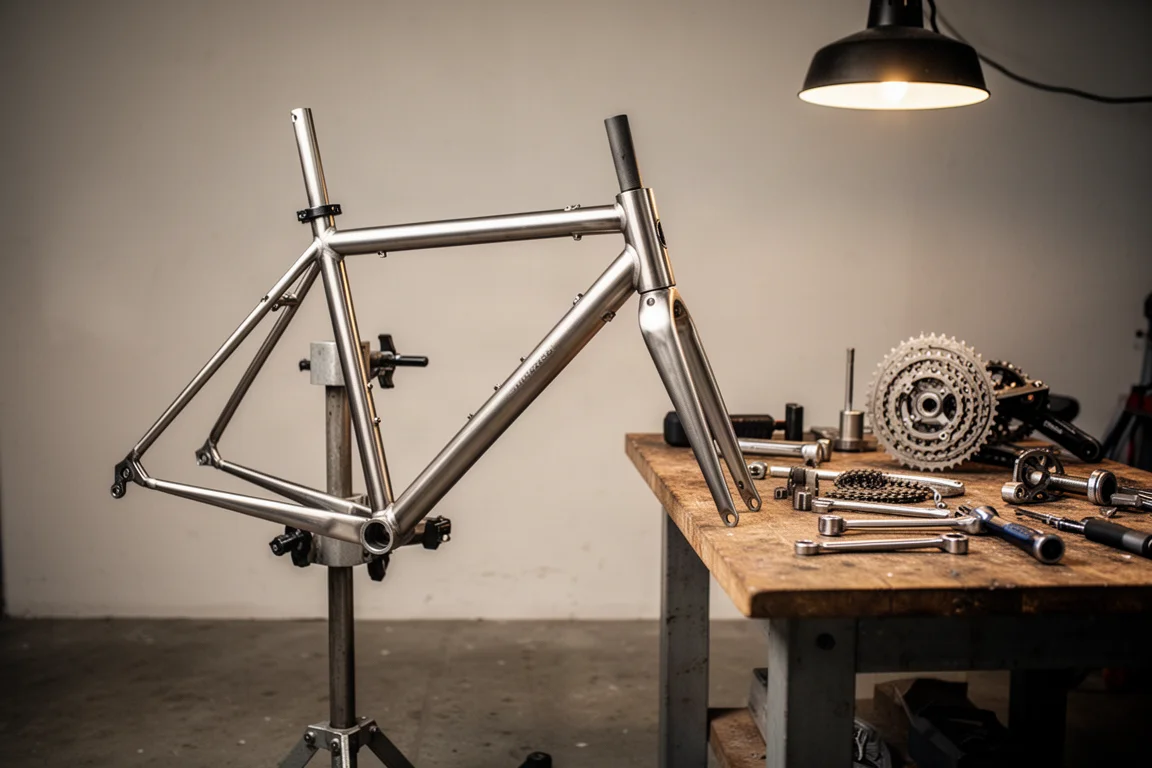
The tubing is a 3/2.5 titanium alloy in a particularly light version, with larger diameters than you would find on a general-purpose gravel frame. The T47 bottom bracket adds stiffness at the pedaling core, while the curved and wishbone rear stays keep the back end lively and visually distinctive.
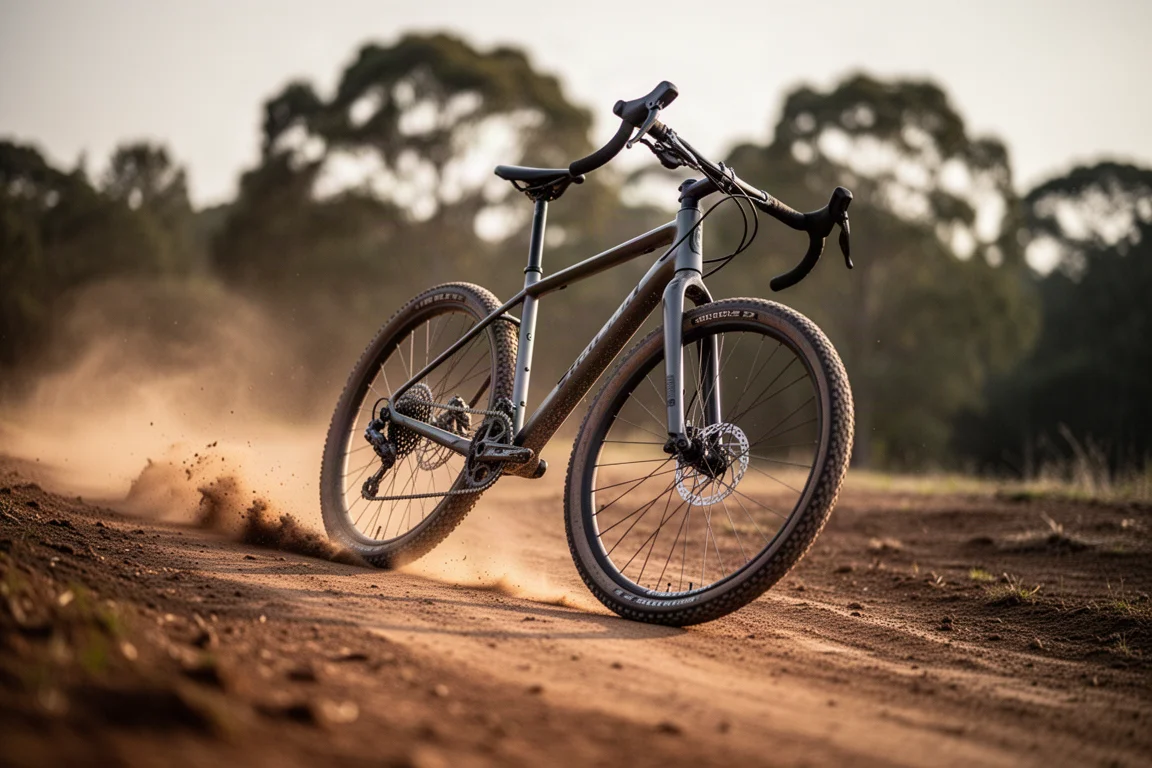
Moots has also introduced 3D printed dropouts that are compatible with the SRAM UDH hanger design. That makes the derailleur hanger easier to replace if it bends or snaps, and it provides forward compatibility with SRAM T-Type transmissions, where the rear derailleur mounts directly to the frame and removes the hanger as a weak point.
The finish is where decades of titanium experience shows. The welds are among the smoothest you will see, with clean transitions at every junction, and Moots uses a special process to produce a range of frame colors and finishes. It is the kind of detail that softens the sting of the price.
How It Rides on Gravel
On smooth forest gravel, twisting singletrack, and everything in between, the Routt CRD handles itself well. The short stem and wide handlebar put the steering on the fast side, and the bike springs from one corner apex to the next with very little hesitation. Narrow trails that would normally call for a mountain bike are genuinely enjoyable here.
Comfort is good off-road. Low tire pressures and the 27.2mm seatpost do a lot of the work, flexing over roots and chatter. The front end, however, feels firmer than expected. The substantial carbon stem and a handlebar with a 35mm clamp diameter appear to remove some of the compliance titanium is known for, and a suspension stem would be a tempting addition if the setup allows it. The handlebar shape itself is sensible, with a 13 degree flare and hoods canted over slightly.
Speed is where expectations need calibrating. The bike is no slouch and it is certainly not slow, but it does not have the explosive, featherweight feel of a high-end carbon gravel race bike.
Cockpit Integration and Tire Clearance
The in-house carbon fork clears tires up to 50mm wide, and the matching stem and handlebar are available in a wide range of lengths and widths, so the fit can be dialed in properly. For riders who want one bike to cover fast gravel racing and rougher days out, that clearance is a real advantage.
Moots has invested seriously in these finishing parts, and it shows in how cleanly the front end comes together. The fork, stem, and bar are designed as a set rather than assembled from mixed components.
The trade-off is visual. A carbon stem and headset sitting on top of a slender titanium frame reads as heavy, and it divides opinion even among titanium fans. Moots still offers other Routt models with a titanium stem and external cable routing for riders who prefer the classic look.
Things to Consider Before Buying
The Routt CRD is built for racing and fast riding, which means it does not try to be everything. Riders who are drawn to titanium for durability often also want more smoothness, more versatility, and mounts for racks and fenders. Those priorities point toward a different build.
It is also worth being honest about the price. This is not an affordable bike by any measure, and the frameset is only part of the cost. Carbon race bikes will remain lighter, stiffer, and more aerodynamic, so the case for the Routt CRD rests on ride character, durability, and the appeal of titanium rather than on the numbers.
Buying Advice and Pricing
The frameset, which includes a Chris King headset, stem, handlebar, and fork, retails for just under $9,000. In the US, complete builds start at around $12,000 with SRAM Force AXS. In the UK, the brand offers frame sets only, so you work with a dealer or bike shop to build the bike to your own specification.
A representative build pairs SRAM Force AXS in a 2x configuration with Panaracer Gravelking tires, a Moots titanium seatpost, a WTB saddle carrying the Moots logo, and matching titanium bottle cages. A 1x drivetrain with an XPLOR cassette would suit many gravel riders just as well.

If the look of a titanium stem matters more to you than hidden cables, another Routt model is the better answer. If full integration is the reason you would choose this bike, the Routt CRD delivers it on a titanium platform.
Conclusion
The Moots Routt CRD is a titanium gravel bike built for racing and fast riding, with full internal routing, a light tube set, 3D printed dropouts, and clearance for 50mm tires. It is not the lightest or most aerodynamic option, and the front end is firmer than some riders will expect, but it offers something carbon cannot match: a tough, paint-free frame that holds up to years of rough riding. For riders who value that durability and the character of titanium, it is a compelling choice.
Product link
View more details for Moots Routt CRD
This product is mentioned in the review. Check the specifications, options, and compatibility before buying.
View more details for Moots Routt CRDFurther reading
Related Reviews

Gravel Bikes
3T Exploro Ultra Review: A Fast Gravel Bike Built for Big Tyres
A close look at the 3T Exploro Ultra, an aero carbon gravel bike designed around wide tyres, with road-like handling, a 980 g frame and genuine rough-terrain capability.

Gravel Bikes
3T Extrema Italia Review: Aero Gravel Speed With Room for 57 mm Tires
The 3T Extrema Italia pairs an aero frame with huge tire clearance, Italian-made carbon and a more comfortable ride than the RaceMax. Here is what to know before buying.

Gravel Bikes
3T Race Max 2 Italia Review: An Aero Gravel Race Bike Made in Italy
A closer look at the second-generation 3T Race Max 2 Italia, covering its aero updates, ride character, tire clearance, internal storage and who it suits.