Everyday Carry
Modular EDC Multi-Tools Compared: Roxon Flex Companion, Mini Flex Companion and Ant Design Zen
Three pocket-sized modular multi-tools that let you swap tools in seconds. We compare size, build quality, tool selection and value to help you pick the right one.
Introduction
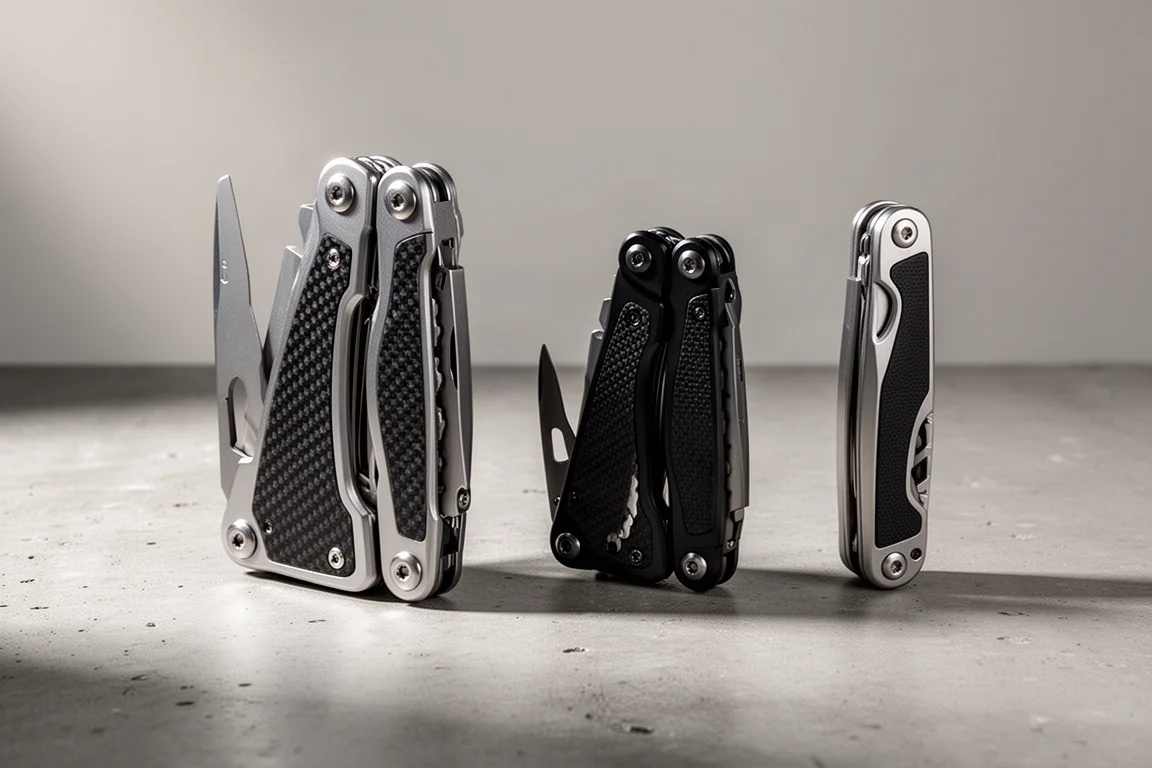
Modular multi-tools are the ones where you can add and remove implements in just a few seconds, so you can build the perfect tool set for your specific needs and change it whenever you want. At Swiss Army knife size, where the built-in tool set is inherently limited, going modular makes a lot of sense for everyday carry.
Three tools currently define this space. Roxon set the benchmark with the Flex Companion, launched in late 2024 and quickly followed by the smaller Mini Flex Companion. Then in early 2026, the far less well-known Ant Design entered the market with the Zen, its first ever multi-tool. Here is how they compare, and why the newcomer arguably takes the lead.
The Line-Up at a Glance
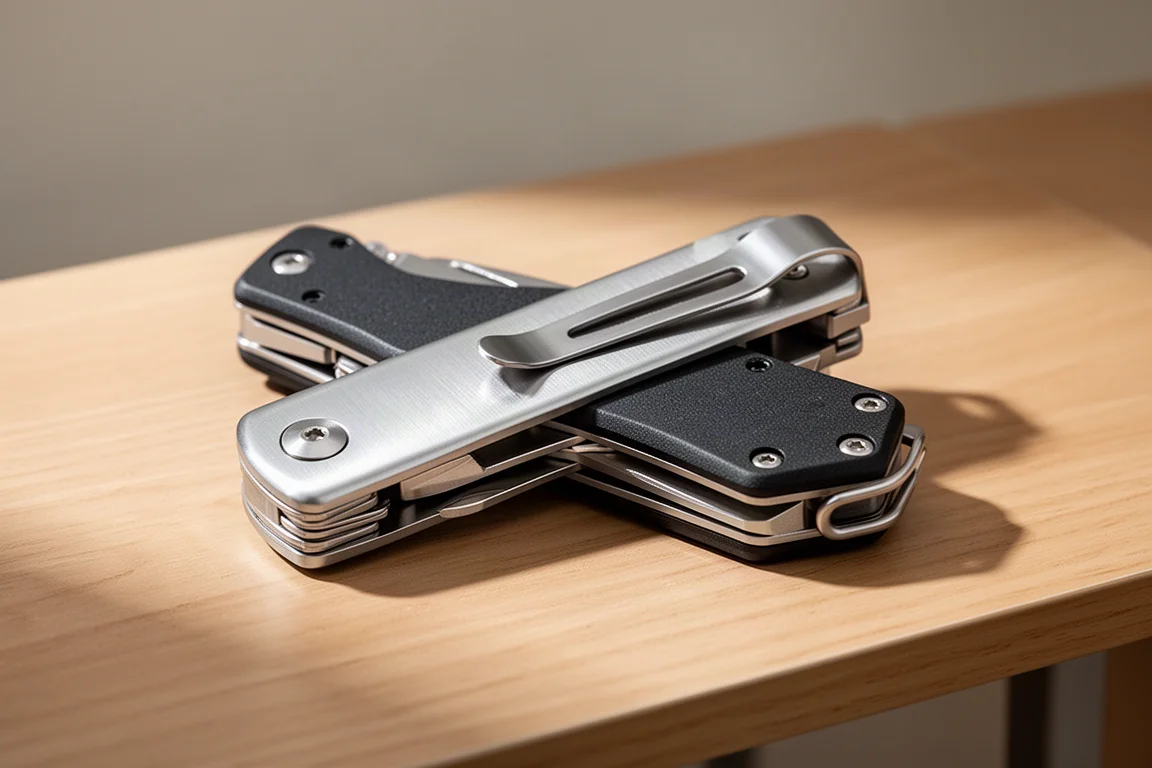
The Roxon Flex Companion uses a steel frame with G10 scales in a range of six colours. There are five tool slots plus a quarter-inch bit driver and a sprung steel pocket clip. It weighs 130 g as supplied, and measures 90 mm long and 24 mm wide.
The Mini Flex Companion shrinks that formula considerably. It keeps the steel frame and G10 scales, but only in black, and offers four tool slots with a smaller 4 mm bit driver. It weighs 84 g as supplied and measures 77 mm long and 19 mm wide. Interestingly, the thickness of the two is quite similar at 17 mm for the Flex and 15 mm for the Mini.
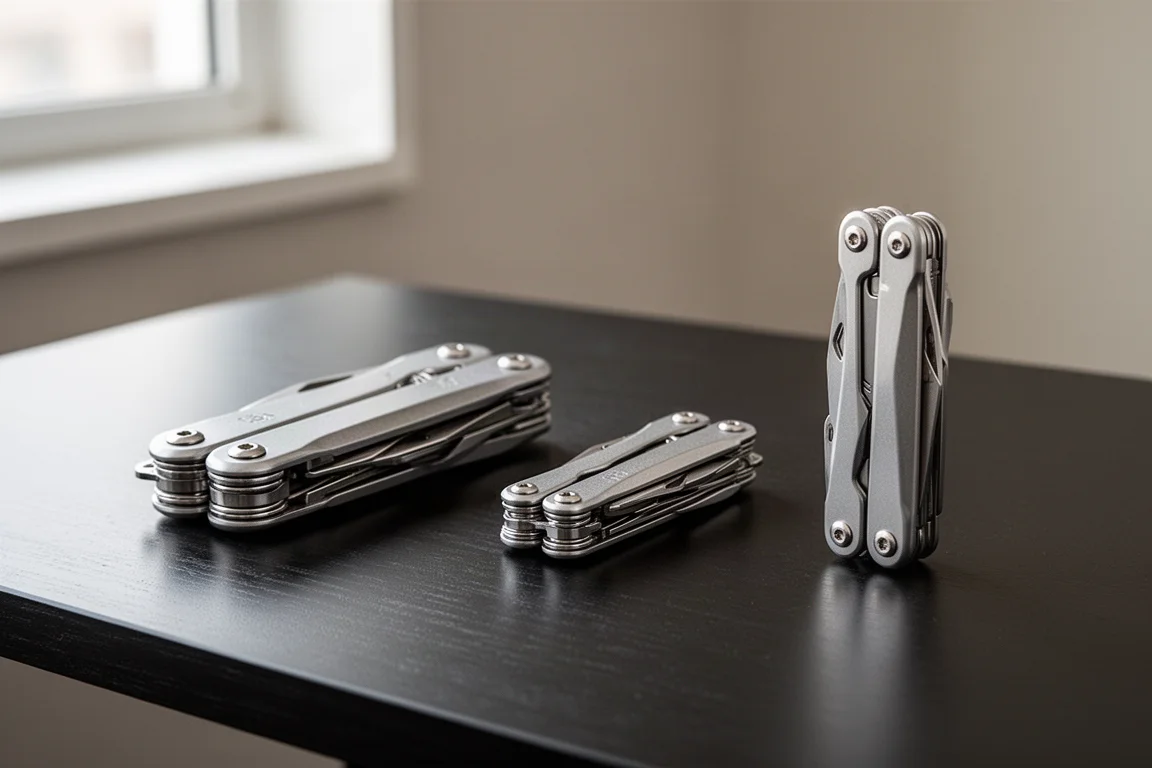
The Ant Design Zen offers three scale material choices: steel, steel with black G10, and titanium. You get five tool slots and a quarter-inch bit driver like the larger Flex, plus a pocket clip that is more substantial and more belt-friendly, since it can be moved sideways on a belt without detaching and swapped to the opposite side. Weight varies by material: 93 g for the titanium, 100 g for the steel, and 106 g for the steel plus G10. It is 90 mm long, like the Flex, and 16 mm thick, sitting between the two Roxons.
The key detail is that the Zen’s scale width is slimmer than either Roxon, slimmer even than the Mini Flex. The dimensions are close to a three-layer Victorinox Swiss Army knife: long enough for effective full-size implements like a blade, saw or file, but compact and light enough for comfortable everyday carry.
Why Modularity Matters for Everyday Carry
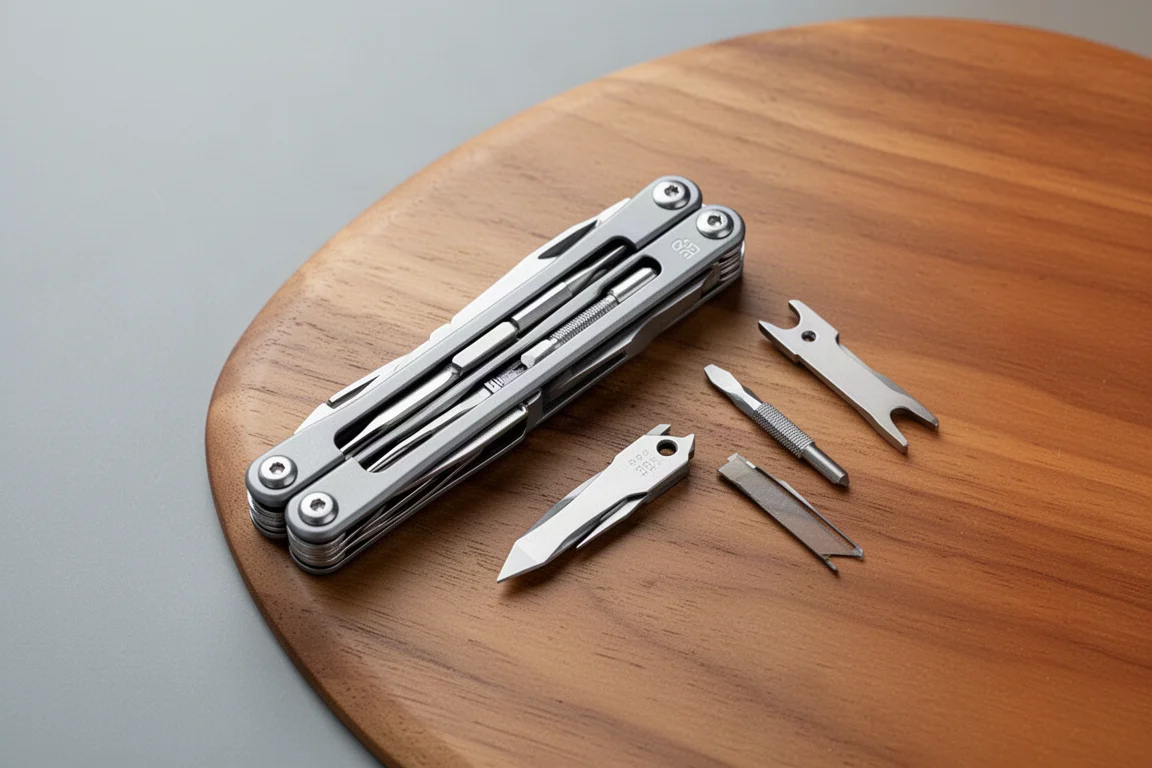
The appeal of all three tools is the same. You can swap out a locking blade for another implement in an instant, which makes the tool legal to carry in countries with more restrictive knife laws such as the UK. In place of a blade, you can still carry an edge reamer, seatbelt cutter or package opener, which in some cases replaces the need for a knife without actually being one.
That flexibility is the whole reason to choose this category over a traditional fixed tool set, and all three tools here deliver it with a simple removal mechanism and a Torx driver included for fine-tuning the torque screws.
Bit Drivers: Quarter-Inch vs 4 mm
The Flex and Mini Flex share the same driver design, opened with a fingernail and locked with a liner lock. The quarter-inch driver on the Flex has a mirror polish finish and works well, with the bit held in place by a magnet. However, the liner lock spring takes up a lot of internal space, and this design contributes to the wider profile of the tool.
The Mini Flex uses the same arrangement in a smaller form, but its 4 mm driver simply is not as capable as a full quarter-inch driver when it comes to bit choice and leverage.
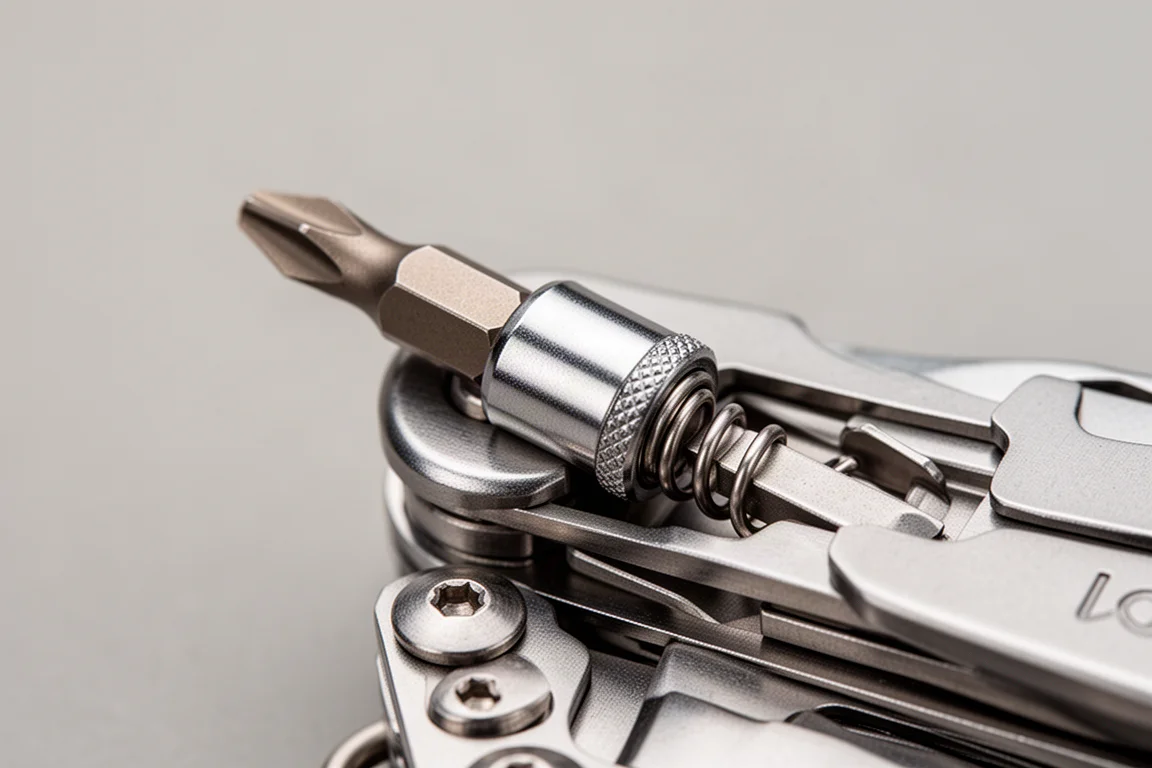
The Zen takes a different approach: a quarter-inch driver with a magnetic bit retainer, but using a button lock mechanism instead. That brings two advantages. First, it is a much more compact arrangement with no long leaf spring, reducing overall width. Second, it allows a 90-degree lock for working in small spaces or when more leverage is needed. It also feels more precise in use, and the overall finish quality is a noticeable step up.
Operation and Locking
The Flex and Mini Flex work identically. Both have a slide lock that must be unlocked before any tool can be opened or closed. That lock serves a purpose: with these tools unlocked, a jolt can deploy the implements on their own, something that does not happen with the Zen or most other multi-tools.
The main blade opens single-handedly on all three, though the forward position of the thumb stud or grip can get in the way when using the knife, especially on the Zen and Mini Flex. Once open, the blade locks into place as do all the tools. On the Flex, a spring-loaded button releases the blade and can be operated one-handed. On the Zen, closing the blade means pushing down on a tensioned release lever, which can be done one-handed but puts your fingers closer to the edge, so two hands are advisable.
For selecting tools, the Flex lets you push forward on the button so all tools pop out, fan them out, pick one, and it locks into place. Simple and effective. On the Zen, you hold it tools-down, pull the release lever so the tools drop, fan and select, and lock in the same way. It is slightly less refined, but works well.
Swapping Tools
Removal is the main reason for choosing a modular tool, and both makers keep it simple. On the Flex, you deploy the tool you want to remove, lock it, then push the button backwards until it clicks so the tool can be replaced.
On the Zen, you move the release lever to the top so the tools loosen, then position the tool at 90 degrees to the handle to remove it. Crucially, the Zen’s blade slot is separated from the rest of the tools, so you can remove the blade and everything still works fine with the slot left empty. That is ideal if you need to take out the knife with nothing immediately at hand to replace it. On the Flex, all slots must be occupied at all times or things get floppy.
The only real drawback with the Zen is that the release lever sits proud of the frame, which spoils the clean lines slightly and could catch on a pocket if stored upside down. It does not get in the way of use, and since it attaches like any other tool, a future revised lever would be an easy swap.
Tool Quality and Steel Choices
The implements cannot be interchanged between the Flex family and the Zen, so your choice of platform matters. The Flex has a surprisingly good D2 steel main blade, while the Zen uses 440C, which sits just below D2 in edge retention. The Mini Flex, in contrast, uses a much more basic steel for its blade.
For the other implements, both Roxon tools use entry-level 3Cr13 steel, a budget-grade material that can be easily stamped from sheet steel to keep costs down. The Zen instead uses the same 440C steel throughout, which is much harder to stamp. Every tool is individually CNC machined, which is time-consuming, costly, and very unusual in any multi-tool. The result is a tougher, more precise tool set, visible in the crisp, almost chisel-like edges compared with the more rounded stamped edges of the Roxon implements.
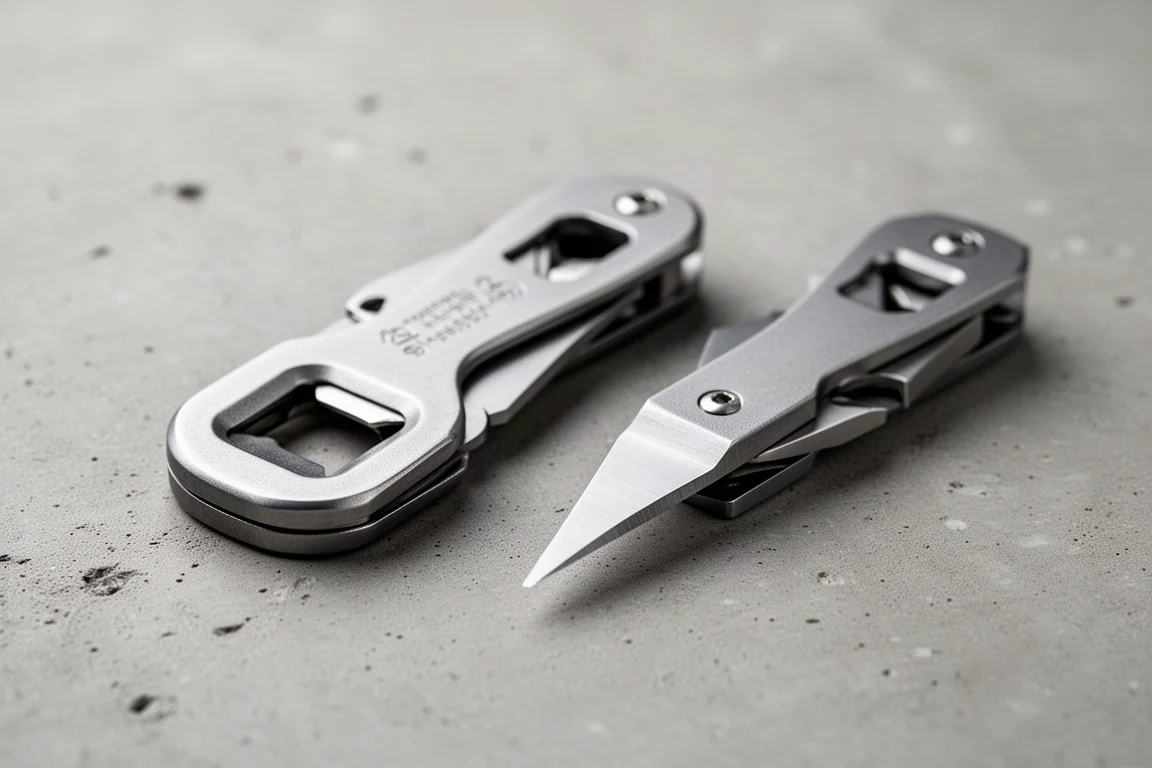
As for what is included, the Flex has a good selection, and its scissors cut 550 paracord cleanly even towards the tip. It also ships with a comb and an unusual implement holding a pen, sewing needle and tweezers, which feels a bit cheap and occupies two slots. The Mini Flex’s selection is weaker, though its extra screwdriver, ruler and file tool is more useful than the installed can opener. Its scissors need smaller cuts rather than one clean pass, and it hides a couple of bonus scale tools: tweezers and a toothpick.
The Zen’s included tools are also a bit limiting, with no scissors out of the box, though a full scissors implement was launching imminently alongside a whole range of new implements, laser cut due to the thinner steel. They cut well but require a little more effort than the Flex due to their slightly smaller size. Roxon already offers a much larger range of compatible implements for both of its tools, subject to size, while Ant Design’s new selection covers most realistic needs.
Value and Buying Advice
On price, the Flex is around £50 or $50, the Mini Flex around £40 or $40, and the Zen starts around £60 or $70. The Flex models are available from Amazon and Roxon’s own site, while the Zen is currently only available from the Ant Design website. All three represent good value.
The preference here, though, goes to the Zen. Its size sits in the Goldilocks zone: large enough to be practical and compact enough to be pocketable, whereas the Flex feels too bulky and the Mini Flex is just a bit too small. You also get the superior quarter-inch bit driver in the compact size, the benefit of the 90-degree lock, a better pocket clip, and a clear step up in overall quality, with tougher CNC-machined 440C tools and a brushed satin finish that looks more premium. Roxon’s wider tool selection is a genuine advantage, but with Ant Design now covering the essentials, nothing important is missing, and the price gap is not big enough to swing the decision.
If you want maximum tool variety and the lowest price, the Roxon Flex Companion is the safe pick. If pocketability matters most, the Mini Flex Companion is the most compact of the three. For the best balance of size, build quality and capability, the Ant Design Zen is the one to beat.
Conclusion
Modular everyday carry multi-tools have matured fast, and all three of these tools make a strong case. The Roxon Flex Companion and Mini Flex Companion offer proven designs, a huge ecosystem of implements and lower prices, while the Ant Design Zen brings CNC-machined 440C tools, a compact quarter-inch bit driver with a 90-degree lock and the slimmest profile of the bunch. Choose based on whether you value tool variety, absolute compactness, or the best all-round balance.
Further reading
Related Reviews

Everyday Carry
Everyday Gear That Deserved a Second Look
A roundup of solid everyday carry items: watches, pens, a pencil, a knife, and a smart ring that each earned a place on the table.

Everyday Carry
KORE Tactical Bifold Wallet Review: A Durable Everyday Carry Option
A close look at the KORE Tactical Bifold Wallet, a reinforced nylon wallet with magnetic closure and room for cards, cash, and IDs.

Everyday Carry
Krabby Wallet Review: A Slim, Simple Carry That Has Stood the Test of Time
A closer look at the Krabby Wallet, a slim canvas and elastic design with a loyal following and a simple, functional approach to everyday carry.