Power Tools
Miter Saw Buying Guide: 5 Things to Check Before You Buy (Plus 2 Nice-to-Haves)
Blade size, slide rails, physical footprint, power, and bevel type all matter more than you think. Here is how to pick the right miter saw without overpaying for size you will never use.
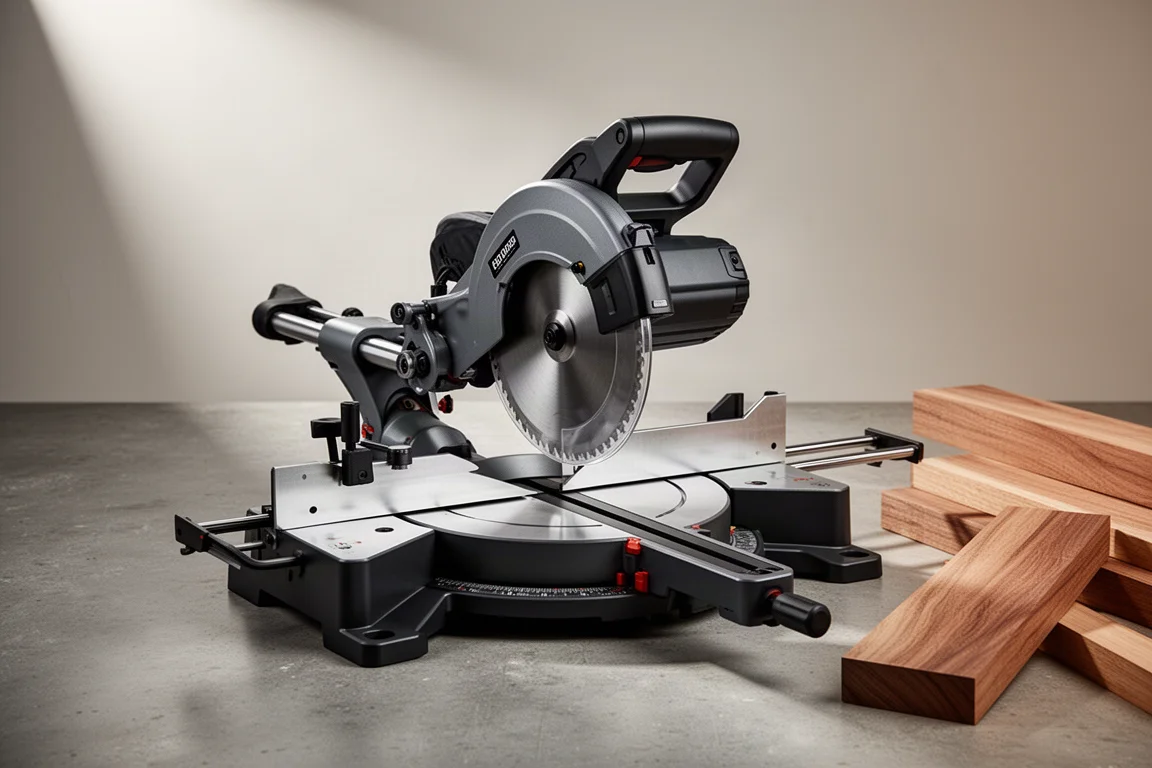
Introduction
Choosing a new miter saw seems simple enough. You can get big ones, you can get small ones, and on the surface it looks like size is the whole decision. In practice, it is definitely not all about size. There are several factors worth working through, some of which are not obvious at all, and a couple of them only become clear once you have actually stood in front of the machines in a shop.
After comparing makers, models, sizes, and types across the market before settling on a new saw for the workshop, a pattern emerged: the right choice depends far more on your situation than on any headline specification. Here are five areas to be aware of, plus two nice-to-haves, so you can buy with confidence and avoid regret.
1. Blade Size and Depth of Cut
Miter saw blades generally range from 7-1/4 inches (184 mm) up to 12 inches (305 mm). The more teeth a blade has, and the closer those teeth are together, the finer the cut; wider spacing gives a rougher finish. Every blade also carries its key details printed on it: for example, a blade marked 184 x 1.6 x 16 means a 184 mm diameter, a 1.6 mm kerf thickness, and a 16 mm bore, though most miter saw blades use a 30 mm bore as standard.
Bigger blades generally mean deeper cuts, but the maximum depth is really the radius minus the motor and gearbox mechanism in the middle. Most saws use an offset gearbox to push that figure up, and in practice the depth of cut lands around 25 mm or an inch below the blade radius on smaller machines, growing to around 40 mm of loss on larger ones. The exact figure varies by make and model, so check it if deep cuts matter to you.
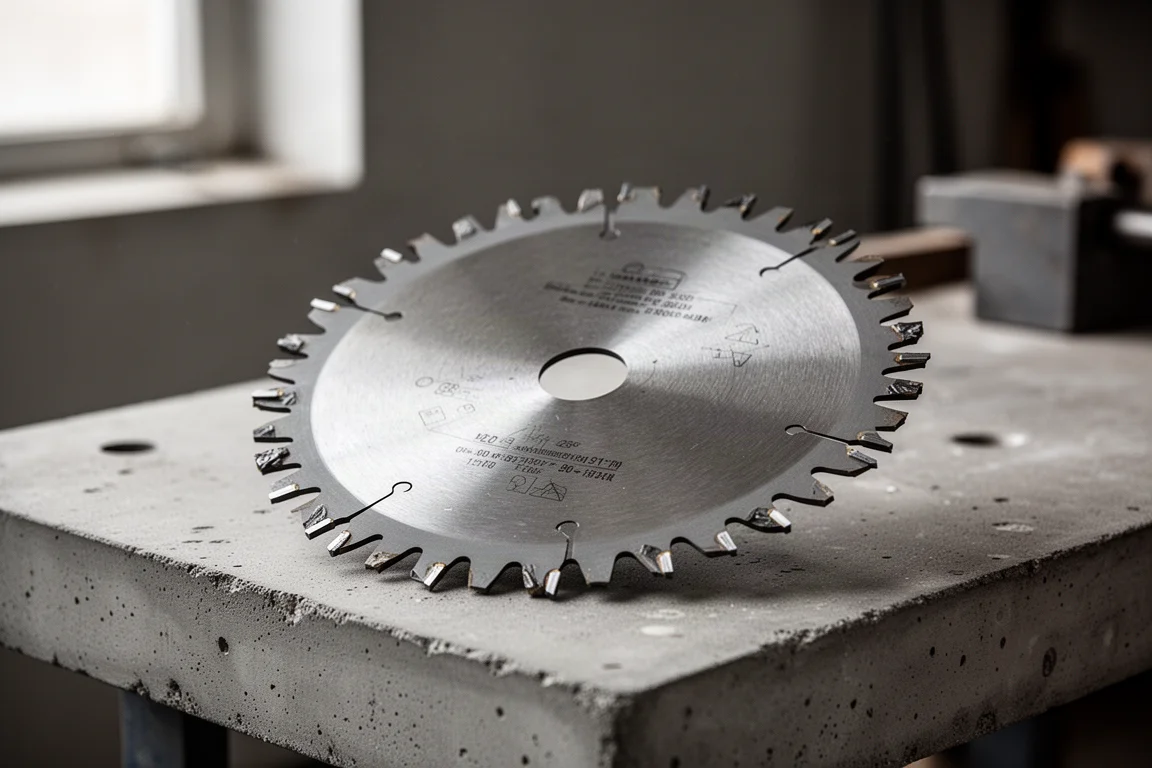
Depth of cut is most important if you are cutting large pieces of wood. If you are landscaping and going through sleepers, fence posts, and 4x4 timbers, or building an extension with chunky roofing timbers, a bigger saw makes far more sense than a smaller one. The last thing you want is to flip the workpiece over every cut because the blade only got halfway through.
2. Width of Cut and Slide Systems
Depth of cut is only half the story. The second thing to check is the width of cut, which is the distance between the fence and the blade. An older 10-inch (250 mm) saw can be surprisingly limited here, managing only around 125 mm or 5 inches of width despite carrying a large blade.
A modern saw with a smaller 216 mm (8-1/2 inch) blade and a slide system can easily double that, cutting around 260 mm wide. Any sliding miter saw will cut wider than a simple chop saw that only moves up and down, which makes a slide particularly handy for skirting boards, flooring boards, and other wide, thin material.
3. The Physical Size Problem
Not all sliding saws suit every workshop, though, and the main drawback is the rails. Saws with rear-facing rails need a lot of clearance behind them, which pushes the machine forward when you are working against a wall. One compact saw measured only 420 mm (about 16-1/2 inches) from the back of its rails to the fence, yet a saw with forward-facing rails needs just over 10 inches, and that is without even pushing it to its full travel.
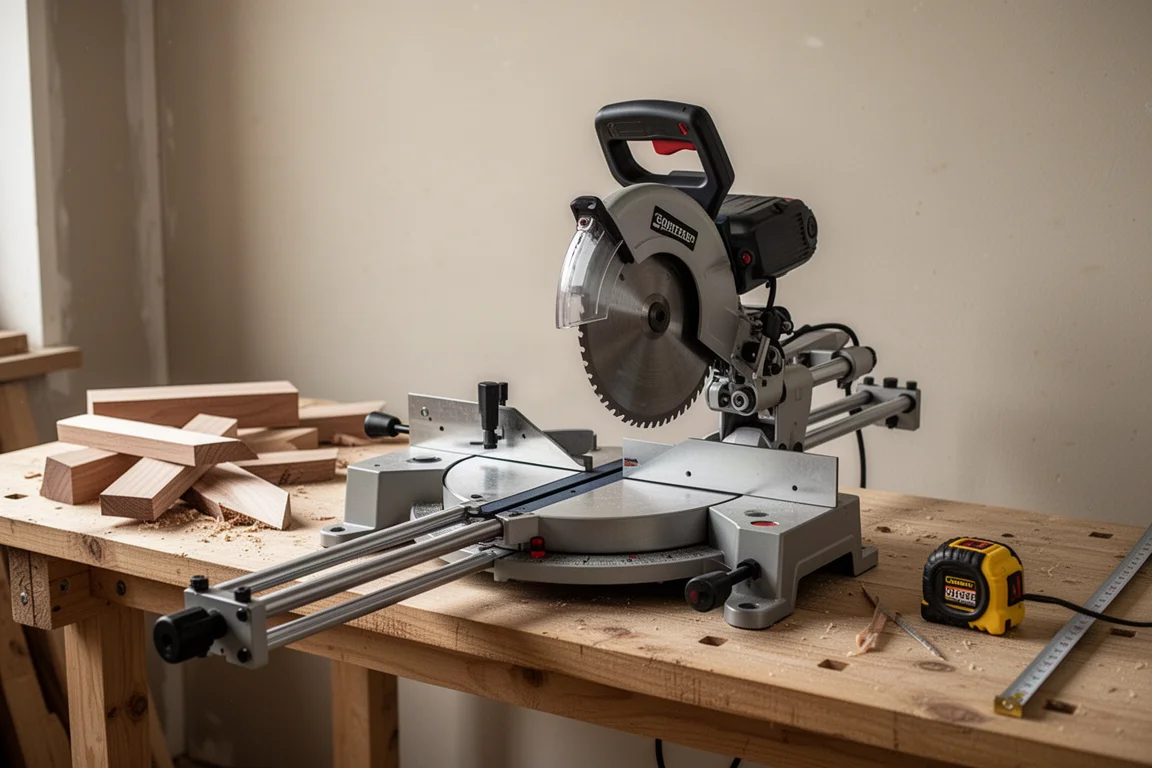
If you use the saw outside, none of this matters. But once it comes into the workshop and sits against a wall, forward-facing rails save a surprising amount of room, especially on the bigger machines.
There is also a lesson that only really lands in person: the big 12-inch machines are enormous. They are excellent pieces of kit, and if you have a large project or are making money from landscaping or building, they are absolutely the right tool. But for the average DIYer, a machine so physically big that it barely fits a small workshop is overkill. Spending in the region of 700 to 1,000 on one only makes sense if you genuinely need it. A medium-sized machine cuts just as well and copes with 99.9 percent of everything most people will ever ask of it.
4. Mains Power or Battery Power
Whether you run mains or battery is a decision only you can make. Cordless miter saws are far more common than they used to be, and not needing a power source nearby means you can set up and work anywhere at a moment’s notice.
Some cordless models are genuinely just as powerful as mains machines, especially at higher voltage. The Makita XGT range is a good example: with its 40V batteries, it is difficult to tell the difference between it and a mains-operated saw in use.
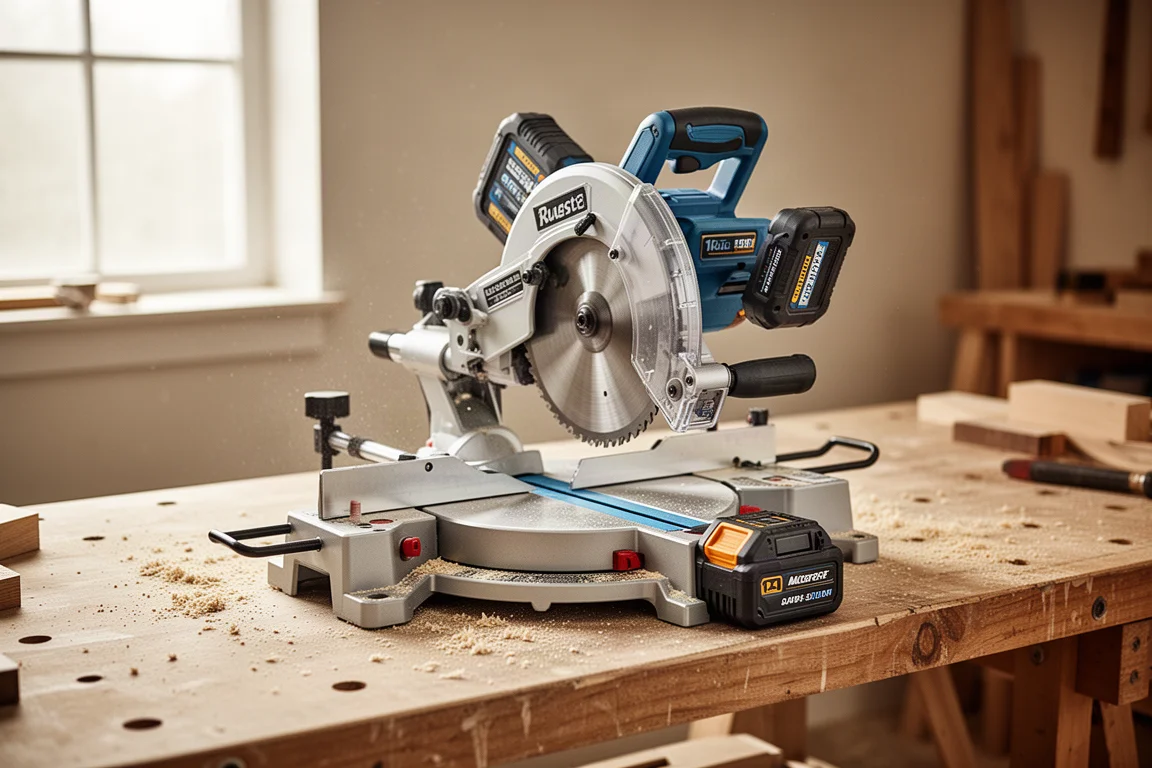
The catch is the platform. Going cordless usually means investing in a whole new battery system, which can be a significant cost. And if the saw lives indoors near an outlet, mains power means no batteries to change at all. Be wary of the cheaper models running off 18V batteries; some of them clearly are not as powerful as they should be. Consider carefully whether battery freedom is worth it or whether mains suits your setup better.
5. Single Bevel or Double Bevel
A single bevel saw only leans over on one side. As you bring it back, it comes to 90 degrees and will not tilt the other way. A double bevel saw leans on either side, which is a real time-saver if you do a lot of trim work on a deadline and need to speed up repetitive cuts.
For occasional DIY use, a single bevel has never been a real limitation. But if you are doing a lot of work or working on site, double bevel is worth the extra look.
Nice-to-Haves Worth Considering
Two features are worth knowing about even if they are not essential. First, a trenching facility, which allows trenching cuts and is genuinely useful for making half-lap joints. You will find it on most sliding saws.
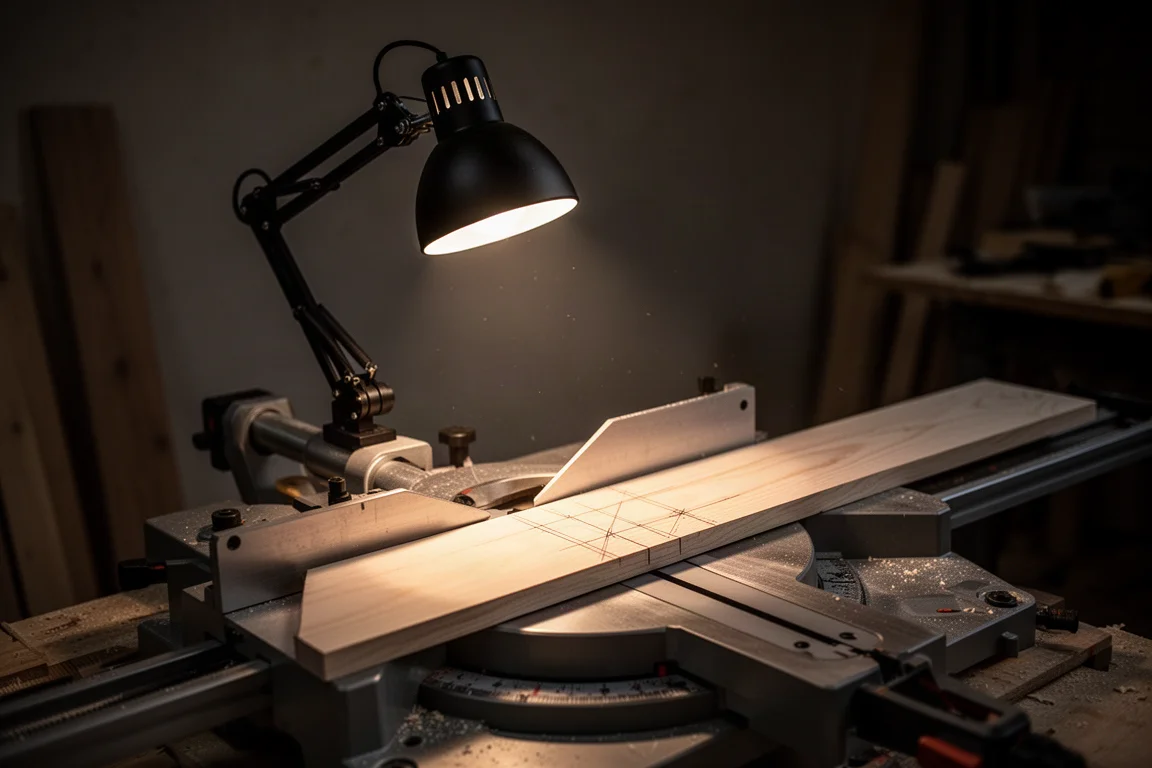
Second, some type of cutting guide, either a laser guide or a shadow line guide. In practice these have limits: you will not see them at all when working outside, and if you are chasing near-perfect accuracy, neither is as precise as simply lining up the blade against your pencil mark. A simple 10 or 15 sewing machine-style light turned on over the cut gives a clear view of what is going on, works on any machine, and arguably serves you better.
Conclusion
There is always a compromise between cost and cut size and physical size, and no single saw wins on every front. But knowing what to look for gets you much closer to the right machine: check the real depth and width of cut rather than just the blade size, mind the rails if your saw will live against a wall, be realistic about how big a machine you actually need, weigh the battery platform cost against mains convenience, and pick bevel type based on how much work you do. Get those right and you are far less likely to regret the purchase.
Product link
View more details for Makita XGT Range
This product is mentioned in the review. Check the specifications, options, and compatibility before buying.
View more details for Makita XGT RangeFurther reading
Related Reviews
Power Tools
Best 1-Inch Pistol Impact Wrenches: Three Heavy-Duty Options Compared
We compare three 1-inch pistol impact wrenches, from a budget-friendly Harbor Freight model to a premium Caterpillar unit, to help you choose the right one.
Power Tools
Best 3/4-Inch Impact Wrenches 2026: Five Contenders Compared
We compare five 3/4-inch impact wrenches across price and performance, from a budget Amazon option to Snap-on's most powerful model yet.
Power Tools
Best Budget Cordless Tools 2026: Walmart Finds That Punch Above Their Price
We tested five cordless tools from Walmart, including a high-torque impact wrench that trades blows with Milwaukee and a $35 duster that outperforms its price class.