Kitchen Knives
Misen vs. Made In Chef's Knife: Which One Deserves Your Counter?
Two affordable direct-to-consumer chef's knives compared on handle design, blade profile, steel, construction, and price.
Introduction
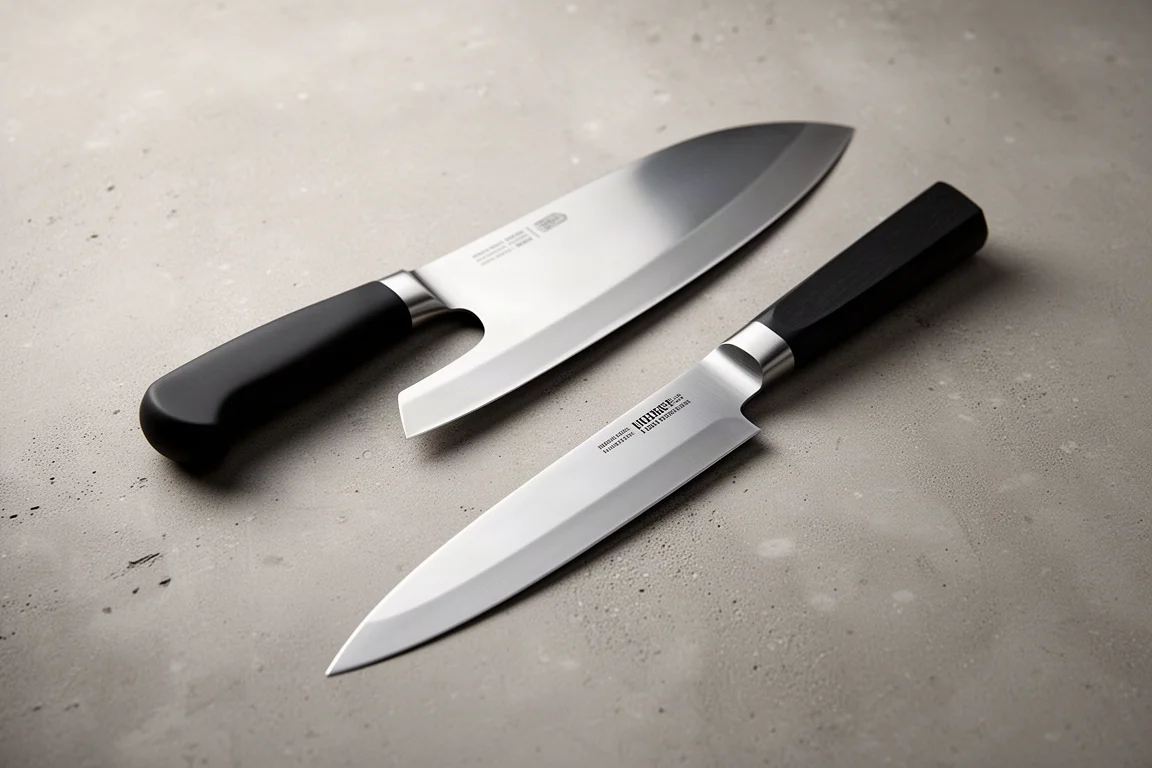
Misen and Made In have a lot in common. Both brands launched within the last ten years, both were born online as direct-to-consumer companies, and both sell high-quality knives at prices well below traditional premium brands like Wusthof and Shun. But there are some significant differences between the two chef’s knives that matter a lot before you buy. This comparison breaks down how they differ in handle design, blade profile, steel, construction, build quality, and price, so you can pick the one that matches how you actually cook.
Handle Design and Comfort
This is one of the most noticeable differences between the two knives. Made In handles are round and straight, while Misen handles have flat sides, squared edges, and a curve right toward the butt end.
The squared edges on the Misen handle dig into your hand and can feel uncomfortable when you’re chopping for long periods. The Made In handle, despite looking like it might not offer much grip because of its round shape, turns out to be smooth, comfortable, and secure once you get used to it.
Misen handles are also slightly longer: about five and a half inches from the top of the bolster to the butt end, compared to about five inches on the Made In.
Colors differ too. Made In offers three handle options: red, black, and wood grain. The red and black versions use a hard, moisture- and fade-resistant synthetic resin, while the wood handle is Mediterranean olive wood, which is hard and very durable. Misen uses a similar synthetic material and offers four colors: blue, black, gray, and red.
Blade Profile: Rocking vs. Precision
The blade profiles are genuinely different. The Made In blade is wider with a more curved belly, has very few flat points, and is better suited for a rocking motion. It’s also great for scooping ingredients off the board since the blade is so wide.
The Misen blade is slimmer with less curve. You can still rock with it, but it performs better for up-and-down chopping and slicing. The slimmer profile also makes it easier to navigate around things like a chicken or to take the rind off a watermelon.
Neither profile is objectively better. It comes down to how you use your knife and your personal preference: rocking and scooping favors Made In, precision work favors Misen.
Edge Angle and Cutting Performance
Made In sharpens its edge to 12.5 degrees per side, while Misen sharpens to 15 degrees per side. That means Made In’s edge is technically sharper out of the box. In practice, both knives are incredibly sharp and you won’t notice much difference in cutting performance. Both can slice through tomatoes in one stroke and cut through potatoes with ease.
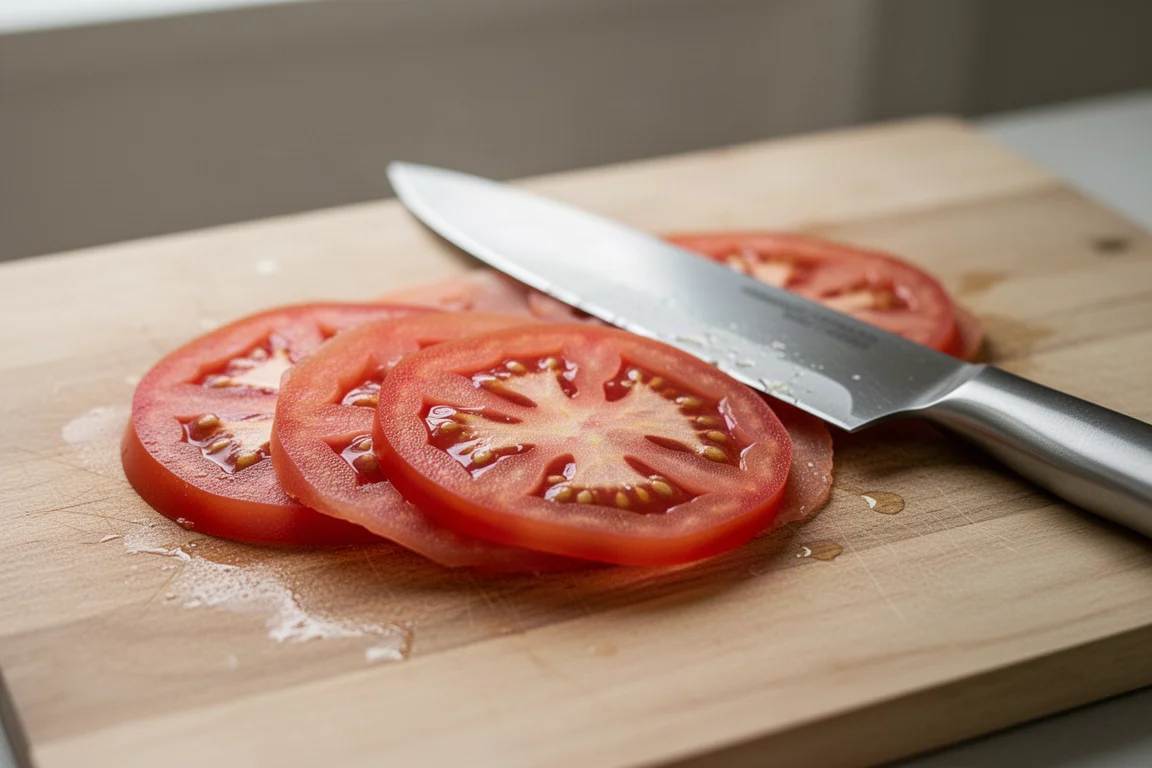
Over time, both knives dull and need resharpening, but Made In stays a little bit sharper for a little bit longer. That may be due to its premium German stainless steel or the nitrogen treatment applied to lock in sharpness. Misen doesn’t dull quickly either, and sharpening either knife is a quick process.
Steel and Construction
Made In makes its blades from German steel, a premium blend also used by knife makers like Wusthof and Zwilling. It’s an ideal stainless steel for kitchen knives thanks to its strength and rust resistance. Made In’s blades are also nitrogen-treated, which hardens the blade and increases durability and edge retention.
Misen blades use Japanese AUS-10 steel, which has roughly double the carbon content of Made In’s steel. Higher carbon usually means a harder steel that holds its edge longer, but both knives are rated at 58 on the Rockwell Hardness Scale. In use, Made In holds its edge slightly longer, though the difference isn’t significant.
Construction is the bigger story. Made In knives are fully forged, meaning the knife is made from a single rod of metal that’s heated and hammered into form. Forging hardens the steel and increases durability. Misen blades are stamped: they begin as a large sheet of steel, the blade is laser cut from the sheet, and the blade is then welded onto the bolster and tang. Stamping makes knives easier and more economical to mass produce, but it typically results in a less durable blade.
That said, not all stamped blades are low quality. The Misen blade isn’t a thin, flimsy stamp like you’d find on $20 grocery-store knives. It looks, feels, and performs like a forged blade. If the brand didn’t disclose it, most users would never guess.
Fit and Finish
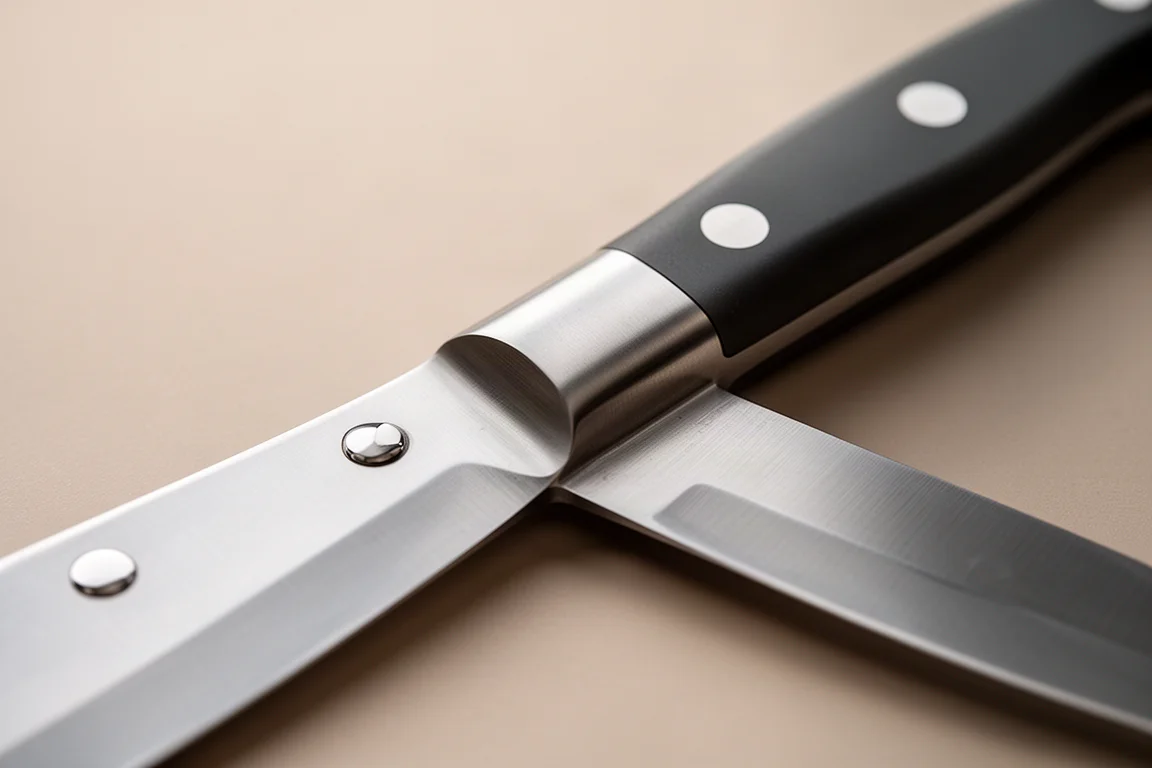
The fit and finish on the Made In knife is almost flawless: a smooth transition from handle to blade, a consistent bevel along the entire edge, perfectly circular rivets, and no gaps where the handle and steel meet. Misen has a couple of minor flaws, including a slight gap where the handle and steel meet and rivets that aren’t perfectly circular.
Where the Knives Are Made
Made In partners with a family-owned French knife factory in Thiers, France, a region known as the capital of cutlery. Companies there have been producing fully forged knives for over 700 years, and today Thiers is home to roughly 100 knife makers and a cutlery museum. It’s a place with deep cutlery expertise, talent, and tradition.
Misen is less transparent about production. Its product page lists the country of production as PRC (the People’s Republic of China), and the FAQ page says the knives are made in a facility just outside Shanghai, but little else is publicly known.
Warranty and Returns
Misen offers a 60-day test drive: if you’re not completely satisfied with the knife’s performance, you can return it for a full refund. Made In offers a very similar guarantee, but for 45 days. Both brands include a lifetime warranty covering material defects and construction issues. Damage from improper use, improper storage, or poor maintenance isn’t covered by either.
Price Comparison
Because both brands sell exclusively online, they can price their knives well below retailers like Wusthof and Shun. Both are affordable given the quality, but Misen is cheaper. The 8-inch Misen chef’s knife is currently listed for $65 on Misen.com. The Made In chef’s knife is $99 on MadeInCookware.com, and $139 with the olive wood handle. The price gap comes down to two factors: Misen is made in China with stamped blades, while Made In is made in France with fully forged blades.
Which Knife Should You Buy?
Ask ten people who have used both knives which one to buy, and you’ll get an even split. Both knives look, feel, and perform like knives that cost twice as much. The three main factors to weigh are handle shape, blade profile, and price.
Made In has a rounder handle, a more curved blade profile suited to rocking, and a higher price, but you get a fully forged blade made in France. Misen has a slimmer blade with a straighter edge for precision work, and it costs less.
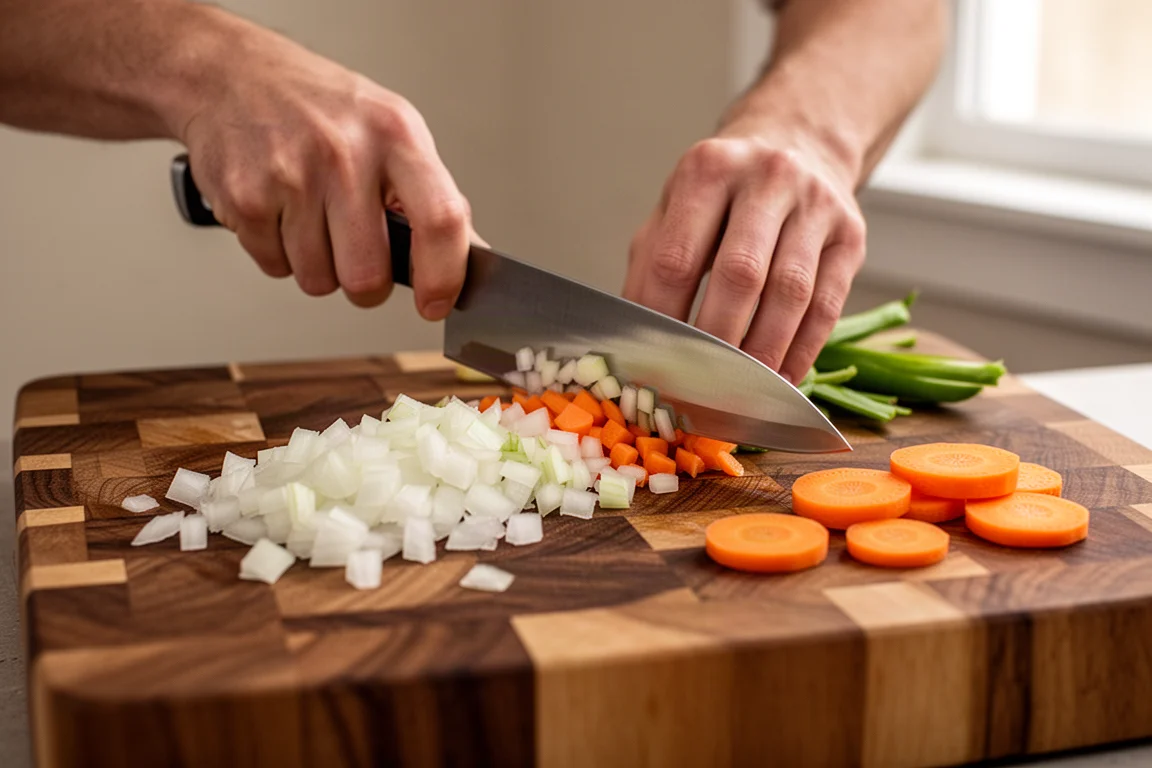
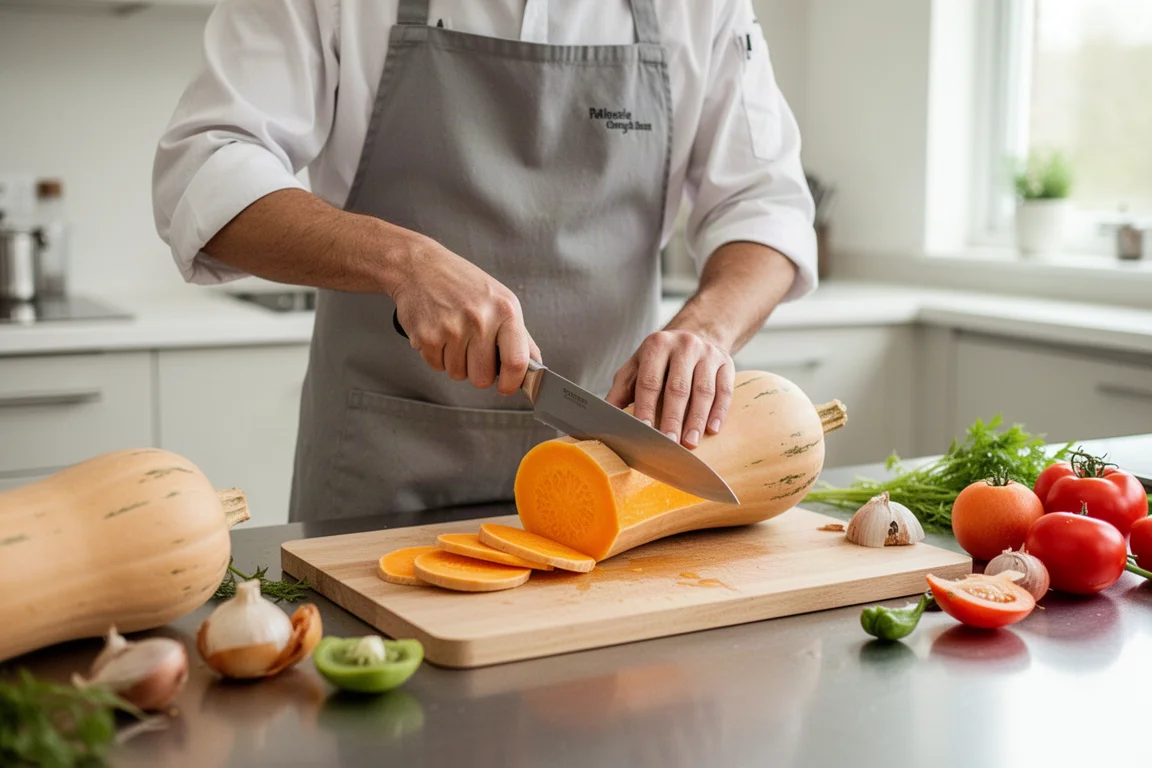
For everyday rocking, breaking down ingredients like squash and carrots, and scooping diced onions, Made In is the better fit. If precision matters most, Misen’s slimmer blade and straighter edge are the draw.
If you had to choose just one, Made In is the stronger pick: the rounded handle is more comfortable, and for a little more money you get a forged blade that should hold up better long term.


Conclusion
Both the Misen and Made In chef’s knives punch well above their price. Misen wins on price and precision-oriented cutting; Made In wins on fit and finish, construction quality, and long-term durability. Match the handle shape and blade profile to your cooking style, and either knife is a confident buy.
Further reading
Related Reviews

Kitchen Knives
Best Chef's Knives 2026: 27 Popular Options Tested and Ranked
A comprehensive review of 27 chef's knives ranging from $18 to $380, with honest assessments of handle comfort, blade balance, and real-world performance.

Kitchen Knives
Best Chef's Knives Under $75: Two Tested Recommendations
Two practical 8-inch chef's knives that balance sharpness, comfort, and durability without premium pricing.

Kitchen Knives
Best Chef's Knives 2026: 27 Options Tested and Ranked
A comprehensive review of 27 chef's knives ranging from $18 to $380, with honest assessments of handle design, balance, blade profile, and real-world performance.