Worksite Audio
Milwaukee Wireless Earbuds Review: Hearing Protection Meets Jobsite Audio
Milwaukee's $179 wireless earbuds double as hearing protection with a jobsite aware mode, a swappable battery case, and up to 70 hours of runtime. Here's what holds up after real use.
Introduction
When Milwaukee first announced its wireless earbuds at $179, the reaction from a lot of people, including this review, was that the price seemed steep for what looked like ordinary earbuds. After spending real time using and abusing them on actual work, that impression changed. These are not just earbuds that play music. They are built as hearing protection for people on construction sites, HVAC jobs, plumbing work, and other loud environments, and that changes the value equation completely.
Who These Are For
These earbuds make sense for anyone working around loud machinery who also wants music, calls, and awareness of their surroundings. Milwaukee is first and foremost a tool company, and its audience uses gear on the jobsite. That framing explains the design choices here: features that protect your hearing on the job are also what make it easier for a supervisor to let you wear them.
If your main priority is blasting music at maximum volume, these are explicitly not for you. The volume ceiling is deliberate, and it is the single biggest trade-off of the whole package.
Case, Charging, and Battery Life
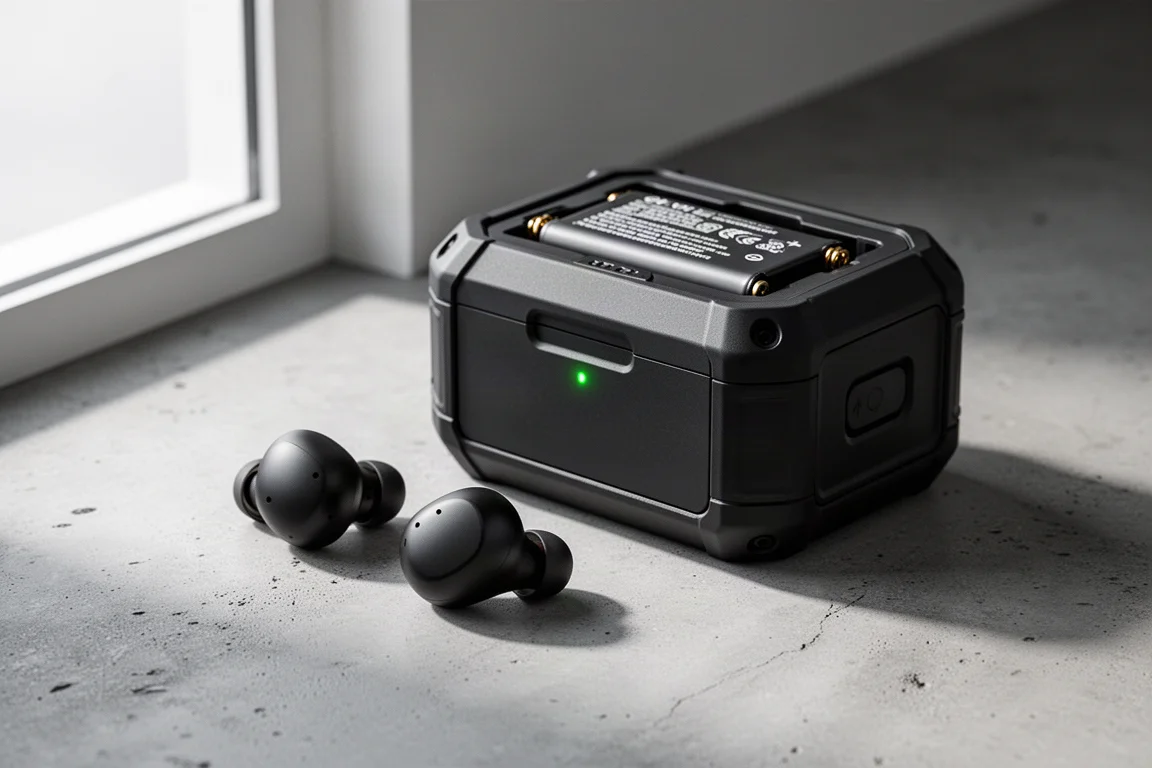
The case is large, and that is the first thing people notice. It is genuinely big for earbuds, but the size earns its keep. On top sits a removable 4V battery pack that pops out, so if you have a spare you can swap it in and get back to work without waiting for a charge. There is also a USB-C port for conventional charging, and a small indicator light on the case shows charge status.
With a full charge you get up to 70 hours of total runtime, with about 10 hours per earbud use before the case recharges them. The earbuds themselves light up to show battery level: green means between 54 and 100 percent, yellow means 6 to 53 percent, and brown means 0 to 5 percent, meaning it is time to charge. Inside the lid, the quick-start instructions are printed right into the case, a small touch that helps when the paper manual disappears.
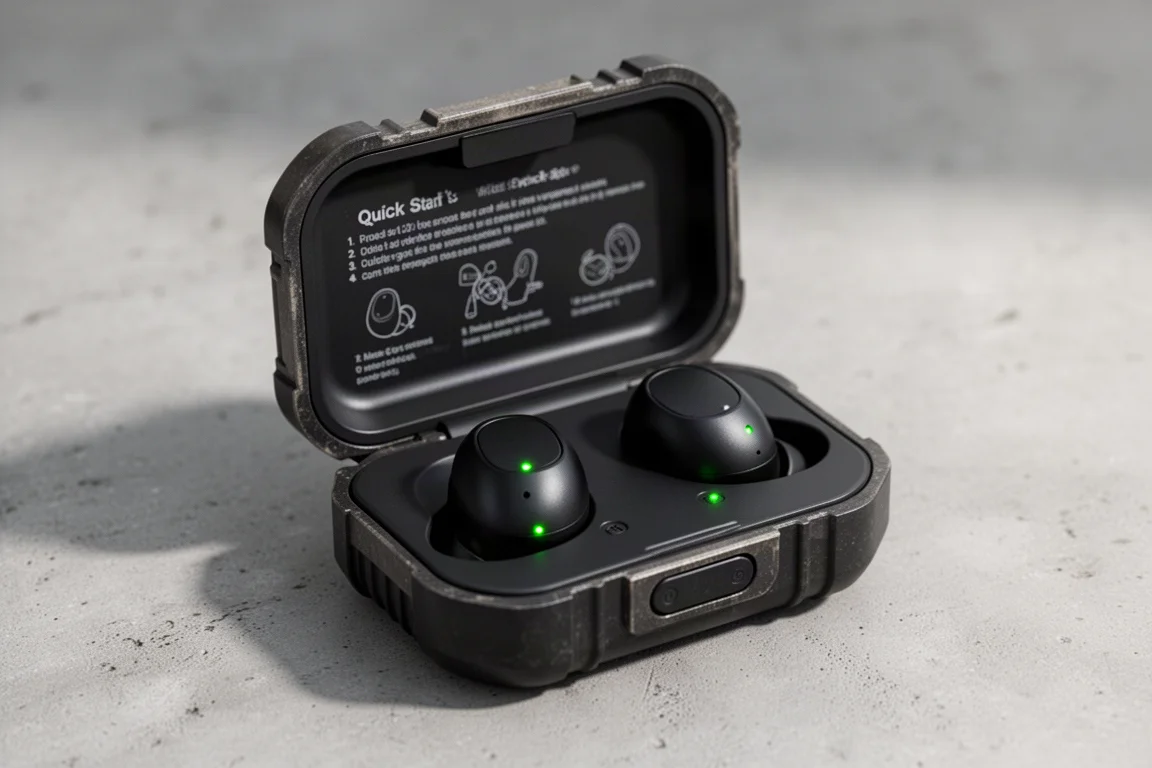
The large case also has a practical benefit: it is hard to lose. The build quality matches the heavy-duty construction expected from Milwaukee tools, which makes the size feel like a deliberate choice rather than an oversight.
Fit and Accessories
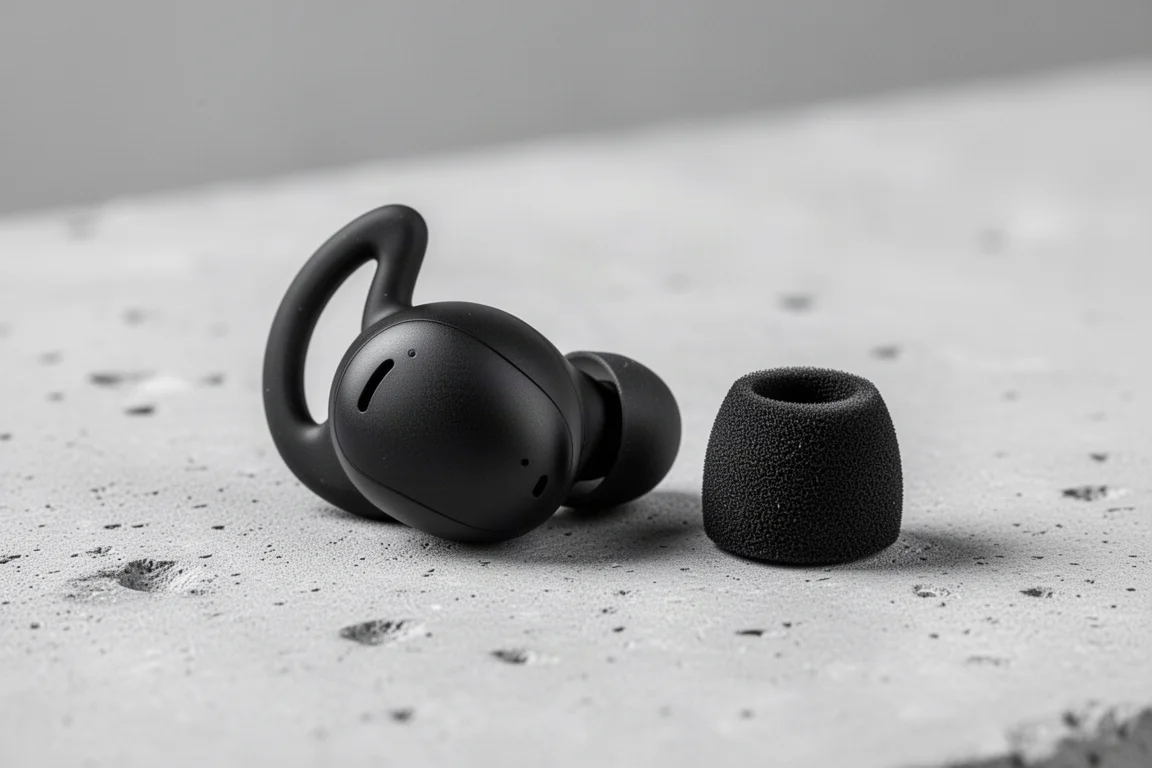
Each earbud has a soft ear wing that clamps gently into the ear for a more secure hold. Comfort is genuinely good: once they are in, you barely notice them. A note for potential buyers is that some people prefer an over-the-ear hook style holder and worry these may not fit every ear. In this testing, there were no fit issues, but an add-on accessory for over-the-ear attachment would be a welcome addition.
Out of the box you get a generous set of spares: multiple extra ear wings in case one tears or gets lost, and foam ear protectors in large, medium, and small sizes so you can find the right seal for your ears.
Audio Quality and the Noise Reduction Rating
Pairing is fast and painless. The moment you take the earbuds out and put them in your ears, they reconnect automatically. The sound itself is bassy and pleasant, though the maximum volume is capped at around 75 dB. If you want your music blaring, look elsewhere. That cap exists for a reason, because these are also certified hearing protection with a noise reduction rating of 22.
It is worth understanding how that rating actually works. The 22 NRR does not subtract 22 dB directly. Subtract 7, divide by 2, and the effective reduction is about 7.5 dB. So if you are working around a 90 dB environment, the OSHA threshold where hearing protection becomes required, wearing these brings you down to roughly 82.5 dB, which puts you in the legal range. That is the entire point: you can listen to audio and talk on calls while staying compliant and protected.

The standout feature is the jobsite aware mode. Both earbuds have a small built-in microphone. Press the left earbud button once and the microphones feed ambient sound through the speakers, canceling background machinery noise while letting you hear someone talking to you clearly. So at a construction site or a shooting range with heavy noise around you, you can hold a conversation safely without pulling the earbuds out. Double presses raise and lower the mic volume. You stay protected while staying aware, which is what separates these from ordinary consumer earbuds that simply seal out the world.
Everyday Use: Calls, Controls, and Range
The button controls are straightforward. One press plays music, another pauses it, two presses skip to the next track, and three presses return to the previous song. For calls, one press answers and one press again hangs up; two presses on an incoming call sends it straight to voicemail.
Bluetooth range stretches to about 100 feet from the phone. In real use, that means cutting the grass with the phone in your pocket while the audio stays connected. Call quality surprised more than one caller: people on the other end reported the voice sounded better through these earbuds than through the phone itself.

You can also use a single earbud at a time, which makes them a practical hands-free phone setup for driving or working with one ear free.
Buying Advice
At $179, the question is whether jobsite features justify paying more than typical consumer earbuds. After real use, the answer here is yes for anyone who works in loud environments. You would otherwise pay similar or more for standard earbuds and get none of the hearing protection, aware mode, swappable battery, or compliance benefits. If you only want earbuds for loud music on a quiet commute, cheaper consumer options will serve you better. If you spend your days around saws, machinery, or 90 dB noise, these earn their price.
Conclusion
Milwaukee set out to make earbuds that a jobsite would actually allow, and it largely succeeded. The sound is good but deliberately capped in volume, the case is big but useful, and the noise reduction rating plus aware mode make them genuinely innovative rather than just another pair of black earbuds. For workers who need protected hearing and decent audio in one package, they are an easy recommendation.
Product link
View more details for Milwaukee Wireless Earbuds
This product is mentioned in the review. Check the specifications, options, and compatibility before buying.
View more details for Milwaukee Wireless EarbudsFurther reading
Related Reviews
Worksite Audio
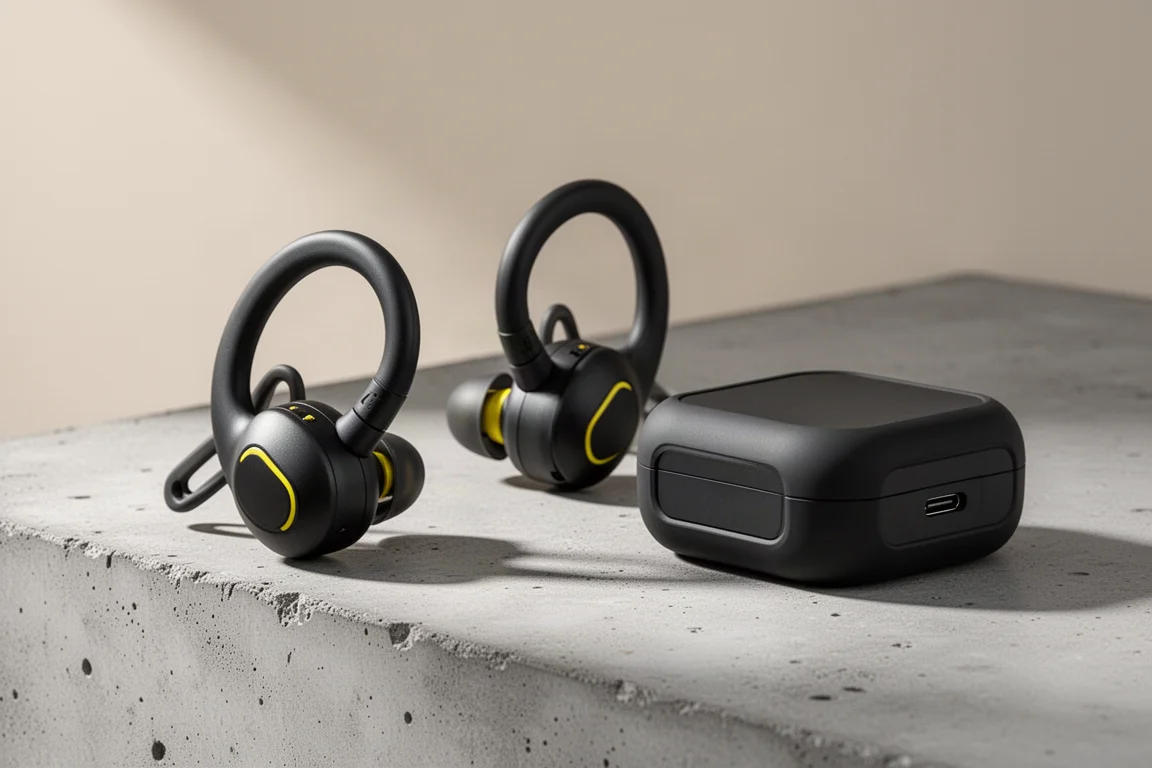
DeWalt DXM192096 Over-the-Ear Headbuds Review: Jobsite Audio Without Losing Awareness
DeWalt's over-the-ear headbuds deliver 11 hours per charge, 44 hours with the case, IP55 dust and water resistance, and full on-board controls while keeping your ears open to the jobsite around you.
Worksite Audio
DeWalt Jobsite Pro Max Neckband Earphones with Speakers: Built for Real Jobsite Days
A neckband earphone system with speaker mode, all-day battery claims, and vibration alerts, tested daily on an active jobsite for over two weeks.
Worksite Audio
DeWalt Wearable Speaker Review: A Hands-Free Work Site Companion
A lightweight clip-on Bluetooth speaker with call support, magnetic mounting, and work site-friendly durability, at a friendly price.