Power Tools
Milwaukee vs DeWalt vs Makita Battery Packs: Exterior Features Compared
A hands-on look at how the big three power tool battery packs differ in date codes, durability, grip, visibility, and seating.
Introduction
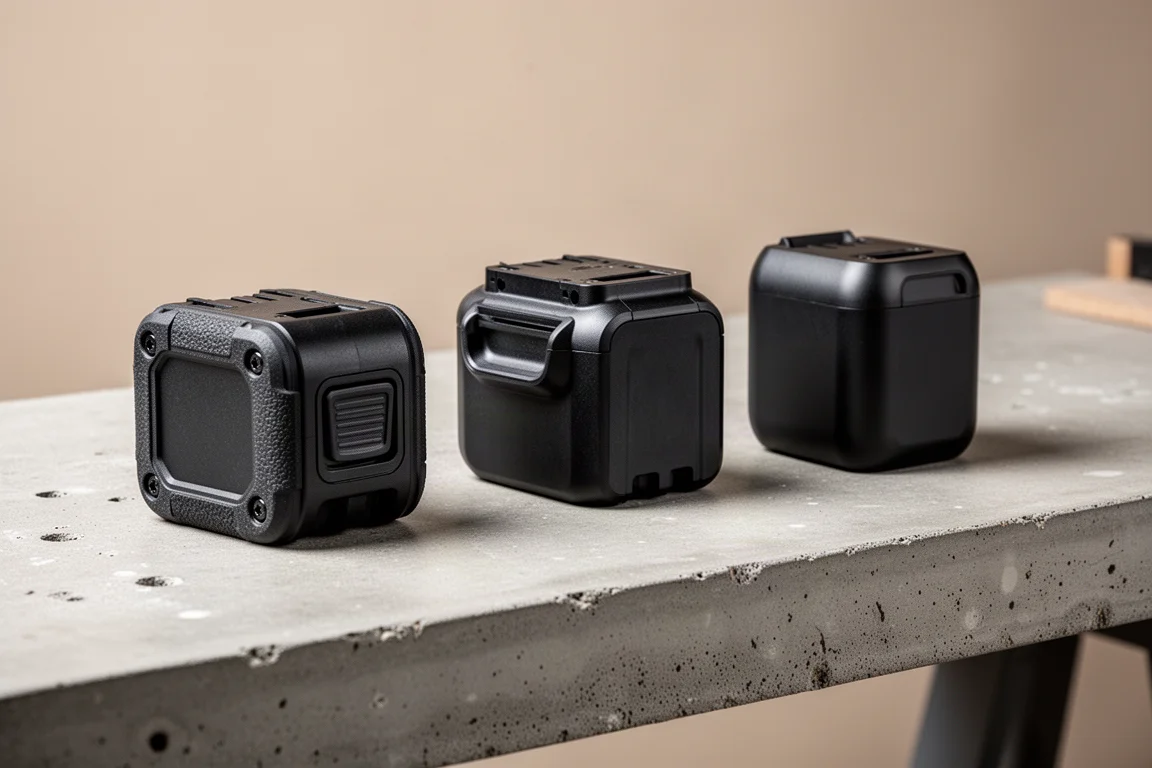
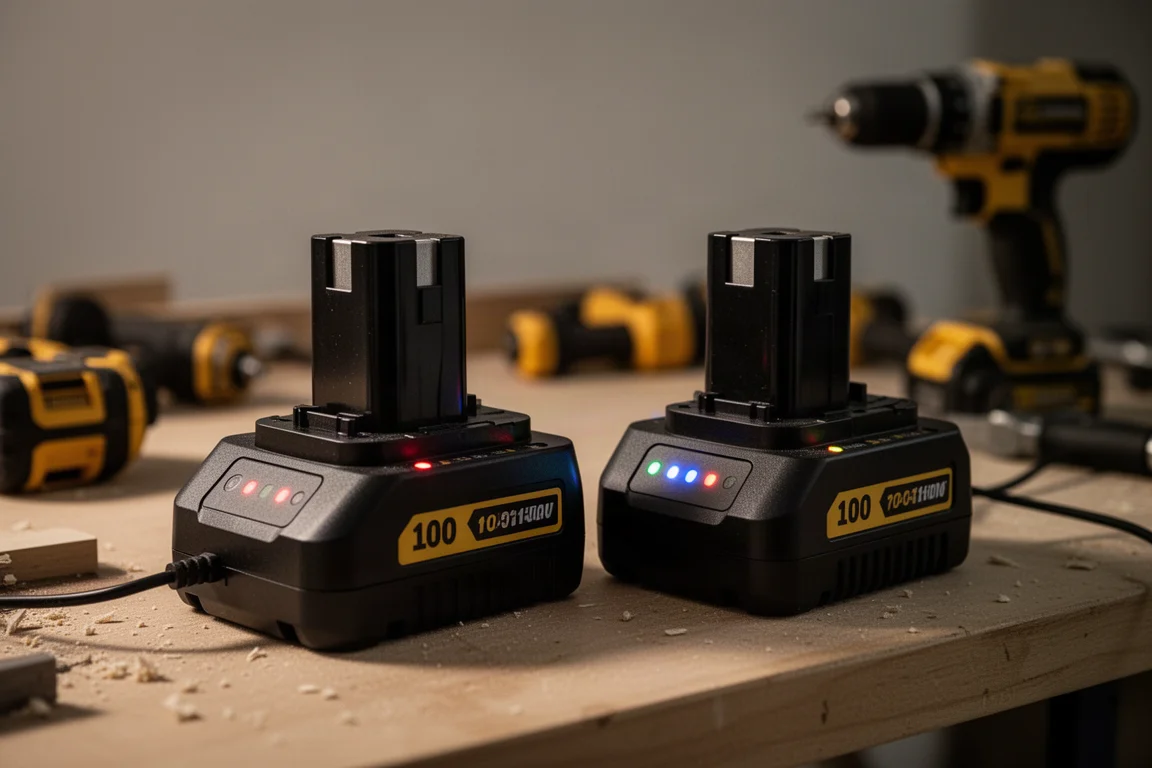
Battery packs from the big three power tool brands, Milwaukee, DeWalt, and Makita, all look similar from a distance, but the exterior design choices between them matter more than most people realize. Date codes, drop protection, grip, seating stability, and even how easy it is to read the amp-hour label all affect how a pack behaves on a real job site. This comparison focuses purely on those external features, not on the internal cells, and highlights where each brand does something worth knowing about before you buy.
How Easy Is It to Find the Date Code?
DeWalt is the clear winner here. The year is stamped right on the front of the pack, for example 2021, with additional smaller codes alongside it. You may need to contact DeWalt to decode the remaining numbers, but the year itself is immediately visible.
Milwaukee comes in second. The date code reads as a sequence such as 180606, which appears to encode the year and week of manufacture, positioned after a small symbol on the label. It is a little trickier because the codes are printed in very small characters, and there is little publicly available documentation on exactly how to read the rest of the sequence. Makita is the hardest of the three: the first number, such as 21, indicates the year, but the meaning of the remaining digits is difficult to confirm, and the lettering is very small.
Durability and Drop Protection
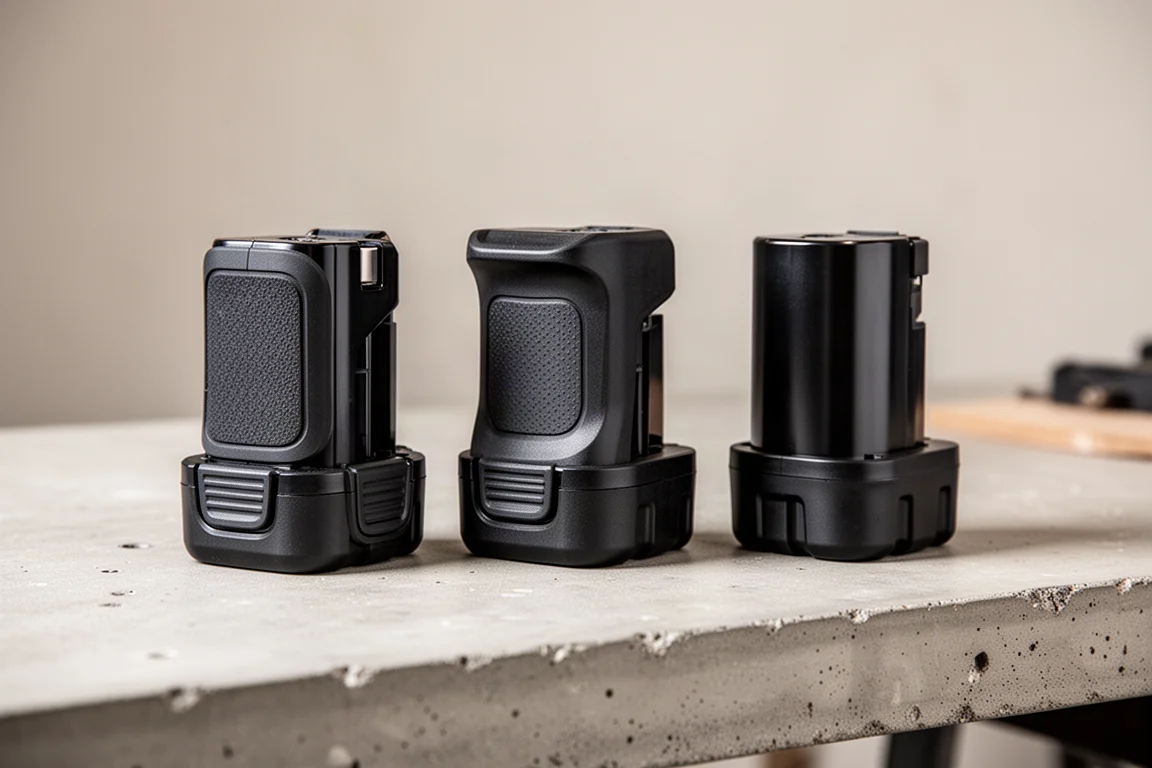
Milwaukee generally takes this category. Its packs include protective padding around the housing, which matters because the battery often sits at one end of a tool. If you drop a tool, the battery usually takes the impact, and Milwaukee’s padding gives it a real advantage there. It would be great to see DeWalt and Makita adopt something similar.
Grip and Removal in Real Working Conditions
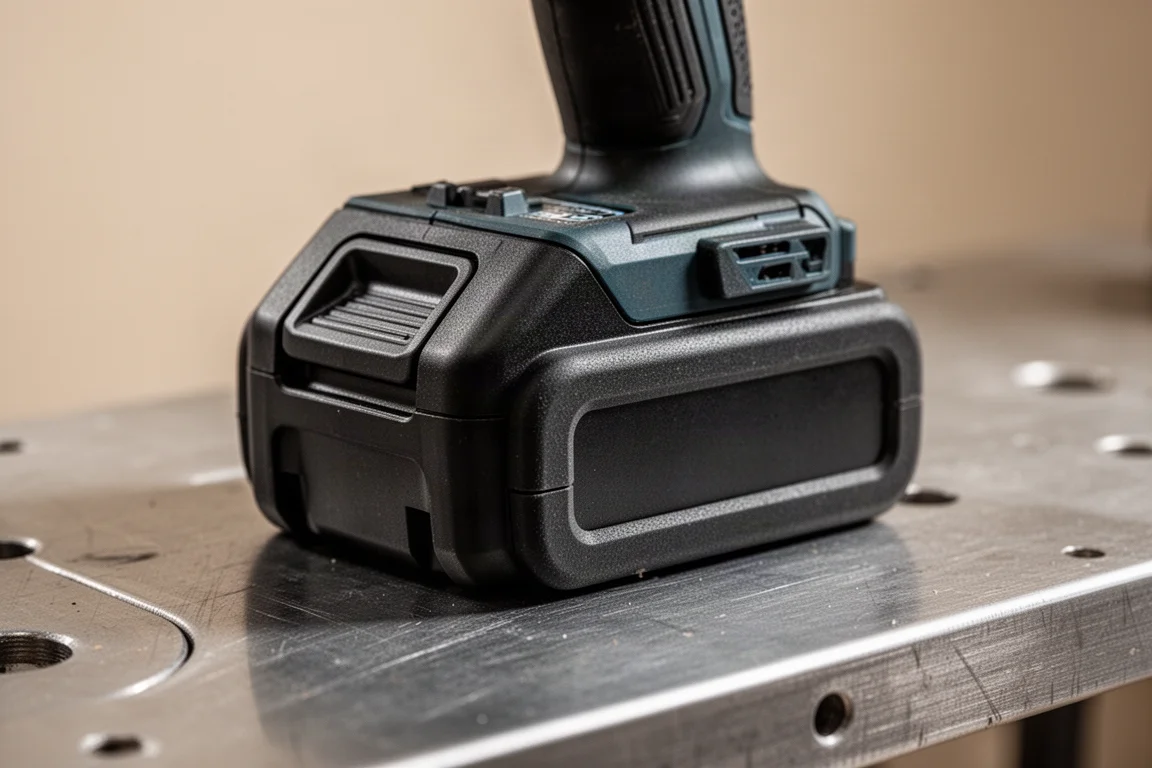
DeWalt offers a small lip and textured grip surfaces on the housing, which makes it easier to pull a pack off a tool, especially with sweaty hands. The label is also recessed into the housing, so it is less likely to peel away over time. Milwaukee sits in a comfortable middle ground, with the padding itself doubling as a solid grip point when removing a pack.
Makita is the weak spot here. The housing is essentially smooth with no grip anywhere, and if your hands are wet or sweaty, getting the pack off the tool can be genuinely tricky. On the plus side, Makita’s markings are printed directly onto the plastic rather than applied as a sticker, so they will not peel off.
Label Visibility
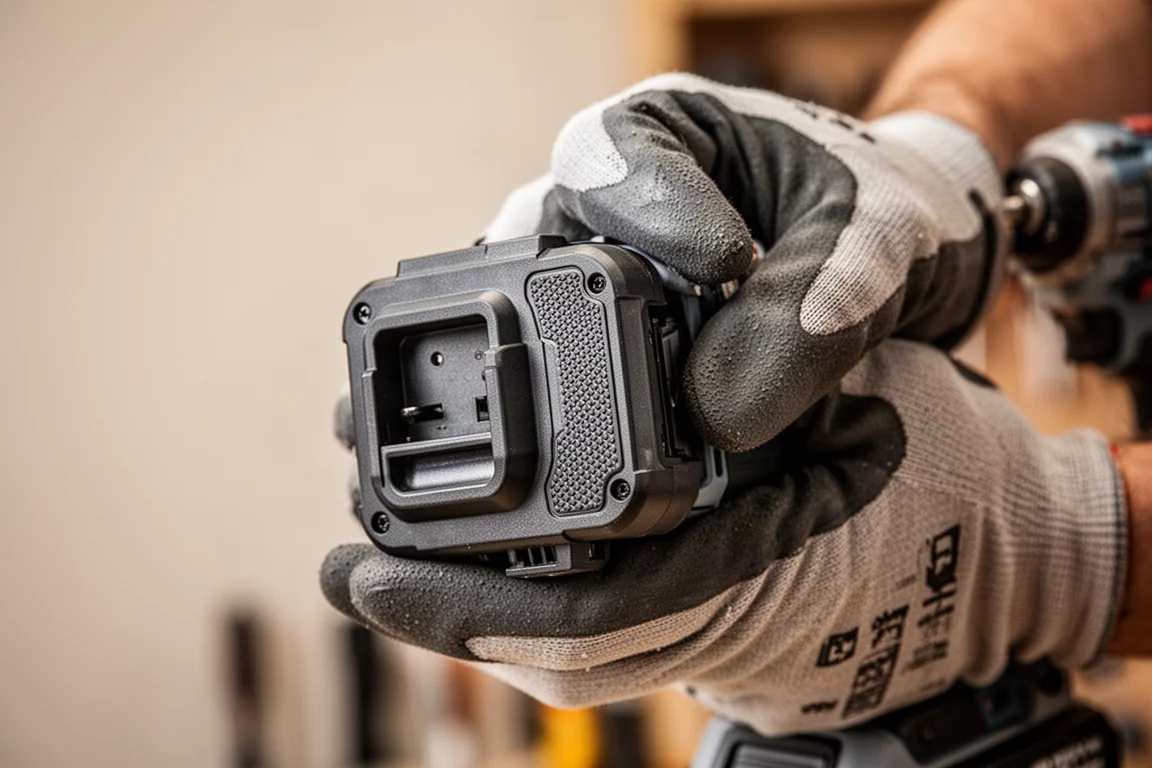
When it comes to reading the pack’s rating from a distance, DeWalt and Makita lead. Large, high-contrast markings let you identify, for example, a 5.0 pack from across the workshop without walking over to it. Milwaukee’s smaller, lower-contrast markings can be ambiguous at a distance, since one character can be mistaken for another, but it is a minor complaint in day-to-day use.
Battery Seating and Vibration
This matters most for mechanical work with impact tools. Milwaukee packs have been criticized for not seating tightly on some tools, meaning they can vibrate during use and potentially damage the tool, the pack, or the contacts. Some users solve this with rubber straps that hold the battery in place against the tool.
DeWalt packs have internal features that hold them more securely, and there are few complaints about excessive vibration. Makita leads the way here: its tools include rubberized inserts in the mounting area, so a battery locks in with a solid, wobble-free connection. That is a meaningful difference if you have heard of packs vibrating loose on high-torque applications.
Charging Times and Pack Size Options
All three brands offer rapid chargers, but Makita’s rapid charging is more often standard. A practical difference shows up mid-job: Milwaukee and DeWalt packs can take noticeably longer to recharge, with turnaround times around an hour and a half in some setups, while Makita packs can be back in service in roughly 45 minutes depending on the charger used.
On pack size, DeWalt now makes the largest option with a 15 amp-hour FlexVolt pack. Milwaukee tops out around 12 amp-hours, while Makita goes up to about 6 amp-hours, which brings trade-offs in weight and runtime depending on the work you do.
Buying Advice
If you value drop protection and a solid grip point, Milwaukee’s padded packs are the most forgiving on a busy site. If you want the easiest date codes, the strongest seating, and the biggest pack capacity, DeWalt makes a strong case. If you want fast standard charging, printed-on labels that never peel, and the most vibration-resistant connection in the tool, Makita is the standout. Think about how you actually handle batteries: whether you drop tools, work with sweaty hands, run impact tools all day, or swap packs constantly will point you toward a different winner.
Conclusion
None of these battery systems is objectively better across the board. Milwaukee wins on durability padding, DeWalt wins on date codes, grip, and maximum capacity, and Makita wins on seating stability, label printing, and charging speed. Matching those exterior strengths to your own workflow is the smartest way to choose.
Product link
View more details for Milwaukee Power Tool Batteries
This product is mentioned in the review. Check the specifications, options, and compatibility before buying.
View more details for Milwaukee Power Tool BatteriesFurther reading
Related Reviews
Power Tools
Best 1-Inch Pistol Impact Wrenches: Three Heavy-Duty Options Compared
We compare three 1-inch pistol impact wrenches, from a budget-friendly Harbor Freight model to a premium Caterpillar unit, to help you choose the right one.
Power Tools
Best 3/4-Inch Impact Wrenches 2026: Five Contenders Compared
We compare five 3/4-inch impact wrenches across price and performance, from a budget Amazon option to Snap-on's most powerful model yet.
Power Tools
Best Budget Cordless Tools 2026: Walmart Finds That Punch Above Their Price
We tested five cordless tools from Walmart, including a high-torque impact wrench that trades blows with Milwaukee and a $35 duster that outperforms its price class.