Tool Storage
Milwaukee vs DeWalt Small Parts Organizer: Which One Deserves Your Money?
Two popular compartment organizers compared side by side on hinges, weather sealing, stackability, warranty, and price.
Introduction
Small parts organizers are one of those cheap accessories that quietly matter. Compartment boxes like these hold drywall screws, toggle bolts, masonry anchors, and everything else that otherwise ends up in a coffee can. Two of the most visible options come from Milwaukee and DeWalt, and they overlap closely on size and purpose while differing in some important ways. The DeWalt version became especially popular when it dropped from its usual twenty dollar price to around ten dollars, and buyers stocked up accordingly. Milwaukee’s version has gone on sale a handful of times but never quite that low, with deals landing somewhere around seventeen dollars.
First Impressions: Build and Hinges
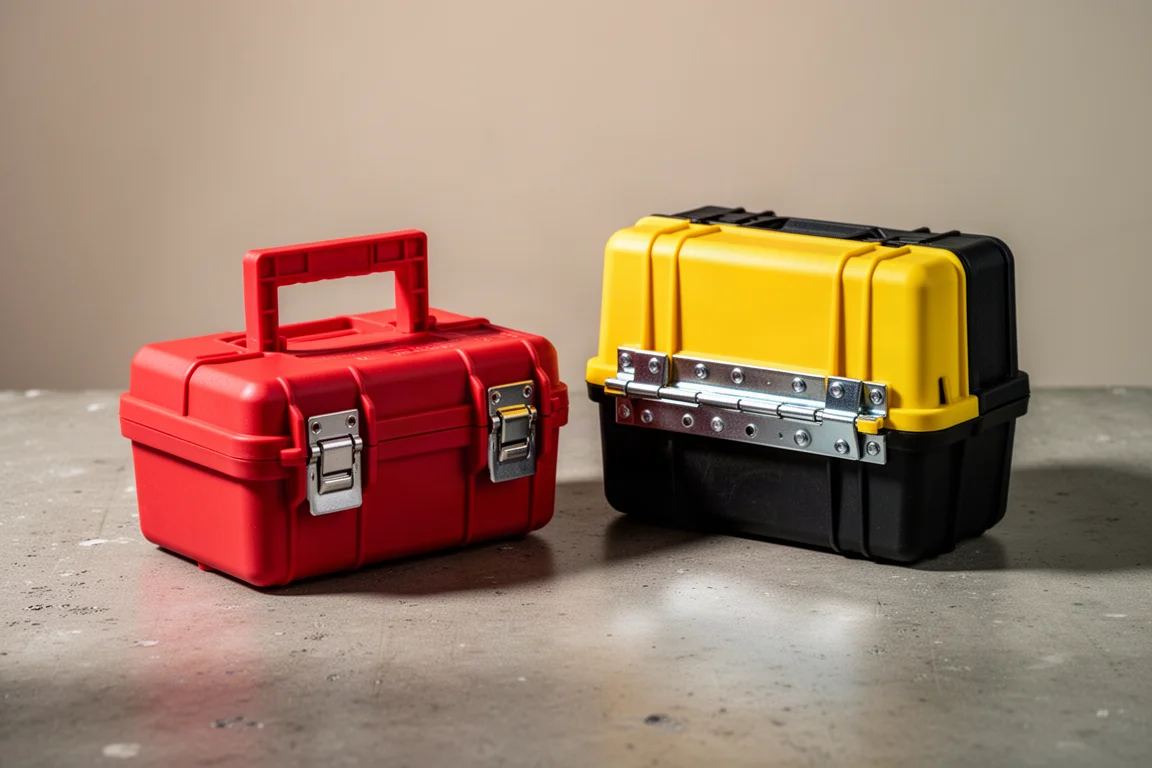
Picking both up side by side, the Milwaukee immediately feels a touch more solid. Its hinge design uses plastic alongside a metal piece, and it feels easier to work with and nicer in the hand. The DeWalt goes all metal on the hinge bar across the rear, but the hinge style itself feels cheaper and less refined to use.
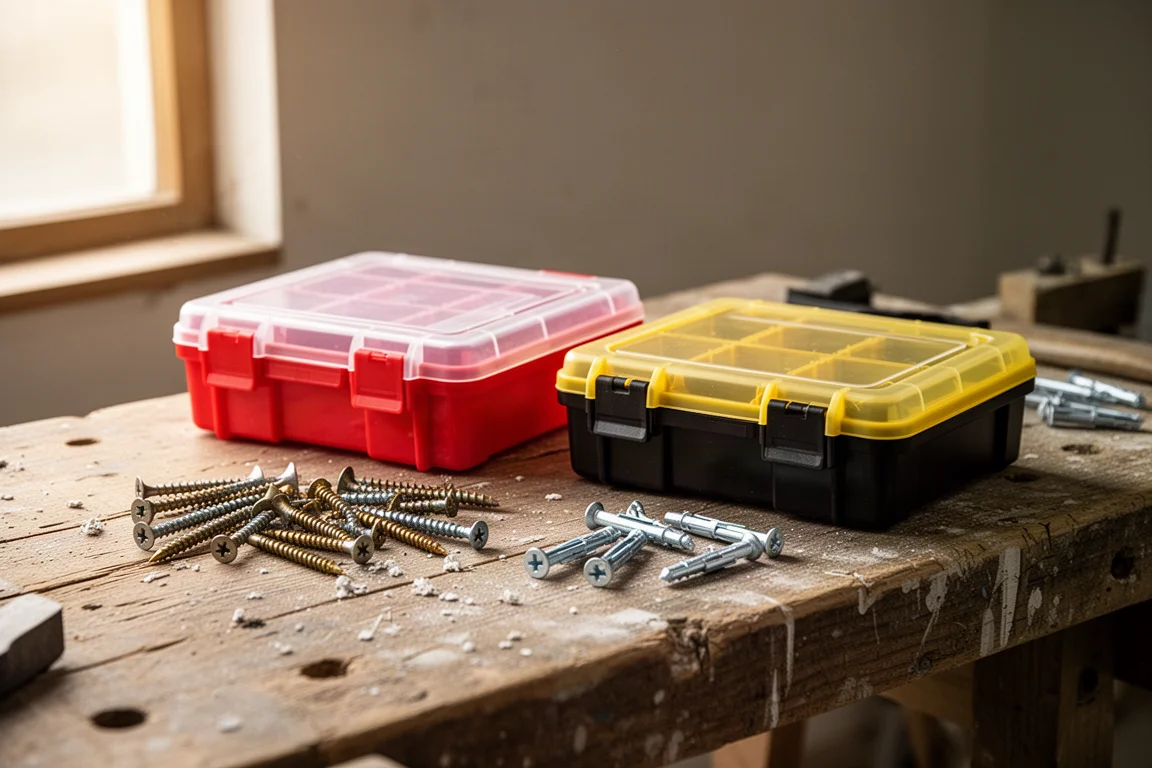
Out of the box, the Milwaukee case also carries a subtle engraved detail on the top cover, and the lid plastic reads slightly thicker. Both feel sturdy overall, and neither case showed problems after being thrown around, but the initial quality impression favors Milwaukee.
Weather Sealing and Lid Flex
Both organizers include a weather seal around the lid, Milwaukee’s in black and DeWalt’s in yellow. On first inspection, the DeWalt seal looks more custom fitted, while the Milwaukee gasket resembles a rubber strip set into a channel and appears somewhat larger. Which approach holds up better over years of use is hard to call. It is also worth noting the DeWalt case carries an IP53 rating, something Milwaukee does not officially claim on its version, though the two gaskets look broadly similar in practice.
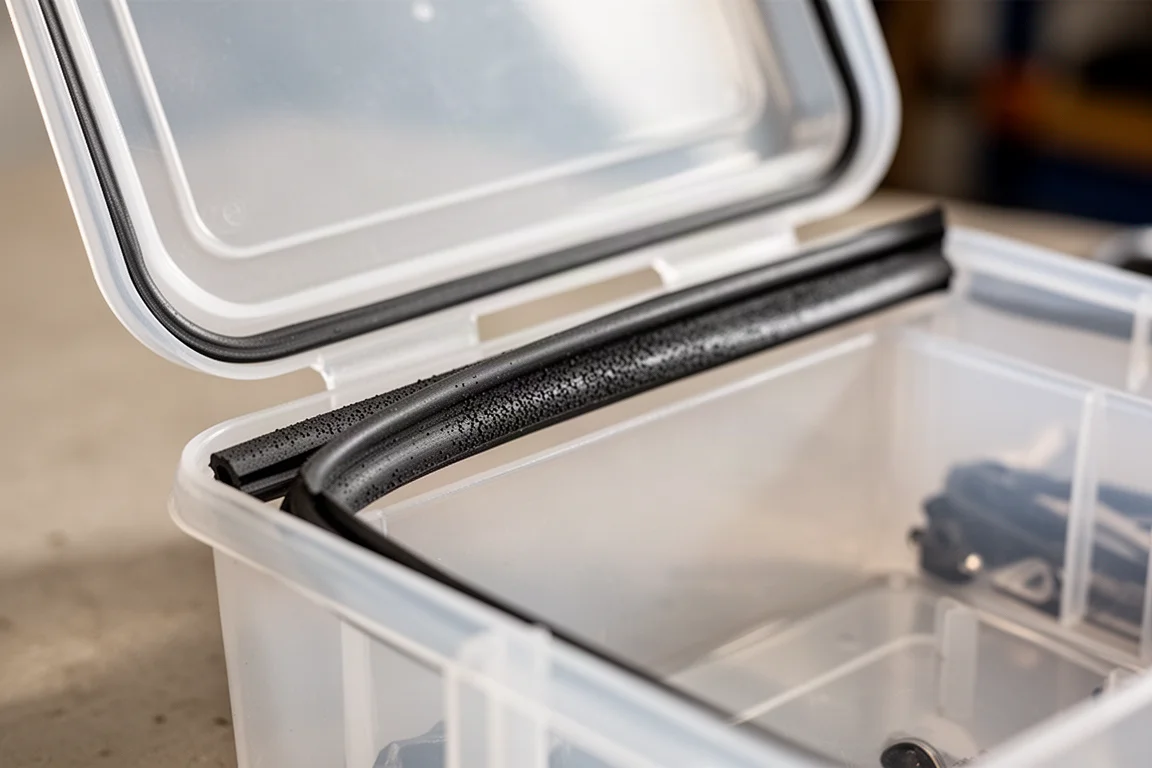
There is a decent amount of flex in both lids, with the Milwaukee plastic feeling a bit thicker. Neither is a deal breaker, but the DeWalt’s rated sealing gives it a documented edge here.
Internal Trays and Space Management
The removable internal trays on both cases come out and hold up well under a squeeze test. The Milwaukee trays feel more rigid, and there is a slight height difference between the two cases, roughly an eighth to a quarter of an inch.
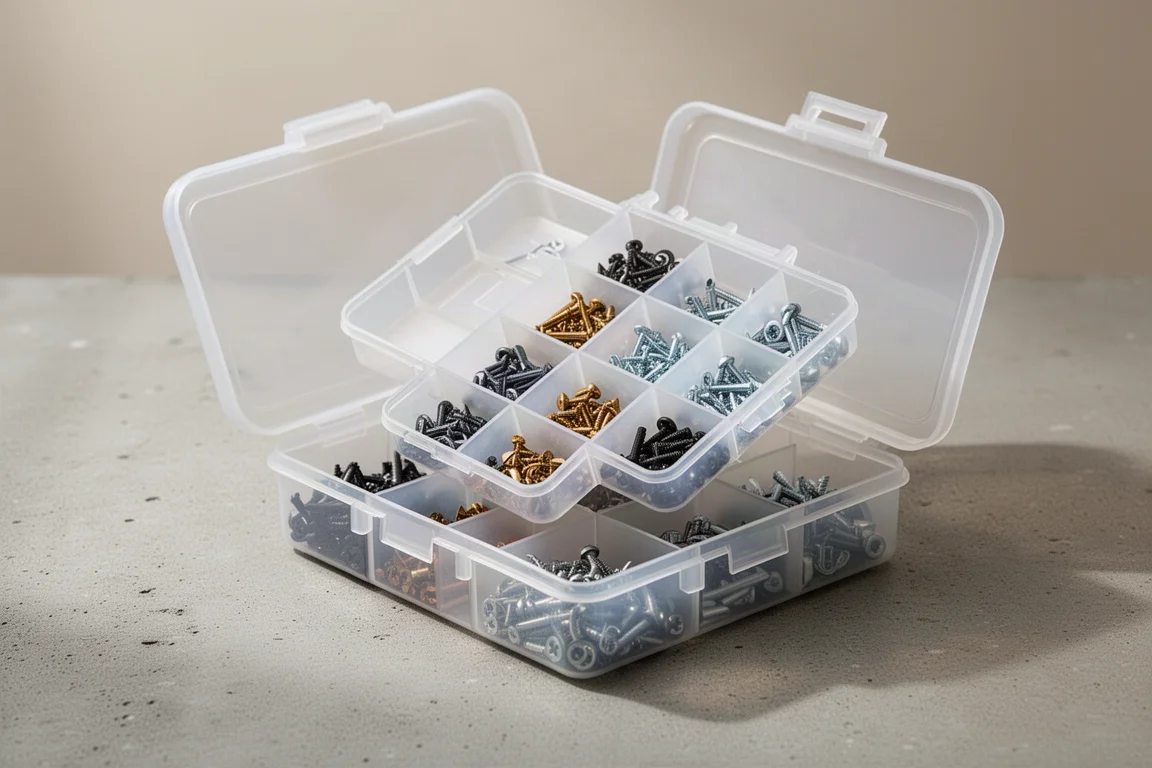
The bigger difference is the handle. Milwaukee’s handle flips down flat, which frees up almost a full compartment worth of internal space. DeWalt’s handle is stationary, which probably means it will break less often, but it eats into usable compartment area. For pure space management, Milwaukee wins this round.
Warranty and System Compatibility
Here is where DeWalt pulls ahead in a big way. The DeWalt organizer comes with DeWalt’s lifetime warranty, and warranty claims on DeWalt products have historically gone smoothly. Milwaukee offers no warranty on this organizer at all, beyond whatever a retailer like Home Depot is willing to take back.
The DeWalt case is also compatible with the TStak stacking system, though that system has a mixed reputation. The latch snaps on TStak bins are known to break off easily, even when they are not being used. Milwaukee’s case has no system compatibility at all: no clips on the top or bottom, so it is strictly a standalone organizer.
Stackability and Clip Design
Milwaukee’s clip system on the case itself is clearly the better design. The latches are metal with some plastic reinforcement, and it takes two hands to flex the case meaningfully. On the DeWalt, the clips can be flexed easily with one hand.
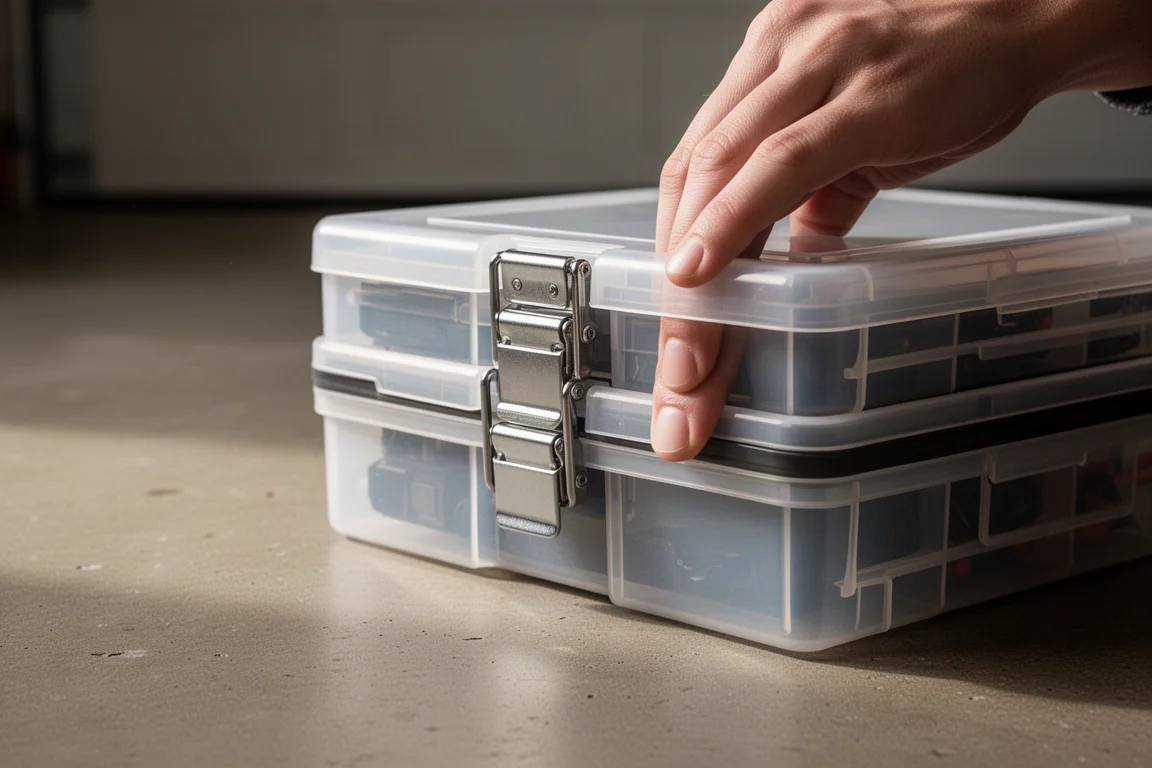
Milwaukee’s limitation is that you can only stack these organizer cases with each other. DeWalt’s TStak opens a larger ecosystem, but given how easily those snaps break, that compatibility is worth less than it sounds on paper.
Which One Should You Buy?
At equal pricing, the Milwaukee is the easy pick. Around fifteen dollars, the better hinges, stiffer trays, flip-down handle, and stronger clips justify the choice. But pricing rarely stays equal. The Milwaukee has drifted up to roughly twenty-five to thirty dollars, while the DeWalt currently sits around twenty dollars and has been seen as low as ten.
At ten dollars, the DeWalt is almost a stock-up item: three of them at ten dollars each outfit a truck for the price of a single Milwaukee, with a lifetime warranty attached. If you find the DeWalt on a deep sale, buy it. If the two sit side by side at the same shelf price, go Milwaukee for the better build.
Conclusion
Both organizers have held up well to real use, and both have genuine strengths. Milwaukee wins on hinges, internal rigidity, space management, and latch design. DeWalt wins on price, warranty coverage, and weather sealing credentials. Match the choice to your priorities: build quality favors Milwaukee, value and backing favor DeWalt.
Product link
View more details for Milwaukee Small Parts Organizer
This product is mentioned in the review. Check the specifications, options, and compatibility before buying.
View more details for Milwaukee Small Parts OrganizerFurther reading
Related Reviews

Tool Storage
Hilti ProKit Modular Storage System Review: A Sturdy, Stackable Tool Storage Solution
The Hilti ProKit modular storage system offers durable cases, a heavy-duty trolley, and a simple nesting latch design for professionals who need reliable tool organization.
Tool Storage
Atlas 46 Tool Rolls: Yorktown Mini and the Leather Classic Compared
Two tool rolls from Atlas 46 for different mindsets: a compact mini roll built for vehicle-based kits, and a heavy leather version for those who appreciate old-world craftsmanship.
Tool Storage
Atlas 46 vs Bucket Boss Tool Roll: Two Ways to Roll Your Tools
A first-impressions comparison of a premium American-made tool roll and a budget-friendly alternative, covering fabric quality, stitching, zipper layout, and storage design.