Tool Storage
Milwaukee Packout: Three Attachments That Fix Its Biggest Complaints
Milwaukee's Packout system changed modular tool storage, but early owners found gaps. A new wave of low-cost attachments finally addresses long tools, hand tool access, and side storage.
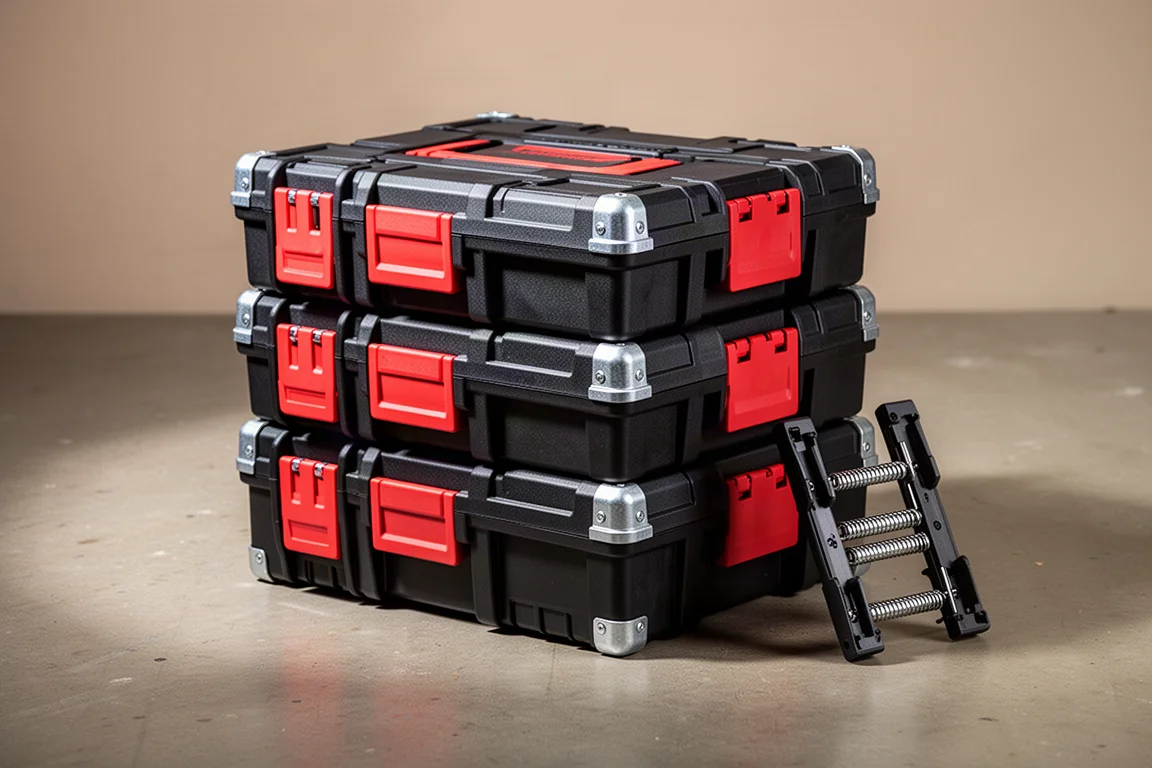
Introduction
Milwaukee’s Packout modular tool storage system barely needs an introduction. Plenty of modular systems existed before it, but Packout was the one that sent shockwaves through the tool industry, prompting other brands to revamp their own systems to keep up. It quickly earned a reputation as one of the most well-thought-out, robust, and feature-rich modular storage systems the industry had seen.
That reputation had a couple of holes in it, though. Once owners started putting the boxes through real day-to-day jobsite tasks, a few glaring issues surfaced. Over the years Milwaukee offered partial fixes, some of which made sense and some of which did not. Now the company has rolled out a set of inexpensive attachments that finally address the most common complaints directly, without asking you to replace your existing stack.
Why Packout Needed Fixing
The core complaint centered on the classic three-piece stack: a rolling box at the bottom with tool and organizer boxes above it. It was the way most people bought into Packout, and it was also the source of the biggest frustration. Larger tools like pipe benders and levels had no natural home. Bungee cording them to the sides of a box never felt like a real solution.
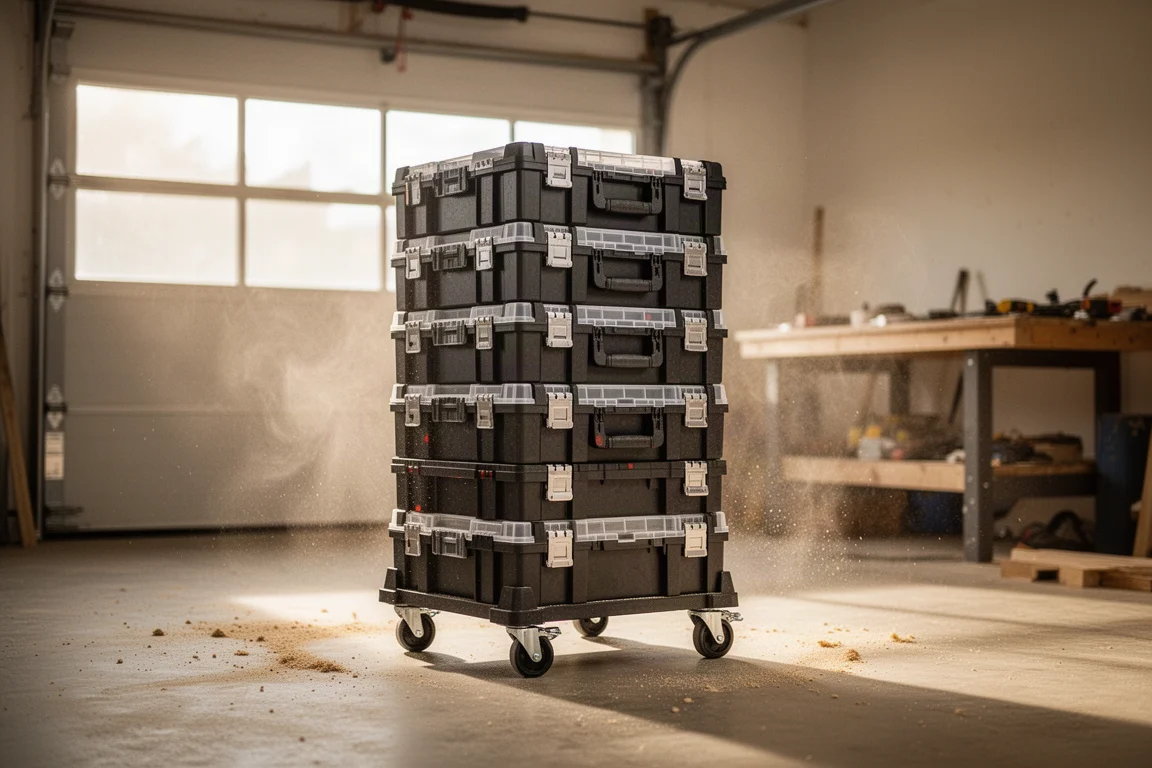
Milwaukee’s first official answer was a two-wheel dolly with a Packout-compatible plate and a cavity for levels or pipe. The idea worked, but the logic did not: the three-piece stack already includes a rolling box, so buying an entire second cart just to haul long tools felt redundant. It was also expensive for what it was, largely plastic, and reportedly brittle enough that one unit arrived already broken. Meanwhile, competitors were solving the same problem with simple accessories that bolted directly onto their boxes. That gap in Milwaukee’s lineup was costing it goodwill, and the company clearly noticed.
The Long Tool Holder Attachment
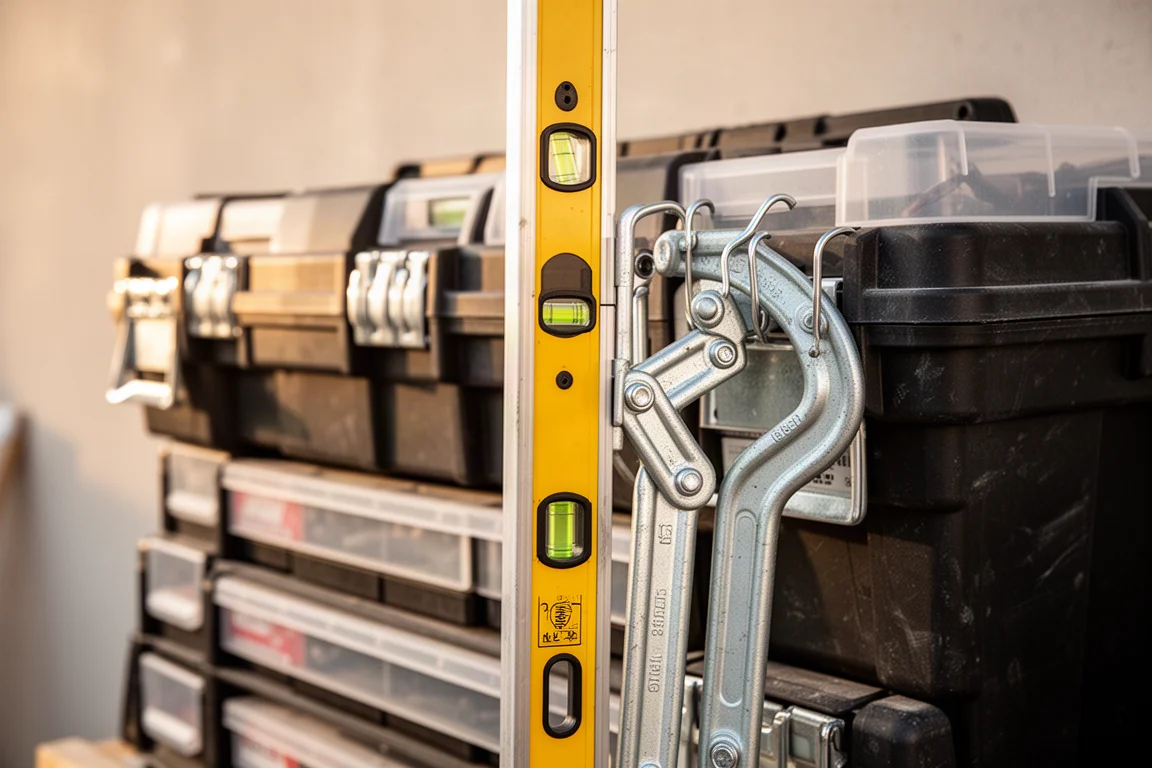
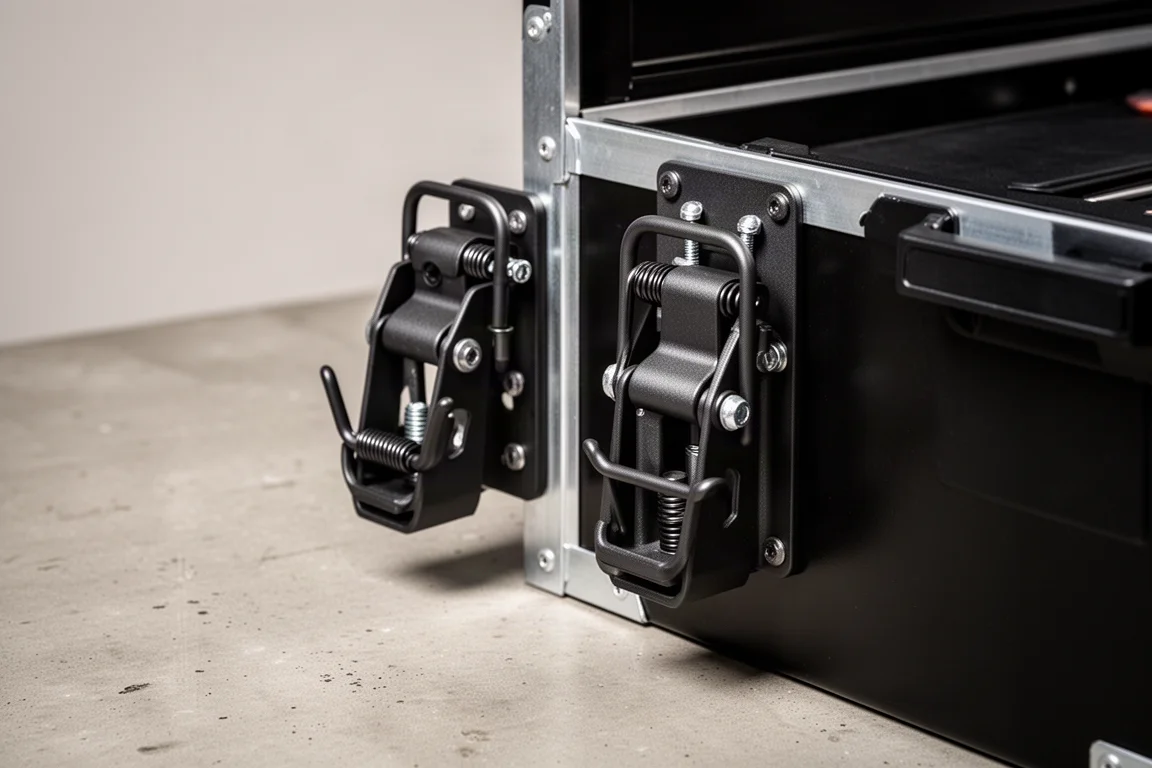
The Packout Long Tool Holder Attachment is Milwaukee’s direct answer to the long tool problem. It consists of an upper and lower toolbox attachment that lock directly onto the metal reinforced corners of the box, so it mounts only where opposing metal corners exist on the stack. That is a smart use of the structure Packout already has rather than an add-on that fights it.
The attachment features spring-loaded gates to easily store and retrieve longer tools such as levels or conduit benders, and it can hold three long tools at once. When mounted to the Packout stack, it carries a 25 lb weight capacity, letting users carry more with side storage. Instead of the hundreds of dollars a dedicated dolly would cost, the MSRP is $44.95, and it may go on sale. For a problem that has lingered this long, a sub-$50 fix is hard to argue with.
The Toolbox Caddy Attachment
The second long-running complaint was about big, wide-open boxes with no good way to organize commonly used hand tools. Milwaukee’s earlier answer was soft-sided storage: a bag with plenty of interior pockets, a large pocket for drill drivers or bigger items, and a cushion for carrying on your side. The problem is that soft bags defeat the entire point of Packout. Nothing stacks on top of them, so you end up pulling the bag off, opening a box, and digging around anyway, all after spending around $120 for the privilege.
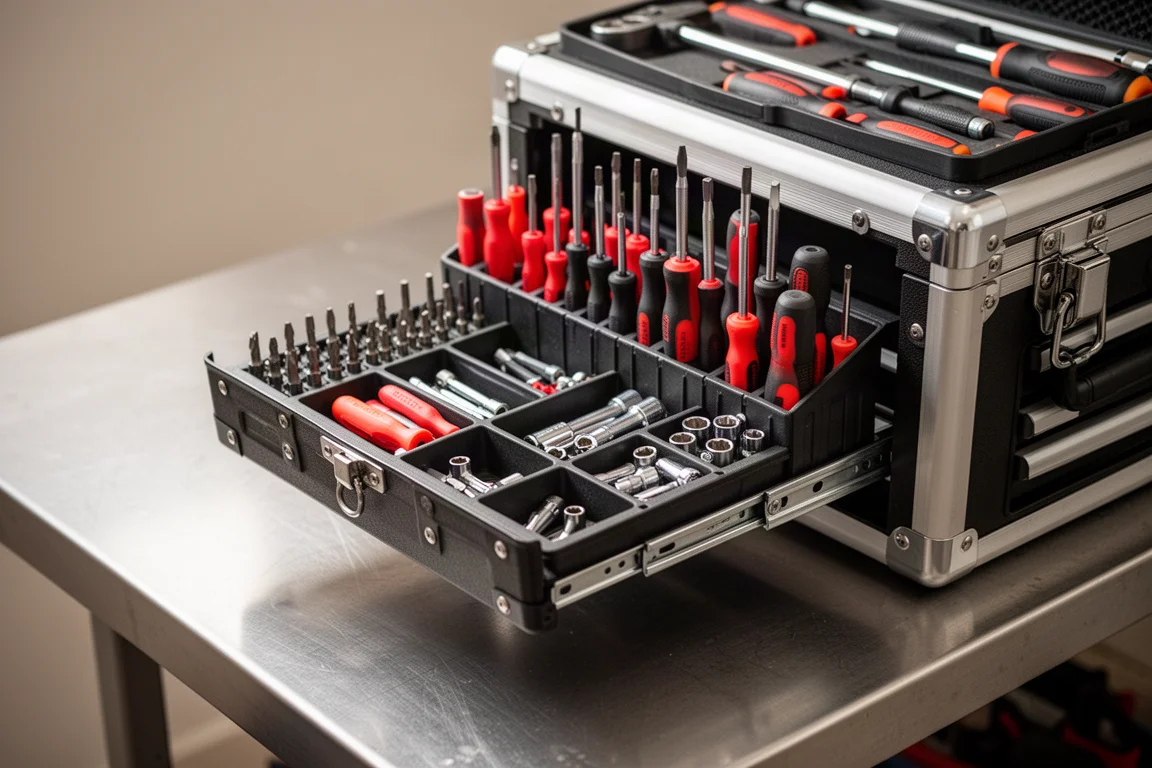
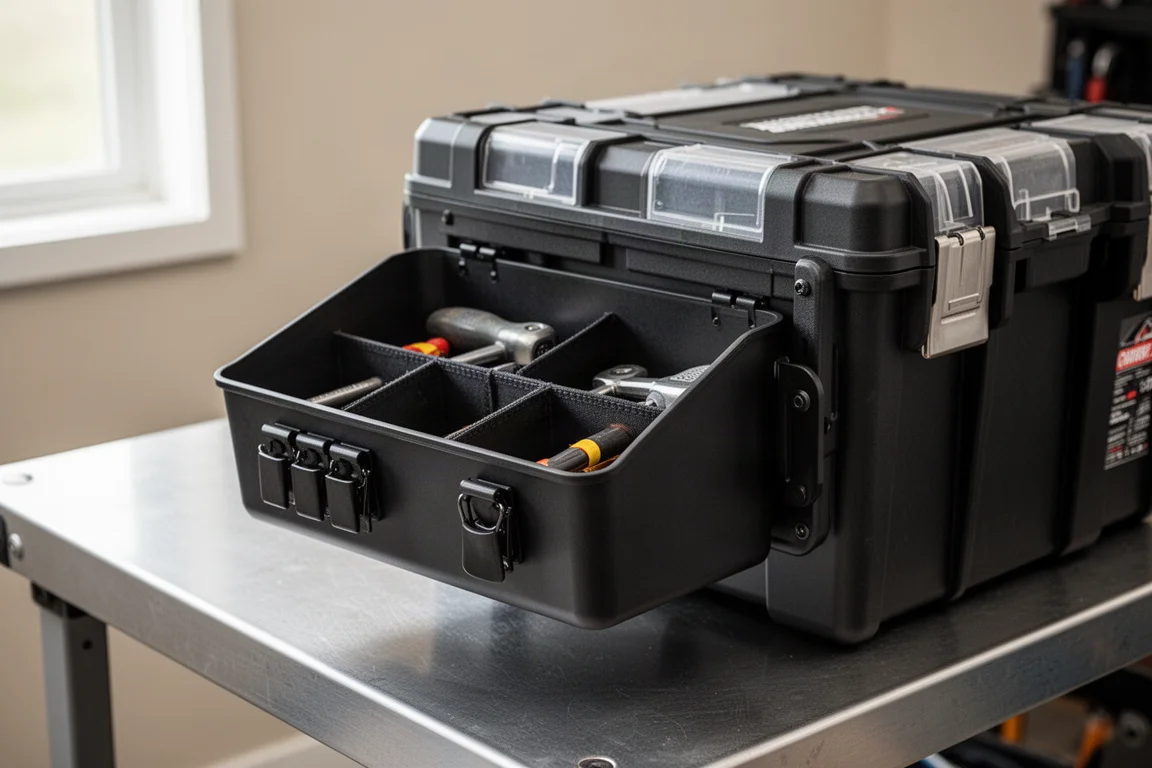
The Packout Toolbox Caddy Attachment takes a different approach. It stores hand tools, accessories, and more right on the outside of the box, with adjustable dividers for customization that can be stored on the back of the attachment when not in use. A metal reinforced belt clip rack adds another level of storage for belt clip tools and maintains its shape when fully loaded. On site, that means your screwdrivers, nut drivers, testers, and self-tapping screws are at your fingertips without opening anything. It is priced like an accessory rather than a solution: $35, and it has been available since November 2024.
The Base System That Started It All
None of these attachments matter without the core system, and the three-piece Packout stack remains the foundation most people build on. The rolling box anchors the stack, with tool boxes and organizers above it, all locking together through the metal reinforced corners that the new accessories now exploit. That modularity is exactly why these bolt-on fixes work so well: instead of buying a generation 2 of everything, your existing boxes gain new capability.
If you are starting fresh, the classic stack is still the way in, and the new attachments slot straight onto it.

More Side Storage on the Way
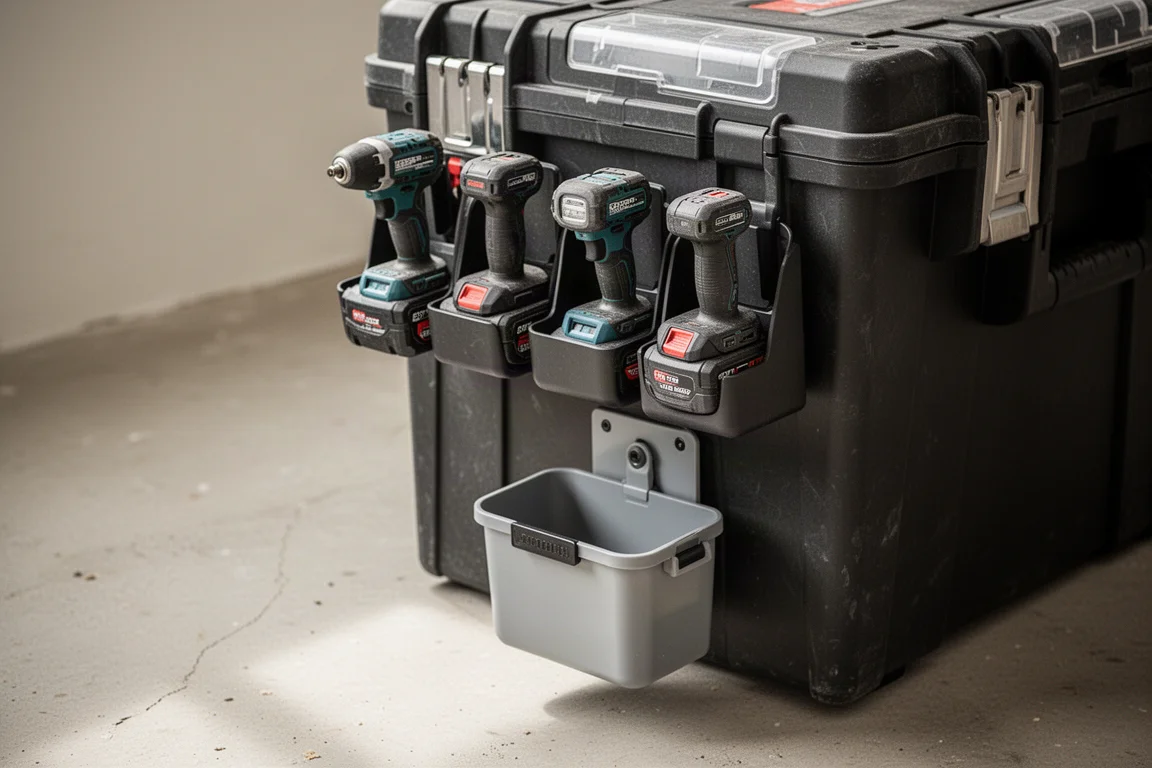
Milwaukee also announced a broader family of side-mounted accessories in the same spirit of quick accessibility. A battery storage accessory accepts both M18 and M12 batteries depending on your platform, clipping them in for easy retrieval while staying robust enough for jobsite conditions. Previously, storing batteries meant dedicating space inside a small toolbox at around $70 or a large one at $100 or more; this accessory is $35 and available now.
A three-tool holder lets you carry larger tools such as circular saws and reciprocating saws on the outside of the box, with a 30 lb weight capacity for $33, also available since November 2024. A compact Packout mounting plate, arriving in January 2025 for $30, lets anything Packout-capable hang from the side of your boxes, from a compact M12 light to small fasteners or a half-size organizer you need within reach at all times. A toolbox tray attachment for $30, available November 2024, stores bins and bit cases for quick access to parts and materials.
Buying Advice
If you already own a Packout stack, the toolbox caddy and long tool holder are the two attachments with the clearest day-to-day payoff, and both cost less than $50 each. If your frustration is wasted interior space, the battery holder and tool holders are similarly affordable wins. The compact mounting plate is worth waiting for if you want to hang organizers or compact lights off the side of your stack. The key takeaway is that Milwaukee realized not everything needs a generation 2: sometimes the original boxes are just fine once a cheap, well-designed accessory fixes the gap.
Conclusion
Packout earned its reputation for a reason, and these attachments close the loop on the complaints that reputation could not quite shake. Long tools, frequently used hand tools, batteries, and even hanging storage now have dedicated, low-cost answers that bolt onto the boxes you already own. For existing Packout owners, this is the update worth acting on.
Further reading
Related Reviews

Tool Storage
Hilti ProKit Modular Storage System Review: A Sturdy, Stackable Tool Storage Solution
The Hilti ProKit modular storage system offers durable cases, a heavy-duty trolley, and a simple nesting latch design for professionals who need reliable tool organization.
Tool Storage
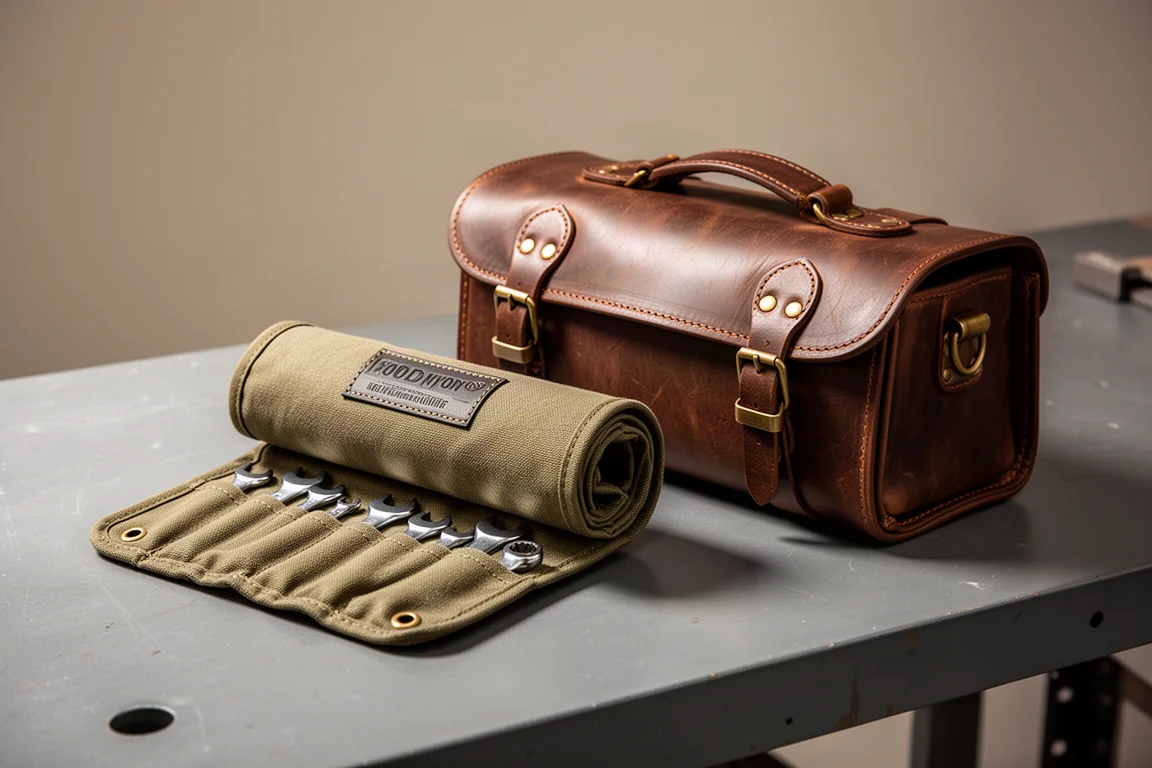
Atlas 46 Tool Rolls: Yorktown Mini and the Leather Classic Compared
Two tool rolls from Atlas 46 for different mindsets: a compact mini roll built for vehicle-based kits, and a heavy leather version for those who appreciate old-world craftsmanship.
Tool Storage
Atlas 46 vs Bucket Boss Tool Roll: Two Ways to Roll Your Tools
A first-impressions comparison of a premium American-made tool roll and a budget-friendly alternative, covering fabric quality, stitching, zipper layout, and storage design.