Tool Accessories
Milwaukee Mechanical Carpenter's Pencil Review: Great Idea, Two Real Flaws
A carpentry mechanical pencil with a built-in sharpener sheath and chunky lead that works well on lumber, but the price and the pop-off cap hold it back.
Introduction
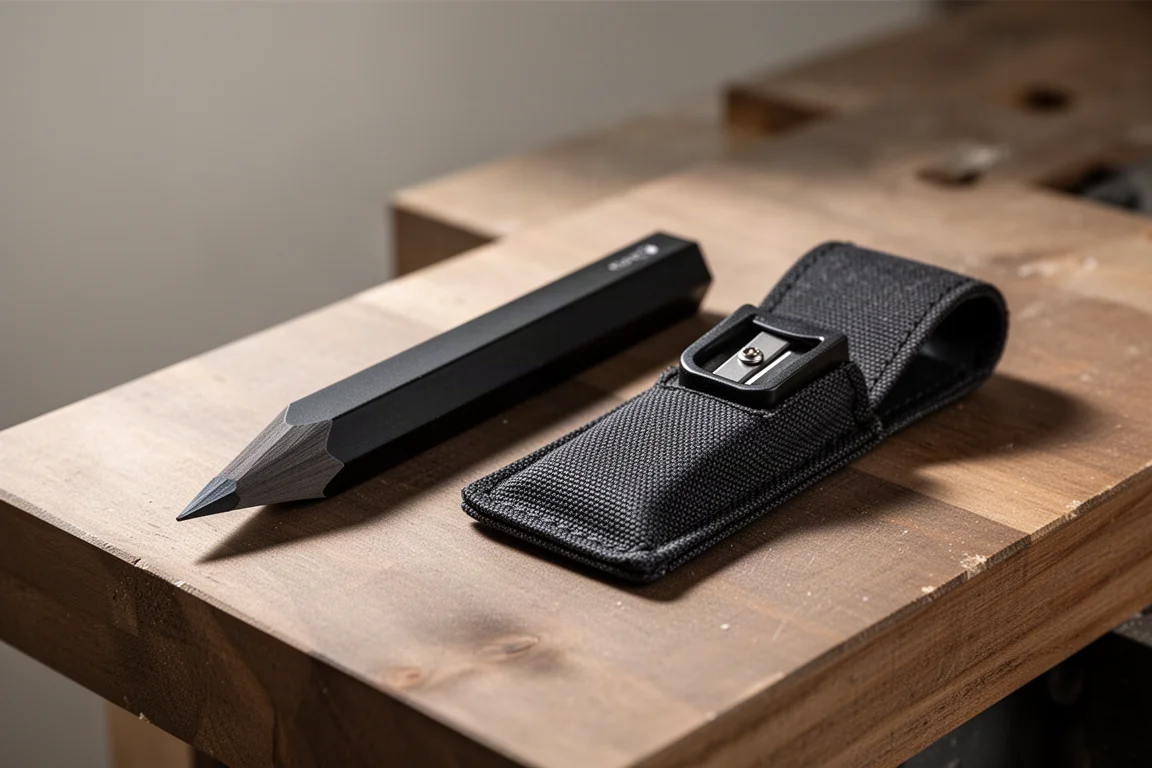
Every so often a tool comes along that feels like it could have been perfect, if only for a couple of small flaws. The Milwaukee mechanical carpenter’s pencil is exactly that kind of tool. It takes the familiar idea of the standard number two pencil that tradespeople have used for decades and re-engineers it with thick, sturdy lead and a genuinely clever sheath. It is a good tool, just not a perfect one.
In this review, we cover what you get, how it performs on real lumber, and the two issues that stop it from being an easy recommendation at its current price.
What’s in the Box
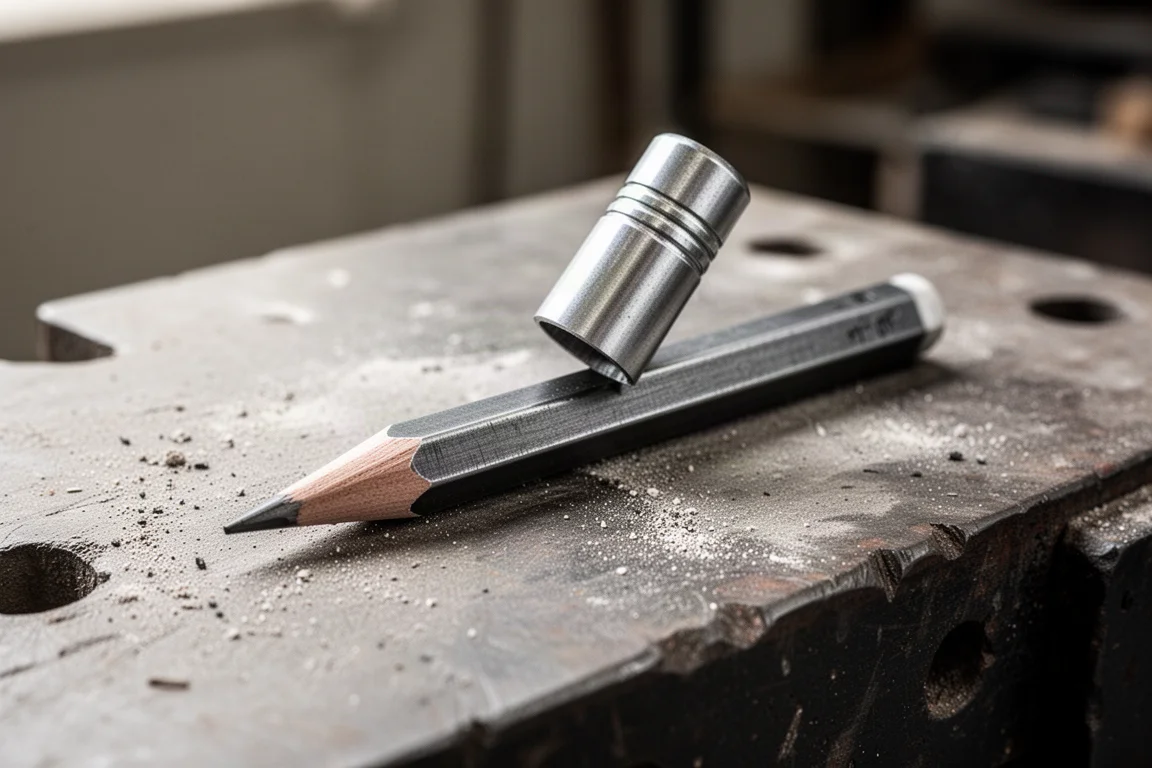
The package includes three things: the mechanical pencil itself, a 10-piece lead set, and a sheath that turns out to be the most interesting part of the whole kit. Loading lead is simple. You pop the cap off the top, drop a lead in, replace the cap, and you are ready to mark.
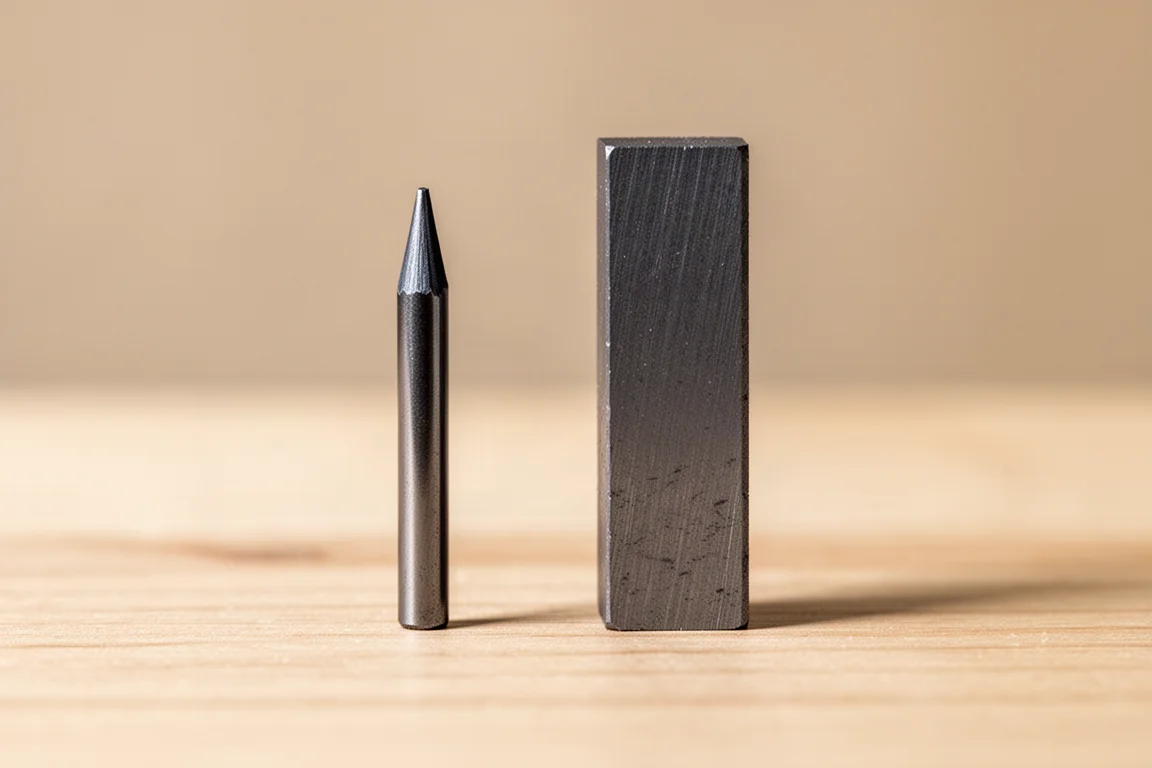
Compared to the thin, easily broken lead from a regular office mechanical pencil, the lead here is noticeably thicker and far more durable. Standard mechanical pencils generally fail in carpentry because the lead snaps the moment you press on rough lumber. This one is built for that kind of use.
How It Works on Lumber
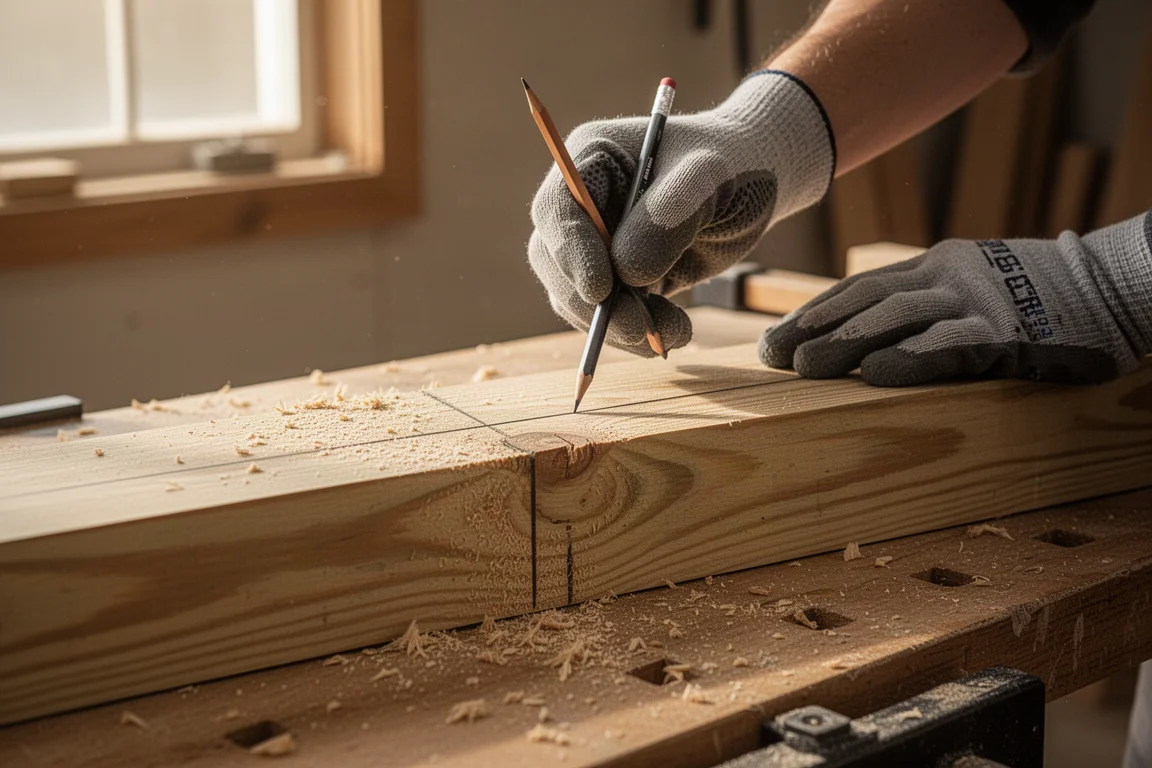
This is where the pencil earns its keep. On a flat piece of wood it performs well, but the real test is rough dimensional lumber like a 2x6, where ordinary mechanical pencil leads just snap. The thick lead here holds up to the kind of heavy-handed marking that carpentry demands.
Refills are easy to swap as well. The lead comes in different colors, including black, red, and yellow, so you can match your marking to the job at hand. Popping one color out and another in takes only a few seconds.
The Built-In Sharpener Sheath
Carpenter’s pencil tips dull quickly on wood. In the shop, a bench sharpener handles that fine, but on a job site nobody is carrying one around, and most people fall back on a razor blade or a utility knife.
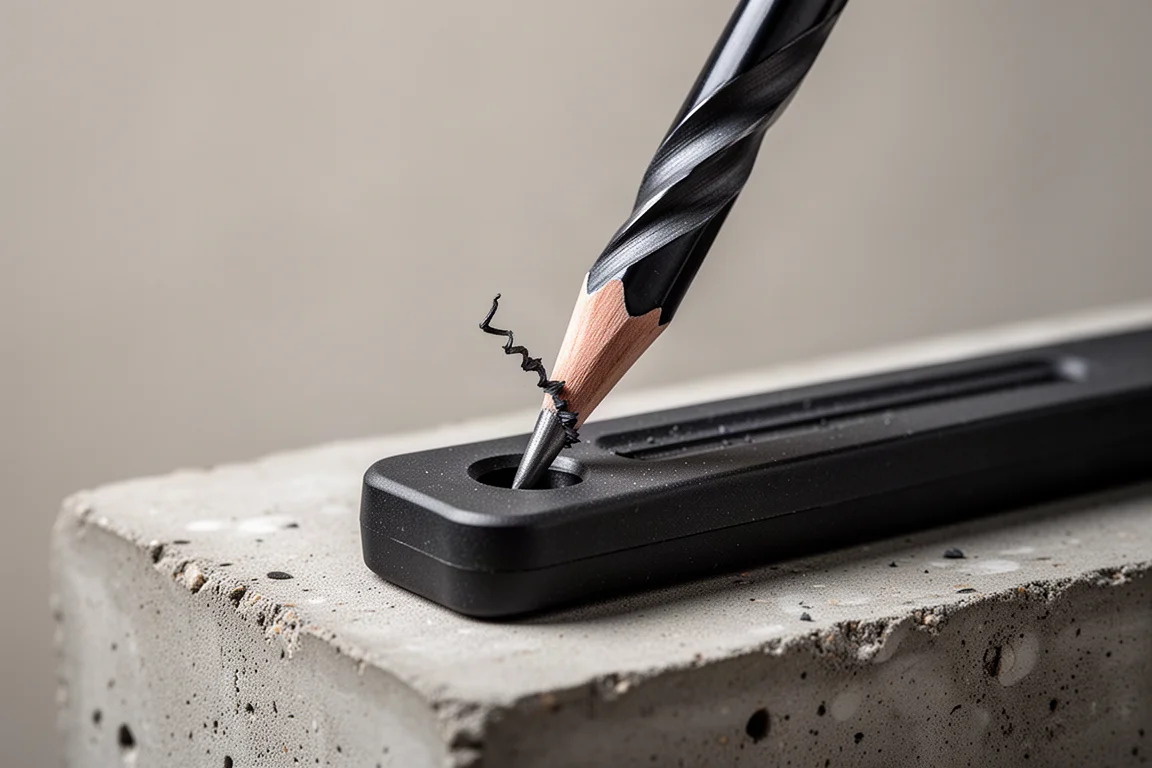
The sheath solves this. It has a sharpening hole built right into it: you insert the dull tip, twist, and the lead sharpens in place. The sheath also has a hole at the end, so you can extend the pencil out of it and hold it with a thicker grip, similar to a traditional flat carpenter’s pencil. That combination of sharpener and sheath is what makes this tool stand out from the pack.
Things to Consider Before Buying
There are two real issues worth weighing. The first is the cap. Instead of screwing on, it just pops off. Plenty of users report that when the pencil goes into a pocket, especially upside down, the cap pops off, rolls across the floor, and is never seen again. Even cheaper alternative versions have caps that screw on, which makes this omission hard to ignore.
The second issue is price. At around $15 you get the pencil, the sheath, and a 10-pack of lead. That sounds reasonable until you realize that competing options on Amazon sell a comparable amount of kit, including screw-on caps, for the same $15, giving you roughly three times the tool for the money. A 20% discount has been available, which softens the blow, and buying from a local store like Home Depot is an option if you need one immediately, but this is not the kind of tool you must have this very second.
Buying Advice
If you are not worried about losing the pop-off cap and you do not mind paying a few extra dollars for the convenience, this pencil will get the job done well. The built-in sharpener in particular is genuinely useful on a job site. If value is your top priority, though, an alternative with a screw-on cap and more included lead is the smarter spend at the same price point.
Conclusion
The Milwaukee mechanical carpenter’s pencil is a well-engineered marking tool with thick durable lead, easy color swaps, and a clever sheath with a built-in sharpener. If not for the higher price and the non-twist-off cap, it could have been perfect. As it stands, it is a good tool with two fixable flaws, and whether it is worth $15 depends on how much you value the polish.
Product link
View more details for Milwaukee Mechanical Carpenter's Pencil
This product is mentioned in the review. Check the specifications, options, and compatibility before buying.
View more details for Milwaukee Mechanical Carpenter's PencilFurther reading
Related Reviews
Tool Accessories
Best Bit Holders 2026: Four Ways to Keep Your Bits Organized
From the dual-molded Tekton 9-bit holder to premium PB Swiss and Snap-on options, four bit holders compared on retention, convenience, and value.
Tool Accessories
Best Magnetic Mats for Tools and Hardware: Three Options Compared
A flexible parts tray, a super-strength mat, and a classic magnetic plate: three magnetic mats with very different personalities and price points.
Tool Accessories
Best Magnetic Tool Accessories: Five Small Additions That Tidy Up Any Workspace
From Snap-on magnetic parts mats to Olsa Tools rails, five magnetic accessories that earn their place around the tool chest.