Power Tools
Milwaukee M28 0779-20 Impact Wrench Review: A Curious Blast from the Past
Milwaukee's 28-volt impact wrench is an oddball from an earlier era of higher-voltage tools. We look at its design, test results, and whether it still makes sense today.
Introduction
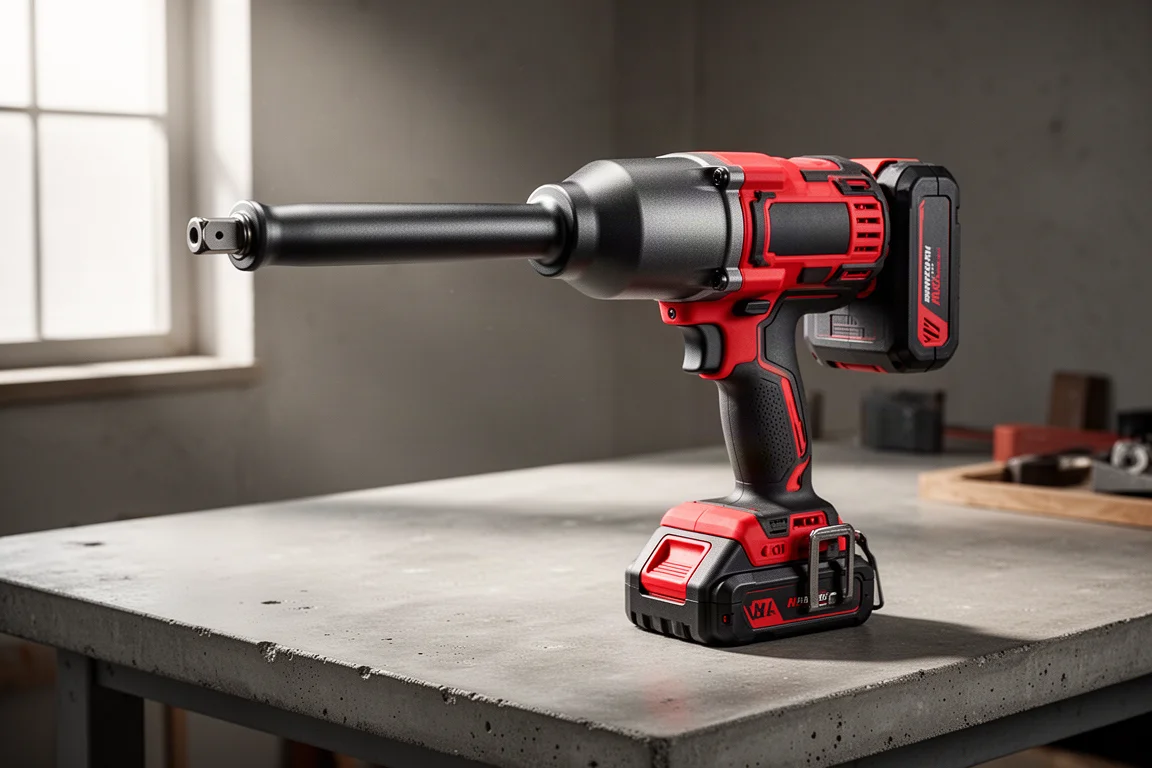
Higher-voltage cordless tools are usually the headline act these days, but one brand quietly went there years ago and rarely gets asked about it. The Milwaukee M28 0779-20 is a 28-volt full-size impact wrench that predates the current era of high-output packs and brushless motors. It is not new, not compact, and not a record-setter by modern standards. It is, however, a genuinely fascinating tool with an unusual design and a level of internal over-engineering that earns it real affection. This closer look covers what makes it different, how it performs, and who might still enjoy owning one.
Design and First Impressions
At 12.1 inches long, the 0779-20 is very much a full-size tool, stretching past a foot from front to back. That length immediately rules it out for tight jobs like brake caliper brackets. The model number itself even sounds unusual for the brand, a hint that this line sits outside the familiar M12 and M18 ecosystem.
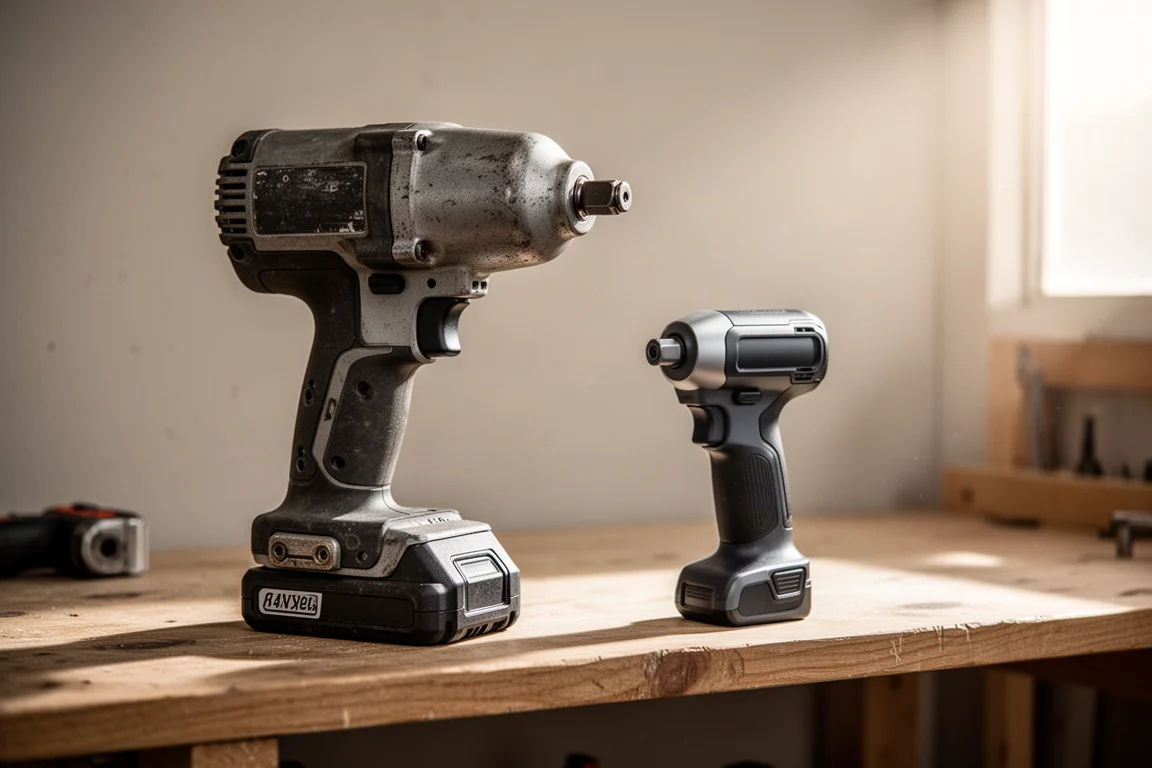
The strangest and arguably coolest feature of the M28 line is that the battery pack can attach facing either forward or rearward. That flexibility can free up a small amount of space at the front of the tool in a pinch, which would help in awkward spots. It is the kind of quirky, practical idea many would love to see return on current models.
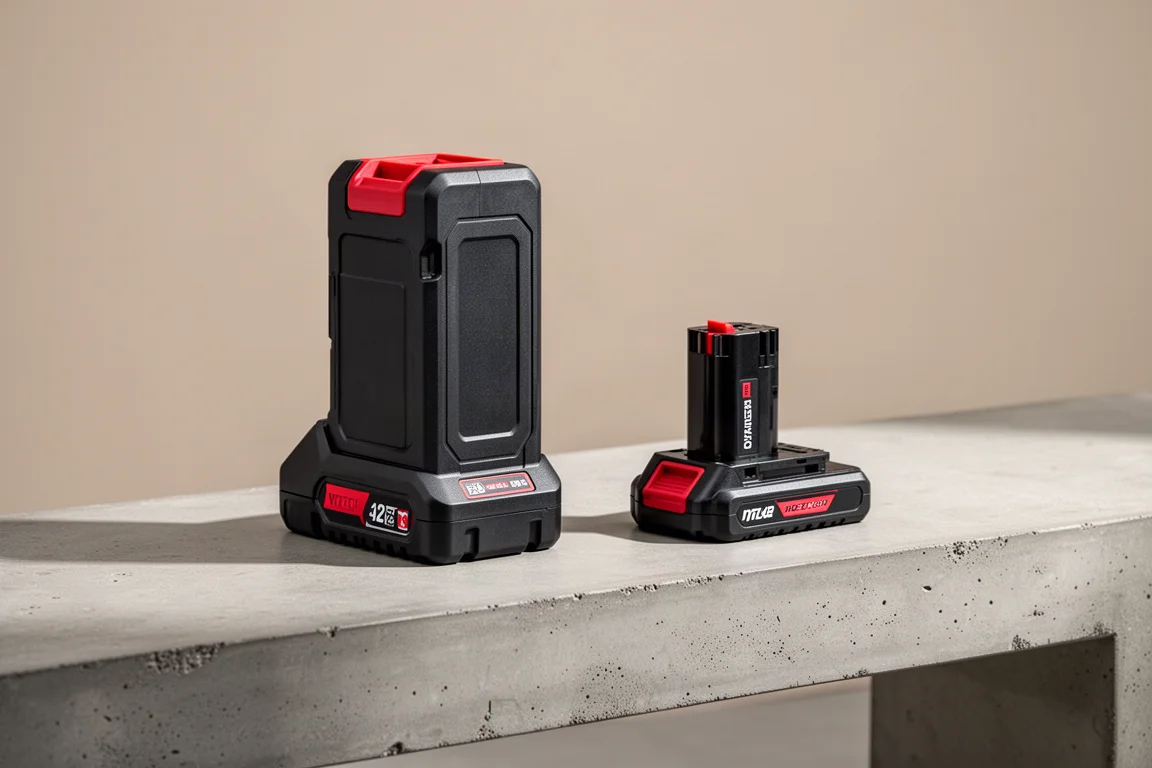
The battery itself is a chunker. Its footprint is larger than a high-output 6.0 or 8.0 Ah M18 pack built on larger 21700 cells, yet this M28 pack is only 3.0 Ah. The reason comes down to cell count: where an M18 pack uses five cells per row for 18 working volts, Milwaukee added two extra cells per level, four extra in total, to reach 28 volts. In theory the higher voltage lets everything run more efficiently with smaller wires carrying fewer amps, and in practice the tool has a noticeably lighter, smoother feel than its size suggests.
Performance Test Results
The first test measured working torque over five seconds in forward. Against the compact, mid-torque, and high-torque M18 impact wrenches, the M28’s run stayed low on the chart while the high-torque M18 dominated at 222 foot-pounds. The M28 did feel super smooth through its runs, though three short runs were enough to drain one bar from the 3.0 Ah 28-volt pack. Some tools do perform better in reverse than forward, and that turned out to matter here.
The second test, max torque over ten seconds in reverse, is where the M28 preferred to work. It still landed between an M12 compact and a modern mid-torque in terms of beam area, with the M18 mid-torque at six inches long clearly dominating the curve. It is a reminder of how much a well-designed shorter tool can accomplish.
The best-case scenario test, running fifteen seconds, produced a peak of 378 foot-pounds in reverse. Unlike some modern tools that flatline early, the M28 kept climbing, though the overall curve stayed fairly tame. On the full-size impact wrench leaderboard, its power runs turned into modest showings, placing it below the much more modern M18 2767. Its advertised rating of 325 foot-pounds, measured the traditional way, was matched almost exactly in the ten-second reverse test, which speaks well of its honest old-school rating.
Inside the Tool: Over-Engineered Smoothness
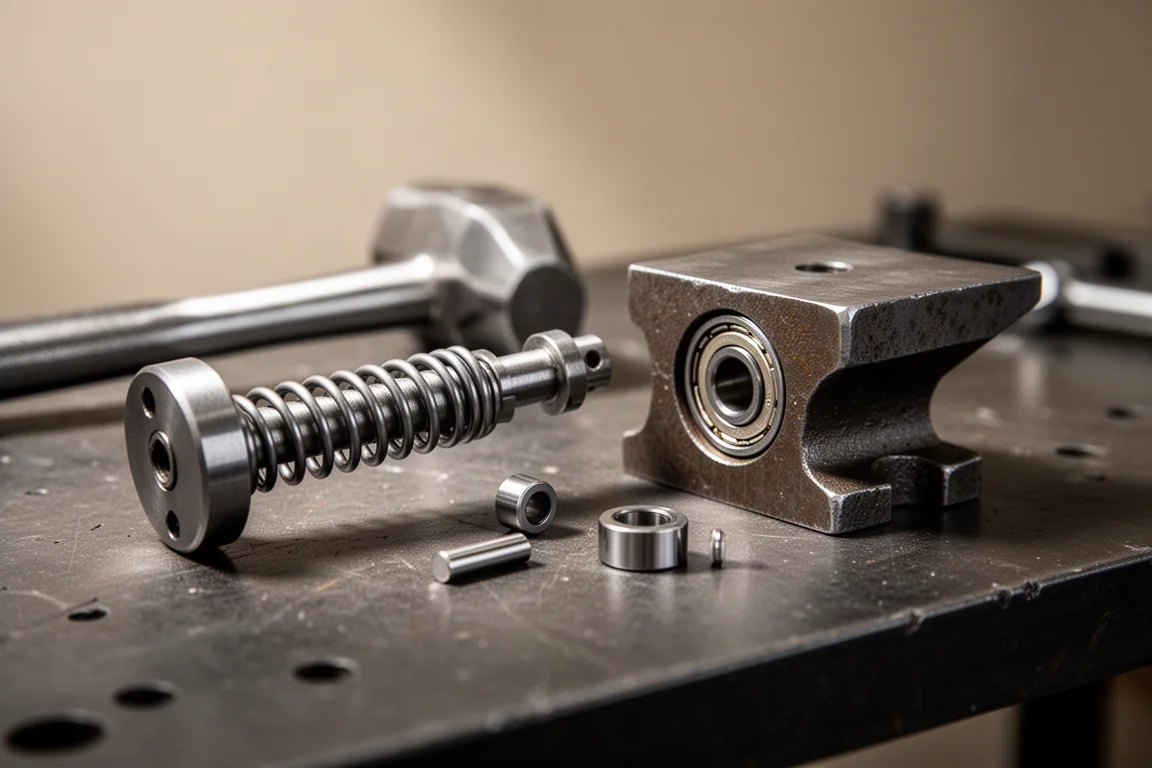
Cracking the tool open reveals why it feels so refined. The anvil uses both a bushing and a needle bearing acting as a thrust bearing, which likely accounts for much of the smoothness felt as the hammers launch forward. The whole hammer assembly rides on a large bearing with a machined bearing groove, something not typically seen, where the assembly usually just sits suspended on the planetary output shaft.
The gear train is equally unusual. Rather than a contained planetary driven by a sun gear, this tool is driven by the planets themselves via five pins, the opposite of what is normally found even within Milwaukee’s own range. A second four-planet reduction follows, and each pin has its own needle bearing. It is over-engineering to the max.
The hammer assembly weighs just 1.4 pounds, notably lighter than the 2767’s very heavy 2 pounds 4.5 ounces. All that double reduction exists largely to accommodate a still-quite-large brushed motor that cannot match the latest brushless Milwaukee fuel tools. All those bearings, however, make for a genuinely sweet ride.
Things to Consider Before Buying
This is a big, heavy, old-platform tool, and that shapes who it suits. The double planetary reduction and generous bearings give it a Cadillac-like smoothness, but the brushed motor and 3.0 Ah pack mean runtime and power delivery lag well behind modern M18 fuel equivalents. Battery availability for a discontinued 28-volt platform is another practical consideration before committing.
Its power-to-size ratio is where the numbers really sting: fitting the power it makes into its 12.1-inch length works out to roughly 31.2 foot-pounds per inch, which is hard to defend on paper. As a working tool for daily automotive use, a modern mid-torque or high-torque M18 is the more rational purchase.
Buying Advice
Buy this tool for the right reasons. It is a holdover from a bygone era, Milwaukee’s first serious attempt at higher-voltage handheld power tools, and it rewards owners with novelty, smoothness, and more bearings than you can shake a stick at. It was sold at one point at the same price as the M18 2767 from the same brand, with very different approaches to power. In terms of value for the power it actually delivers, the picture is less flattering, and it scores accordingly, saved from the bottom of the rankings only by one competitor below it.
If you already own M28 batteries, or you simply want a piece of the brand’s higher-voltage history in the collection, the 0779-20 is a charming and unusual addition. If you need maximum power in the shortest possible tool, modern M18 options remain the smarter choice. Milwaukee now appears to be exploring higher-output territory again with dual-battery side-by-side designs, which makes tools like this one all the more fun to look back on.
Conclusion
The Milwaukee M28 0779-20 is not going to set records in the 2020s, and it does not try to. Its appeal lies in the details: reversible battery mounting, an honest 325 foot-pound rating it actually meets, a triple-bearings-everywhere drivetrain, and an overall smoothness that feels almost luxurious for an impact wrench. As a curiosity and a conversation piece with real competence, it earns its place on the bench.
Product link
View more details for Milwaukee M28 0779-20 Impact Wrench
This product is mentioned in the review. Check the specifications, options, and compatibility before buying.
View more details for Milwaukee M28 0779-20 Impact WrenchFurther reading
Related Reviews
Power Tools
Best 1-Inch Pistol Impact Wrenches: Three Heavy-Duty Options Compared
We compare three 1-inch pistol impact wrenches, from a budget-friendly Harbor Freight model to a premium Caterpillar unit, to help you choose the right one.
Power Tools
Best 3/4-Inch Impact Wrenches 2026: Five Contenders Compared
We compare five 3/4-inch impact wrenches across price and performance, from a budget Amazon option to Snap-on's most powerful model yet.
Power Tools
Best Budget Cordless Tools 2026: Walmart Finds That Punch Above Their Price
We tested five cordless tools from Walmart, including a high-torque impact wrench that trades blows with Milwaukee and a $35 duster that outperforms its price class.