Power Tools
Milwaukee M18 Supercharger and Forge Battery: Fast Charging Put to the Test
Milwaukee's latest M18 Supercharger pairs with Forge batteries to cut charge times dramatically. We tested it against the older rapid charger to see what it really delivers.
Introduction
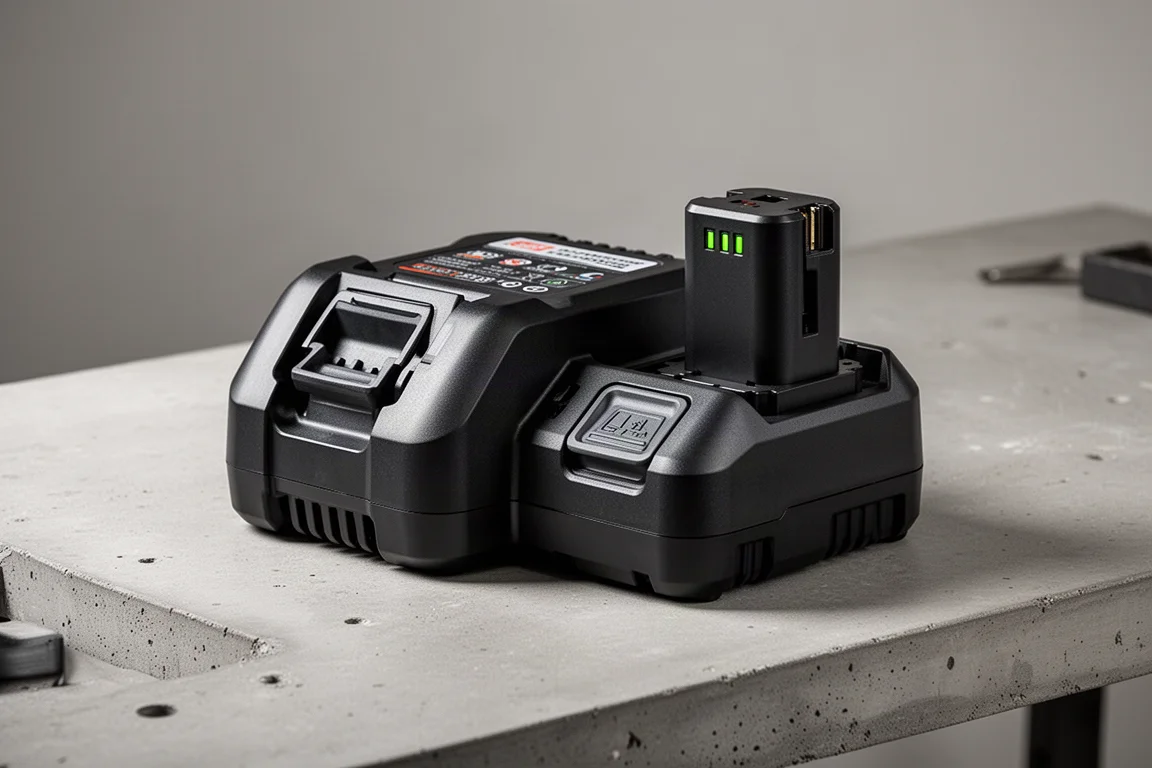
Milwaukee’s M18 Supercharger is the newest charger in the M18 platform, designed alongside the Forge battery line to take advantage of its faster charging capability. It is a physically big unit with a hefty central body, active cooling fans, and a dual-bay layout that shares charging power in a way we have not seen from Milwaukee’s older rapid chargers.
The obvious question is whether the claimed speed gains hold up in real use. So we timed it: Forge batteries, high output batteries, and older standard packs, all charged on both the Supercharger and the conventional rapid charger, from genuinely flat states, at room temperature, with the results logged honestly rather than pulled from a spec sheet.
Who This Setup Is For
If you are a tradesperson who cannot afford downtime between battery swaps, fast charging is not a luxury, it is a workflow tool. Waiting more than an hour for a battery to come back can stall a whole day’s work. Conversely, DIY users who charge slowly overnight and use their tools infrequently may never notice a difference, and could reasonably stick with a smaller or older charger.
The Supercharger makes most sense for people running high drain batteries all day, and it is at its best when paired with the Forge packs it was designed for.
How the Dual-Bay Power Sharing Works
This is not a sequential charger, and it is not evenly rapid either. The charger delivers up to 18 amps of total charging power, but a home power supply cannot feed both bays at that rate simultaneously. Instead, it allocates the current intelligently.
Put a battery in the primary bay and it charges at 12 amps. Add a second battery and the primary drops to 12 while the second gets 6. Once the first battery finishes, the full 12 amps jump across to the other one. That is why a second battery takes roughly 50% longer than the first, not double the time: by the time the fast bay is done, the slow bay is already about half charged, and the remaining half then charges at the higher rate.
It is a clever arrangement, though the behaviour is not spelled out clearly on the charger itself, and it takes some observation to work out which bay is which.
Cooling: Three Fans, One Caveat
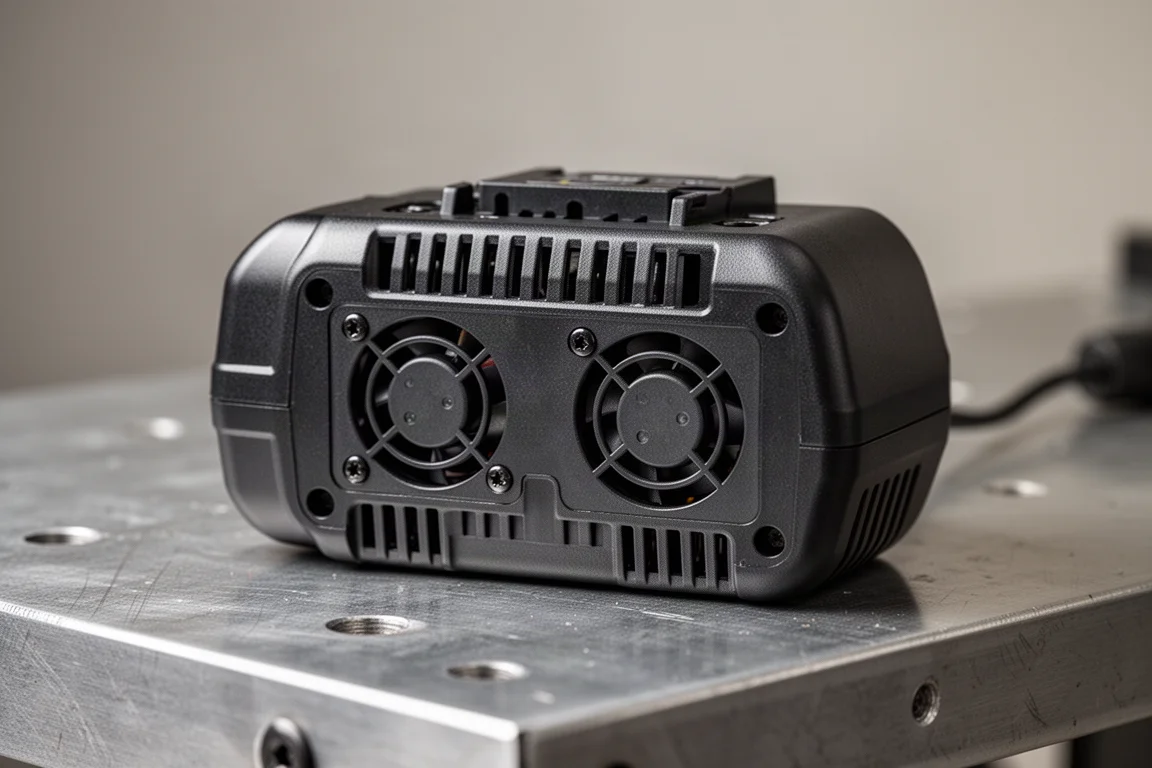
Where the older rapid charger has no fans at all, the Supercharger has three: one to keep the unit cool and one per battery bay, drawing air up from vents on the underside of the unit. The fans kick in when charging starts and stop when the battery is removed, and they are audible but not obtrusive.
Here is the caveat worth knowing: air does not actually pass through most M18 batteries. Older packs have no vent openings in the casing at all, so the bay fans mostly blow air around the outside of the battery, which helps a little but does not cool the cells directly. It is more effective on the newer battery designs that have openings at the rail area. Rapid charging generates heat, so the active cooling makes sense, but expectations should be calibrated accordingly.
Charging Speeds: What the Tests Showed
The headline numbers are what sell this setup, and they largely held up.
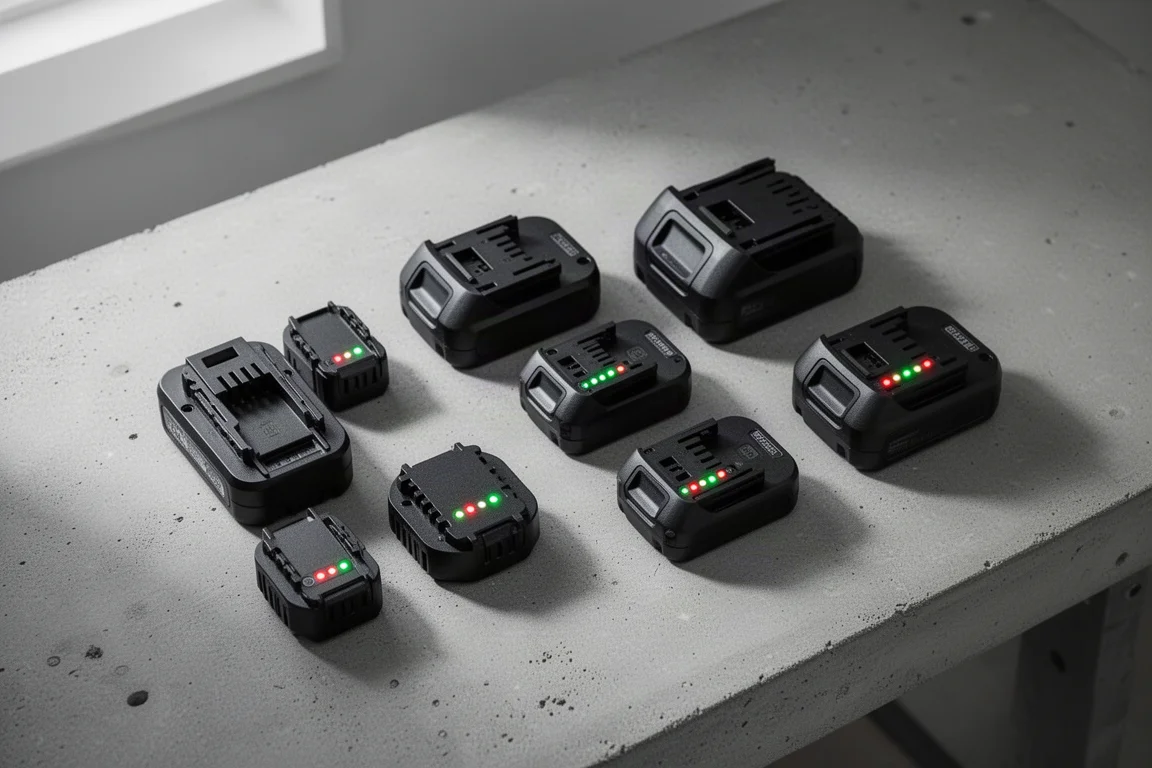
The Forge 6Ah battery, the fastest-charging pack in the test, reached a full charge in right at 24 minutes, matching the claimed figure almost to the second. The flashing green light even appeared around the 16 minute mark, indicating roughly 80% charge, enough to grab the battery and get back to work well before it hit 100%.
The 6Ah high output battery took about 25 to 26 minutes on the Supercharger, notably quicker than the roughly 35 minutes indicated for it. On the older rapid charger, the same Forge pack took 1 hour and 1 minute, more than double the Supercharger time.
The older standard batteries are where the advantage disappears. A conventional M18 pack took 58 minutes on the Supercharger and 58 minutes and 48 seconds on the rapid charger, effectively identical. The lesson is clear: the Supercharger needs Forge or high output batteries to show its worth.
Charging Two 12Ah Batteries
The 12Ah high output packs are the biggest batteries Milwaukee makes for the M18 platform, and they are slow to charge on conventional hardware, taking over 2 hours each on the older rapid charger.
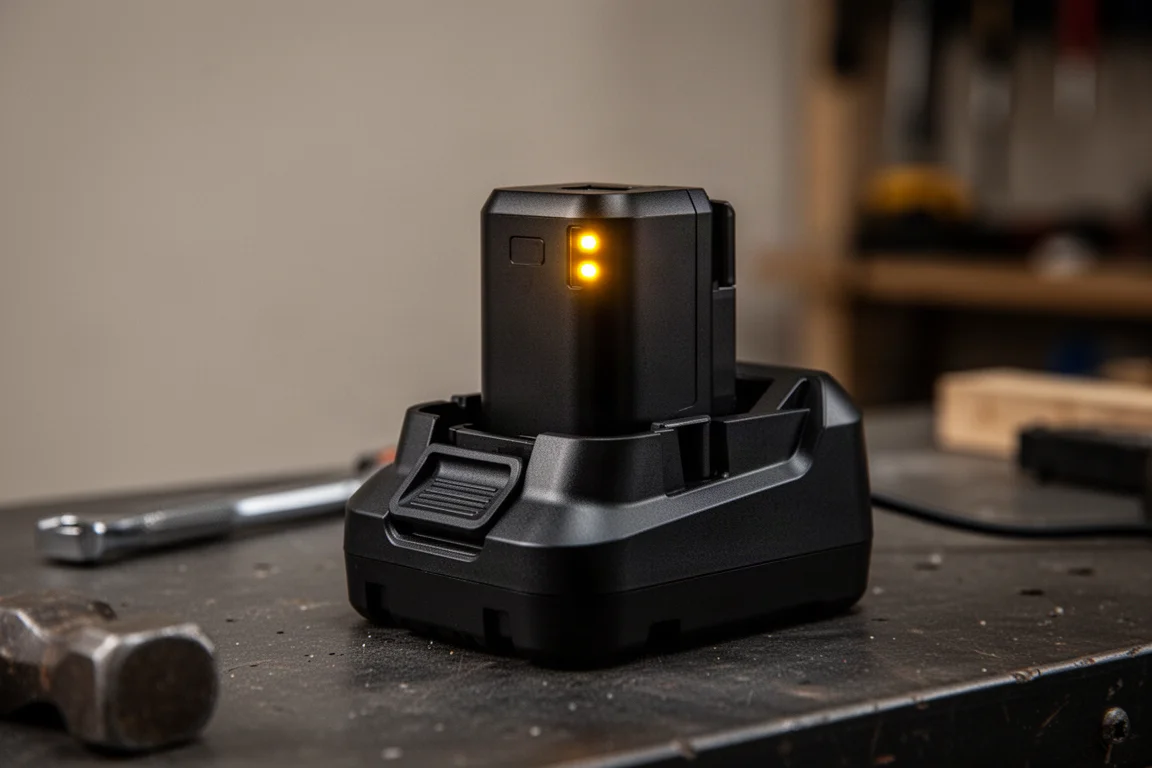
On the Supercharger, both completely flat 12Ah packs were charged in 1 hour and 5 minutes, roughly half the time of charging a single one on the old charger. Interestingly, the second battery, nominally charging at the slower rate, finished at essentially the same time as the first, so the real-world behaviour was even better than the theory suggested.
For anyone who runs multiple large packs, that time saving is substantial and easy to appreciate.
Build Quality and Materials
The Forge battery itself feels like a step up from earlier M18 packs. The casing is PA66 nylon with 25% glass fibre filling and an F52 flame retardant rating, a tougher and more abrasion-resistant material than the PA6 used in most tool housings, which makes sense for parts that slide in and out of tools constantly. The shell is genuinely rigid; flexing it is nearly impossible.
The older high output batteries use polycarbonate with an additional flame retardant rating, and interestingly contain metal reinforcing pieces moulded into the plastic around the rails, presumably for structural strength. The Forge pack’s buttons and release mechanism also work noticeably better than older packs, which can catch or stick when removing them from tools.
Things to Consider Before Buying
The Supercharger is louder than the older rapid charger, purely because of the fans. That noise is the price of fast charging and better thermal management, and most users will consider it a fair trade. There is also no audible completion alert on this or any current Milwaukee charger, so you have to glance over to know when a battery is done.
The dual-bay power sharing logic can be slightly confusing at first, and the indicator lights do not fully explain themselves without a manual. Finally, as noted above, owners of only older standard batteries will see no meaningful speed benefit; the charger is essentially the same speed as the old rapid charger with those packs.
Who Should Buy the Supercharger
If your day depends on batteries being ready when you need them, the Supercharger is easy to recommend. It is roughly twice as fast as the older rapid charger across the high output and Forge range, cuts 12Ah charge times in half when charging two packs, and delivers the full 24 minute charge on the Forge 6Ah battery that Milwaukee promises.
If you charge occasionally and own mostly older M18 packs, you can comfortably pass on the upgrade. But for heavy users, this charger fundamentally changes how you plan a working day.
Conclusion
The M18 Supercharger does what it was built to do: make fast charging genuinely fast, provided you feed it modern batteries. Paired with the Forge pack, a full charge in about 24 minutes is a real, repeatable result, and even the big 12Ah packs come back in a fraction of the usual time. It is a little noisy and a little cryptic in places, but for anyone who works against the clock, those are small prices to pay.
Product link
View more details for Milwaukee M18 Supercharger
This product is mentioned in the review. Check the specifications, options, and compatibility before buying.
View more details for Milwaukee M18 SuperchargerFurther reading
Related Reviews

Power Tools
Best 1-Inch Pistol Impact Wrenches: Three Heavy-Duty Options Compared
We compare three 1-inch pistol impact wrenches, from a budget-friendly Harbor Freight model to a premium Caterpillar unit, to help you choose the right one.

Power Tools
Best 3/4-Inch Impact Wrenches 2026: Five Contenders Compared
We compare five 3/4-inch impact wrenches across price and performance, from a budget Amazon option to Snap-on's most powerful model yet.

Power Tools
Best Budget Cordless Tools 2026: Walmart Finds That Punch Above Their Price
We tested five cordless tools from Walmart, including a high-torque impact wrench that trades blows with Milwaukee and a $35 duster that outperforms its price class.