Power Tools
Milwaukee M18 Super Sawzall vs Flex FX2271-Z: Two Recip Saws, Very Different Insides
Two 3,000 SPM cordless reciprocating saws with matching specs on paper, but cutting tests and teardown footage reveal real differences you can feel.
Introduction
Reciprocating saws go by many names: recip saw, Sawzall, the tool you grab when something needs to disappear. Whatever you call them, the idea is simple: a large inline saw whose blade moves up and down through just about everything that is not finish work. Between drywall, 2x4 studs, angle iron, 4x4 posts, steel pipe, and sheet metal, the right blade turns one of these into the workhorse that gets the job done in a hurry and asks little in return.
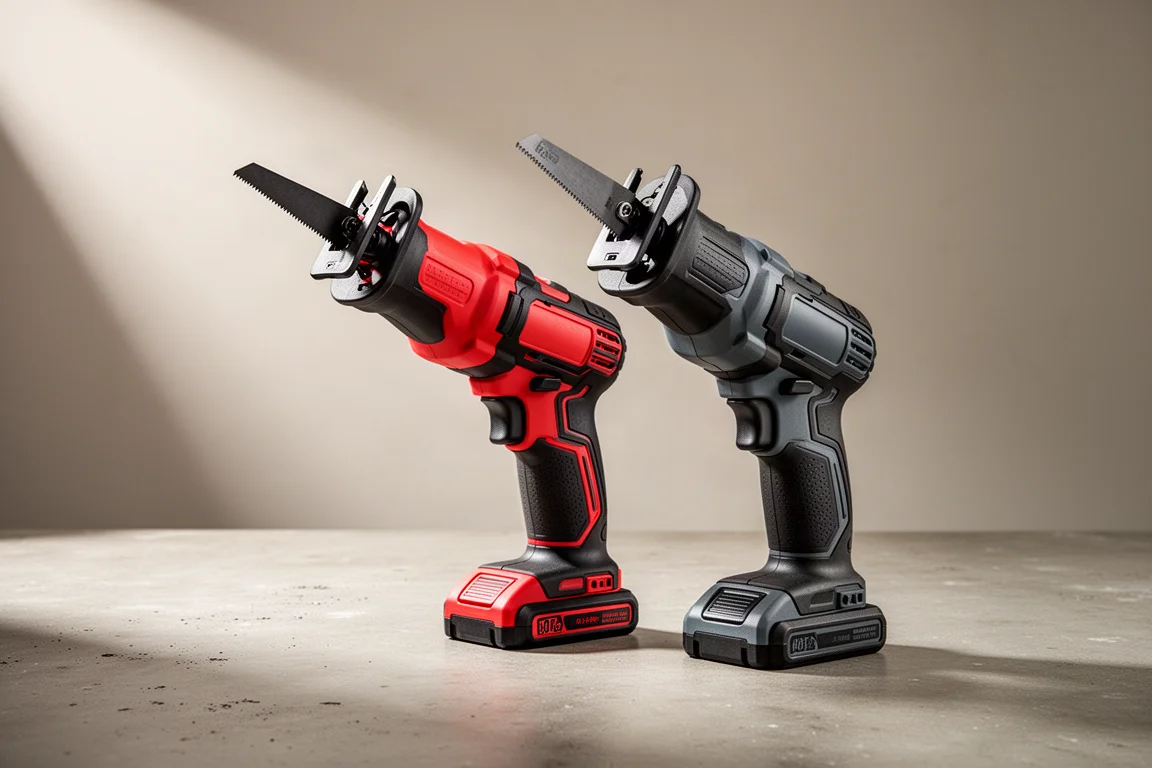
This comparison looks at two of the best cordless examples: the Milwaukee 2722-20 M18 Super Sawzall and the Flex FX2271-Z. On paper they look nearly identical. In practice, cutting tests and a teardown reveal two very different ways of doing the same job.
How We Tested
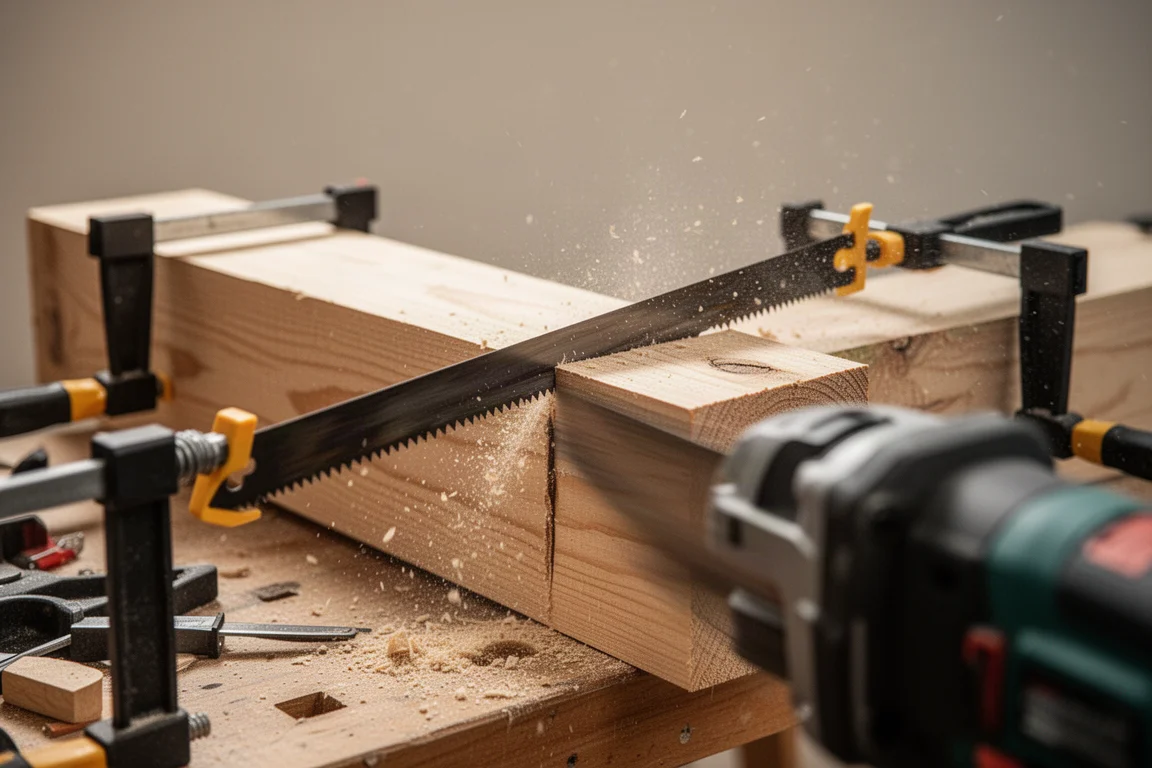
Both saws were tested the same way: a fresh basic wood-cutting blade, a 4x4 beam, and a consistent 7 lb of weight hanging on the hand guard to keep the comparison measurable. This lower force is slower than what most people would push with by hand, but it keeps the results apples-to-apples between the two tools. Cut times were recorded across three runs with median results reported.
Cutting Performance on Wood
With 7 lb of consistent load, the Flex finished its 4x4 cuts with a median of 16.9 seconds, a little quicker than the M18’s median of 19.5 seconds. Both tools advertise 3,000 strokes per minute, and both actually saw between roughly 3,060 and 3,140 SPM under load, which is impressive given that most brands only quote free-air speed numbers.
Both saws share the same 1-1/4 inch stroke length, and both offer an orbital mode. Orbital action turns the purely back-and-forth stroke into a mixed motion that adds downward bites into the material. In soft materials like wood, it simply means business. In steel, it mostly adds chatter, so it is best left off there.
Straight Mode Results
In straight reciprocating mode, the Flex edges ahead: its three-cut median came in at 16.9 seconds versus the M18’s 19.5 seconds. The Flex also seems to carry a slight built-in slope to its stroke even in standard mode, picking the blade up and settling it into the cut, which may explain why it cuts a touch faster for the same effort.
Orbital Mode Results
Orbital mode changes the picture. The M18’s orbital setting is far more aggressive, and it turned its 19.5 second cut into a 13.6 second median, dropping nearly 6 seconds. The Flex’s orbital action is gentler, shaving 3 to 4 seconds to a 13.4 second median. In the light 7 lb weighted orbital test, the M18 finished at 22.1 seconds versus the Flex at 24.5, suggesting that the Milwaukee’s dancing orbital action does more of the work for you when pressure is limited, such as when standing on a ladder without much leverage.
What you feel matters too. The Milwaukee hops around more, even in straight mode, while the Flex runs with a smooth, almost meditative back-and-forth motion and noticeably less vibration and hopping. The trade-off is comfort versus raw orbital bite.
Inside the Milwaukee: Crankshaft and Bevel Gear
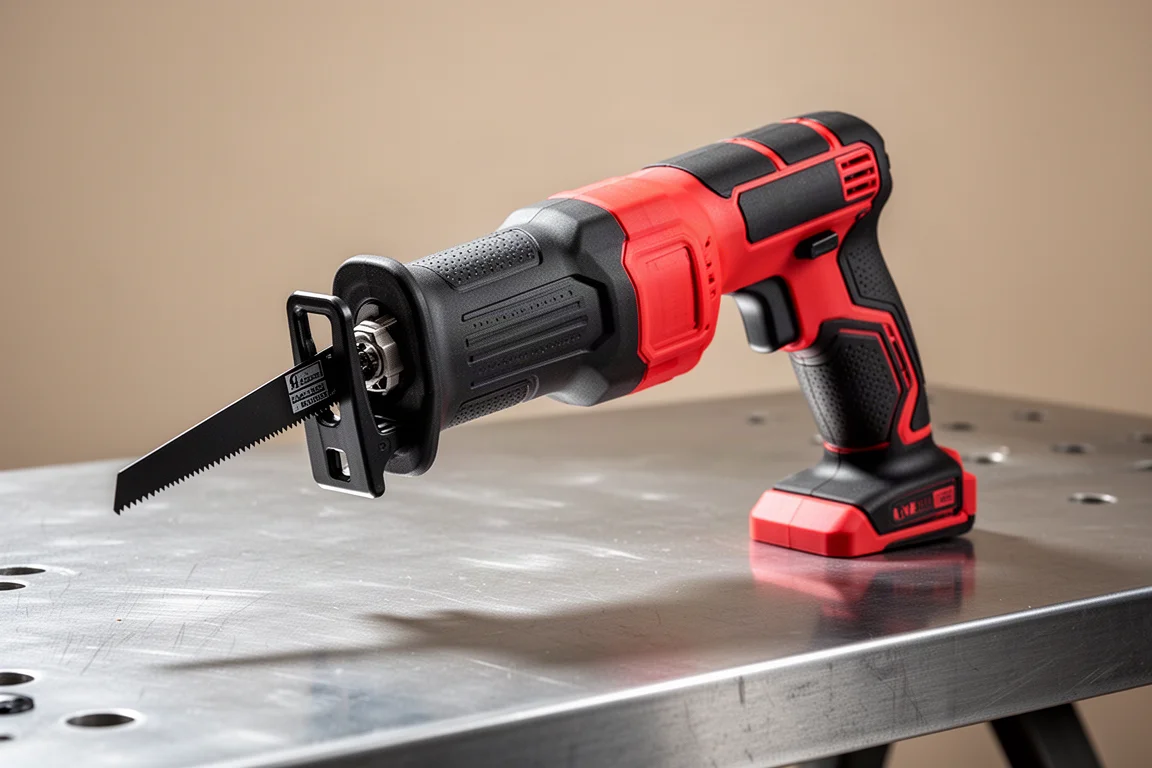
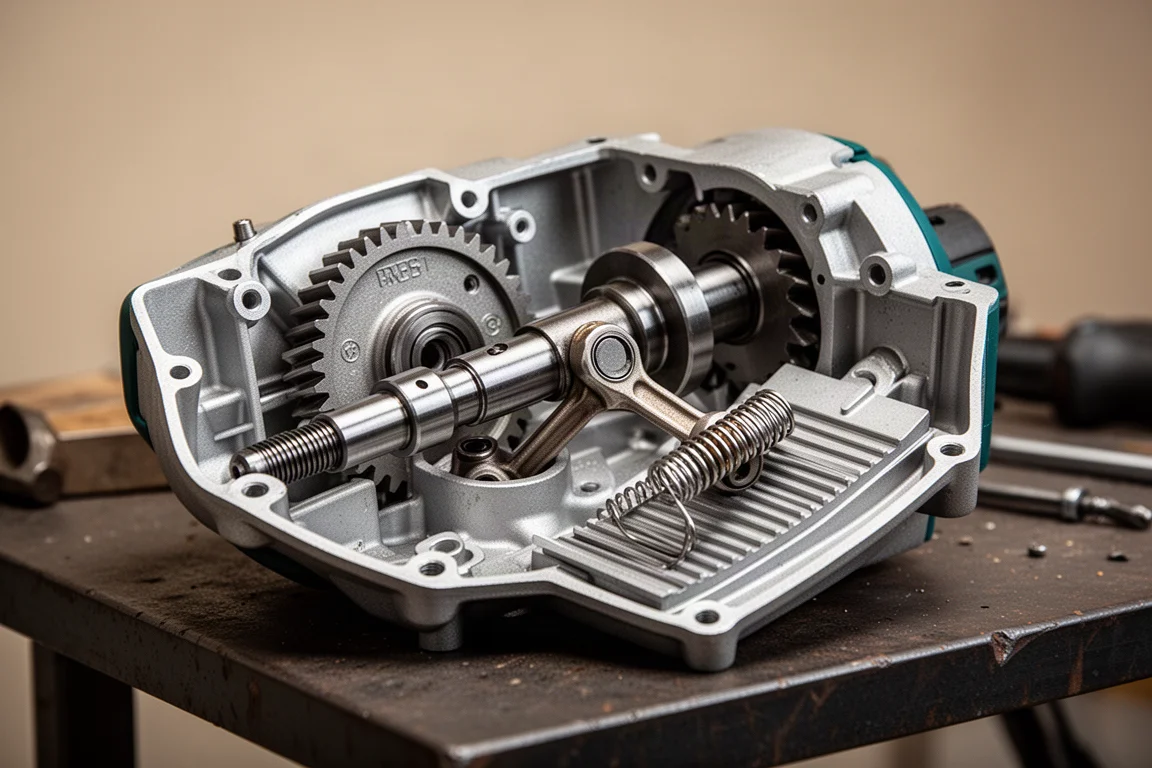
Opening the M18 reveals a large cast aluminum housing with two folding halves. Inside is a bevel ring gear and pinion transfer feeding a crankshaft and rod setup that converts rotational force into back-and-forth strokes, much like a piston engine. The bevel gear changes the orientation of the spin and acts as a gear reduction, helping the saw power through material without bogging down the motor. The crank even carries a counterweight, like an engine crankshaft, to balance internal forces. The orbital ramp is sprung and determines whether the rod connection is held in place or allowed to move temporarily before being pushed back.
Inside the Flex: Pivoting Arm and Springs
The Flex takes a different path entirely, despite matching the M18’s specs from the outside. A pivoting arm cylinder works with a flywheel runner carrying a roller bearing inside a channel, progressing the rod forward and back as it rotates. Rather than a crankshaft ramp, the Flex uses springs on top of the rod and cylinder assembly for orbital action: flipping the mode switch rotates a shaft so a rounded bump kicks the assembly upward, with the springs pulling it back down each stroke. The result is a vibration-defying, bolt-action-like feel. This approach appears in some other brands’ models too, but rarely paired with an orbital function.
Which One Should You Buy?
Both saws are strong picks, and both have been described as the best cordless examples used in recent memory. The Flex FX2271-Z lists for $199 at Lowe’s and is often $50 to $75 cheaper at retail than the M18 Super Sawzall, while delivering smoother operation, less felt wear and tear over long sessions, and slightly quicker straight-mode cuts. The M18 counters with a more aggressive orbital mode that pays off when you cannot lean hard into the cut, making it a strong choice for elevated work and low-leverage situations.
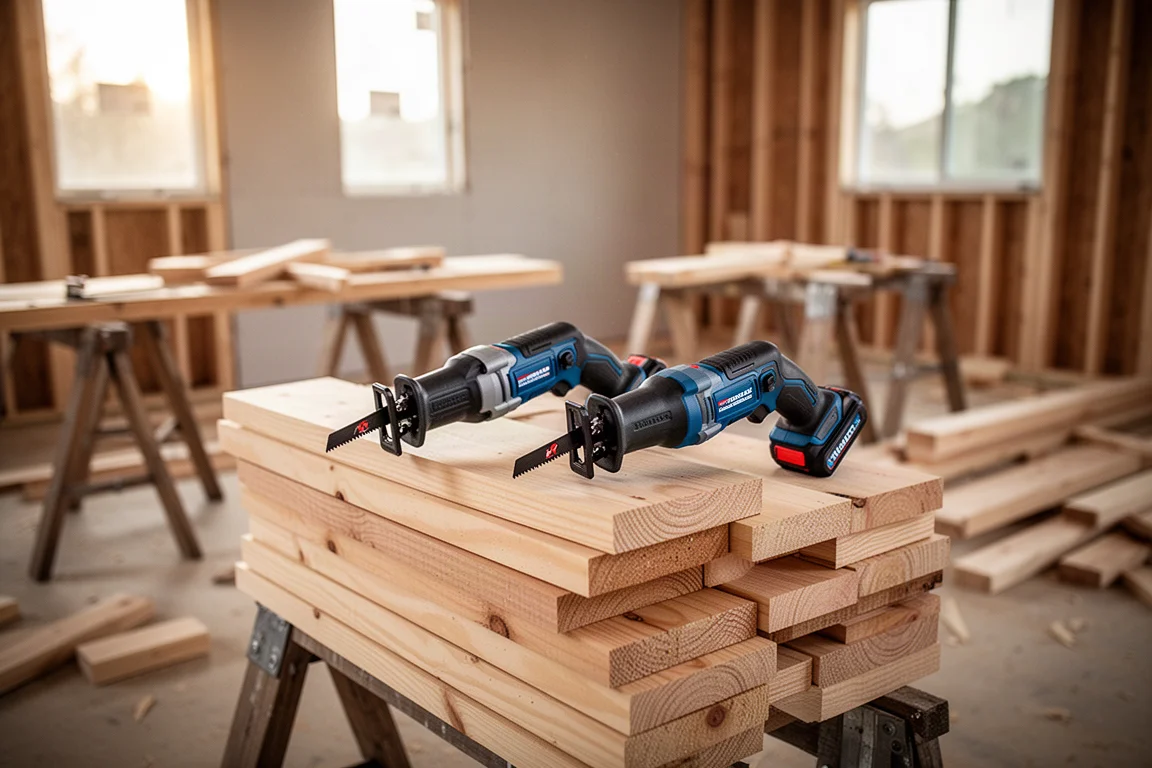
If smooth comfort matters most and the budget is tight, the Flex is the easier tool to live with. If you want the most forceful orbital action and do not mind some hopping, the Super Sawzall earns its name.
Conclusion
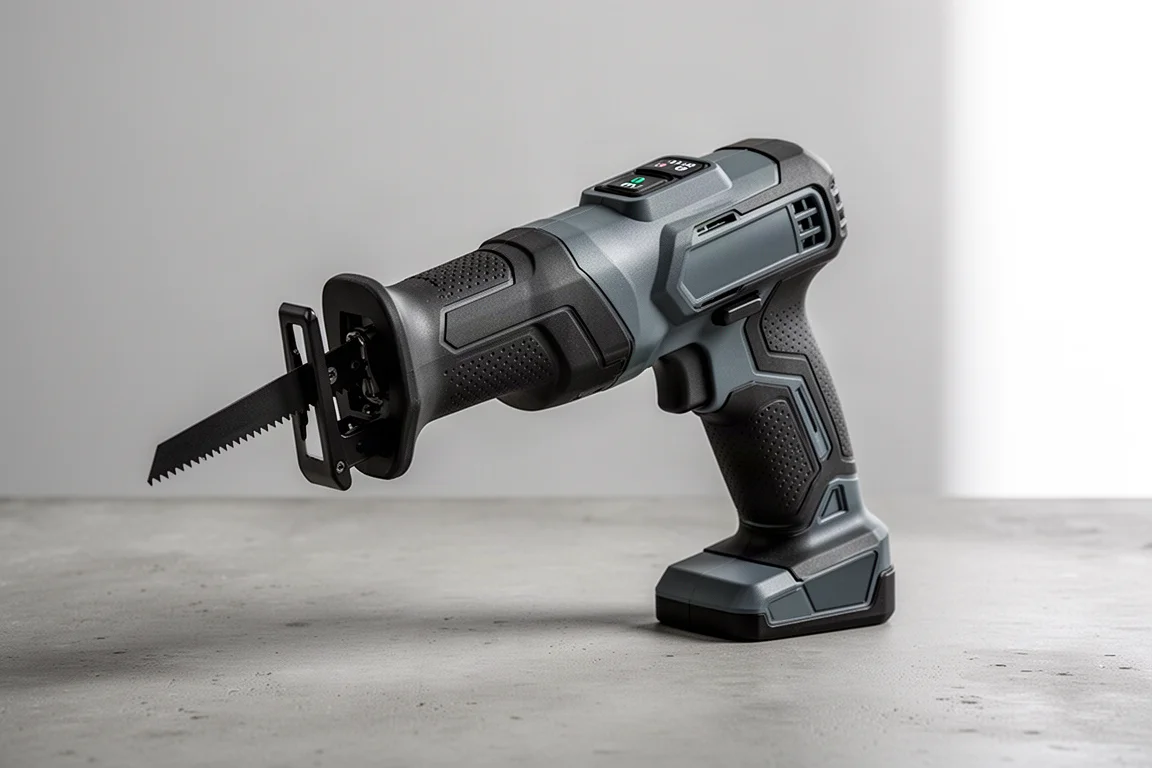
The Milwaukee M18 Super Sawzall and Flex FX2271-Z prove that identical spec sheets can hide completely different engineering. The Milwaukee brings a crankshaft-driven, gear-reduced design with a violently effective orbital mode. The Flex counters with a spring-loaded pivoting arm that smooths out vibration and a friendlier price at retail. Either way, you are getting a capable, fast-cutting recip saw; the right one depends on whether you value smooth control or maximum orbital bite.
Further reading
Related Reviews
Power Tools
Best 1-Inch Pistol Impact Wrenches: Three Heavy-Duty Options Compared
We compare three 1-inch pistol impact wrenches, from a budget-friendly Harbor Freight model to a premium Caterpillar unit, to help you choose the right one.
Power Tools
Best 3/4-Inch Impact Wrenches 2026: Five Contenders Compared
We compare five 3/4-inch impact wrenches across price and performance, from a budget Amazon option to Snap-on's most powerful model yet.
Power Tools
Best Budget Cordless Tools 2026: Walmart Finds That Punch Above Their Price
We tested five cordless tools from Walmart, including a high-torque impact wrench that trades blows with Milwaukee and a $35 duster that outperforms its price class.