Power Tools
Milwaukee M18 Power Supply Review: A Battery-Powered Power Station for Milwaukee Users
Four batteries, 3,600 starting watts, and 1,800 watts continuous output. Here is what the Milwaukee M18 Power Supply can realistically run and who it makes sense for.
Introduction
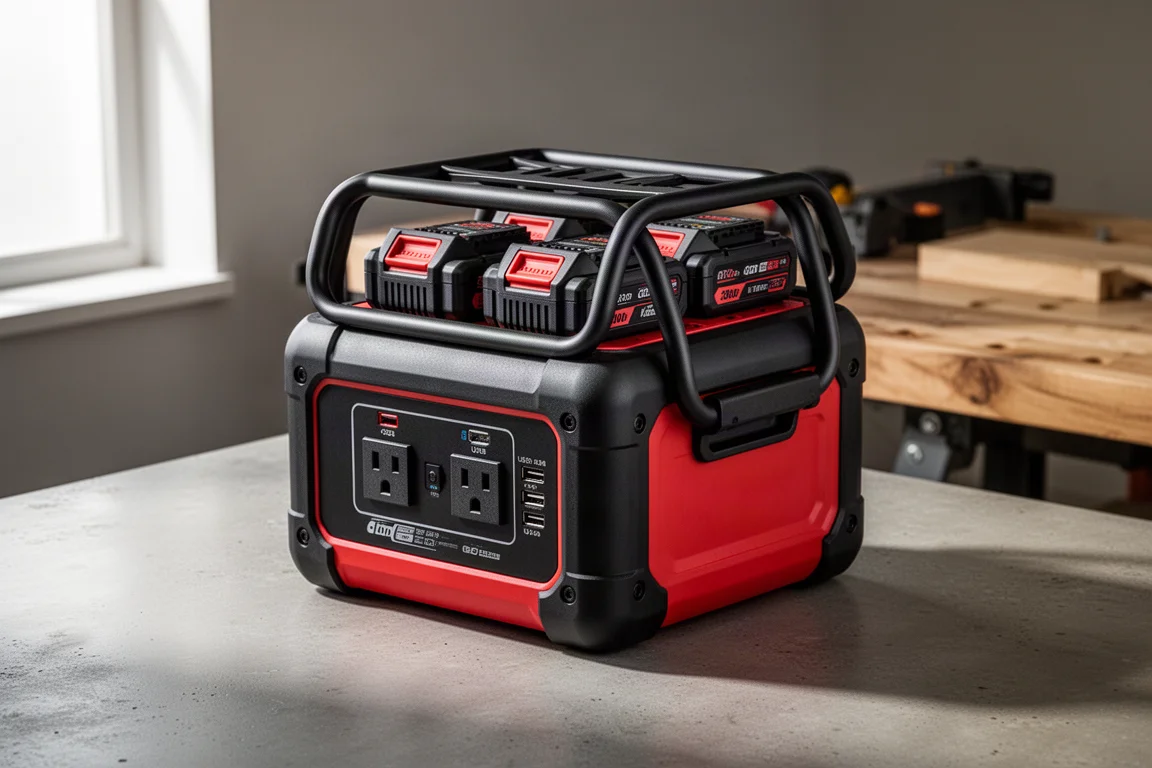
If you already own a stack of M18 batteries, the Milwaukee M18 Power Supply is one of the more interesting ways to put them to work beyond the tools themselves. It takes four batteries and turns them into a 110V power station with enough output to run refrigerators, power tools, and even a full guitar amp rig. After extensive testing, here is how it holds up and who it actually makes sense for.
What the M18 Power Supply Actually Is
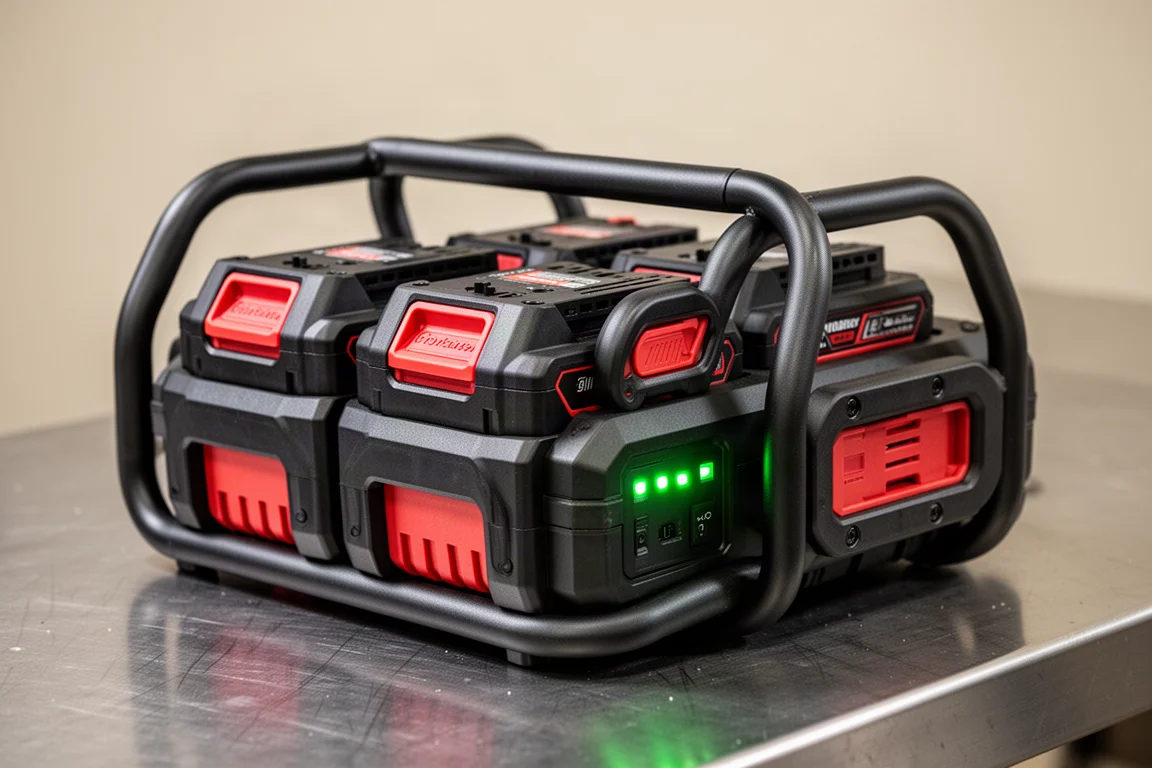
The unit has four battery bays on top, two on each side. Notably, all four batteries are required for it to operate: remove one and the unit will not turn on until it is back in place. The batteries draw from all four simultaneously, so the load is spread across the set.
Any M18 battery will work, not just the high-capacity ones, but there is a catch. If one battery in the set runs flat while the others still have charge, the unit stops working. Running four identical batteries is the practical way to use it.
The power supply doubles as a standard charger, charging all four batteries at the same time. It is not a rapid charger, so expect roughly three hours to charge four 12.0Ah batteries, and it cannot output power while charging.
Real-World Test Results
The headline numbers are 3,600 starting watts and 1,800 watts of continuous output, with two 110V outlets plus USB and USB-C ports for charging phones and laptops.
The most requested test was a refrigerator. It ran the compressor, not just the lights, kept the fridge cool for about two hours, and barely made a dent in the batteries. That alone makes it a credible short-outage backup.
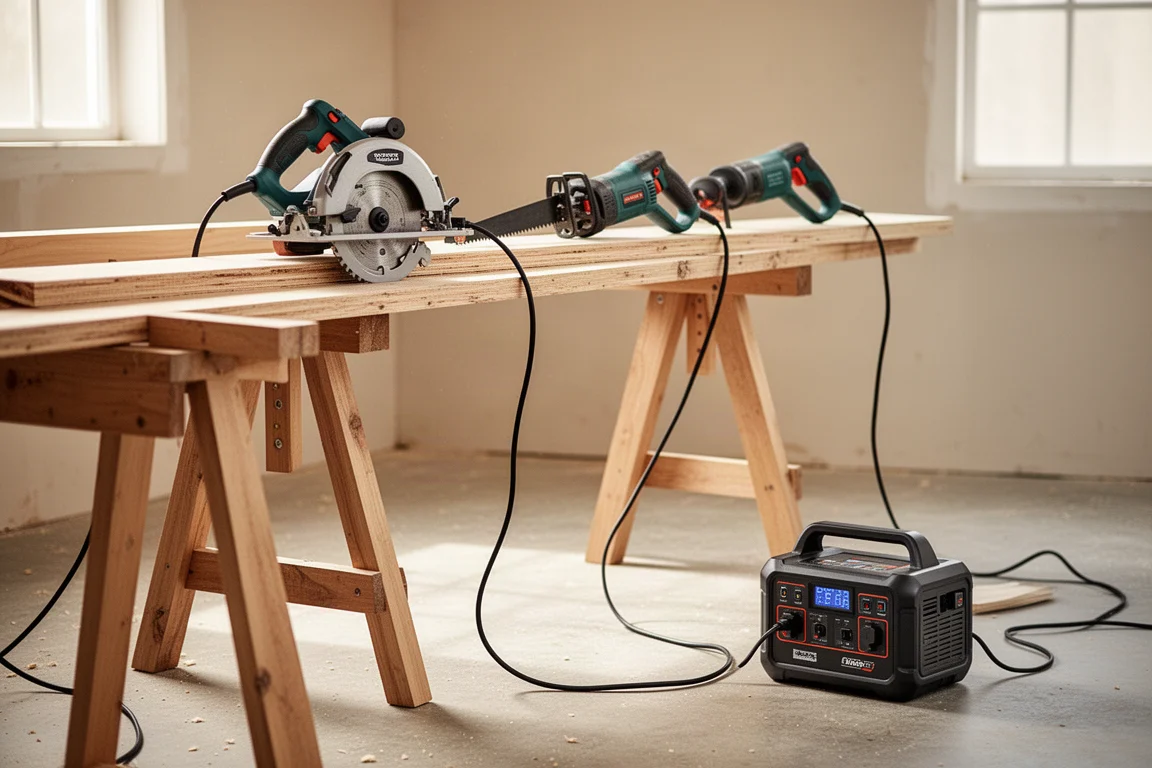
Power tools are the other obvious use case. It will run one 15-amp tool at a time, so a reciprocating saw, circular saw, miter saw, or table saw is fine, but you cannot run two at once. A torpedo heater also ran without problems.
The washing machine test was the surprise. A full hour-long normal cycle with hot water and a large load drained only one bar from one battery, with the other three still at three bars. And for the ambitious: a 100-watt tube amplifier head with a full pedal chain ran with no issues, which says a lot about how well it handles surging loads.
As for microwaves, a compact model under 1,000 watts should fall comfortably within the 1,800-watt continuous rating, but check the wattage label on your specific unit before relying on it.
Quiet Power for Camping and Backup
Because there is no engine, there are no fumes and no noise. That makes it suitable for campsites where gas generators get you kicked out, and far safer than running a gas generator indoors or in a garage during a storm-related outage, something that goes wrong every single storm season.

It is also genuinely portable at around 28 pounds, with a carry strap spanning the unit, so moving it from the truck to the tent or the job site is a one-hand job.
Security and Durability Features
Job sites are hard on gear, and this unit addresses that in a few ways. A protective cage over the battery bays protects the batteries if the unit gets dropped or knocked over.
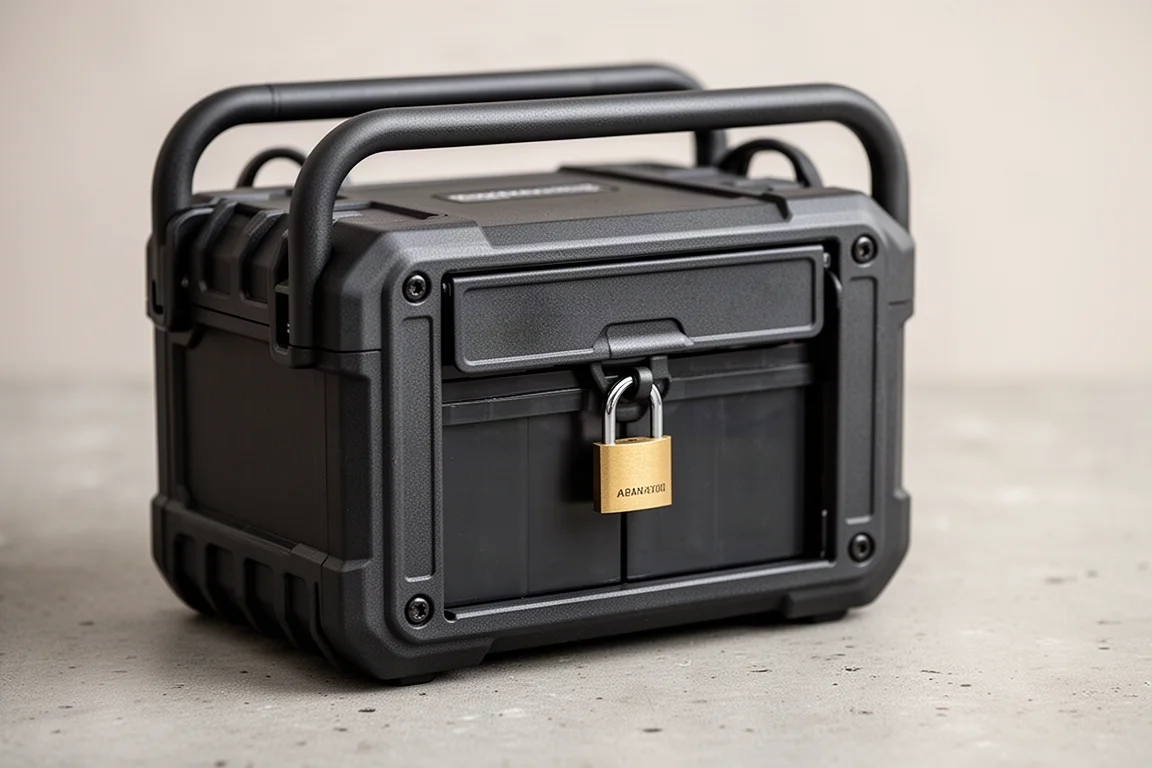
There is also a theft deterrent built in. If a battery is pulled, the unit alerts people nearby, and for louder sites there is a sliding lockable cover: slide it back, drop a padlock through the hole, and the batteries underneath are physically inaccessible. Walking off with the entire 28-pound power supply is a far more conspicuous crime than pocketing a battery.
Buying Advice
The power supply alone is $699 and does not include batteries. A kit version runs around $900 but only includes two batteries, and not the 12.0Ah ones, so the kit is hard to recommend. If you are already in the M18 platform with batteries on the shelf, the standalone unit is the sensible buy.
If you are not already in the Milwaukee battery ecosystem, the total cost of the unit plus four capable batteries climbs fast, and a conventional portable power station may deserve a look instead. This is a tool that rewards existing platform owners.
Conclusion
For Milwaukee users who want backup power for outages, quiet campsite electricity, or job site power for a single tool at a time, the M18 Power Supply delivers impressive real-world performance. It is not for everyone, but for anyone already invested in the M18 battery platform, it is a genuinely useful addition.
Product link
View more details for Milwaukee M18 Power Supply
This product is mentioned in the review. Check the specifications, options, and compatibility before buying.
View more details for Milwaukee M18 Power SupplyFurther reading
Related Reviews

Power Tools
Best 1-Inch Pistol Impact Wrenches: Three Heavy-Duty Options Compared
We compare three 1-inch pistol impact wrenches, from a budget-friendly Harbor Freight model to a premium Caterpillar unit, to help you choose the right one.

Power Tools
Best 3/4-Inch Impact Wrenches 2026: Five Contenders Compared
We compare five 3/4-inch impact wrenches across price and performance, from a budget Amazon option to Snap-on's most powerful model yet.

Power Tools
Best Budget Cordless Tools 2026: Walmart Finds That Punch Above Their Price
We tested five cordless tools from Walmart, including a high-torque impact wrench that trades blows with Milwaukee and a $35 duster that outperforms its price class.