Job Site Audio
Milwaukee M18 Bluetooth Job Site Speaker (2954) Review: Big Sound for the Shop
A beefy, linkable job site speaker with surprisingly strong bass at moderate volume, plus a few trade-offs to know before buying.
Introduction
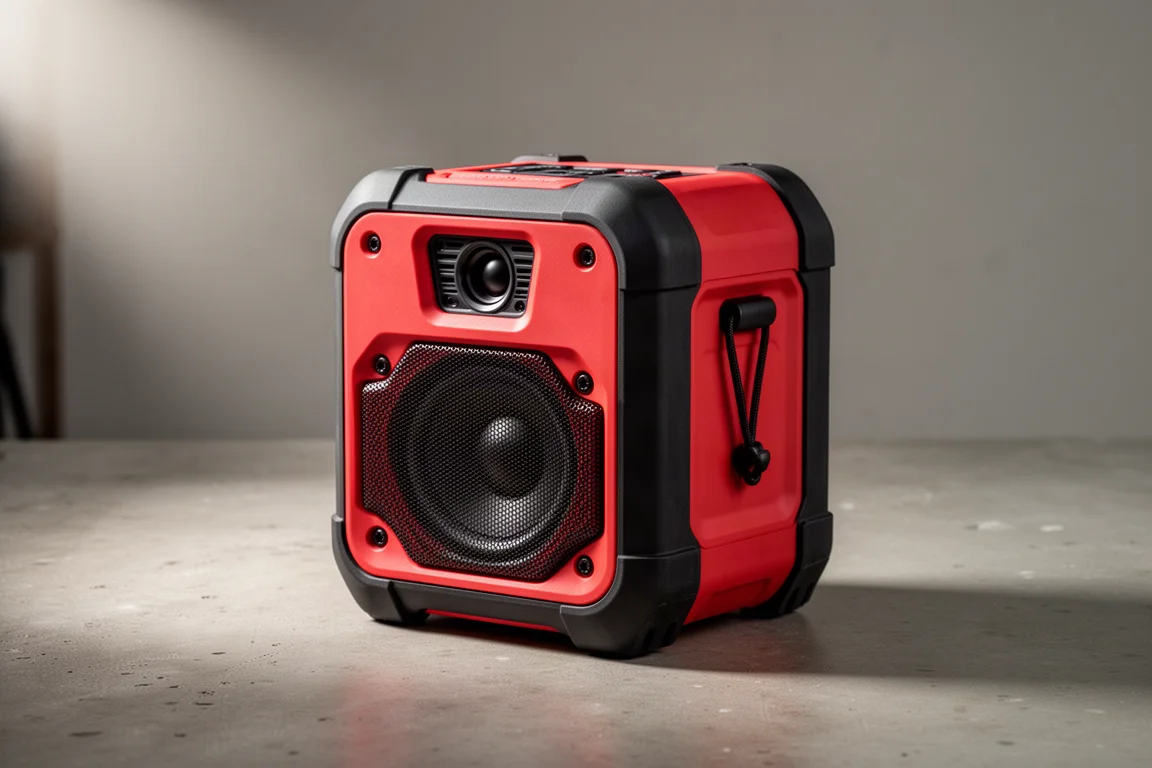
Cordless job site radios have a long history of one particular disappointment: weak bass. That has been true across most tool-brand audio releases for years, and it has long been a fair criticism of Milwaukee’s own radios, from the larger M18 units down to the smaller M12 versions. The new Milwaukee M18 Bluetooth Job Site Speaker (model 2954) sets out to change that, and to a surprising degree, it does.
These speakers also borrow a page from a concept Ryobi popularized a year and a half earlier: compact speakers you can link together and scatter around a work area. Milwaukee’s take is bigger, beefier, and aimed at delivering actual low-end response rather than just portable background music. After extended use and outright abuse, here is how it all shakes out.
Who This Product Is For
This speaker is aimed squarely at people already invested in the M18 battery platform. It runs on M18 batteries only, and there is no fallback option: you cannot plug it into an extension cord and run it from wall power. If you are not already buying M18 batteries, that is a genuine limitation worth thinking about before you commit.
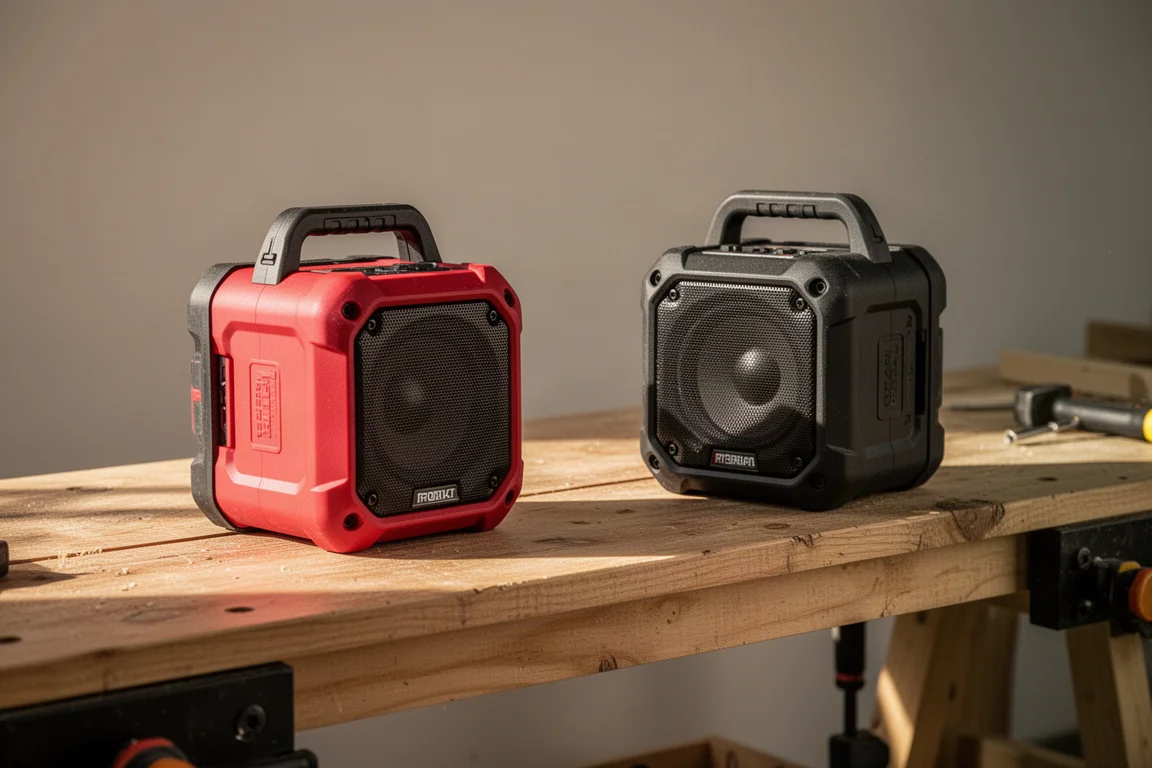
It also suits anyone who wants to build a distributed sound system across a shop, garage, or job site. You can link as many of these units together as you want, two or thirty, and spread them throughout your workspace.
Build Quality, Size and Specs
The first thing that stands out is the build. These are beefy units, noticeably larger than the competing Ryobi-style speakers they resemble, and the construction quality is genuinely impressive. The weight and heft communicate quality in a way that is immediately obvious the moment you pick one up.
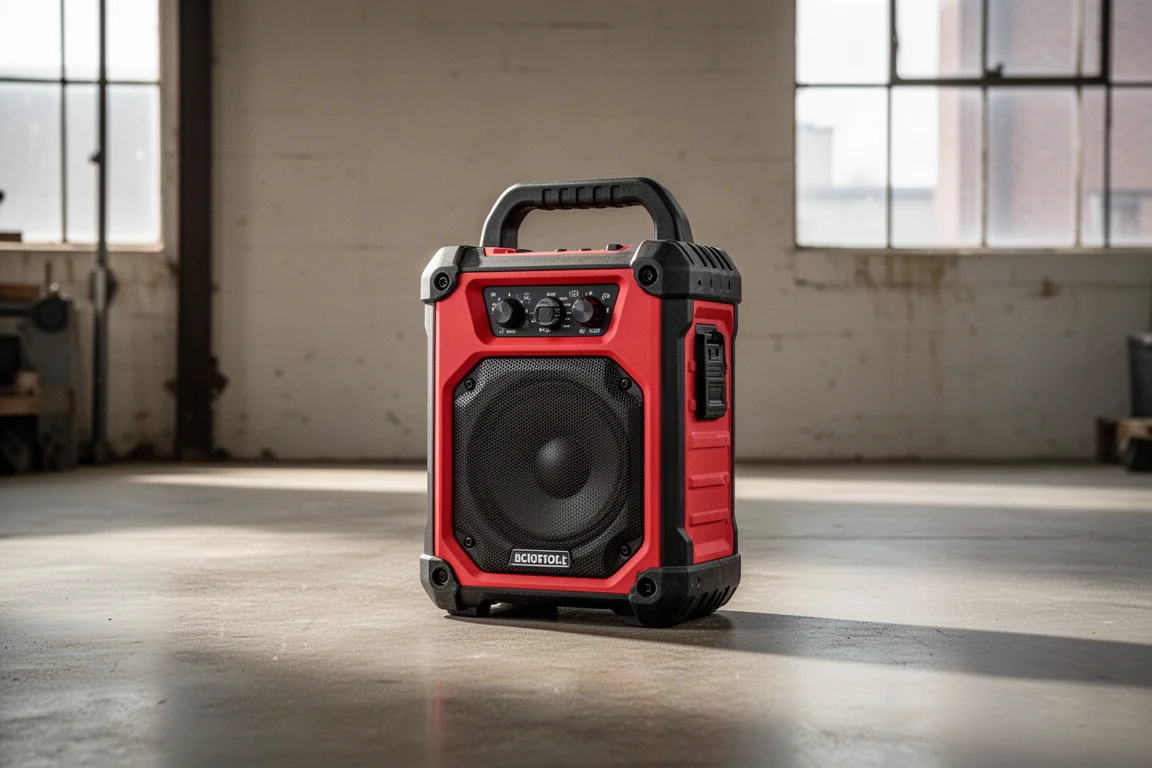
The spec sheet reads well for a job site product:
- 3.75-inch woofer on the bottom, with a high-frequency tweeter mounted on top
- Bluetooth 5.3 connectivity
- IP64 dust and water resistance
- USB-C port on the side for charging phones and other electronics
- One-year tool warranty
- Claimed runtime: 18 hours at 100% volume, 60 hours at 50% volume, using a 5.0 M18 battery
That claimed runtime range is wide, and it makes one thing clear: volume level plays a much bigger role in battery life than you might expect. Considering the sound quality trade-offs at high volume discussed below, running at moderate levels gets you both better sound and dramatically longer runtime.
Everyday Usability
Mounting options were handled well. Rubber pads on the bottom keep surfaces from getting marred, and the design lets the speaker hang off the edge of a metal cart, which works nicely in a shop setting. There is also a hole and notch arrangement that lets you pass a cable or wire through and hang the speaker from a nail in a piece of wood. Small touches, but genuinely useful ones.
The top panel is refreshingly simple. No AM, no FM, no frills: just volume, play/pause, skip, repeat, and two Bluetooth buttons, one for pairing and one for linking multiple speakers.
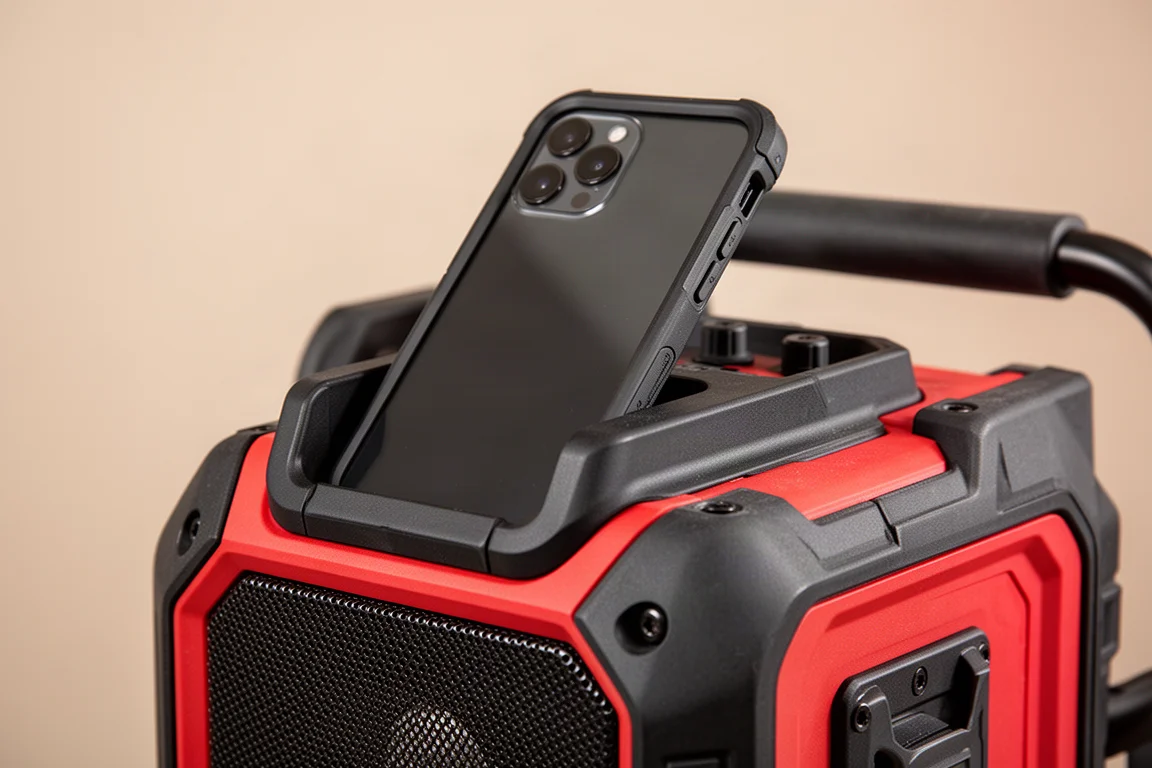
One standout detail: the phone holder. Even a large phone in a bulky protective case, which defeats most holders, fits properly, with a lip on the inside that keeps the phone from sliding out. If you control your music from a phone, this is a well-executed convenience.
Things to Consider Before Buying
There are a few genuine annoyances here that you should weigh before purchasing.
No re-pairing memory. When you shut the speakers off, they do not automatically reconnect when you turn them back on. You have to pair them again every time. If you have these spread all over the shop, that means walking around and re-pairing each unit. It is the most frustrating part of the daily experience.
No onboard EQ. There is no bass, treble, or mid adjustment on the unit itself. All sound shaping has to happen from your phone’s music player. If you prefer physical controls, this will disappoint.
Audio Link compatibility. The linking technology is called Audio Link, and it only works with other Audio Link-capable devices. Notably, it does not work with the older M18 radio, which is a shame since pairing these with an existing radio would have been a natural combination.
Sound Quality: Where It Shines and Where It Falls Apart
Here is the headline: at moderate volume, this is likely the best bass response ever felt from a tool-brand radio or speaker. At lower and mid volume levels, the bass is genuinely felt, thumping hard enough to rattle a table. A phone sitting on top of the speaker will slide off if it is not held in the phone holder. The character at these levels has been compared to a Bose setup, which is high praise for a job site product.
But there is a clear ceiling, and it arrives fast:
- Up to about 50% volume: excellent, rich bass, the sweet spot
- Around 65-70%: still very good, this is where most listeners will be happy
- At 75%: the bass starts thinning out and high frequencies take over, though it still sounds acceptable
- At 80-85%: quality degrades noticeably
- At 90% and beyond: it sounds bad, and at a full 100% it falls apart entirely
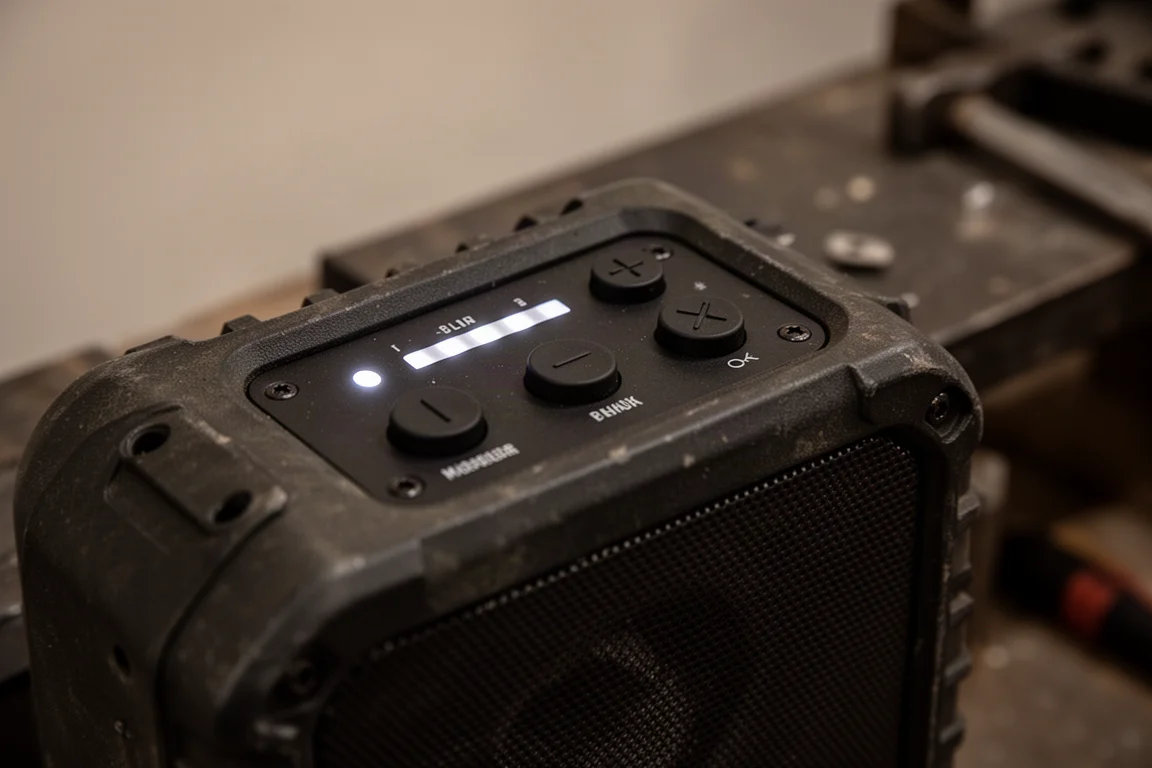
In practice, this is not as damning as it might sound. Most people will run shop audio at moderate levels anyway, and under roughly 70% volume these speakers are genuinely satisfying, with real weight and meat to the music regardless of genre. Just go in knowing that cranking them to maximum is the one thing they do not do well.
Buying Advice
Buy this speaker if you are already on the M18 platform, want real bass from a job site audio product, and like the idea of linking multiple units across a workspace. The Audio Link system makes building a distributed shop sound system trivially easy, and the sound at moderate volume is a genuine step forward for tool-brand audio.
Skip it or think twice if you are not invested in M18 batteries, since there is no other power option. Also temper expectations if your habit is blasting speakers at maximum volume; the sweet spot sits well below 100%, and pushing past it punishes the sound quickly. If you keep your expectations aligned with how most shop listening actually happens, this is an easy product to recommend.
Conclusion
The Milwaukee M18 Bluetooth Job Site Speaker (2954) delivers on the promise its size implies: strong, tangible bass and solid sound quality at the volume levels most people actually use. The re-pairing annoyance, the phone-only EQ, and the Audio Link compatibility limits are real irritations, and the high-volume collapse keeps it from being flawless. But for M18 users who want their shop music to have some soul, these speakers are one of the best options the tool world has produced so far.
Product link
View more details for Milwaukee M18 Bluetooth Job Site Speaker (2954)
This product is mentioned in the review. Check the specifications, options, and compatibility before buying.
View more details for Milwaukee M18 Bluetooth Job Site Speaker (2954)Further reading
Related Reviews
Job Site Audio
Best Job Site Radios 2026: Six Picks Ranked for Sound, Features, and Value
We compare six job site radios and speakers, from a bargain Ryobi to the Milwaukee M18 Packout, to find the best sound and features for your money.
Job Site Audio
DeWalt Jobsite Pro Wearable Speaker Review: Hands-Free Audio for the Job Site
A clip-on, magnet-mounted wearable speaker that handles music and calls without cords, earbuds, or fiddly pairing.
Job Site Audio
Flex 24V 360° Sound StackPack Job Site Radio Review: Big Sound That Plugs Into Your Tool Storage
A stackable job site radio with a 5.25-inch woofer, IP64 weather resistance, pass-through battery charging, and 150 ft Bluetooth range. Here is what stands out before you buy.