Power Tools
Milwaukee M18 3600W/1800W Inverter Review: Corded Tool Power Without the Wall
A top-style inverter that turns M18 batteries into 120V AC power, tested hard with a 15 amp circular saw, heat guns, and mixed-brand battery adapters.
Introduction
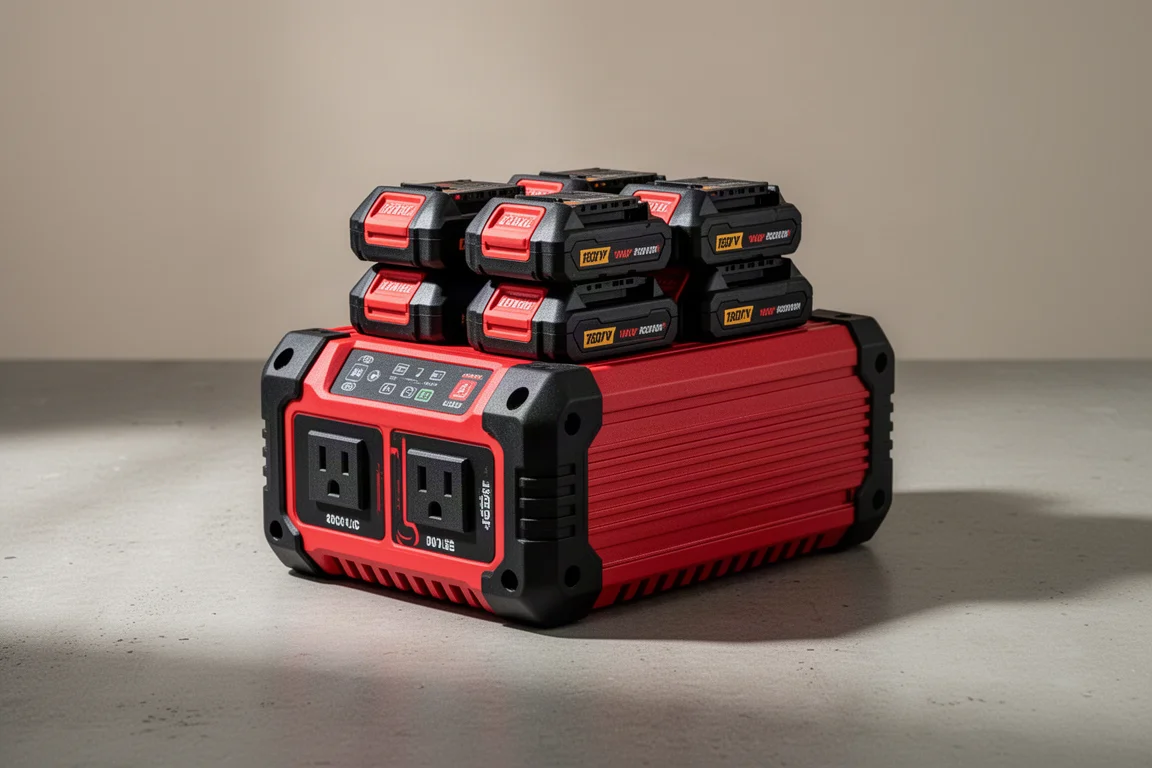
Most portable power talk revolves around making cordless tools last longer. This product flips the idea: it takes your power tool batteries and turns them into honest 120V AC outlets, so you can run corded tools when there is no wall outlet in sight. That is exactly what the Milwaukee M18 3600W/1800W inverter is built for, and after putting it through a demanding set of tests, it earns its keep.
What It Is and Who It Is For
This is a top-style power station that accepts a stack of M18 batteries and delivers 120 to 123 volts of AC power from two outlets. The rated output is 1,800W continuous with a 3,600W peak figure, and in testing it genuinely delivered over 1,500W without complaint. It is aimed at anyone who works where outlets are missing, power is out, or wiring is not hooked up yet, but who still wants to use corded tools like grinders and saws.
One honest caveat applies to the price. Filling it with Milwaukee batteries is not cheap: loading it with 6Ah high-output M18 packs can cost as much as or more than the inverter itself. That is why battery adapters matter so much here, and we will get to those.
Power Output and Load Testing
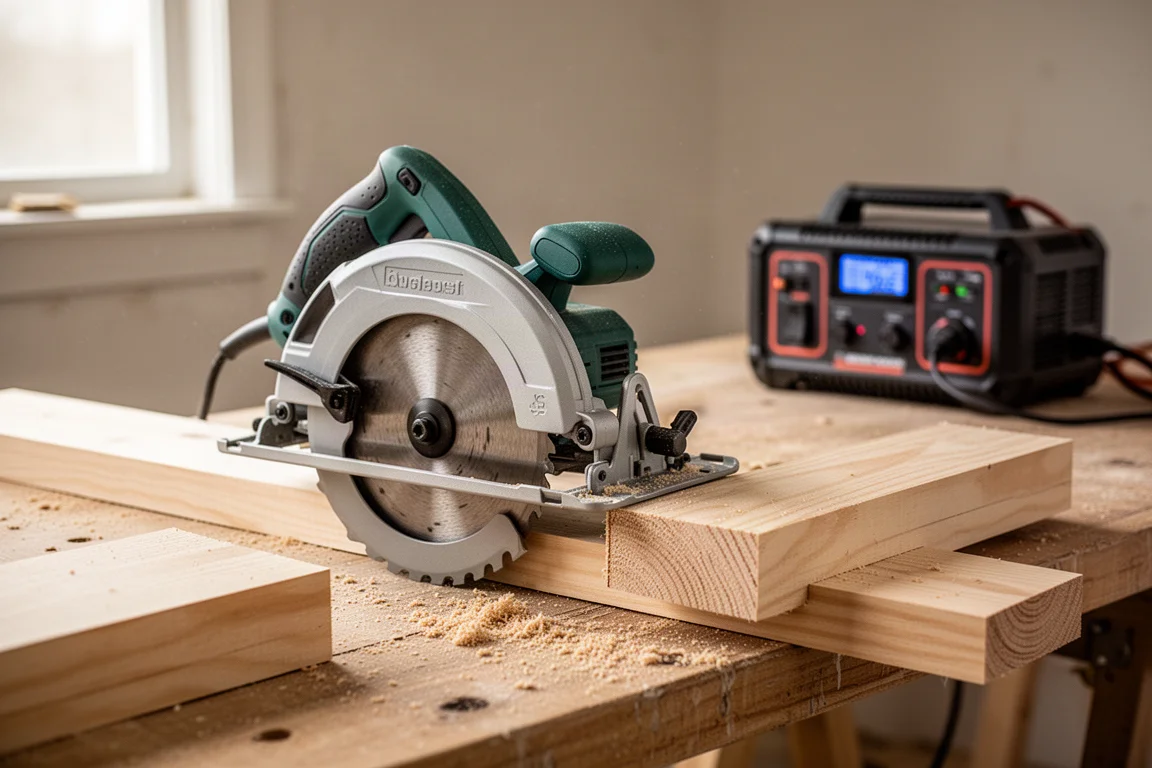
Under a heat gun load, the inverter scaled smoothly from 800 to well over 1,500W without beeping or cutting out. It even handled the startup surge of a 15 amp Makita circular saw, the kind of inrush current that shuts down cheaper inverters. The startup spike from AC motors is what makes most budget units give up, and this one simply did not flinch.
A notable detail: the saw drew around 920W through the inverter under load, slightly more than when plugged into the wall, since the inverter itself pulls about 14,500W-equivalent draw from the batteries at max load. Corded tools are not the most efficient beasts, so plan your battery budget accordingly.
Runtime and Battery Capacity
Maxed out with HD 12.0 packs, this setup reaches up to 48 amp hours, or 864 watt hours of capacity. There is also a slide-over lock to keep the battery stack secure when unattended, and a charging cord that lets you recharge all the batteries at once, which only works with genuine M18 packs.
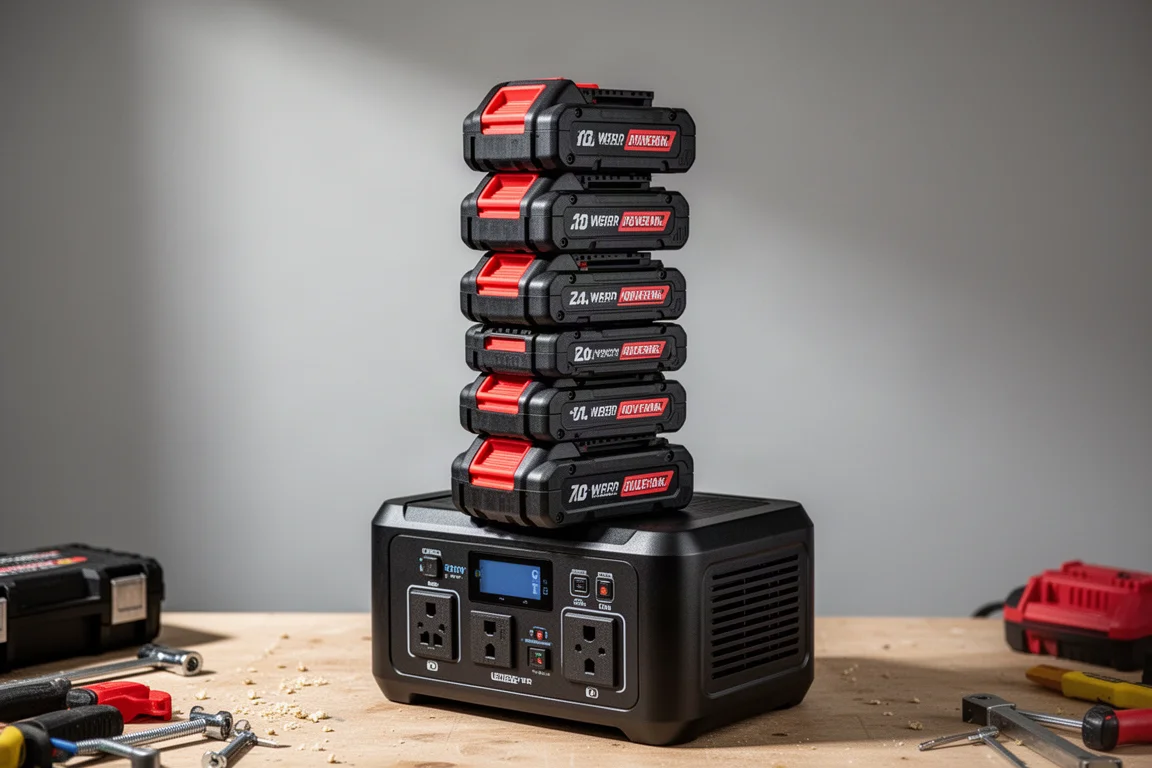
In a sustained cutting test with a liquid-cooled dynamo motor setup and a 12Ah battery stack, the M18 inverter ran a corded 7-1/4 inch circular saw for 54 minutes and 282,000 revolutions under constant load, only tapering in the final minute. The inverter held a steady 120 to 123 volts, so the saw never lost RPM the way cordless tools do as battery voltage sag. That is dramatically better than the roughly 14 minutes a typical cordless saw manages on an 8Ah pack. Adjusted per 8Ah of battery, the corded saw managed about 9 minutes and 47,000 revolutions, which is respectable given how inefficient AC universal motors are.
The inverter also protected the batteries well, cutting off after the packs dropped to around 2.8 to 2.9 volts per cell. That is deeply discharged but within reason, and everything charged back up normally afterward.
Using Off-Brand Batteries With Adapters
Here is the trick that changes the math: 3D-printed adapters from aftermarket sellers make this inverter work with DeWalt and Hercules 18/20V batteries, with resistors to satisfy the communication check it expects. In testing, around $350 of Hercules 12Ah packs delivered over 1,500W happily, and DeWalt packs performed well too, with the 15Ah DeWalt pack theoretically bringing total capacity to 60 amp hours or 1,080 watt hours.
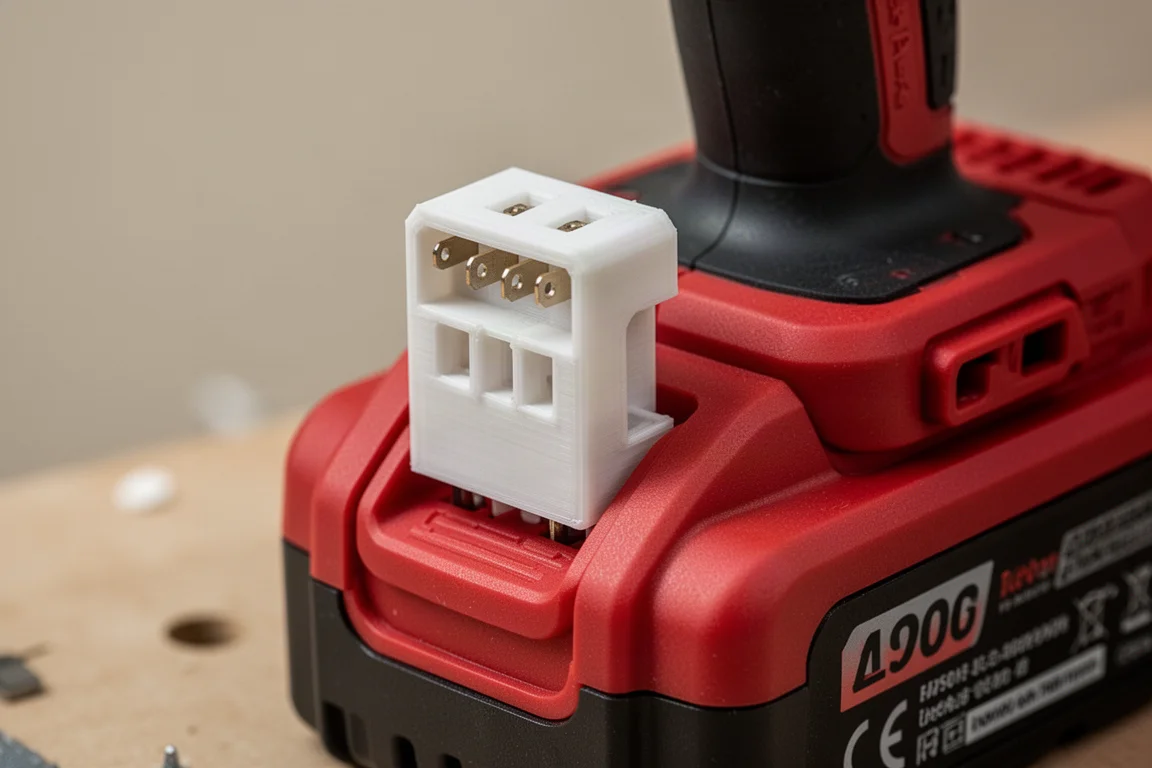
Two things to know before trying this. First, the Milwaukee inverter has a fifth center pin that most tools lack, so some adapters or a small notch modification may be needed. Second, off-brand batteries will not charge through the inverter; that convenience is M18-only. Still, the adapters proved far less sketchy than expected, and they mean you can use whatever batteries you already own instead of paying matching-color prices.
Real-World Performance and the Pinch Test
The saw test told a clear story. With mixed M18 batteries the saw held strong cutting speed; with Hercules packs it produced around 960W at the dyno; with DeWalt packs it hit roughly 990W, the highest figure of the bunch. Combined loads worked too: running a 1,500W heat gun alongside the saw pushed total draw to about 3,100 to 3,200W before the inverter shut itself into protection mode. That is far better than the misleading per-outlet peak math suggests.
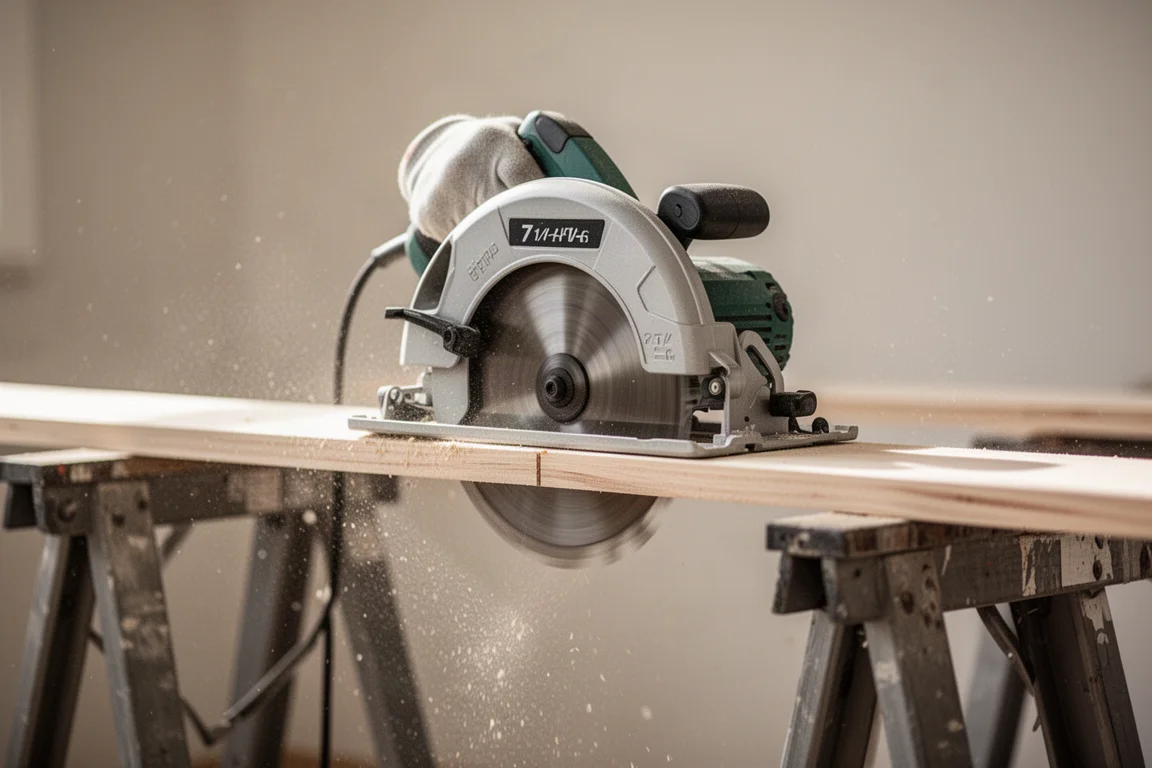
Then came the pinch test: a dull blade and a board unsupported between two saw horses, loaded deliberately to force a stall. The board lost. The saw slowed dramatically and nearly stalled, but the inverter stayed unfazed with no beeping or shutdown. Pushing an inverter this hard with an inductive motor load and having it hold is genuinely impressive.
Buying Advice
This inverter will not replace a large gas generator, which simply scales better for sustained whole-site power. But for a smaller, easily thrown-in-the-truck solution that genuinely delivers, it is easy to recommend. If you already own M18 batteries, it is an obvious fit. If you do not, aftermarket battery adapters can make it far more affordable to run, with the trade-off of losing the all-at-once charging feature. Just budget realistically: corded tools under battery power drain packs much faster than cordless equivalents, so more batteries means more cutting time.
Conclusion
The Milwaukee M18 3600W/1800W inverter does one thing remarkably well: it turns your tool batteries into a capable 120V power source for corded tools, with clean sine-wave output, steady voltage under load, and a peak capacity that actually backs up its rating. Combine it with third-party battery adapters and it becomes a genuinely practical alternative to dragging out extension cords or firing up a generator for smaller jobs.
Product link
View more details for Milwaukee M18 3600W/1800W Inverter
This product is mentioned in the review. Check the specifications, options, and compatibility before buying.
View more details for Milwaukee M18 3600W/1800W InverterFurther reading
Related Reviews
Power Tools
Best 1-Inch Pistol Impact Wrenches: Three Heavy-Duty Options Compared
We compare three 1-inch pistol impact wrenches, from a budget-friendly Harbor Freight model to a premium Caterpillar unit, to help you choose the right one.
Power Tools
Best 3/4-Inch Impact Wrenches 2026: Five Contenders Compared
We compare five 3/4-inch impact wrenches across price and performance, from a budget Amazon option to Snap-on's most powerful model yet.
Power Tools
Best Budget Cordless Tools 2026: Walmart Finds That Punch Above Their Price
We tested five cordless tools from Walmart, including a high-torque impact wrench that trades blows with Milwaukee and a $35 duster that outperforms its price class.