Power Tools
Milwaukee M18 Fuel Wet/Dry Vacs: Three Cordless Sizes, One Modular System
A first look at Milwaukee's new M18 Fuel job site vacuums: modular tanks, interchangeable parts, corded-level suction, and pricing details.
Introduction
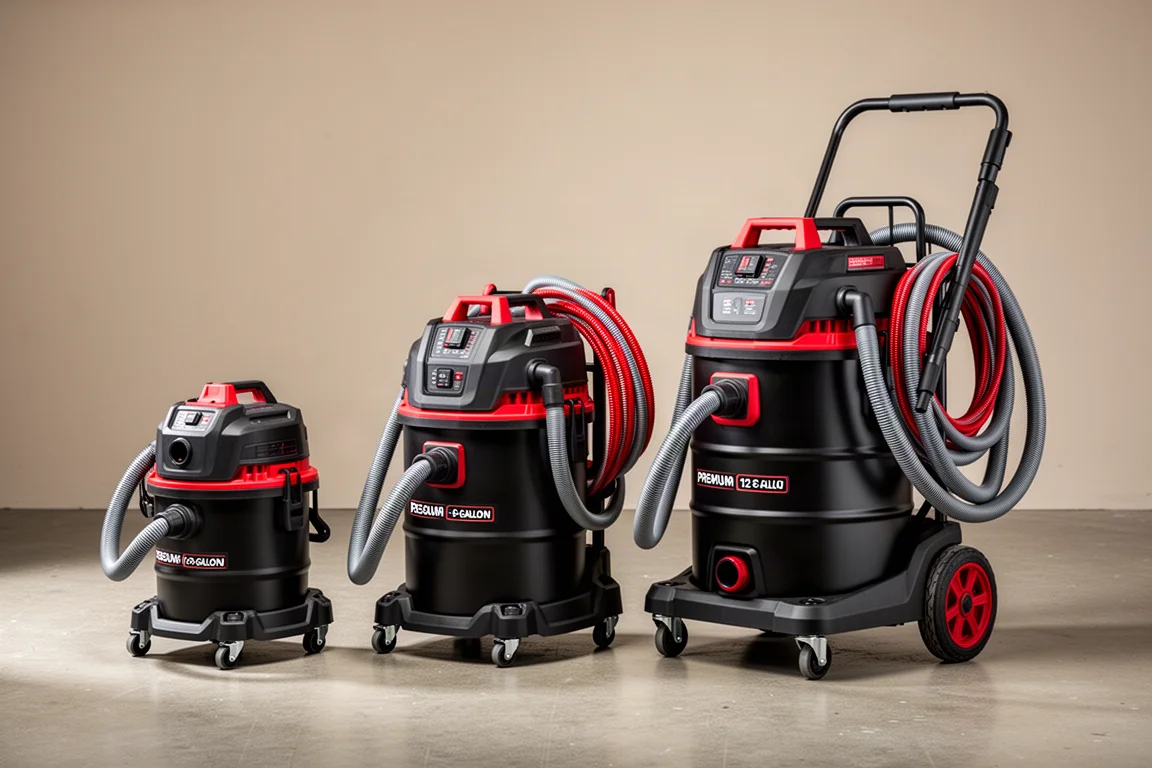
Milwaukee’s new M18 Fuel wet/dry vacuums arrived with three tank sizes: 6-gallon, 9-gallon, and 12-gallon. All three are battery-powered brushless tools, with single-battery and dual-battery configurations, plus an AC model planned as part of the same line. The headline story is that Milwaukee chased corded-level performance from cordless platforms, and the claimed numbers back that up: suction that lines up with 3.5 to 4.25 peak horsepower corded vacuums, achieved through an optimized motor, fan, and shroud design running far more efficiently.
A Fully Modular Vacuum System
Everything here fits together because it is designed to. This is a completely modular, interchangeable system: every head works on every tank, the dollies are interchangeable, and even the hoses share the same connection. A foot pedal on the dolly releases the vac, so you can pull the tank off, swap it, or use it without wheels entirely.
The premium cart on the 12-gallon model gets larger treaded, rubberized roller wheels with a telescopic handle plus smaller caster wheels. The other dollies use four caster wheels, and all wheels lock front and back so you can secure the cart in any orientation. The rubberized tread handles job site vibration far better than hard plastic wheels, which tend to crack and break off, and the longer metal connection adds durability.
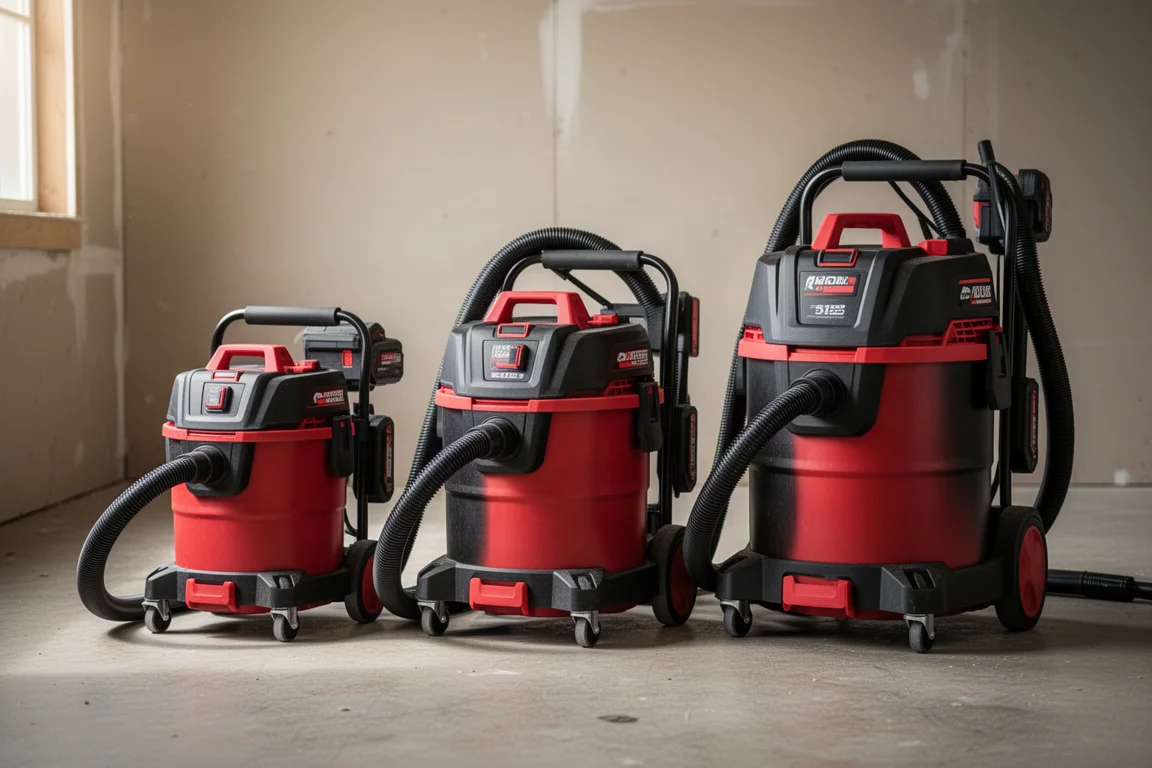
Accessories store on the back of each dolly, and Milwaukee color-codes them: grey for the 1-7/8-inch size and red for the 2-1/2-inch size, so you can identify the right accessory even when the vac is not attached. The smaller vacs ship with a 1-7/8-inch hose and the larger vac with a 2-1/2-inch hose, and you can swap them freely.
Runtime and Performance
Each vac has three modes: off in the middle, plus low and high, letting you prioritize runtime or performance. In low power mode, the two-battery vacs run about 49 minutes and the one-battery vac about 47 minutes. On high, that drops to 34 minutes for two-battery models and 31 minutes for single-battery. The two-battery system runs in series at 36 volts, delivering real performance gains alongside the extra runtime.
On the performance side, the one-battery (6-gallon) vac delivers 87 CFM with 60 inches of water lift. The 9-gallon reaches 109 CFM with 77 inches of water lift, and the 12-gallon hits about 114 CFM and 78 inches of water lift. The 9 and 12 use the same head; the 12’s higher numbers come from its larger 2-1/2-inch hose.
The efficiency story is where it gets interesting. In a demonstrated test, the 9-gallon produced more suction at 450 watts than a corded unit at 1,100 watts, which is what makes both the performance figures and the cleanup runtime possible.
Filters, Bags, and Dust Management
The filter system gets a simple fix for a common annoyance. Instead of snapping a filter on and off and puffing dust everywhere, a small turn, less than a quarter turn, releases it with one hand for cleaning or replacement. Bags will be available, along with multiple filter options including HEPA filters.
While the vac is not Table 1 compliant on its own because it lacks an automatic filter cleaning system, Milwaukee is going through objective data testing and will provide the paperwork so these vacs can be used in concrete applications.
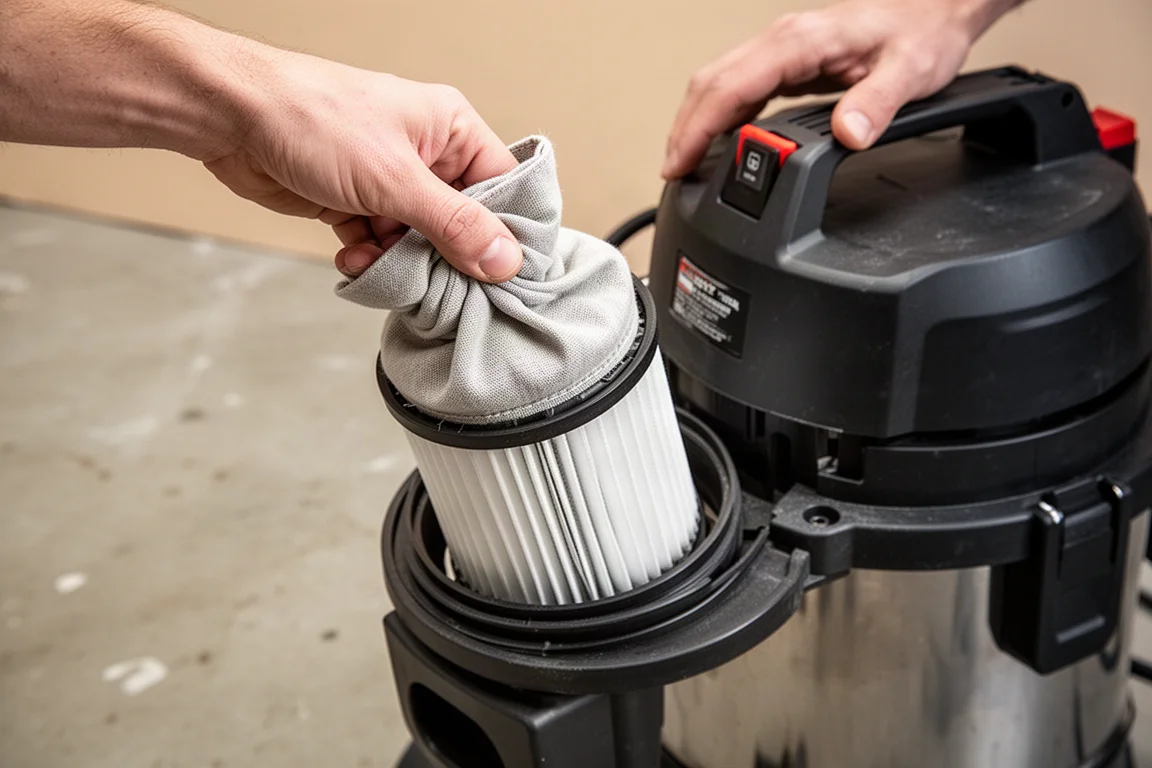
Standard clips hold the motor head in place, and they are a bit more robust than most shop vacs.
A Better Hose
Hoses are a known weak point on most shop vacs, and Milwaukee addressed it directly. The hose is noticeably more flexible than typical shop vac hoses, and far more durable: twist it hard and it springs right back without permanent damage, no kinked hole and no duct tape required. The head freely rotates as you pull the vac around the job site, so it will not twist itself into a kink, and the connection is threaded, so if it pops off under a heavy load you just twist the grey or red ring back on.
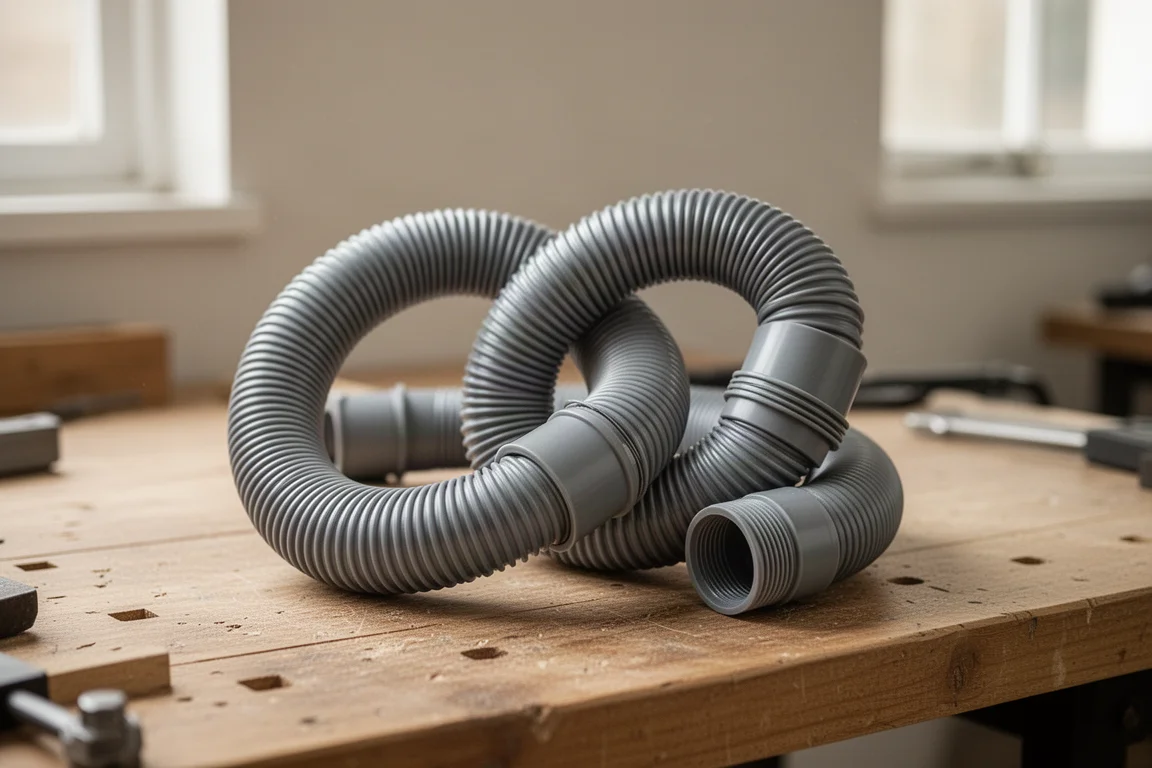
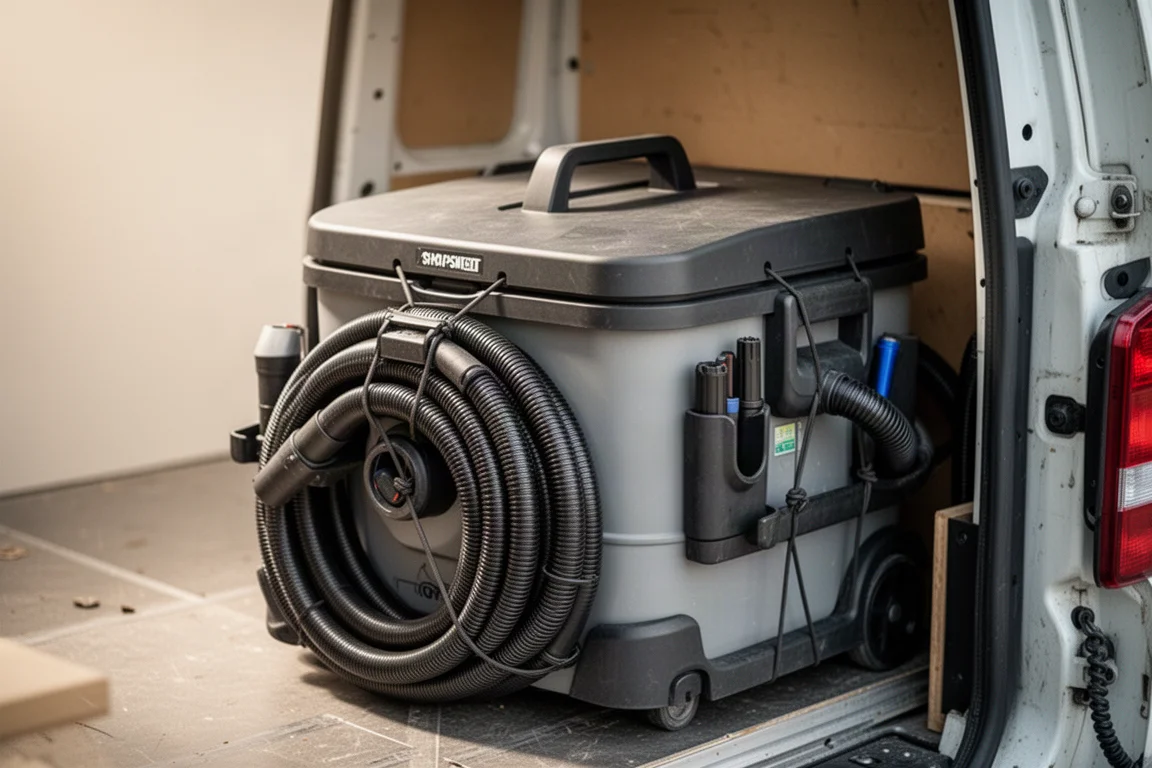
Hose management is also solved. A C-clip on the side holds the hose, and a flat-to-flat bungee system on the back secures both hose sections for transport. Accessory management is handled too, and the whole package forms a tight shape that fits in a van or trailer. The top of the unit is flat with a handle that flushes level, so you can stack other things on top. These are not PACKOUT compatible, though PACKOUT-compatible vacs are coming later.
Pricing and Availability
Pricing breaks down as follows: the 6-gallon vac is $249 bare. The 9-gallon is $299 bare, or $699 as a kit with two 8Ah High Output batteries and a dual-port rapid charger. The 12-gallon is $799 kit-only, with two 8Ah batteries, the dual-port rapid charger, and the premium cart included.
For availability, the single-battery vacuum and most accessories arrive in March, with the two-battery options and the 2-1/2-inch accessories following in May.
Air Tip Accessories
The vacs are only half the story. Milwaukee is also launching AIR-TIP, a line of 20 trade-focused vacuum accessories with crossover potential into general home improvement. The standout feature: these accessories fit 1-1/4-inch, 1-7/8-inch, and 2-1/2-inch hoses without any adapters, straight out of the box.
That adapter-free fit across hose sizes is genuinely unusual, and it means the accessories work with vacuums you may already own, not just the new M18 Fuel models.
Which One Should You Buy?
If you want a compact, affordable cordless vac for lighter cleanup, the 6-gallon single-battery model at $249 bare is the entry point. If you need more suction and longer runtime, the 9-gallon kit with two 8Ah batteries at $699 is the balanced pick. For maximum capacity and the premium cart, the 12-gallon kit at $799 is the full package. Note that the 12-gallon is only sold as a kit, so budget accordingly.
Conclusion
Milwaukee’s first M18 Fuel wet/dry vacs look like a thoughtful take on job site cleanup: modular across all three sizes, genuinely cordless without giving up corded-class suction, and built around smart fixes for old frustrations like stiff hoses, fiddly filters, and loose accessories. With the single-battery models landing in March and the dual-battery kits in May, there will be a config for most cleanup jobs.
Product link
View more details for Milwaukee M18 Fuel 6-Gallon Wet/Dry Vac
This product is mentioned in the review. Check the specifications, options, and compatibility before buying.
View more details for Milwaukee M18 Fuel 6-Gallon Wet/Dry VacFurther reading
Related Reviews

Power Tools
Best 1-Inch Pistol Impact Wrenches: Three Heavy-Duty Options Compared
We compare three 1-inch pistol impact wrenches, from a budget-friendly Harbor Freight model to a premium Caterpillar unit, to help you choose the right one.

Power Tools
Best 3/4-Inch Impact Wrenches 2026: Five Contenders Compared
We compare five 3/4-inch impact wrenches across price and performance, from a budget Amazon option to Snap-on's most powerful model yet.

Power Tools
Best Budget Cordless Tools 2026: Walmart Finds That Punch Above Their Price
We tested five cordless tools from Walmart, including a high-torque impact wrench that trades blows with Milwaukee and a $35 duster that outperforms its price class.