Lawn Care
Milwaukee M18 Fuel Self-Propelled Lawnmower Review: A Serious Battery Mower for Heavy-Duty Cutting
A commercial-grade 36V cordless mower with 10 foot-pounds of torque, a 21-inch steel-cut deck, dual-battery power, and runtime that holds up under real cutting loads.
Introduction
The Milwaukee M18 Fuel Self-Propelled Lawnmower is aimed squarely at professionals, and after extended use it shows. It is a 36-volt mower running on two M18 batteries, it cuts a genuine 21-inch swath, and it delivers the strongest torque figure we have measured in a battery-powered mower to date. This is not a mower pretending to be commercial-grade; it is built like one.
Who This Product Is For
Milwaukee designed this as a commercial mower. It makes sense for landscaping crews who want a battery option to supplement gas machines on their trailer, or as a primary tool for operators already invested in the M18 battery platform. Homeowners with large, demanding lawns can also justify it, but the price and capability are aimed at pro use. It launches at Milwaukee retailers starting April 1st, 2022.
Design and Build: A Tour of the Mower
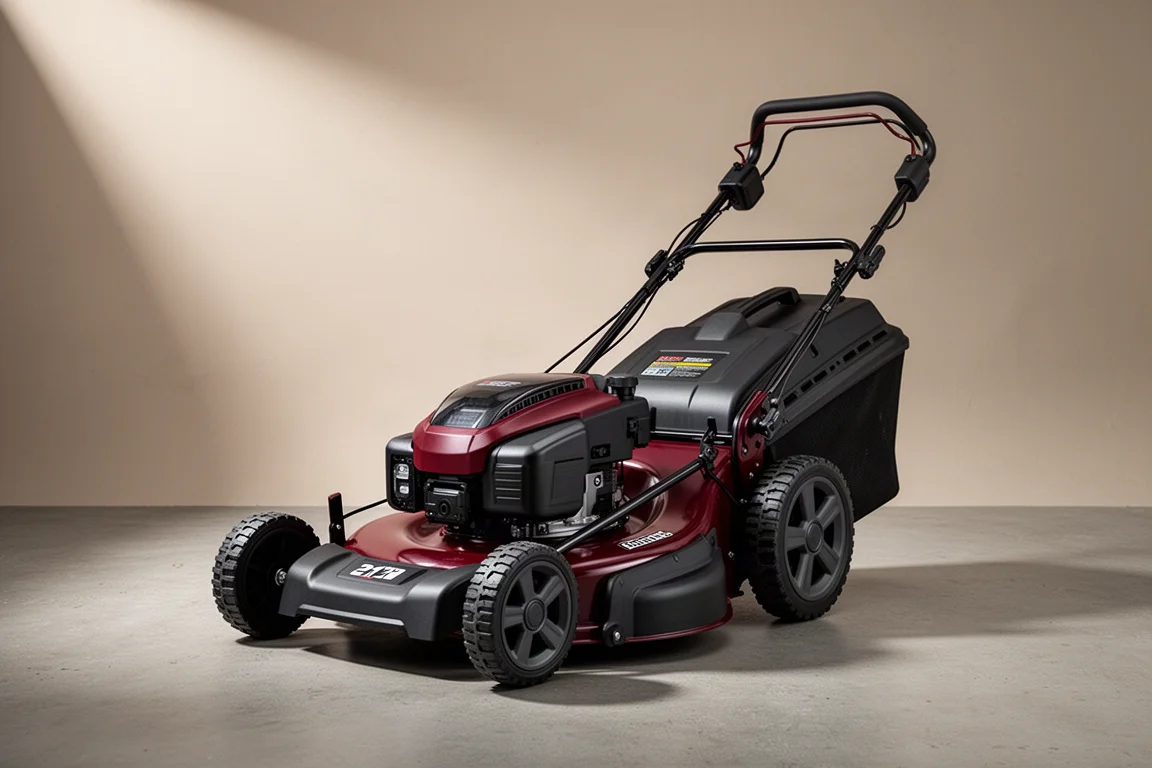
The 21-inch deck measurement is honest: the blade itself is 21 inches, not a smaller blade on an oversized deck. The rubberized wheels have a softer outer compound for better grip, and all four roll smoothly whether the self-propelled drive is engaged or not, thanks to what appear to be bearings in every wheel.
Height adjustment is a single-point system covering seven increments from 1 to 4 inches in half-inch steps. It is a slightly unusual choice at this level, but it works. With both batteries installed the mower weighs 85 pounds, yet the frame shows very little flex. Everything about it has the earmarks of a commercial build.

Dual-Battery System and Charging
This is Milwaukee’s first two-battery tool system, and the mower requires two M18 batteries to run. Milwaukee highly recommends the 12Ah high-output batteries for the best performance and runtime, though any M18 battery will work at reduced output. With two 12Ah packs installed, you get 432 watt-hours of total capacity.
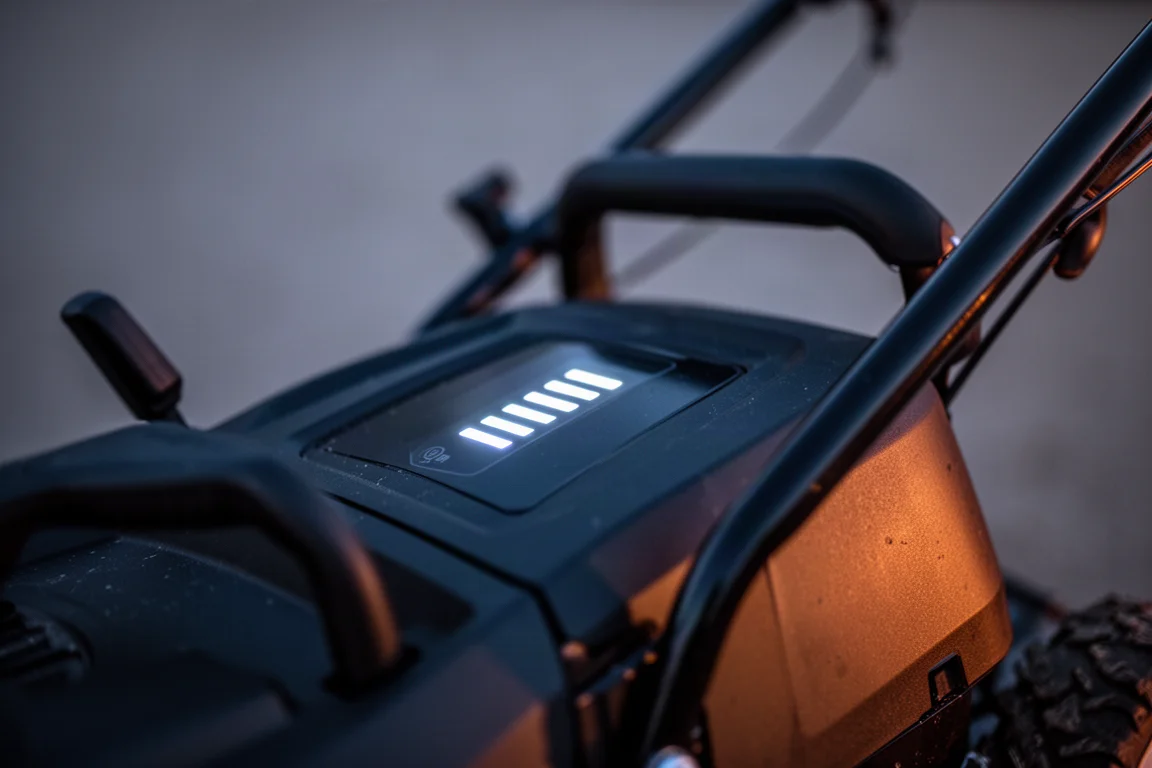
A thoughtful touch: LED charge indicators on the back of the mower show remaining battery level while you mow, dropping one bar at a time, so you never need to open the door to check the packs.
Lighting You Can Actually Use
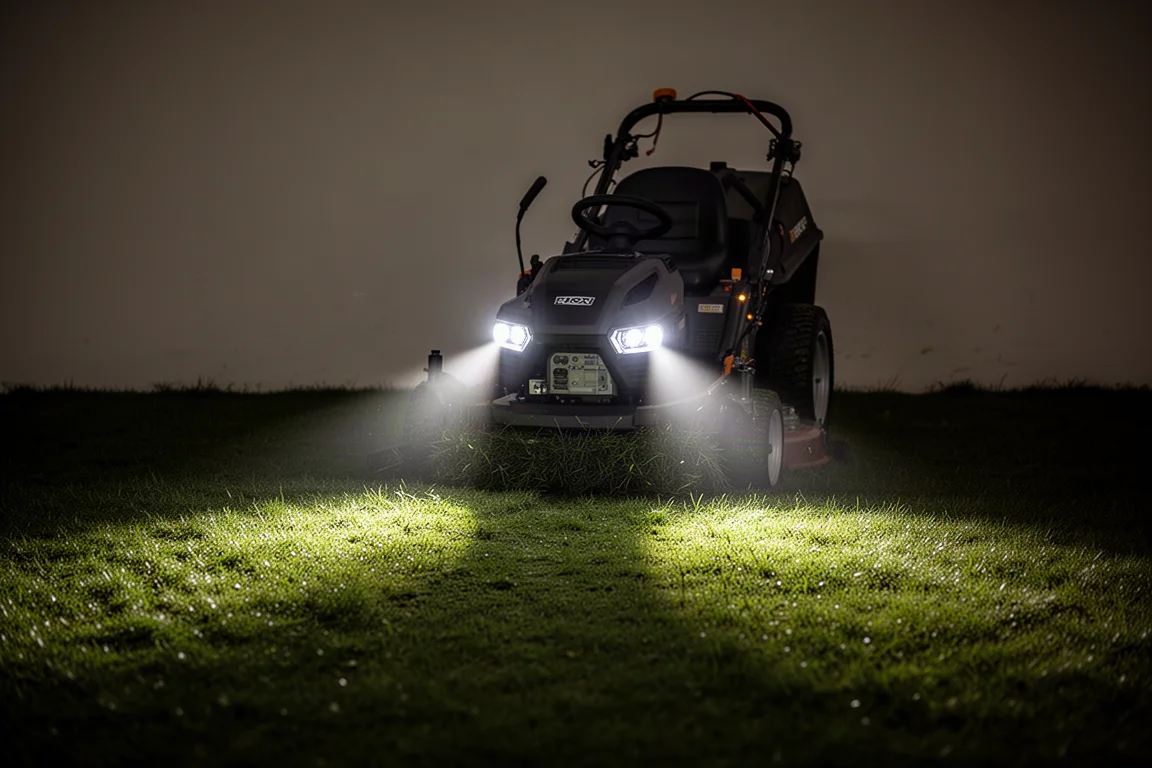
Rather than mounting LEDs only on the front, Milwaukee added lights on the sides too, producing a full 180 degrees of illumination. In early morning or late evening conditions, you can genuinely see more of what you are doing. It is noticeably more effective than the LED setups we have seen on most other mowers.
Three-in-One Cutting: Bagging, Mulching, and Side Discharge
The mower handles bagging, mulching, and side discharge. The bag is sized to fit between the handles, making it easier to mount and remove. The mulching plug slides in and is held by the deck door; with the strong airflow from the blade, it needs to be seated properly or it can get pushed out.
Side discharge is the interesting one. It installs from the rear and routes the chute to the side, with arrows to confirm correct alignment. Crucially, the discharge stays within the width of the deck, so narrow gates and tight passages are no problem.
Controls and Drive System
The control deck is well thought out. The presence bar recesses into the handle for a more comfortable grip, and the self-propelled drive can be engaged without the blades running. A button toggles the lights, and a high-lift mode holds the motor at its top RPM instead of letting it drop as low as 2,800 RPM in light grass. That mode is about lift, not power: bagging is better and fall leaf pickup improves noticeably. Expect roughly 40 minutes of runtime in high-lift mode, about 33 percent less than standard.
The roller dial adjusts self-propelled speed from zero to 4 mph. There are no detents, but the tension is well judged: stiff enough not to drift while mowing, loose enough to adjust on the fly. Four mph is genuinely fast for a self-propelled mower.
Blade engagement reaches max RPM, up to 3,300, in under a second. The thumb bar for drive engagement curves naturally to the hand and adds a second layer of speed control: the roller sets your max speed, and pushing the bar further approaches it, so easing off slows you down for thick grass or hills. The downside is thumb fatigue over long sessions, since the spring pushes back against you the whole time.
The handle adjusts tool-free across three height positions, folds forward for vertical storage (remove the bag or rear discharge first; the mulching plug stays put), and the middle position suited testers of very different heights.
Performance: Power and Runtime
Torque tells the real story here, because it determines how well the mower keeps cutting when grass gets thick. The best battery mower previously measured came in at 8.3 foot-pounds, itself a figure that exceeds most gas mowers. Milwaukee delivers 10 foot-pounds, and it is monstrous in practice. In a torture test with two months of overgrown grass and the deck dropped to its lowest setting, the mower never stopped or clogged; it just kept going.
Runtime held up impressively against real-world loads. With two 12Ah batteries, Milwaukee claims up to 60 minutes cutting one inch of growth in mulch mode at 3 mph. The actual test was far more demanding, taking 4 to 6 inches off, and the mower ran for 43 minutes and 27 seconds. Given how much heavier that cutting load was, the hour-long estimate seems about right.

Things to Consider Before Buying
At $999 with two 12Ah batteries and a dual-port rapid charger, this is not a cheap mower. But the fair comparison is commercial gas mowers, which start north of $800 and can exceed $1,300. In that context, the price is entirely appropriate. Also weigh the thumb-bar fatigue over long sessions and the single-point height adjustment, both minor issues against otherwise excellent execution.
Buying Advice
If you run a landscaping operation and need a battery mower for noise-restricted properties or as a trailer supplement, this is the most capable commercial-level battery mower we have seen so far. If you already own M18 batteries, the case gets even stronger. For typical suburban lawns with light growth, a cheaper residential mower remains the sensible pick.
Conclusion
Milwaukee did a fantastic job with this mower, and it does not feel like a first-generation product. Ten foot-pounds of torque, honest 21-inch cutting width, smart lighting, and runtime that survives abusive cutting conditions make it the benchmark for commercial battery mowing, with only small tweaks left for a future revision.
Product link
View more details for Milwaukee M18 Fuel Self-Propelled Lawnmower
This product is mentioned in the review. Check the specifications, options, and compatibility before buying.
View more details for Milwaukee M18 Fuel Self-Propelled LawnmowerFurther reading
Related Reviews

Lawn Care
Best Robot Lawn Mowers 2026: 13 Models Tested for Real-World Performance
We tested 13 robot lawn mowers across battery life, cut quality, navigation, object avoidance, and edging to find the best options for different yards and budgets.

Lawn Care
DeWalt 21-Inch 196cc RWD Self-Propelled Lawn Mower Review
A closer look at a gas-powered self-propelled mower with a commercial-grade engine, variable speed drive, and three-in-one cutting flexibility.
Lawn Care
Best Battery-Powered Self-Propelled Lawn Mowers: 10 Flagship Cordless Models Compared
Ten flagship cordless self-propelled mowers from DeWalt, Echo, Ego, Greenworks Commercial, Makita, Milwaukee, Ryobi, Skil, Stihl, and Toro, compared on build, ergonomics, noise, and runtime.