Lawn Care
Milwaukee M18 Fuel Lawn Mower: A Close Look at Milwaukee's Battery-Powered Push Mower
A hands-on look at the Milwaukee M18 Fuel push mower, from its metal deck and dual-battery system to instant torque, self-propel, and kit-only pricing.
Introduction
Milwaukee’s M18 Fuel push mower is the company’s entry into the battery-powered lawn care space, and it arrives with a clear identity: a metal stamped deck, a dual-battery power system, and instant torque that sets it apart from many other battery mowers on the market. After a close hands-on look at the machine, here is what stands out, what to think about before buying, and who this mower makes the most sense for.
Who This Product Is For
This mower is aimed at homeowners who want to cut roughly a half acre on battery power without dealing with pull cords, spark plugs, or stale fuel after winter storage. It is also a natural fit for people already invested in Milwaukee’s M18 battery platform, though the kit-only packaging complicates that story, as we will get into below.
Build and Design
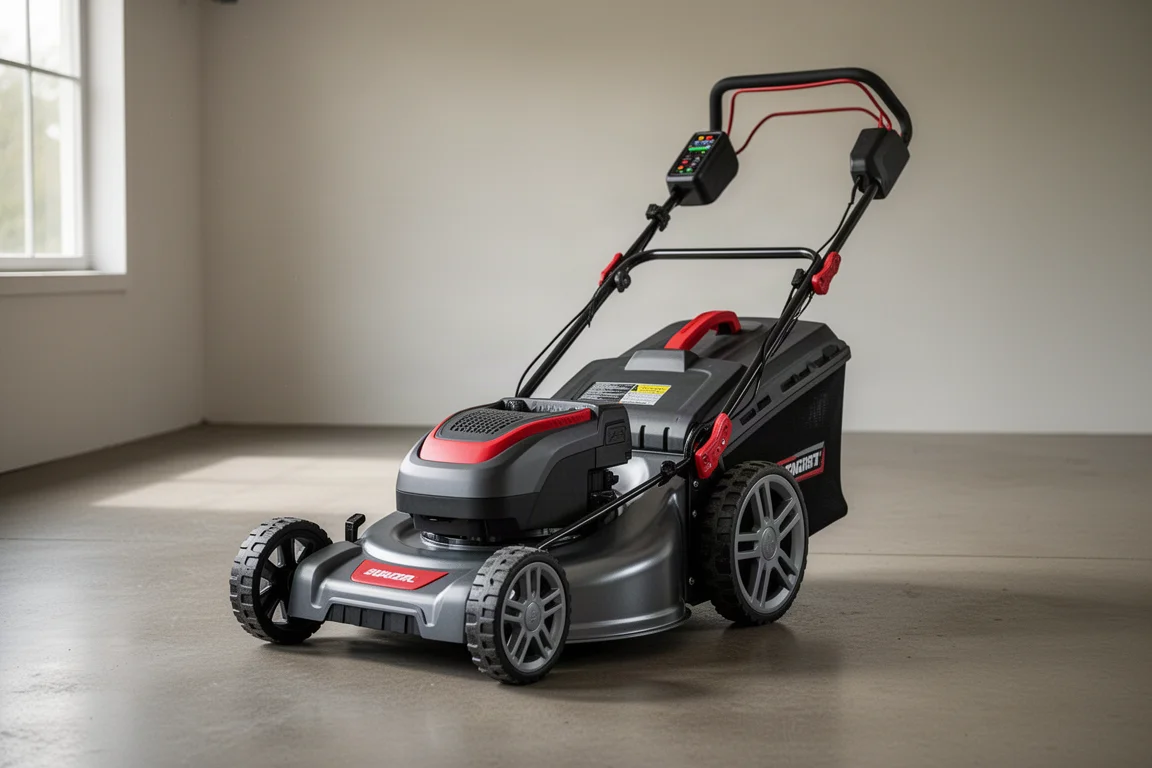
The deck is a genuine metal stamped deck, not plastic, which is a meaningful difference from many budget battery mowers. The wheels, however, are made of a heavier gray polymer. They should hold up fine unless you drive over them with a truck, but it is worth knowing they are not metal. The rear wheels are larger at 10 inches to help with rougher terrain, and the mower is rear-wheel driven, with the front wheels fixed.
Grass management is handled through three removable components: a mulcher plug for mulching clippings, a rear discharge flap that spreads clippings more evenly instead of blasting them toward the neighbor’s yard like a traditional side discharge, and a grass bag that attaches with simple hooks. Taking the plug out switches the mower away from mulching mode.
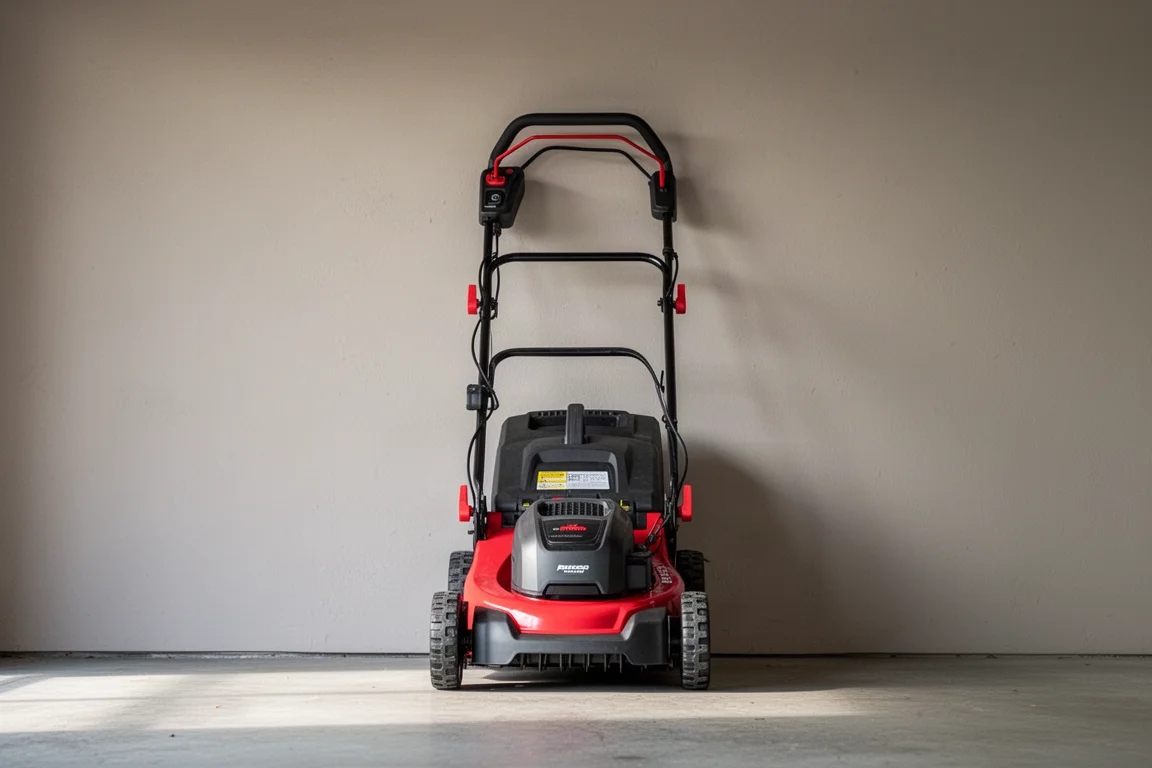
Storage is well thought out. The handles fold down with a ladder-style locking mechanism, and you can adjust the handle height for taller or shorter users. Folded fully over, the mower stands upright on its rear feet for compact vertical storage, and the handles can be removed entirely for an even smaller footprint.
Battery System and Charging
The mower runs on two 12.0Ah batteries at the same time, one on each side. Both batteries are required for it to operate; you cannot run it on a single battery. Smaller packs do work in a pinch, so you can use a 9.0, 5.0, or 3.0 battery if that is what you have, but the system drains both sides together. If one battery dies, everything stops, even if the other still has charge. Mixing a 12.0 with a 3.0 means the smaller pack will run out first and cut the mower off.
The kit includes two 12.0Ah batteries and a dual-port rapid charger. A battery indicator light on the mower shows remaining charge at the push of a button, and there are carry handles built in to help lift it around, which is useful since it is somewhat heavy, though lighter than a typical gas mower.
Controls and Power Delivery
The control panel is simple: power, speed, an LED light button, and one extra button worth explaining. Starting the mower takes a simple pull-back of the handle and a button press, and the motor delivers its power instantly with no rev-up, which is noticeably snappier than many other battery mowers. It is also quiet; roughly around 70 dB based on a rough estimate, well below a standard gas mower.

There has been some debate about the LED lights built into the deck. They illuminate the front and sides rather than acting as a single light bar, and they can help with early morning or evening mowing. Power draw from the lights should be minimal, but opinions on whether they are useful vary.
Self-Propel and Power Modes
The self-propel system uses a lever and a speed dial from one to five, with a top speed somewhere around 3 to 3.5 mph. The speed control works whether the blade is running or not, so you can use it simply to move the mower around. The bail handle has a thumb pad that turned out to be more comfortable than expected.

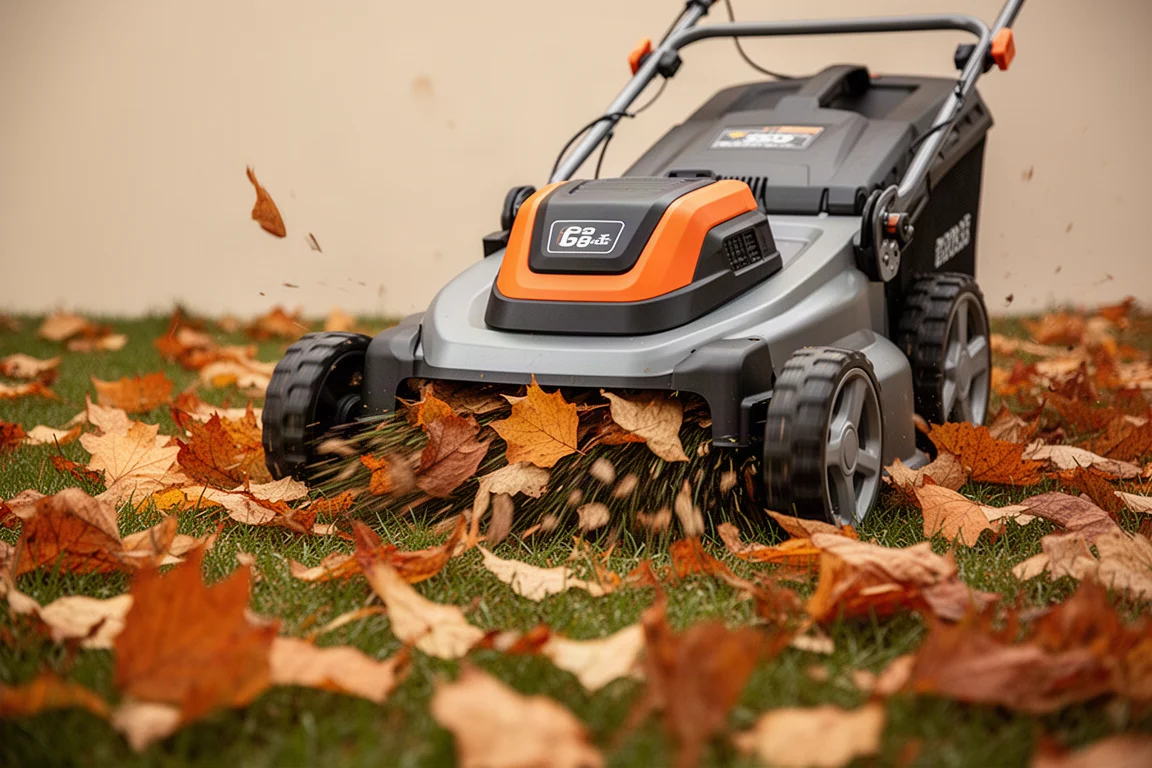
The extra button on the panel holds the motor at a higher, constant output. Normally the mower’s smart technology ramps the motor up when it hits heavy grass and back down afterward to conserve battery. For heavy patches, thick grass, or especially fall leaf mulching, that button keeps the motor at a higher rate for better airflow and finer chopping.
One design note: the mower uses a single blade, while some competing models use two. Milwaukee’s position is that two blades are not needed, so that remains to be seen over time.
Price and Value
The mower is sold as a kit only, priced at $999, and there is no tool-only option. That number sounds steep for a push mower, and it is fair to find it expensive. Milwaukee’s justification is the bundle: two 12.0Ah batteries would cost about $249 each if bought separately, roughly $500 together, plus the dual rapid charger, which puts the effective cost of the mower itself somewhere around $400 to $450 within the kit.
That math works well for new buyers who want the batteries anyway. For anyone who already owns a collection of M18 batteries and only wants the mower, the kit-only requirement is a genuine drawback, since there is no way to avoid paying for batteries and a charger you may not need.
Buying Advice
If you are starting from zero and want a quiet, low-maintenance battery mower for up to about a half acre, the kit pricing is actually reasonable given the included batteries and charger. If you already own plenty of M18 batteries, think carefully, because you will still be paying for hardware you may not want. Instant torque, quiet operation, and smart power management are the standout strengths; the kit-only sales model is the main friction point.
Conclusion
The Milwaukee M18 Fuel push mower brings a metal deck, dual-battery runtime, instant power delivery, and flexible grass management into a single package. The $999 kit price is easier to accept if you need the batteries, harder if you do not. For the right buyer, it is a compelling sign of where battery-powered lawn care is headed.
Product link
View more details for Milwaukee M18 Fuel Lawn Mower
This product is mentioned in the review. Check the specifications, options, and compatibility before buying.
View more details for Milwaukee M18 Fuel Lawn MowerFurther reading
Related Reviews

Lawn Care
Best Robot Lawn Mowers 2026: 13 Models Tested for Real-World Performance
We tested 13 robot lawn mowers across battery life, cut quality, navigation, object avoidance, and edging to find the best options for different yards and budgets.

Lawn Care
DeWalt 21-Inch 196cc RWD Self-Propelled Lawn Mower Review
A closer look at a gas-powered self-propelled mower with a commercial-grade engine, variable speed drive, and three-in-one cutting flexibility.
Lawn Care
Best Battery-Powered Self-Propelled Lawn Mowers: 10 Flagship Cordless Models Compared
Ten flagship cordless self-propelled mowers from DeWalt, Echo, Ego, Greenworks Commercial, Makita, Milwaukee, Ryobi, Skil, Stihl, and Toro, compared on build, ergonomics, noise, and runtime.