Power Tools
Milwaukee M18 Fuel Dual Battery 9-Gallon Wet/Dry Vacuum: Compatibility, Accessories and Everyday Use
A closer look at the Milwaukee M18 Fuel dual battery 9-gallon wet/dry vacuum, its hose and accessory system, and how carts, tubs, and attachments swap across tank sizes.
Introduction
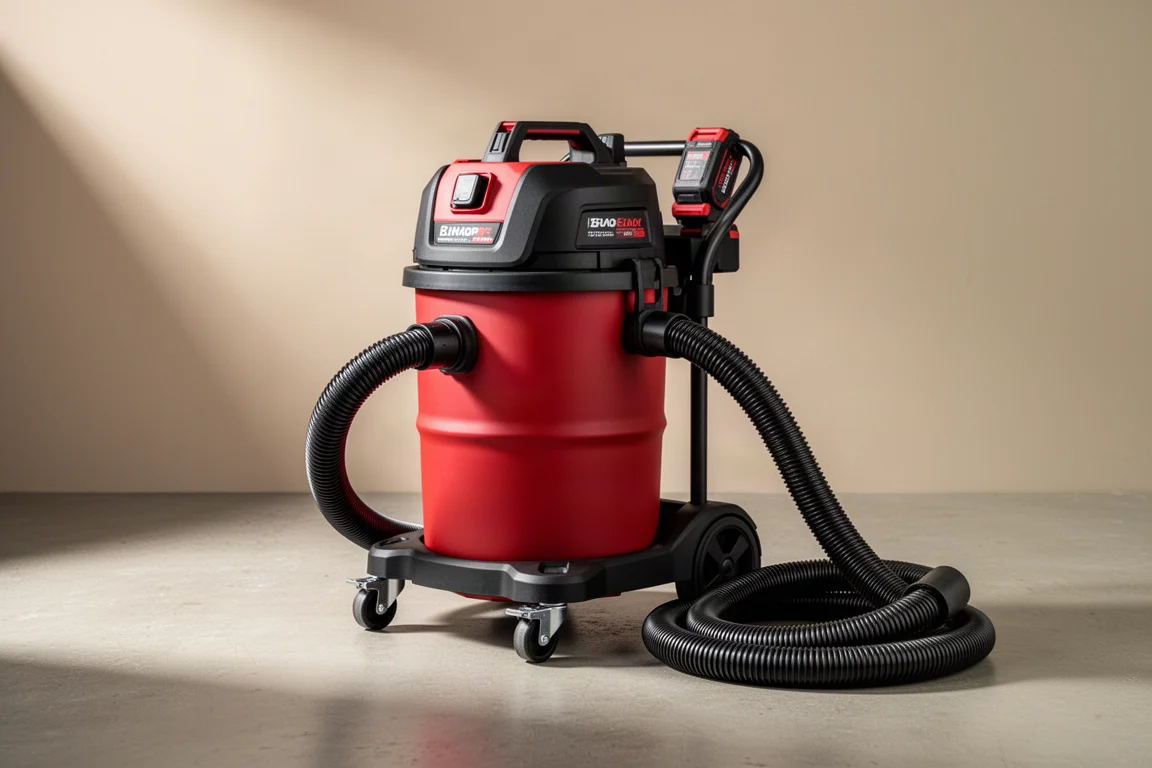
The Milwaukee M18 Fuel dual battery 9-gallon wet/dry vacuum has generated a lot of questions from owners: which bases and containers work, whether hoses swap back and forth, and what happens if you want to move between tank sizes. This guide walks through how the system fits together, which accessories transfer between hose sizes, and where the real practical value sits.
Hose Compatibility: 1 7/8-Inch and 2 1/2-Inch Hoses
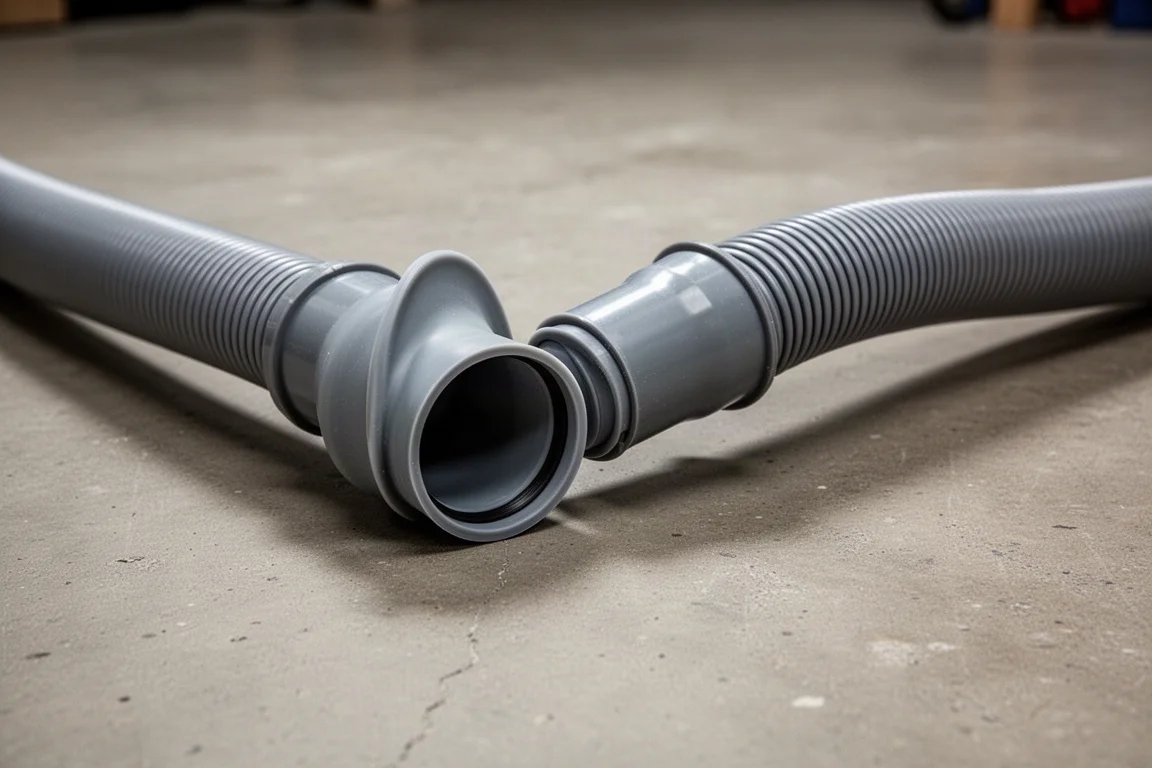
Out of the box, the vacuum comes with a 1 7/8-inch hose that actually flares larger where it connects, which means you can also attach the 2 1/2-inch hose, and oddly enough that hose flares down to roughly the same size. The two connect with zero issue, and running the larger hose on this vacuum is a worthwhile move.
The 16-foot 2 1/2-inch hose is not an expensive upgrade, and it opens up the ability to pick up larger chips and largely avoids the clogging issues that can happen with the smaller hose. Plenty of power was never the problem; the smaller hose diameter was.
Everyday Accessories That Pull Their Weight
Milwaukee thought about accessory transitions too. The hose end carries a nifty grey silicone seal, which makes more sense once you see it in use: a 1 7/8-inch extension slides into the 2 1/2-inch hose and seats firmly. Twist it and pull to release. If you are sucking water, nothing comes through past the seal. That means you do not need to buy a pile of separate adapters, and the crevice tip and floor nozzle also push in and work just fine.
The Milwaukee Air Tip attachment is a standout. Its rubber brush head is excellent for car interiors, pulling out debris that settles in the back seat area and plush carpet. It works with both hose sizes: it sits on the outside of the 2 1/2-inch hose, where it arguably works best, and also fits inside the 1 7/8-inch hose, though the fit is tight and you do not reach in as far.

One Thing to Know Before Upgrading Hoses
There is one downside to running a larger hose on a vacuum purchased with the 1 7/8-inch hose: the hose clip, or the piece that connects everything cleanly, does not accept the 2 1/2-inch hose. The part can be sourced separately, but everything still fits with the bungee cord at the back, so it is not a blocker for most users.
Carts: Swivel Casters vs. the Larger 12-Gallon Cart
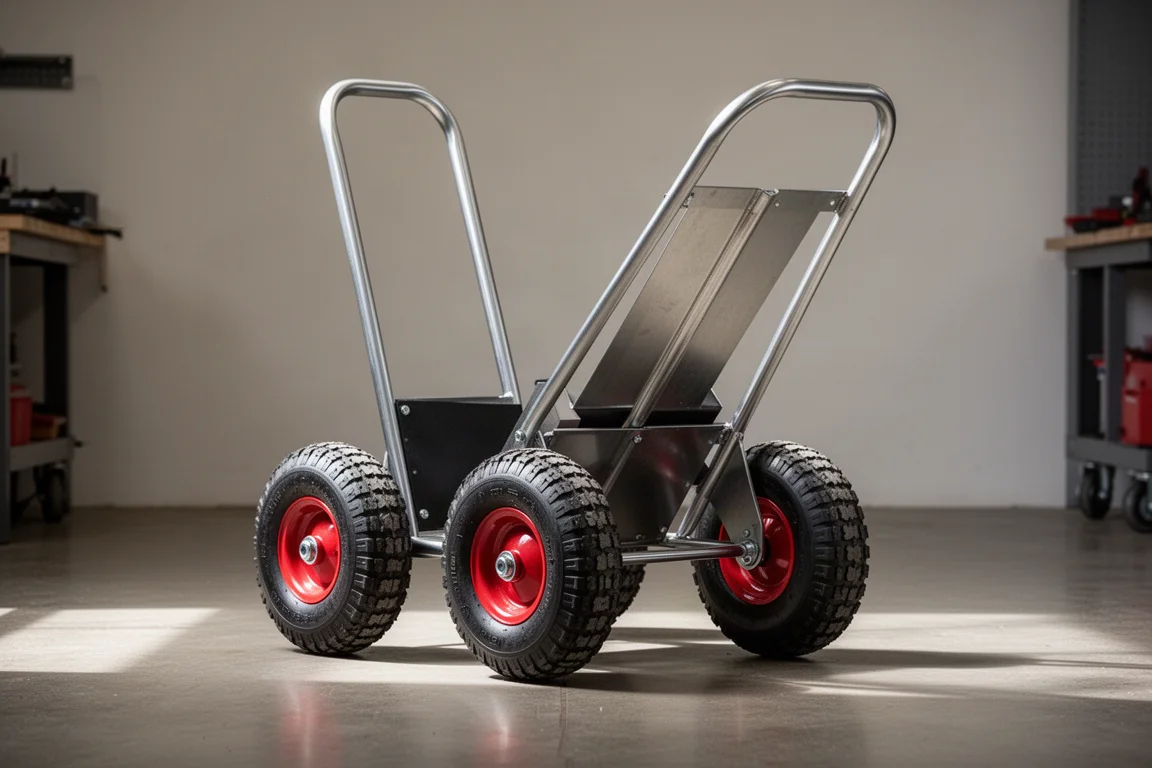
The dual battery 9-gallon vacuum ships with a rolling cart that works well: the hose pulls along with you, the wheels lock, and all four swivel. If you get the 6- or 9-gallon model but prefer the much larger cart that comes with the 12-gallon, you can buy that cart separately.
The bigger cart has some genuine advantages, especially for hauling water. Two rear casters are stationary rather than full swivel, but the rear tires are larger and there is more room for everything, plus a handle you can tilt up on for job site work. Conveniently, there is no height difference between the large cart with the handle and the small cart, and the handle can be removed by pushing two pins at the back for tighter storage.
Tank Options and Mixing Heads
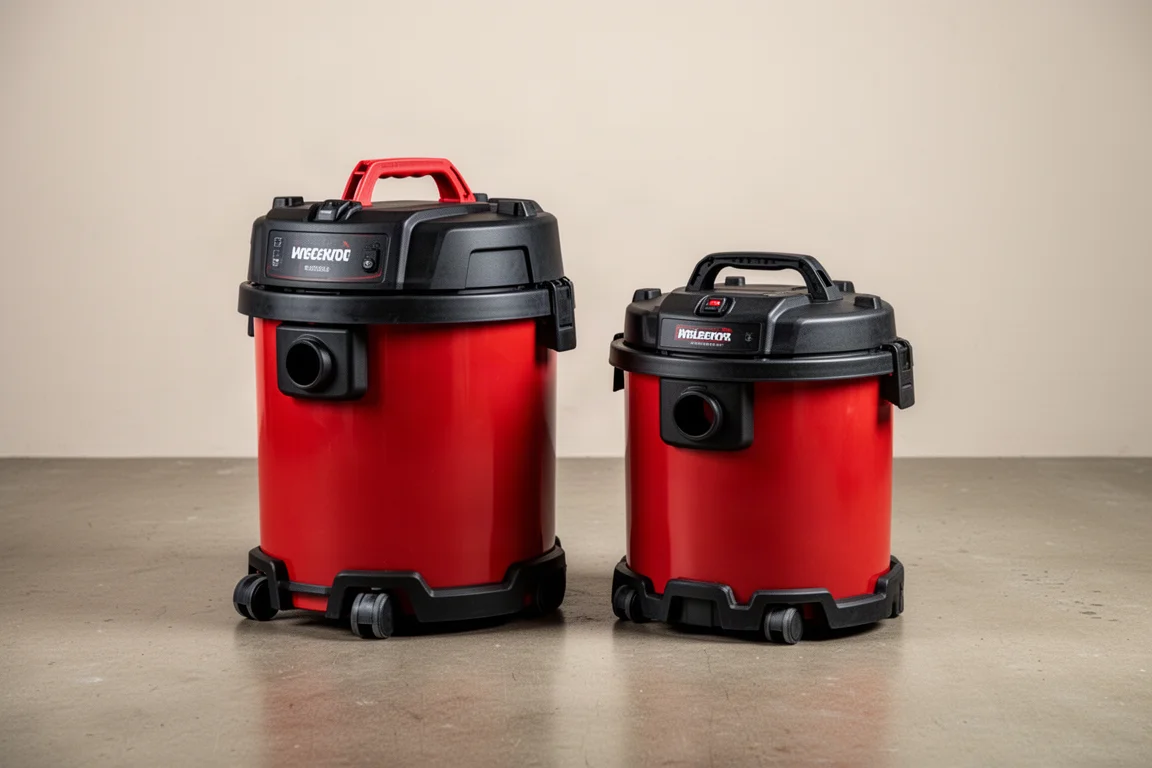
Milwaukee sells the tubs separately too, and that is where the system becomes interesting. A 12-gallon tub will not fit in the back of some trucks, so buyers can start smaller and move up later when needed. All the tubs fit across the different models, so you can swap between 6, 9, and 12 gallons depending on the job.
The tank size difference between the 9-gallon and the 12-gallon is significant, which is exactly why some buyers will not want to step up to the 12, and may even prefer the 6. The 12-gallon tub definitely will not slide under a tonneau cover; the 6- or possibly the 9-gallon might.
Another planned setup is mixing heads: one vacuum with the dual battery head and another with an AC head. The AC head can go on whichever tank suits the job, most likely the 12-gallon, while the dual battery head runs the 6- or 9-gallon. All accessories work across both, giving you the right tool for the right job. Note that Milwaukee does not currently offer the AC-only vacuum by itself; it may come later.
Buying Advice
Upgrading to the 16-foot 2 1/2-inch hose if you have the 6- or 9-gallon model is a no-brainer: it handles larger debris, avoids early clogging, and every other accessory still works. If you want the larger cart for hauling, it can be bought separately. Swapping tubs between sizes is genuinely practical if your space or transport situation changes.
Conclusion
This vacuum is not the least expensive option out there, and you are paying for a lot of research and development and a lot of options. But the system is thoughtfully designed: hoses, accessories, carts, and tubs all work together across the range, and the dual battery performance is strong. If you want one cordless wet/dry vacuum that can adapt as your needs change, this is a system worth serious consideration.
Product link
View more details for Milwaukee M18 Fuel Dual Battery 9-Gallon Wet/Dry Vacuum
This product is mentioned in the review. Check the specifications, options, and compatibility before buying.
View more details for Milwaukee M18 Fuel Dual Battery 9-Gallon Wet/Dry VacuumFurther reading
Related Reviews
Power Tools
Best 1-Inch Pistol Impact Wrenches: Three Heavy-Duty Options Compared
We compare three 1-inch pistol impact wrenches, from a budget-friendly Harbor Freight model to a premium Caterpillar unit, to help you choose the right one.
Power Tools
Best 3/4-Inch Impact Wrenches 2026: Five Contenders Compared
We compare five 3/4-inch impact wrenches across price and performance, from a budget Amazon option to Snap-on's most powerful model yet.
Power Tools
Best Budget Cordless Tools 2026: Walmart Finds That Punch Above Their Price
We tested five cordless tools from Walmart, including a high-torque impact wrench that trades blows with Milwaukee and a $35 duster that outperforms its price class.