Power Tools
Milwaukee M18 Fuel 6 Gallon Wet/Dry Vacuum Review: Cordless Power Meets Durability Testing
A closer look at Milwaukee's M18 Fuel 6 Gallon cordless wet/dry vacuum, including our own repeated durability testing to check the claims behind its wheels and hose.
Introduction
When Milwaukee Tool announced its new line of cordless M18 Fuel job site vacuums, the headline claim was durability: the company says these machines use the most durable wheels and hoses in the industry. That is a bold statement for a category where wheels and hoses are commonly the first things to fail, so we decided to put the six gallon unit through its paces, including our own long-form durability testing to see whether the claims hold up.
First Impressions and Design
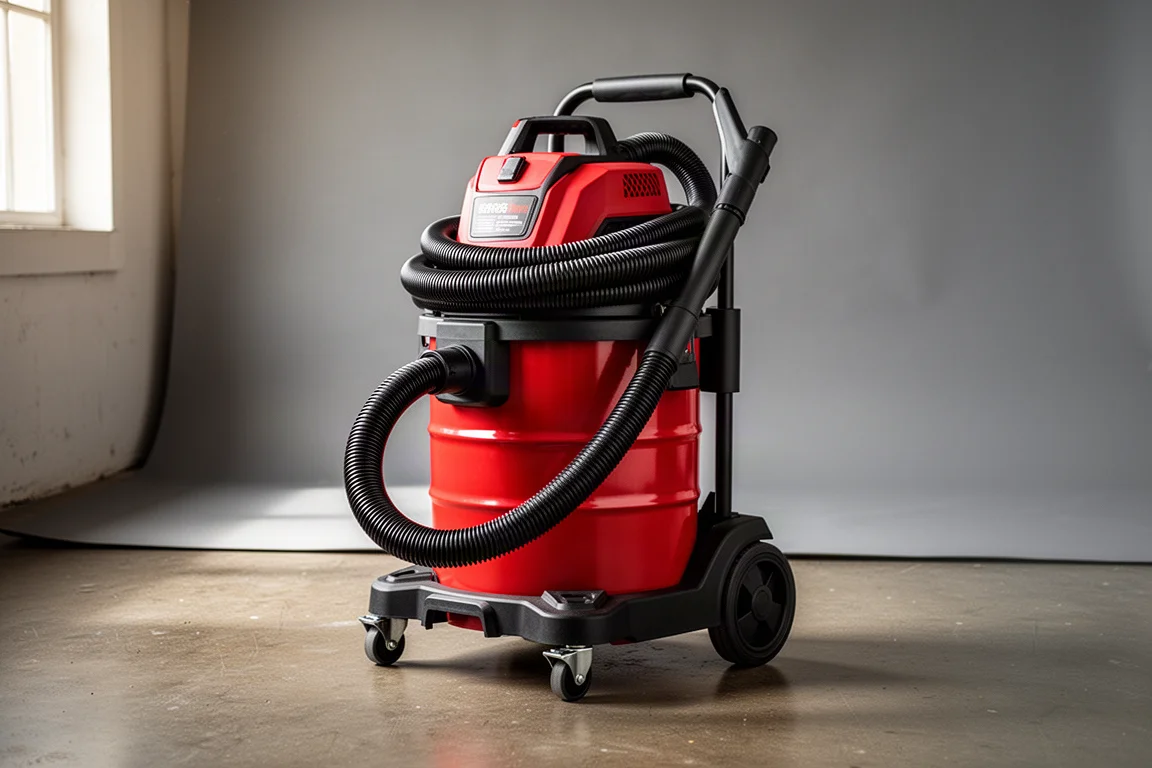
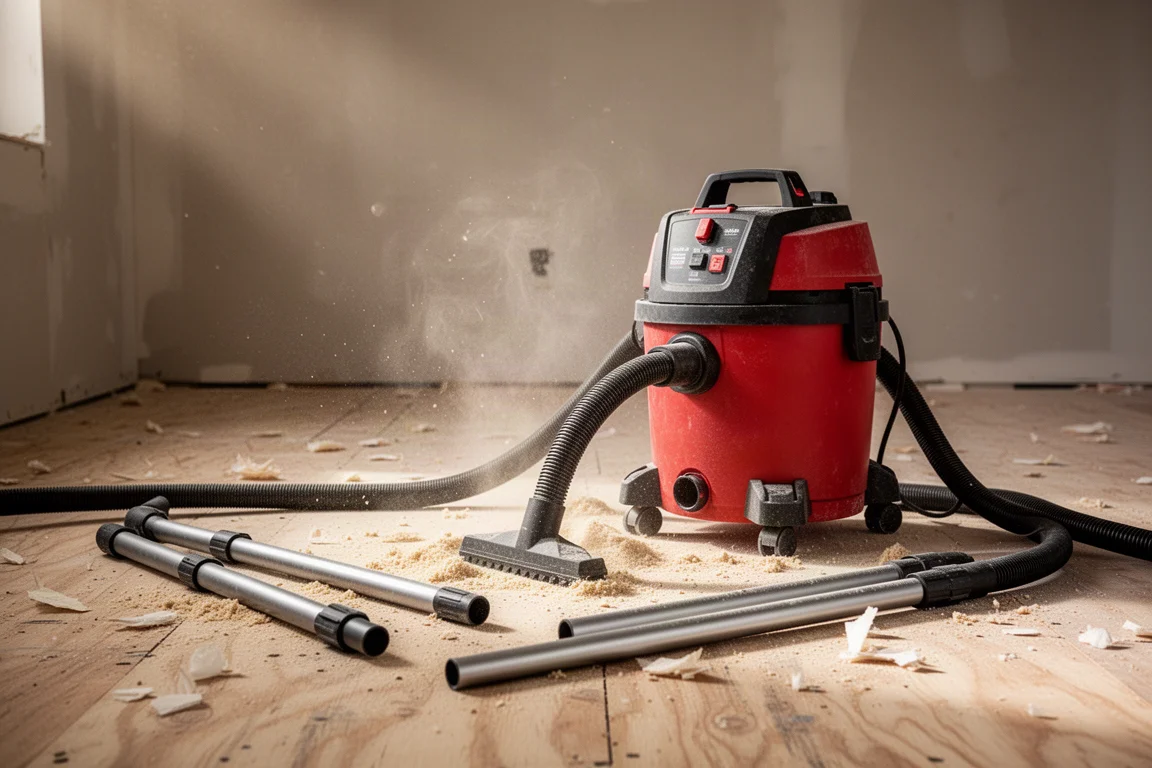
Out of the box, the six gallon unit reads as a thoughtfully built machine. It sits on a cart that rolls easily, the wheels feel substantial, and the large top handle makes it genuinely convenient to carry out to a truck or up a staircase. The overall build comes across as rugged, which is exactly what you want from a job site vacuum.
This is the bare tool, product number 0910-20, running on the M18 Fuel platform. It works with any M18 battery, but Milwaukee recommends an HO architecture battery for best performance, and all of our testing was done with a 12 amp hour pack. Milwaukee rates the motor at 3.5 peak horsepower, and the vacuum handles both wet and dry debris.
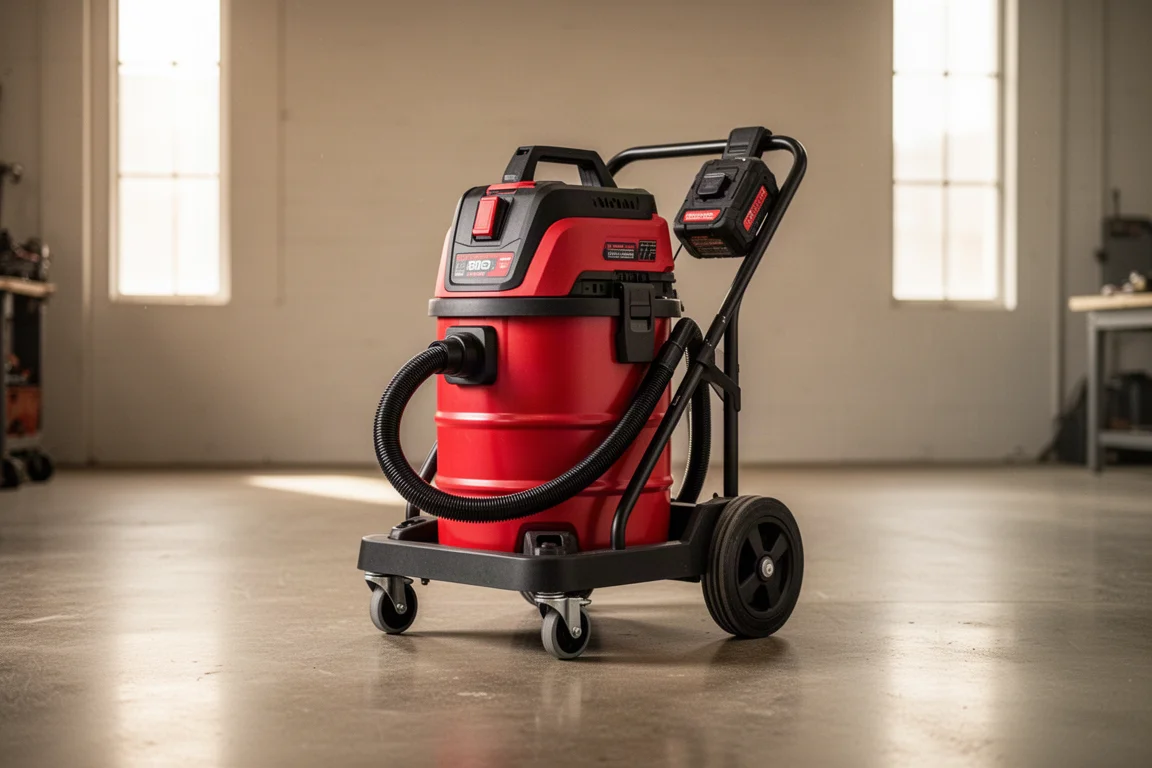
One detail worth knowing before you buy: at this price point the vacuum does not include a self-cleaning filter mode, which means it is not Table 1 compliant. It is a two-speed machine, and there are situations where the low speed is preferable, particularly for lighter debris or longer run time.
What’s in the Box
As a bare tool package, the 0910-20 includes the motorhead, a six gallon tank and cart, a 1-7/8 inch by 9 foot flexible hose, a 1-7/8 inch utility nozzle, a large high efficiency filter, a 1-7/8 inch crevice tool, and two 1-7/8 inch extension wands. Milwaukee also launched a line of shop vac accessories that work with any brand of shop vac, sold separately.
Runtime claims are respectable for a cordless machine of this size: a continuous cleaning time of 47 minutes on light debris covering roughly 1,300 square feet, or 31 minutes in max power mode for heavy debris covering up to 1,000 square feet, all on a single 12 amp hour battery.
Everyday Use
Suction testing with common job site debris such as sawdust, sand, and particulate went smoothly, and the vacuum rolls well around a workspace. One minor frustration: re-seating the vacuum on the cart requires lining up the rear tabs and the front tab perfectly. It may loosen up with wear over time, but it takes a bit of care during the first uses.
A genuinely nice touch is that the vacuum is made in the USA with global materials, which is not something you see often at this tier of shop vacuums.
Durability Testing: Repeating the Treadmill Test
Milwaukee demonstrated a “job site treadmill” test at its lab where vacuums run side by side over simulated debris, with 20 pounds of added weight on each unit, and claimed a competitor’s vacuum broke its wheel well before Milwaukee’s did. Because that testing was not fully shown in person, we built our own version to see whether the results would reproduce.
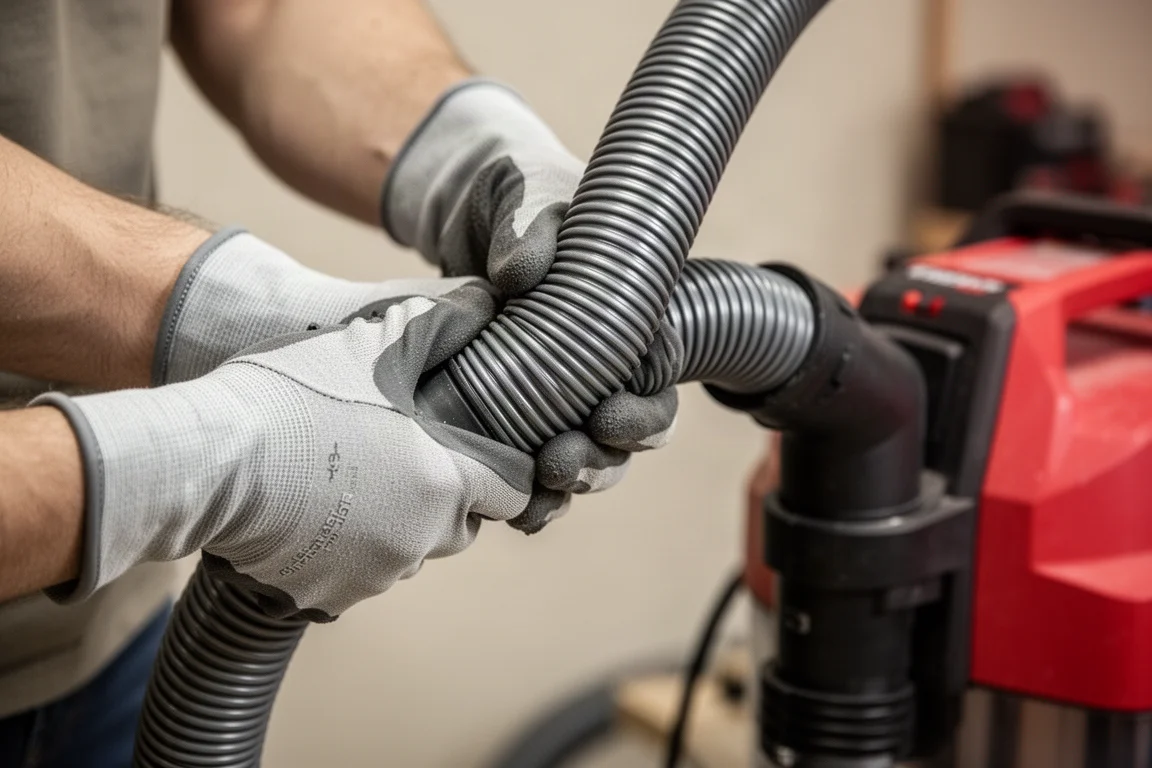
Our first iteration used eighth inch thick wood strips as speed bumps every 12 and 6 inches, with the treadmill running at a constant 1.5 miles per hour for miles on end. The result: no wheel breakage on either machine, but the wood speed bumps themselves wore down faster than the vacuum wheels. We switched to eighth inch hot rolled steel strips and removed the rear straps from both vacuums to allow more jostling.
The competitor’s vacuum lost wheels repeatedly during subsequent runs, typically not by snapping but by popping off at their mounting point. Even gluing the wheels on did not stop a wheel from falling off at the 5.5 mile mark, and the competitor tipped over at speed, losing stability. By the time the competitor accumulated 17 miles of run time, 10 miles beyond where Milwaukee’s own testing had observed failure, the failure mode was wheels bending, inhibiting free spinning, taking chunks out of the wheels, and making the unit fall over continuously.
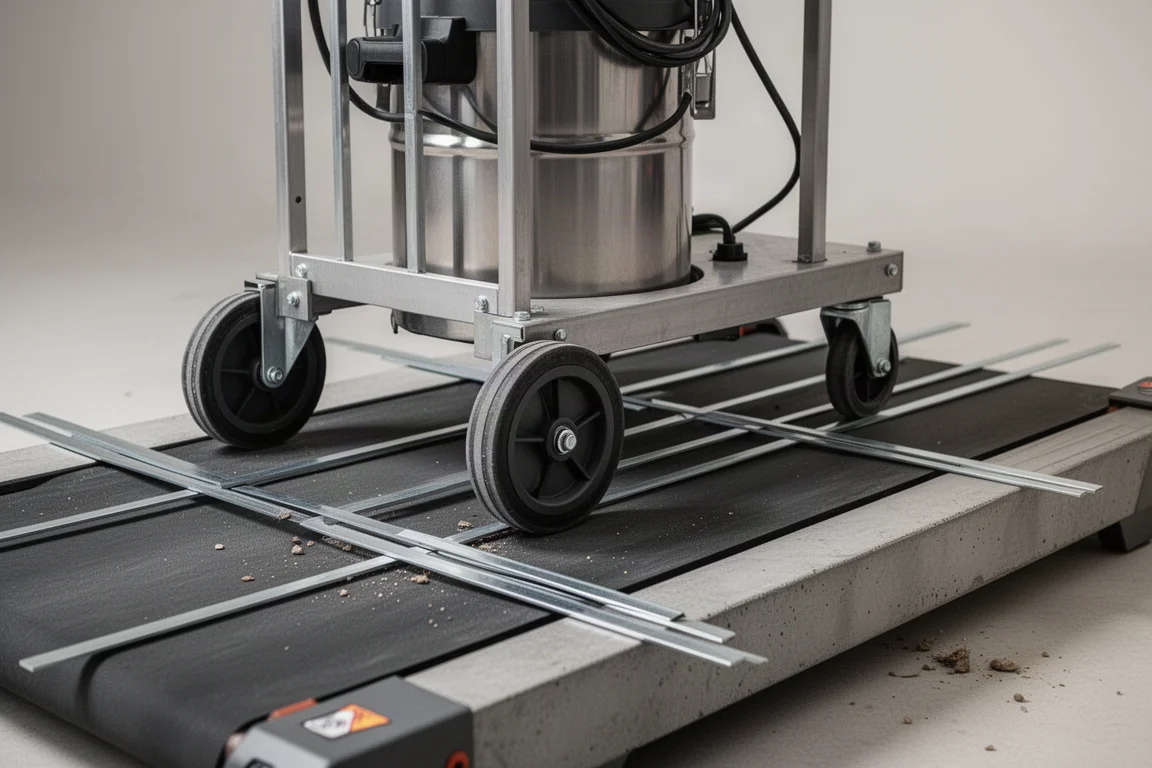
Raising the treadmill speed to 2.8 miles per hour induced violent jostling but no airborne jumps. At that speed, the Milwaukee vacuum kept rolling like it was just another day at the office, running for nearly an additional hour before we stopped the test because it looked like it would run indefinitely. The Milwaukee cart’s wheels were hardly worn.
We were never able to replicate the exact wheel-snap failure Milwaukee showed, and our testing produced a slightly different failure mode for the competitor, but the practical takeaway matched: the Milwaukee vacuum survived far beyond the point where its competitor was struggling to stay upright.
Things to Consider Before Buying
The cart setup is a meaningful advantage for longevity. If the cart ever fails, you can replace just the cart rather than the whole vacuum. At an investment of $249 for this setup, it is not a small purchase, but it is not the largest investment you can make for a shop-quality vacuum either, and replaceable components soften the long-term cost.
The lack of a self-cleaning mode is the main spec-level compromise, so contractors who need Table 1 compliance should look elsewhere. Everyone else should weigh whether two speeds and the claimed runtimes fit their typical job site sessions.
Buying Advice
If you already own M18 batteries, this vacuum slots neatly into your existing ecosystem, and a high-capacity HO battery is the way to get the claimed runtime figures. For light debris and medium-sized spaces, the 47 minute runtime on light debris is generous for a cordless machine.
For buyers comparing cordless shop vacuums on durability, the repeated treadmill testing we ran supports Milwaukee’s claim of class-leading wheel and hose toughness. The six gallon cart configuration in particular is the version worth considering if you value stability and replaceable parts.
Conclusion
The Milwaukee M18 Fuel 6 Gallon Wet/Dry Vacuum pairs solid cordless performance with a durability story that survived our own aggressive re-testing. Its main trade-offs are the absence of a self-cleaning mode and a fussy cart re-seating process, but for M18 battery owners who want a tough, well-supported job site vacuum, it is an easy recommendation.
Product link
View more details for Milwaukee M18 Fuel 6 Gallon Wet/Dry Vacuum (0910-20)
This product is mentioned in the review. Check the specifications, options, and compatibility before buying.
View more details for Milwaukee M18 Fuel 6 Gallon Wet/Dry Vacuum (0910-20)Further reading
Related Reviews
Power Tools
Best 1-Inch Pistol Impact Wrenches: Three Heavy-Duty Options Compared
We compare three 1-inch pistol impact wrenches, from a budget-friendly Harbor Freight model to a premium Caterpillar unit, to help you choose the right one.
Power Tools
Best 3/4-Inch Impact Wrenches 2026: Five Contenders Compared
We compare five 3/4-inch impact wrenches across price and performance, from a budget Amazon option to Snap-on's most powerful model yet.
Power Tools
Best Budget Cordless Tools 2026: Walmart Finds That Punch Above Their Price
We tested five cordless tools from Walmart, including a high-torque impact wrench that trades blows with Milwaukee and a $35 duster that outperforms its price class.