Power Tools
Milwaukee M18 Fuel 2827 20" Chainsaw Review: Dual-Battery Power Without the Gas
A dual-battery 20-inch cordless chainsaw with two power modes, a claimed 70cc-class gas equivalent, and real-world oak-cutting results worth knowing before you buy.
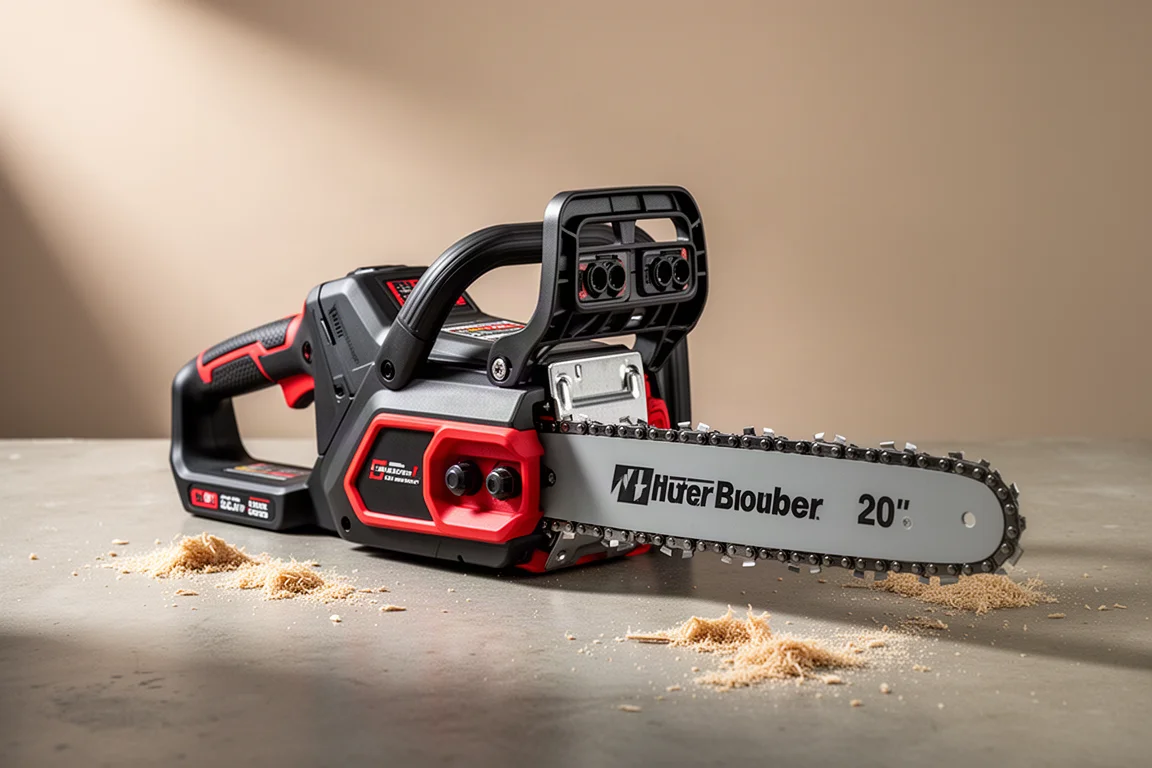
Introduction
The Milwaukee M18 Fuel 2827 is a 20-inch dual-battery chainsaw that claims the cutting power of a 70cc gas saw. It is built for demanding yard and property work, and it is aimed squarely at anyone considering the switch from gas to battery, especially if they already own other Milwaukee M18 tools.
After putting it to work cutting heavy oak, it left a strong impression as an easy saw to recommend for real cutting tasks, though it comes with a few trade-offs worth understanding first.
Who This Product Is For
This saw makes the most sense for property owners and users with substantial cutting jobs who want gas-class performance without the gas engine. If you already own other Milwaukee M18 tools, the shared battery platform makes this a logical next purchase.
It is also well suited to anyone tired of pull starts and engine maintenance, as the saw reaches full speed within about a second of squeezing the trigger. There is no revving or warm-up; you hit the trigger and you are ready to cut.
Key Features and Design Details
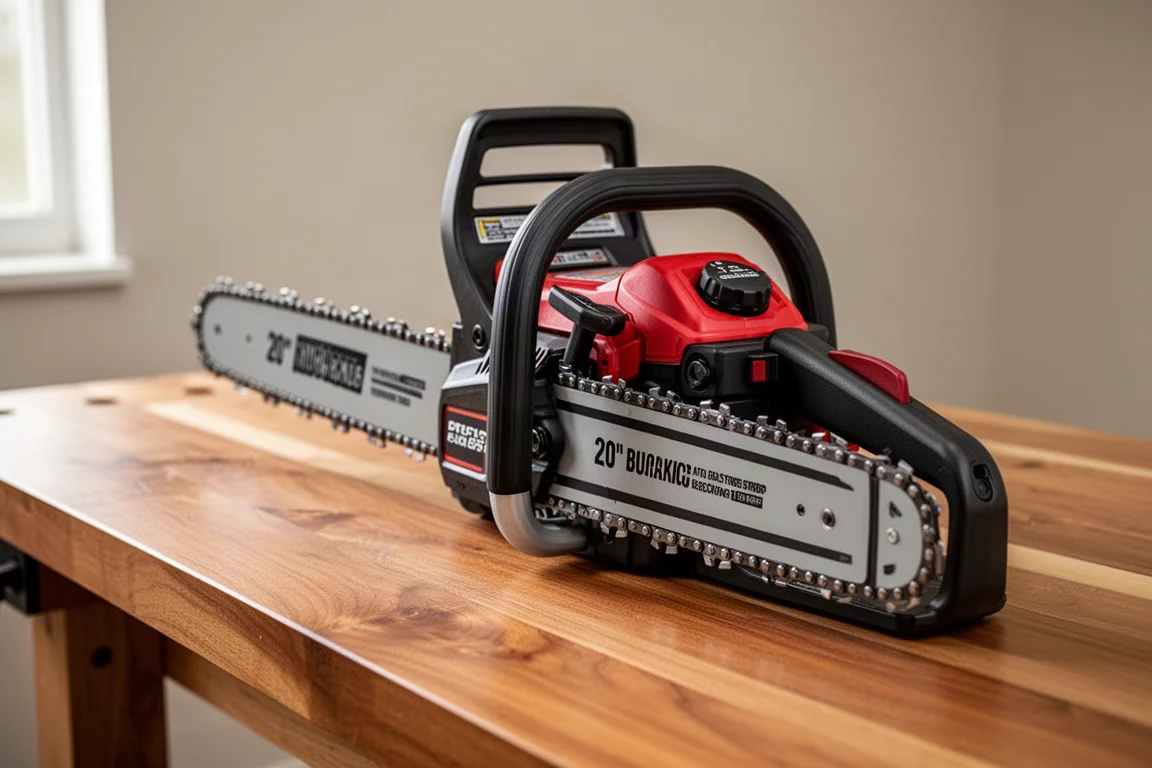
The rear grip has a nice rubber over-mold with an integrated safety built into the handle: push it forward, then pull the trigger. The trigger is variable speed, so you can speed the saw up or slow it down with your hand, and the safety works well even with gloves on.
The headline feature is the two-mode system. One mode delivers about 4.4 horsepower for standard cutting, while the higher mode pushes out 5.8 horsepower for tougher or harder material. The higher mode demands more from the batteries, so run time drops and the saw heats up a bit more. When the hard work is done, switching back to the standard mode extends run time and keeps the tool cooler. Switching between modes is done at the tip of your finger with a button on top.
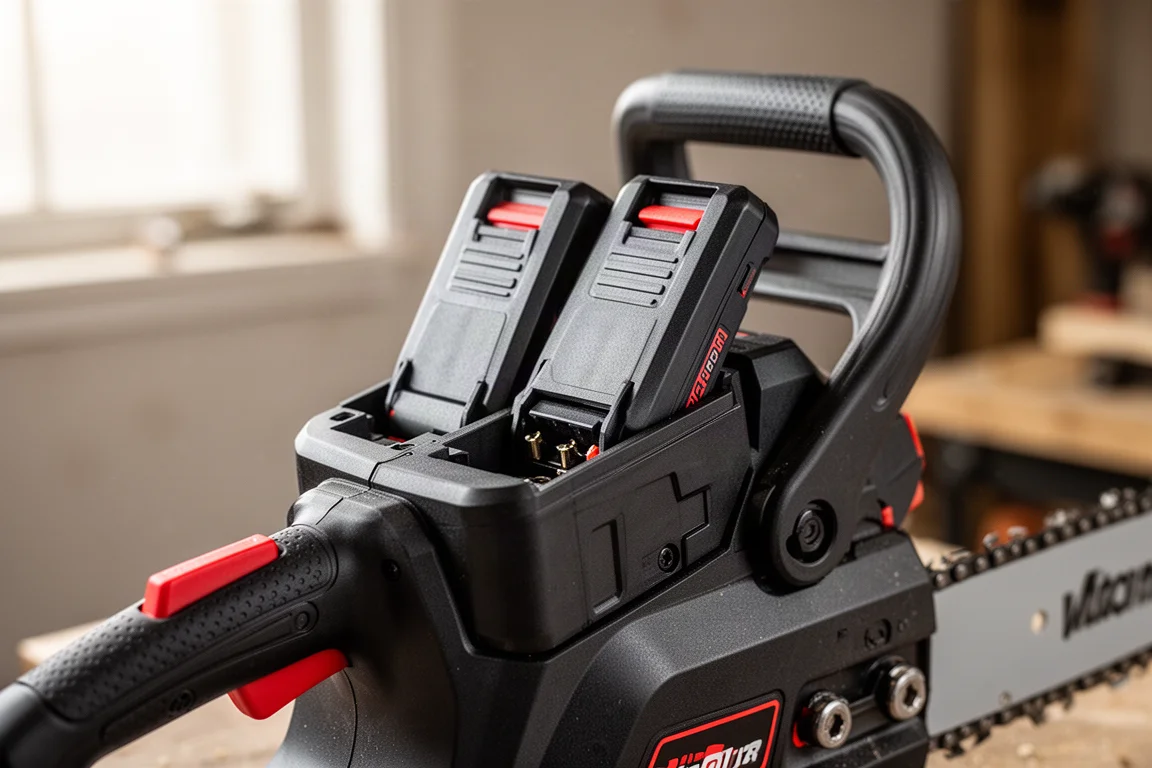
Both batteries are required to run the saw, and the tool reminds you of this right on the top of the housing. The batteries slide into the top-mounted ports simply and click into position.
Other thoughtful details include an inertia chain brake that works like any gas or battery saw you are used to, a metal front plate protecting the tool, and large dual metal bucking strips on both sides of the bar that bite into the material so you can lean in with confidence. The bar nuts are captured, so you cannot lose them out in the field, and there is a removable metal filter at the air intake protecting the brushless motor. Pull it out periodically, blow it off, and reinstall it to keep the motor cool and performing well.
Setup and Chain Tensioning
Assembly is straightforward. The bar has a roller tip with a ball bearing, and the chain goes on the bar first, oriented so it spins in the correct direction as it runs. Line the bar up on the studs, make sure the chain seats around the drive sprocket and stays in the grooves, and align the bar with the tensioning pin.
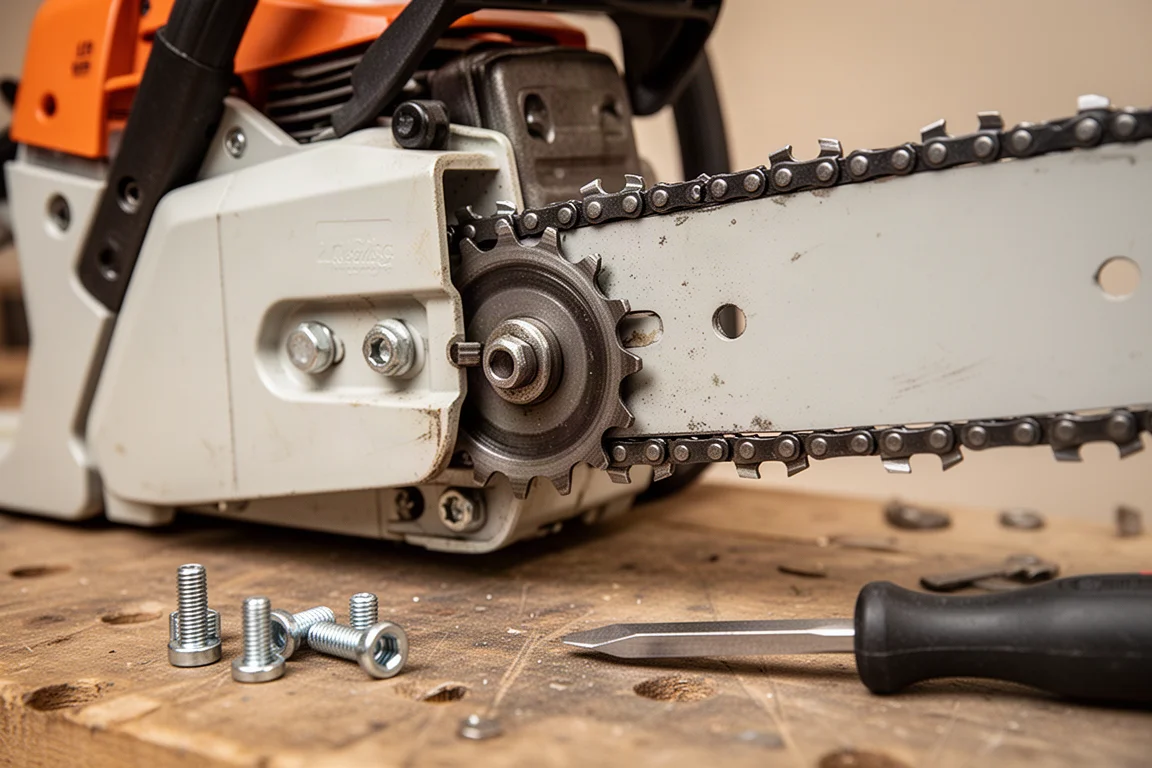
The cover goes back on with the captured nuts thumb-tightened, and a flat blade screwdriver tip is integrated into the base of the saw for final tightening and tensioning. Chain tension is adjusted by turning the screw as directed by markings on the front of the saw. Turn a little, check the tension, and repeat until it is right.
Cutting Performance
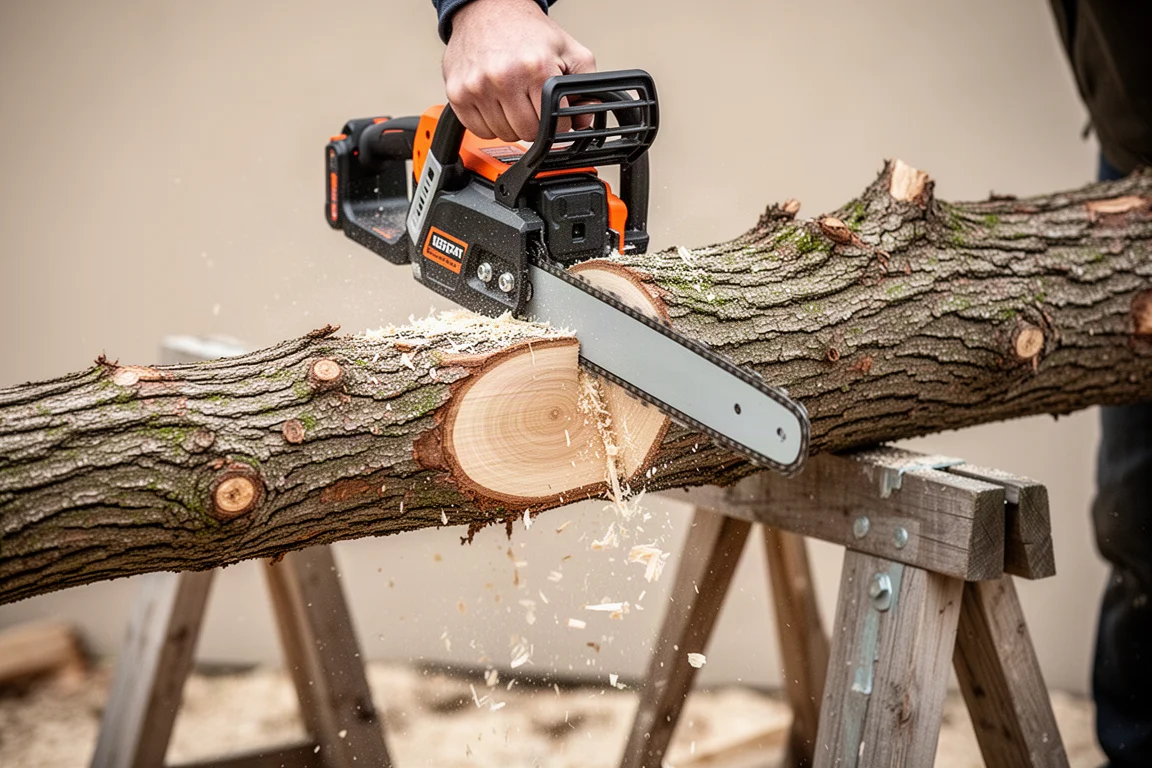
The test project involved cutting oak, which is a very heavy, dense wood. The saw got through the material without issue in both speed modes. On the lower mode, larger chunks required cutting a bit more slowly; on high mode, you can push right through and let the saw work at its own pace, which is a quick one.
The dual bucking strips worked phenomenally, biting into the wood and letting the saw tilt into the cut with great ease. The factory chain is excellent as well, with amazing chip removal. The saw never clogged with chips, and the inside of the guard stayed clean with chips evacuating well.
Oiling worked fine throughout: with a full reservoir, roughly half a tank was used for the cutting done. As for batteries, one full set was consumed during the project. The charge indicator dropped to one bar right at the very end, meaning the task was completed without needing a recharge in between.
One thing to note: this is not a light saw. With both batteries installed it comes in just shy of 21 pounds. However, it is balanced well. Held from the center handle, the front hand carries most of the weight while the rear handle is used to maneuver and operate the saw. The integrated wrench also stayed firmly in its slot in the base without moving or falling out.
Things to Consider Before Buying
The two-mode system is a genuine advantage, but it rewards restraint. Using the 5.8 horsepower mode on every cut will drain the batteries faster and build up more heat, so treat the high mode as a tool for hard material rather than a default.
The weight is the other factor. At just under 21 pounds with both batteries, extended overhead or one-handed-adjacent work will be tiring, though the balance helps a lot in practice. Finally, this saw is not inexpensive, and factor in that you must supply and charge two batteries to operate it.
Buying Advice
This saw lists for $899 at Acme, and that price is for the kit: the saw, two batteries, and a simultaneous charger. It is available online and anywhere Milwaukee tools are sold.
If you are transitioning from gas to electric, this is a strong candidate, particularly for owners of other Milwaukee M18 tools who can justify the investment through their existing battery ecosystem. If you only need occasional light trimming, a smaller and cheaper saw may serve you better.
Conclusion
The Milwaukee M18 Fuel 2827 20-inch chainsaw delivers on its core promise: near-instant startup, two useful power modes, excellent chip clearance, and the ability to power through dense hardwood like oak without issue. The weight and price are the trade-offs, but for serious cutting tasks and existing M18 users, it is an easy saw to recommend.
Product link
View more details for Milwaukee M18 Fuel 2827 20" Chainsaw
This product is mentioned in the review. Check the specifications, options, and compatibility before buying.
View more details for Milwaukee M18 Fuel 2827 20" ChainsawFurther reading
Related Reviews
Power Tools
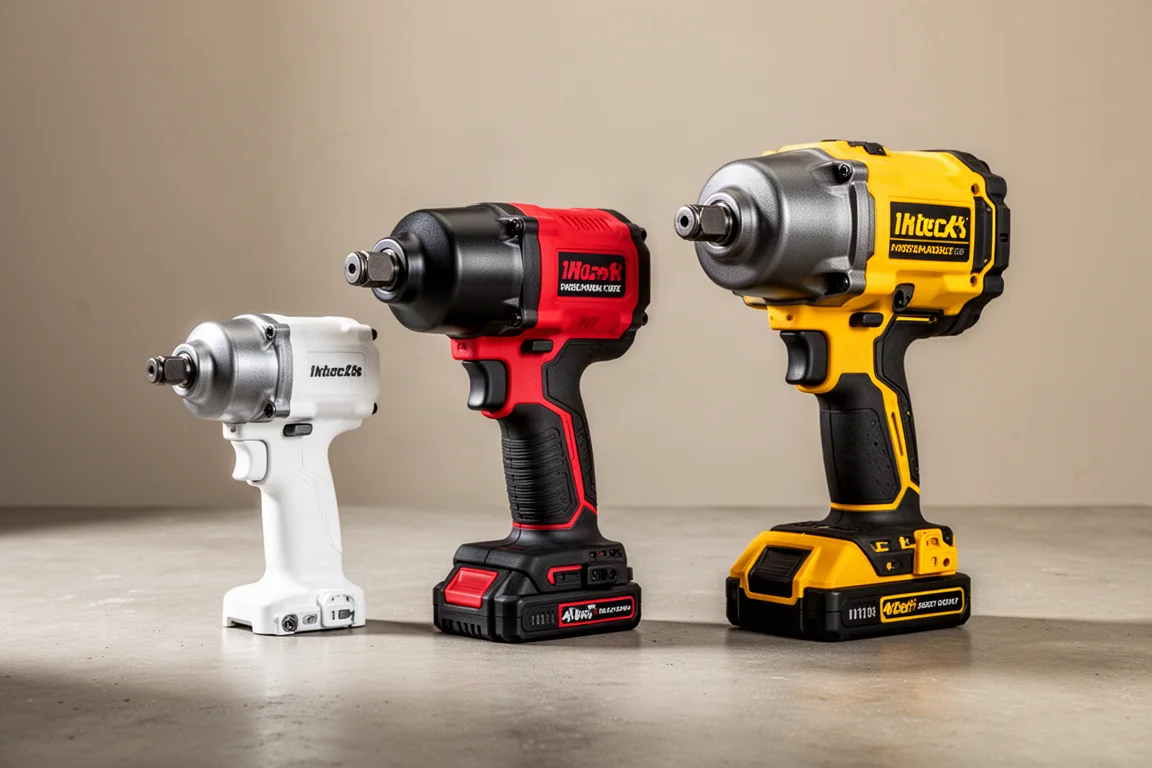
Best 1-Inch Pistol Impact Wrenches: Three Heavy-Duty Options Compared
We compare three 1-inch pistol impact wrenches, from a budget-friendly Harbor Freight model to a premium Caterpillar unit, to help you choose the right one.
Power Tools
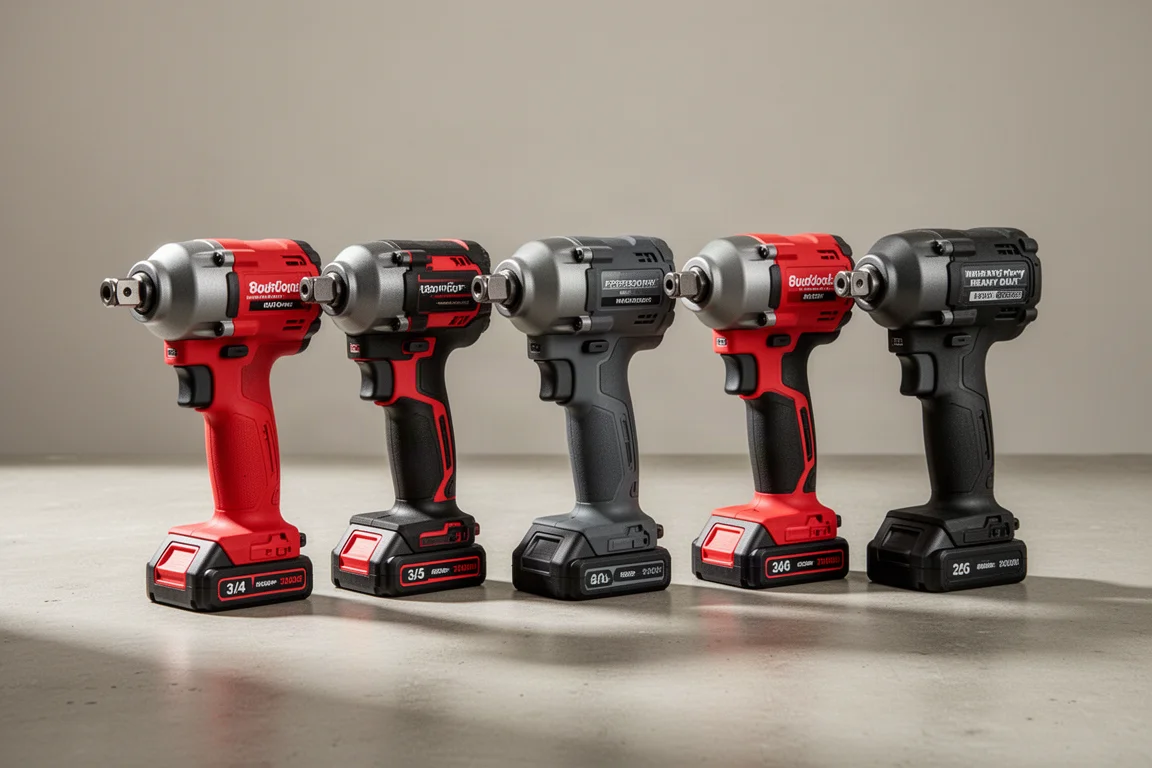
Best 3/4-Inch Impact Wrenches 2026: Five Contenders Compared
We compare five 3/4-inch impact wrenches across price and performance, from a budget Amazon option to Snap-on's most powerful model yet.
Power Tools
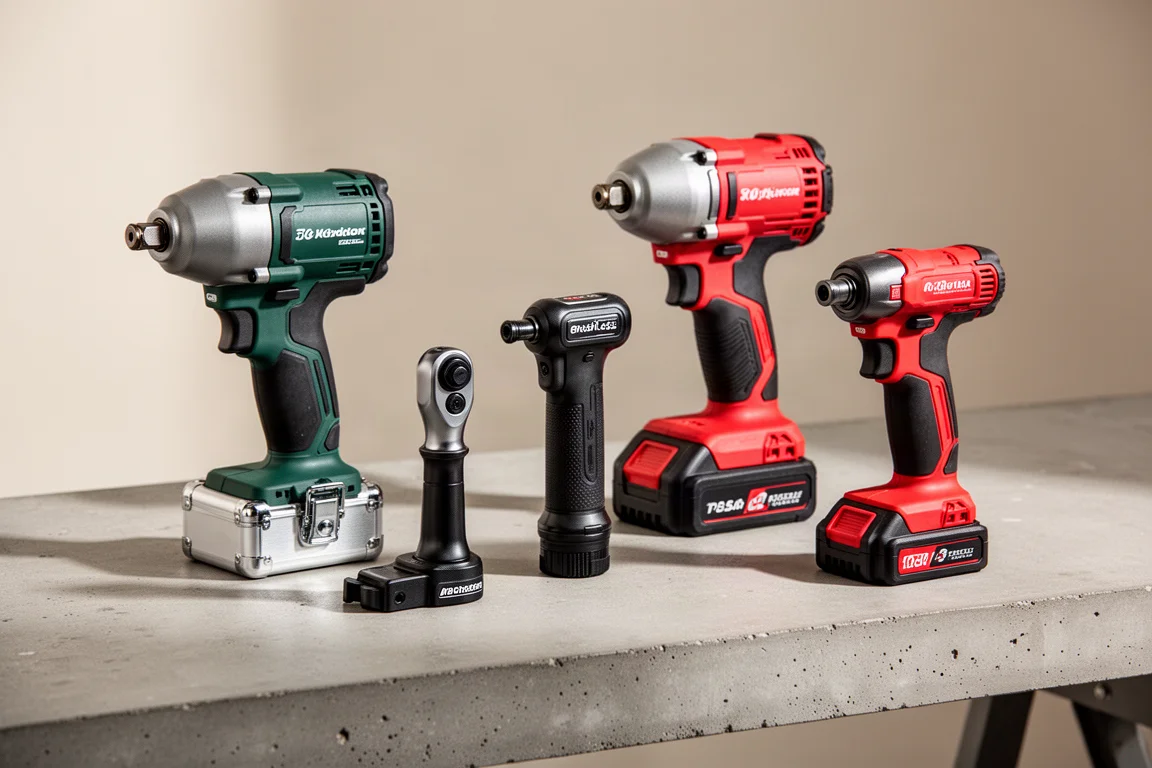
Best Budget Cordless Tools 2026: Walmart Finds That Punch Above Their Price
We tested five cordless tools from Walmart, including a high-torque impact wrench that trades blows with Milwaukee and a $35 duster that outperforms its price class.