Power Tools
Milwaukee M18 FPS 55 vs Metabo KT18 LTX 66 BL: Two 18V Plunge Saws Compared
Two 18V cordless plunge saws go head to head on power, cut depth, track compatibility, dust extraction, and everyday handling.
Introduction
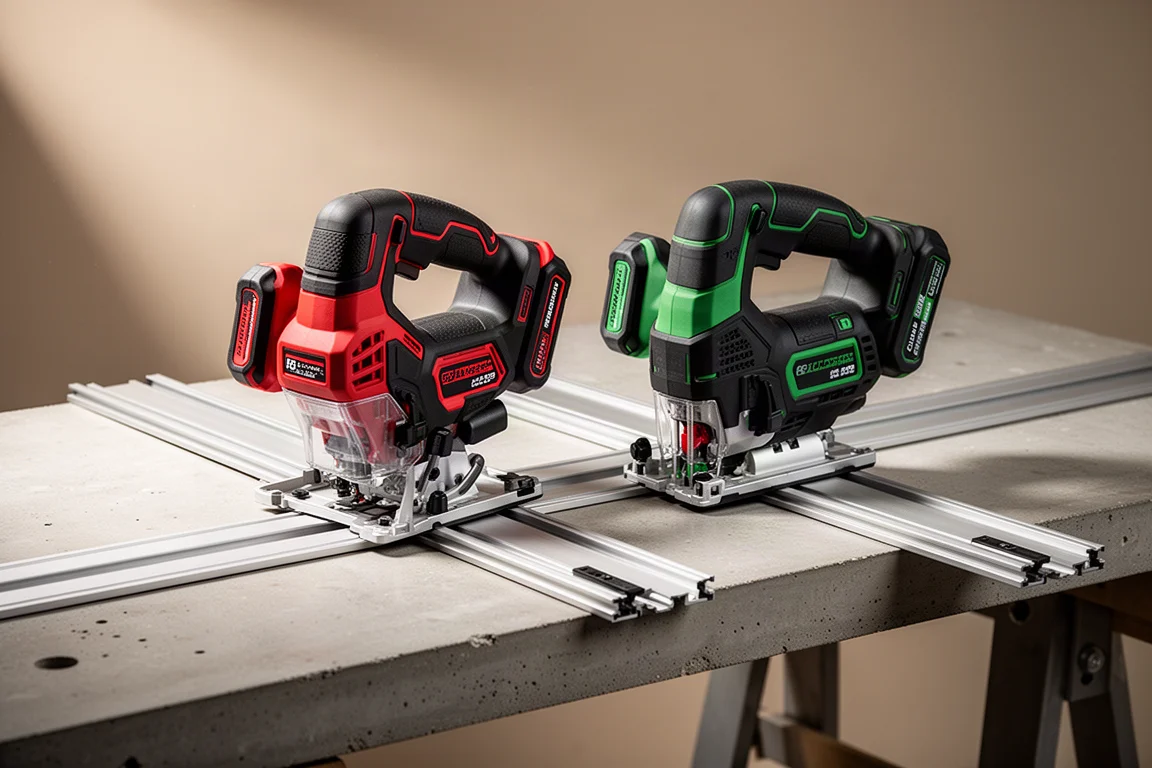
Plunge saws have become one of the most useful tools in the modern workshop, and two 18V options stand out for anyone who wants track-saw accuracy without stepping up to heavier 36V platforms: the Milwaukee M18 FPS 55 and the Metabo KT18 LTX 66 BL. Both are brushless, both cut cleanly, and both did everything asked of them in testing, including ripping dry framing timber without complaint.
To keep the comparison fair, both saws were run with fresh, fully charged batteries, new blades, and the same test cuts on framing timber and coated sheet goods. Neither saw is really designed for ripping wet structural timber; these are tools for sheet goods, cabinetry, and fine kitchen work. Judged on that, both performed well, but the details set them apart.
Milwaukee M18 FPS 55: Power and Features
The Milwaukee M18 FPS 55 takes its name from its 18V Fuel brushless platform and its 55mm maximum depth of cut. The blade is 165mm (six and a half inches), and speed is variable across six settings, from 2,500 rpm up to 5,600 rpm. It also has a scoring function, which proved genuinely useful in testing.
Feature highlights include a plunge lock, a blade lock, onboard tool storage, an easy depth-of-cut setting that shows full depth both with and without the track, a fine adjustment screw for the depth stop, and bevel capacity up to 48 degrees with detents at 45 and 22.5 degrees. Using the knob, it can even achieve a minus 1 degree reverse bevel.
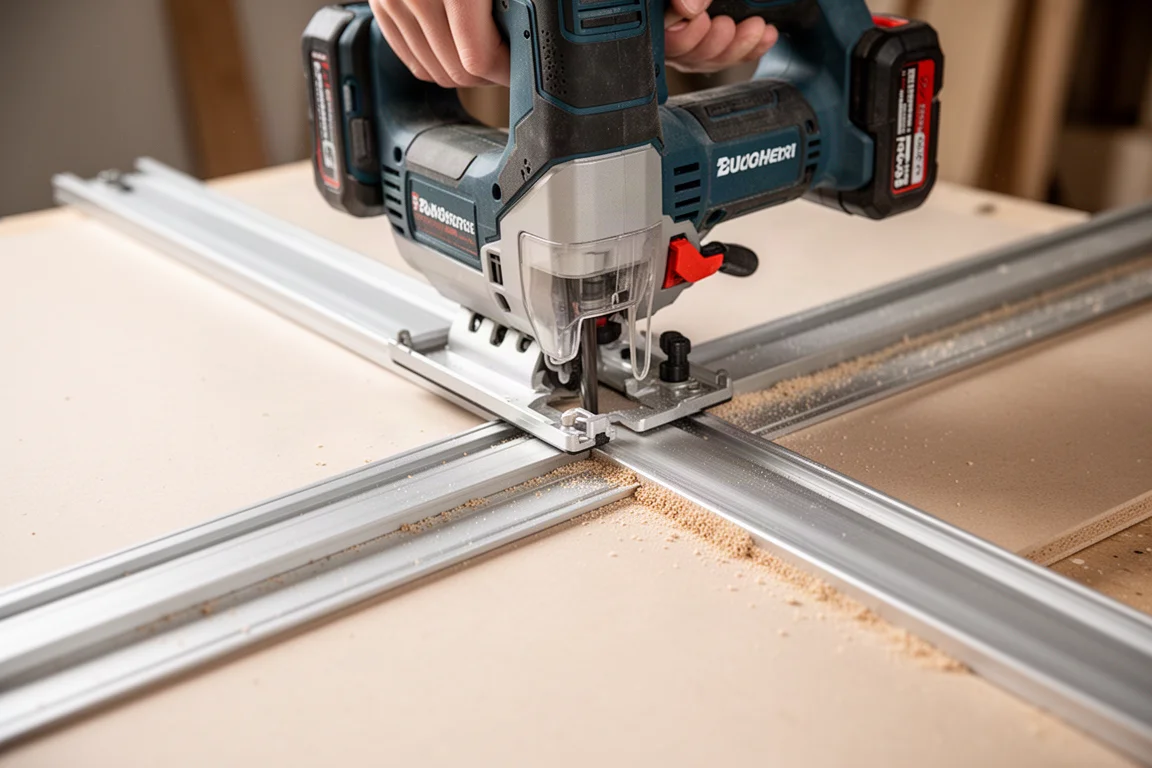
Blade changes use a simple spindle lock, which is a refreshingly foolproof system compared with more convoluted designs. The saw can also plunge and lock at the bottom of its range to give access to the adjustable riving knife, something the Metabo does not offer. Onboard tool storage is exceptionally tight, right next to your hand, so the included hex key is very unlikely to wander off.
Metabo KT18 LTX 66 BL: Power and Features
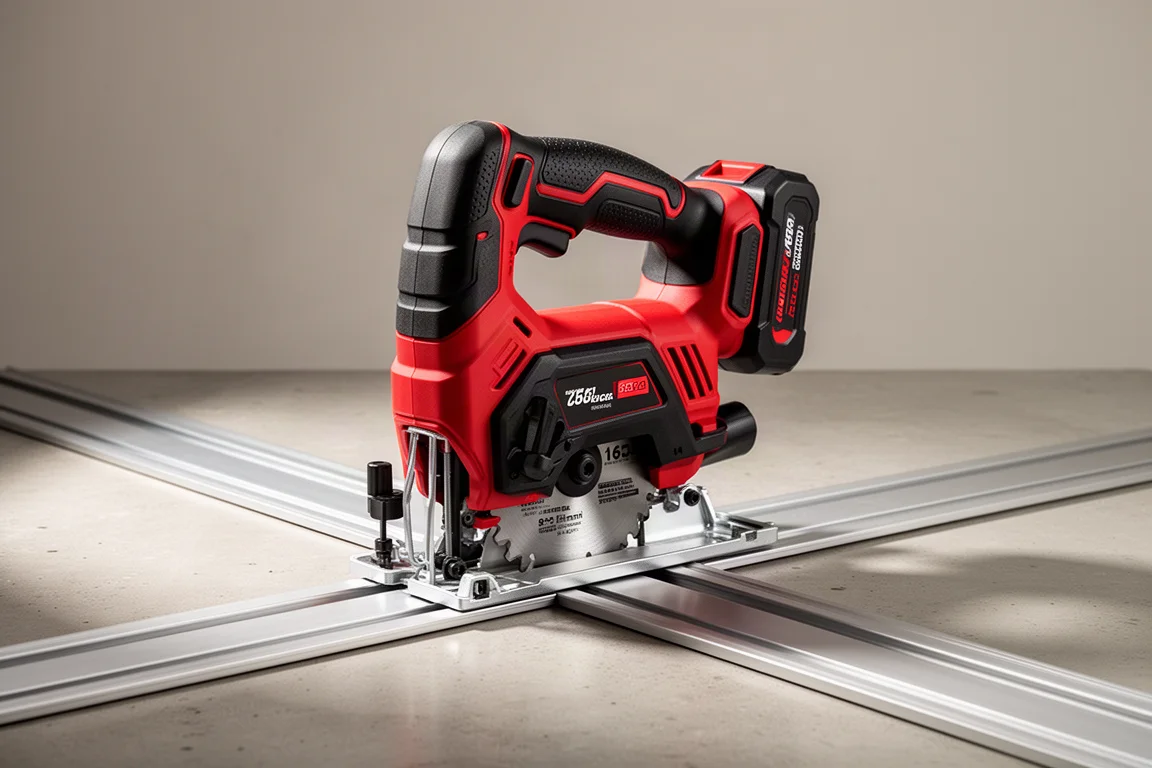
The Metabo KT18 LTX 66 BL counters with a deeper 66mm maximum plunge depth, just over two and a half inches. Blade changes involve raising the depth setting into the marked area, turning a dial, plunging the saw until it clicks, and locking it in place. It works, but the mechanism has many moving parts and did not feel especially strong, making it the weakest point of this saw.
Speed is variable from 1 through 12, ranging from 2,250 rpm to 5,000 rpm. The bevel system allows 46-plus degrees with a button override past the 45 degree stop, and pushing the front knob drops the saw to minus 1 degree and pops back to zero. The dust port locks in multiple positions and can be fully removed, and the saw has levers front and back for fitting a rip fence, though the required thumb screws are not included.
Track Compatibility and Base Design
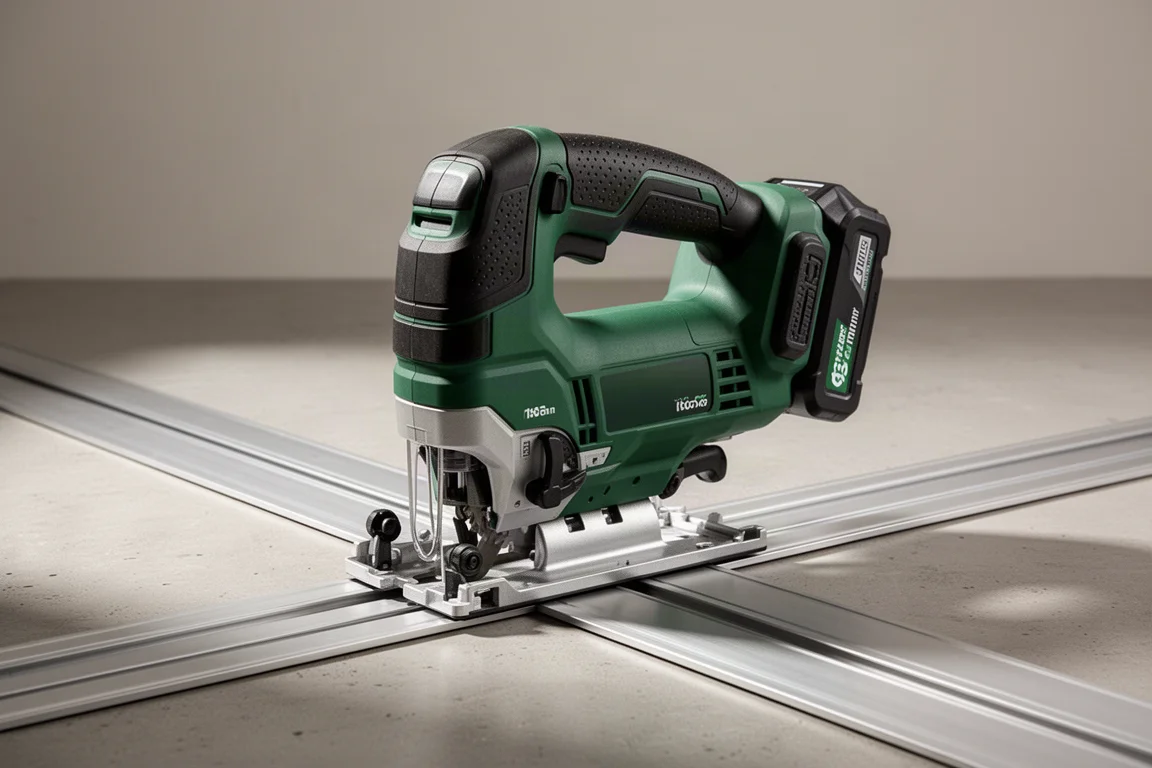
Track flexibility is a genuine strength of the Milwaukee. Its base runs on Metabo, Makita, and Festool rails, though switching between brands may mean re-trimming the splinter guard, since the distance from groove to blade differs slightly between saws. The Metabo base goes further: its extra groove supports the narrower Bosch and Mafell track design in addition to the common Makita, Festool, Hikoki, and Hilti profile.
The Metabo also wins on base adjustments. Its single front knob controls anti-play for both outer and inner grooves with a satisfying click, a better system than the Milwaukee’s. However, the Metabo has no anti-tilt feature at all: at 45 degrees the saw will not sit properly on a rail without clamping, and on the Milwaukee track it simply will not slide when tightened. The Milwaukee’s pop-out anti-tip dial works, though it catches slightly on Makita rails and has nothing to grip on Festool rails.
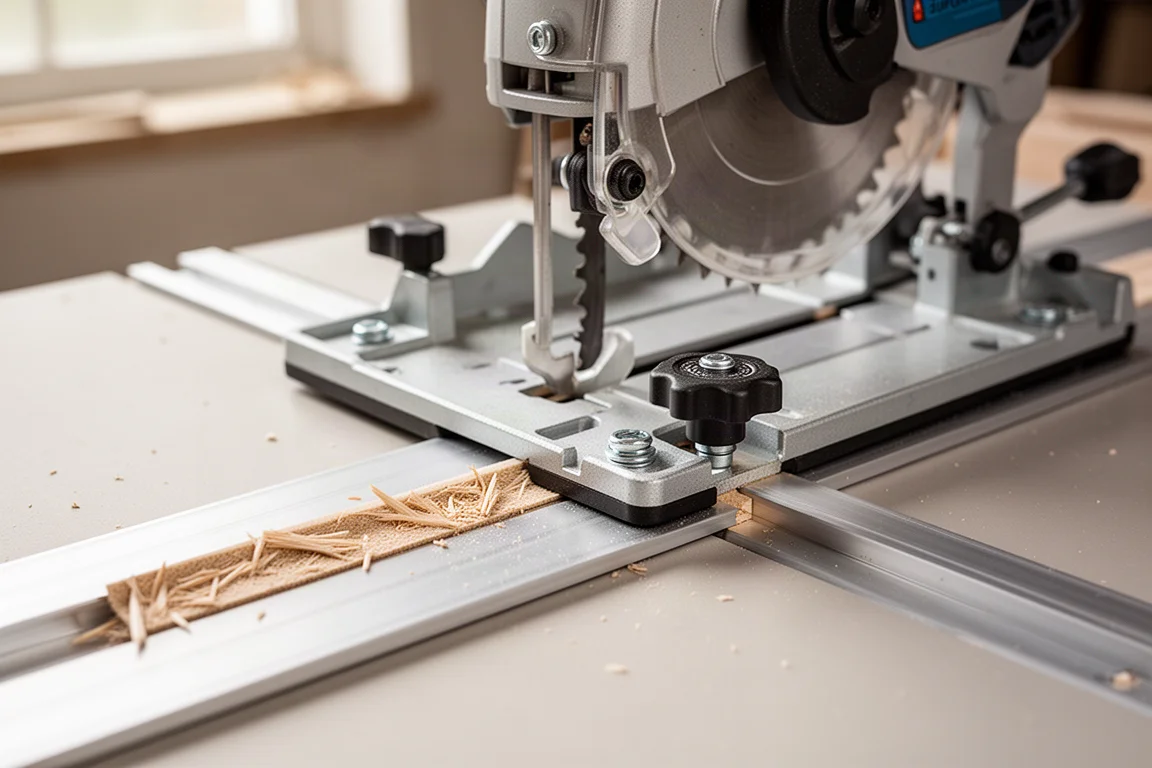
On track lengths, the 1,600mm Metabo rail offers more overhang than the 1.4m Milwaukee and Makita rails, and Metabo’s cam-screw connectors feel more solid than flipping the track over as with the other brands. Be aware that some Metabo connector sets do not fit newer track profiles.
Bevel Cuts and Depth of Cut
Cutting full 45 degree bevels with a plunge saw rewards careful clamping, and both saws benefit from holding the base down against the rail, especially one-handed. At 45 degrees the top handles stop working well, so downward pressure has to come through the base itself.
Depth figures tell a clear story. At 90 degrees the Metabo reaches 66mm against the Milwaukee’s 59mm. At 45 degrees the Metabo manages 43mm, a couple of millimetres short of framing timber, while the Milwaukee manages roughly 36mm. Neither is a framing tool, but the Metabo’s extra depth is real. Weighing them without batteries, the Milwaukee comes in at 4.14kg against the Metabo’s 4.345kg, a noticeable 200 grams lighter in the hand.
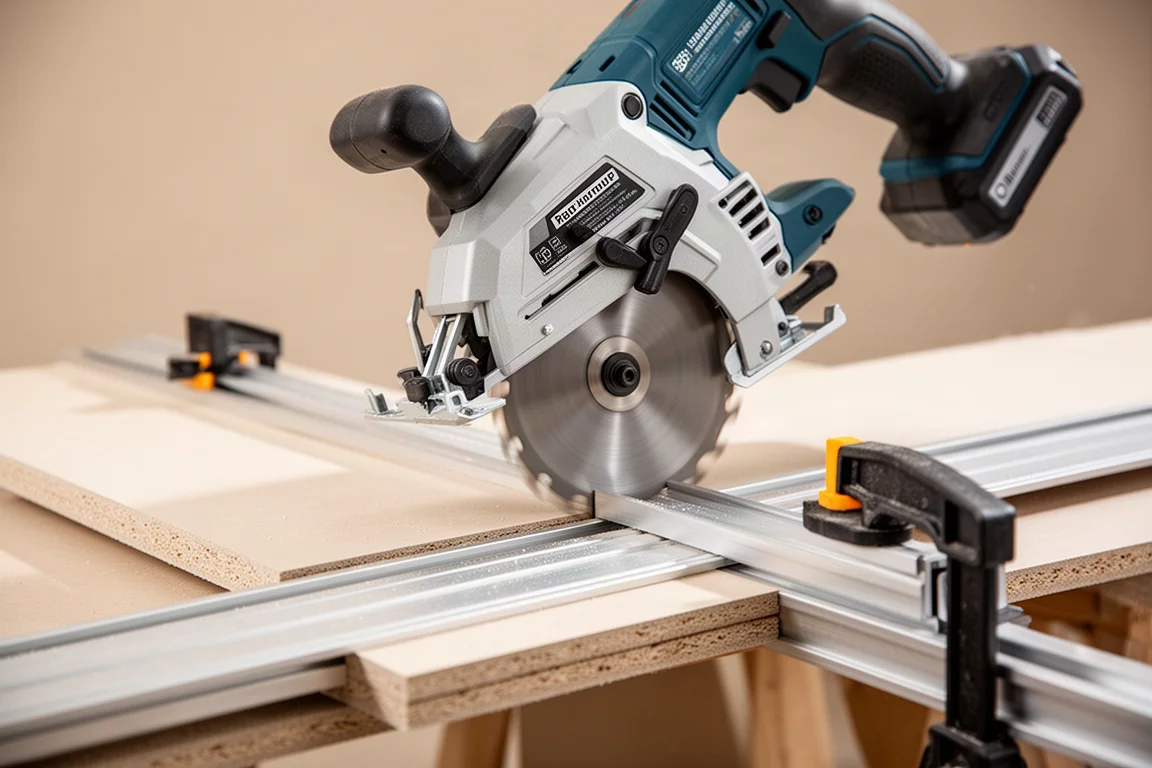
Cut quality on easily chipped melamine-coated board was good from both saws with Milwaukee blades, though the roughest edges came from the Metabo’s factory blade, which felt clearly inferior. Dry treated pine framing cut with a 24 tooth blade came up beautifully smooth on both, thanks to the rail keeping the cut dead straight.
Dust Extraction and Everyday Handling
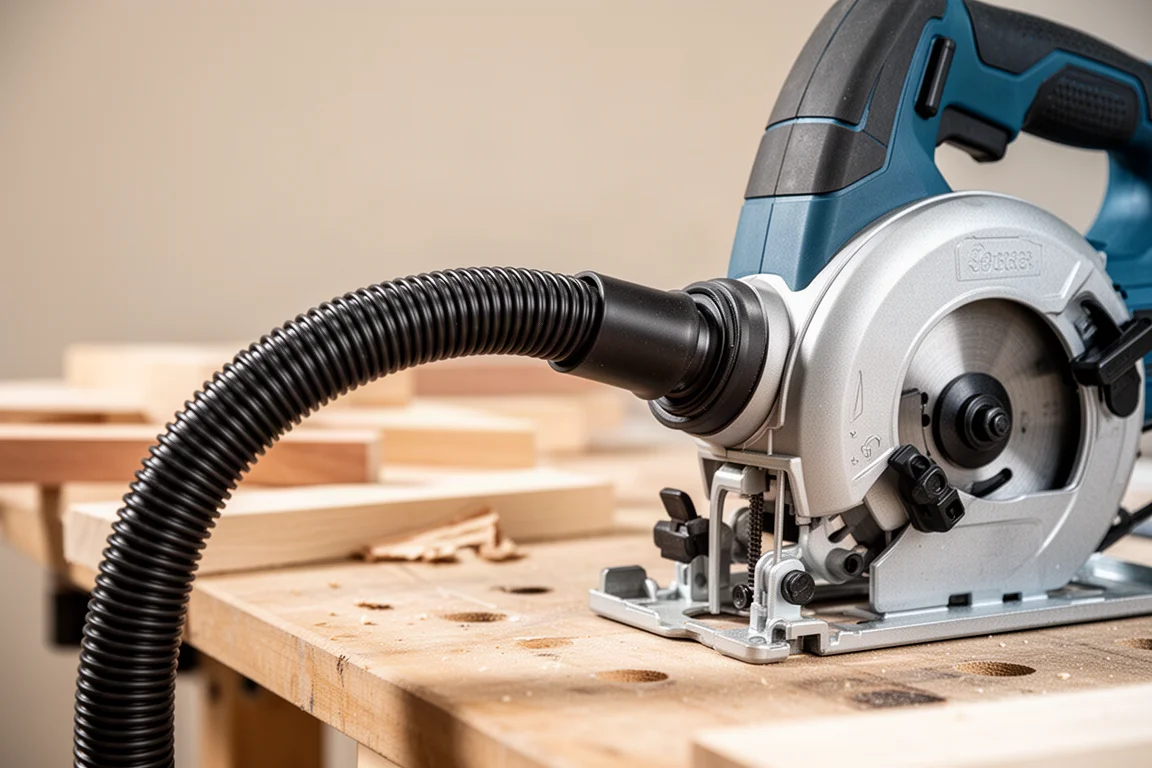
Neither saw’s supplied dust bag is worth bothering with; both fill up too fast. Hooked to a vacuum, the Metabo’s port accepts standard extractor fittings directly, while the Milwaukee’s port has an odd size that resisted every fitting on hand, needing duct tape or a dedicated adapter. With everything set up properly, the Milwaukee extracted dust slightly better; without splinter guards fitted, the Metabo threw out noticeably more debris.
Handling is where the personalities diverge. The Metabo’s main handle is far more comfortable, with a better plunge release you can push up with your whole thumb and a nicely shaped grip. Its front handle, however, is a letdown: held on by a single screw, it wobbles, comes loose easily, and its slippery tapered plastic combined with front-heavy balance makes the saw feel like it will slide out of your hand. The Milwaukee’s overmoulded front handle is far grippier, but its plunge release is a squared button with a sharp plastic edge, and its plunge spring is very strong, perhaps too strong.
Battery placement is a compromise on both. With a large 12Ah pack on the Milwaukee, the front handle becomes almost unusable; even a 6Ah High Output sticks up awkwardly. The Metabo’s vent sits on top of the body, exposing the internals to dust, and it lacks the Milwaukee’s scoring function and 22.5 degree detent.
Buying Advice
If you can keep only one, the Milwaukee is the easier tool to recommend overall. It feels quicker and more powerful, its blade-change system is simpler and more foolproof, it has the scoring function, the 22.5 degree detent, a riving knife, better splinter-guard provisions, and the most secure onboard tool storage you will find. Its dust port and battery placement are the main frustrations.
Choose the Metabo if deeper plunge capacity matters most: 66mm versus 59mm, and 43mm versus 36mm at 45 degrees. Its base design is more versatile across track brands, its dust port accepts standard fittings, and its main handle and plunge action feel better. Just budget for a better aftermarket blade and accept the fussy blade-change mechanism and the lack of an anti-tilt stop.
Conclusion
Both of these 18V plunge saws cut well, have plenty of power, and are capable of genuinely fine work on sheet goods. The Milwaukee edges ahead on power feel, feature design, and everyday convenience, while the Metabo leads on plunge depth and base versatility. Match the trade-offs to your own work and either one will earn its place in the workshop.
Further reading
Related Reviews
Power Tools
Best 1-Inch Pistol Impact Wrenches: Three Heavy-Duty Options Compared
We compare three 1-inch pistol impact wrenches, from a budget-friendly Harbor Freight model to a premium Caterpillar unit, to help you choose the right one.
Power Tools
Best 3/4-Inch Impact Wrenches 2026: Five Contenders Compared
We compare five 3/4-inch impact wrenches across price and performance, from a budget Amazon option to Snap-on's most powerful model yet.
Power Tools
Best Budget Cordless Tools 2026: Walmart Finds That Punch Above Their Price
We tested five cordless tools from Walmart, including a high-torque impact wrench that trades blows with Milwaukee and a $35 duster that outperforms its price class.