Power Tools
Milwaukee M18 FHIWF1R Railway Impact Wrench Review: A 1-Inch Drive Oddball That Delivers
Milwaukee's unusual pogo-stick shaped 1-inch drive impact wrench is rated for 2,000 Nm and packs railroad-specific modes with impressively consistent auto shut-off torque.
Introduction
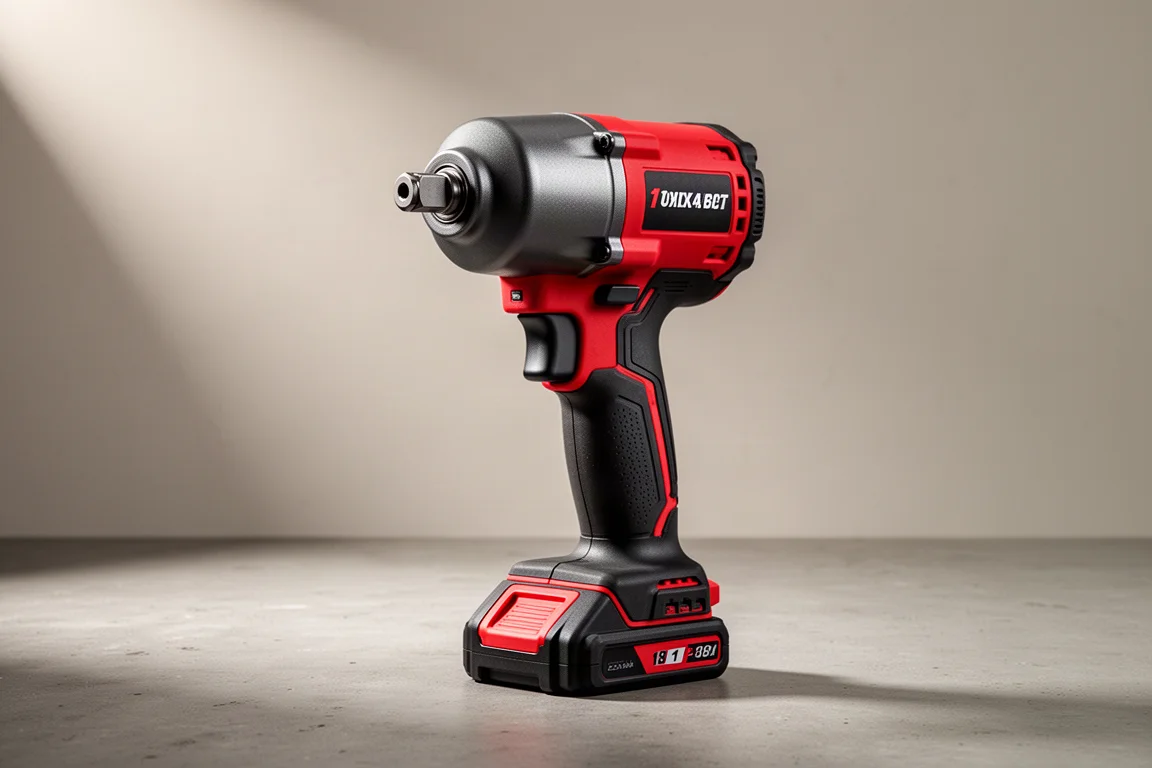
Few cordless tools generate curiosity the way the Milwaukee M18 FHIWF1R railway impact wrench does. It is a 1-inch drive impact wrench shaped like a pogo stick, sold primarily to railroad construction outfits, and it carries a model number most people have never seen. Priced at roughly 1,100 pounds sterling in its home markets, it is a niche commercial tool that still manages to be genuinely interesting to anyone who works with big fasteners.
The headline specs do not look dramatic on paper: a 2,000 Nm (1,475 ft-lb) rating and a weight of 13.75 lb bare, or around 16 lb with a battery. What makes it compelling is the context. Traditional gas-powered railway impact wrenches commonly used for this work weigh around 44 lb, nearly three times as much, and are far less ergonomic. Even Milwaukee’s own current 1-inch two-handed cordless model comes in at roughly 23 to 24 pounds with the same battery platform. In that light, a 16-pound cordless option starts to make a lot of sense.
Who This Tool Is For
This is not a tool built to impress dyno charts. It is built for crews driving and removing large rail fasteners all day, where weight and body strain matter more than a few hundred extra foot-pounds. The tall, pogo-stick form factor exists precisely so workers do not have to bend over for an entire shift, and the 1-inch drive anvil accepts the sockets used for railroad tie nuts.
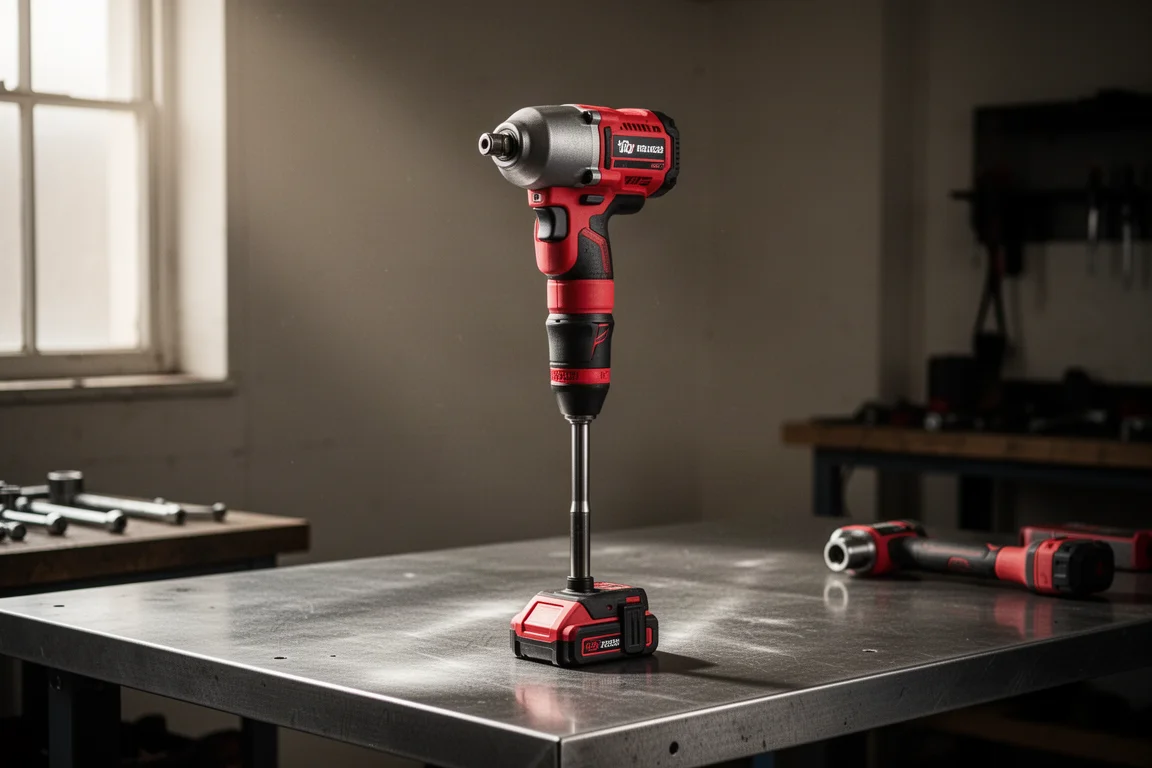
It also doubles as an unforgettable conversation piece. Walking up to a set of lug nuts with a battery-powered tool that looks like nothing else on the market is a flex, and it would not look out of place mounted above a workbench as a talking point. But the real audience is commercial rail work, where the design choices reward sustained, repeated use rather than occasional shop bravado.
Main Strengths
Modes and the Standout Auto Shut-Off Feature
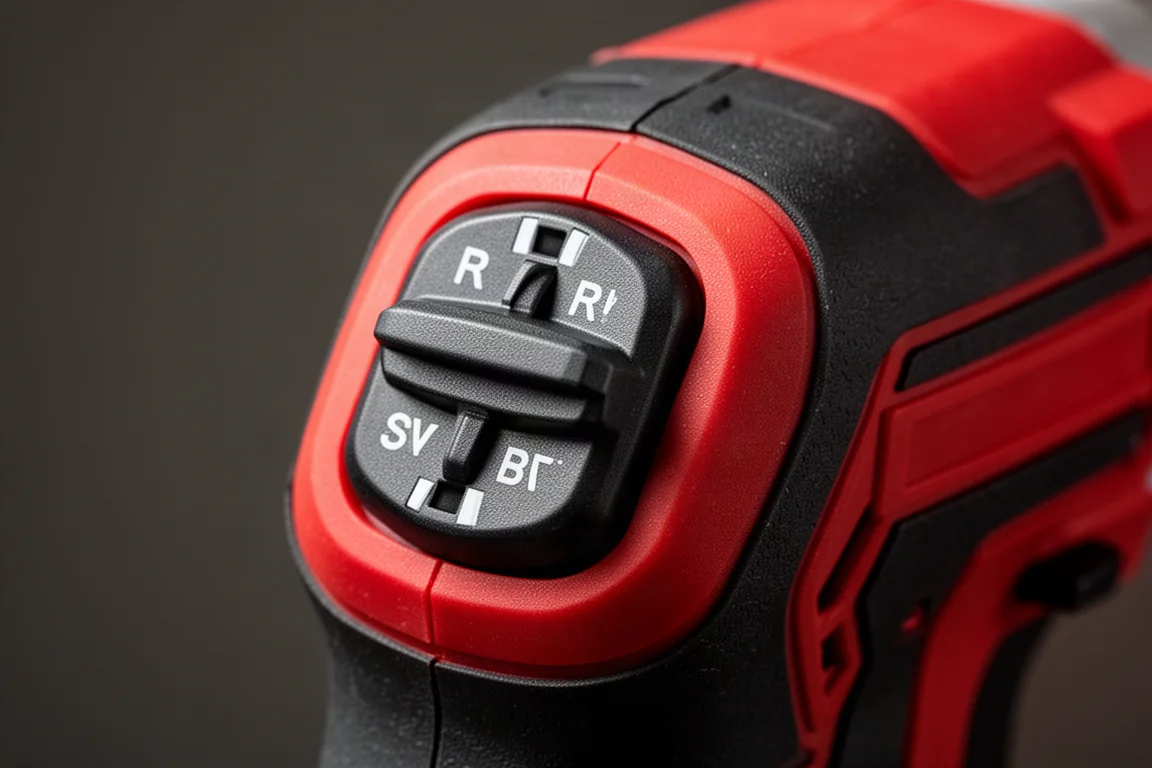
The mode system is where this tool earns serious respect. Mode one delivers around 175 ft-lbs within five seconds and tapers off from there. Mode two jumps to roughly 506 ft-lbs. But the most interesting setting is marked not with a number but with a picture of a nut in a circle: a mode designed specifically not to overtighten railroad tie nuts.
In testing, that auto shut-off cut power completely with the trigger still held down, consistently landing between 368 and 385 ft-lbs across repeated pulls. The observed variance was about 2.5 percent, which is within the wheelhouse of torque wrench levels of accuracy. That is the best consistency measured from an impact wrench outside of Milwaukee’s own Controlled Torque wrench, a 1,300-dollar tool that uses sensors, monitoring, and machine learning. The railway wrench appears to use a sensor stack monitoring hammer movement, similar in concept to that Controlled Torque design, rather than simply counting impacts or throttling motor current the way most impact wrenches with similar settings do.
Manageable Weight Compared to the Alternatives
At 13.75 lb bare, it is heavy by general impact wrench standards, but the comparison that matters is against what it replaces. The gas railway wrenches this category relies on weigh about 44 lb and lose steam under sustained load, laying over as bolt load increases. Against those, the M18 is a dramatic ergonomic upgrade, and even next to Milwaukee’s own 24-pound 1-inch two-hander it occupies a genuinely useful middle ground.
Things to Consider Before Buying
Real-World Torque Performance
In a standard 10-second reverse max torque test, the M18 railway wrench produced 810 ft-lbs, beating Milwaukee’s 1-inch pistol impact in reverse, though that pistol model clearly dislikes reverse. The gas railway wrench reached 2,000 ft-lbs in the same test but only in short bursts, falling off under extended load.
In a 15-second best-case test, the tool managed 898 ft-lbs with the 12 Ah Forge battery. Interestingly, battery size barely moved the needle: the 8 Ah Forge headed toward 922 ft-lbs, and the 6 Ah Forge delivered nearly identical numbers, within about 10 ft-lbs of the larger pack. That kind of flat performance across battery sizes usually signals a motor and hammer with an unusual power-to-size relationship, and it means buyers do not need to over-invest in the biggest pack to get full performance.

It also makes more power than Milwaukee’s current 1/2-inch High Torque, which is a good sign for a tool of this size. Still, if raw peak torque is the priority, the forward-direction output of the gas alternative, which hit a thousand, and the stronger figures from other 1-inch cordless pistols remain higher. This tool is detuned by design, built to work all day rather than win short contests.
Internal Build and Modding Potential
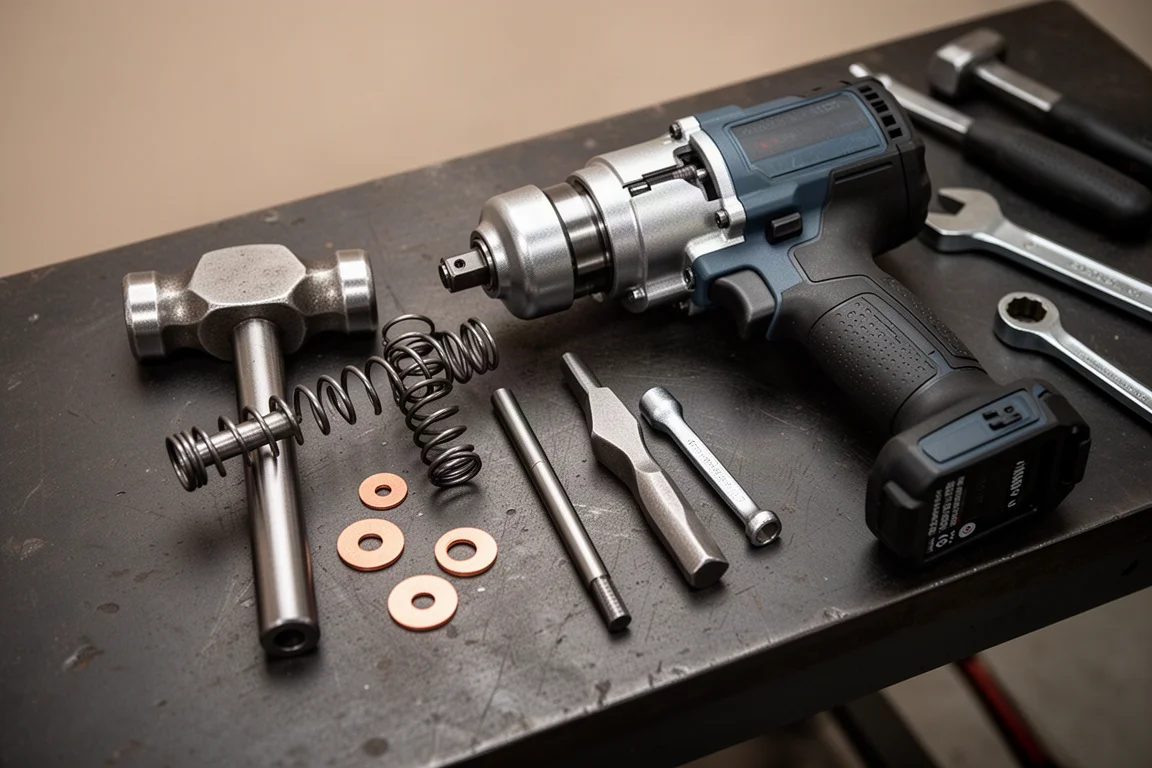
Teardown reveals an unusual internal layout but all the familiar components of a modern cordless impact. The hammer is marked P140 in handwriting and, while it looks smaller than the hammer in the 1-inch pistol, it weighs about the same at just over 3 lb; it is simply a thicker, denser package. Thicker steel separates the internal parts, and the generous tool length gives designers room to beef things up.
Enthusiasts with the right skills can even wake up some extra performance: shimming the hammer spring, using copper strip hammered over to hold the shims in place, raised output from 922 to 957 ft-lbs with the same battery. It is a fiddly process not for the faint of heart, but it confirms the tool runs a conservative, all-day-duty tune rather than a maxed-out one.
Buying Advice
If you work in rail construction or maintenance and are tired of hauling a 44 lb gas unit around, this is arguably the most sensible modern alternative available. The auto shut-off tie-nut mode alone justifies a look, given how rare that level of repeatability is in any impact wrench. If you are a general-duty user chasing the highest possible nut-busting numbers, a conventional 1-inch pistol or two-handed cordless impact will serve you better and cost less to source, since this model is primarily sold in European markets and is not widely stocked elsewhere.
Buy it for the weight savings, the ergonomics, and the consistency. Do not buy it expecting dyno-topping numbers.
Conclusion
The Milwaukee M18 FHIWF1R railway impact wrench is a purpose-built oddball that turns out to be one of the more thoughtfully engineered tools in its class. Its torque output will not top any charts, but its 2.5 percent auto shut-off variance, featherweight design relative to gas rivals, and battery-agnostic performance make it a genuinely practical upgrade for the people it was built for. For everyone else, it remains one of the coolest-looking tools ever to hang on a wall.
Product link
View more details for Milwaukee M18 FHIWF1R Railway Impact Wrench
This product is mentioned in the review. Check the specifications, options, and compatibility before buying.
View more details for Milwaukee M18 FHIWF1R Railway Impact WrenchFurther reading
Related Reviews

Power Tools
Best 1-Inch Pistol Impact Wrenches: Three Heavy-Duty Options Compared
We compare three 1-inch pistol impact wrenches, from a budget-friendly Harbor Freight model to a premium Caterpillar unit, to help you choose the right one.

Power Tools
Best 3/4-Inch Impact Wrenches 2026: Five Contenders Compared
We compare five 3/4-inch impact wrenches across price and performance, from a budget Amazon option to Snap-on's most powerful model yet.

Power Tools
Best Budget Cordless Tools 2026: Walmart Finds That Punch Above Their Price
We tested five cordless tools from Walmart, including a high-torque impact wrench that trades blows with Milwaukee and a $35 duster that outperforms its price class.