Power Tools
Milwaukee M18 Carry-On Fuel Power Supply Review: Battery Power for the Job Site
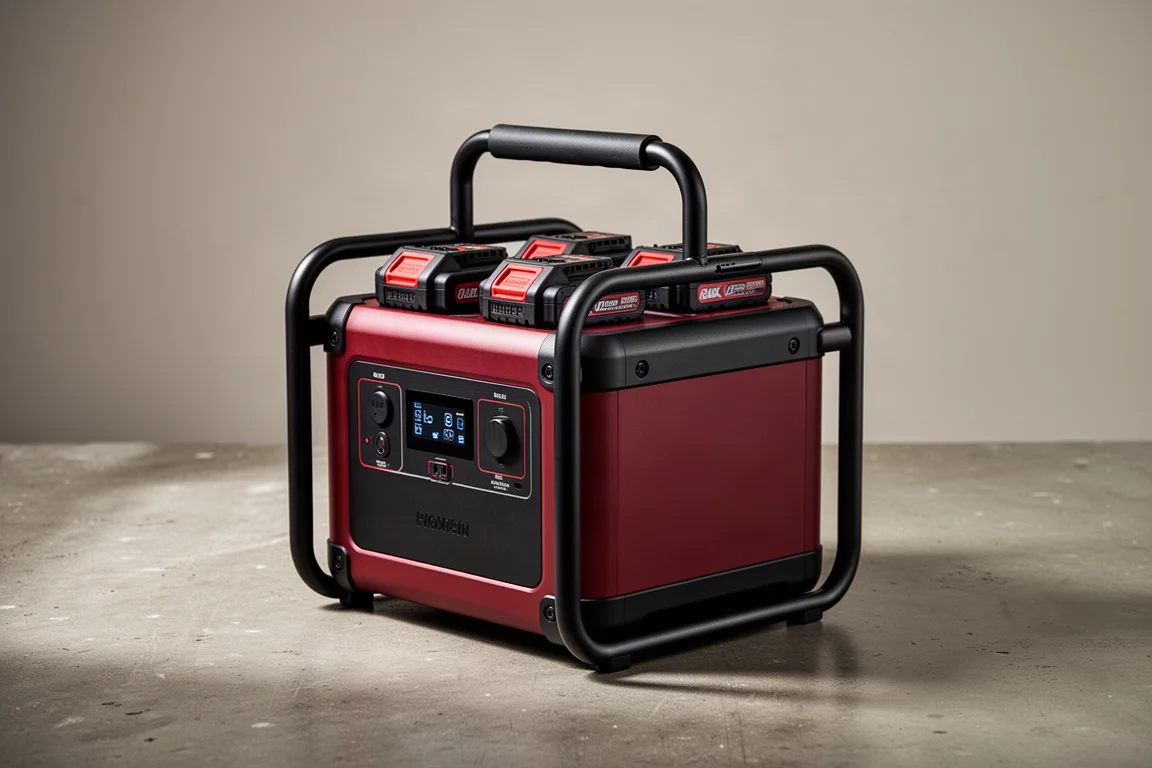
A portable power supply built around four M18 batteries, delivering 1,800 running watts of pure sine wave output for corded tools and sensitive electronics.
Introduction
Portable power is nothing new on construction sites, but running corded tools from batteries is a different kind of challenge. Milwaukee first answered that challenge with the MX Fuel Carry-On Power Supply, and now the company is bringing the concept to its massively popular 18-volt system with the M18 Carry-On Fuel Power Supply.
This unit is not a recreational battery inverter, and understanding that distinction is the key to knowing whether it belongs in your setup. Here is what it is, what it does well, and who it is really for.
How It Works: Four Batteries, One System
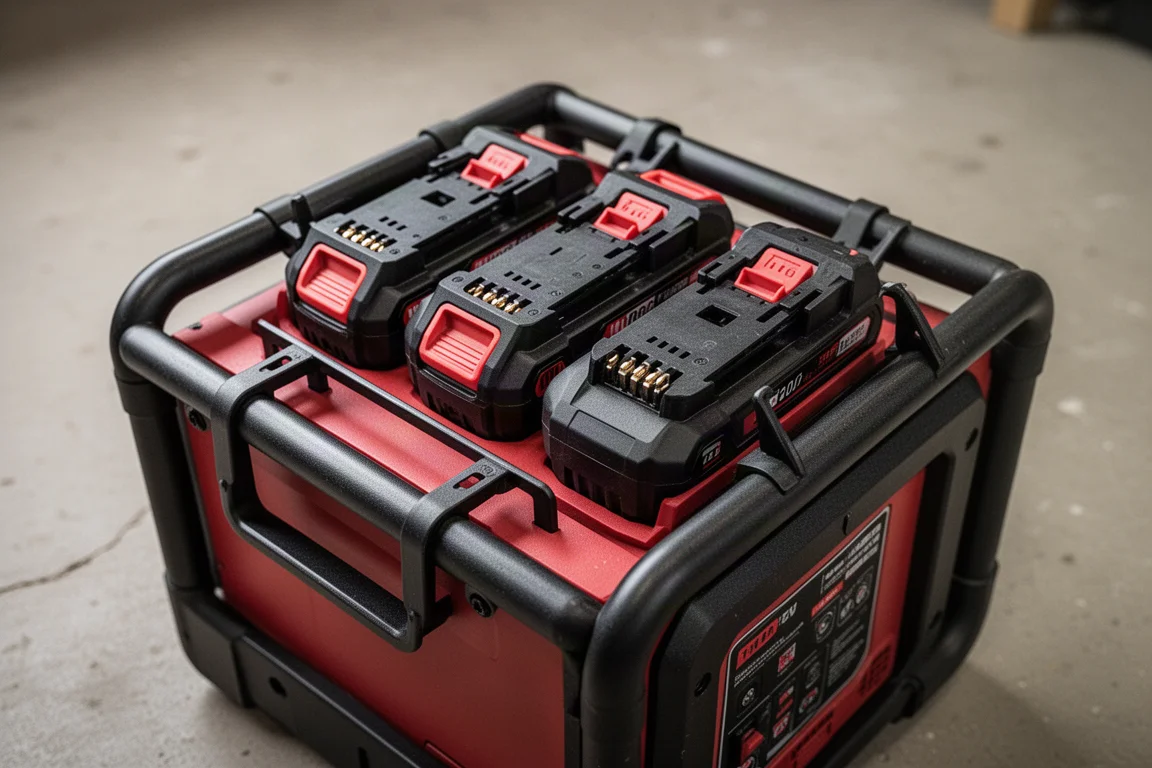
The first thing you need to know is that this unit has to run with four M18 batteries installed. That differs from other portable power units that simply step down their wattage when fewer batteries are attached, and it makes sense once you think it through. If you try to run something like a two-inch rotary hammer from a single 18-volt pack, that battery has to work extremely hard to keep up. With four packs sharing the load, each battery works less and you get far more relevant run time for higher-draw tools.
To get the best performance, start with four fully charged batteries of the same amp hour capacity. If you mix three 12 amp hour packs with one 2 amp hour pack, the whole unit shuts down when the smallest pack is drained. Matched, fully charged batteries are non-negotiable.
When capacity runs low, the unit emits a beep loud enough to be heard across a job site. If you are using it overnight to power a refrigerator after a hurricane, it will wake you up. While running, it sits at a constant 66 decibels, so it is quiet enough on its own.
Power Output and Outlets
The M18 Carry-On delivers 1,800 running watts. Do the math and that works out to 15 amps at 120 volts, meaning it can run all of your 15-amp tools. It also has a 3,600-watt startup capacity, so the surge from things like table saws or refrigerators will not trip it up.
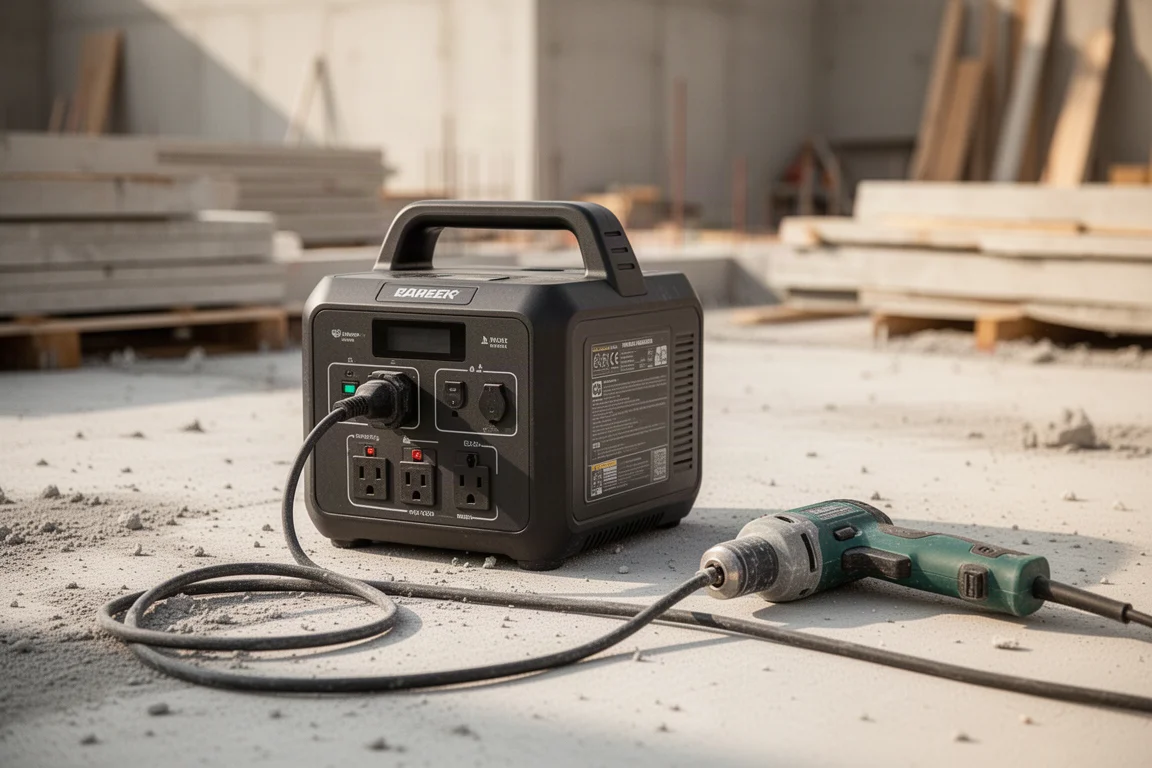
On the front you get a pair of 120-volt outlets, a charging port, and two USB ports: one USB-A and one USB-C. The output is pure sine wave, so it is perfectly capable of running sensitive electronics such as tablets, laptops, and even CPAP machines.
Charging All Four Batteries at Once
Charging is refreshingly simple: a standard extension cord is all you need. The unit charges all four batteries simultaneously at a 3-amp-per-battery rate, which is a standard charge rate but applied to all four packs at the same time.
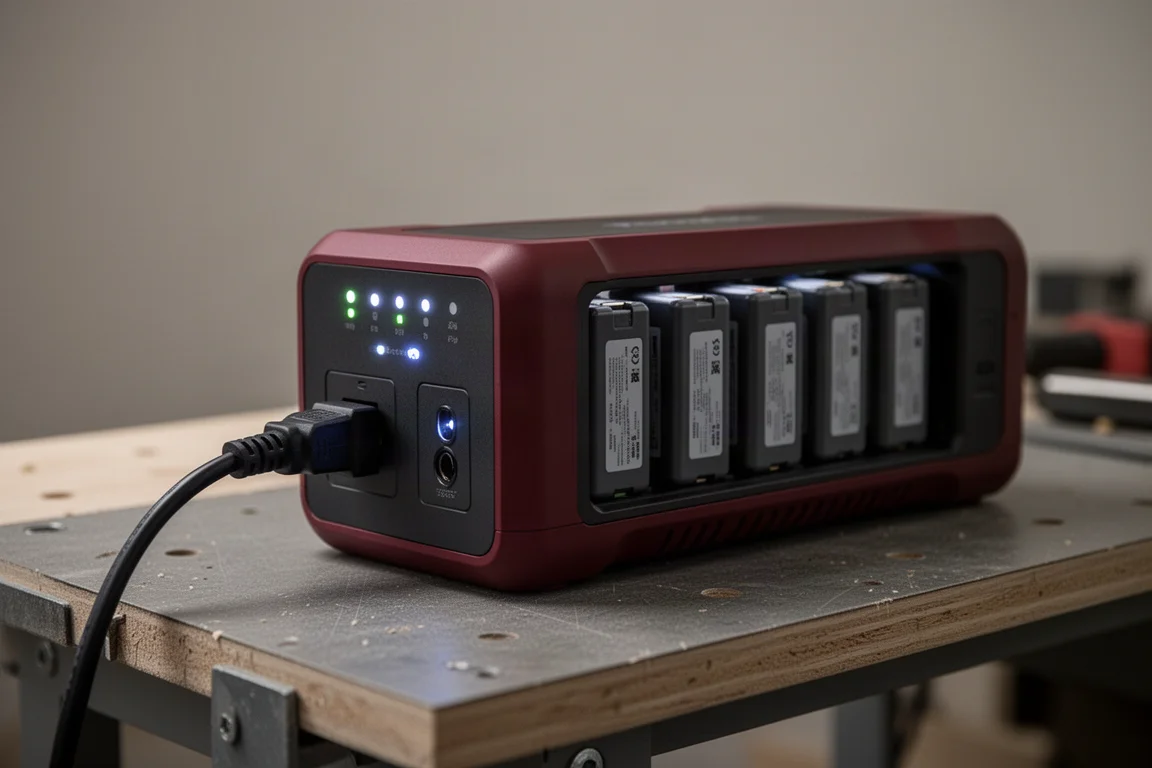
One important limitation: there is no pass-through charging. If you plug in to charge the batteries and then switch the unit on to use the outlets, it protects itself by shutting down the charging cycle.
Portability and Battery Lockout
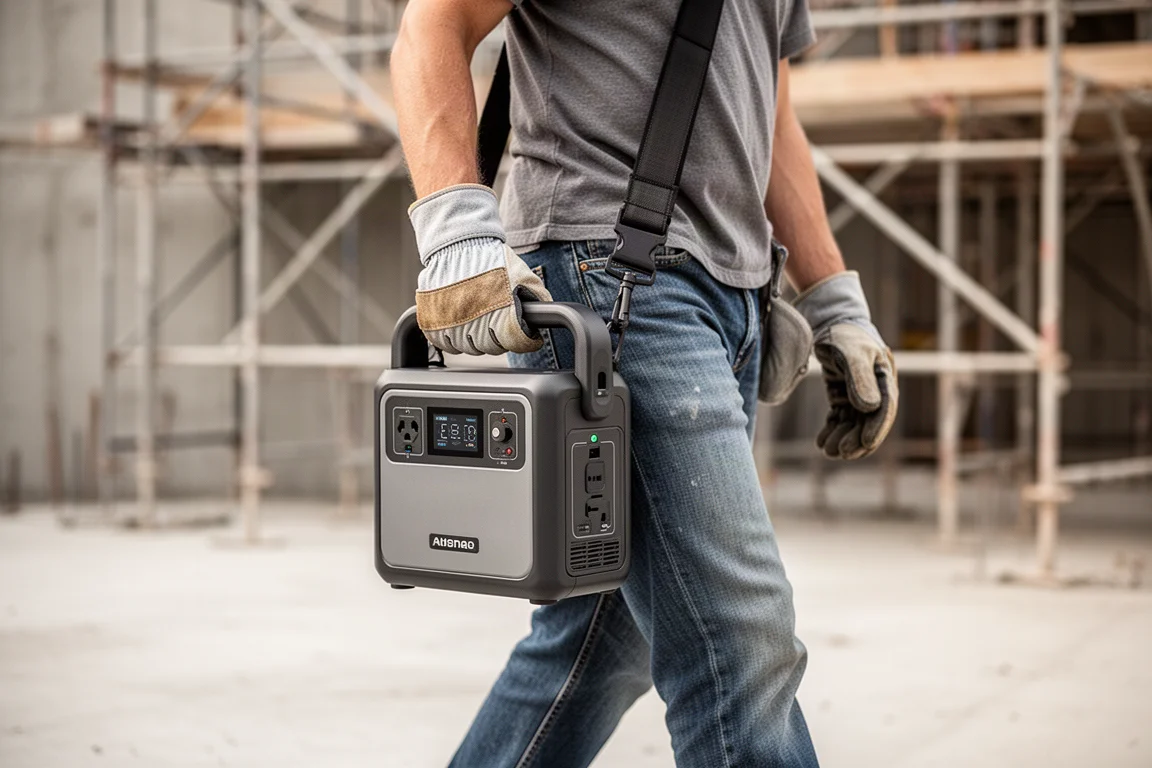
Milwaukee built in an optional battery lockout. Twist to unlock the handle, the bars spread out, and you can slip a padlock through a hole so the bars hold the batteries in place. Even unclipped, the packs cannot slide out. It is a simple but useful feature if you want to make sure your batteries do not walk off the site.
With four 12 amp hour batteries installed, the unit weighs 41.7 pounds. An optional shoulder strap is worth adding; the boxy design makes it a little awkward on the shoulder, but it works well enough carried against your hip. The top handle lets you one-arm it if you are feeling strong.
What It Is Not
A friend who also owns one felt Milwaukee punted on the design, wanting an LCD screen showing discharge and charge rates, solar compatibility, and more outlets. Essentially, he wanted a recreational battery inverter. That is not what Milwaukee designed this to be. It has a roll cage design, the power outlets needed to run corded tools or charge batteries, and just enough tech support for what you bring on site. Milwaukee did a fine job of designing this exactly for construction site work, nothing more and nothing less.
Pricing and Warranty
There are several configuration options. The bare tool runs $699. A kit with four 5 amp hour batteries runs $1,122, a good fit for charging other batteries or running lower-demand items. The kit with four 12 amp hour batteries and the shoulder strap runs $1,799, and that is the way to go if you plan to run power-hungry tools. The unit carries a three-year warranty, so register it to take advantage of that coverage.
Conclusion
The primary purpose of the M18 Carry-On Fuel Power Supply is to provide portable power in areas where you cannot take a gas generator, and for that job it does really well. If you work around sites where noise, fumes, or access rules rule out combustion power, this is a tool built precisely for you. Matched batteries, realistic expectations about its role, and the right kit choice will make it a genuinely useful addition to the M18 ecosystem.
Product link
View more details for Milwaukee M18 Carry-On Power Supply
This product is mentioned in the review. Check the specifications, options, and compatibility before buying.
View more details for Milwaukee M18 Carry-On Power SupplyFurther reading
Related Reviews
Power Tools
Best 1-Inch Pistol Impact Wrenches: Three Heavy-Duty Options Compared
We compare three 1-inch pistol impact wrenches, from a budget-friendly Harbor Freight model to a premium Caterpillar unit, to help you choose the right one.
Power Tools
Best 3/4-Inch Impact Wrenches 2026: Five Contenders Compared
We compare five 3/4-inch impact wrenches across price and performance, from a budget Amazon option to Snap-on's most powerful model yet.
Power Tools
Best Budget Cordless Tools 2026: Walmart Finds That Punch Above Their Price
We tested five cordless tools from Walmart, including a high-torque impact wrench that trades blows with Milwaukee and a $35 duster that outperforms its price class.