Power Tools
Best Milwaukee M18 Battery for Your Drill: Voltage Drop Test Results
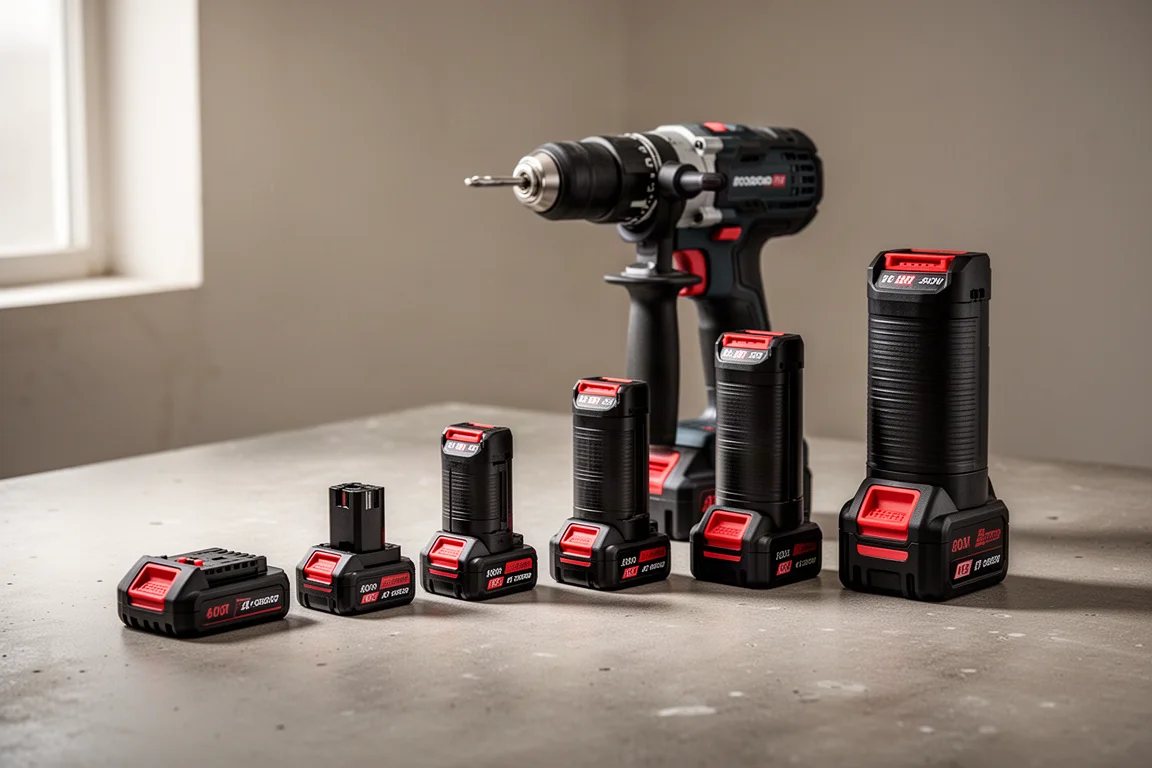
Seven Milwaukee M18 batteries, one 2804 hammer drill, and a voltage drop test that shows which pack actually makes sense for your work.
Introduction
Battery choice changes how a cordless drill feels more than most people expect. To find out exactly how much, seven Milwaukee M18 batteries ranging from 1.5Ah up to 12Ah were run through the same drill, the same bits, and the same wood, with voltage monitored throughout.
The result is a clear picture of where each pack shines, where it struggles, and which one is the right compromise between weight, runtime, and power delivery for the work you actually do.
The Test Setup
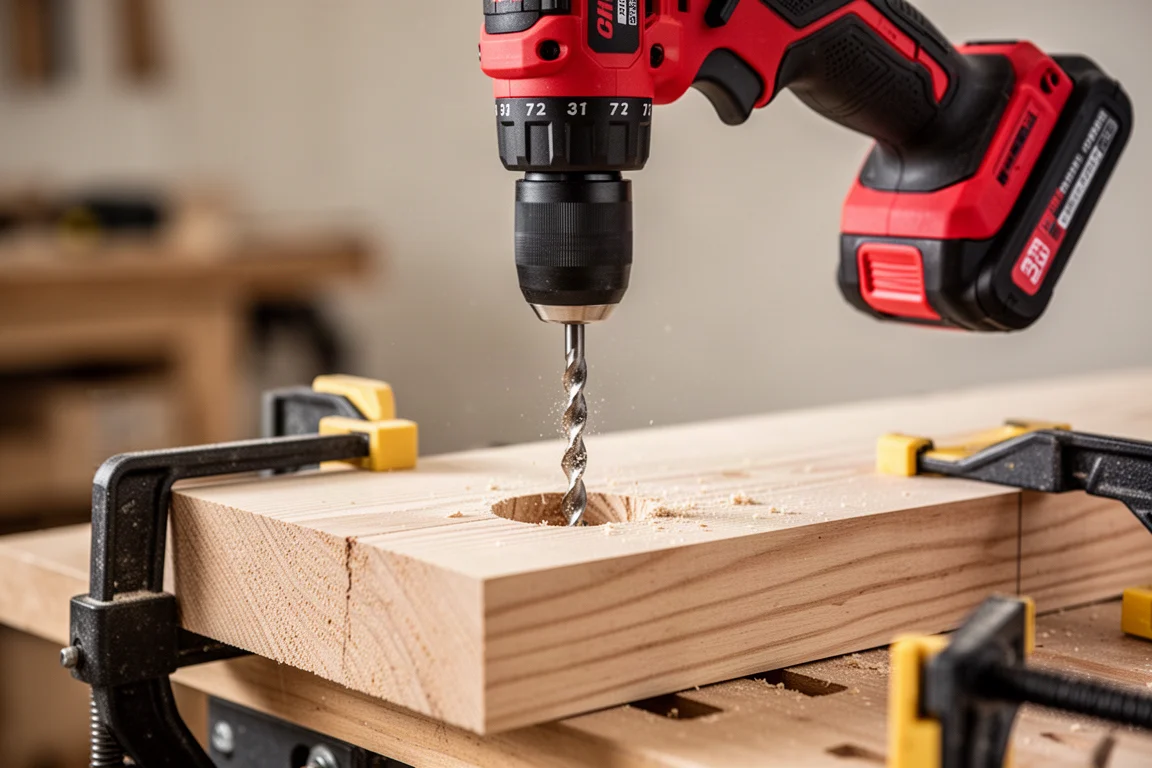
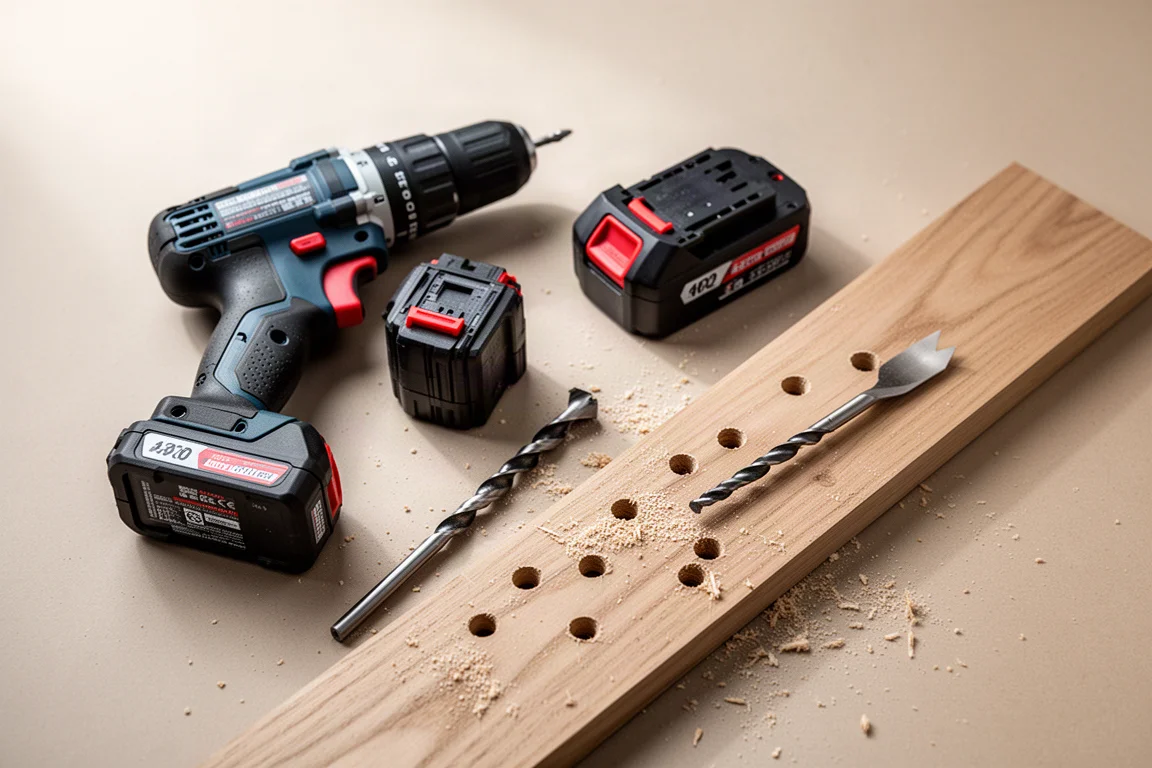
The platform was the Milwaukee 2804 hammer drill. Two tests were used for every battery: a large 3-5/8 inch bore bit drilled on low speed, watching where voltage dipped and where it recovered, and a 1 inch spade bit on high speed, drilling multiple holes while tracking the same behavior.
The idea is simple: pick a battery based on the compromise between pack size and the amount of voltage drop, or power drop, you see. That way you can choose exactly what battery suits your situation.
The Smallest Packs: 1.5Ah and 2.0Ah
Neither the 1.5Ah nor the 2.0Ah pack made it through the 3-5/8 inch bore bit test. Both cut out at roughly 11.5 volts. With the 1 inch spade bit, the 1.5Ah battery held 10.4 volts and the 2.0Ah held 14.01 volts, which was a more usable showing.
The verdict here is blunt: if you are working with something the size of a 1 inch spade bit or larger, these packs are not worth having. The 2.0Ah is still feasible for light duty work, but for anything demanding it is worth moving up even with the extra weight.
The Small Packs: CP3.0 and XC5.0
The CP3.0 and XC5.0 batteries both use 21700 cells and both started at an identical 20.48 volts on the 3-5/8 inch bit. The XC5.0 dropped lower, to 15.01 volts, while the CP3.0 held up closer, and on the 1 inch spade bit the CP3.0 recovered a little better over time, dipping to 17.2 volts versus the XC5.0 at 17.1 volts.
The difference in drilling speed is probably negligible, but the CP3.0 recovered better under load. Both of these are compact options with noticeably less weight, and the CP3.0 in particular earned praise for punching above its size in the smaller-bit work.
High Output Line: 6.0, 8.0 and 12.0
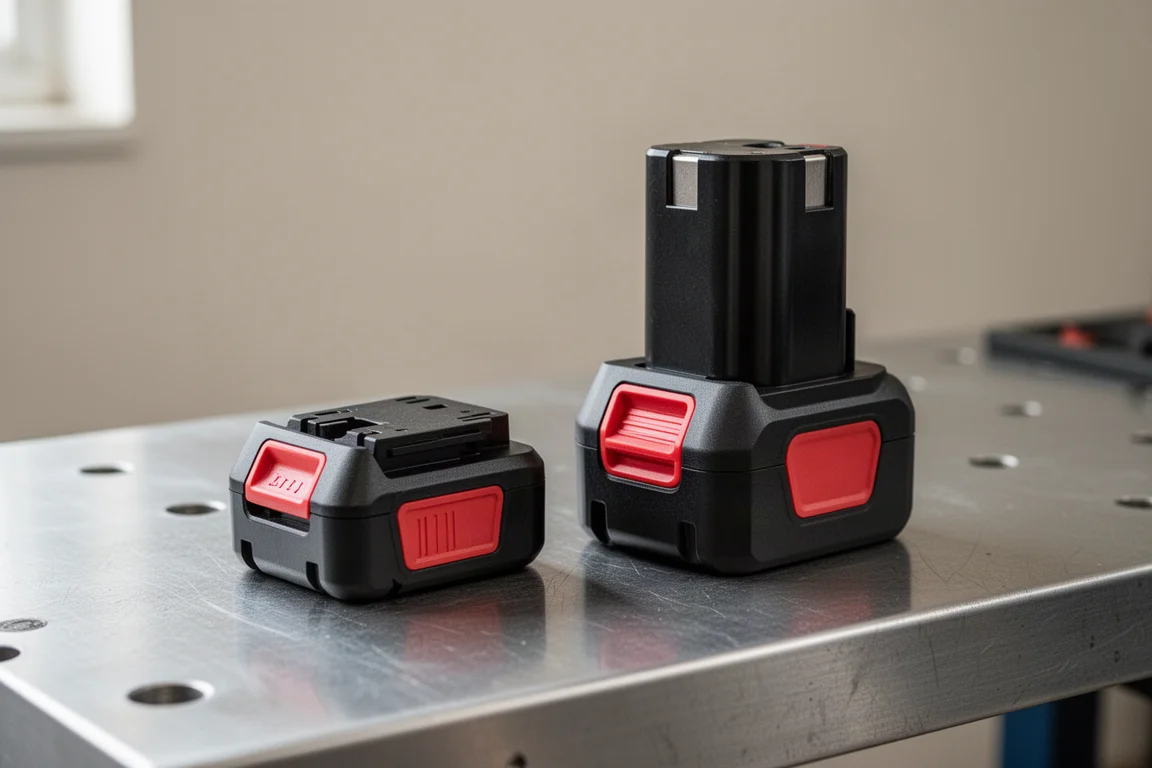
This is where the results got interesting. The High Output 6.0, 8.0 and 12.0 batteries all ended up in the 17-volt range on the big bore bit, and the 12.0 was still in the 19-volt range while driving the 1 inch spade bit.
The numbers are so close across the three that either the 6.0 or the 8.0 is a realistic pick for most people. The 8.0 seemed a little more punchy with the larger bit, while the 6.0 was a little happier with the smaller bit, though whether that comes down to battery cells or simply the wood is hard to say. The 12.0 is a genuinely heavy pack: superb performance, but most people will find the 6.0 or 8.0 the better everyday compromise.
The 9.0 High Demand Battery
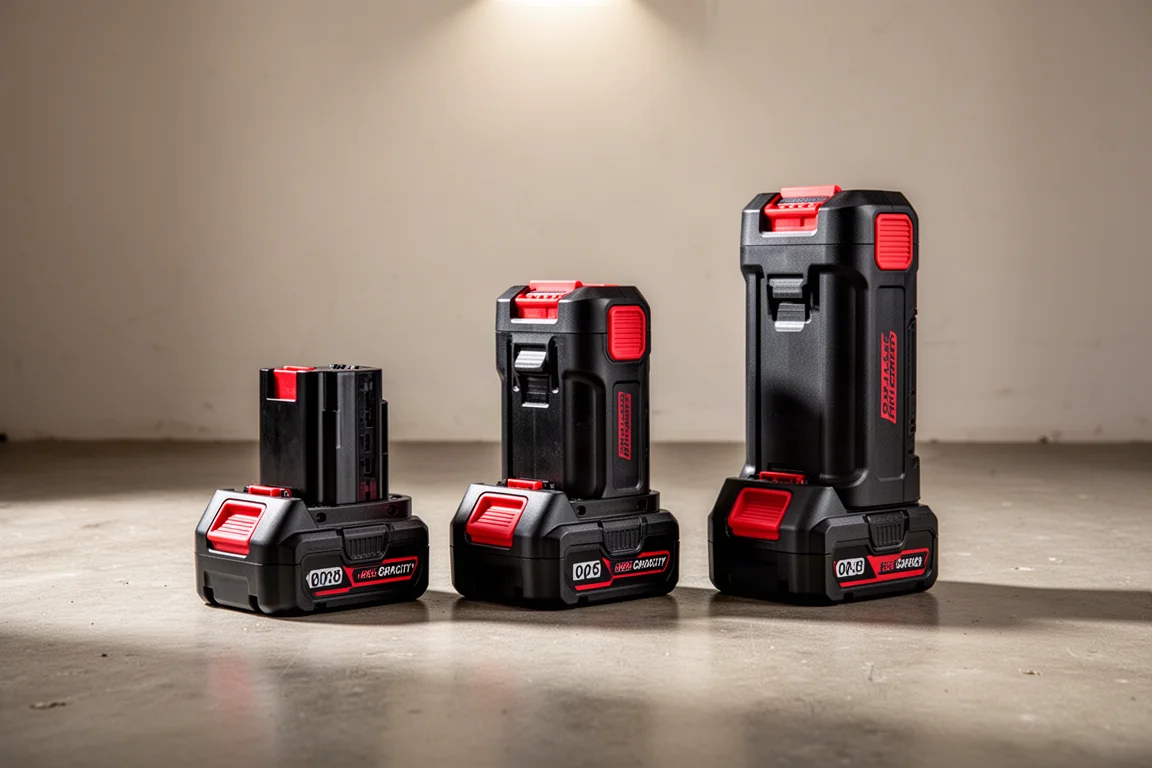
The High Demand 9.0 started at 20.3 volts and dropped to 16.22 volts. It works well in a lot of different situations, but it likely does not have the same high output cell design, so a drill pulling hard on it can drag the voltage down more than the High Output packs.
It will give you a little more than the 5.0, but whether that is worth the weight is questionable. It would have to be seriously on sale to make sense over an 8.0, especially for drill use. In high-draw tools like a table saw or miter saw, the story may be very different, and that comparison is worth testing separately.
Buying Advice: Which Battery Should You Pick?
The overall results landed roughly where expected, and were fairly similar in output across the board. For drill use, the guidance breaks down cleanly:
- CP3.0: great for small work, realistically small to medium small jobs.
- 2.0Ah: acceptable for light duty work only.
- XC5.0: a deal or a steal if you find it on sale and do not mind a little extra weight.
- High Output 6.0 and 8.0: the sweet spot for a drill if you want more oomph and longer-lasting runtime.
- High Output 12.0: for serious heavy duty work where you are willing to haul around a heavy pack.
- High Demand 9.0: functional, but hard to justify over an 8.0 for drill work unless deeply discounted.
Conclusion
There is a lot more to discover here, particularly across other tools, but for drills the pattern is clear. Small and medium work gets by happily on the CP3.0 or a discounted 5.0. For real power and runtime in a drill, the High Output 6.0 and 8.0 are where it is at. The 12.0 is reserved for heavy duty work where its weight does not matter, and the 9.0 High Demand is the hardest pack to recommend for this kind of use. Choose based on the work in front of you, and the right battery is an easy call.
Product link
View more details for Milwaukee 2804
This product is mentioned in the review. Check the specifications, options, and compatibility before buying.
View more details for Milwaukee 2804Further reading
Related Reviews
Power Tools
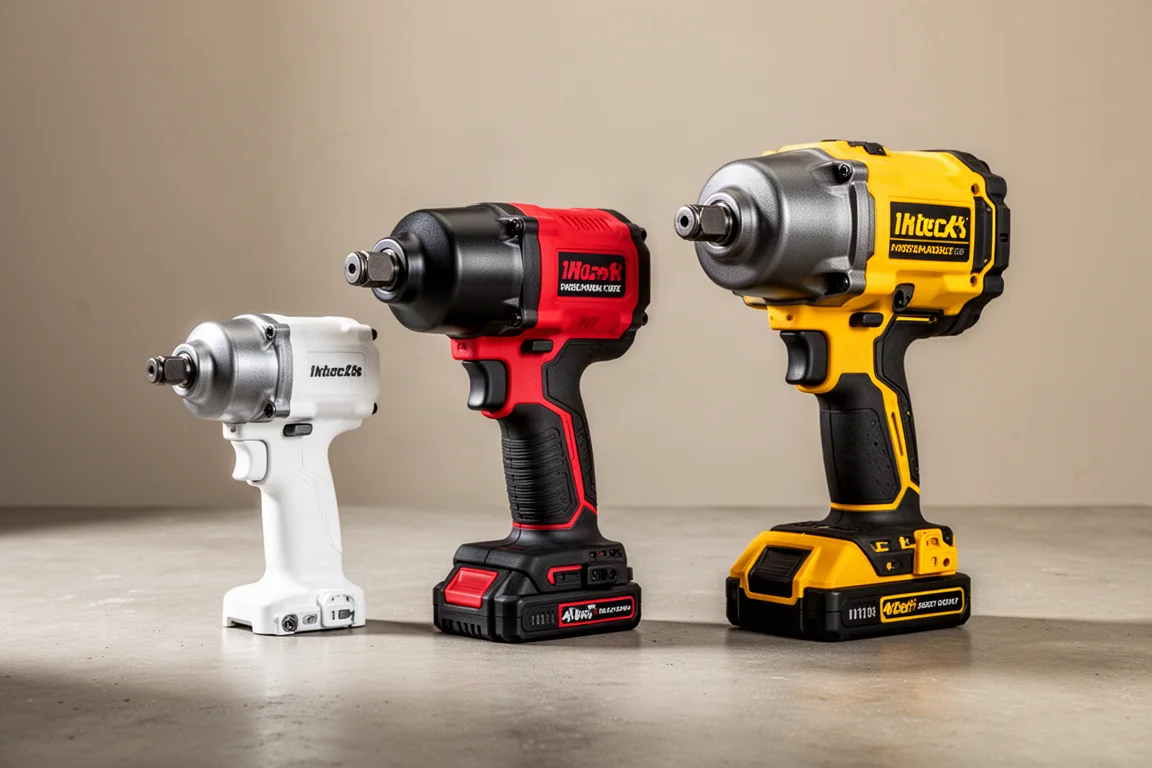
Best 1-Inch Pistol Impact Wrenches: Three Heavy-Duty Options Compared
We compare three 1-inch pistol impact wrenches, from a budget-friendly Harbor Freight model to a premium Caterpillar unit, to help you choose the right one.
Power Tools
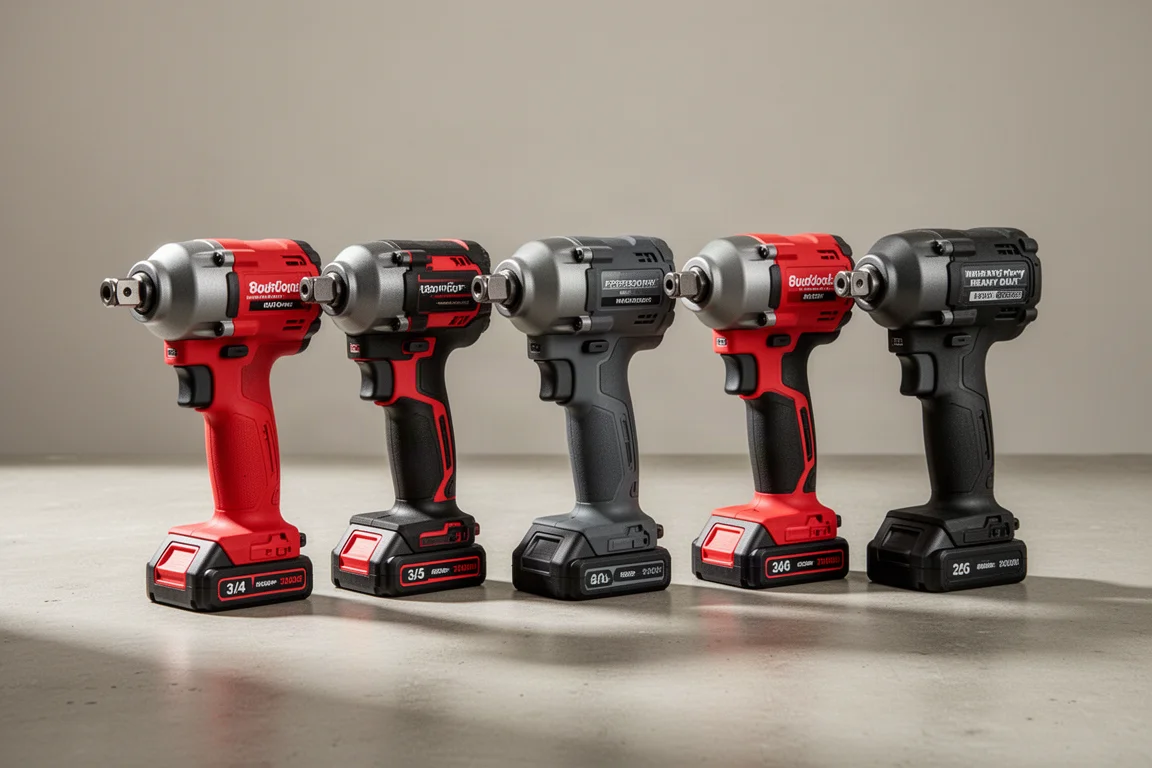
Best 3/4-Inch Impact Wrenches 2026: Five Contenders Compared
We compare five 3/4-inch impact wrenches across price and performance, from a budget Amazon option to Snap-on's most powerful model yet.
Power Tools
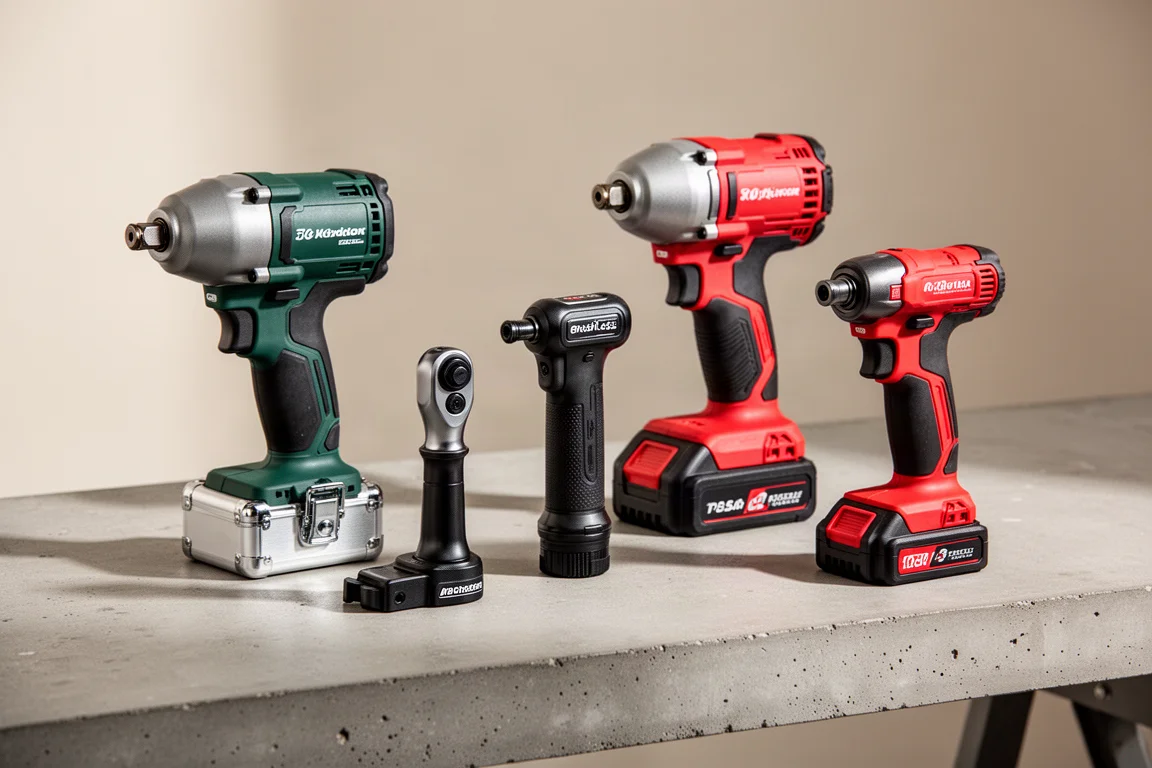
Best Budget Cordless Tools 2026: Walmart Finds That Punch Above Their Price
We tested five cordless tools from Walmart, including a high-torque impact wrench that trades blows with Milwaukee and a $35 duster that outperforms its price class.