Power Tools
Milwaukee M18 3771 Striker Review: The First Cordless Air Hammer
Milwaukee's M18 Striker claims the title of world's first cordless air hammer. We look at its .401 shank design, measured performance, battery behavior, and whether $599 bare is justified.
Introduction
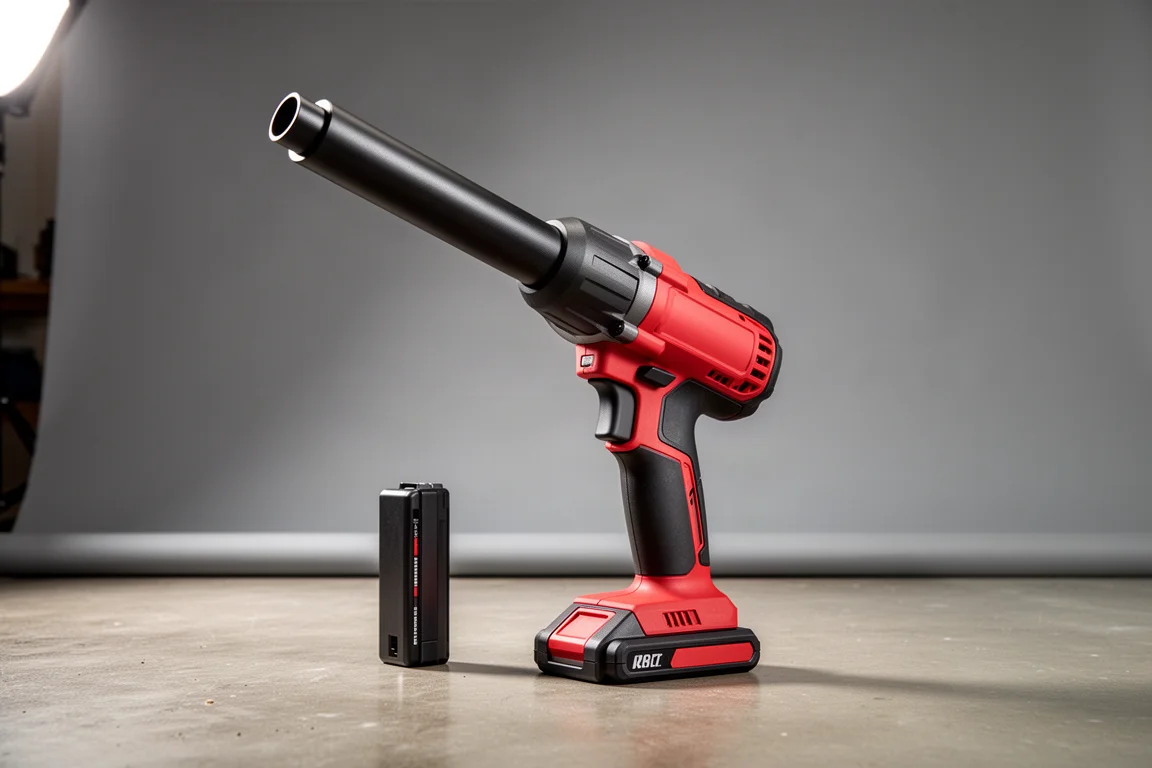
After roughly a decade of development and multiple patents, Milwaukee has released what the company calls the world’s first cordless air hammer: the M18 3771 Striker. It takes the familiar .401 shank air hammer format and runs it off an M18 battery instead of an air compressor, which is something no one has shipped before in this one-handed pistol form.
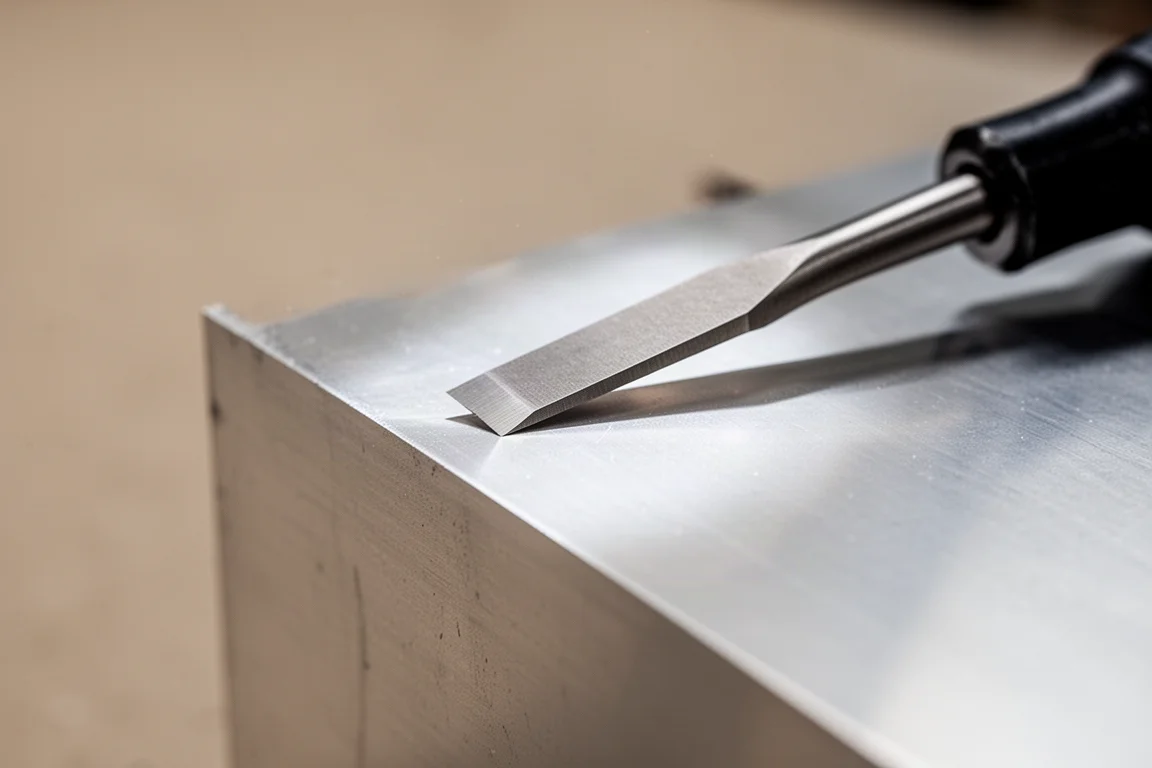
Cordless SDS-style breakers have existed from other brands, but those tools use SDS shanks and bits designed for impulse blows to break concrete or chip tile. The Striker instead accepts standard .401 shank automotive air hammer bits: cold chisels, cutters, drifts, pickle forks, bolt busters, and hammers. That difference is the whole point of this tool.
It is not cheap. The bare tool was purchased for $599, and this review looks at whether the performance justifies that number.
What the M18 Striker Actually Is
Milwaukee calls it the M18 Striker, and despite the cordless power source, it works like an air hammer inside and out. A reciprocating piston sealed against the cylinder walls compresses air, and that air pressure accelerates an internal striker element that hits the bit. It is essentially the same air-spring principle as a full-size corded jackhammer, shrunk down and powered by a battery instead of a compressor.
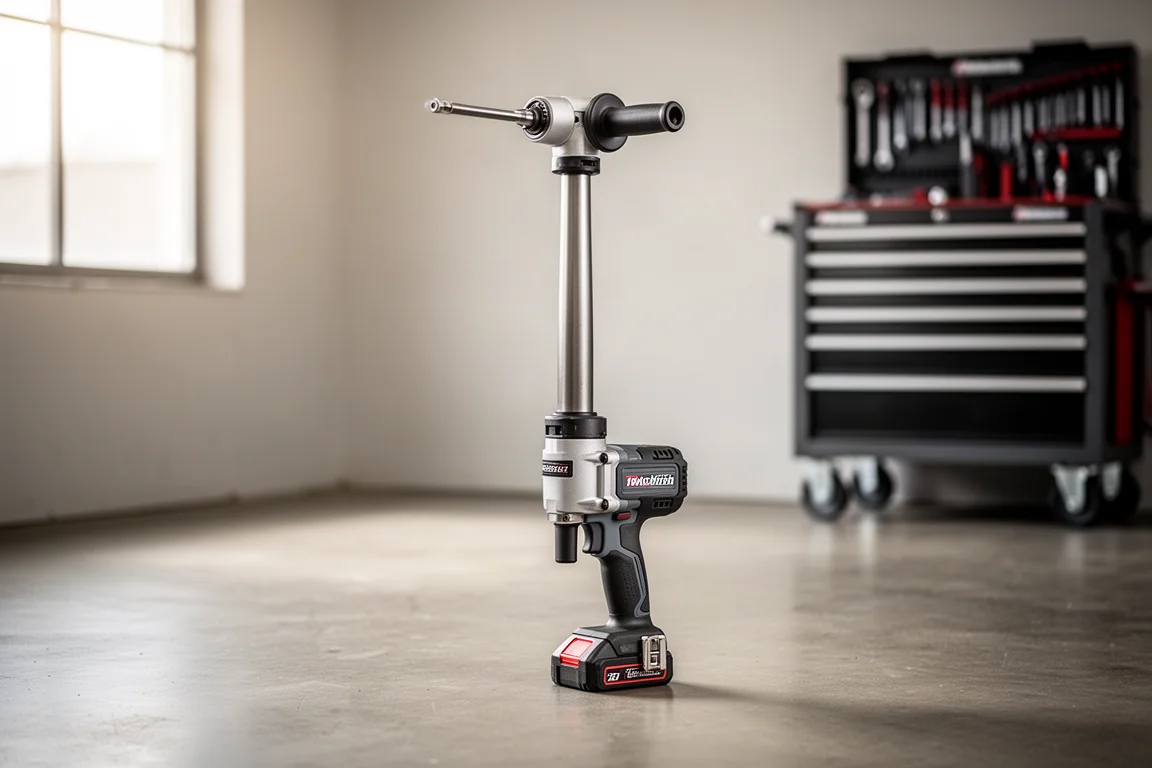
The barrel is long at 12.3 inches, which is actually a record length for a .401 air hammer, though not a flattering one. Earlier marketing suggested 14.4 inches, and with a bit installed it measures around 15.5 inches. Long barrels get extra piston travel before impact, which typically means more power, but the Striker is not small or narrow. It looks and feels roughly twice the bulk of a comparable air-powered long-barrel hammer.
One early note: do not dry-fire the chisels or hammer bits. It beats up the front of the tool and damages bits, even with the ball retainers inside.
Who This Tool Is For
If you have a well-fed compressor and a good air hose setup, a top air hammer still has advantages, including the ability to turn up line pressure for free instead of buying more battery. The Striker makes the most sense for people who cannot or do not want to run an air line to the job: mobile mechanics, junkyard and salvage work, upper-level and off-site jobs, or anyone whose compressor and hose cannot keep a high-performance air hammer fed.
For those buyers, nothing else before it has come close.
Measured Performance
On a standardized increasing-friction hammer test, the Striker put up a median run of 35.62, already past what an M18 1-inch SDS rotary hammer in hammer-only mode achieves, which is roughly double the size. At full throttle it reached 4584, more than a Mac Tools air hammer and above the Snap-on PH3050B, the traditional benchmark in this category that Milwaukee has been directly comparing it to.
The Snap-on still wins when air line pressure is turned up to typical shop static pressure: 5233 versus 4887 for the Striker with the new XC5 battery. That gap matters, because air tools can gain performance by raising pressure, while a cordless tool cannot. On rated blows per minute, the Snap-on runs 2500 and the Striker 3000, so within a task both can accomplish, the M18 typically finishes sooner simply by hitting more often. But there are high-pressure tasks where the Snap-on can deliver and the Striker cannot, and that is worth knowing before choosing.
Against a much larger and more expensive M18 SDS Max rotary hammer, the Striker scored 4216, which is impressive given it is smaller, lighter, and cheaper. It hits more often but hits a performance wall earlier in the run.
Overall ranking lands it around the same point total as the Chief long-barrel air hammer, with the most powerful long-barrel air hammers still above it.
Battery Behavior and Vibration
A common reaction to this tool was concern that hammering would destroy battery packs. Measured acceleration data suggests otherwise. The tool uses a rubber-mounted isolator where the battery slides in, which damps G spikes. Initial spike at trigger pull measured 4.27 Gs, with typical spikes around 3.88, 3.84, and 3.7 Gs mostly in the side-to-side axis.
In ramp-up mode, peaks measured 2.02, 1.95, 1.92, and 1.87 Gs, and even without ramping, the initial forward-axis spike was 2.67 Gs. That is measurably less than some impact drivers and well below an M18 high-torque impact wrench, so the “RIP to your batteries” worry appears to need an update.
Inside, the tool is built with an unusual number of screws, aluminum casing, Loctite, grounding wires to the electronics housing, and potted electronics in the handle. It appears Milwaukee was determined that this tool would not rattle itself apart, which is understandable given that earlier prototypes apparently did.
The New XC5 High Output 5.0 Battery
Alongside the Striker, Milwaukee launched the XC5 High Output, a new 5 amp hour pack with cells the company has never used before: likely tabless Samsung 18650s with large laser welds similar to the Forge packs. Weight is about the same as the standard XC5.0, and the case moves the screws to the top, which may slow or end the bottom-screw pull-through failure that has made XC5.0 packs among the most frequently replaced batteries.
Under a simulated 700 W load, the standard XC5.0 sags into the mid-to-low 18-volt range quickly, while the XC5 stays in the high to mid 18s the entire time, holding M18-class output. It performs close to or better than the 6 amp hour High Output and beats the 8 amp hour High Output in voltage sag, in a smaller package.
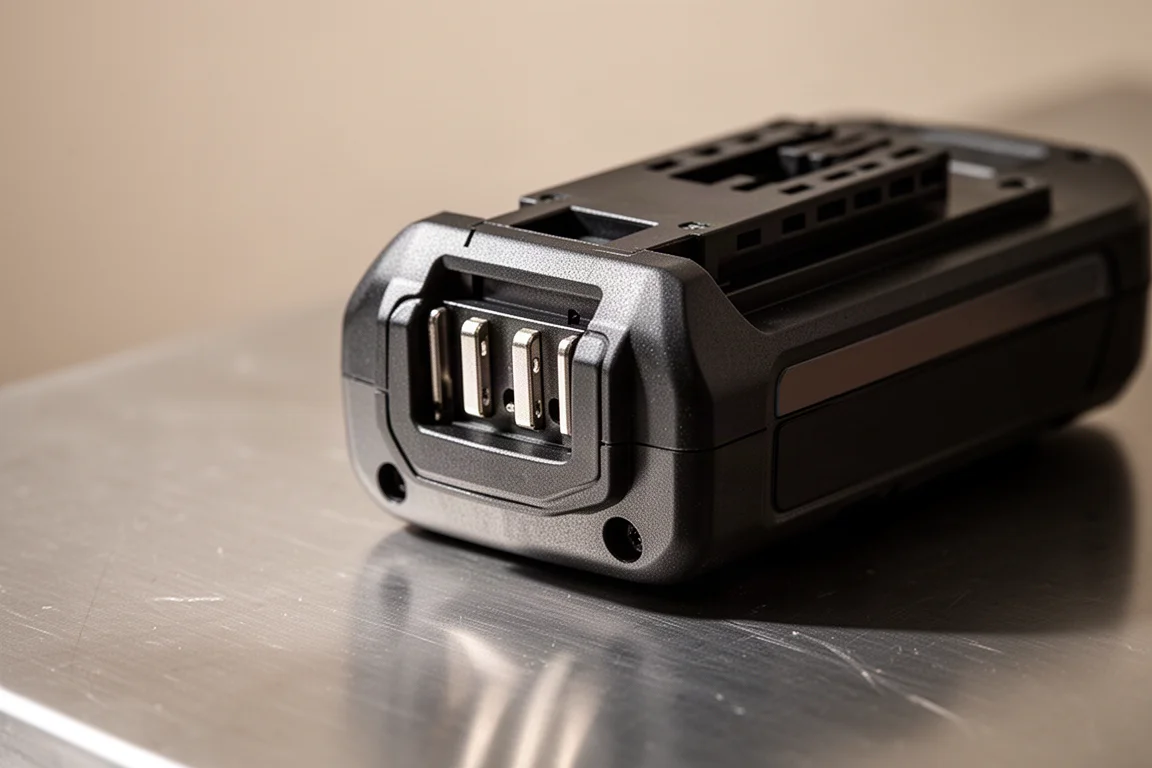
On the Striker itself, using the XC5 raised the full-throttle score from 4584 to 4887, which is unusual, since battery swaps typically change little on SDS-style tools. The mechanism inside clearly loads the motor enough to matter. Using anything above the XC5, such as a 12 amp hour Forge, made no difference, so there is no need to carry extra weight or cost for this tool.
Pricing sits at $169 for the XC5, the same as the XC5.0, while the 6 amp hour Forge is $229 and mostly offers more run time rather than more punch.
Trigger Control and Low-Power Finesse
The Striker offers two modes: a standard full-power mode and a ramp-up mode that builds power gradually, approximating the feathering ability of premium air hammers. That helps when working near customer suspension parts or wheel wells where you want to nudge something loose before it slips off and causes damage.
The trigger itself is also exceptionally fine. At minimum power it can idle down to a score of 20, essentially a gentle tap, and the range between its minimum and maximum output measures 48.7 points, among the widest usable power ranges in its test group. For fine, accurate work, this is one of the best trigger setups available in the category.
Buying Advice
The bare tool is $599, and the Snap-on PH3050B now sits around $585, so the price gap versus the classic benchmark is smaller than it first appears. The kit version costs $149 more and includes an oil and chemical resistant XC5, which is worth considering over buying a standard XC5.0 separately at $165.
If you work where air lines do not reach, this tool delivers something genuinely new. If you already have a serious compressor feeding a top air hammer, the Striker is harder to justify, since the Snap-on can still be turned up beyond what the cordless can match.
Conclusion
The M18 3771 Striker is a credible first attempt at a cordless .401 shank air hammer, backed by real measured output that beats some of the most respected air hammers in the category and even outperforms a larger, pricier SDS Max in its test. It is big, heavy, and expensive, and it cannot match a high-pressure air setup at the very top end. But for anyone who needs air hammer capability without an air hose, it is the only tool of its kind, and it appears to treat its batteries far better than skeptics expected.
Product link
View more details for Milwaukee M18 3771 Striker
This product is mentioned in the review. Check the specifications, options, and compatibility before buying.
View more details for Milwaukee M18 3771 StrikerFurther reading
Related Reviews

Power Tools
Best 1-Inch Pistol Impact Wrenches: Three Heavy-Duty Options Compared
We compare three 1-inch pistol impact wrenches, from a budget-friendly Harbor Freight model to a premium Caterpillar unit, to help you choose the right one.

Power Tools
Best 3/4-Inch Impact Wrenches 2026: Five Contenders Compared
We compare five 3/4-inch impact wrenches across price and performance, from a budget Amazon option to Snap-on's most powerful model yet.

Power Tools
Best Budget Cordless Tools 2026: Walmart Finds That Punch Above Their Price
We tested five cordless tools from Walmart, including a high-torque impact wrench that trades blows with Milwaukee and a $35 duster that outperforms its price class.