Power Tools
Milwaukee M18 3062 Controlled Torque Impact Wrench Review: A Torque Wrench That Impacts
Milwaukee's M18 3062 aims to replace the torque wrench with a mid torque impact that learns your fasteners. We look at what works, what trips it up, and whether $1,399 is justified.
Introduction
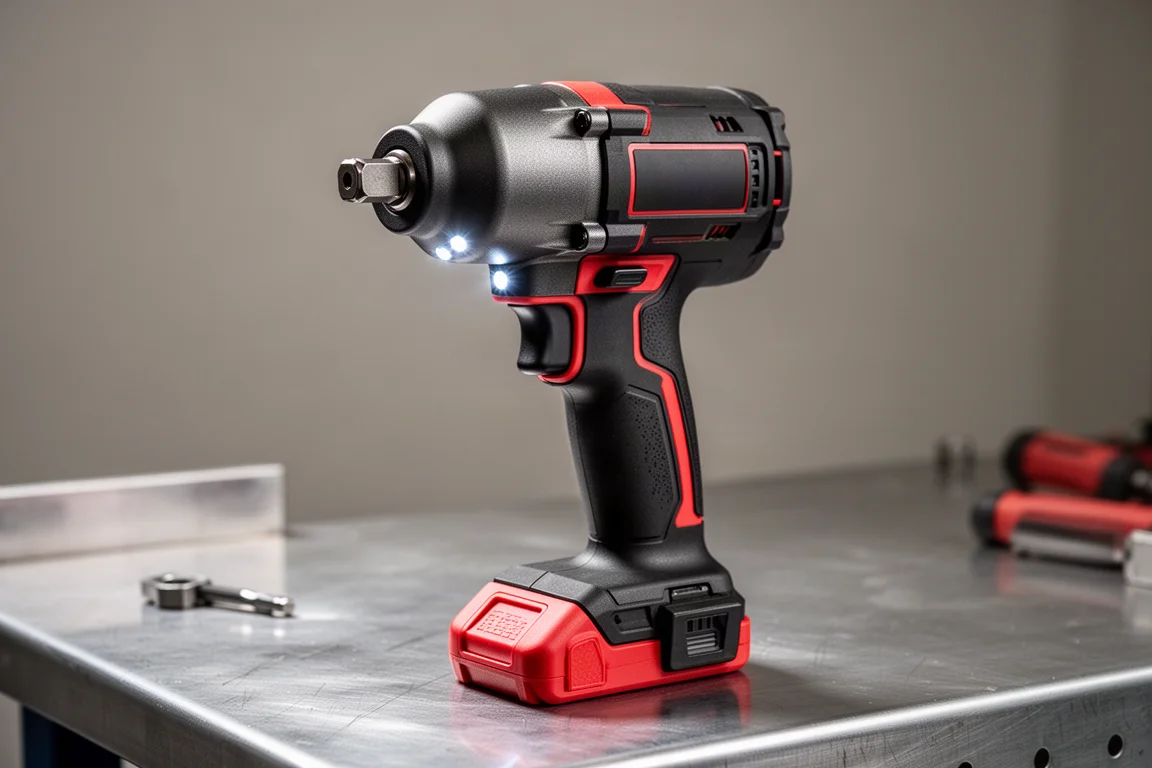
Most people have never heard of the Milwaukee M18 3062, and that is partly the point. While Milwaukee spent the past year showing off Forge batteries and new Gen 3 high torque tools, this odd-looking mid torque impact wrench sat in a trade show display almost nobody covered, surrounded by buzzwords like never before seen industry tech and machine learning algorithms. What it actually is, for practical purposes, is an impact wrench and a torque wrench in one, aimed squarely at large-scale commercial job sites and solar installation crews.
It is also expensive. At $1,399 for the bare tool, it sits well above the $219 M18 2962 it shares a body size with. Milwaukee says it can replace the need for a torque wrench on solar installations, which raises an obvious question for anyone who wheels or wrenches: can it replace the torque wrench on lug nuts too? We put it through a bolt tension dyno, threw a long list of variables at it, and took it apart to see how it works.
What the M18 3062 Actually Is
The 3062 is Milwaukee’s controlled torque impact wrench, and it is more digital than it is a typical hardware tool. Through the app you can do far more than most One-Key tools allow: make the tool blink to find it, adjust the brightness and run-on duration of the front LEDs, set top power modes (out of the box it caps at 2,067 RPM, which you can raise to 2,400), and configure custom Precision mode levels.
The headline feature is Torque Sense. In mode one, you enter a target torque, pick an LED color for the hit confirmation (magenta by default), set direction lock, and enable double hit prevention so the tool stops you re-tightening bolts that are already snug. Milwaukee asks that you keep both hands on the tool during the process, likely so it can sense body position and a rigid setup. You then run a ten-pull calibration where the tool under- and overshoots on its way to honing in on the target. Four profiles can be saved directly on the tool, so you can keep four different fastener setups accessible without opening the app.
Milwaukee rates the Torque Sense function at 250 ft-lbs. There is no advertised bolt breakaway rating, though nothing stops you from using it like a regular impact in a bind.
Torque Sense Accuracy: The Strong Points
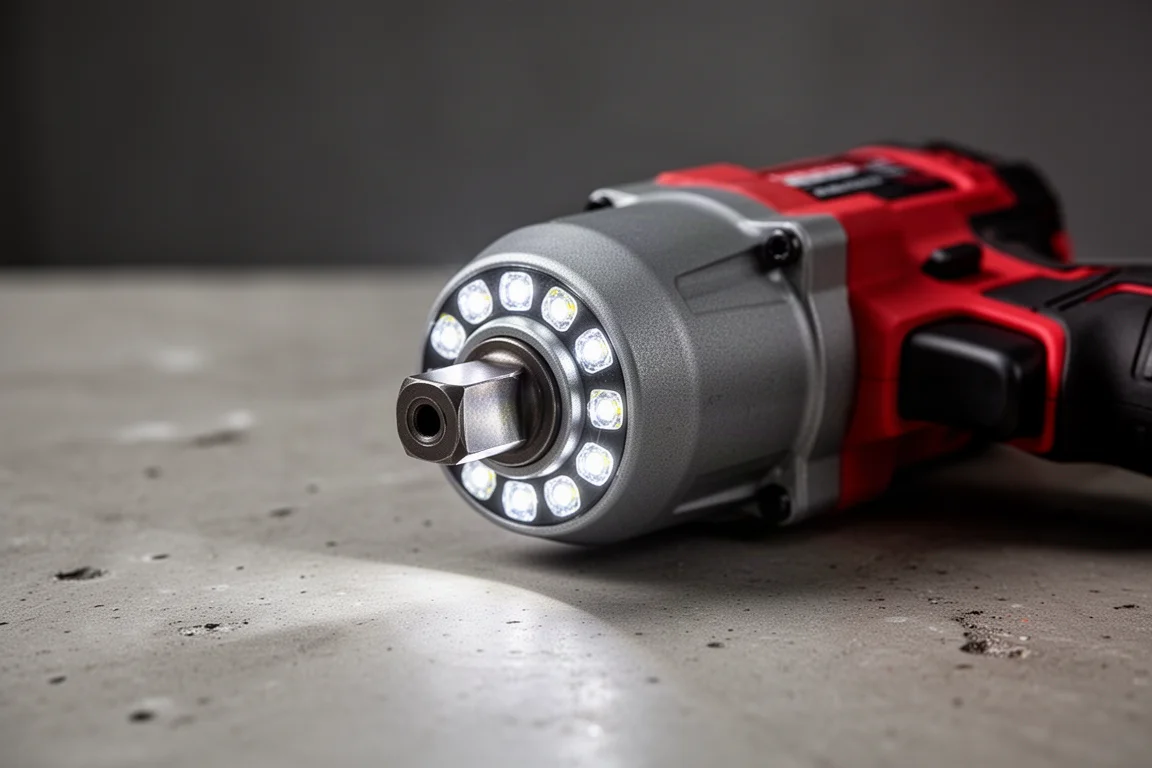
On our bolt tension dyno, calibrated to a 100 ft-lb target, the results were genuinely impressive. Runs came in at 101, 103, 102, and 100 ft-lbs, and you can simply hold the trigger while the tool stops itself right at the target. That is torque wrench territory, and it is the kind of repeatability that existing alternatives fail to deliver.
With double hit prevention enabled, the first hit lands around 101 ft-lb, and each accidental extra pull adds roughly 5 to 6 ft-lbs with one hand on the tool, dropping to 3 to 4 ft-lbs with two solid hands. For anyone who has worked around shops where the torque wrench never leaves the drawer, having a precision impact in hand is a real workflow upgrade.
The competitive landscape explains why this matters. Torque sticks get you into a rough wheelhouse but still require a torque wrench with the car on the ground. Fixed bolt-mode impacts are repeatable but vary with bolt size. Adjustable current-limiting impacts can be wildly off. This tool, properly calibrated, is the first of its kind we have seen hit targets this consistently.
Where It Struggles: Batteries, Hardware, and Heat
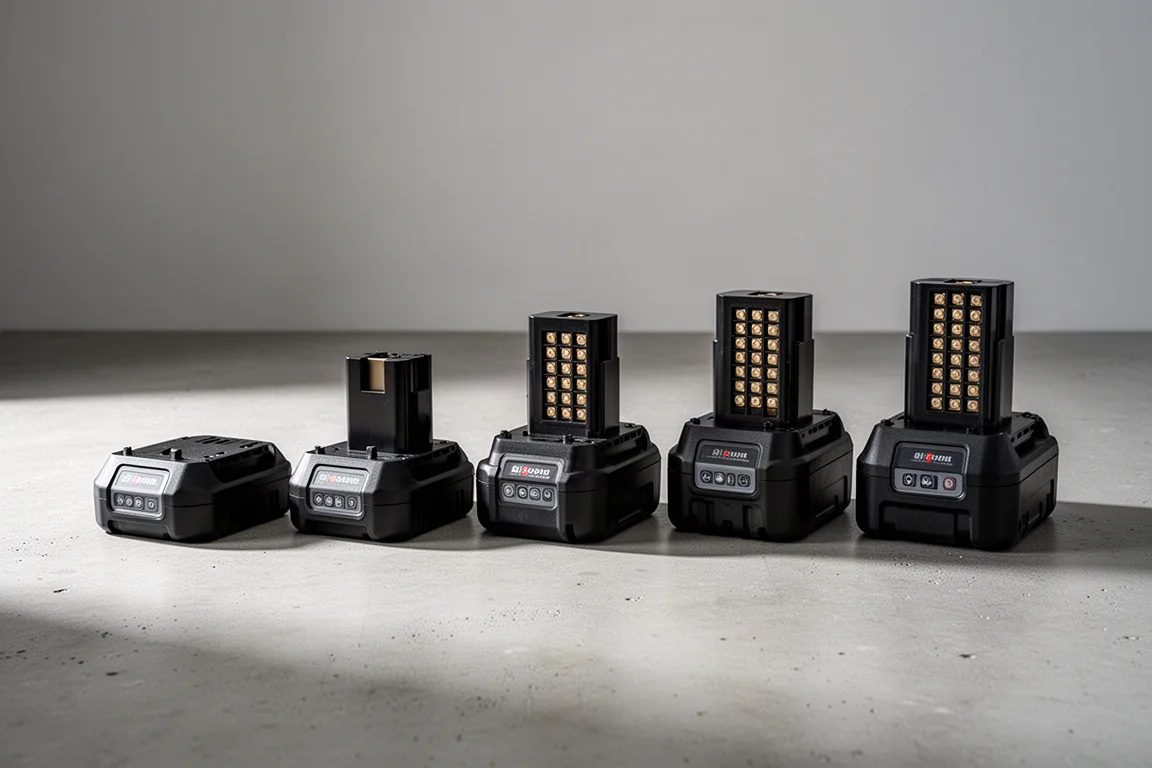
The calibration is also where the fragility lives, because the tool learns against the exact conditions you calibrate it under. Drain an XC 5.0 battery to one bar and it still landed within a few ft-lbs of a 100 ft-lb target, which was fine. Swap to a Forge battery and everything fell apart: the same mode hit only 68 to 73 ft-lbs, cutting off in a hurry as if surprised by the sudden power delivery.
Programming a 200 ft-lb target with the Forge battery and recalibrating made it overshoot badly, landing at 220 to 230 ft-lbs, outside even torque wrench accuracy. Put the XC 5.0 back on a tool calibrated with the Forge and it hit 200 to 203 ft-lbs. Something in the machine learning assumes things about voltage sag and peak current, so you will want to stick with one battery type per profile, or recalibrate when you swap. Larger packs like a 5Ah, XT6, or HD12 behaved like the Forge, but calibrating with those packs directly restored normal behavior.
Dry, unbroken-in hardware also tripped it up. Our test bolts are greased for consistency, and the tool handled that well, but swapping in the same grade hardware dry dropped it to 130 to 140 ft-lbs on a 200 ft-lb target. New hardware means a fresh ten-step calibration, which the app does point out. Locking lug nuts were similarly unreliable even after calibration, which undermines a chunk of the wheel-gun time saving if you need a torque wrench for those anyway.
On smaller M14 lug hardware with a 150 ft-lb target, it was consistently in the upper 140s, and if you release the trigger before the tool stops itself, it flashes red to tell you the fastener was not torqued to spec. Socket choice, shallow or deep, chrome or impact, made no measurable difference, and even a tool hot from repeated use, reading 140 degrees on the case, still compensated accurately.
Raw Power and Dyno Numbers
Out of curiosity, we maxed it out on the dyno. In a five-second working torque test, the 3062 managed 285 ft-lbs in forward while the $219 M18 2962 delivered 337. In a best-case bind, the 3062 hit 420 ft-lbs, nowhere near its advertised 250 Torque Sense rating but enough to work much like a regular mid torque when removing fasteners.
One quirk: for the first time we have seen, a Forge battery actually produced less output on this tool even in a plain maxed preset mode. It simply behaves oddly with that pack in any setting. If you buy this tool, treat battery choice as part of the setup.
Inside the Tool: How the Machine Learning Works
Teardown reveals where the $1,399 goes. Inside you find far more wires and electronics than a standard mid torque, an entire extra wire harness, and a larger control board. The hammers look nearly identical to the cheaper model, but the anvil is a strange overhanging design unlike anything we have seen, which we believe exists to communicate with a sensor PCB paired inside.
Here is why that matters. An impact wrench is really two disconnected systems: a motor spinning a hammer and a hammer striking an anvil, connected only by a reset spring that decouples the motor so it does not stall. That means a conventional impact is effectively blind the whole time it is hitting; it has no idea what the anvil, socket, or fastener is doing.
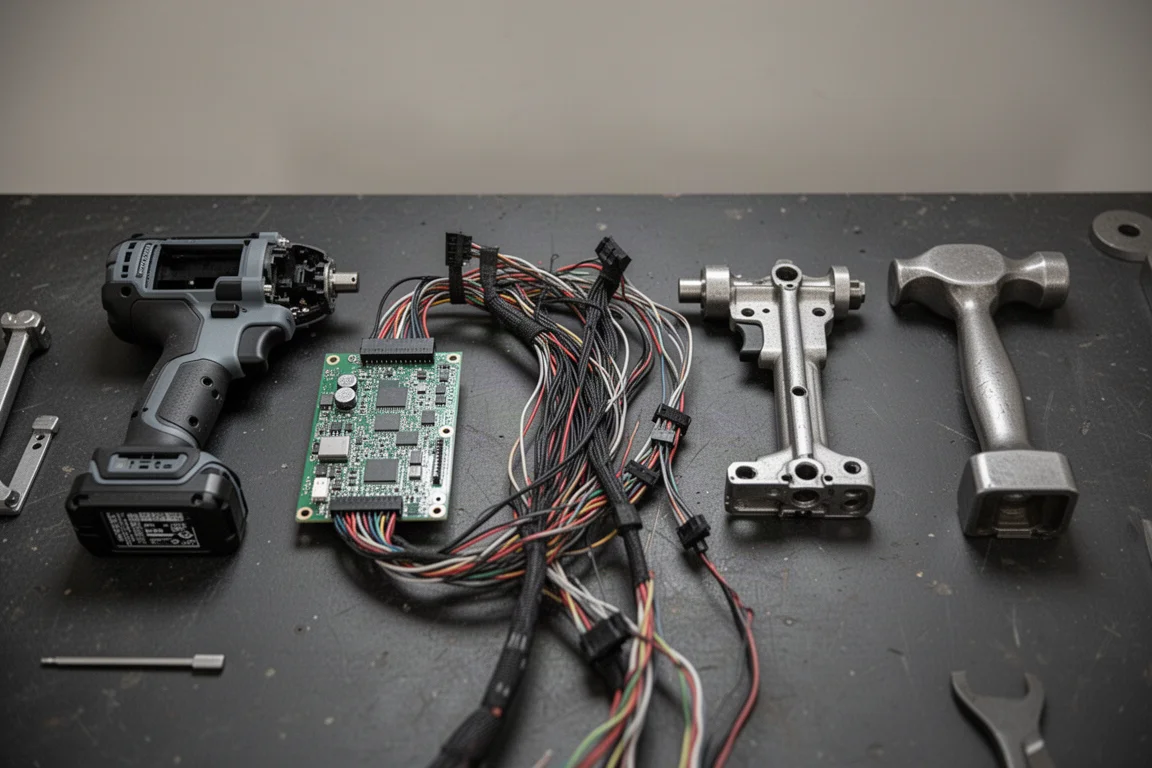
The sensor pair in the 3062 closes that gap. The round sensor watches how far the anvil rotates after impacting starts, and the long sensor board picks that up. Once impacting starts, the tool figures it is no longer running the fastener down but tightening it, and the ten-run calibration teaches it how much anvil rotation corresponds to your target torque. It is not quite the space-age black box the marketing suggests, and the dry-bolt stumbles back that up, but it is still light years ahead of anything other brands are doing with impact wrenches today.
Things to Consider Before Buying
There are real annoyances. The profile buttons on the tool occasionally wipe themselves even without pulling the battery, so save everything into a folder in the app for quick reassignment. Milwaukee advertises software updates for the tool, so this could hypothetically be patched.
The recommended calibration method, using a torque wrench to remove a bolt and input that value, has a flaw: removal torque on a new fastener can easily be more than 10% off tightening torque. A transducer or Skidmore machine is the more accurate way to dial in real bolt tension, and the line-marking method is a good double check in a tire shop.
The calibration can also go rogue. We saw it want to tighten a 100 ft-lb spec up toward 280 ft-lbs twice, once on a lug nut and once on the dyno. If you are not paying attention and holding the trigger, you can seriously over-torque something.
Buying Advice
Is it worth $1,399? Honestly, you are partly covering R&D and tooling on expected low-volume sales. But as a wheel gun with four saved profiles, say 90, 100, 150, and 165 ft-lbs for different threads, it is genuinely dialed in once configured. It suits shops and installers who need documented, repeatable torque with an impact already in hand, and it is a harder sell for occasional home use where a torque wrench and a $219 impact cover the same ground far cheaper.
Conclusion
The M18 3062 is the closest thing to an impact wrench that replaces a torque wrench, and on calibrated hardware it performs with real torque wrench accuracy. Its weaknesses are contextual: battery swaps, new or dry hardware, and locking lug nuts all require recalibration, the price is steep, and the setup process demands attention. If your work revolves around repeatable fastener torque and you already run Milwaukee M18, it may be exactly the tool nobody told you about. If you wrench casually, there are far cheaper ways to get close enough.
Product link
View more details for Milwaukee M18 3062 Controlled Torque Impact Wrench
This product is mentioned in the review. Check the specifications, options, and compatibility before buying.
View more details for Milwaukee M18 3062 Controlled Torque Impact WrenchFurther reading
Related Reviews

Power Tools
Best 1-Inch Pistol Impact Wrenches: Three Heavy-Duty Options Compared
We compare three 1-inch pistol impact wrenches, from a budget-friendly Harbor Freight model to a premium Caterpillar unit, to help you choose the right one.

Power Tools
Best 3/4-Inch Impact Wrenches 2026: Five Contenders Compared
We compare five 3/4-inch impact wrenches across price and performance, from a budget Amazon option to Snap-on's most powerful model yet.

Power Tools
Best Budget Cordless Tools 2026: Walmart Finds That Punch Above Their Price
We tested five cordless tools from Walmart, including a high-torque impact wrench that trades blows with Milwaukee and a $35 duster that outperforms its price class.