Power Tools
Milwaukee M18 18-inch Fan (0821-20) Review: Big Air, Battery or Cord
A heavy-duty 18-inch jobsite fan that moves up to 3,400 CFM on battery or corded power, with stackable storage and serious build quality.

Introduction
The Milwaukee M18 18-inch fan (model 0821-20) is not a small accessory you toss in a truck bed and forget about. It is a large, genuinely powerful air mover, sold as a bare tool, that runs on any M18 battery or off an extension cord. Milwaukee claims it can throw air up to 50 feet with a 13.5 mph air speed out the front, and on high it moves 3,400 CFM. That is a lot of air for a portable fan.
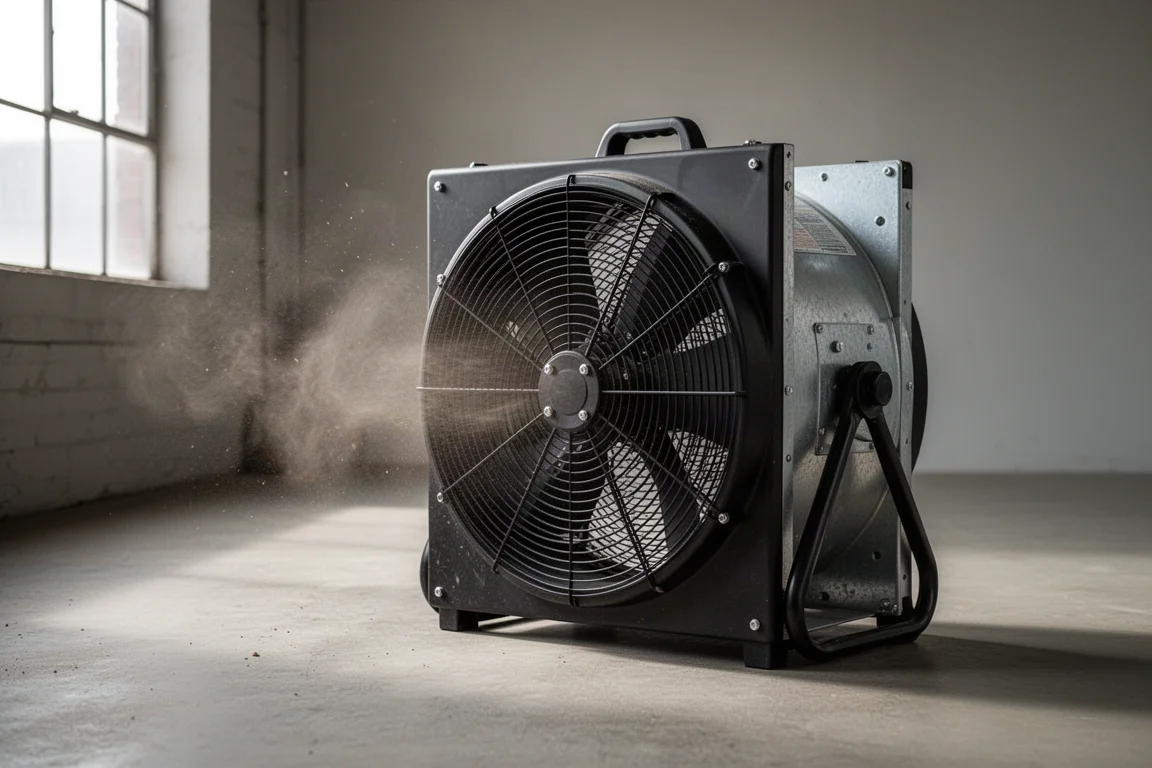
In practical terms, this is a fan built for drying, ventilating, and cooling large spaces. One observation from testing: in a barn area sectioned off to roughly 2,000 sq ft, the fan placed in a corner could plausibly cover most of that space. Whether that justifies the price is the real question, and we will get there.
Key Specs and Design
The fan uses an 18-inch blade, with an overall footprint of 23.3 inches wide, 26.5 inches tall, and 11 inches deep. Total weight is 17 lb, so it is substantial but still portable. The housing is impact-resistant and dust and water-resistant per Milwaukee.
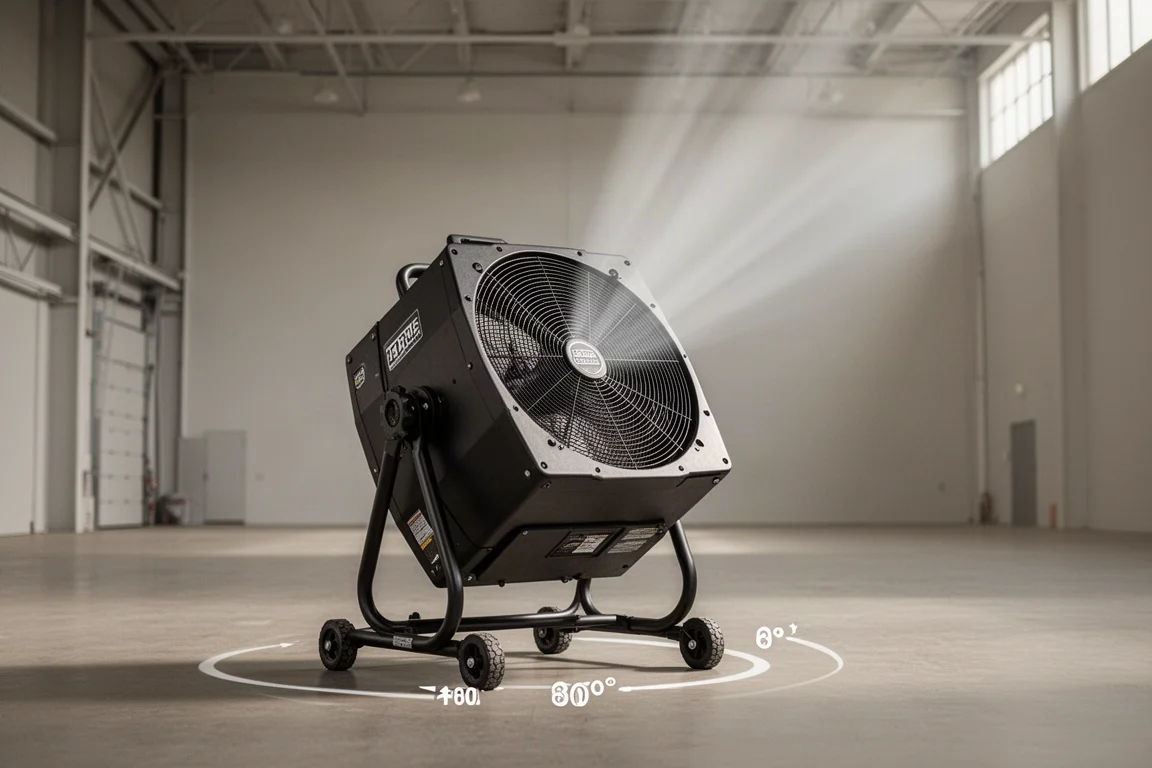
One useful design detail: the head pivots a complete 360 degrees. Whether you want to dry something directly up on the ceiling or push air across a floor, you can aim it exactly where you need it.
Run Time and Power Options
This fan accepts any M18 battery, or it can run off an extension cord. It is not a battery charger, so do not count on it to top up your other tools.
Milwaukee’s claimed run times on high are about 2 hours with a 5-amp-hour battery and 5 hours with a 12-amp-hour battery. That works out to roughly 2.5 amp hours consumed per hour of fan time, which reflects how much the brushless motor draws at full speed.
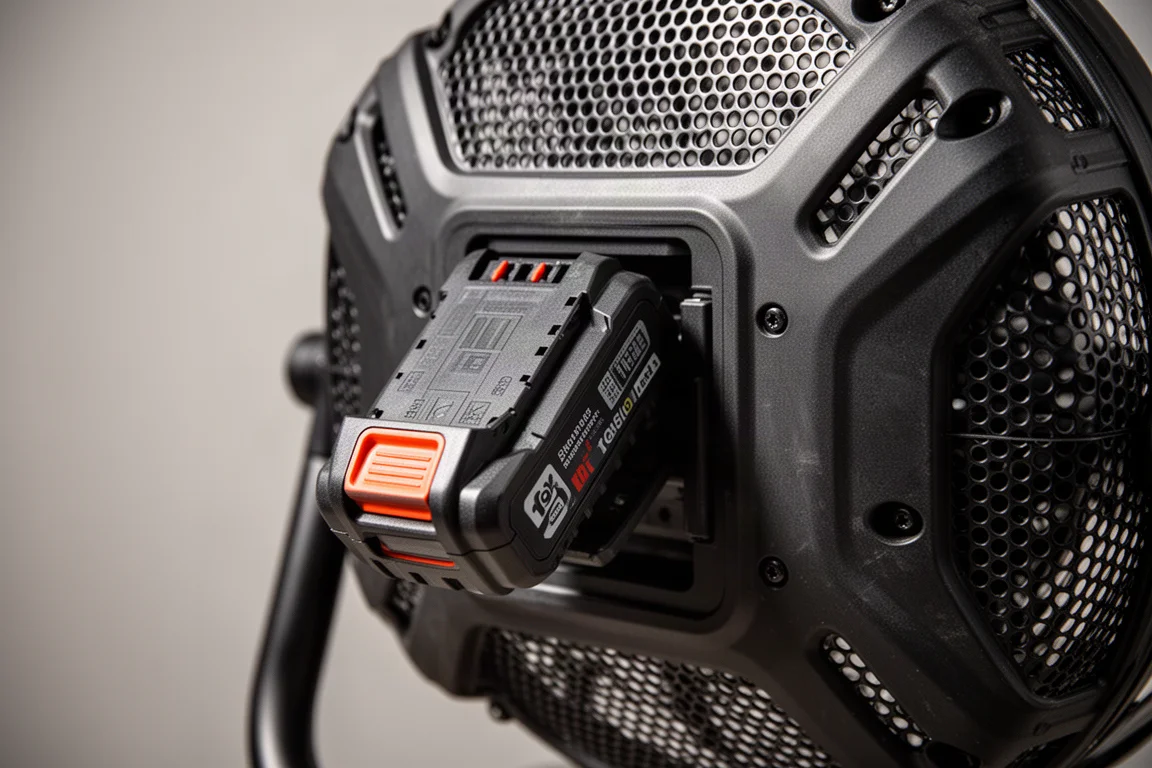
On low, the numbers get much friendlier: 9 hours on a 5-amp-hour pack and 23 hours on a 12-amp-hour pack. For overnight runs, such as drying out a basement, a 12-amp-hour battery on medium should deliver a solid 12 hours or so, depending somewhat on the specific pack.
An important nuance: the fan pushes noticeably more air on corded power than on battery. The difference is roughly comparable to stepping up from level two to level three. If you plan to run this on high for long stretches, corded power is the better option.
Noise and Airflow Experience
Across all three speed levels, the fan runs surprisingly quietly. Level one is quiet enough that you could have it in a corner of your house and barely notice it. Level two ramps up to a very quiet hum with a lot of air movement, enough to fill a large room. Level three has a jet-engine feel as it spools up, noticeably louder up close but not aggressive from a distance.
Air reach is the standout. At 20 feet, a sheet of paper angled straight into the stream lifts outright. At 40 feet, the fan still moves that paper, and even off to the side of the main stream it pushes noticeably. The front intake pulls air in around the corners of the housing, and the rear draws a substantial draft as well.
Build Quality, Noise, and Cleaning
Build quality is a genuine highlight. The front is all plastic with a finger-safe grille, and the actual fan sits toward the rear behind a metal panel with much smaller holes. That rear metal section is the part that will need periodic cleaning. Milwaukee says to remove the front for cleaning, presumably for safety reasons, and soap or water is acceptable for cleaning the inside. As always, remove the battery and keep everything unplugged, and keep water away from the brushless motor.
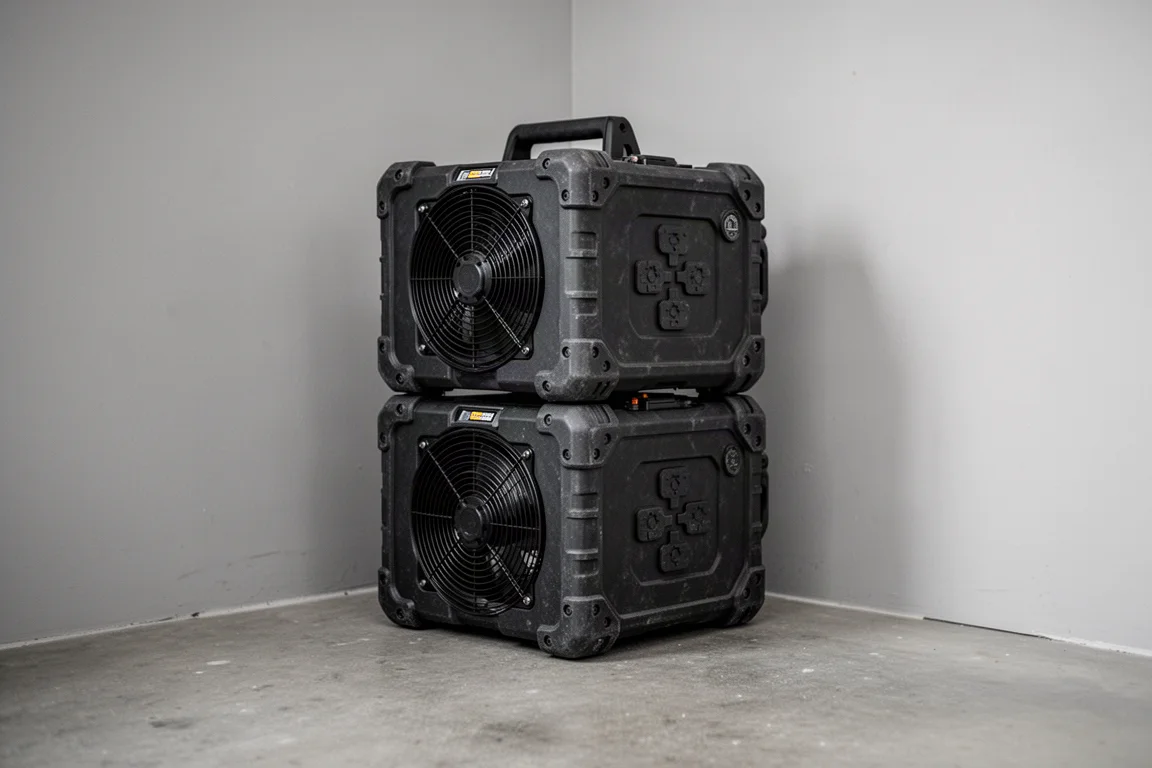
Another practical feature: these fans are stackable. Small buttons around the housing fit into matching recesses on the rear of another unit, so if you invest in several, they store neatly on top of each other.
Things to Consider Before Buying
Here is the elephant in the room: the fan alone, without a battery or extension cord, costs $250. That likely makes it one of the more expensive box-style fans on the market, and it is cost-prohibitive for casual use. It also requires you to already own M18 batteries for untethered use, or to accept corded operation.
The warranty is 1 year, which is worth factoring in at this price point. And the trade-off between battery and corded output is real: battery power is convenient, but corded power moves noticeably more air.
Buying Advice
If you run this fan long-term, corded operation is the sensible default. If you need overnight operation where there is no power available, a 12-amp-hour battery on medium is the sweet spot, delivering roughly 12 hours of runtime without touching the low setting.
The most natural fit is general contractors and tradespeople who already own M18 batteries and need reliable air movement on job sites. For a homeowner who just needs an occasional box fan, the $250 price is hard to justify.
Conclusion
The Milwaukee M18 18-inch fan (0821-20) delivers on performance. It moves a significant amount of air, reaches impressively far, runs quietly for its class, pivots a full 360 degrees, and is built well enough that its impact and dust/water resistance claims are believable. The catch is price: at $250 for the bare tool, it is a specialist purchase. If you are a contractor who needs serious airflow anywhere, on battery or cord, it is a very sweet setup. If not, more affordable options exist.
Product link
View more details for Milwaukee M18 18-inch Fan (0821-20)
This product is mentioned in the review. Check the specifications, options, and compatibility before buying.
View more details for Milwaukee M18 18-inch Fan (0821-20)Further reading
Related Reviews
Power Tools
Best 1-Inch Pistol Impact Wrenches: Three Heavy-Duty Options Compared
We compare three 1-inch pistol impact wrenches, from a budget-friendly Harbor Freight model to a premium Caterpillar unit, to help you choose the right one.
Power Tools
Best 3/4-Inch Impact Wrenches 2026: Five Contenders Compared
We compare five 3/4-inch impact wrenches across price and performance, from a budget Amazon option to Snap-on's most powerful model yet.
Power Tools
Best Budget Cordless Tools 2026: Walmart Finds That Punch Above Their Price
We tested five cordless tools from Walmart, including a high-torque impact wrench that trades blows with Milwaukee and a $35 duster that outperforms its price class.