Power Tools
Milwaukee M12 BSTP Stick Pump Review: A 12V Water Mover That Earns Its Spot
Milwaukee's compact 12V stick pump moves up to 34 liters per minute with a 4.6 meter head. Here is how it performed in real-world draining tests.
Introduction
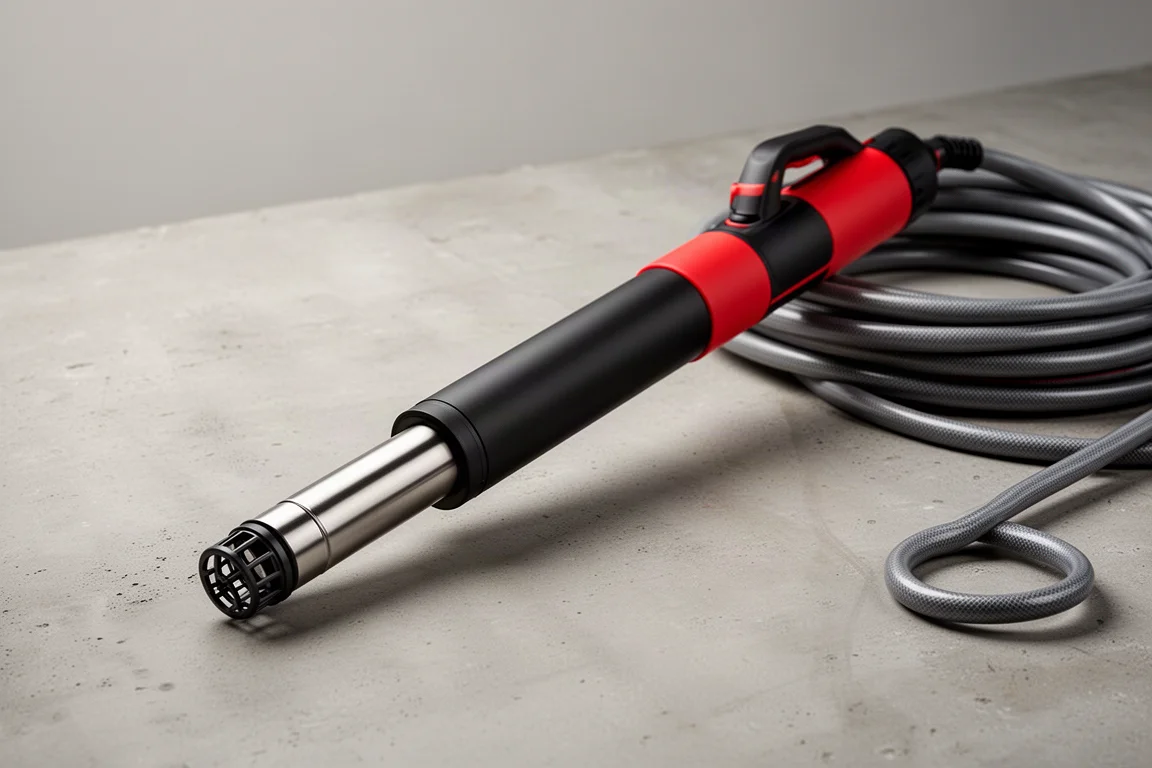
Some tools solve a problem you did not realize you had until you own them. The Milwaukee M12 BSTP stick pump, sold as model 2579 in the United States, fits that description. It is a 900 millimeter long, 12 volt, brushed motor stick pump designed to move water out of places where it should not be: sumps, meter boxes, trenches, ponds, pools, or the bottom of a spa or water tank.
It is not your average power tool, and it is not a Fuel model. But after spending time with it in genuinely dirty water, it is easy to see why owners quickly find new jobs for it around the property.
Who This Product Is For
The M12 BSTP is for anyone who regularly deals with standing water in awkward spots. If you have ever picked up a bucket of water, walked it across the yard, and tipped it out somewhere else, this pump does the same job without bending your back. Push it in, flick the switch, and the water goes where you point the hose.
It suits homeowners clearing flooded meter boxes, tradespeople emptying trenches or sumps, and spa or tank owners who want to suck debris off the bottom without draining everything. It is explicitly a water pump only: no flammable liquids, no acids, no petrol, and nothing hotter than 60 degrees Celsius.
What the M12 BSTP Actually Is
The stick form factor is the whole point. The 36 inch shaft lets you reach down into deep holes, and the tip carries a removable filter cage that keeps large debris out of the impeller. That impeller is tiny, driven by a brushed motor, which makes the claimed numbers genuinely surprising.
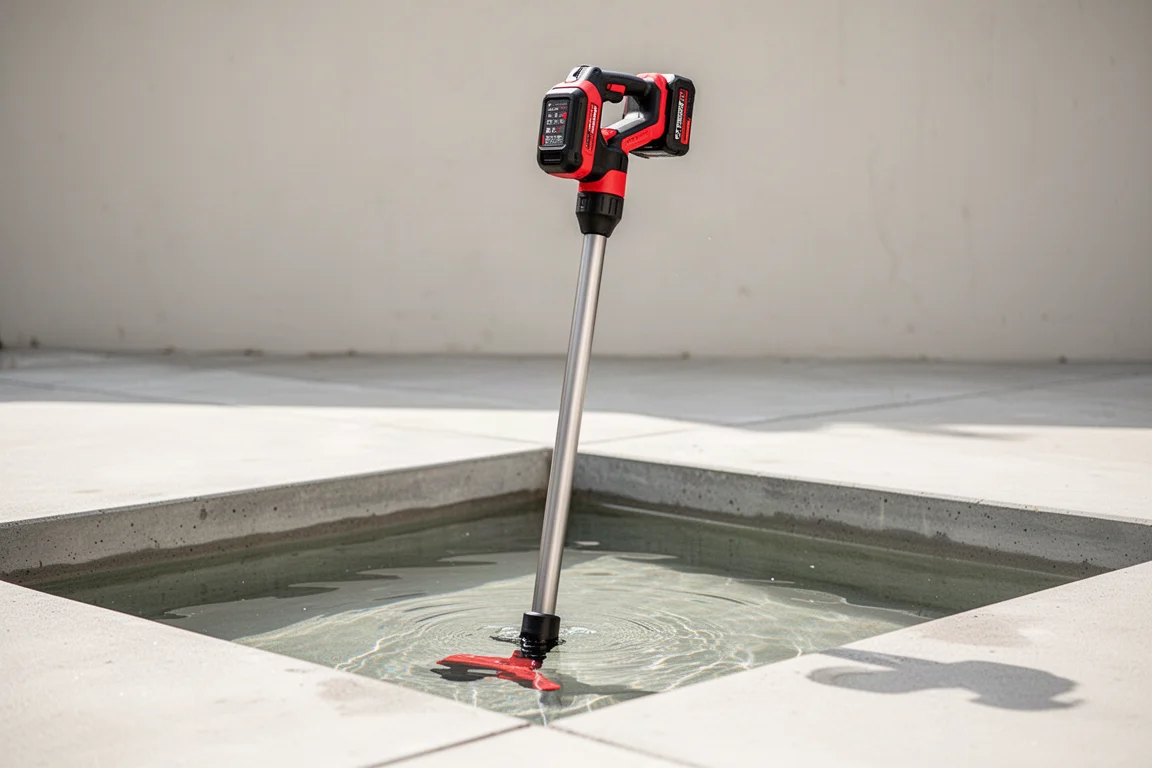
On the top end there is a 900 millimeter shaft feeding water up to the head, four battery fuel gauge lights consistent with the rest of the M12 range, and a simple two-direction switch: one way pumps, the other way stops. That is essentially the entire feature set, which is part of the charm.
It attaches to a standard 19 millimeter, or three-quarter inch, hose fitting. Screw the fitting on, clip on any hose that fits, and you are ready to move water.
Real-World Pumping Performance
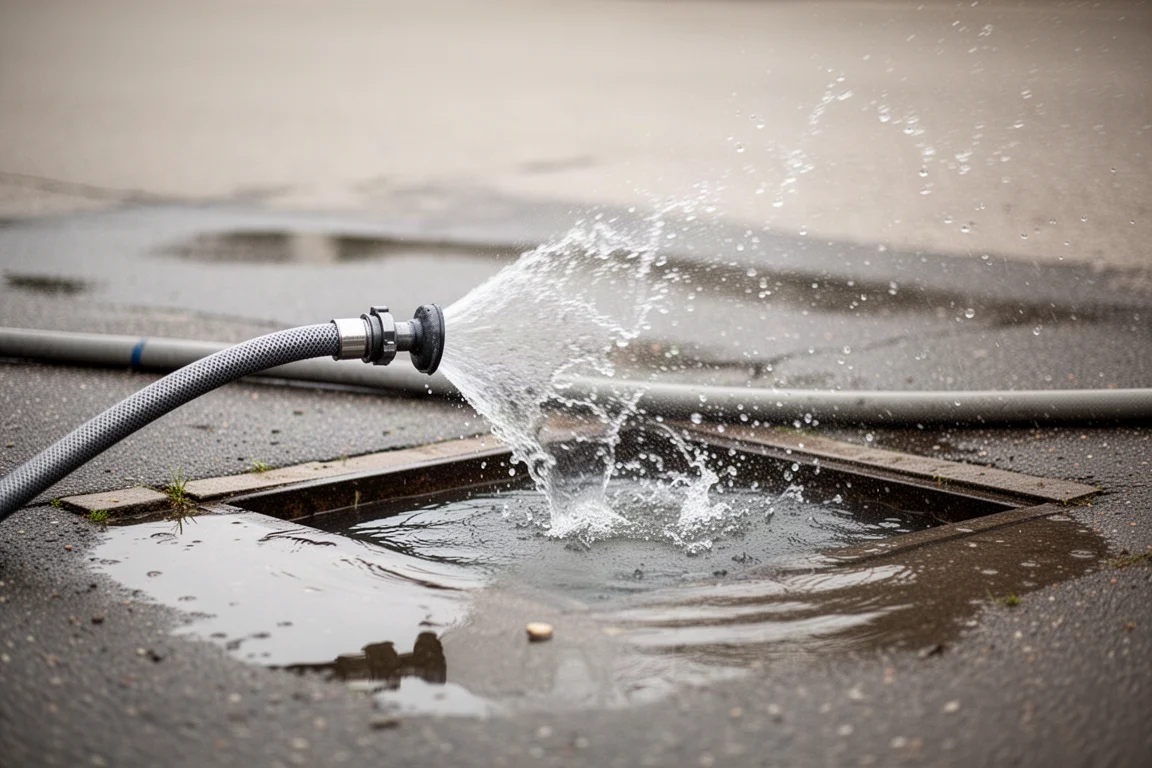
In the field, this thing fires water a long way. With no hose attached, the output stream was strong enough to reach roughly a meter and a half or more with ease, and in a flooded meter box the stream cleared at least two meters. Dirty water did not slow it down noticeably.
It left roughly 25 to 40 millimeters of water at the bottom of a deep tub, which is worth knowing if you need a completely dry surface. It also naturally cannot get every last drop out of a deep pit, because the filter cage and shaft geometry limit how close it sits to the bottom.
One practical habit emerged during testing: if the pump is lifted out of the water or the intake comes out, it will chug and struggle rather than prime itself. Flick the switch off and straight back on again, and it pressures up immediately. Keep that trick in mind.
Head Height and Flow Tests
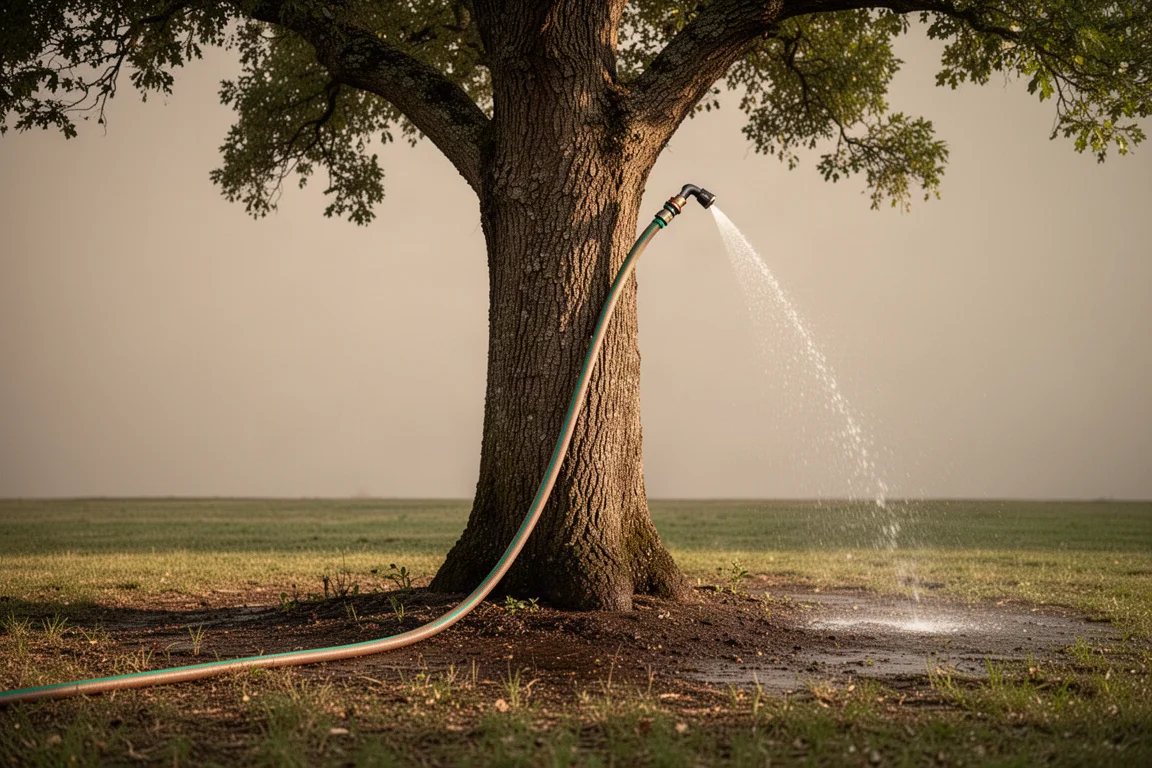
The rated head is 4.6 meters, about 15 feet, which is impressive for a 12 volt tool. Testing pushed it hard: a 10 meter hose run with over five meters of vertical lift exceeded the rating and produced only squirts and dribbles. Once lowered to just under three meters of vertical rise with the same 10 meter hose, the pump pushed water reliably up a tree and continued to deliver around a further 10 meters along a sloping driveway with about a one meter rise at the outlet.
Flow rate depends heavily on restriction. Through a long, narrow hose the output dropped to roughly 20 liters per minute, about three quarters of a 20 liter bucket per minute. Firing straight out of the pump with no hose, it came much closer to the claimed 34 liters per minute, filling three quarters of the same bucket in around 22 seconds.
On battery life, a freshly charged 2 amp hour battery ran the pump for about 19 minutes, roughly in line with expectations, and a 2 amp battery will move about 500 liters of water. A 6 amp hour battery moved around 1,600 liters, or roughly 420 gallons, before needing a recharge. Draining a 2,000 to 2,200 liter tub took a fully charged 2 amp battery plus a 6 amp hour battery and around one hour combined.
One battery-related note is worth flagging. During testing with a 2 amp hour Power battery, pressure dropped after two to three minutes of running, even when the intake was suspended clear of silt, and cycling the switch restored full pressure. The same behavior did not appear with a 6 amp hour battery, which ran for over 16 minutes with no pressure loss. The likely explanation is that the smaller Power battery struggles to sustain the current draw. For sustained pumping, a higher amp hour battery is the better choice; the 2 amp pack is fine for small jobs and a few bucket loads.
Things to Consider Before Buying
Maintenance is simple but matters. The filter cage will collect little pebbles, grit, and leaf matter, and that buildup will hurt flow rate, so clean it periodically. After use in chlorinated, salty, or dirty water, flush the pump through with fresh clean water. Never run hot or boiling water through it; the rating tops out at 60 degrees Celsius, about 140 Fahrenheit.
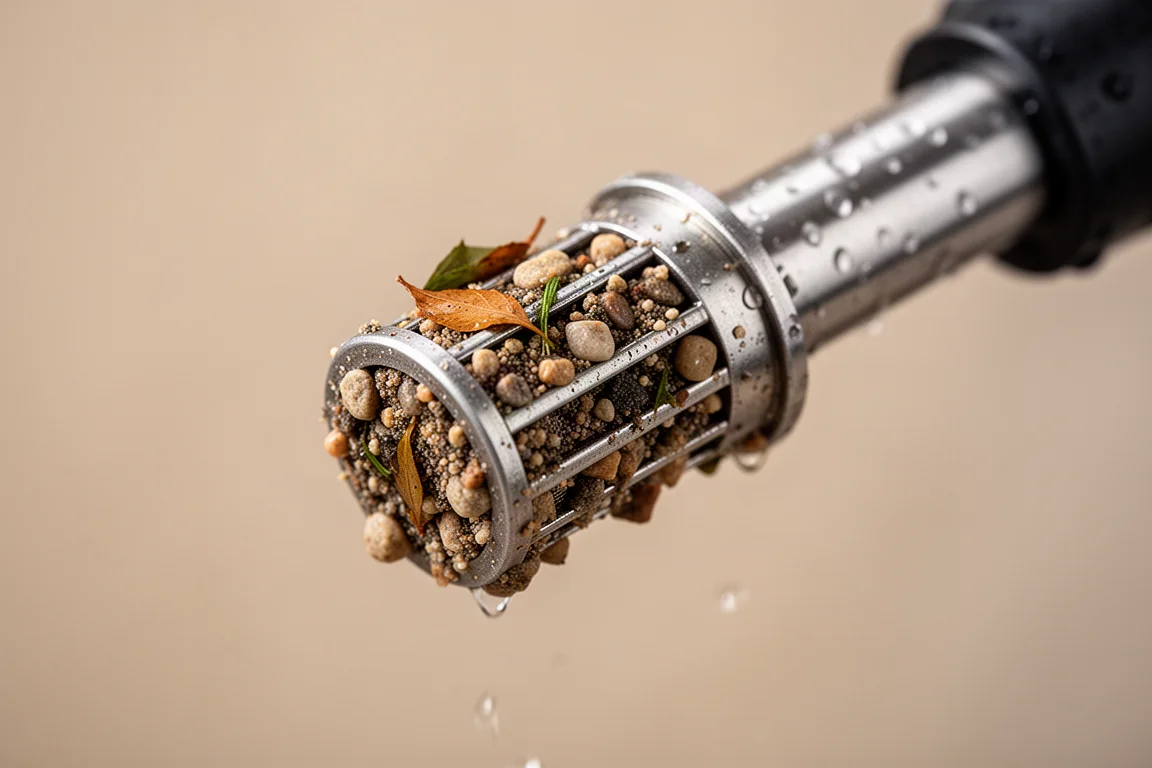
There is also a disassembly caution: when removing the filter cage, hold the cage and the motor housing firmly while undoing it. If you grab the shaft instead, there is a real chance of unscrewing the whole motor section and exposing the internal wiring. It is a small thing, but it turns the pump into an awkward bench subject, and it is the kind of detail worth knowing before your first teardown.
Finally, manage expectations on residue. It leaves a shallow layer of water behind, and silting up will slow any battery setup down. Neither issue is a dealbreaker for the pump’s core job of bulk-moving water out of a hole.
Buying Advice
If you already own M12 batteries, the BSTP slots into the system neatly and the 6 amp hour pack is the one to pair with it for sustained pressure. If you are buying into the platform just for this tool, factor the battery cost in. For occasional small jobs, the 2 amp pack is adequate.
Conclusion
The M12 BSTP stick pump is not flashy, but it does one job very well: moving standing water out of places buckets and drains cannot easily reach. Strong flow close to its rated 34 liters per minute, a genuinely useful head height, one-handed operation, and a simple switch make it an easy tool to like. Just use a higher capacity battery for long runs, keep the filter clean, and flush it after dirty jobs, and it should be a fixture in the kit for years.
Product link
View more details for Milwaukee M12 BSTP Stick Pump (Model 2579)
This product is mentioned in the review. Check the specifications, options, and compatibility before buying.
View more details for Milwaukee M12 BSTP Stick Pump (Model 2579)Further reading
Related Reviews
Power Tools
Best 1-Inch Pistol Impact Wrenches: Three Heavy-Duty Options Compared
We compare three 1-inch pistol impact wrenches, from a budget-friendly Harbor Freight model to a premium Caterpillar unit, to help you choose the right one.
Power Tools
Best 3/4-Inch Impact Wrenches 2026: Five Contenders Compared
We compare five 3/4-inch impact wrenches across price and performance, from a budget Amazon option to Snap-on's most powerful model yet.
Power Tools
Best Budget Cordless Tools 2026: Walmart Finds That Punch Above Their Price
We tested five cordless tools from Walmart, including a high-torque impact wrench that trades blows with Milwaukee and a $35 duster that outperforms its price class.