EDC & Tools
Four Milwaukee Fastback Alternatives Worth a Look in 2026
Utility knives from Gerber, Oknife, and Civivi that break away from the standard Fastback style with better grip, more tools, and stand-out designs.
Introduction
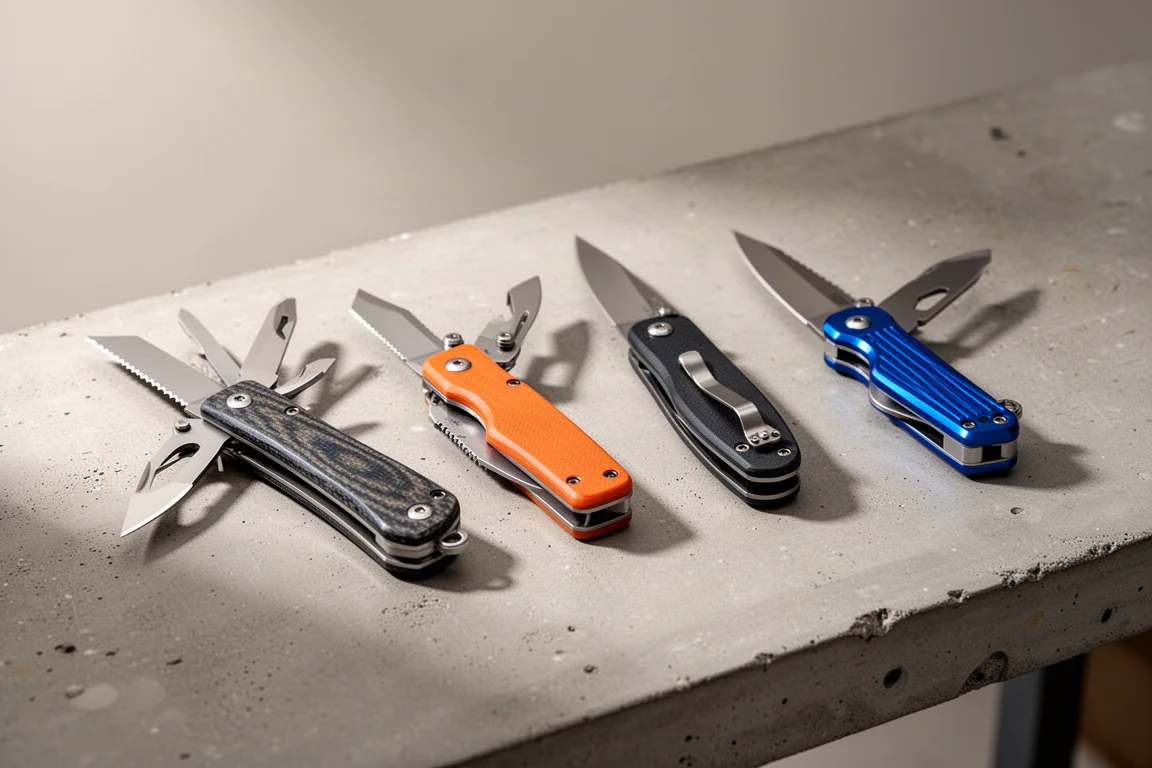
The old screwdriver-and-screws utility knife is mostly gone from job sites, replaced almost everywhere by the Fastback-style folding blade. That shift solved the slow blade changes, but it created a new problem: everyone carries the same knife, and yours disappears into a pile of identical tools. If you want to keep the quick-change convenience but own something nobody else on the site has, these four alternatives are worth a close look.
Why Look Beyond the Fastback
Fastback-style knives earned their popularity for good reasons. They deploy fast, they clip into a pocket so you don’t always need a full tool belt, and blade changes take seconds. After years of relying on that style, the appeal is obvious.
The downside is sameness. When everyone on site carries the same tool, marking your knife with spray paint becomes the norm, and there is no real distinction in grip, features, or form factor. The four knives below keep the replaceable utility blade concept but add textured handles, extra tools, more compact sizes, or a design that doesn’t scream utility knife at all.
Evaluation Criteria
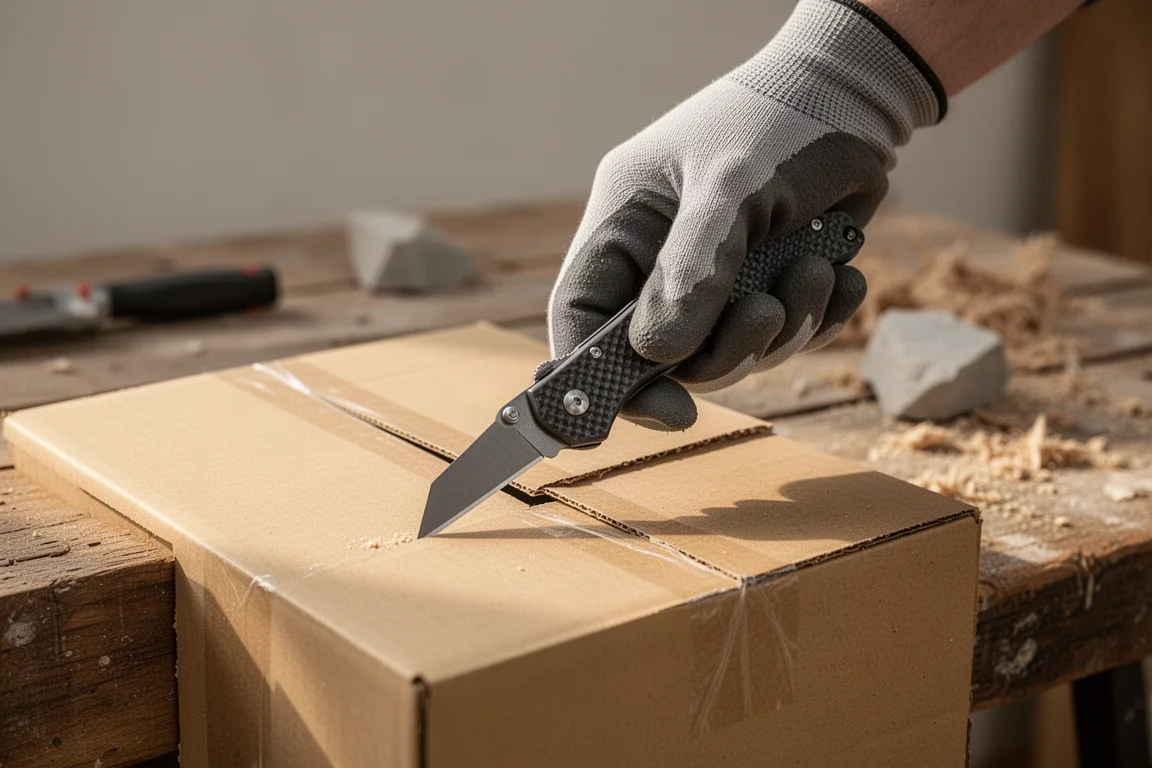
Each knife was judged on a few practical points: how quickly it deploys and retracts, how easy the blade change is, how well the handle grips when hands get sweaty, what extra tools are included, and how visibly distinct it is from the standard Fastback. Price matters too, since these range from budget-friendly to roughly double the cost of a typical Fastback.
Gerber Pyramid Utility Multi-Tool
The Gerber Pyramid is the easiest pick for anyone in the trades who recognizes the brand. It is not just a knife: it packs eight tools in one, including a pry bar, large and small flat drivers, a nail puller, a wire stripper, a bottle opener, and a slide lock, all around a full-size utility blade.
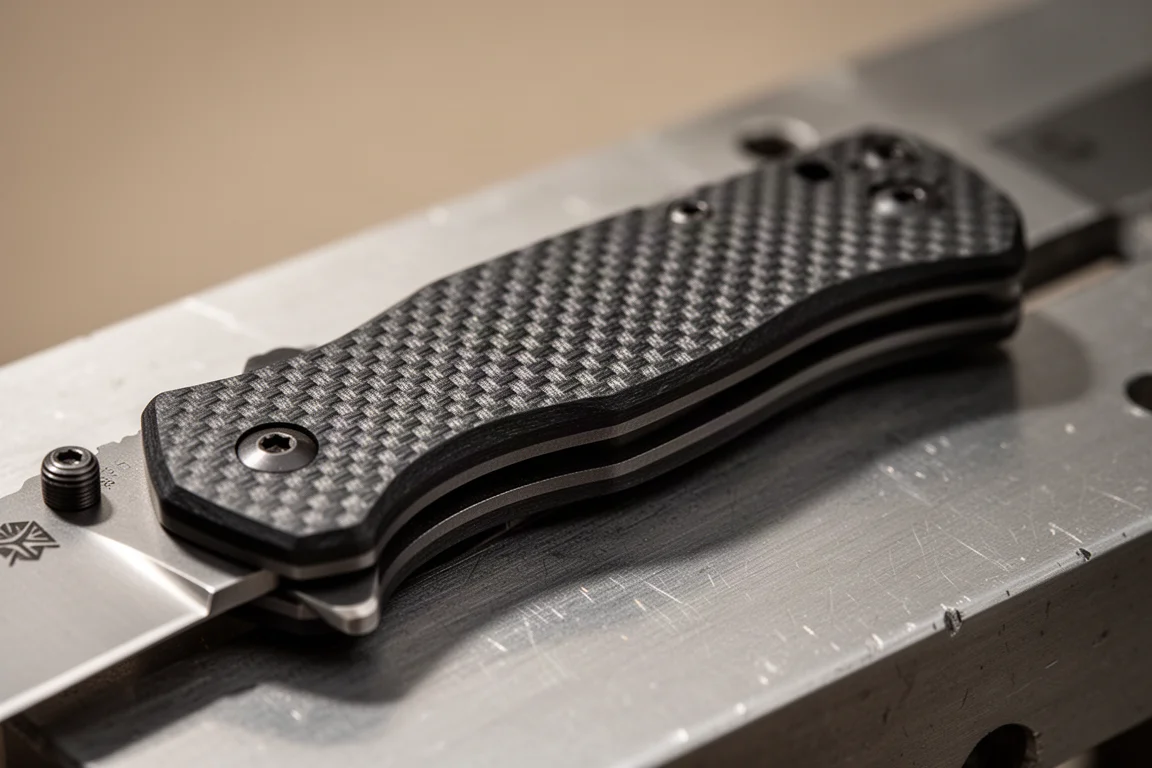
The standout feature is the handle. While most job-site knives use cheaper plastic scales, the Pyramid uses G10, a fibrous composite that can be made very grippy. For anyone whose hands get sweaty on the job, that texture makes a genuine difference over slippery plastic. It also has a positive stop, so the blade is either retracted or fully deployed and cannot sit half-open in a pocket.
Blade changes are quick: lift the retention, pop the blade out, and swap it. Retraction is slightly finicky at first, since the blade needs a push to reach the positive full-extension stop before it folds. There is also a rope-cutter slot that accommodates larger rope, plus a lanyard hole. At $24.95, it is a viable, tool-rich alternative, and nobody else on the job site is likely to be carrying one.
Oknife Octal
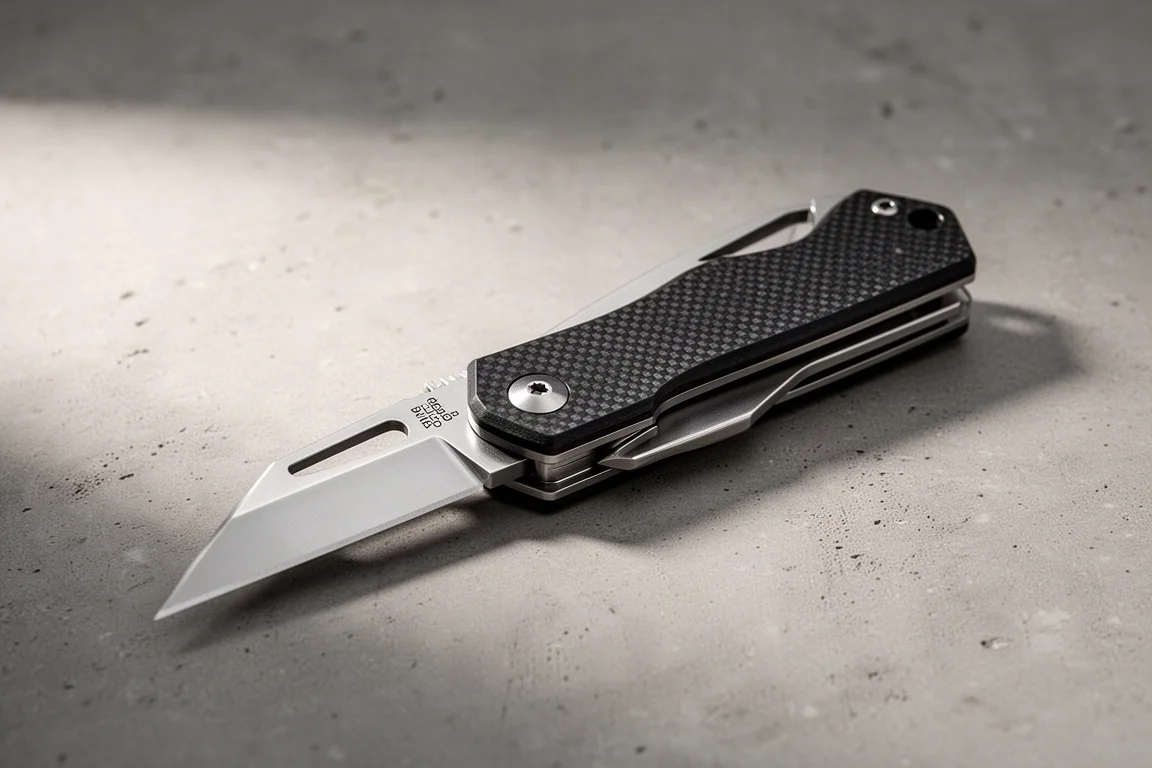
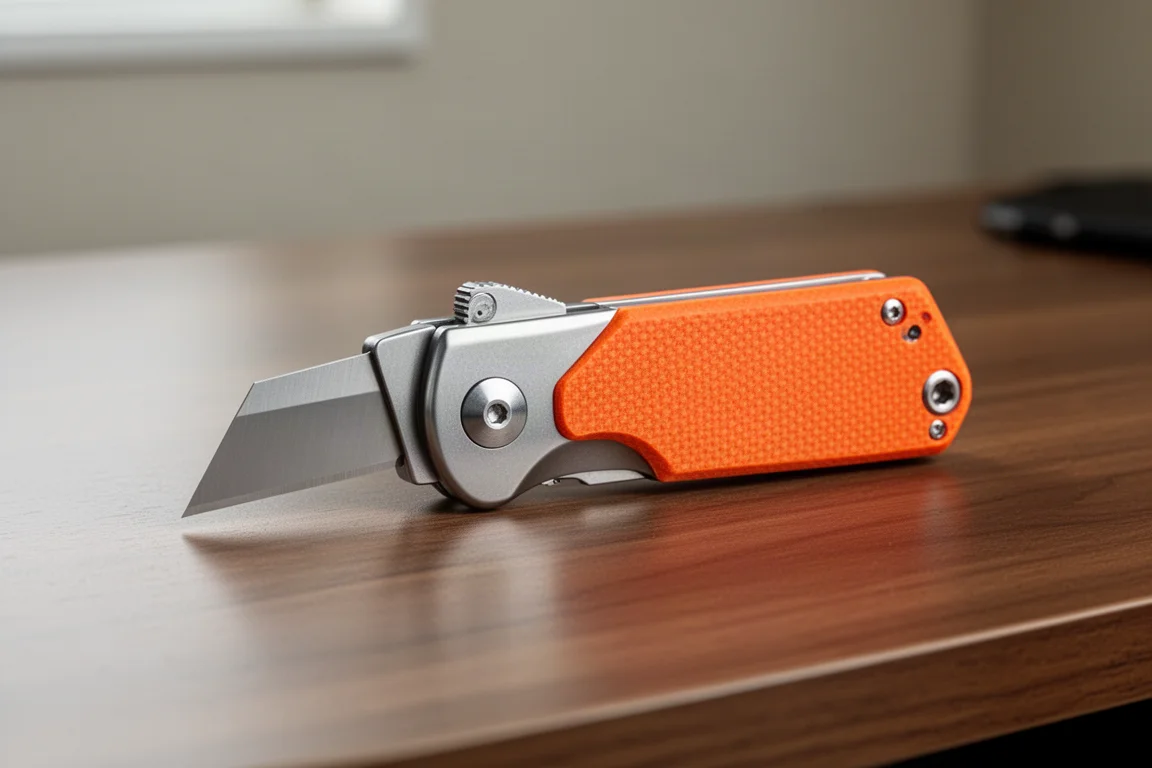
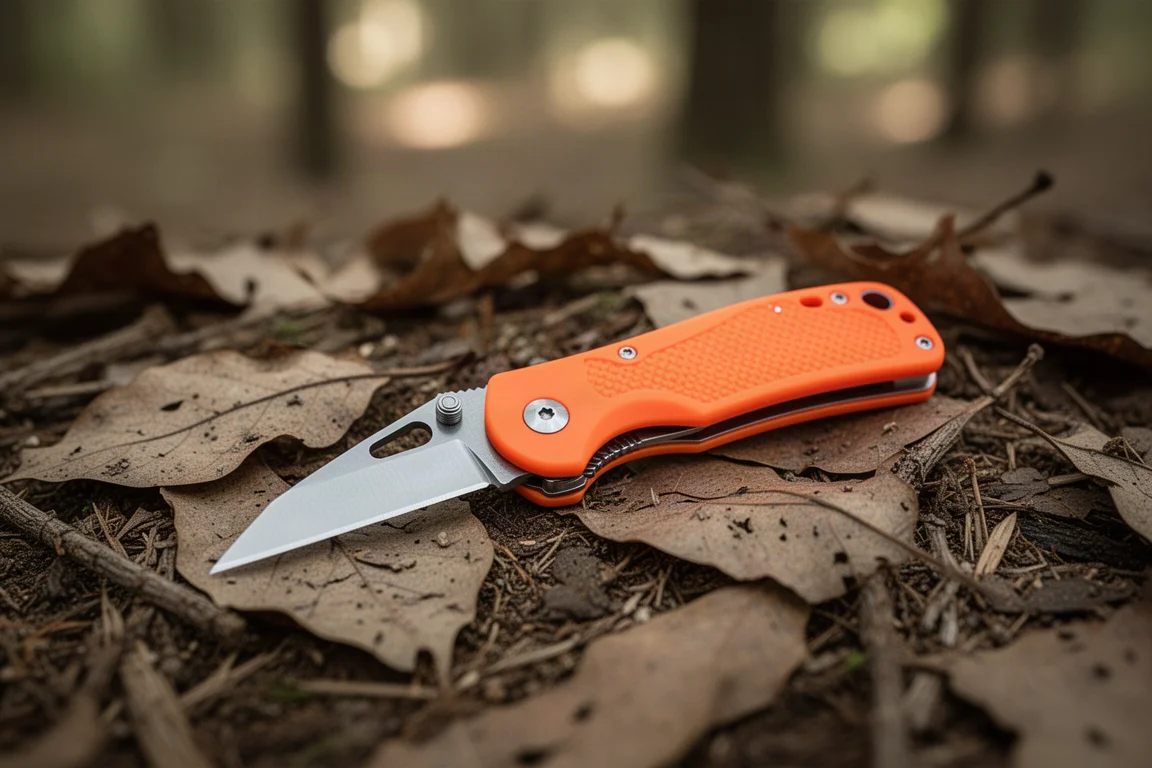
The Oknife Octal takes a tighter form factor around the utility blade, more compact than the Gerber. The G10 scale is one-sided, with steel on the other side, and the bright orange finish makes it hard to lose, a genuine plus for hunters and outdoors users whose camo and OD-green gear tends to vanish when dropped.
Deployment uses a two-position lock. The first position suits small cutting duties like box opening, while the second full deployment position handles more aggressive cutting. Extras include a bottle opener and a small hex drive sized for the number-8 hex, a popular size for quick maintenance tasks. There is also a modest prying tool, less feature-rich than the Gerber’s pry bar but present.
The size difference is striking: even the more compact Fastback dwarfs the Octal. That makes it a natural second knife for everyday carry, letting you save your main premium-steel pocket knife from the wear of cutting cardboard. It comes in noticeably less expensive than the Gerber, and the build quality feels solid. Of the options here, this is the one most likely to end up in a pocket as a daily add-on.
Oknife Why Work Pro
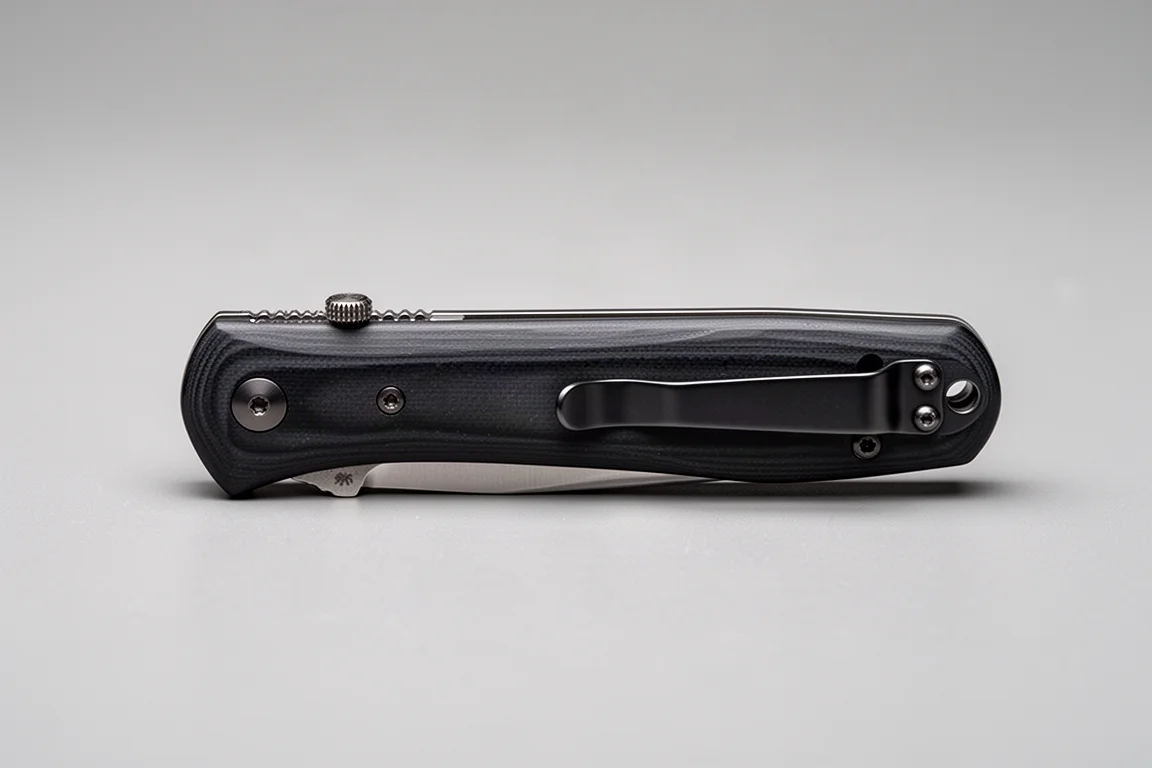
The Oknife Why Work Pro takes full-size utility blades but wraps them in a traditional folding knife design with a G10 handle. It weighs just 2.3 ounces and is balanced to feel like a regular handsome pocket knife rather than a job-site tool, which is exactly the point: it does not announce itself as a utility knife.
The G10 here is smoother than on the Octal, and the deep pocket clip achieves genuine concealment. In a pocket, it reads as a pen or a small flashlight, not a knife. Deployment options are flexible: thumb studs for opening and a retention toggle for quick deployment and retraction, with jimping on the spine and a lanyard hole at the rear.
The trade-off is blade changes. The blade holder unscrews, then the blade is pushed up and pulled out, tilted back in, and resecured. You can leave the screw in place so it doesn’t fly off, but with gloved hands a blade swap is not quick. At $24.99, it is a fine choice if you value looks and pocketability and don’t swap blades constantly.
Civivi Elementum Utility
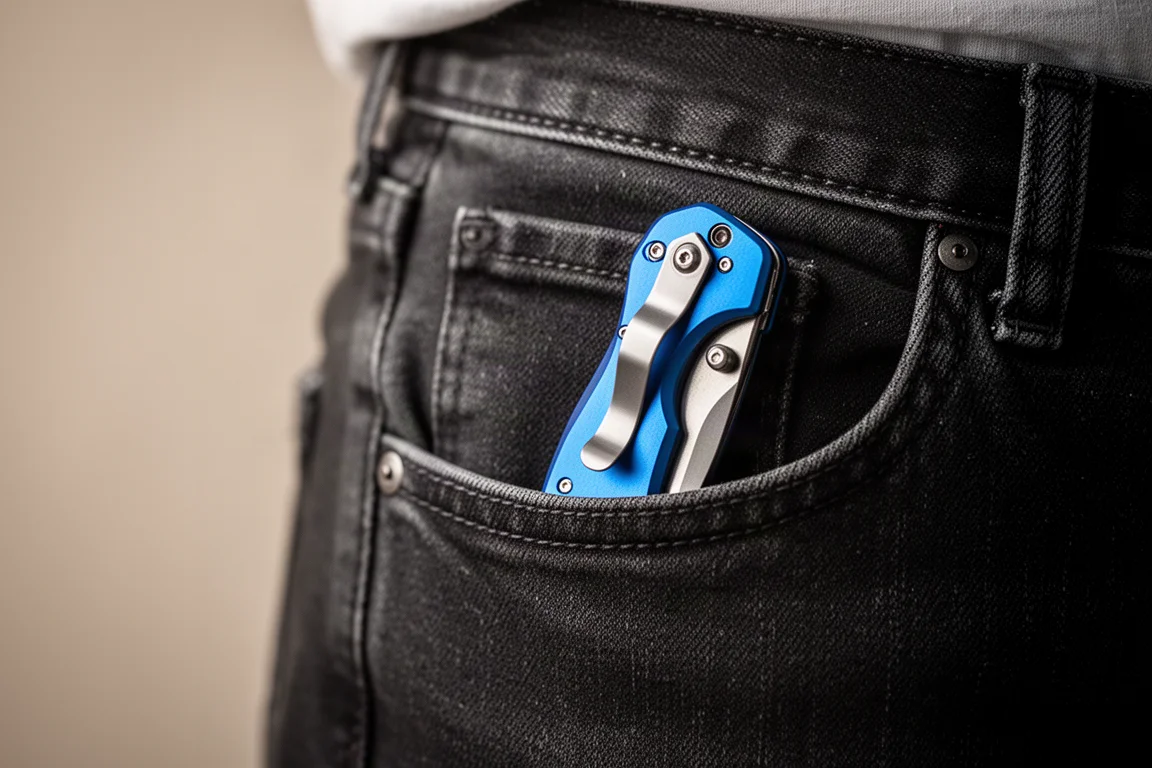
The Civivi Elementum Utility arrived as the most eye-catching of the group, released for Civivi’s ten-year anniversary. It has a blue anodized aluminum handle, a stonewashed stainless steel blade holder, and a plain 6CR blade. The unboxing itself is a step above: a white presentation box, a case, a cleaning cloth, replacement blades, and a spare screw included in the package.
The fit and finish is excellent, and rapid deployment is clearly a design priority. A flipper opens it smoothly, a plunger handles retraction and deployment, and jimping at the finger tang and spine adds grip where it counts. The deep pocket clip conceals well, though the aluminum handle, while more durable than plastic, can become slippery, the very issue G10 solves elsewhere on this list.
The deal breaker is the blade change: it requires a separate tool, and that tool is not included in the kit. If you cut aggressively and swap blades often, that’s a problem. If your cutting is lighter and less frequent, the Elementum Utility at $42.50, roughly double the price of the others, is as much a luxury pocket knife as a utility knife, and the case and included extras soften the cost somewhat.
Overall Buying Advice
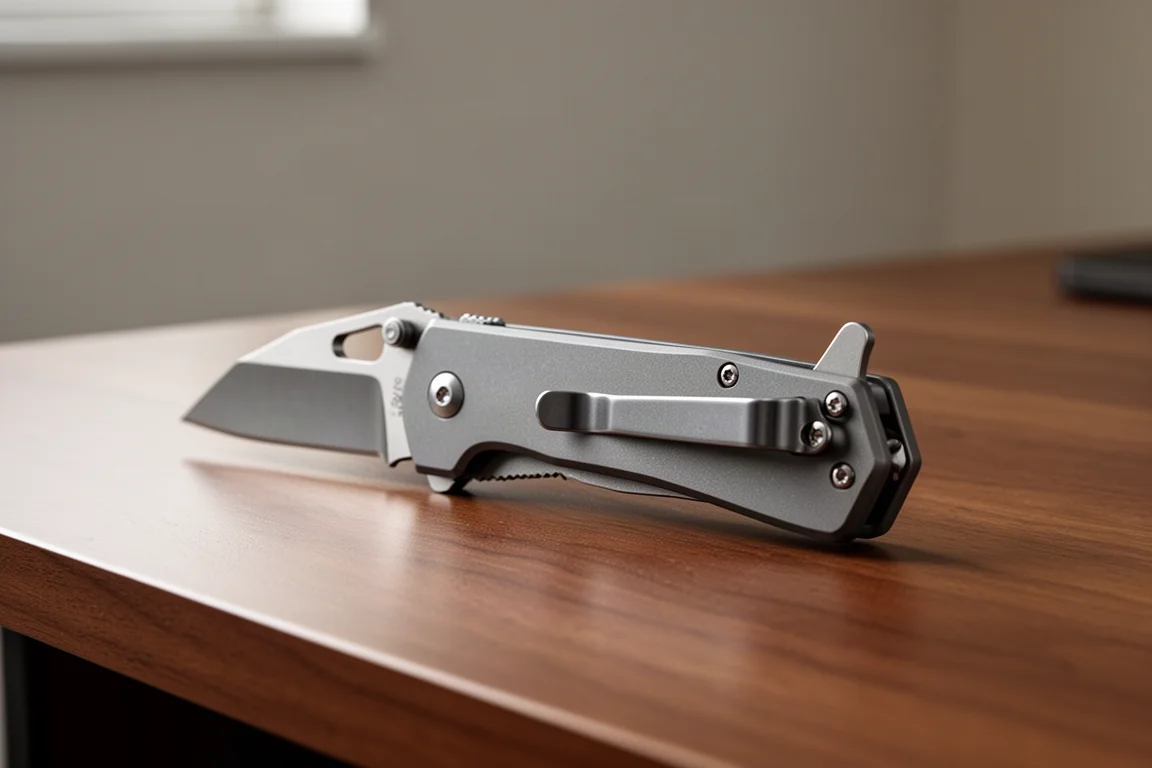
If the goal is to replace a Fastback outright, the Oknife Octal is the strongest pick: it needs no extra tools for blade changes, it is more compact, and its bright color means no mistaking your knife for anyone else’s on the job. If you want more tools in one package, the Gerber Pyramid earns its $24.95 with eight functions and a genuinely grippy G10 handle. The Oknife Why Work Pro suits anyone who wants a utility knife that looks like a refined pocket knife, accepting a slower blade change. The Civivi Elementum Utility is the premium style pick, best for lighter-duty cutting where presentation and finish matter more than quick blade swaps.
Conclusion
The Fastback style earned its place, but it no longer has to be the only answer. Between the Gerber’s multi-tool practicality, the Oknife Octal’s compact everyday-carry appeal, the Why Work Pro’s traditional good looks, and the Civivi’s premium finish, there is an alternative here for nearly every kind of user, each one far less likely to be picked up by mistake on a busy job site.
Further reading
Related Reviews
EDC & Tools
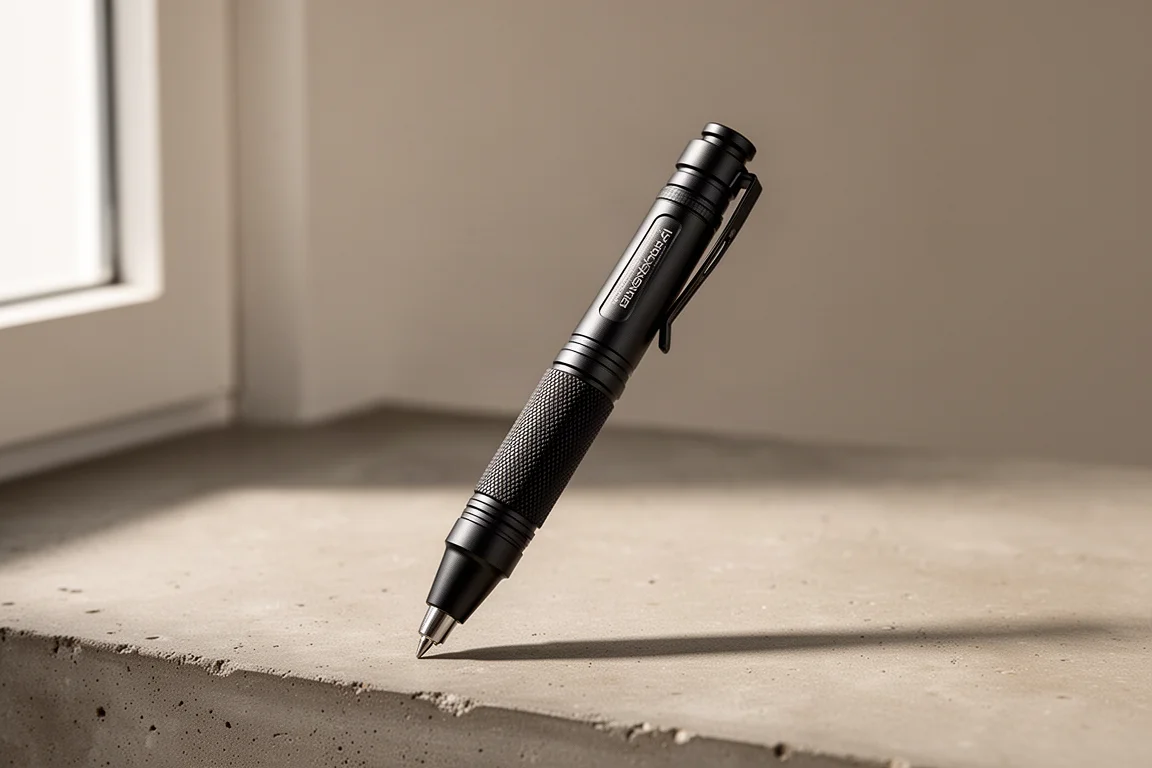
CRKT Pen With Carbide Scribe: An EDC Pen That Does More Than Write
CRKT's new pen pairs smooth writing with a hidden carbide scribe and a clever collar that hints at even more utility, all under fifty dollars.
EDC & Tools
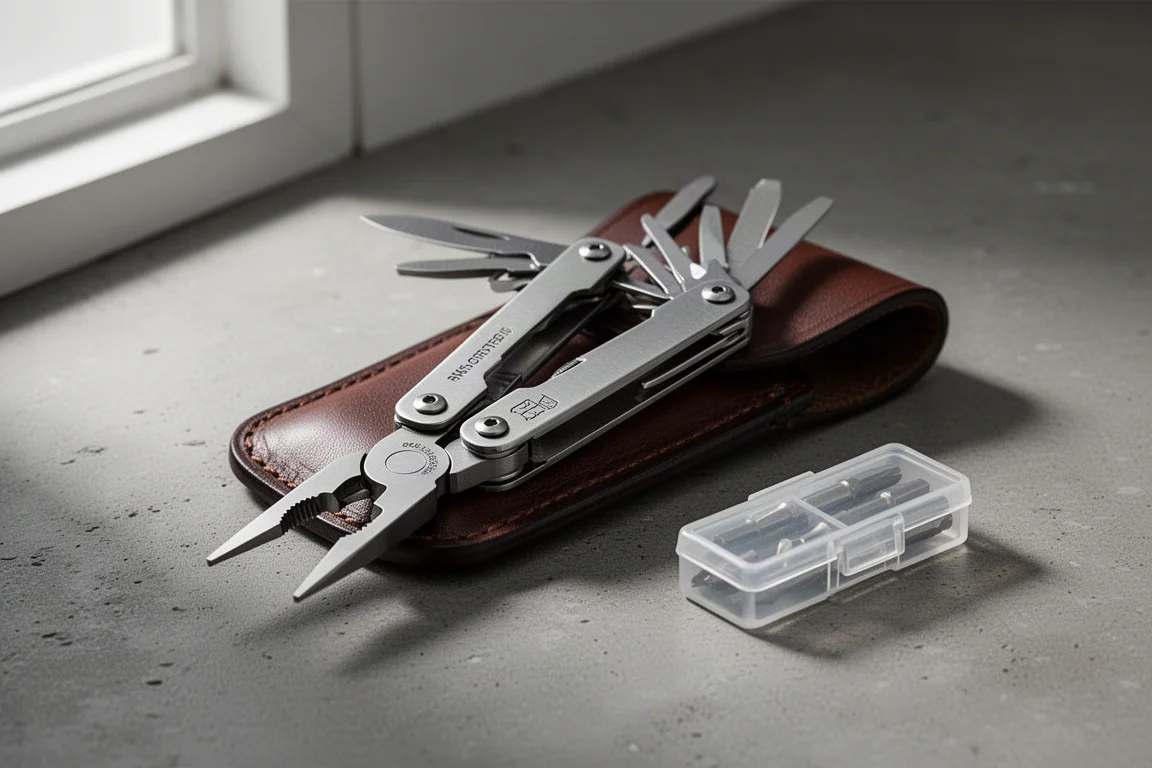
Victorinox Swiss Tool X Deal: A Rare Discount on a Premium Multi-Tool Kit
The Victorinox Swiss Tool X with leather sheath and bit kit is selling at a discount lower than we have seen before. Here is what you get and who should grab it.
EDC & Tools
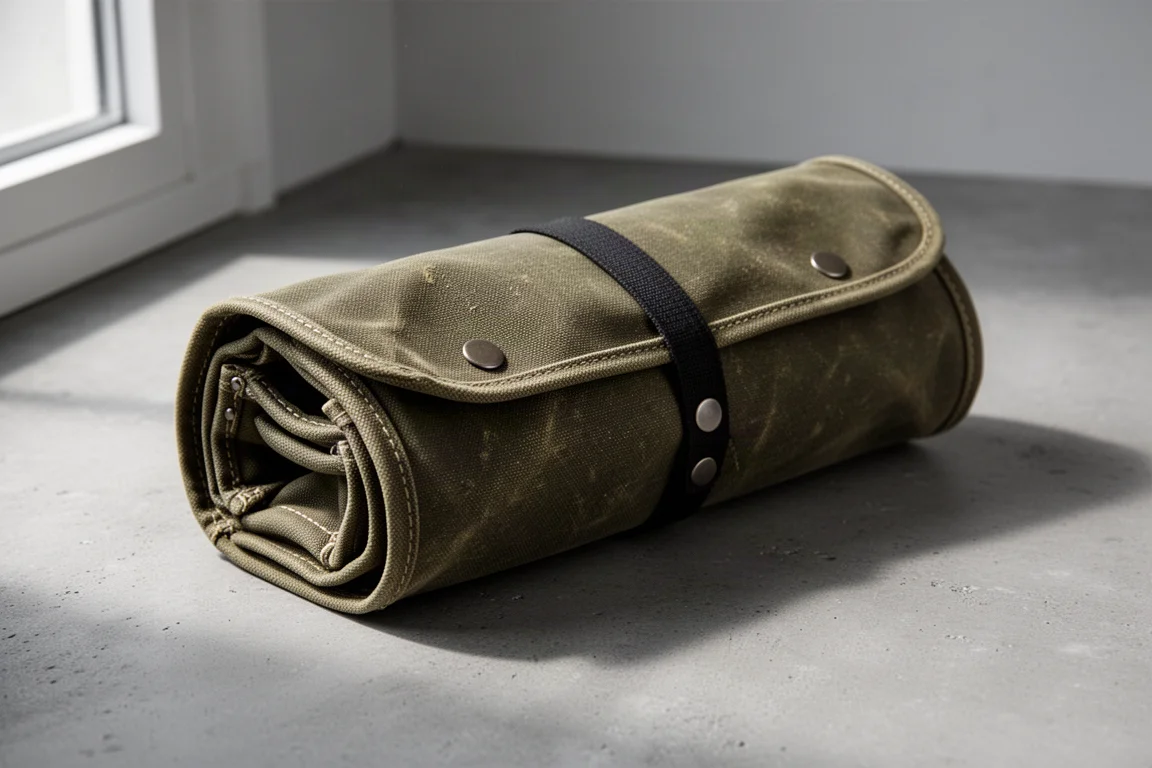
Olight Exploit Mini Tool Roll Review: Compact EDC Organization for $17
A small six-pocket tool roll with a waxed canvas build, velvety lining, snap closure, and enough flexibility for knives, pliers, or a compact tool set.