Power Tool Accessories
Milwaukee Condrive: The Drill and Drive System That Stops Stripped and Snapped Tapcons
A dedicated sleeve-and-clutch system for rotary hammers that sets Tapcon masonry fasteners correctly every time, without over-driving the screw or blowing out the hole.
Introduction
Anyone who has fastened into concrete with Tapcons knows the pattern: with small fasteners you either strip the screw head or snap the fastener entirely, and with larger ones you can blow out the hole. The usual approach is to drill with a hammer drill and the supplied masonry bit, then swap to a nut setter or driver on an impact tool and hope the torque lands in the right place. More often than not, it doesn’t. Milwaukee’s Drill and Drive system, built around the Condrive sleeve, is designed to end that cycle by pairing a rotary hammer with a clutch-controlled drive attachment.
Why Tapcons Go Wrong With the Usual Setup
The typical routine looks like this: chuck the supplied masonry bit into a hammer drill, set it to hammer mode, drill and evacuate the hole, then switch to a nut setter and drive the fastener into the masonry. The problem shows up at the driving stage. The hole can blow out so the fastener never sets any deeper, even at higher torque, leaving it wiggling in place. On the reverse end, the fastener can snap, forcing you to drill a new hole next to the old one. Neither outcome is ideal, and it comes down to using the wrong tool for the driving step.
The recommendation that emerges is simple: drop the impact driver entirely, keep the hammer drill for drilling, and if you are setting a large number of masonry fasteners over time, step up to a rotary hammer. Combined with the right accessory, that setup sets every Tapcon the right way.
What Comes in the Kit
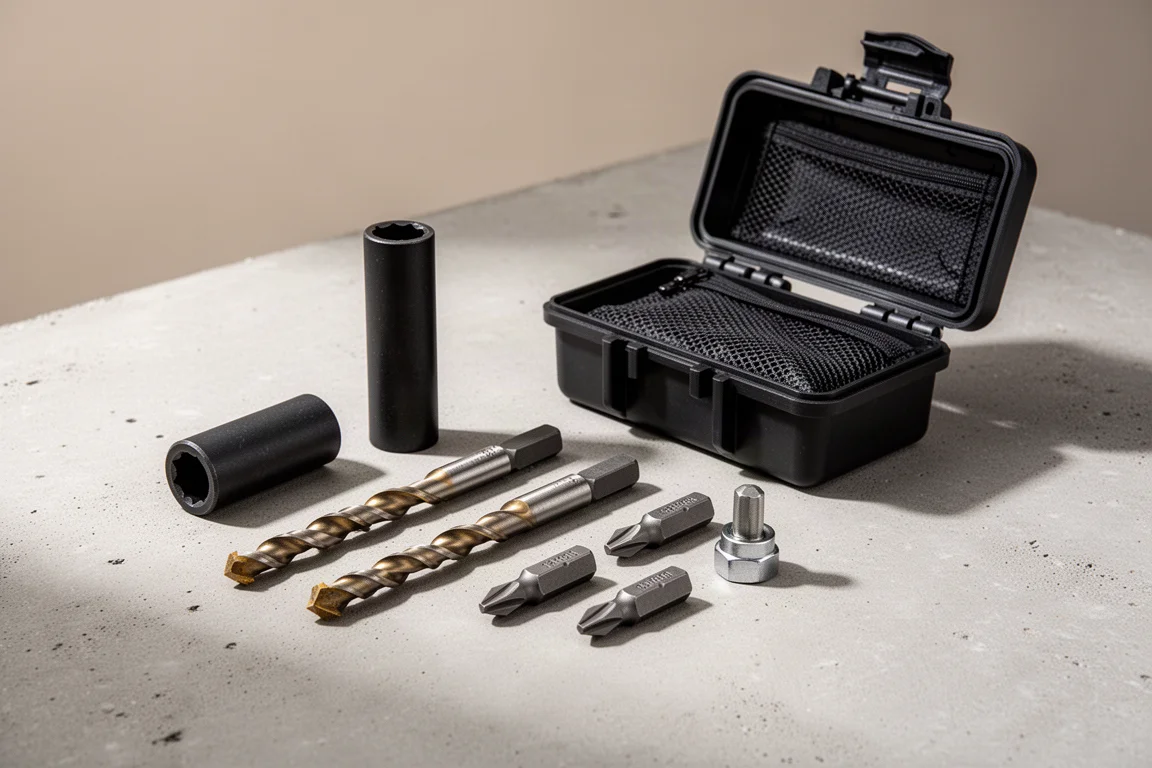
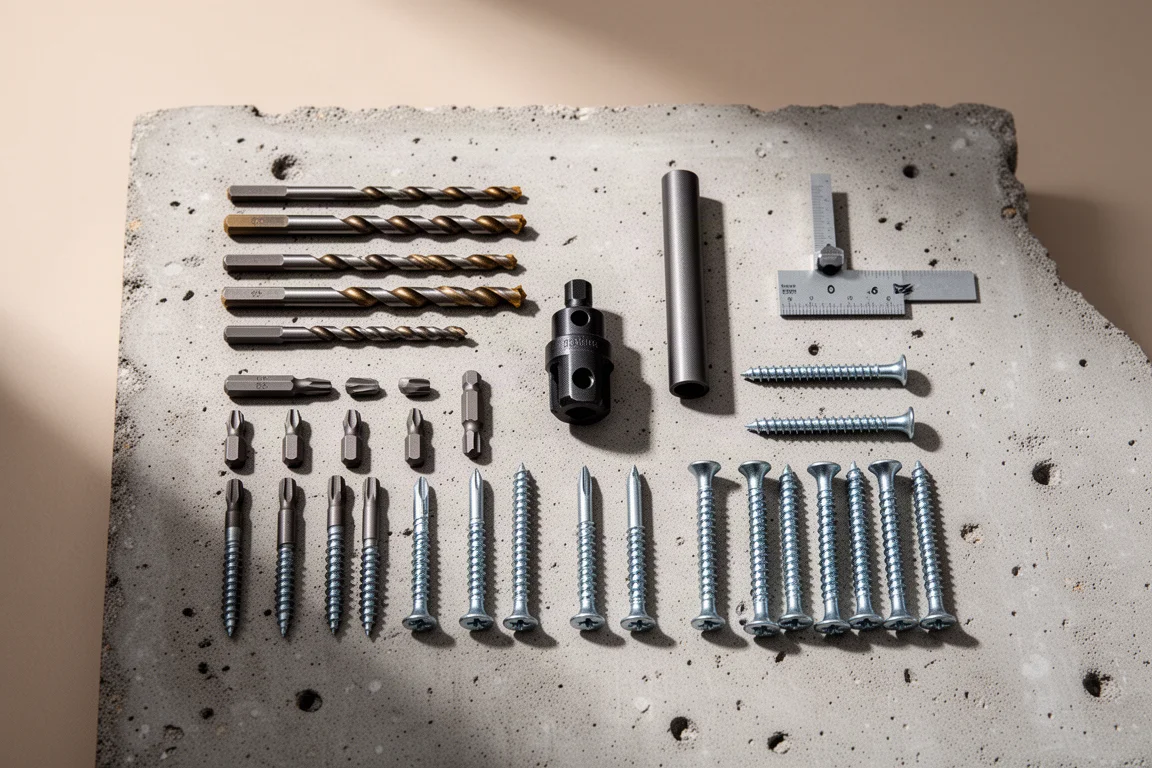
The Milwaukee Drill and Drive kit is built specifically for use with rotary hammers and Tapcon fasteners. It includes two masonry bits sized for different fastener diameters (5/32-inch and 3/16-inch), a #2 Phillips driver, a #3 Phillips driver, and nut setter attachments for 1/4-inch and 5/16-inch fasteners. Everything fits into a compact case with a mesh pouch, so you can see the contents at a glance.
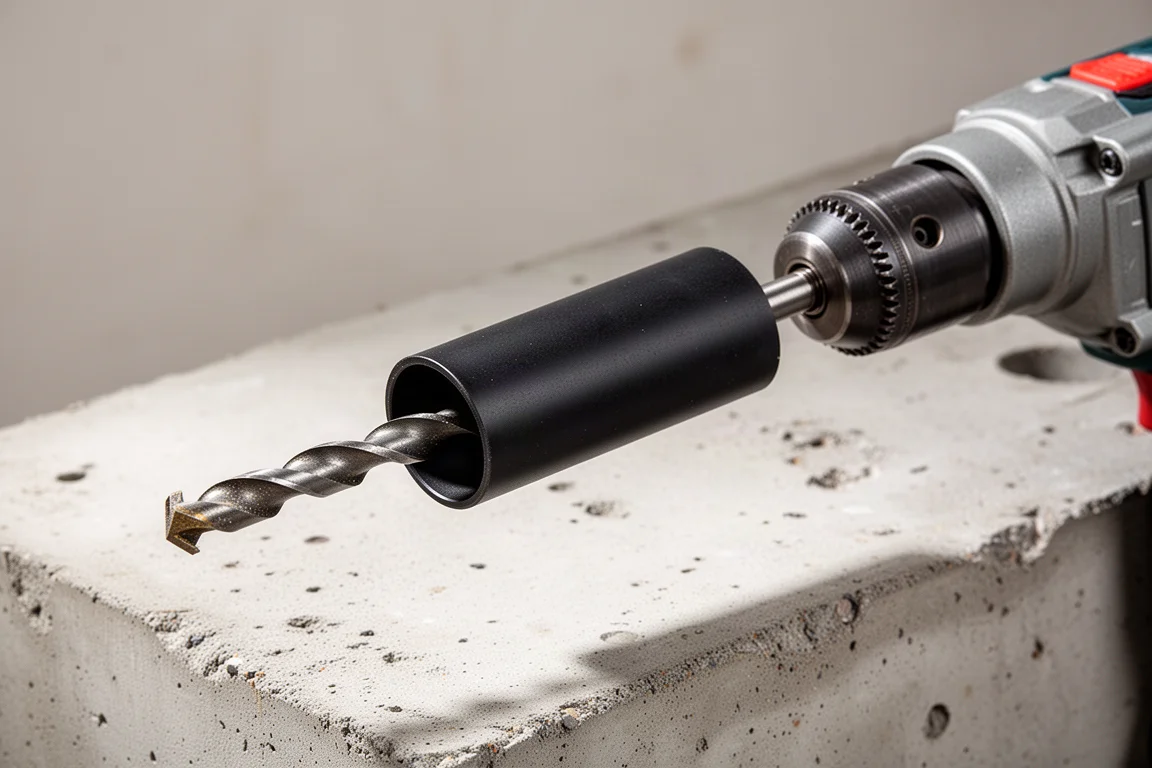
The heart of the system is the Condrive sleeve. The bits fit into it, and your chosen driver inserts into the end of the sleeve. One important detail: the masonry bits must have a hex portion on the shank to work with the sleeve. If a bit doesn’t have that hex portion, it won’t be compatible. Standard rotary hammer or SDS Plus bits without the hex portion won’t work, though if you already own compatible hex-shank bits you can use them instead.
How the System Works in Practice
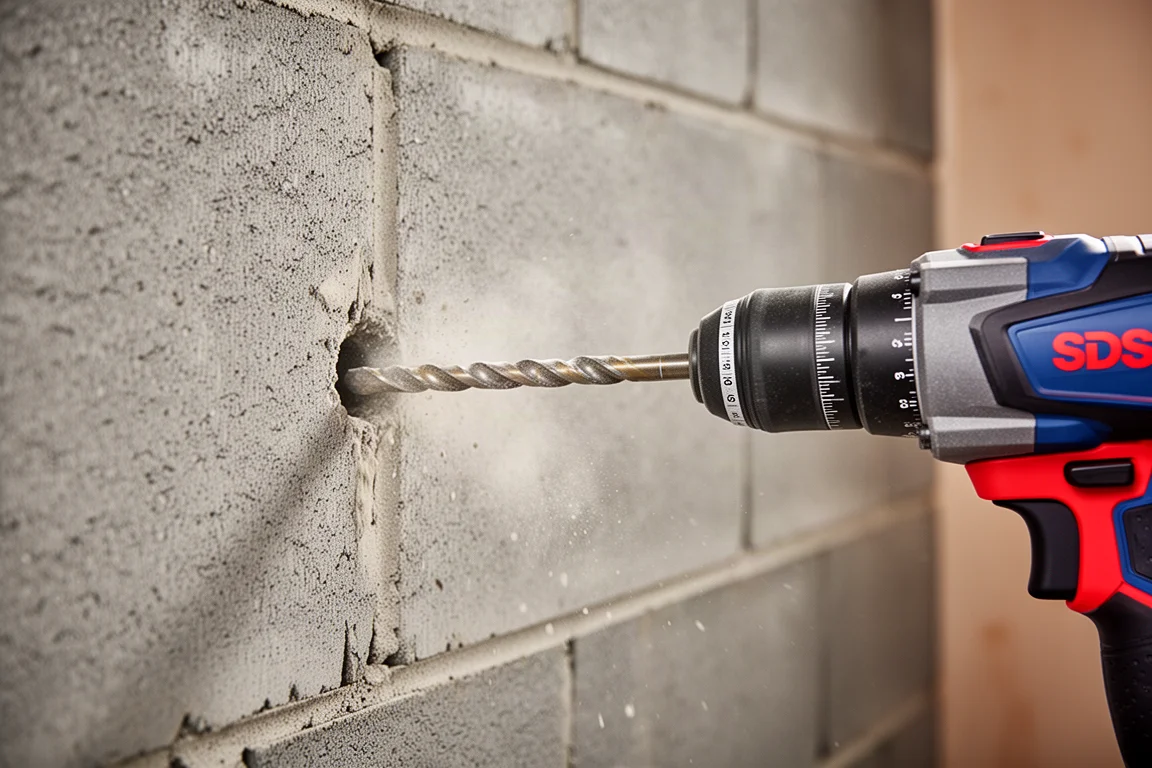
The workflow removes the tool swap entirely. You set your depth gauge slightly longer than the fastener you are setting, drill the hole, and evacuate it. Then, without taking the bit out of the rotary hammer, you pop the Condrive sleeve over the bit, insert the appropriate drive (your choice of #2 Phillips, #3 Phillips, or a nut setter), seat the fastener, and drive.
The clicking you hear during the drive is the clutch mechanism, not the fastener spinning loose. It applies the right amount of torque to set the fastener and nothing more, which is what prevents over-driving, snapping, and blown-out holes. Switching fastener sizes only means swapping the bit and driver; the sleeve stays put.
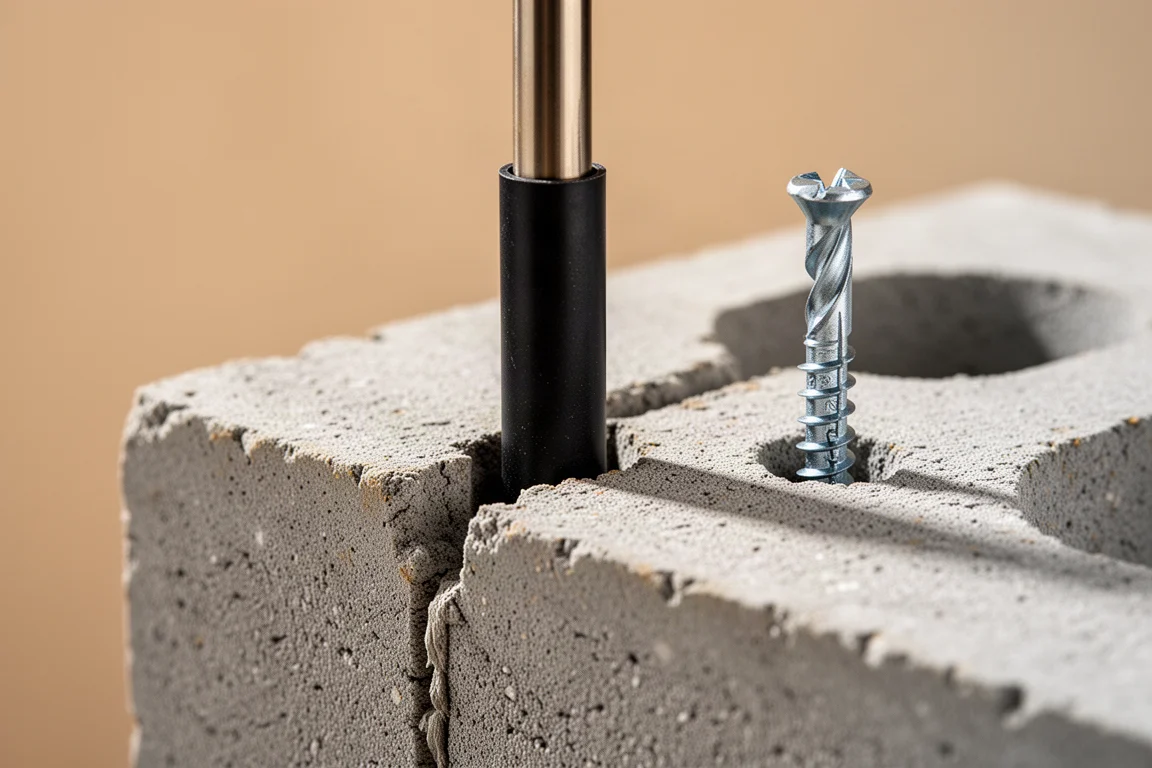
A practical note on fastener choice: #2 Phillips is the least satisfying drive to work with, and #3 Phillips is preferable when the fastener needs to sit flush. If the application allows a hex head, that is generally the most positive drive of the three.
Should You Add This to Your Toolkit?
If you only drop a handful of Tapcons a year, the conventional approach may keep working for you, and your existing bits may already be compatible if they carry the hex portion. But if you set masonry fasteners regularly, the case for the Condrive is straightforward. Tapcons themselves are relatively inexpensive, and the stakes of a snapped or blown-out fastener, which means re-drilling and a weaker connection, make a dedicated system a sensible investment. For rotary hammer owners, this is one of those accessories that changes the job from frustrating to routine.
Conclusion
Most Tapcon failures trace back to the tools used for the driving step, not the fasteners themselves. Milwaukee’s Drill and Drive system pairs a rotary hammer with a clutch-equipped sleeve to apply consistent, controlled torque, setting fasteners correctly every time. If stripped heads, snapped screws, and blown-out holes sound familiar, this inexpensive accessory is worth a look.
Product link
View more details for Milwaukee Drill and Drive System (Condrive)
This product is mentioned in the review. Check the specifications, options, and compatibility before buying.
View more details for Milwaukee Drill and Drive System (Condrive)Further reading
Related Reviews

Power Tool Accessories
Best Drill Attachments 2026: Three DeWalt Tools Worth Buying
A practical look at three DeWalt drill attachments that deliver real value, plus the sketchy options you should skip.

Power Tool Accessories
Best Drill Bits 2026: 14 Sets Tested on Mild Steel, Spring Steel, and AR500 Armor
We tested 14 drill bit sets across mild steel, spring steel, and AR500 armor plating to find the best value, speed, and durability.

Power Tool Accessories
Best Right Angle Impact Adapters 2026: Five Options Tested for Speed, Torque, and Durability
We tested five right angle impact adapters from DeWalt, Milwaukee, Warrior, Titan, and Milescraft to see which ones deliver real performance without failing early.