Power Tools & Accessories
Milwaukee 333-15A Power Manager Review: Overnight Charging Without the Tripped Breaker
A 12-outlet power manager that staggers charger loads, prioritizes fast charging from the top down, and keeps a 15 amp circuit from tripping overnight.
Introduction
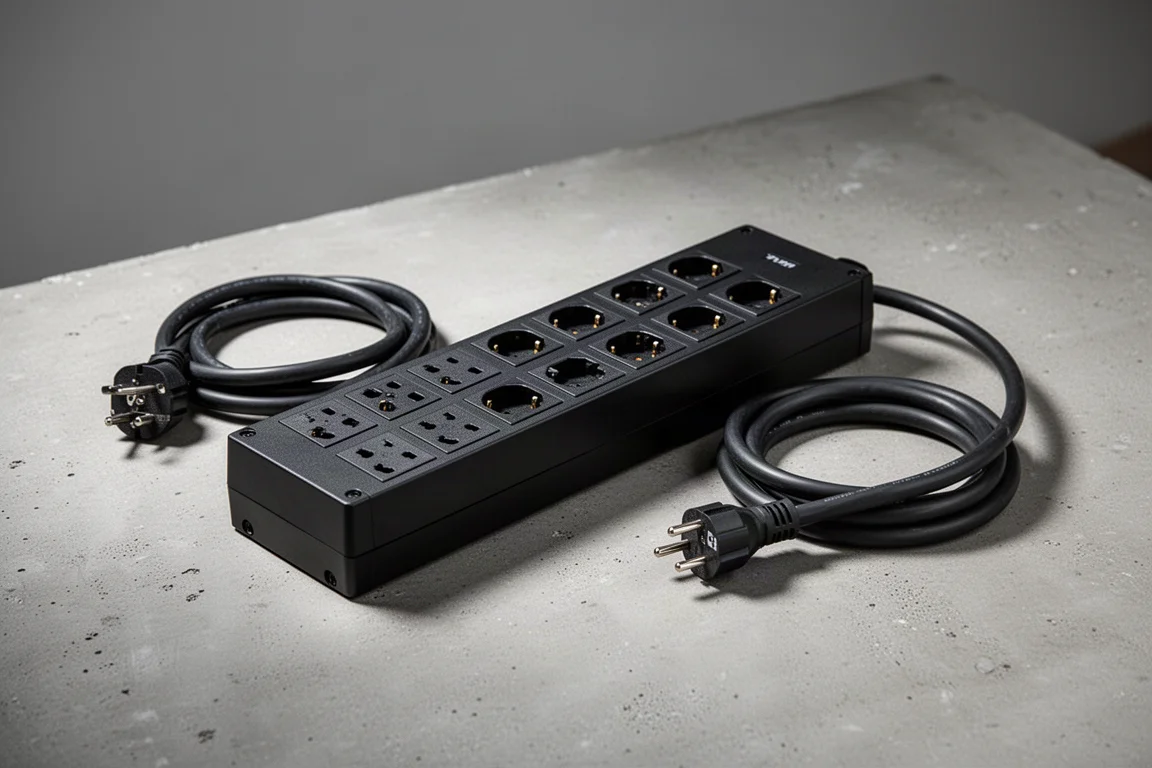
Buried underneath a tangle of cables and chargers sits one of the more quietly useful accessories in a power tool fleet: the Milwaukee 333-15A Power Manager. It is a 12-outlet unit designed to solve a familiar problem: you plug a dozen chargers into one circuit overnight and wake up to a tripped breaker and a trailer full of dead batteries.
The promise is simple. Twelve outlets assure you that batteries will be charged by morning and the breaker will not trip. Milwaukee makes versions for both 15 and 20 amp outlets, so it is worth checking which model matches your situation before buying.
How Load Prioritization Works
The power manager’s job is to assess how much power is being drawn from each plug, turning chargers on as needed and off when they stop drawing power. It prioritizes from the top of the unit to the bottom: anything at the top gets power first, then it moves down. That means your fast chargers should live at the top of the unit and the slower chargers at the bottom, which gives you a full night’s charge on everything connected.
One single power cord feeds the whole unit, and it is meant to be plugged into a 15 amp outlet on its own. When everything turns on at once, the unit deliberately overshoots the target before backing off. In testing it crept past 15 amps to around 16 or 17 before blinking and shedding load, eventually settling at a safe 12 amps, roughly 80% of the breaker rating. Once a battery finishes charging, that outlet turns off and the next one on the list comes online.
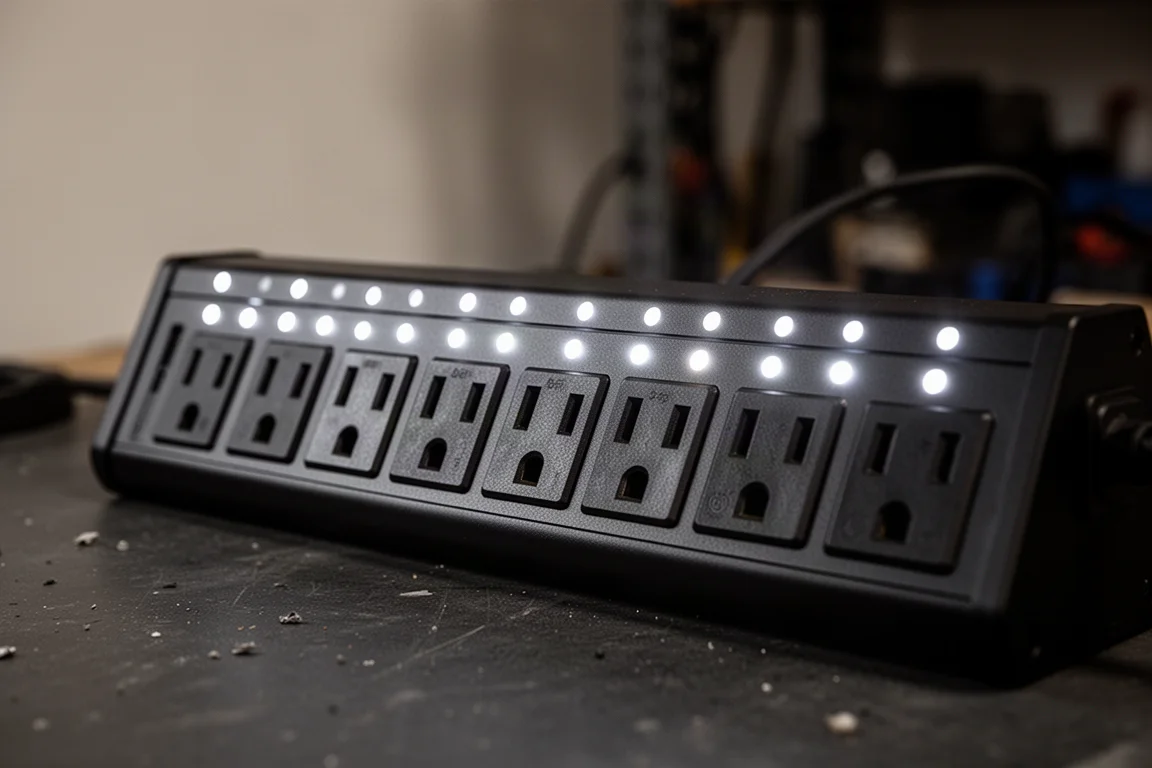
If a company adopts this, it pays to train the crew and maybe even label the outlets: the top chargers are the ones to use when you need batteries back ASAP, and the bottom ones carry less priority. Plugging two empty batteries into a fast charger up top immediately pulls power away from the lower-priority outlets so they charge as fast as possible.
Adjusting the Amp Limit
This is not just a trailer accessory. Using a connected power meter, you can raise or lower the total amperage the unit will draw. Dropped down to 3 amps, it leaves enough headroom to also run a vacuum, a miter saw, or anything else on the same circuit. If your circuit tends to drop at 10 amps, you can tone the limit down until everything works together.
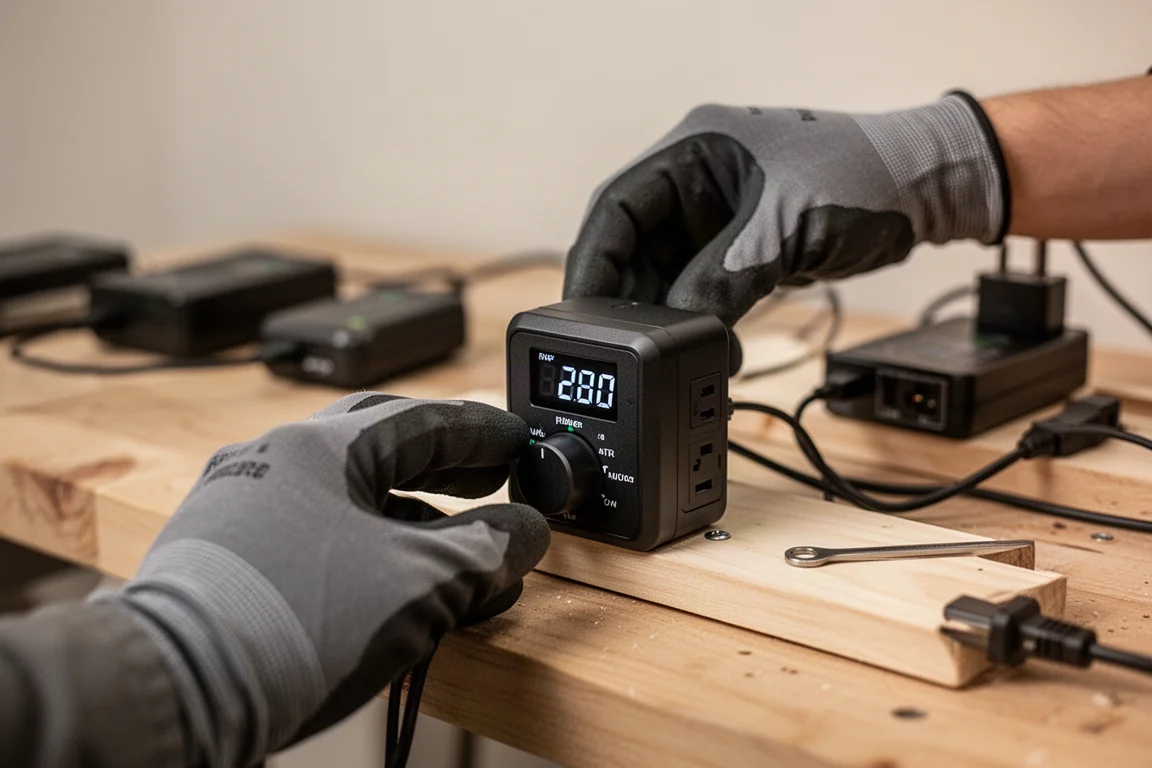
Milwaukee did not necessarily design it as a job site load limiter, but the adjustable ceiling makes it fit almost any circuit. The main trade-off is that initial spike when the unit first powers on: dropping the limit down two bars keeps the steady-state draw around 7.65 amps and keeps the peak under about 14.5 amps, but you may be charging at 9 amps when you could technically push 12. It likes to take the circuit right to the max and slightly over before coming back down, and how long it lingers above 15 amps is worth watching on a true 15 amp circuit.
Real-World Setup and Buying Advice
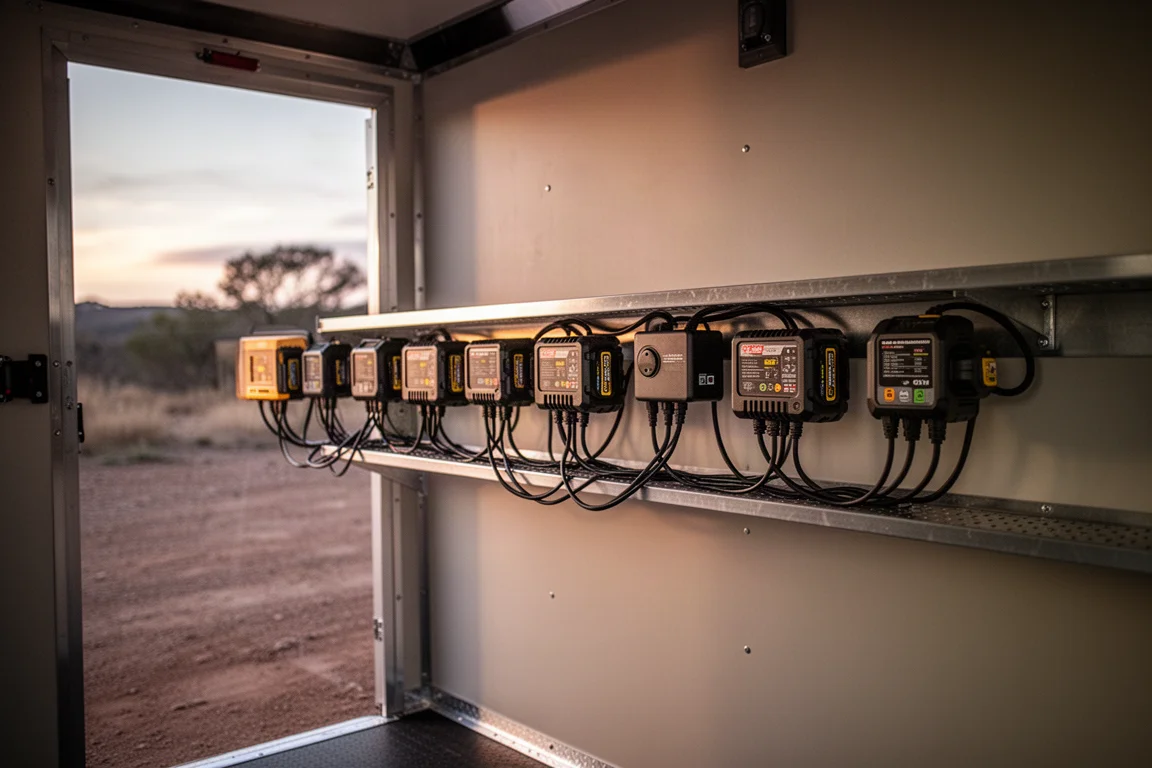
The intended home for this unit is a landscaping trailer with only one plug available. Run an extension cord out to the trailer, plug all the chargers into the power manager, and let it do its job so nothing overloads. Dropped down two bars, the setup held the draw under 14 amps while still charging at a safe rate, so nothing trips the breaker even on an extension cord.
The box and the unit itself both read 333-15A, confirming the 15 amp model, and the adjustment range makes it tolerant of the constant plugged-in, unplugged rhythm of a trailer that moves between sites.
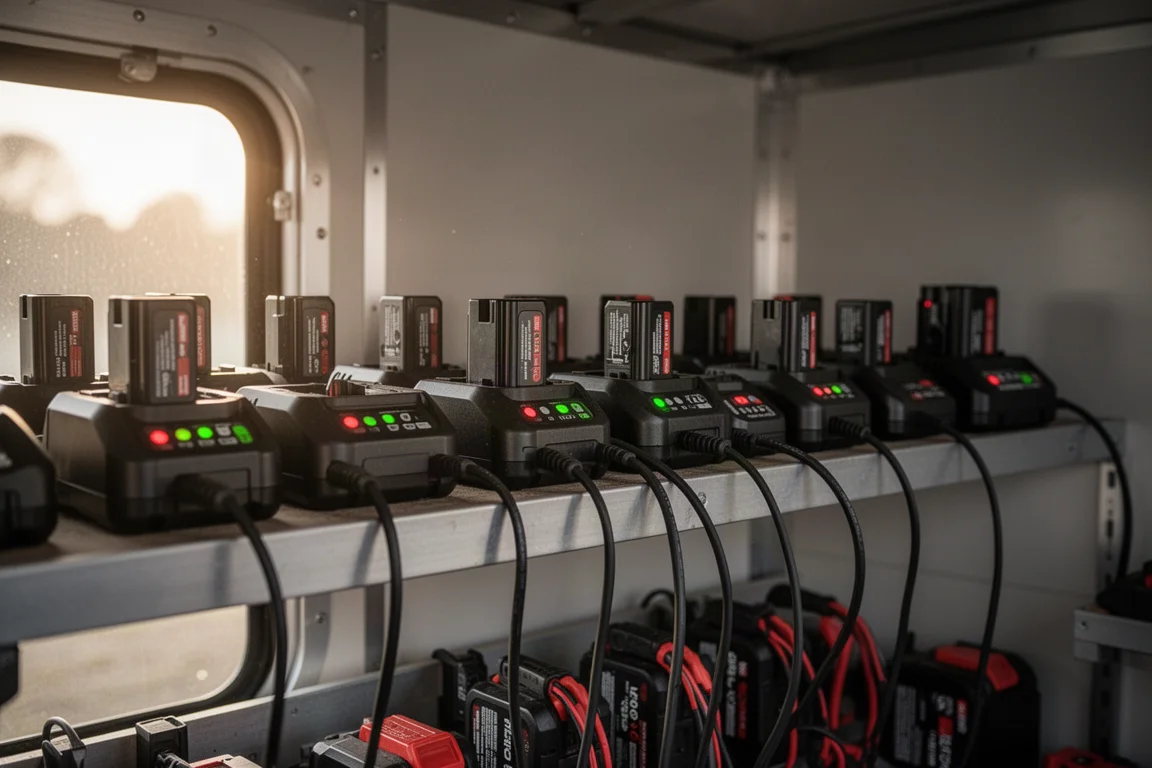
The real value is productivity. You get a dedicated charging station without needing a dedicated 15 amp circuit, you can plug in a pile of fast chargers from any brand, and come morning you know the batteries are charged and the breaker never tripped. You walk onto the job site ready to go.
Conclusion
The Milwaukee 333-15A Power Manager is a practical buy for any shop, trailer, or crew that charges a lot of tool batteries on a limited circuit. Its top-down prioritization, automatic load shedding, and adjustable amp ceiling deliver exactly what overnight charging setups need. Just be aware of the initial amp spike when it powers on, pick the correct 15 or 20 amp version for your outlets, and set sensible expectations with your crew about which chargers come first.
Product link
View more details for Milwaukee 333-15A Power Manager
This product is mentioned in the review. Check the specifications, options, and compatibility before buying.
View more details for Milwaukee 333-15A Power ManagerFurther reading
Related Reviews
Power Tools
Milwaukee M12 Fuel Cordless Ratchets: Compact Power for Tight Spaces
The Milwaukee M12 Fuel 1/4-inch and 3/8-inch cordless ratchets bring brushless power and a compact head to fastening jobs in tight spaces.

Work Lights
Milwaukee M12 Rover Review: A Compact Work Light That Goes Where You Do
The Milwaukee M12 Rover is a compact, versatile work light with three brightness levels, multiple mounting options, and USB-C charging for your devices.

Power Tools
Milwaukee M18 Fuel 2025 Tool Recap: Seven Jobsite Upgrades Worth Knowing
A practical look at seven new Milwaukee M18 and M12 Fuel tools, covering what each one does well and who should consider buying it.