Power Tools
Milwaukee 2953 vs DeWalt DCF845: Two Flagship Impact Drivers Tested Head-to-Head
We compare Milwaukee's 2953 and DeWalt's DCF845 impact drivers across lag bolt driving, breakaway torque, structural screws, and spade bit drilling to see which comes out on top.
Introduction
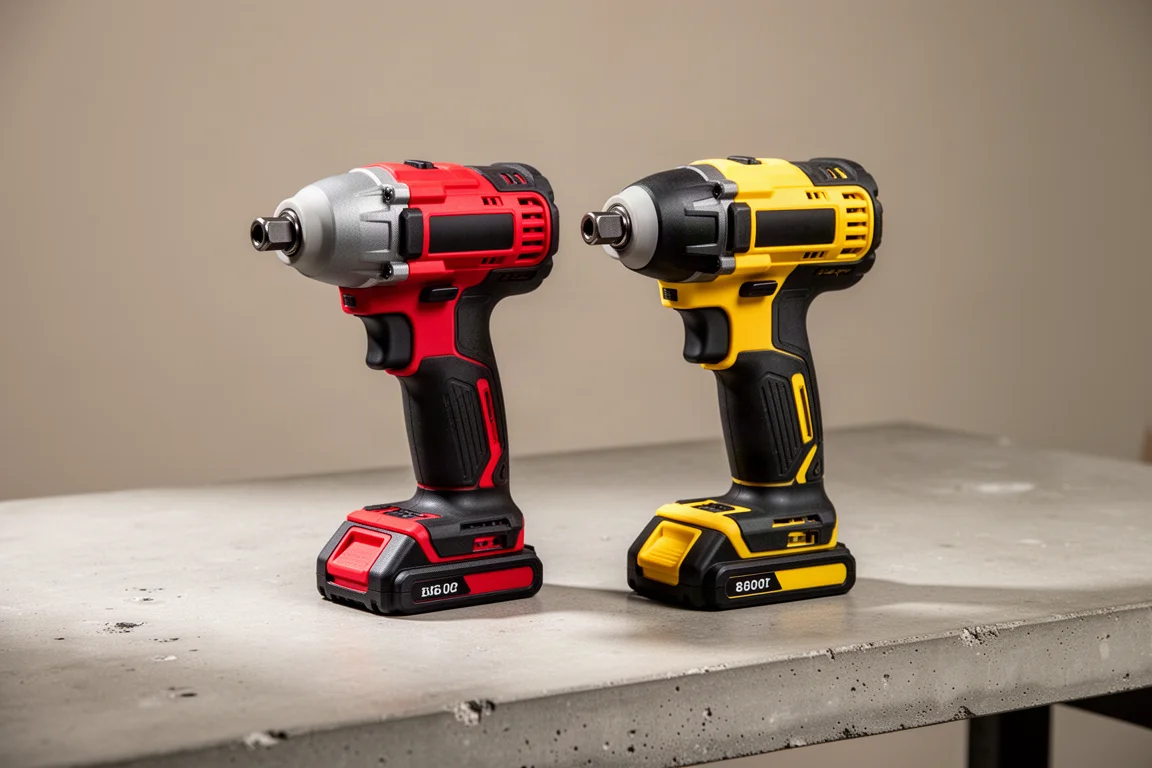
When two flagship impact drivers collide, the results are rarely subtle. Milwaukee’s 2953 and DeWalt’s DCF845 sit at the top of their respective 18V and 20V Max lineups, and both claim serious power in a compact package. To separate them, we ran a gauntlet of tests covering driving speed, breakaway torque, structural screw performance, and drilling capability. Here is how each tool stacks up.
Milwaukee 2953: Specs and First Impressions
The 2953 is Milwaukee’s flagship model running on the M18 Fuel battery system. It tops out at 3,900 RPM with a maximum torque of 2,000 in-lbs and an impact rate of 4,400 IPM. It is extremely compact at just 4.5 inches long and weighs 2.2 pounds.
DeWalt DCF845: Specs and First Impressions
DeWalt’s flagship DCF845 runs on the well-established 20V Max system. It spins up to 3,400 RPM and delivers 1,825 in-lbs of torque. The ergonomics are a highlight: a compact handle paired with a slightly longer body than Milwaukee’s at 6.1 inches. Bare tool weight is identical at 2.2 pounds.
How We Tested
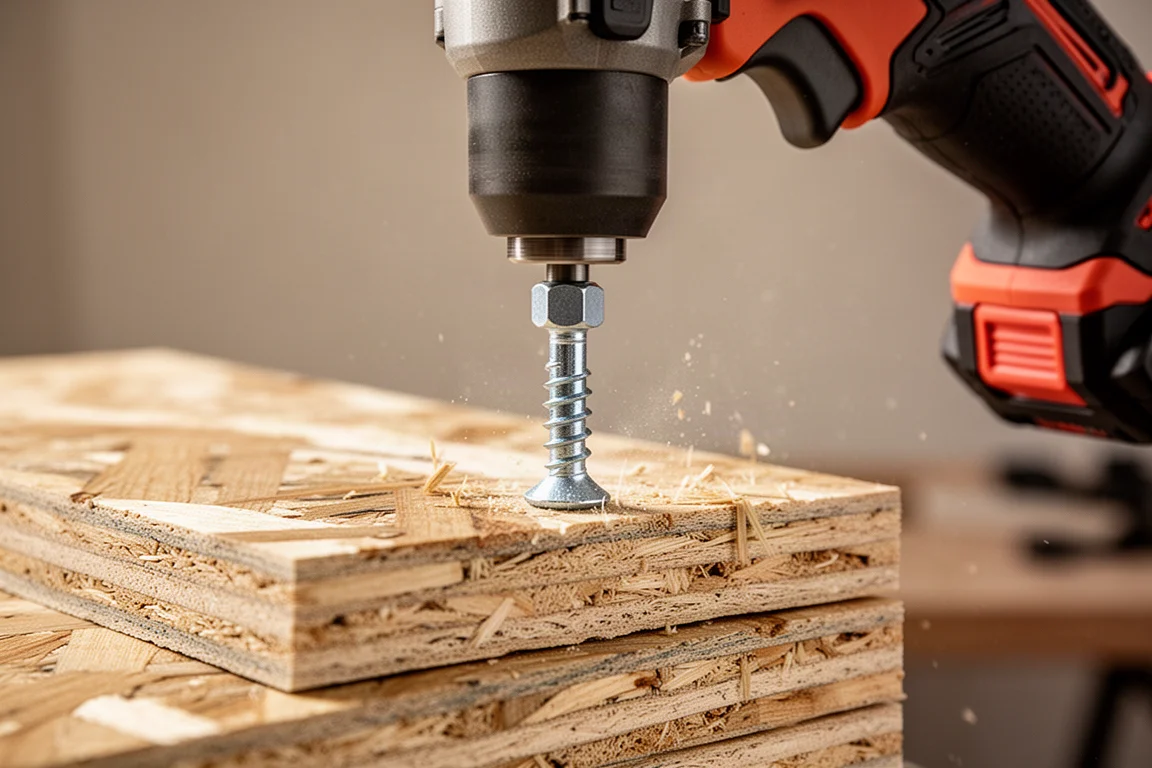
Both tools faced five challenges: driving 3/8-inch by 6-inch lag bolts into stacked OSB for speed under medium load, driving a 10-inch lag screw for 30 seconds to measure how far it could sink it, breaking loose eight bolts torqued to 150 ft-lb, driving 8-inch structural RSS screws for practical framing speed, and drilling three holes with a 1-inch self-feed spade bit to assess raw power. Each tool was tested with both its standard 5Ah battery and its higher-output premium pack (Milwaukee’s M18 Forge and DeWalt’s PowerStack).
Lag Bolt Driving: Speed and Depth
Milwaukee set the pace from the start. With its standard 5Ah battery, the 2953 drove 3/8-inch lag bolts in an average of 6.36 seconds. The DCF845 with its 5Ah battery averaged 9.06 seconds. With the Forge battery, Milwaukee sharpened its edge to a 5.8-second average, while DeWalt’s PowerStack brought the DCF845 down to 7.83 seconds but still could not catch up.
Breakaway Torque: The Stress Test
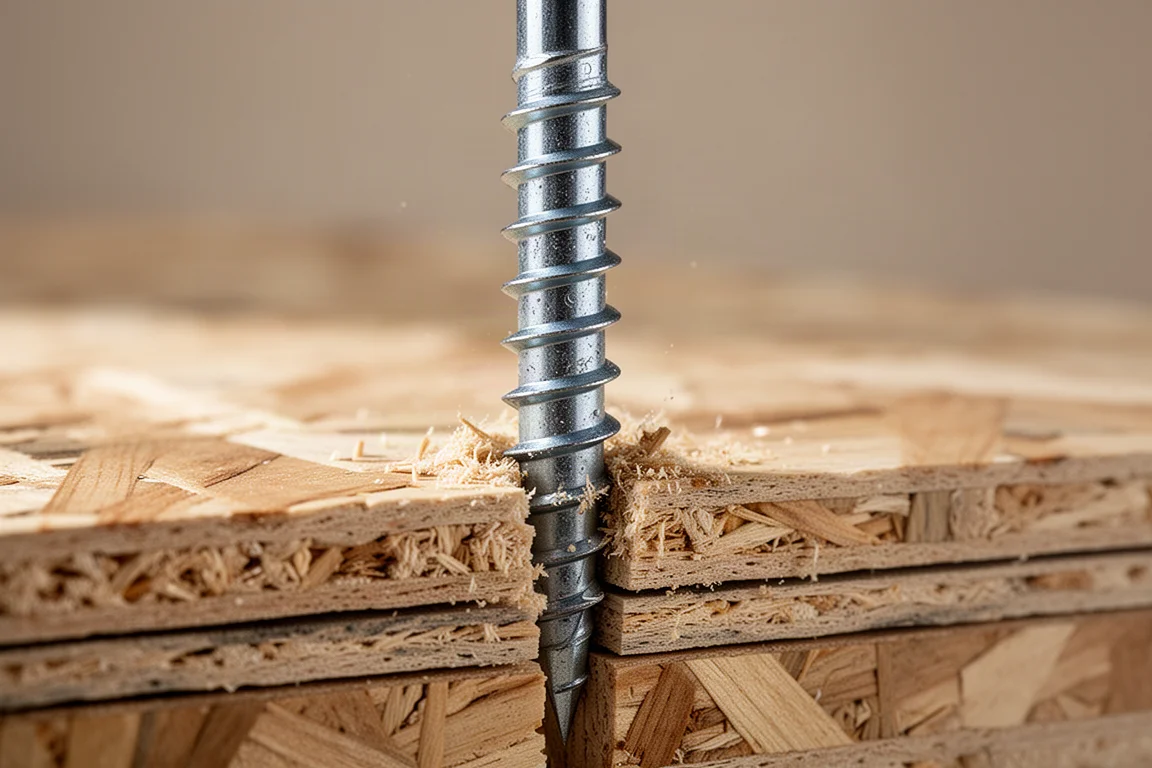
The 30-second big-bolt test told a similar story. Milwaukee left just 1.88 inches of the lag screw standing after its attempt, and with the Forge battery buried it even further, leaving only 0.88 inches proud. DeWalt left 3.5 inches exposed with its standard battery and 3.13 inches with the PowerStack.
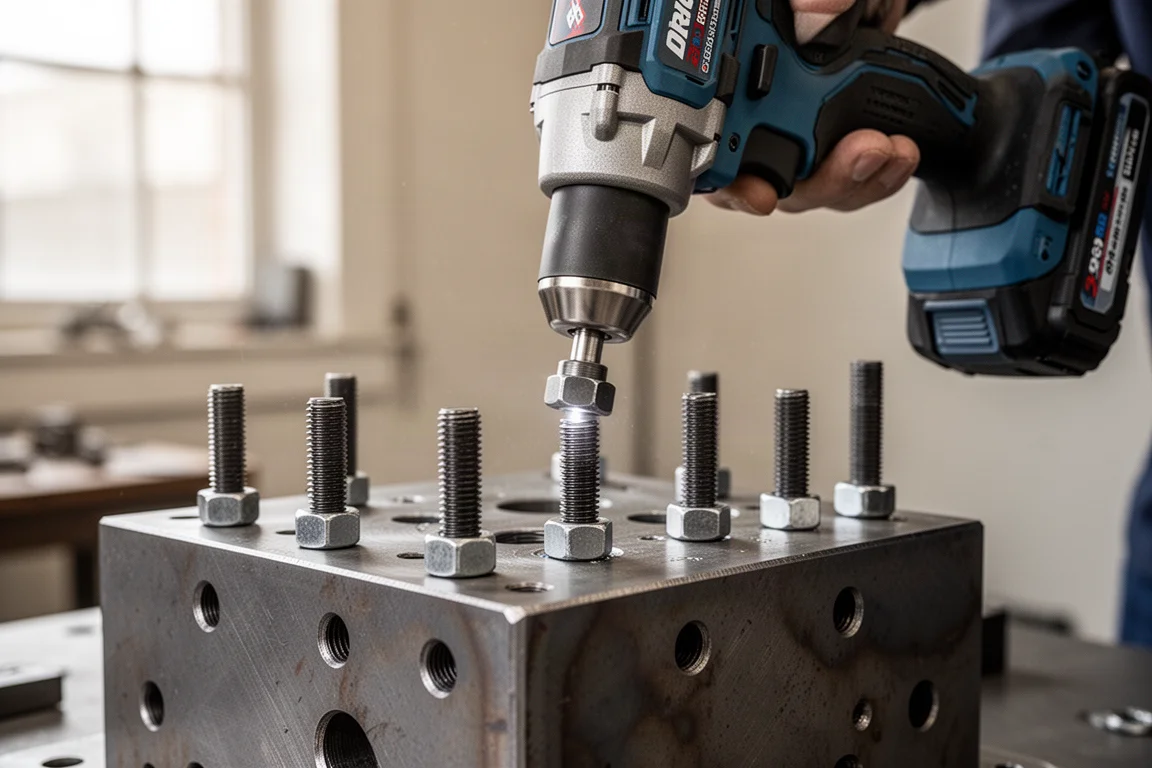
Next came breakaway torque, the real-world challenge of busting loose bolts torqued to 150 ft-lb. The Milwaukee 2953 tore through the challenge with a 5Ah battery, breaking all eight bolts in 3.47 seconds, then blazed through even faster at 3.02 seconds on the Forge pack. The DCF845, despite multiple attempts with both battery types, was unable to break all eight bolts to complete the test.
Structural Screw Speed Test
Driving 8-inch structural RSS screws into stacked OSB highlighted practical framing speed. Milwaukee averaged 7.28 seconds per screw on the 5Ah battery, dropping to 5.9 seconds with the Forge pack. DeWalt followed with a respectable 8.63-second average on its 5Ah battery, improving only incrementally to 8.27 seconds with the PowerStack.
Spade Bit Drilling
With a 1-inch self-feed spade bit, Milwaukee showcased its drilling prowess, averaging 5.22 seconds per hole on the 5Ah battery and 4.54 seconds on Forge. DeWalt drilled through in 6.69 seconds on average, dropping to 5.35 seconds per hole with the PowerStack, the largest but still modest boost we saw from that battery.
Price and Value
The Milwaukee 2953 runs around $149 for the bare tool and $249 for a kit with two 5Ah batteries and a charger. In our view it is not only one of the most powerful impact drivers out there, but one of the best values for pros as well. The DeWalt DCF845 shares the same $149 bare tool price but offers more kit options, ranging from $219 to $279. A $219 kit includes a 2Ah compact battery, a 1.7Ah compact PowerStack battery, and a charger, while 5Ah battery kits run $229 for one battery or $279 for two.
Which Should You Buy?
Looking across all test results, the Milwaukee 2953 consistently outperformed, especially when paired with the M18 Forge battery, excelling in speed, power, and efficiency. The DeWalt DCF845 is strong and offers more affordable kit entry points, but it could not quite match Milwaukee’s performance, particularly in the bolt break test. If you are already invested in either battery platform, that ecosystem is worth weighing, but on pure tested performance, Milwaukee holds the advantage.
Conclusion
The Milwaukee 2953 wins this head-to-head on tested speed and power, and at the same $149 bare tool price it doubles as one of the best values in its class. The DeWalt DCF845 remains a capable, comfortable flagship with flexible kit options, but it finished second in nearly every test. Choose Milwaukee for maximum performance per dollar, or DeWalt if its platform and kit pricing fit your needs better.
Product link
View more details for Milwaukee 2953 Impact Driver
This product is mentioned in the review. Check the specifications, options, and compatibility before buying.
View more details for Milwaukee 2953 Impact DriverFurther reading
Related Reviews

Power Tools
Best 1-Inch Pistol Impact Wrenches: Three Heavy-Duty Options Compared
We compare three 1-inch pistol impact wrenches, from a budget-friendly Harbor Freight model to a premium Caterpillar unit, to help you choose the right one.

Power Tools
Best 3/4-Inch Impact Wrenches 2026: Five Contenders Compared
We compare five 3/4-inch impact wrenches across price and performance, from a budget Amazon option to Snap-on's most powerful model yet.

Power Tools
Best Budget Cordless Tools 2026: Walmart Finds That Punch Above Their Price
We tested five cordless tools from Walmart, including a high-torque impact wrench that trades blows with Milwaukee and a $35 duster that outperforms its price class.