Power Tools
Milwaukee 2953 vs 2962: Impact Driver or Impact Wrench?
Two of Milwaukee's flagship M18 FUEL impact tools face off in lag bolt, speed, and bolt-breaking tests to help you decide which one belongs in your kit.
Introduction
Impact wrench versus impact driver: which is better, and which do you actually need? The honest answer is that they solve different problems, and a head-to-head comparison makes those differences obvious. Milwaukee’s flagship M18 FUEL impact tools were put through a series of duplicate tests, including lag bolt depth runs, timed multi-bolt drives, and a demanding bolt-breaking challenge, each run with both a standard 5.0Ah battery and the newer high-output Forge XC 6.0 battery. Here is how the two stack up, and what the numbers mean for your next purchase.
Two Flagship Tools, Two Different Jobs
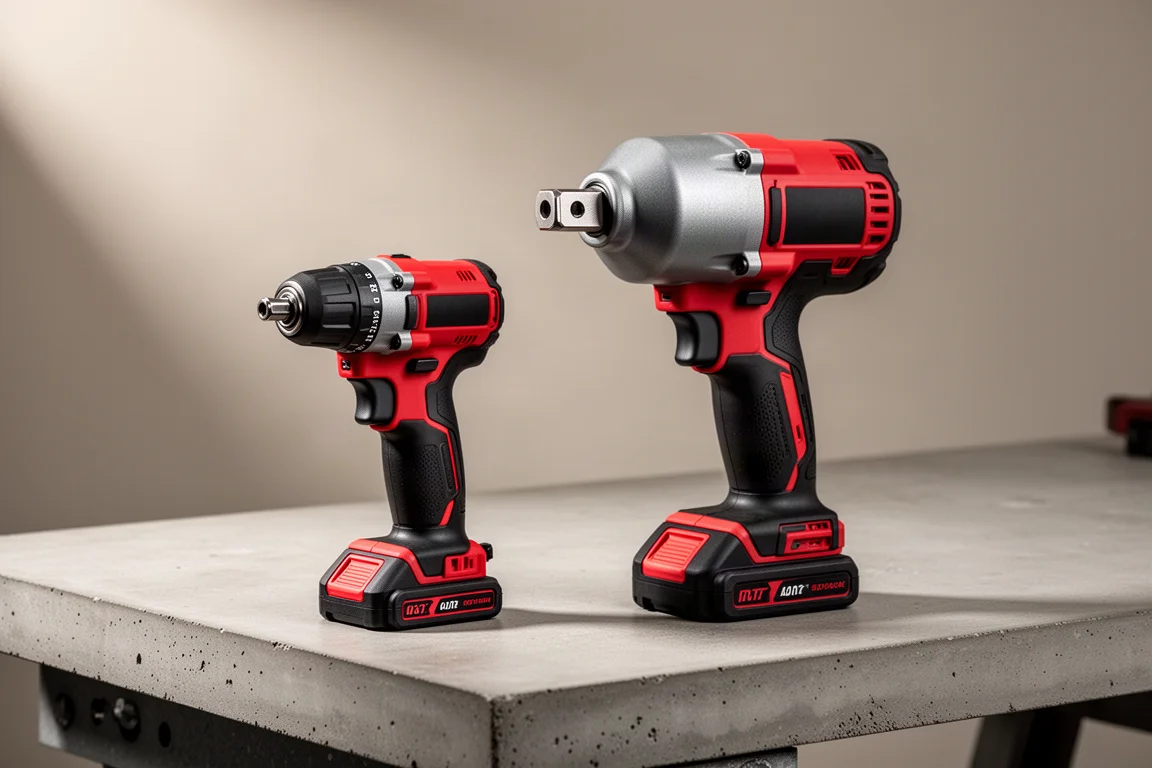
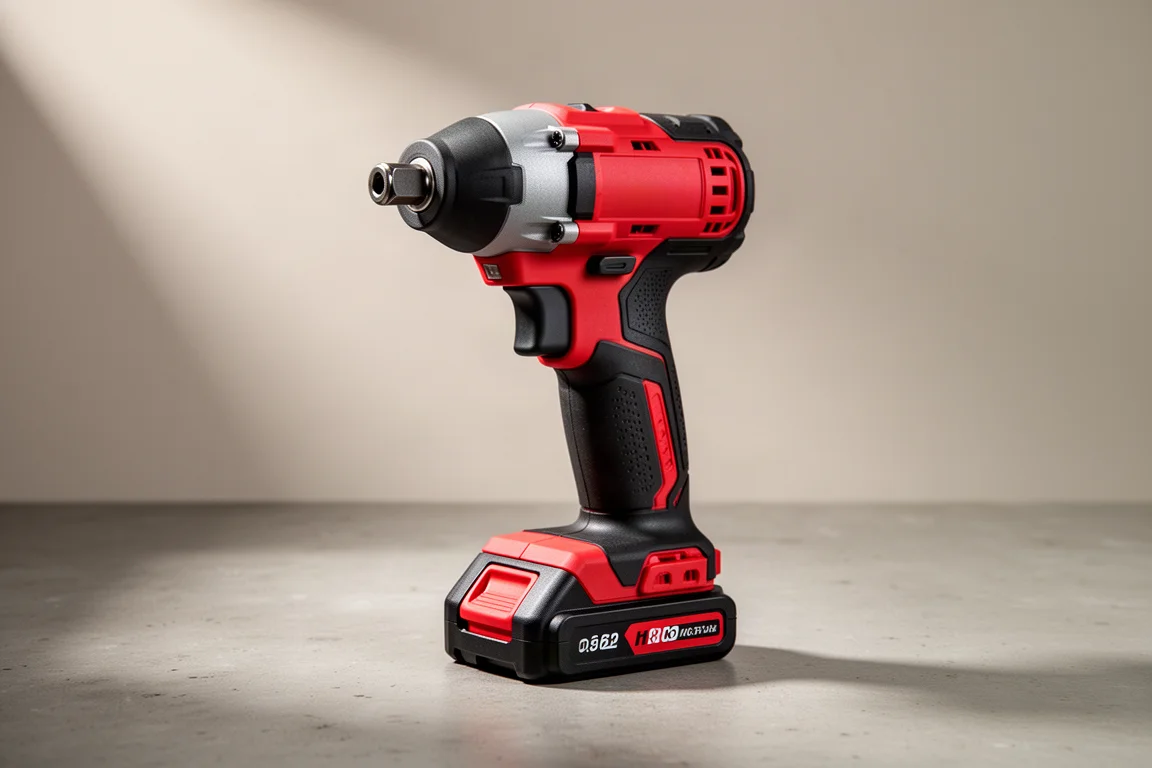
The Milwaukee 2953 impact driver is built for precision and speed in a very small package. It reaches a top speed of 3,900 RPM, delivers a maximum torque of 2,000 in-lbs, and hits 4,400 impacts per minute. At just 4.5 inches long and 2.2 lbs before the battery, it is genuinely compact, which makes it easy to control in tight spaces and overhead work.
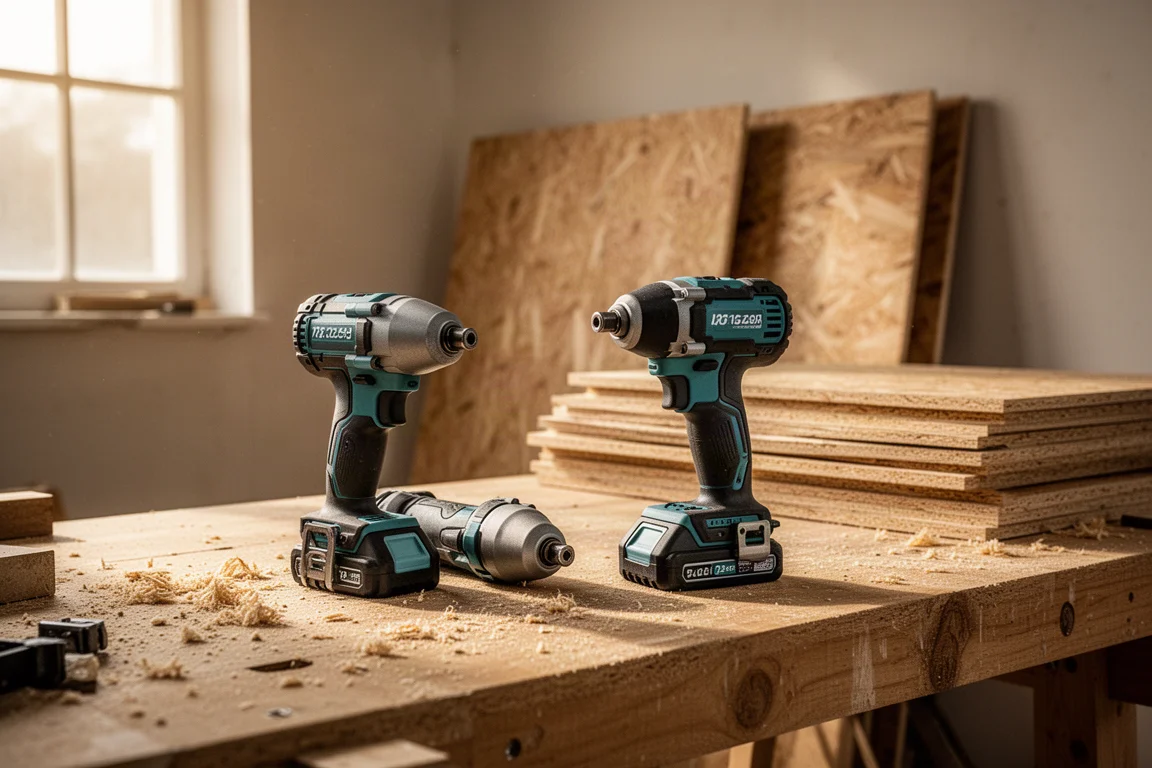
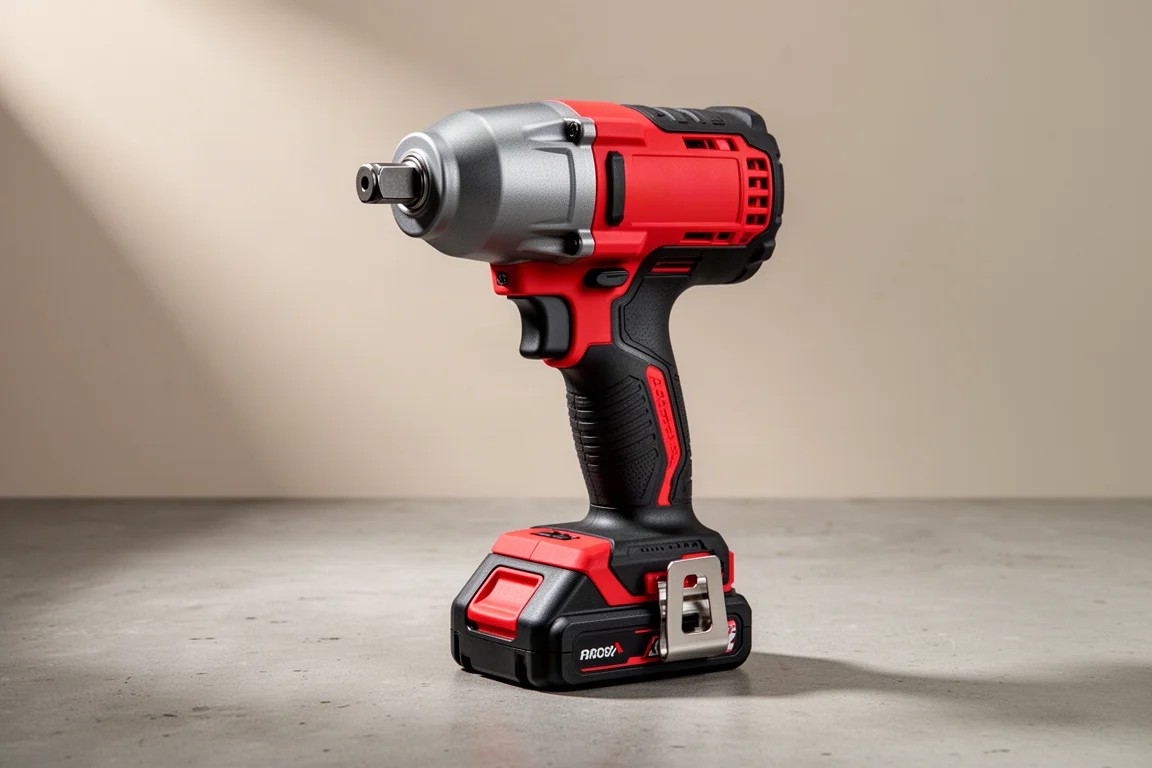
The Milwaukee 2962 impact wrench is the power specialist of the pair. It produces 550 ft-lb of fastening torque and a nut-busting torque of 650 ft-lb, running at a top speed of 2,575 RPM with 3,100 impacts per minute. At 6 inches long and 3.5 lbs before the battery, it is larger than the driver but still remarkably compact compared with other cordless 18V impact wrenches.
How the Tests Were Run
Both tools were fitted with a standard 5.0Ah M18 FUEL battery for the first round, then the same tests were repeated using Milwaukee’s newer high-performance Forge XC 6.0 battery. Three challenges were used:
- Depth test: drive a 10-inch lag bolt into OSB subfloor material for 30 seconds, then measure how much of the bolt remains standing proud.
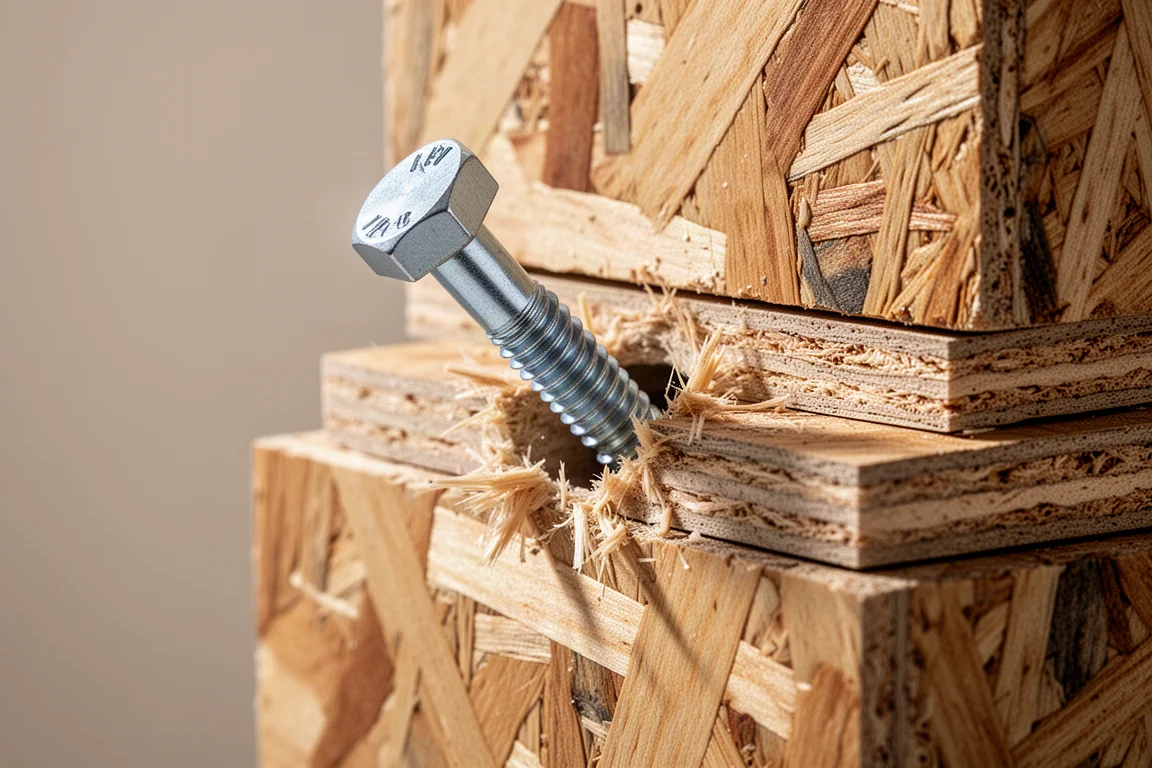
- Speed test: drive three slightly smaller 6-inch 3/8-inch lag bolts into stacked OSB as quickly as possible, averaging the time to sink all three.
- Bolt breaking: break free pre-torqued bolts to measure breakaway torque. The impact driver faced bolts torqued to 150 ft-lb; the impact wrench faced bolts torqued to 500 ft-lb.
Depth Test: Sinking a 10-Inch Lag Bolt
With the 5.0Ah battery, the impact driver left 1.88 inches of the 10-inch lag bolt standing after 30 seconds. Switching to the Forge battery changed the picture dramatically: only 0.88 inches remained, a full inch of improvement in the same time window.
The impact wrench started slightly slower, leaving 2.5 inches standing with the 5.0Ah battery. The reason is speed: the impact driver spins more than 1,300 RPM faster, giving it a significant head start before it slows under the increasing torque of the large bolt. But with the Forge battery, the impact wrench showed remarkable consistency, fully sinking the lag bolt within the allotted time. For heavy-duty fastening where complete seating matters, the wrench with a Forge battery is the stronger tool.
Speed Test: Driving 3/8-Inch Lag Bolts
In the three-bolt speed test, the impact driver with a 5.0Ah battery averaged 6.36 seconds. With the Forge battery, it improved to 5.88 seconds, shaving more than half a second off its average.
The impact wrench averaged 7.77 seconds with the 5.0Ah battery, then more than doubled that improvement with the Forge battery, cutting a full second to finish at 6.61 seconds. Even so, it stayed a little behind the driver in both battery configurations.
The pattern here is clear: what the impact driver lacks in raw power compared with the impact wrench, it makes up in speed. The 2953 never bottomed out during the drives, and its higher top speed gave it the efficiency to sink screws quickly, while the wrench’s slower RPM cost it time even as its battery improved.
Bolt Breaking: Breakaway Torque Under Stress
For the breakaway challenge, each tool was pushed toward the top of its rated capability: 150 ft-lb bolts for the driver, 500 ft-lb bolts for the wrench.
The impact driver broke all eight 150 ft-lb bolts in a total of 3.47 seconds with the 5.0Ah battery, improving to 3.02 seconds with the Forge battery. The impact wrench, working against bolts torqued more than three times higher, took 5.95 seconds to break all eight with the 5.0Ah battery, then completed the set in 3.8 seconds with the Forge battery. Given how much tougher its bolts were, that is an impressive showing and a clear demonstration of where the wrench’s strength lies.
Pricing and Configuration Options
The Milwaukee 2953 impact driver is available at Acme Tools, Home Depot, and other retailers for $149 as a bare tool, or $249 for a kit with two 5.0Ah batteries and a charger. That makes it not only one of the most powerful impact drivers tested in this class, but one of the best values as well.
The impact wrench family offers more variety. Milwaukee sells it in a 3/8-inch friction ring configuration as the 2960, a 1/2-inch friction ring version as the 2962, and a 1/2-inch pin detent style as the 2962P, all from the same retailers. Based on the 2962 friction ring model used in the tests, pricing is $249 for the bare tool and $479 for a kit with two 5.0Ah batteries and a charger. If you want extra power, M18 FUEL Forge batteries can be bought separately at $179 for a single pack or $339 for a two-pack.
Which One Should You Buy?
Each tool excels in its own specialty. If your work is mostly driving screws, fasteners, and smaller hardware, especially in tight spaces, the 2953 impact driver is the faster, lighter, and more affordable choice, and its value at $149 bare is hard to argue with.
If you regularly tackle large fasteners, automotive work, or applications where raw breakaway and fastening torque matter, the 2962 impact wrench is the right tool, and pairing it with a Forge battery unlocks its best performance. Many serious DIYers and tradespeople eventually own both, since neither truly replaces the other.
Conclusion
In this head-to-head, the 2953 impact driver wins on speed and value, while the 2962 impact wrench dominates on torque and complete seating of large fasteners, especially with a Forge XC 6.0 battery attached. Choose the driver for everyday fastening efficiency, the wrench for heavy-duty torque, or both if your projects span the full range.
Further reading
Related Reviews
Power Tools
Best 1-Inch Pistol Impact Wrenches: Three Heavy-Duty Options Compared
We compare three 1-inch pistol impact wrenches, from a budget-friendly Harbor Freight model to a premium Caterpillar unit, to help you choose the right one.
Power Tools
Best 3/4-Inch Impact Wrenches 2026: Five Contenders Compared
We compare five 3/4-inch impact wrenches across price and performance, from a budget Amazon option to Snap-on's most powerful model yet.
Power Tools
Best Budget Cordless Tools 2026: Walmart Finds That Punch Above Their Price
We tested five cordless tools from Walmart, including a high-torque impact wrench that trades blows with Milwaukee and a $35 duster that outperforms its price class.