Power Tools
Milwaukee 2904 vs Metabo HPT Hammer Drill: Flagship Drill-Driver Head-to-Head
Two flagship hammer drill/drivers with near-identical specs go through spade bit, self-feed, hole saw, and structural screw tests. The result is closer than you might expect.
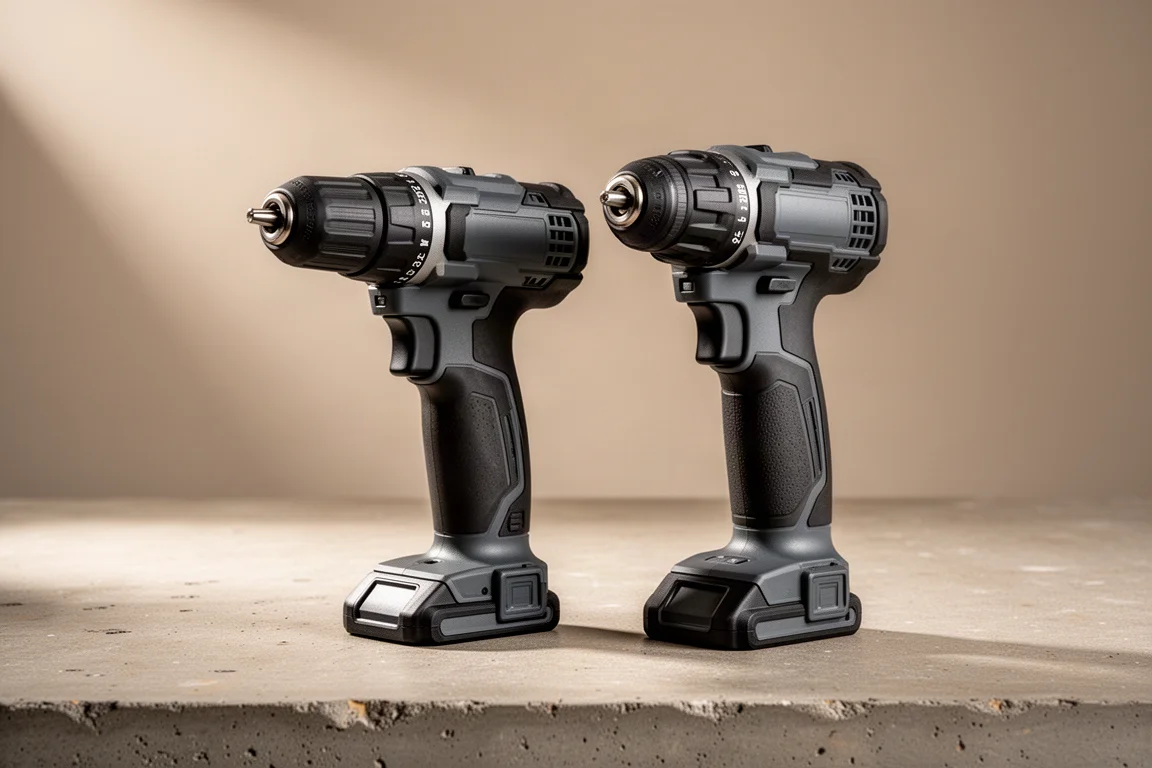
Introduction
Flagship drill-driver showdowns are usually decided by small margins, and this one is no exception. The Milwaukee 2904 and the Metabo HPT hammer drill sit at the top of their respective lineups, and both are built for the same job: heavy drilling and driving on demanding job sites.
To see which one holds up better, both drills went through a series of practical tests: fast spade bit holes in pine, aggressive self-feed boring, hole saw work, and driving long structural screws. The short version up front: these two are remarkably evenly matched, and the choice between them comes down more to platform loyalty than performance.
Specs: Very Close on Paper
On a specification level, these drills are almost twins. Both deliver 1,400 in-lbs of torque. Milwaukee runs at 2,100 RPM while Metabo HPT runs at 2,200 RPM, a gap of just 100 RPM. Both share a hammer rate of 33,000 BPM.
The main differences are small but real. The Milwaukee 2904 offers 16 main clutch settings plus two, along with a dedicated drilling mode and hammer mode. The Metabo HPT steps up to 22 clutch settings, also with drilling and hammer modes. Metabo HPT also claims a higher maximum capacity of 4-5/8 inches versus 4 inches on the Milwaukee, which matters for the most demanding boring applications.
In the hand, the differences are marginal too. The Metabo HPT is slightly heavier and the Milwaukee slightly longer, but neither is enough to sway a buying decision on its own.
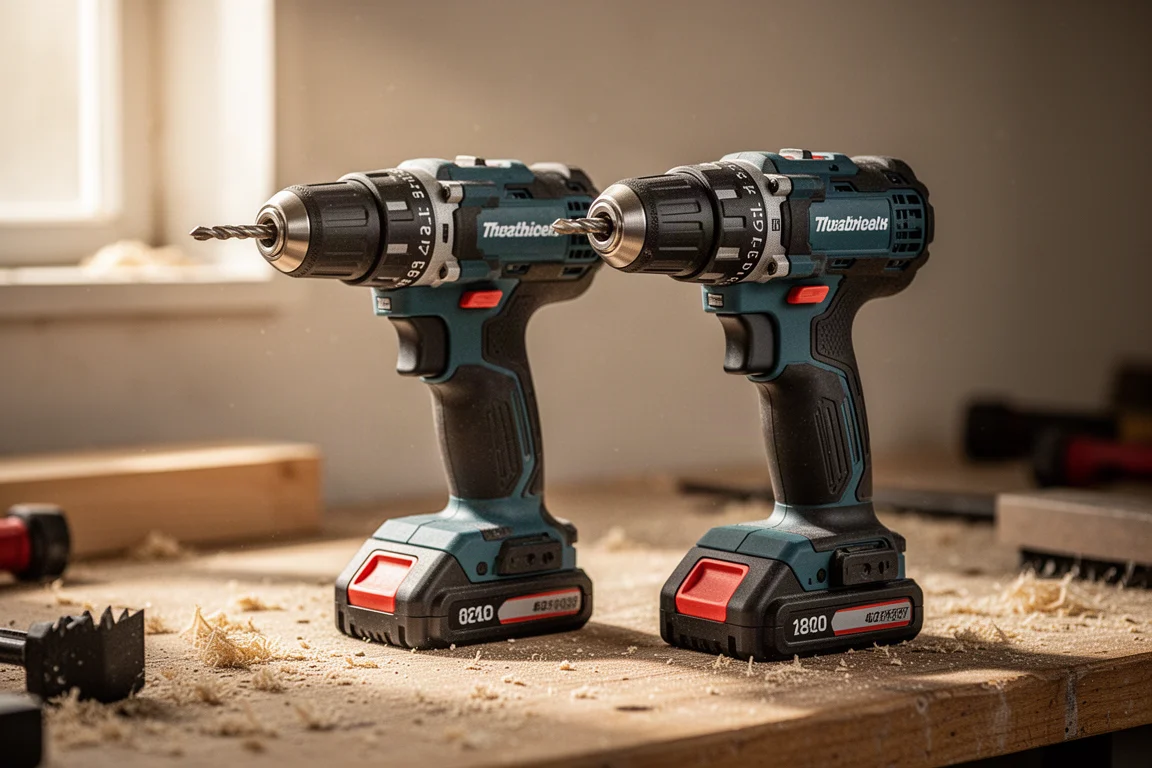
Spade Bit Speed Test
The first test used a 1-inch spade bit in white pine 2x4 stock, drilling three holes at top speed in high gear with the torque ring set to drill mode. The result was essentially a dead heat, with both drills finishing within a second of each other across multiple runs.
Handle feel separated them slightly in subjective terms. The Metabo HPT grip is a bit slimmer than many drills and fits medium-sized hands very comfortably. The Milwaukee feels familiar to anyone who has already spent time on the M18 platform, with a solid, well-known grip shape.
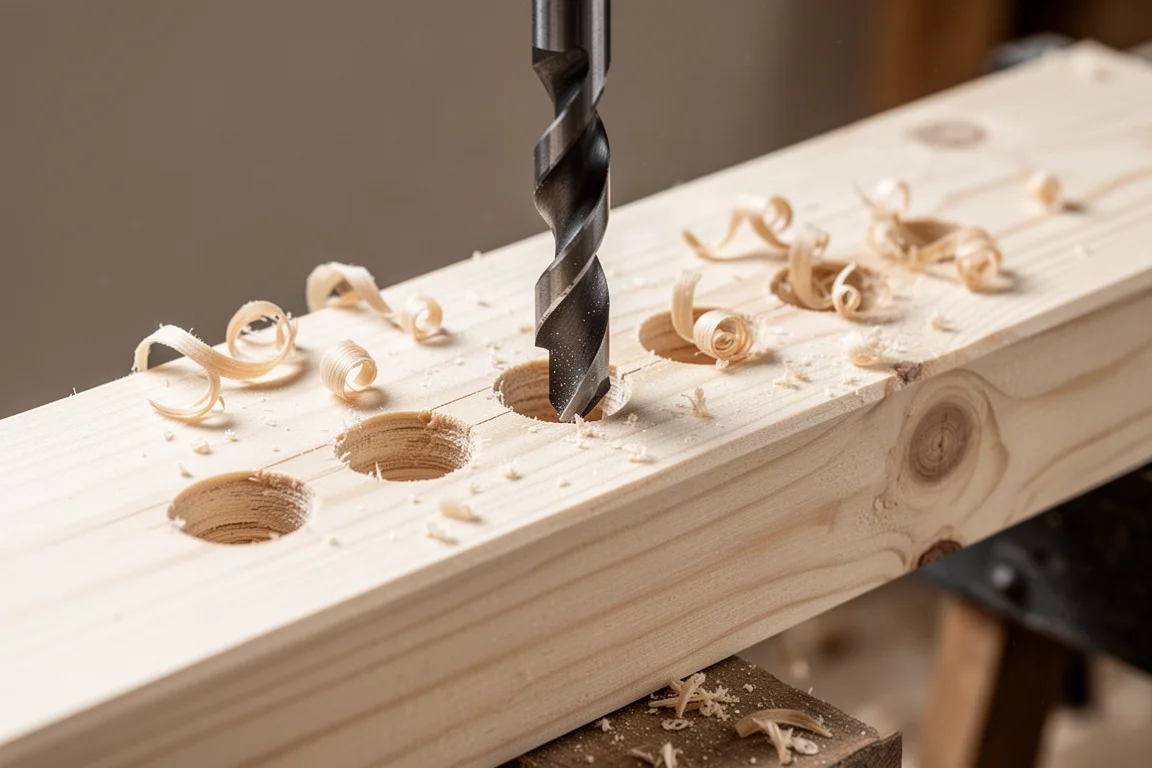
Self-Feed Bit Boring
Next up was a more aggressive self-feed bit, the kind that pulls itself through the material and throws large chips, so the operator mostly guides rather than forces it. Both drills completed the cut in high speed without dropping to low gear, and the times were effectively identical.
This is a meaningful result. Lesser drills often need low gear for this bit or struggle entirely in the same material. Both flagships chewed through soft white pine without complaint, which is exactly what you would expect at this level.
Hole Saw Test
Hole saws are the least fun part of any drilling test. With smaller teeth that clear chips more slowly and no self-feeding action, they demand more from both the tool and the technique. Plumbers rely on them for running pipe through joists, so they are worth checking.
The results here were inconsistent, but the inconsistency traced back to the accessories rather than the drills. After swapping bits between tools, the times evened out, pointing to a dull saw as the culprit in the slower run. Worth noting for capacity-minded buyers: Metabo HPT lists a 4-5/8 inch max capacity against 4 inches for the Milwaukee, which could tip the scales for heavy-duty boring work.
Driving Large Structural Screws
The final test treated each drill as what it truly is: a drill-driver. Eight-inch GRK RSS structural screws were driven into an OSB glue-up block, using low speed and drill mode, with a pilot hole drilled first for a straight drive.
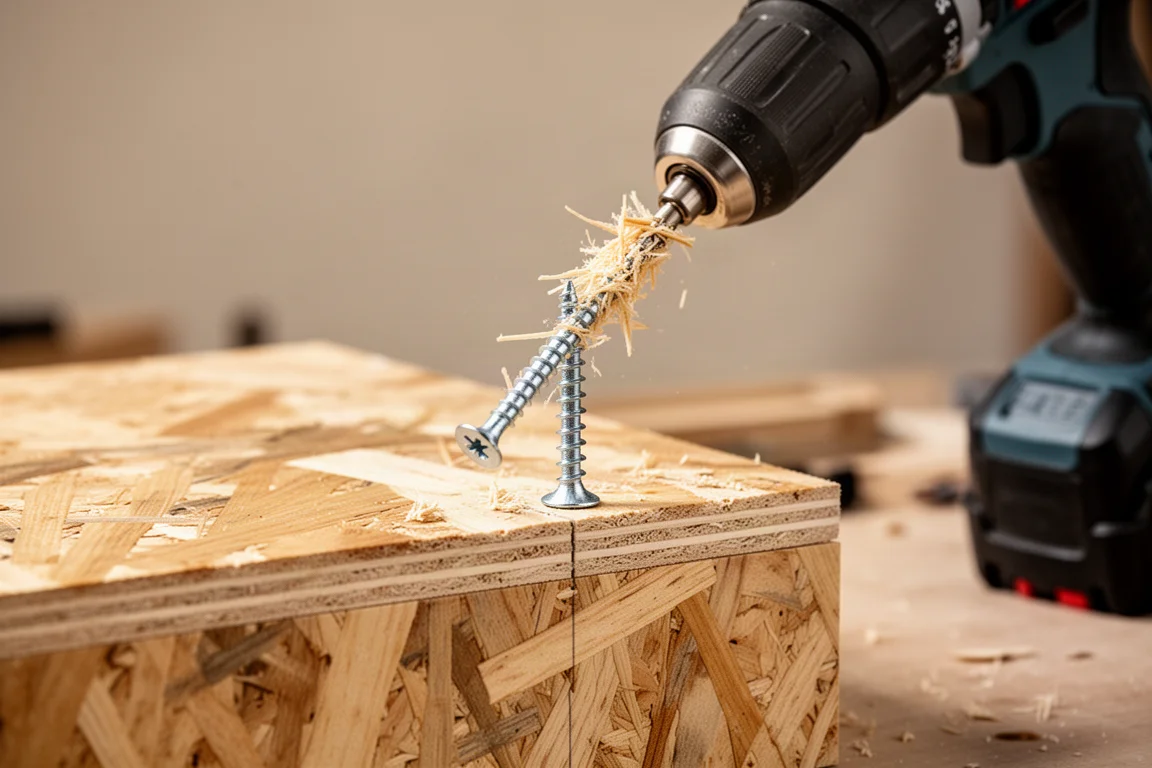
Both drills drove the screws without stalling, though you could hear the motors pulling on every bit of that 1,400 in-lbs of torque. These are big fasteners that most people would normally reach for an impact driver to install, and while a drill is not the first choice for the job, both handled it. Times stayed within a fraction of a second of each other, and the roughly 100 RPM advantage the Metabo HPT has on paper never translated into a noticeable real-world lead.
An impact driver remains the more natural tool for this fastener, but knowing either drill can step in when needed is reassuring.
Which One Should You Buy?
Here is the part that makes this decision easy: the kit prices are identical. Each configuration includes the tool, a charger, two batteries, and a hard-shell case for $299. Combined with matching performance across every test, there is no clear winner here. It is a tie, and an honest one.
That leaves personal preference and platform. If you are already invested in the Milwaukee M18 system and want another strong tool in your collection, the 2904 is an easy pick. If you are a fan of Metabo HPT, this drill proves itself as an awesome flagship with a slightly slimmer grip, more clutch settings, and a higher max boring capacity. Either way, you win.
Conclusion
Two flagship drills, near-identical specs, identical kit prices, and effectively identical performance across every test thrown at them. The Milwaukee 2904 and the Metabo HPT hammer drill are so close that no single test separated them meaningfully, and the few differences that exist, like clutch settings and max capacity, are small advantages on the Metabo HPT side.
If you are choosing between them, pick the platform you are already on. You cannot go wrong with either one.
Product link
View more details for Milwaukee 2904
This product is mentioned in the review. Check the specifications, options, and compatibility before buying.
View more details for Milwaukee 2904Further reading
Related Reviews

Power Tools
Best 1-Inch Pistol Impact Wrenches: Three Heavy-Duty Options Compared
We compare three 1-inch pistol impact wrenches, from a budget-friendly Harbor Freight model to a premium Caterpillar unit, to help you choose the right one.

Power Tools
Best 3/4-Inch Impact Wrenches 2026: Five Contenders Compared
We compare five 3/4-inch impact wrenches across price and performance, from a budget Amazon option to Snap-on's most powerful model yet.

Power Tools
Best Budget Cordless Tools 2026: Walmart Finds That Punch Above Their Price
We tested five cordless tools from Walmart, including a high-torque impact wrench that trades blows with Milwaukee and a $35 duster that outperforms its price class.