Power Tools
Milwaukee 2717 SDS Max Hammer Drill: Can a Cordless Rotary Hammer Match an Air Hammer?
We look at how the Milwaukee 2717 SDS Max rotary hammer stacks up against traditional air hammers in raw impact power, control, and real-world practicality.
Introduction
When it comes to cordless tools, there is now a battery-powered answer for nearly everything that used to run on cords or compressed air. The air hammer has been the stubborn exception. It is simply a piston moving back and forth inside a cylinder, driven by directed air pressure, and until recently nothing handheld and cordless really replicated it.
The closest equivalent, by most reasonable estimates, is an SDS rotary hammer running in hammer-only mode. That is exactly the ground the Milwaukee 2717 SDS Max hammer drill was built to cover, and its measured results against traditional 0.401 shank air hammers are genuinely interesting.
What the Milwaukee 2717 Actually Is
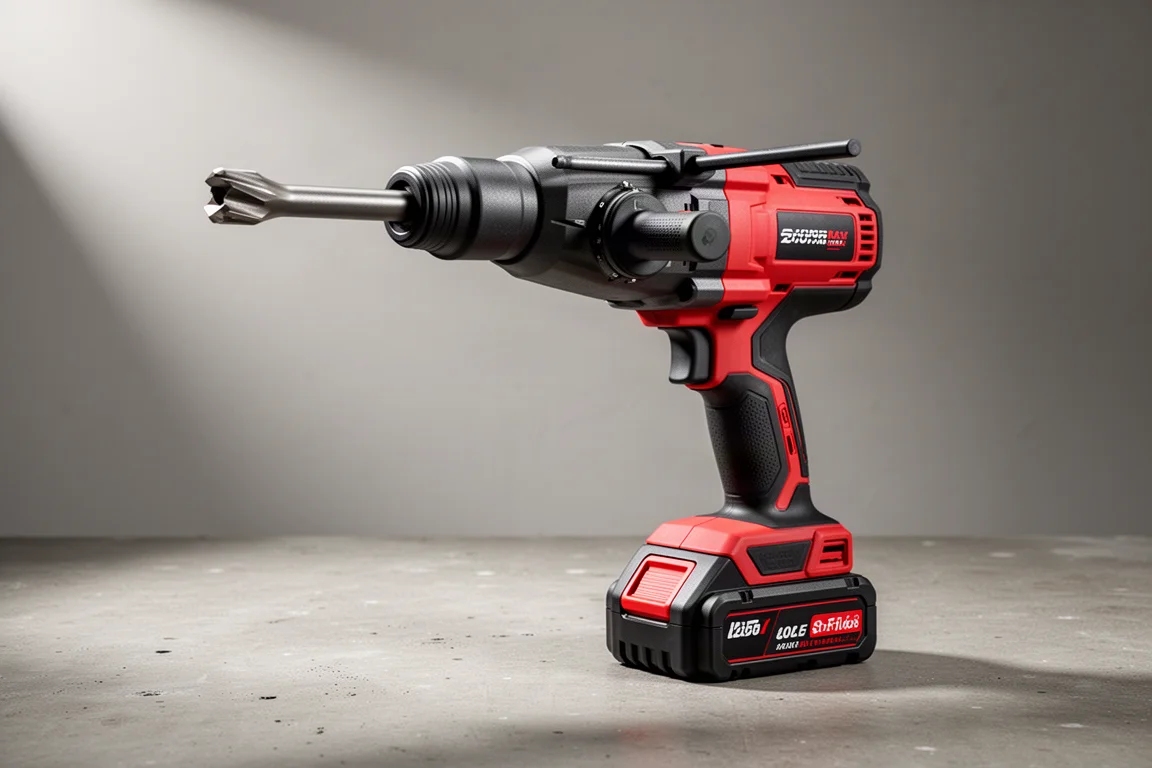
This is the 1-9/16 inch capacity model, the largest SDS category of sizes, sitting above SDS and SDS Plus. In practical terms, it is about as big as anyone would realistically be willing to hold horizontally for very long. Next to an average air hammer, it is enormous, and at 14.5 pounds it is a committed two-handed tool.
That size buys you two things. First, it is a very high torque drill capable of boring 1-9/16 inch holes in concrete. Second, it hammers with far more force than a typical cordless hammer drill. The headline figure is 5 foot pounds of impact energy, delivered at roughly 3,000 blows per minute, which is notably faster than the roughly 2,000 blows per minute of most air hammers.
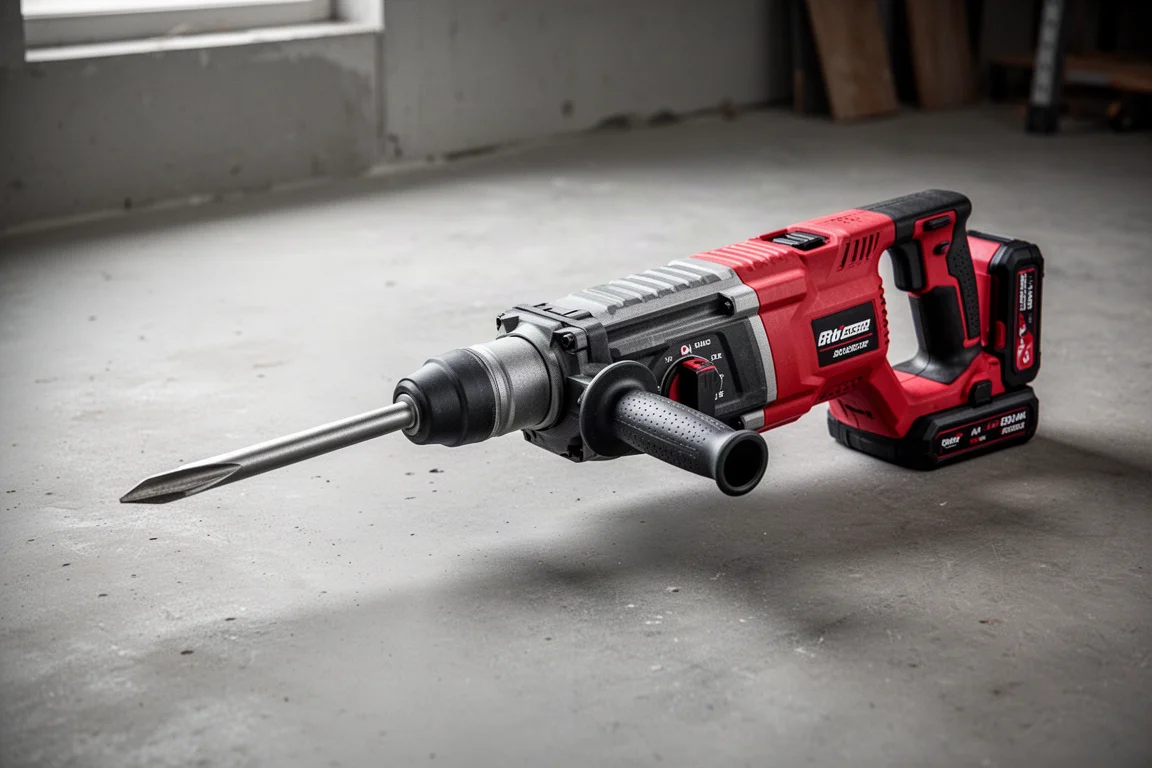
The multiple mode selector is part of why the tool is so large: it has to switch between pure drilling, drilling plus hammering, and the hammer-only mode that matters most for chipping work.
How the Hammering Mechanism Works
Large electric hammers, like chippers and jackhammers, use a big piston moving up and down to compress air in a cylinder against an opposing piston that strikes the bit. That air cushion reduces vibration and stress on the tool, and the primary piston is driven by a connecting rod on a rotating crank, much like a combustion engine.
An SDS drill has two jobs, so it uses a different approach: an asymmetric wobble cam, usually a yoke moving freely on a center-pinned axis, compresses air against an opposing piston that hits a rod or the bit directly. It is a similar principle to how reciprocating saws generate their back-and forth stroke, though a recip saw transfers sudden impacts straight into the tool, while the SDS design carries an air cushion to soften the blow.
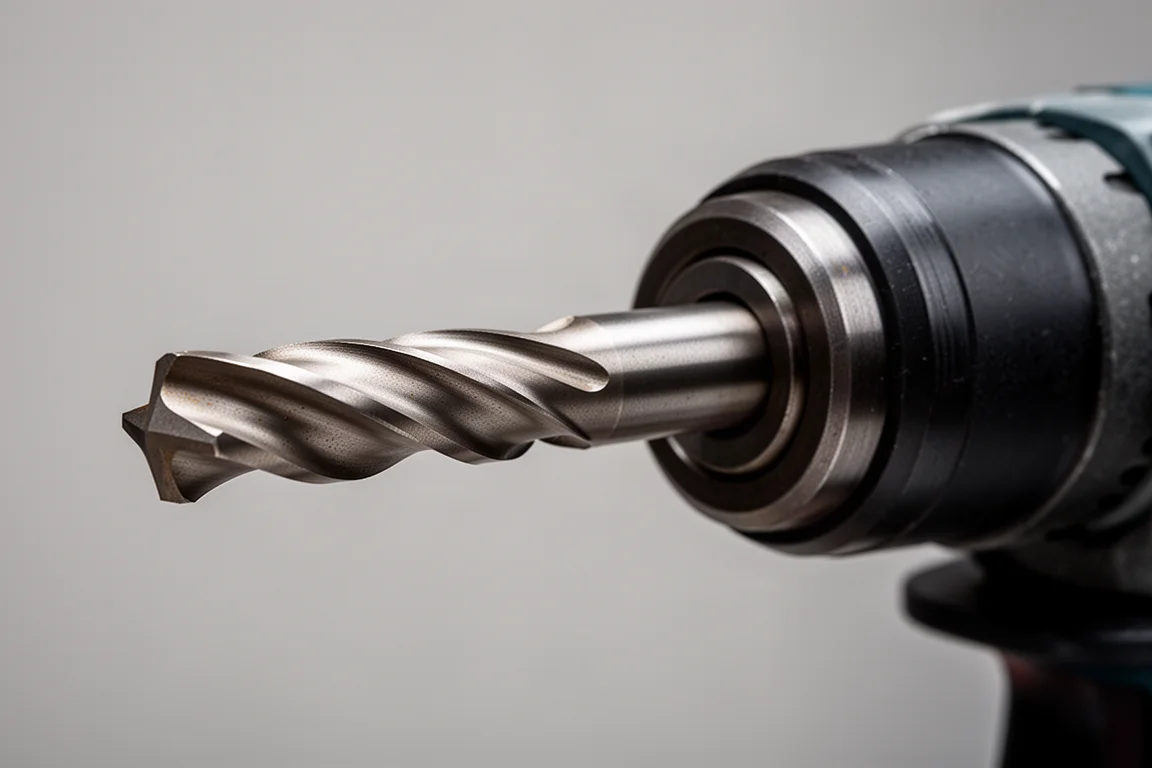
That added complexity, the gear transfer case and the drilling mechanism packed alongside the hammering action, is a large part of why tools in this class carry a price around $500.
Measured Impact Power Against Air Hammers
In a maximum power test of 5 seconds of impacting, the Milwaukee 2717 put up 4,195 psi at the wedge. For context, that lands it right among a strong field of long barrel air hammers, in the mix with tools running at pressures like 4,477 psi from a leading shop-air benchmark and above others further down the board.
In the minimum power test, relying purely on trigger control, the Milwaukee throttled back to 198 psi. That is very good modulation for a tool this size, especially against air hammers that managed lower minimums but are built around a valve you can feather.
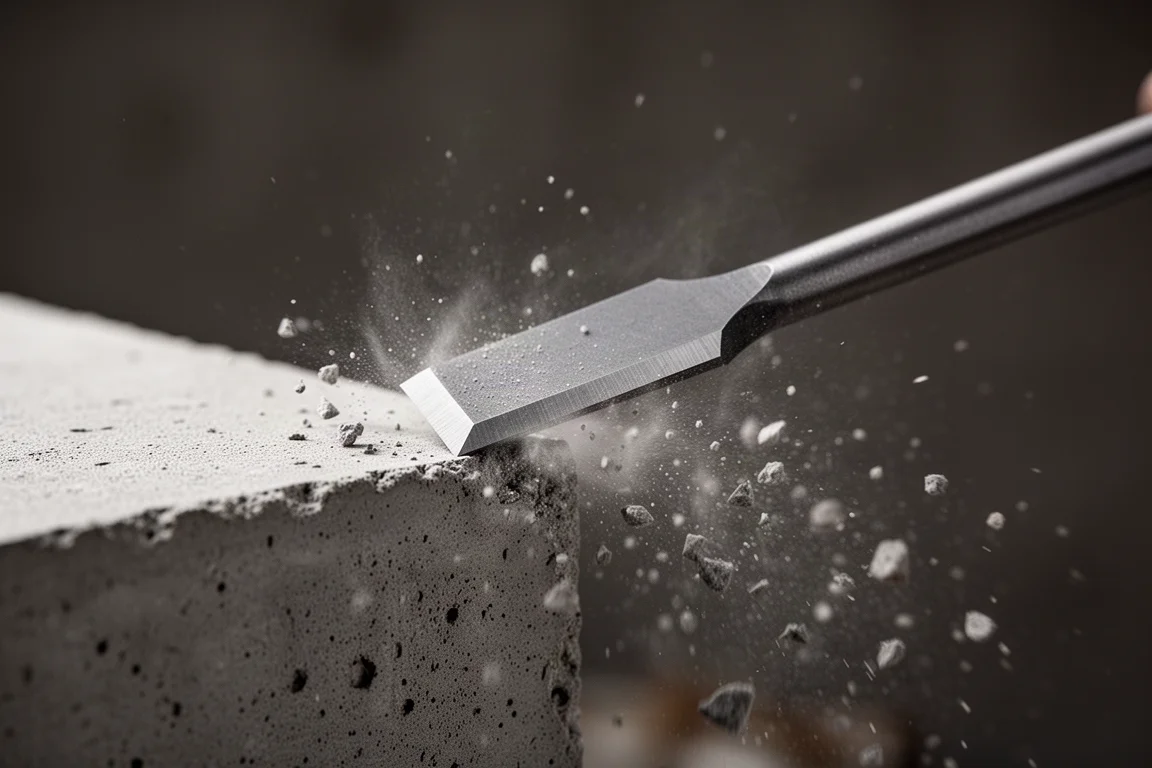
Pushed to a more realistic higher shop-line pressure scenario, the air hammers gain ground, but the cordless Milwaukee barely moved: its best run held essentially steady because the tool has no regulator valve to open, just a fresh battery. Notably, running with a different high output battery produced results within the margin of error of the standard pack.
On an overall scoring basis, the 2717 placed just below a well-regarded Sioux Tools gun and above the Sunex, totaling around 570 points once weight, trigger control, length, and price were factored in. Its 18.75 inch length is a real drawback in tight work, and at 22.5 points on the size score it is one of the least compact tools measured, though not quite a record low.
Things to Consider Before Buying
The honest takeaway is that the SDS Max class can stand in for some pretty top shelf 0.401 shank air hammers in short bursts, something few people had hard numbers to support until now. But if all you ever do is chip and hammer, the Milwaukee’s result was eclipsed by a smaller air hammer delivering more measured power at roughly one third the size, weight, and cost.
Buying Advice: Who Should Pick the 2717
This tool makes the most sense if you will use its weight to your advantage, such as holding it vertically on top of something and letting gravity do part of the work. In short bursts held in other orientations, it can replicate the power of genuine air hammers, which is a remarkable claim for a cordless tool.
If drilling large holes in concrete is part of your workload, the roughly $500 price wraps in a lot of capability the chipping tests never exercised, making it probably a better buy than dedicated air hammers at similar prices. If you are purely a chipping user with a compressor, a compact air hammer still remains the deal that is hard to ignore.
Conclusion
The Milwaukee 2717 SDS Max hammer drill proves that a cordless rotary hammer can sit credibly alongside serious 0.401 shank air hammers in raw impact power. It is heavy, long, and expensive, but it also drills very large concrete holes, modulates well on the trigger, and delivers consistent measured force. Buy it as a capable two-in-one concrete tool rather than a pure air hammer replacement, and it earns its place.
Product link
View more details for Milwaukee 2717 SDS Max Hammer Drill
This product is mentioned in the review. Check the specifications, options, and compatibility before buying.
View more details for Milwaukee 2717 SDS Max Hammer DrillFurther reading
Related Reviews

Power Tools
Best 1-Inch Pistol Impact Wrenches: Three Heavy-Duty Options Compared
We compare three 1-inch pistol impact wrenches, from a budget-friendly Harbor Freight model to a premium Caterpillar unit, to help you choose the right one.

Power Tools
Best 3/4-Inch Impact Wrenches 2026: Five Contenders Compared
We compare five 3/4-inch impact wrenches across price and performance, from a budget Amazon option to Snap-on's most powerful model yet.

Power Tools
Best Budget Cordless Tools 2026: Walmart Finds That Punch Above Their Price
We tested five cordless tools from Walmart, including a high-torque impact wrench that trades blows with Milwaukee and a $35 duster that outperforms its price class.