Kitchen Knives
Middleton Made Ecoline 4-Inch Paring Knife Review: A Handmade Paring Knife That Rewards In-Hand Work
A hand forged AEBL steel paring knife from a South Carolina blacksmith, with a dyed birch veneer handle, light nimble handling, and surprisingly good food release at a $100 price point.
Introduction
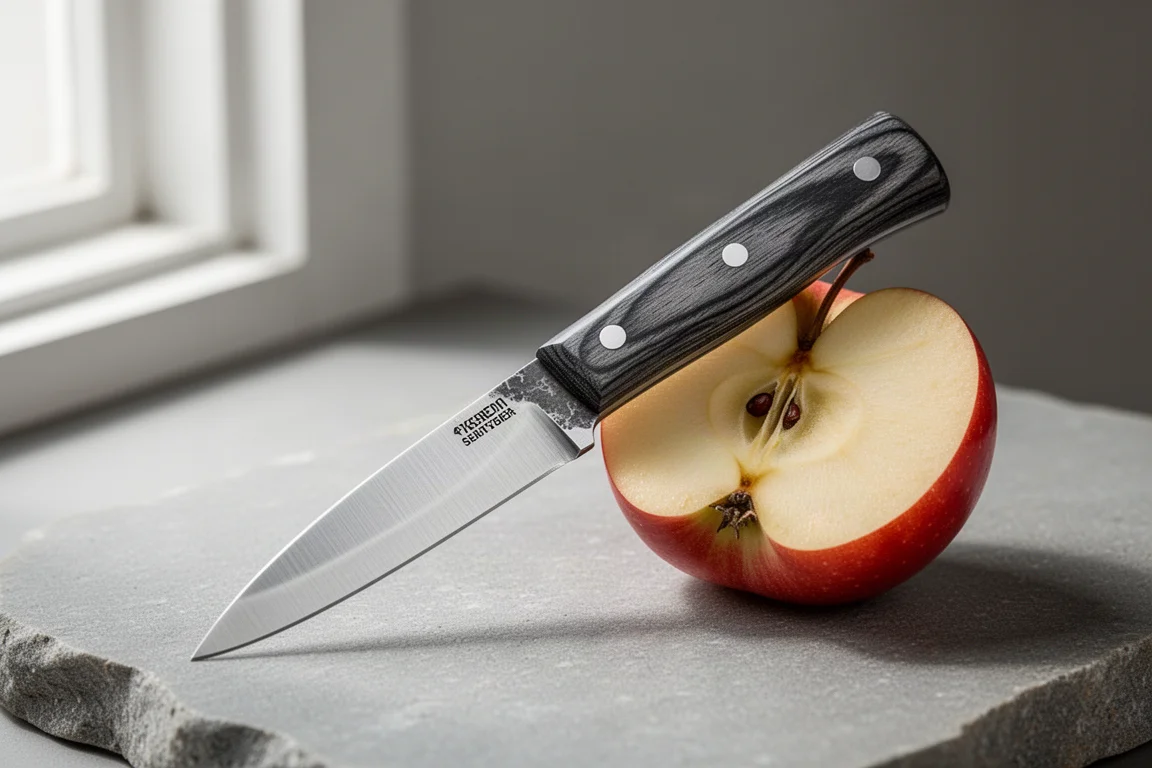
When Quentin Middleton from Middleton Made Knives, a USA blacksmith hand forging knives in Saint Stephens, South Carolina, sends over a set of his Ecoline kitchen knives, expectations run high. The first of the four to be put through a proper food test is his 4-inch paring knife from the Ecoline line, made entirely from AEBL stainless steel and fitted with a dyed birch veneer handle in charcoal.
This is a knife that was initially thought to be more of a petty, but after real kitchen use, that label no longer holds up. This is a genuine paring knife, and a rather charming one. Here is how it performed.
Who This Knife Is For
At $100 USD, this is a genuinely strong entry-level knife for someone moving on from classic big-box store knives or inherited family blades that have long since lost their edge. The Ecoline line sits in a sweet spot: it is not that these knives are not for professionals, but in terms of price to quality, the value is excellent.
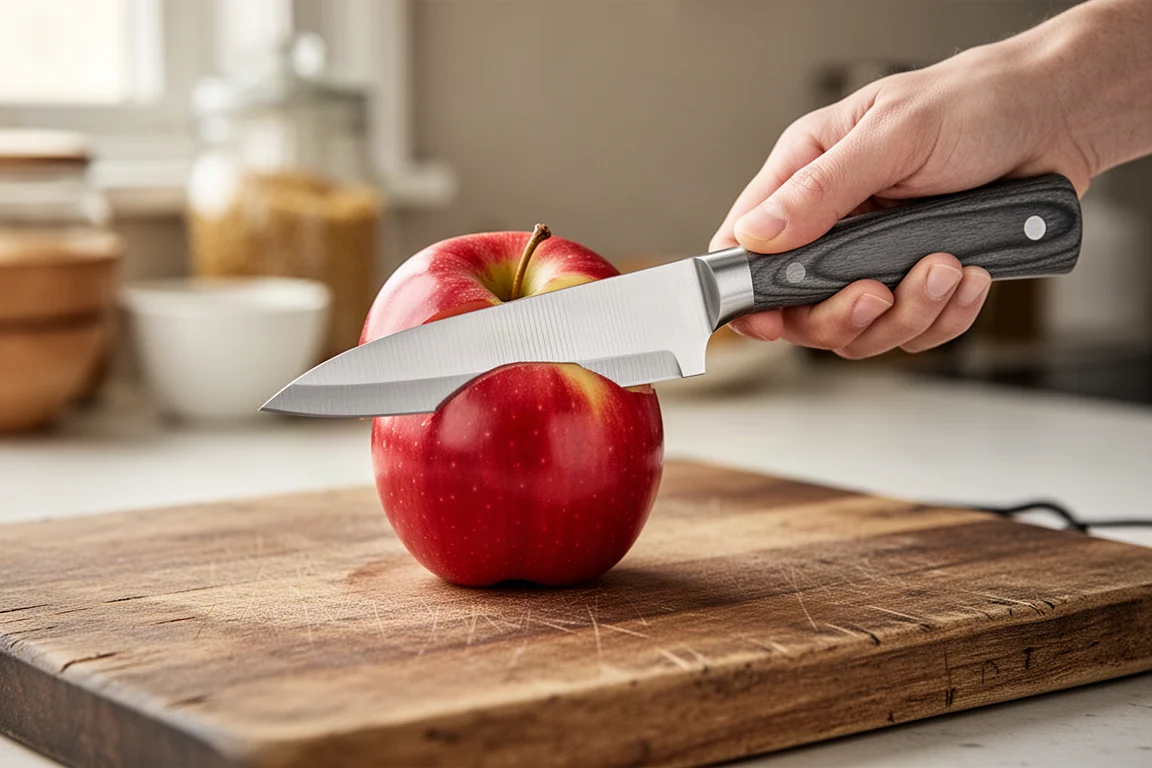
It is also a great fit for anyone who values stainless steel practicality. Because the blade is fully stainless AEBL, a knife like this can be set down mid-task with confidence. Cutting produce, getting called away, coming back to a blade that has not immediately rusted: that everyday forgiveness matters more than most people admit.
Build Quality and Handle Comfort
The build is impressive for the money. The charcoal dyed birch veneer handle looks clean and modern, the engraved logo is evenly dark and consistent, and the pins are very nearly flush with the handle. One pin does sit out slightly, but in a very dry climate like Edmonton in winter, wood movement is a plausible explanation rather than a flaw.
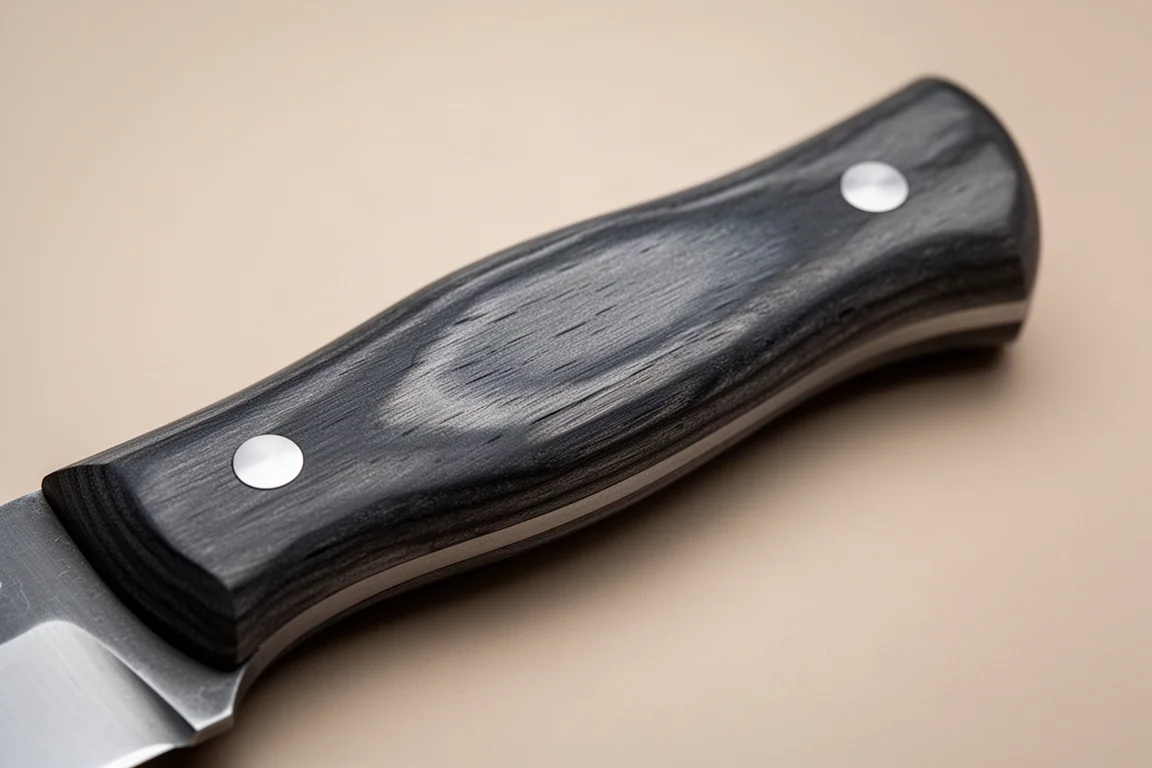
The standout feature is the coke bottle shape of the handle. It swells slightly in the middle and settles naturally into the palm. Interestingly, the bigger the Ecoline knives got, the more comfortable they became held this way rather than in a pinch grip.
The knife is full tang, yet like the rest of the Ecoline line it feels remarkably light and nimble. The primary bevel is more Western than Japanese in style, a V-grind without a shinogi line, but that does not hold back performance where it counts.
Performance: Where It Shines and Where It Struggles
The geometry tells the real story. At roughly 4 inches, just over 100 millimeters, the blade has significant angle variation from heel to tip. That swoop means very little cutting edge contacts the cutting board at any time, which makes it a poor fit for board work with produce larger in diameter than the contact edge. That is exactly why this is a paring knife and not a petty, despite lacking the classic bird’s beak or sheep’s foot profiles.
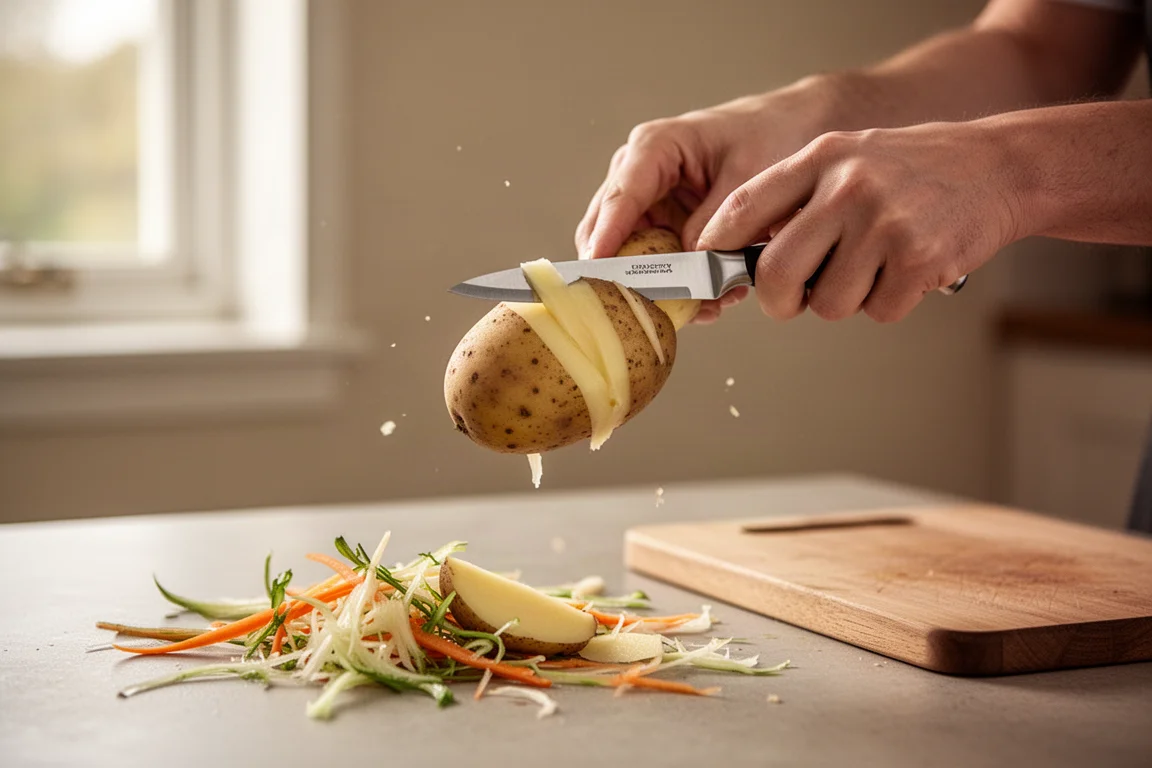
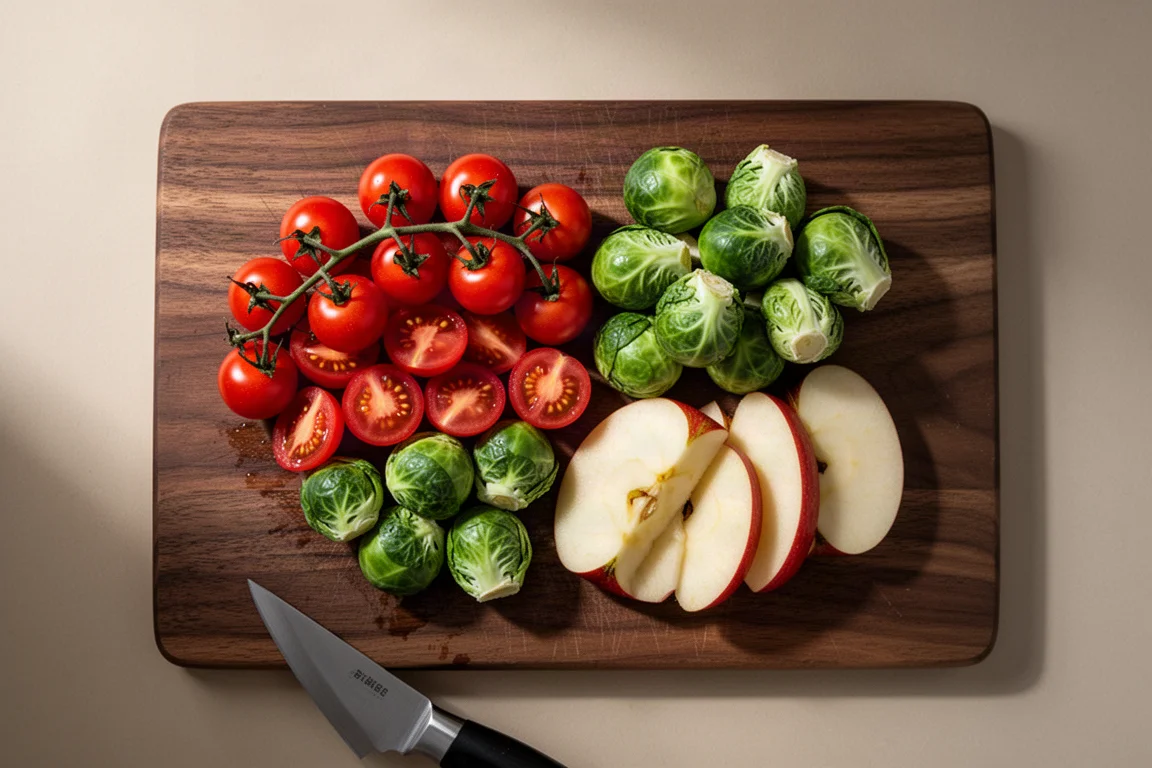
Where the knife excels is in-hand work. Peeling an apple, trimming a banana, doing detail cuts toward yourself from heel to tip: the curved edge never comes close to your skin, and the whole experience feels like using a grandmother’s well-loved paring knife. The tip also curves up ever so slightly, so when pulling back through a cut, the point never digs into the cutting board. Cherry tomatoes and Brussels sprouts were handled very well. Denser produce gave it more trouble, as expected from a knife this size.
One pleasant surprise: food release. With no tsuchime or kurouchi finish to break suction, the expectation was for sticking, but the vertical belt grinder striations give genuinely good food release. Once sticking did start, it accumulated quickly, but overall the release performance was far better than expected for a smooth stainless blade.
Things to Consider Before Buying
There are a few trade-offs worth knowing before buying. Cutting potential on the board leaves something to be desired given the curved profile, so this knife will not replace a utility or petty knife for flat slicing. Denser produce also pushed it harder than it comfortably handled.
The $100 price for a 4-inch paring knife may sound steep at first, but the finish quality, consistent engraving, and thoughtful geometry justify it for anyone who values a well-made small knife. Since the line is produced with apprentices alongside the smith himself, consistent output is a reasonable expectation, but this piece performed well regardless of who made it.
Buying Advice
Middleton Made sells this 4-inch Ecoline paring knife with the charcoal handle directly for $100 USD, and it is also available as part of a three-knife set that includes the 4-inch paring knife, a 6-inch nakiri, and an 8-inch chef knife.
If you spend most of your knife time doing in-hand work like peeling, trimming, and detail cuts, this blade rewards that style of use beautifully. If your paring knife mostly lives on the cutting board slicing larger produce, its curved profile will work against you and a flatter-bellied petty would serve better. For someone stepping up from basic starter knives, the price to quality ratio is hard to argue with, and one knife from the Ecoline line will even be offered in a raffle for those following the full series.
Conclusion
The Middleton Made Ecoline 4-inch paring knife is a beautifully finished, lightweight, fully stainless paring knife that shines in hand and charms in the kitchen. Its curved geometry limits board work, but that same profile is what makes it safe and precise for peeling and detail cuts. At $100 USD, it is a compelling entry point into hand forged American knives.
Product link
View more details for Middleton Made Ecoline 4-Inch Paring Knife
This product is mentioned in the review. Check the specifications, options, and compatibility before buying.
View more details for Middleton Made Ecoline 4-Inch Paring KnifeFurther reading
Related Reviews

Kitchen Knives
Best Chef's Knives 2026: 27 Popular Options Tested and Ranked
A comprehensive review of 27 chef's knives ranging from $18 to $380, with honest assessments of handle comfort, blade balance, and real-world performance.

Kitchen Knives
Best Chef's Knives Under $75: Two Tested Recommendations
Two practical 8-inch chef's knives that balance sharpness, comfort, and durability without premium pricing.

Kitchen Knives
Best Chef's Knives 2026: 27 Options Tested and Ranked
A comprehensive review of 27 chef's knives ranging from $18 to $380, with honest assessments of handle design, balance, blade profile, and real-world performance.