Skis
Meyer Wrangler 2024 Review: A Handcrafted All-Mountain Ski That Balances Both Sides of the Mountain
A 94 mm handcrafted all-mountain ski built in Colorado, with confident carving, strong off-trail flotation, and a few honest trade-offs to weigh before buying.
Introduction
All-mountain skis tend to promise more than they deliver. A 94 mm waist is wide enough to float in soft snow and narrow enough to carve on hardpack, yet plenty of skis in that class quietly favor one side of that equation. The Meyer Wrangler 2024 is one of the more convincing attempts at genuinely balancing both.
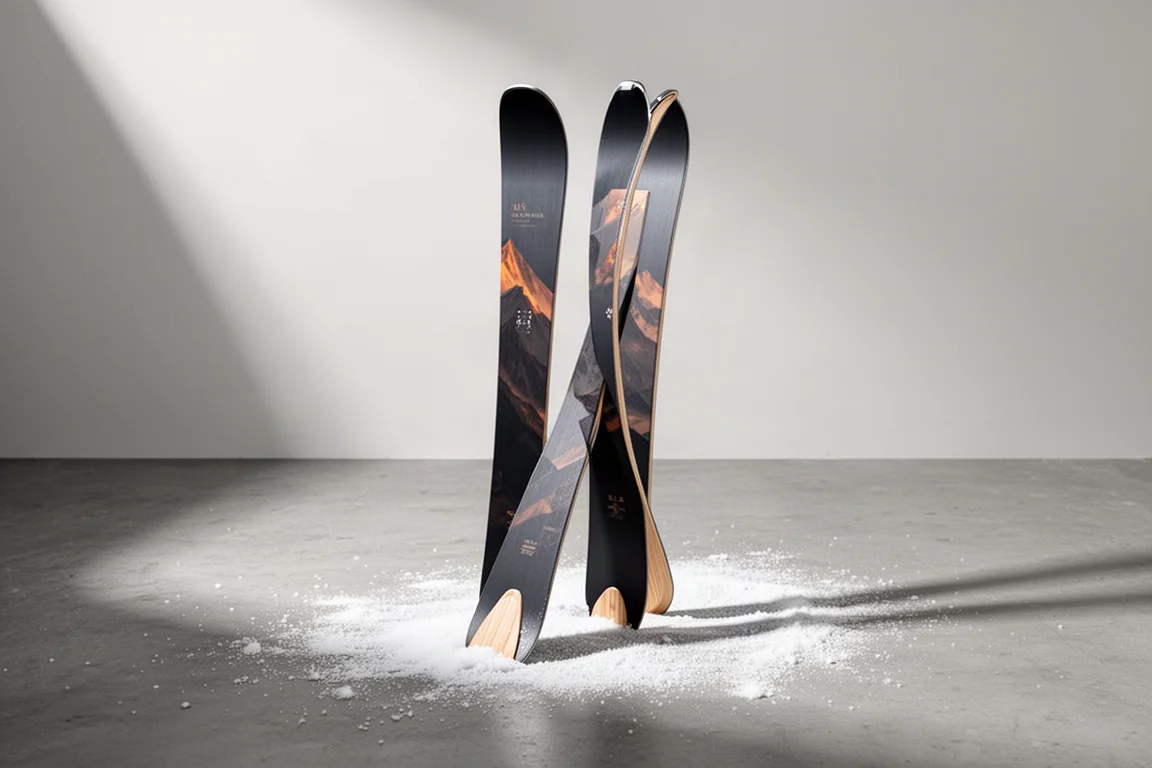
Meyer builds the Wrangler by hand in Colorado. The ski measures 94 mm underfoot with a 16 m turn radius and comes in a 180 cm length, which is the size we spent the most time on, alongside a 185 cm option. The list price is $895, with a current listing at $695.
The short version: this is a versatile, well-made ski that transitions between groomed runs and soft snow with unusual ease, and it asks for very little in return.
Who This Ski Is For
The Wrangler is for the skier who wants one pair to cover an entire mountain day rather than a quiver to choose from in the parking lot. It is not a dedicated powder ski and it is not a race-room carver. It is a daily driver that stays composed on groomers, moves quickly edge to edge in tight terrain, and floats well enough to enjoy the soft pockets you stumble across.
It suits confident intermediate through advanced skiers who value adaptability over specialization, and riders who like to link a carved run into a tree line without changing their technique halfway down. It also appeals to skiers who want a domestically made, handcrafted product rather than a mass-produced one.
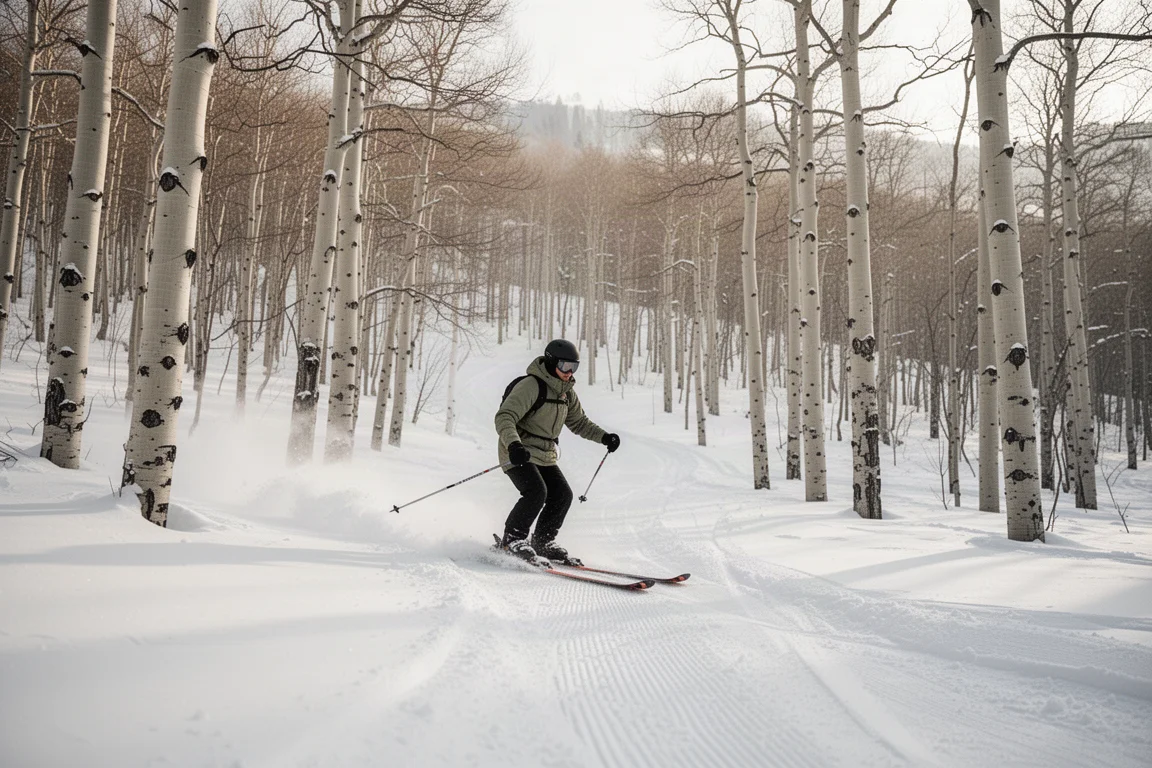
Sizing deserves a moment of thought. The 180 cm we used felt responsive rather than long, and it set up quick pole plant turns comfortably. Skiers who spend most of their time in open terrain may prefer the longer 185 cm, while those who live in tighter trees and narrower chutes will likely be happy at 180 cm.
Main Strengths: Off-Trail Performance and Flotation
Off-trail is where the Wrangler is at its most enjoyable. Turn initiation is quick, the ski moves edge to edge without hesitation, and short pole plant turns feel immediate rather than labored. For a 94 mm waist, the flotation punches above its weight class, and unexpected pockets of powder are genuinely fun rather than something to survive.
That performance held up in less forgiving snow as well. In wind-affected and chopped sections a couple of days after a storm, the Wrangler stayed composed and predictable, cutting through adverse conditions without demanding a lot of correction from the skier.
The real strength, though, is diversity. Being able to carve a groomed run, read a section that has gone sour, and then hop back into a soft pocket on the same descent is exactly what an all-mountain ski should enable. The Wrangler makes those transitions feel natural instead of like a compromise.
Main Strengths: Carving and Stability
On groomers, the Wrangler loads up a turn and gives the energy back. It builds a solid platform underfoot, the turn initiation is strong for the width and length, and the ski does not feel like it runs out of support when you push it. The radius feels accurate, and the ski rewards a deliberate, driven turn.
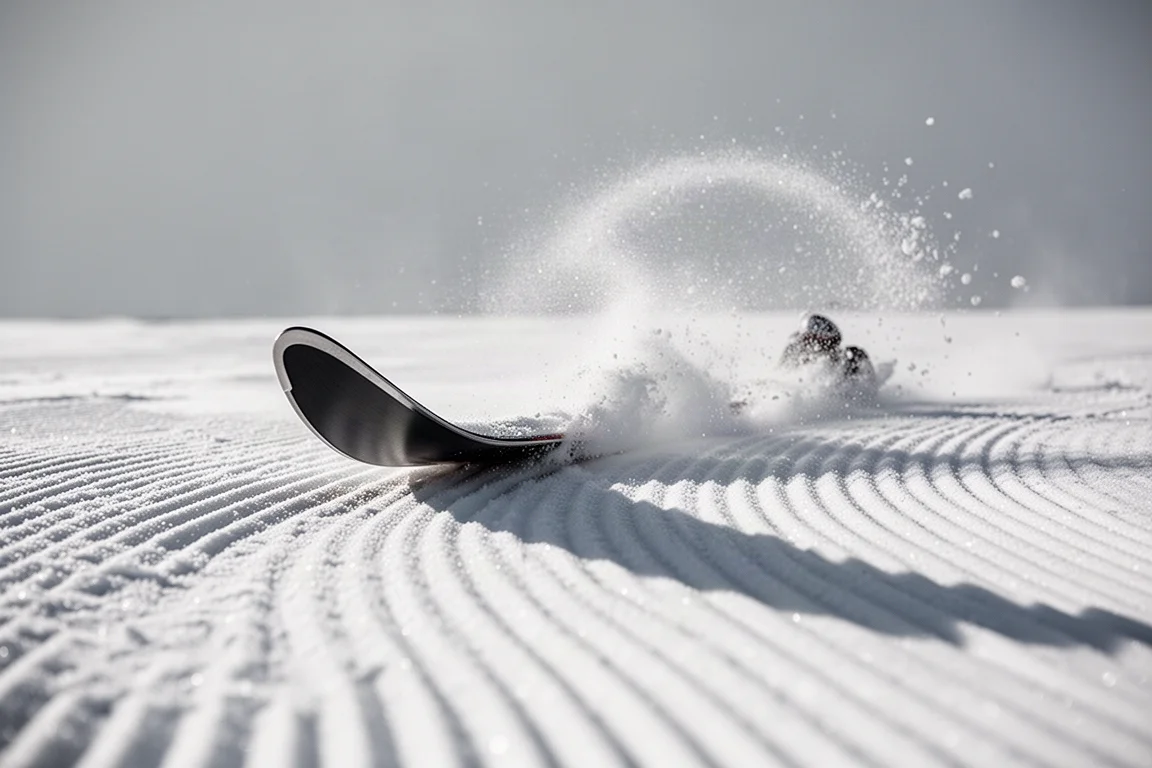
Stability is a highlight. The ski stays settled at speed, and the only wobble appeared at very high speeds, the kind you reach while tucking down a long, steep groomer. In normal aggressive skiing, that instability never surfaced. Damping is solid as well, with the ski absorbing rough snow without bouncing the skier around.
Things to Consider Before Buying
The most consistent note is camber. The Wrangler has some, but exiting a turn it does not spring you forward the way the best carvers in this class do. It gives your energy back at the apex, yet it finishes turns a touch flatly rather than flicking you into the next one. That may be a deliberate trade for off-trail performance, and it is a minor complaint on a ski this capable, but it is the one place where a bit more zest would be welcome.
Weight is worth flagging. The ski is on the heavier side on paper, though that weight is not especially noticeable underfoot while skiing. Buyers who count grams for touring setups should look elsewhere or ask Meyer directly about construction.
On that note, detailed construction information is not easy to find on the product page, so anyone who wants specifics on core materials and layup should reach out to the company before ordering. It is a small operation, and direct questions tend to get direct answers.
Build Quality, Specs, and Value
The Wrangler is handcrafted in Colorado, and the build quality backs that up. Nothing about the finish or assembly feels improvised. This is a properly made ski from a small independent maker, not a hobby project with a graphic slapped on top.
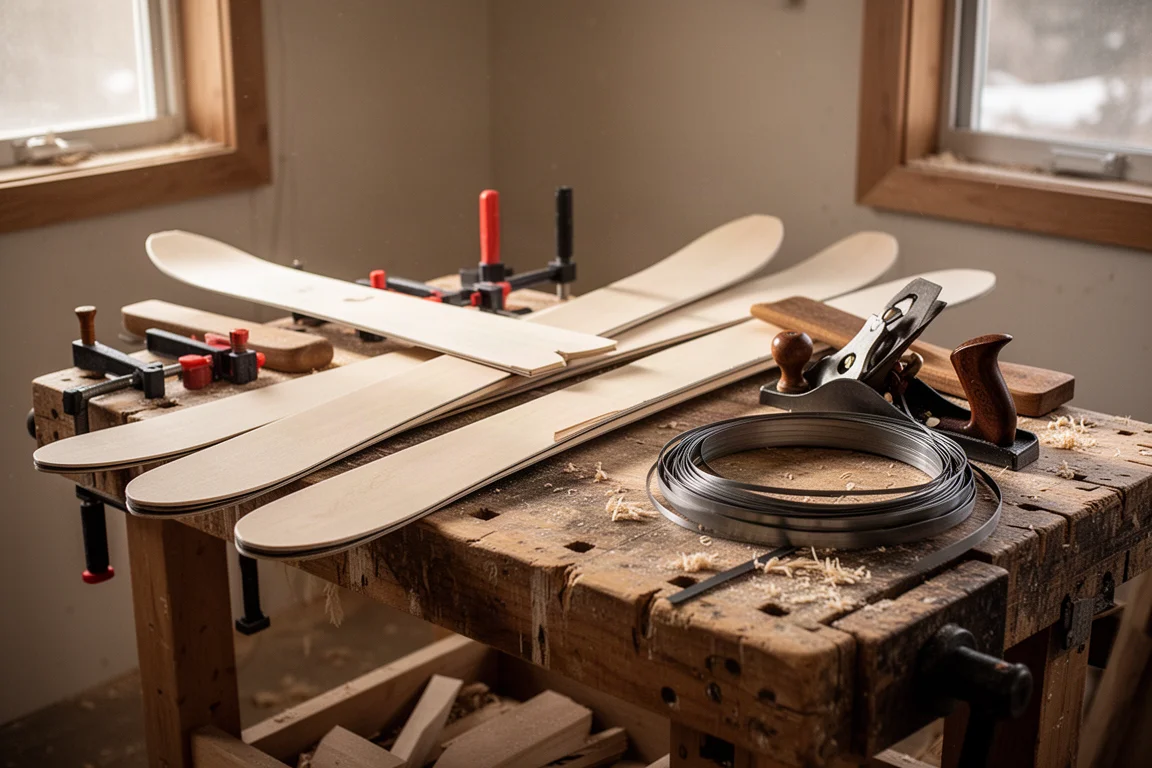
Value depends on what you are comparing it to. At $895, the Wrangler sits in the same conversation as the established category leaders, and at the current $695 it is priced aggressively for a handcrafted ski. Hand-built skis from small makers often carry a premium, so this one lands in a reasonable place, especially for buyers who place value on domestic manufacturing.
Specs recap: 94 mm underfoot, 16 m turn radius, 180 cm and 185 cm lengths, handcrafted in Colorado.
Riding Conditions and Terrain Notes
In light powder, the Wrangler floats better than its width suggests and holds its own against wider skis in the same conditions. On groomed and packed surfaces it is smooth and planted.
The weak spot is low-elevation wet, sticky snow. In those conditions the ski gets hung up more than others in its weight class. It is not a hard stop, but you will notice it, particularly on flat runouts where momentum matters.
Extreme speed is the other boundary. The ski is stable in normal aggressive skiing, and only a hard tuck on a long, steep groomer produced meaningful wobble. For most riders, that ceiling is far above where they will actually ski.
Buying Advice
If you want a single ski that handles groomers, cat tracks, trees, and soft snow without forcing a compromise, the Wrangler is an easy recommendation. It is versatile enough to be the only pair in the car, and it rewards skiers who like to move around the mountain rather than commit to one style of terrain.
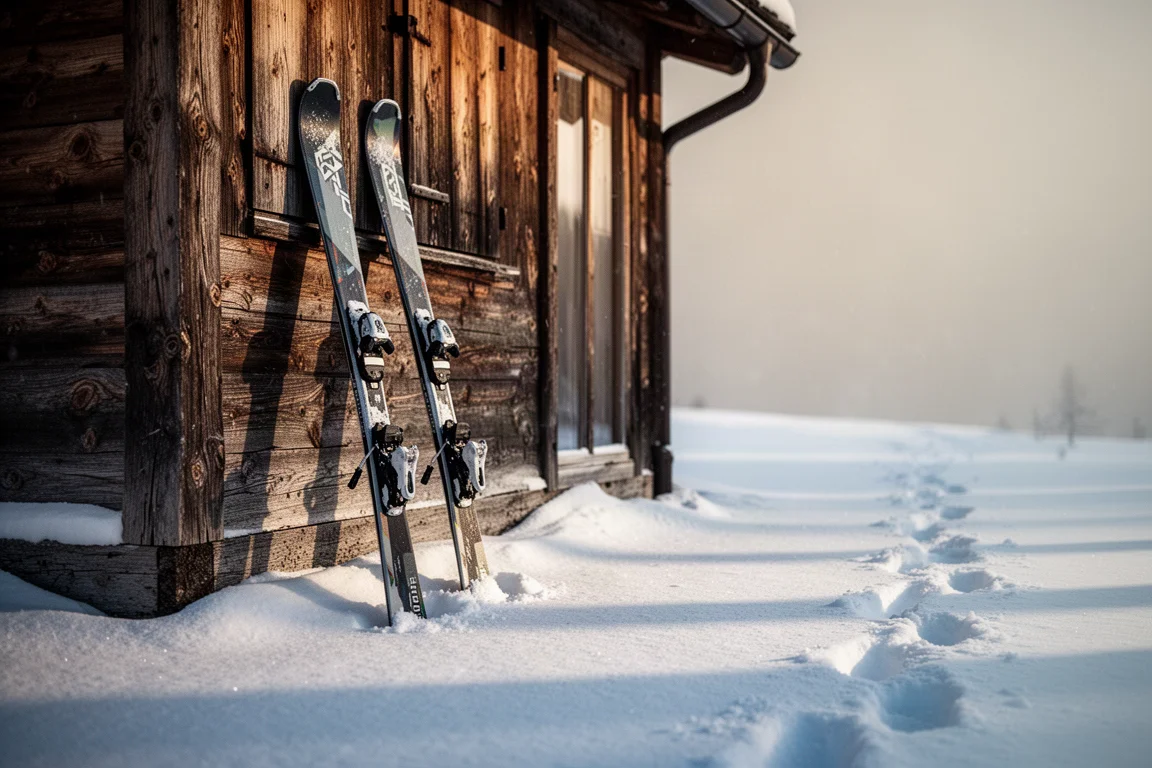
Consider the trade-offs honestly. If your priority is maximum pop out of every turn, the sharpest carvers in this class still have an edge. If your priority is a broad, forgiving skill set with a strong off-trail bias, the Wrangler delivers more than its price suggests. Buyers in wet, heavy snow regions should weigh the sticky-snow behavior, and anyone wanting full construction details should confirm them with Meyer before purchase.
Conclusion
The Meyer Wrangler 2024 is a genuinely impressive all-mountain ski. It carves with confidence, floats better than its 94 mm waist implies, and blends terrain in a way that very few skis manage. The missing snap out of turns, the extra heft, and the wet-snow hang-up are real but minor notes against a ski that is otherwise excellent value for a handcrafted, American-made product.
Our rating lands at 8.9 out of 10. It sits just behind the benchmark carvers in this category, and it makes up ground with versatility, build quality, and price. If you get the chance to ski a pair, take it.
Product link
View more details for Meyer Wrangler 2024
This product is mentioned in the review. Check the specifications, options, and compatibility before buying.
View more details for Meyer Wrangler 2024Further reading
Related Reviews

Skis
Armada Anti Matter 82 W Review: A Light, Approachable All-Mountain Carver
Armada's Anti Matter 82 W pairs a lightweight Karuba and carbon build with an easygoing all-mountain shape, aimed at intermediates through lighter-footed advanced skiers.

Skis
Armada Anti Matter 88W Review: A Light, Playful 88mm All-Mountain Ski Plus Two Alternatives
The Armada Anti Matter 88W returns unchanged in spirit from its Reliance 88C days, and it remains one of the most versatile 88mm skis around. We also look at the Nordica Santa Ana 87 and Anti Matter 92 W as alternatives.

Skis
Armada ARV 100 vs Atomic Bent 100: Which 100mm Freestyle Ski Should You Buy?
Two of the best all-mountain freestyle skis of the season compared: one leans playful and park-ready, the other holds up better everywhere else.