Kitchen Knives
Why Metal Cutting Boards Hurt Your Knives: Better Alternatives Worth Buying
A 5-pound onion test measured how fast knives dull on a metal board versus wood. Here is what the numbers showed and which boards we recommend instead.
Introduction
Ask anyone who works around high-quality knives and you will hear the same advice: keep hard surfaces away from your edge. Metal, glass, and granite cutting boards are the worst offenders, and even bamboo and Epicurean boards earn criticism for how quickly they dull a blade. The logic is simple. Every knife, no matter how good, keeps its edge longer on a softer board. And the more often you sharpen, the faster you run out of knife.
Yet lately, worries about bacteria, mold, and microplastics have pushed people toward metal boards. That concern deserves a closer look, because much of it is overblown. Wooden boards have been shown in studies to have naturally antibacterial properties, and the visible plastic flecks coming off a plastic board under deliberate scraping are far more dramatic than what normal use produces.
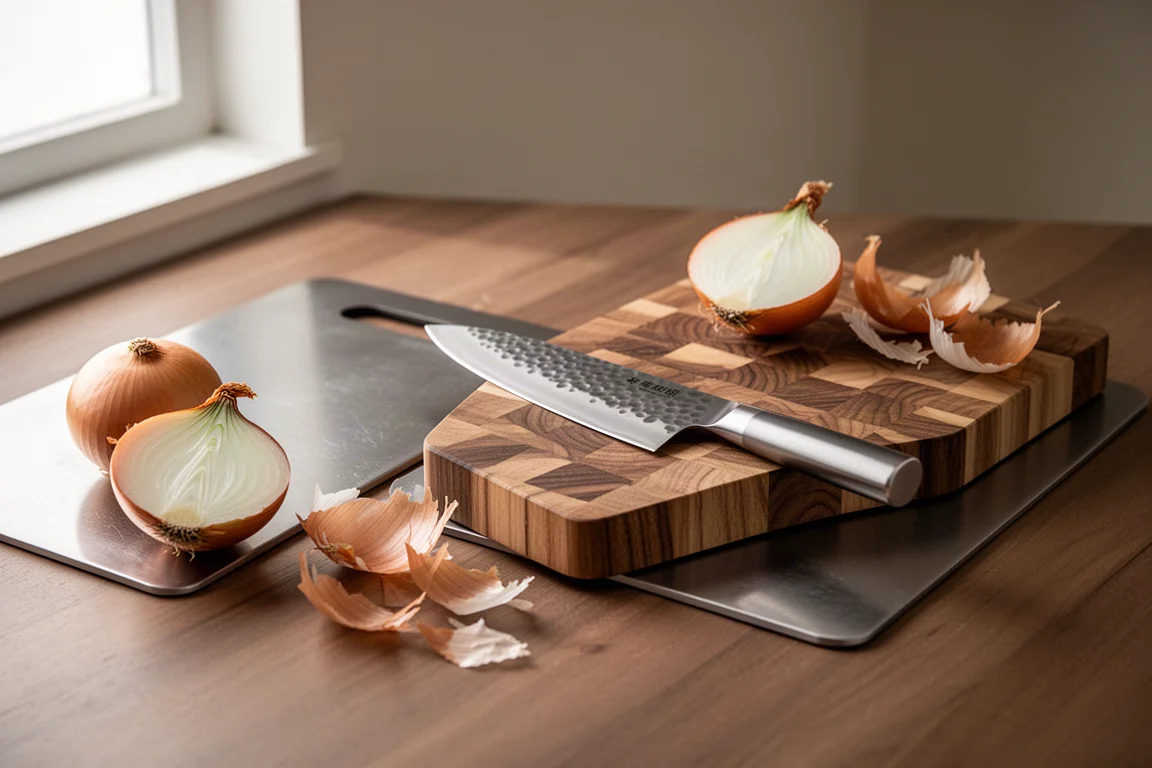
To settle the debate, we ran a simple comparison: two identical knives, 5 pounds of onions, one wooden board, and one metal board, with sharpness measured before and after.
Why Hard Boards Are a Safety Problem
A metal cutting board is undeniably sanitary. You can put it in the dishwasher, spray it with bleach, or clean it however aggressively you like. The problem is what it does to your knife.
Every time the edge hits the board, it dulls a little. A duller knife needs more pressure to cut through a tomato, an onion, or a pepper. More force means the knife smacks into the board harder, which dulls it further. Eventually you end up with a knife that resists when you push it through food and kicks off in the wrong direction. That is when cuts happen. A sharp knife goes where you point it, like a car that steers properly, and that makes it far safer to use.
How We Tested It
We used two brand new Ichigo SLD Migaki knives and an electronic sharpness tester that measures the grams of force needed to cut a standardized test wire. The tester only evaluates a single point at the very edge, but that is exactly the part a cutting board wears down.
We marked the same spot on the middle of the belly of each blade, recorded baseline numbers of 150 and 162 grams, then had each knife cut 5 pounds of onions on its assigned board.
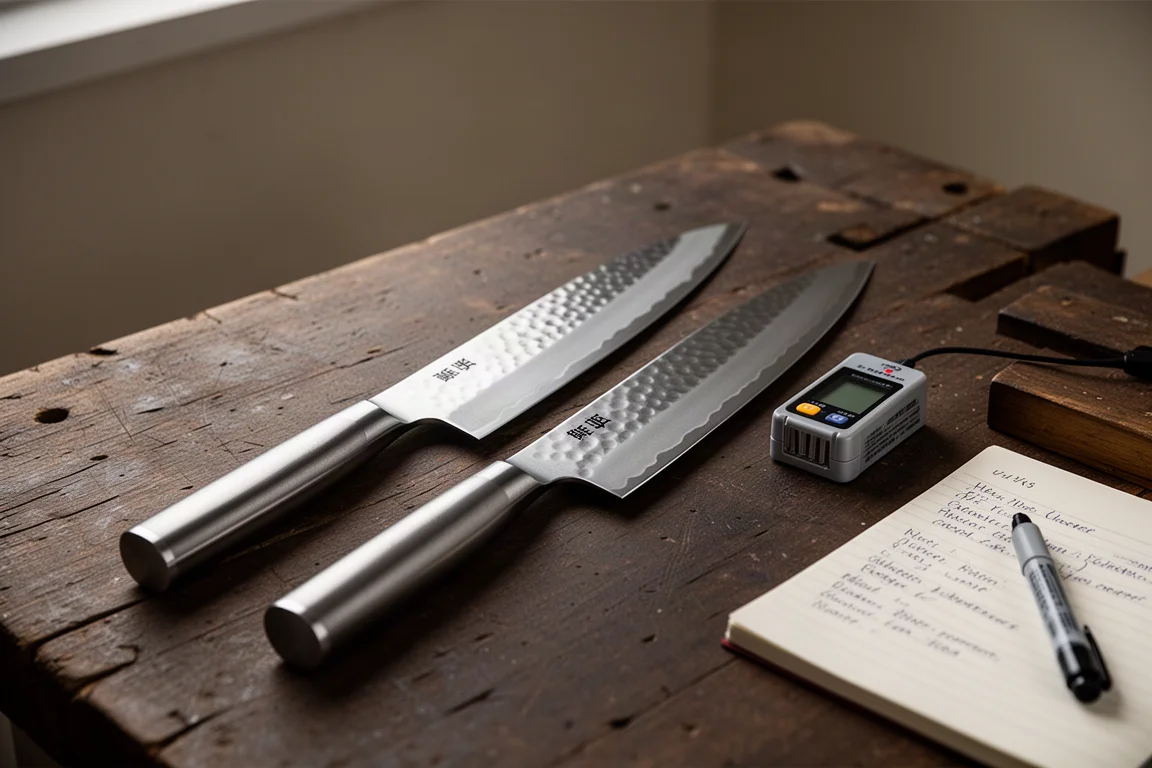
The result was striking. The knife used on wood went from 150 to 277 grams, an increase of 127. The knife used on the metal board went from 162 to 589 grams, an increase of 427. That is roughly three and a half times more edge loss. The difference was also obvious while cutting: the metal-board knife was fighting with onion skin by the end, while the wood-board knife felt consistent throughout.
A two-knife test is a small sample, and we will not pretend it is a lab study. But the numbers backed up more than a decade of experience watching customers bring in dull knives that had lived on hard boards.
The Better Alternatives
Wood and plastic remain the right choices for almost everyone. Both are soft enough to protect your edge, and each has a clear case.
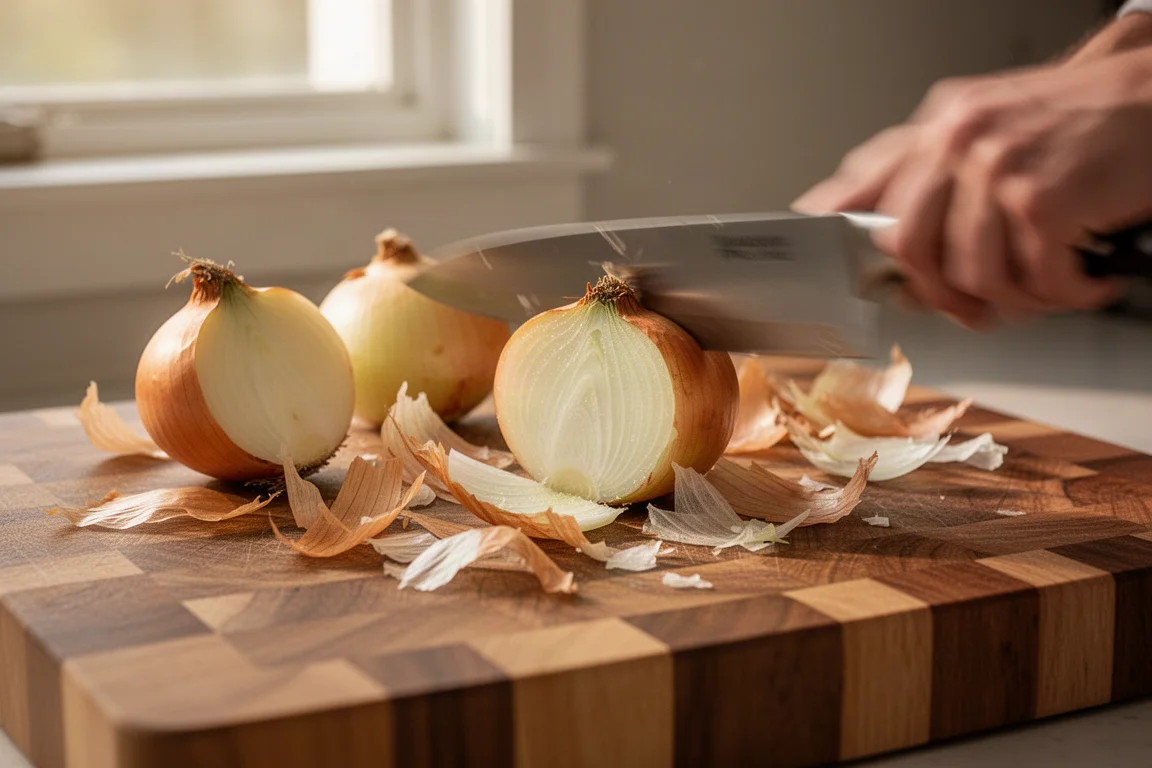
Wood is beautiful, lasts a long time, and feels great to use. Studies show it kills bacteria on its own, so hot soapy water, plus hot water after cutting meat, is genuinely enough. No bleach, no restaurant sanitizer. Plastic is cheap, cheerful, dishwasher-safe, and a sensible pick if you are uncomfortable with wood. The microplastics fear around plastic boards is overblown: the flecks you see in scraped-off videos come from deliberate abuse, not normal cutting, and incidental particles simply pass through the body.
If you want the sanitization convenience of plastic with knife-friendly softness, or the lasting character of wood, the two boards below cover both bases. And since a good board is only half the equation, we are also featuring the knife used in the test itself.
Hasegawa Antibacterial Cutting Board
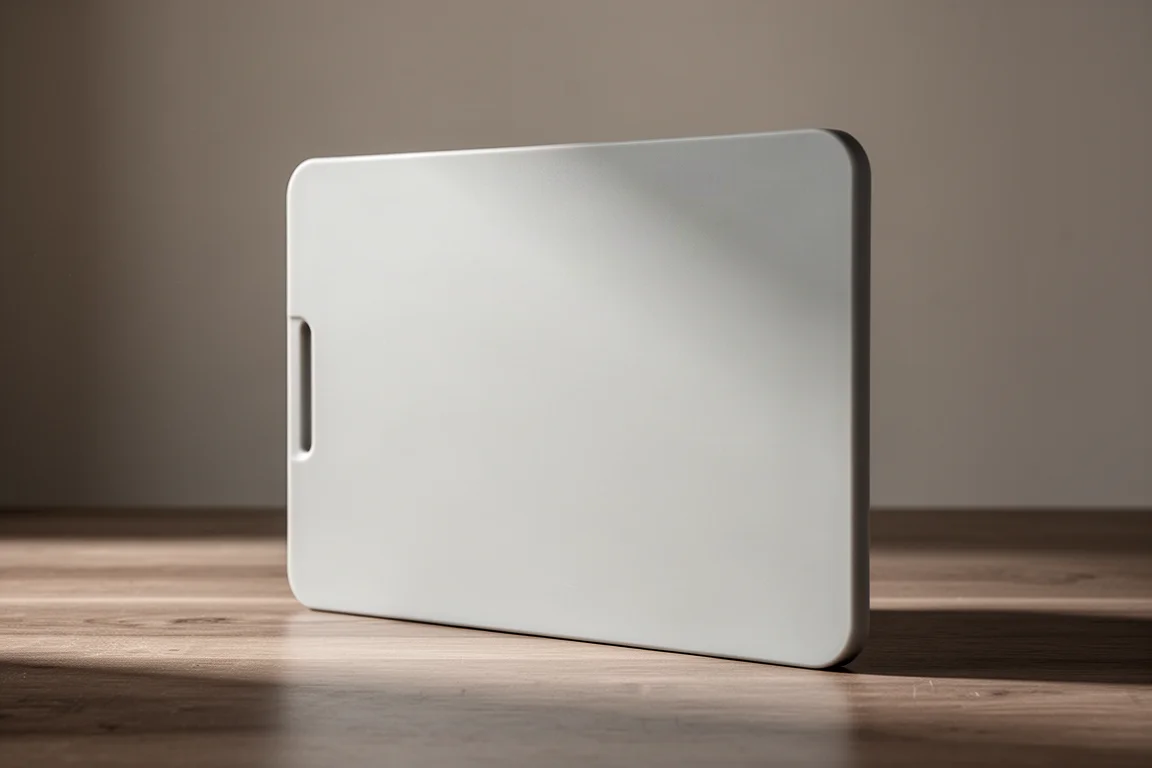
The Hasegawa board is designed to be good for knives while also being antibacterial. It has been impregnated with microparticles of silver that destroy bacteria, and it can go straight in the dishwasher. It is soft on edges, easy to sanitize, and one of the best options for anyone who simply cannot get comfortable with wood.
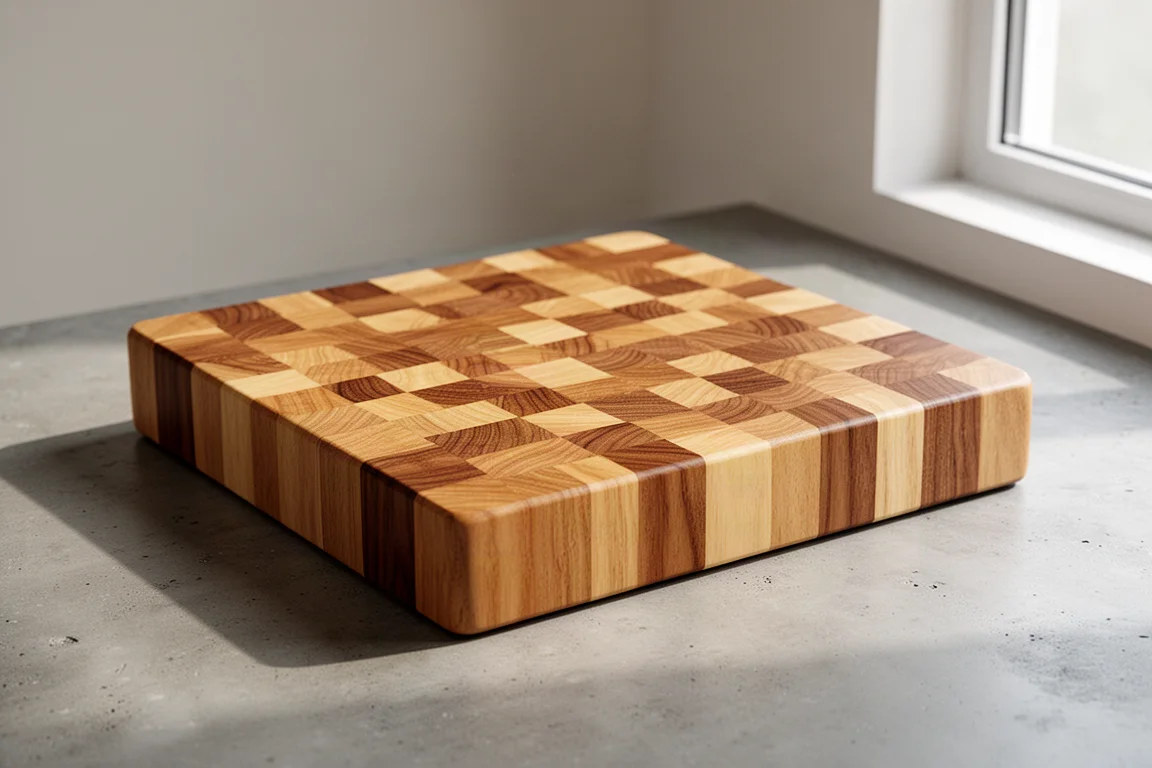
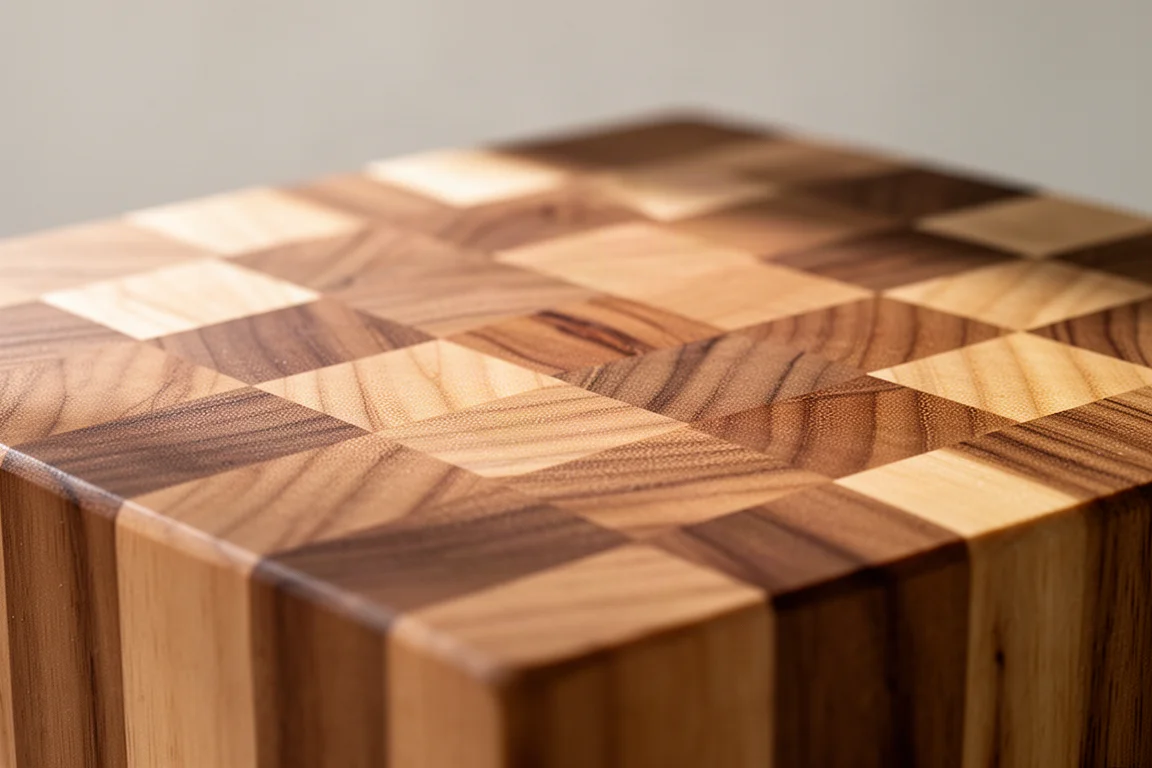
Larchwood End Grain Cutting Board
The wooden board used in our test was a Larchwood end grain board made in Canada. End grain construction is widely considered the best for knife edges, and it performed exactly as expected: no noticeable decline in cutting feel across 5 pounds of onions. If you trust soap, water, and the science behind wood’s natural antibacterial properties, this is the board to grab.
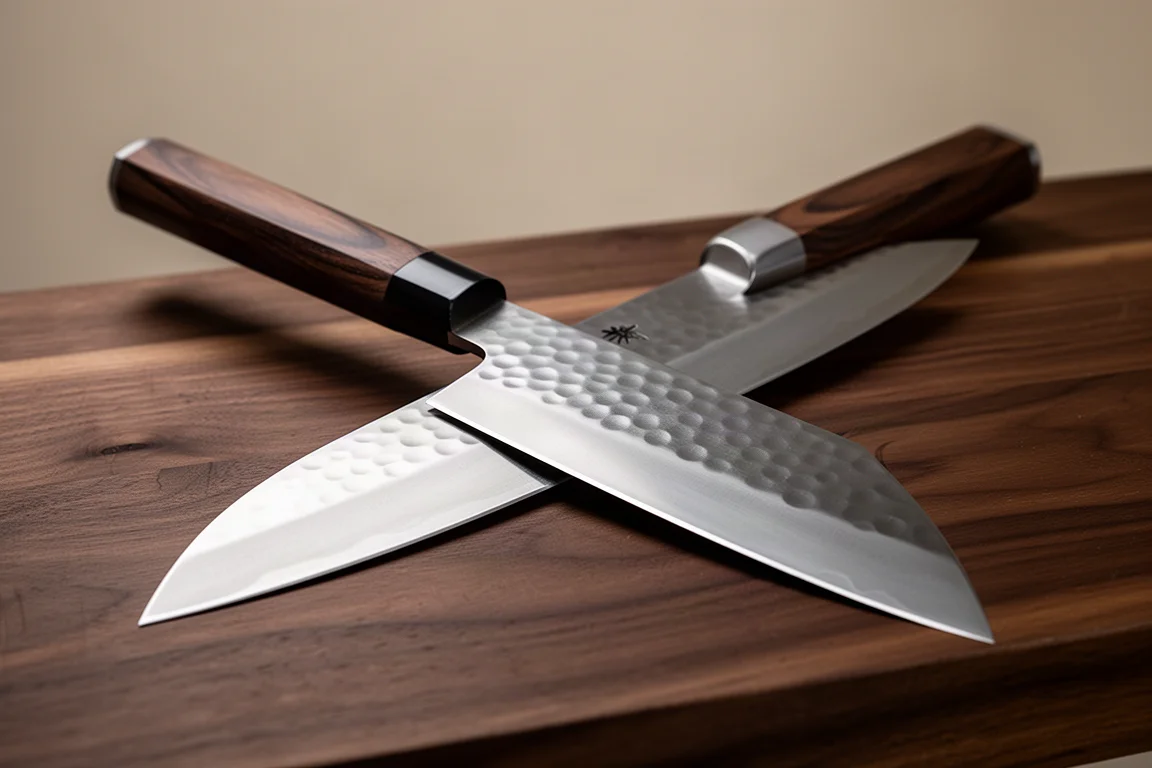
Ichigo SLD Migaki Knife
The test blades were two brand new Ichigo SLD Migaki knives, a new addition to the knife world worth knowing about. As the test showed, even an excellent knife loses its edge quickly on the wrong surface, so pairing a quality blade with a soft board and a ceramic honing rod for regular maintenance is the combination that keeps cutting enjoyable. A leather strop or occasional wet stone touch-up covers the rest.
Buying Advice
Skip metal cutting boards entirely. If you have a serious phobia of bacteria, choose plastic instead of metal; if a board must handle raw meat exclusively, plastic is still the better call than metal. Otherwise, pick wood for daily cooking and long-term beauty, or the silver-impregnated Hasegawa if you want dishwasher convenience with knife-friendly softness.
Whichever board you choose, maintain the edge with a ceramic honing rod on a regular basis to keep it close to sharp between full sharpenings. Cutting on a hard board means far more frequent sharpening, and there is no way around that cost.
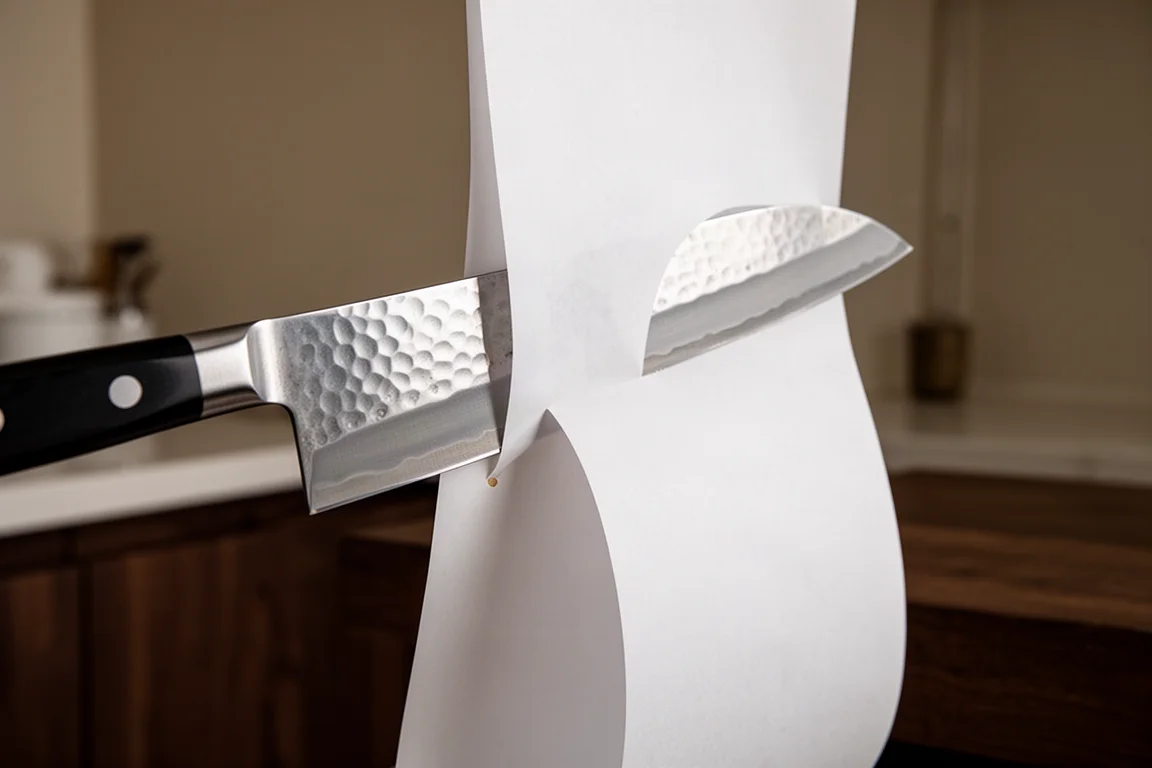
A paper test tells you what the machine cannot: it evaluates the entire length of the edge rather than a single spot. The wood-board knife still cut paper smoothly along most of its blade, while the metal-board knife would barely cut at the rear of the edge. If your knife tears instead of slicing, it is asking for a touch-up.
Conclusion
The test confirmed what knife people have long believed: a metal cutting board dulls a knife roughly three and a half times faster than wood over the same workload, and it dulls it noticeably within the first few onions. Wood offers natural antibacterial performance and lasting beauty, while a silver-infused soft board like the Hasegawa covers anyone who prefers dishwasher sanitizing. Choose a soft board, hone regularly, and your knives will stay sharper, safer, and with you for much longer.
Further reading
Related Reviews

Kitchen Knives
Best Chef's Knives 2026: 27 Popular Options Tested and Ranked
A comprehensive review of 27 chef's knives ranging from $18 to $380, with honest assessments of handle comfort, blade balance, and real-world performance.

Kitchen Knives
Best Chef's Knives Under $75: Two Tested Recommendations
Two practical 8-inch chef's knives that balance sharpness, comfort, and durability without premium pricing.

Kitchen Knives
Best Chef's Knives 2026: 27 Options Tested and Ranked
A comprehensive review of 27 chef's knives ranging from $18 to $380, with honest assessments of handle design, balance, blade profile, and real-world performance.